

There’s something almost magical about waking up and walking outside to find a fence or trellis blanketed in trumpet-shaped flowers — vivid blue, rich purple, soft pink — that somehow weren’t fully open when you went to bed. That’s the quiet charm of morning glories.
They’ve been captivating gardeners for centuries. In fact, morning glory has been cultivated in Japan since the 8th century and was used medicinally in ancient China long before it became a garden staple in the West. If you’ve ever stood in front of a seed packet at the nursery, wondering whether these dramatic vines are worth the effort, whether they’ll come back on their own, and how on earth to get started — this guide is for you.
We’ll answer the questions most beginners ask first: Do morning glories come back every year? Are morning glories perennials? And of course, how do you actually plant them so they thrive?
What Are Morning Glories, Exactly?
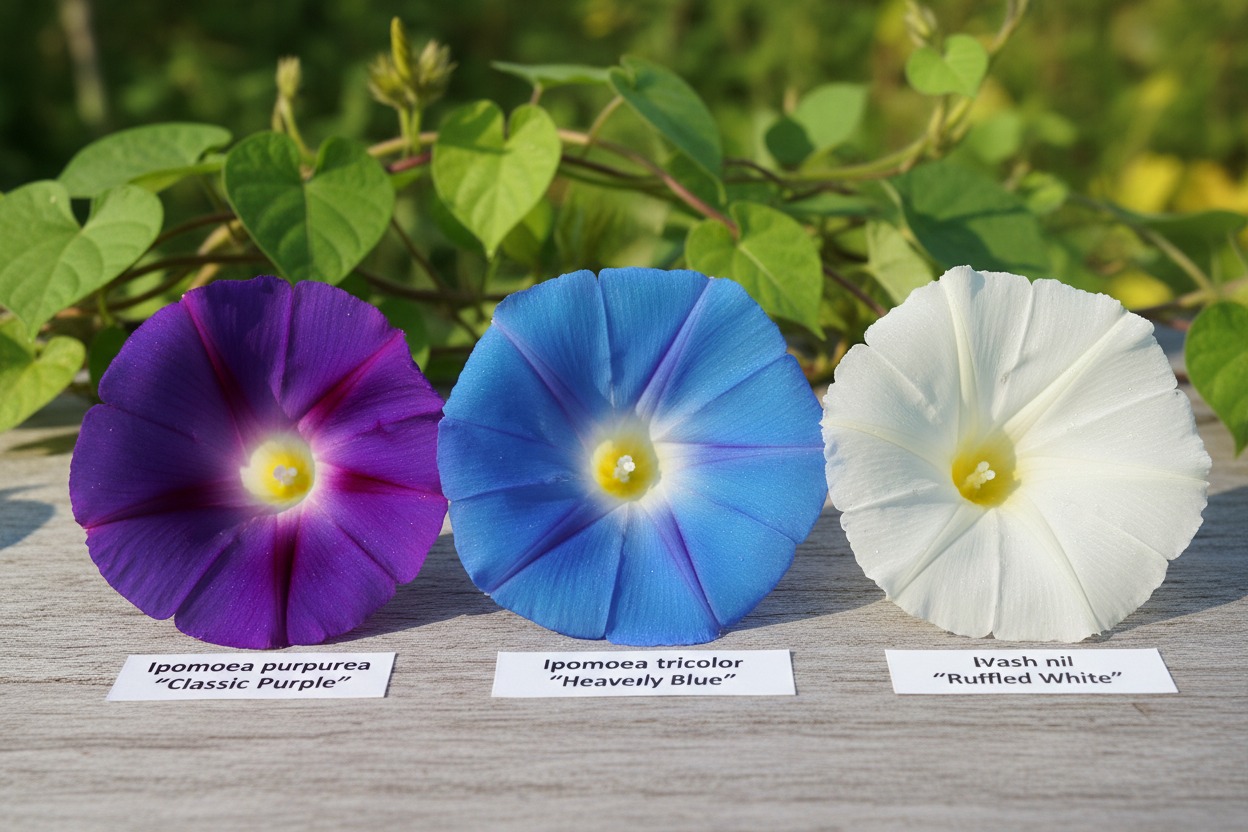
Morning glories belong to the genus Ipomoea in the family Convolvulaceae — the same family that includes sweet potatoes and the notorious field bindweed. The most commonly grown garden varieties come from three species:
- Ipomoea purpurea — the classic, with flowers up to 2½ inches wide in purple, pink, red, and white
- Ipomoea tricolor — responsible for the iconic ‘Heavenly Blue’ cultivar, with blooms reaching 3–5 inches
- Ipomoea nil — larger-flowered Japanese morning glories that can reach 6 inches across and climb to 12 feet
The name says it all: their funnel-shaped flowers unfurl in the morning, soaking up the early sun, then close again by early afternoon. Each flower only lasts a single day — but the plant compensates by producing new blooms every morning throughout the season.
They’re fast. Incredibly fast. A single vine can climb 6 to 15 feet in one growing season, twining itself around whatever support you give it — a trellis, a fence post, a mailbox post, even a neighboring shrub if you’re not paying attention.
Do Morning Glories Come Back Every Year?
This is the question most gardeners ask — and the answer is: it depends on where you live.
Morning glories are technically capable of being perennials, but whether yours return year after year depends on your climate and USDA hardiness zone.
In Zones 9–11 (Warm and Tropical Climates)
If you’re in a warm region where temperatures don’t regularly drop below 45°F, morning glories will behave like true perennials. They’ll die back a bit in cooler months, then return from their root systems each spring — no replanting required. Think of parts of southern Texas, Florida, southern California, and Hawaii.
In Zones 2–8 (Most of the Country)
For most gardeners, morning glories are grown as annuals. One season, one life cycle — then frost kills the vine. You’ll need to replant from seed each spring.
But here’s the twist that surprises most beginners: even in cold zones, morning glories have a sneaky way of “coming back.” They’re prolific self-seeders. If you let seed pods mature and drop naturally in the fall, those seeds will overwinter in the soil and sprout the following spring — often in spots you didn’t choose. Some gardeners swear the self-seeded plants bloom even more beautifully than the intentionally planted ones.
So the practical answer for most people: you may not need to replant them, but that’s because the plant is doing the replanting for you.
Are Morning Glories Perennials?
Technically, yes — in the botanical sense. But practically, for most gardeners, no.
Here’s a simple breakdown:
| Zone | Morning Glory Behavior |
|---|---|
| USDA Zones 9–11 | True perennial — returns from roots each year |
| USDA Zones 2–8 | Grown as an annual; dies with frost |
| Any zone (with self-seeding) | Can “return” via dropped seeds each spring |
This distinction trips up many gardeners who plant morning glories in zone 6, watch them explode all summer, and then assume the vine will come back in spring. It won’t grow from last year’s vine. But if seeds dropped in fall, you might see fresh seedlings emerge from the soil — new plants, not revived ones.
One important caution: there is a plant called field bindweed (Convolvulus arvensis), sometimes sold or referred to as “perennial morning glory,” that comes back every year in cold climates through deep underground roots. That plant is classified as a noxious weed in many states and is notoriously difficult to eradicate — its roots can reach nine feet deep. It is not the same plant as garden morning glory, despite the shared nickname.
Popular Morning Glory Varieties Worth Growing

Before you plant, it helps to know what you’re working with. Not all morning glories are the same, and variety choice affects color, size, climbing habit, and how aggressively they self-seed.
‘Heavenly Blue’ (Ipomoea tricolor)
The gold standard. This award-winning cultivar produces large, vivid azure-blue flowers with white and yellow throats, each 3–5 inches across. It climbs to 8–12 feet and blooms from early summer until frost. If you only grow one morning glory, make it this one.
‘Grandpa Ott’ (Ipomoea purpurea)
An heirloom variety with deep purple flowers streaked with a magenta star at the center. Vigorous, reliable, and one of the most popular choices for cottage gardens. Grows 6–10 feet tall.
‘Scarlett O’Hara’ (Ipomoea nil)
Vivid crimson-red flowers with white throats. More dramatic than the typical blues and purples, it’s a striking choice if you want to break from the traditional color palette.
‘Flying Saucers’ (Ipomoea tricolor)
A more unusual find — flowers are boldly striped in blue and white, creating a pinwheel effect. Growth habit is similar to ‘Heavenly Blue.’
Moonflower (Ipomoea alba)
Not a traditional morning glory in color, but a close relative worth mentioning. Moonflower opens at dusk and closes by noon the next day — the opposite of morning glory. Its flowers are white, extremely fragrant, and can reach five inches across. It’s a stunning companion to plant alongside morning glories for all-day coverage.
Cardinal Climber (Ipomoea x multifida)
A hummingbird magnet with bright red tubular blooms and deeply cut, feathery foliage. Grows 6–12 feet and works beautifully near feeders.
How to Plant Morning Glories: Step-by-Step
Now for the practical part. Morning glories have a well-earned reputation for being easy — but a few specific steps make the difference between a spindly vine and a showstopping display.
Step 1: Choose the Right Spot
Morning glories need full sun — at least 6 to 8 hours of direct sunlight per day. Without it, they’ll produce plenty of leafy vines but very few flowers. An east-facing location is ideal, where they’ll catch full morning light (fitting, given the name).
Avoid rich, heavily amended soil. This is counterintuitive, but morning glories actually bloom better in moderately fertile, even somewhat poor soil. Overloading with nitrogen or compost tells the plant to grow more leaves — not more flowers.
Step 2: Wait for the Right Timing
Timing is everything with morning glories. They hate cold, and planting too early is the most common beginner mistake.
- Wait until all danger of frost has passed
- Soil temperature should be at least 60–65°F for good germination
- In most regions, this means planting between late April and early June
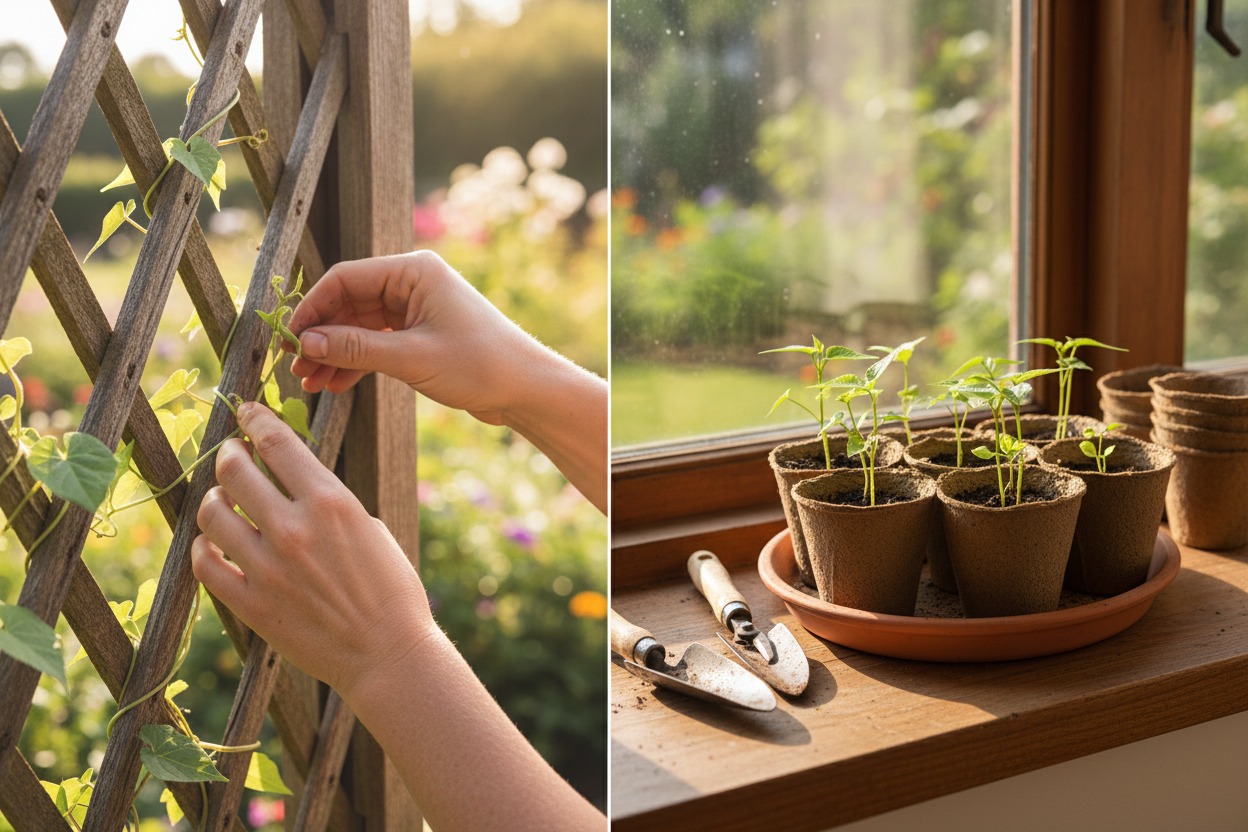
- If you want blooms earlier, start seeds indoors 4–6 weeks before your last frost date in biodegradable peat pots (morning glories resent root disturbance, so peat pots that go directly in the ground are ideal)
Step 3: Prepare the Seeds
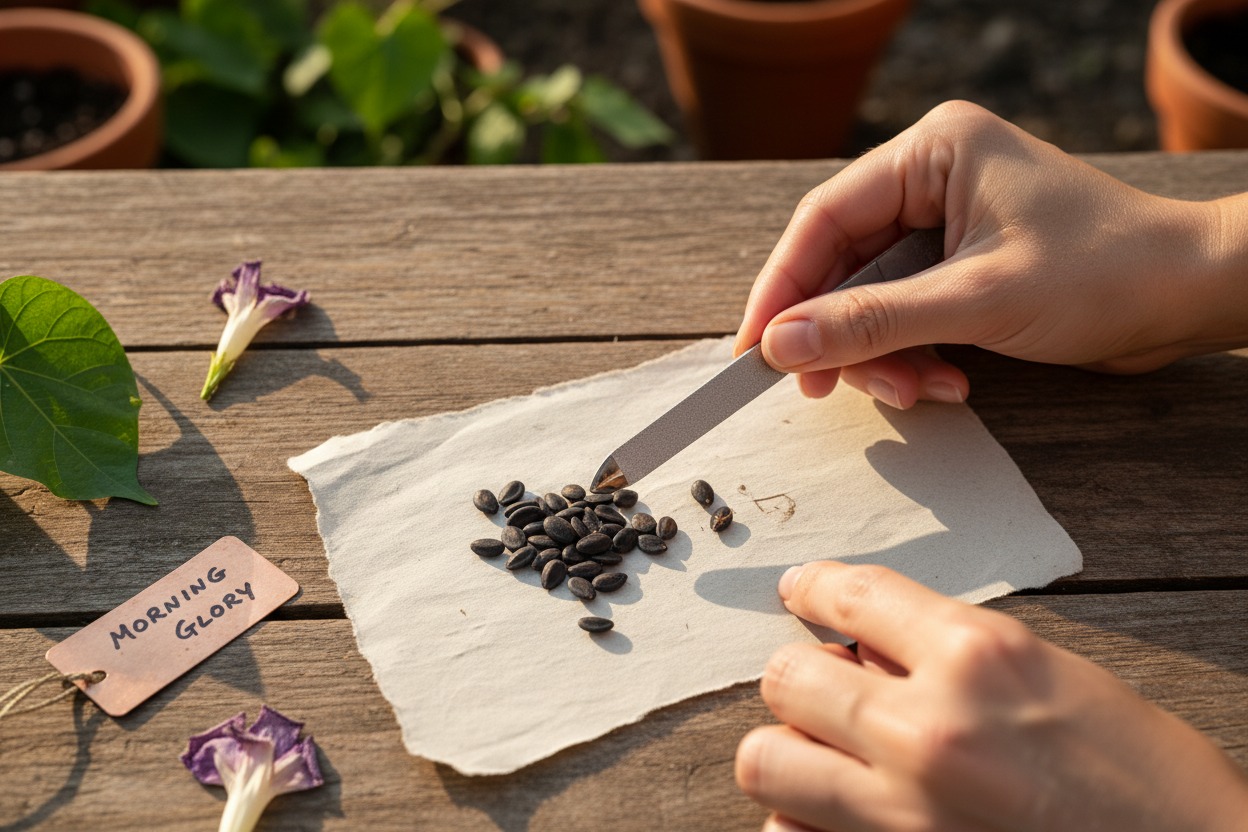
Morning glory seeds have a notoriously hard outer coat that can slow — or prevent — germination if you skip this step.
The two-step seed prep method:
- Nick the seeds — Use a nail file, sandpaper, or the tip of a knife to lightly scratch the surface of each seed
- Soak overnight — Place nicked seeds in a bowl of warm water for 12–24 hours before planting
This softens the shell and dramatically speeds up germination. Expect sprouts in 5–21 days after properly prepared seeds are planted.
Step 4: Plant the Seeds
- Sow seeds ½ inch deep in the soil
- Space seeds or seedlings 6 to 12 inches apart
- Plant directly at the base of your trellis, fence, or support structure — these vines need something to twine around from day one
- Water gently after planting and keep the soil consistently moist until seedlings are established
Step 5: Set Up Support Before You Plant
Don’t wait on this. Morning glories grow fast — sometimes visibly so from day to day — and they’ll twine around whatever is closest. Set up your trellis, fence, stakes, or wire support before you plant, not after. A sturdy support structure that’s at least 6 feet tall is recommended for most varieties.
Step 6: Water and Care Through the Season
Once established, morning glories are surprisingly low-maintenance:
- Water regularly until plants are established; mature plants tolerate some drought
- Fertilize sparingly — if at all, use a low-nitrogen formula (like 5-10-10) to encourage blooms over leaves
- Deadhead spent flowers if desired, though most varieties will continue blooming regardless
- Watch for self-seeding — if you don’t want volunteers next year, remove seed pods before they dry and split open in fall
Morning Glory Growing Conditions at a Glance
| Factor | Requirement |
|---|---|
| Sunlight | Full sun, 6–8 hours minimum |
| Soil | Moderately fertile, well-draining |
| Watering | Regular until established; drought-tolerant after |
| Fertilizer | Low-nitrogen or none; avoid over-fertilizing |
| Temperature | Optimal 70–80°F; minimum 60°F for germination |
| Support | Required — trellis, fence, or stake at least 6 ft tall |
| Spacing | 6–12 inches between plants |
| Germination | 5–21 days after seed preparation |
How Fast Do Morning Glories Grow?
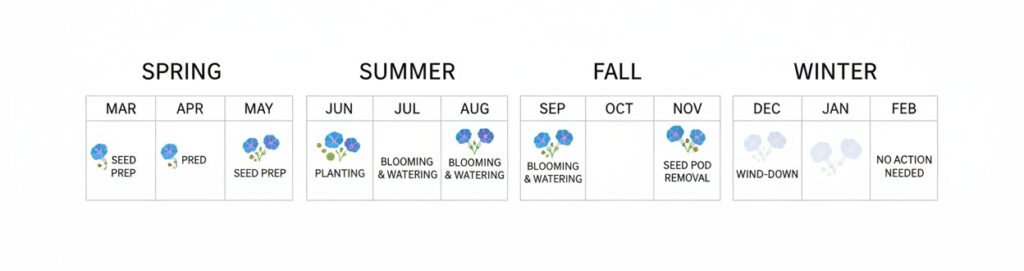
Fast enough to surprise you. Once germinated, morning glories enter a growth phase that seems almost aggressive. Depending on the variety and growing conditions, a single vine can reach 6 to 15 feet in one season.
The OSU Extension Service notes that some cultivars can grow up to 15 feet long, making them among the fastest-covering plants available to home gardeners. If you have an unsightly fence, a bare wall, or an ugly utility pole to hide, morning glories are your fastest solution.
They typically begin blooming by mid-summer when direct-seeded after the last frost. Those started indoors and transplanted earlier may begin flowering by early summer.
Morning Glory Pros and Cons
Before you commit to planting, here’s an honest look at what you’re getting into.
Pros
- Extremely fast-growing — covers fences, trellises, and arbors in one season.
- Low-maintenance once established
- Drought-tolerant after the first few weeks
- Pollinator magnet — attracts bees, butterflies, and hummingbirds
- Self-seeds for a potential return performance next year
- Huge variety of colors — blue, purple, magenta, red, white, bi-colored
- Inexpensive and easy to find at any garden center or online seed shop
Cons
- Short bloom window per flower — each bloom lasts only one day
- Flowers close by midafternoon on sunny days
- It can become invasive through aggressive self-seeding if not managed
- Seeds are toxic — keep away from children and pets
- Resent root disturbance — transplanting seedlings can be tricky
- Need full sun — won’t bloom well in shady spots
- Must be replanted annually in most climates
Expert Tips for Better Blooms
These are the insights that separate an average planting from a spectacular display.
Tip 1: Don’t over-amend your soil. Morning glories bloom best in relatively poor soil. Rich, heavily fertilized beds produce lush, beautiful vines with very few flowers. If your soil is already decent, skip the fertilizer entirely.
Tip 2: Nick AND soak your seeds. Many gardeners do one or the other. Doing both — nicking the hard coat, then soaking overnight — gives you significantly better germination rates and faster sprouting.
Tip 3: Plant in peat pots for indoor starts. Because morning glories dislike having their roots disturbed, transplanting seedlings from regular containers often sets them back. Biodegradable peat pots solve this — you plant the whole pot, and roots push through as the pot breaks down.
Tip 4: Train early. Young vines need a little direction. For the first week or two, gently guide tendrils toward your trellis or fence by hand. Once they get the idea, they’ll climb on their own.
Tip 5: Remove seed pods for next-year control. If you don’t want morning glories reappearing in random spots next spring, remove and discard seed pods in late fall before they split and scatter. If you want volunteers, let some pods dry and fall naturally.
Tip 6: Combine with moonflower for all-day blooms. Morning glory closes by early afternoon; moonflower (Ipomoea alba) opens at dusk. Planting them together on the same trellis gives you continuous blooms from sunrise to midnight.
Morning Glories and Pollinators
If you care about your local ecosystem — and most gardeners do — morning glories are one of the best plants you can add. Their trumpet-shaped blooms are perfectly suited for pollinators with long proboscises or beaks.
Regular visitors include:
- Bumblebees and honeybees — drawn to the nectar and bright color
- Monarch and swallowtail butterflies — morning glories are a common nectar source during migration
- Hummingbirds — especially attracted to the red and coral varieties like Cardinal Climber
Planting morning glories isn’t just an aesthetic choice. It’s a contribution to local pollinator populations, which are under significant pressure from habitat loss and pesticide use. The Xerces Society documents the value of flowering vines, such as morning glories, in supporting bee and butterfly populations.
Morning Glories as a Design Element
Beyond their ecological value, morning glories are one of the most versatile plants in the garden design toolkit.
Common uses include:
- Covering unsightly fences or walls — a chain-link fence becomes a flower wall within weeks
- Pergola and arbor decoration — morning glories will climb any overhead structure
- Container gardening — plant in a large pot with a central stake or trellis insert for a stunning patio display
- Hanging baskets — let vines trail downward for a cascading effect
- Privacy screens — a row of morning glories on a wire fence creates a dense, seasonal privacy barrier
- Cottage garden filler — their informal, sprawling nature suits cottage-style plantings perfectly
They work especially well planted alongside annual companions like zinnias, cosmos, and black-eyed Susans — all of which share similar care requirements and complement morning glory’s color range beautifully.
Potential Problems and How to Fix Them
My morning glories aren’t blooming.
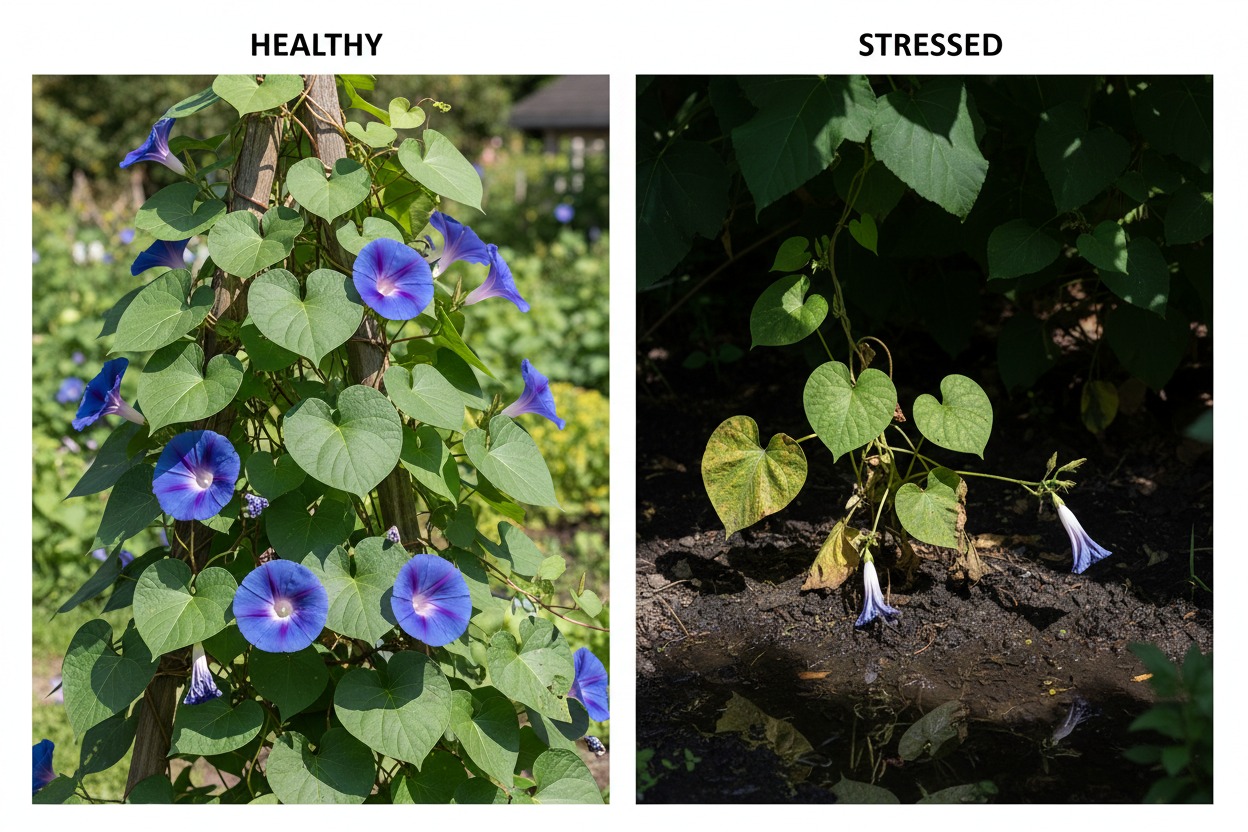
Almost always caused by one of three things: too much shade, too much fertilizer (especially nitrogen), or planting too early in cold soil. Move to a sunnier spot, skip the fertilizer, and make sure soil is consistently above 60°F before planting.
Leaves are yellowing
Overwatering or poor drainage. Morning glories prefer consistently moist soil but will develop root rot if waterlogged. Check that your planting area drains well.
Vines are growing but not climbing
They need thin supports to twine around — boards and wide walls won’t work. Provide wire, string, stakes, or mesh fencing. Guide the first few tendrils by hand, and they’ll take over from there.
I see small flowers and arrowhead-shaped leaves — is this morning glory?
Probably not — or at least not the garden variety. You may have field bindweed (Convolvulus arvensis), a perennial weed that shares the “morning glory” nickname. Its flowers are small and only white or pink; its leaves are arrow-shaped rather than heart-shaped. If you didn’t plant it, it’s most likely bindweed, and you’ll want to remove it promptly before it establishes deep roots.
Aphids on my plants
Small infestations can be knocked off with a strong stream of water. For persistent problems, insecticidal soap is effective and won’t harm pollinators once dry. Avoid broad-spectrum pesticides near morning glories since they’re heavily visited by bees and butterflies.
Safety Warning: Morning Glory Seeds Are Toxic
This deserves its own section because it’s genuinely important and often overlooked.
All parts of the morning glory plant are mildly toxic, but the seeds are the most dangerous — particularly in large quantities. The seeds of some species, especially Ipomoea tricolor, contain compounds chemically similar to lysergic acid (LSA). Ingestion can cause nausea, vomiting, diarrhea, and other symptoms.
Keep morning glory seeds away from children and pets. If you’re growing them in a household with curious toddlers, consider removing seed pods before they mature.
For more information on plant toxicity, the ASPCA Animal Poison Control Center maintains an updated database of toxic plants for pets.
Frequently Asked Questions
Do morning glories come back every year?
In USDA Zones 9–11, yes — morning glories are true perennials and return from their root system each spring. In Zones 2–8, they die with frost and must be replanted. However, they self-seed so prolifically that many gardeners see “volunteers” sprout from dropped seeds each spring, even in colder climates.
Are morning glories perennials or annuals?
They’re technically perennials in warm climates (Zones 9–11) and annuals in cooler climates (Zones 2–8). The most common garden varieties are treated as annuals by most home gardeners because they don’t survive winter frost.
How long does it take morning glories to bloom from seed?
Morning glories typically take 2½ to 4 months from seed to first bloom. Seeds started indoors 4–6 weeks before the last frost can begin blooming in early summer. Seeds direct-sown after the last frost usually begin blooming in mid to late summer.
Do morning glories need a trellis?
Yes. Morning glories are twining vines — they wrap their stems around structures to climb. Without support, they’ll sprawl along the ground. Provide a trellis, fence, wire, or stake at least 6 feet tall. The support needs to be thin enough for vines to wrap around; broad boards or walls won’t work without added wire or string.
Will morning glories take over my garden?
They can if left unchecked. Morning glories self-seed aggressively, and some varieties have been declared invasive in certain regions. To prevent this, remove seed pods before they dry and split open in fall. If you want controlled self-seeding, let a few pods fall naturally, but monitor the area in spring and remove unwanted seedlings early.
Final Thoughts: Are Morning Glories Right for Your Garden?
If you want fast, dramatic color, a vine that pollinators love, and a plant you can grow from seed with minimal gardening experience, morning glories deliver all of that and more.
Yes, they’re enthusiastic growers. Yes, they’ll self-seed if you let them. And yes, you’ll probably need to replant them each year unless you’re in a warmer climate. But the reward — a fence or trellis covered in vivid trumpet-shaped blooms from early summer to frost, opening fresh every single morning — is genuinely one of the more satisfying experiences in gardening.
Start with ‘Heavenly Blue’ if you’re a first-timer. Nick and soak your seeds. Give them full sun and a trellis to climb. Then step back and let them do what they do best.
Have you grown morning glories before? What’s your favorite variety — and did they come back on their own? Drop your story in the comments. Gardeners who’ve wrestled with these beautiful, willful vines always have the best stories.

