
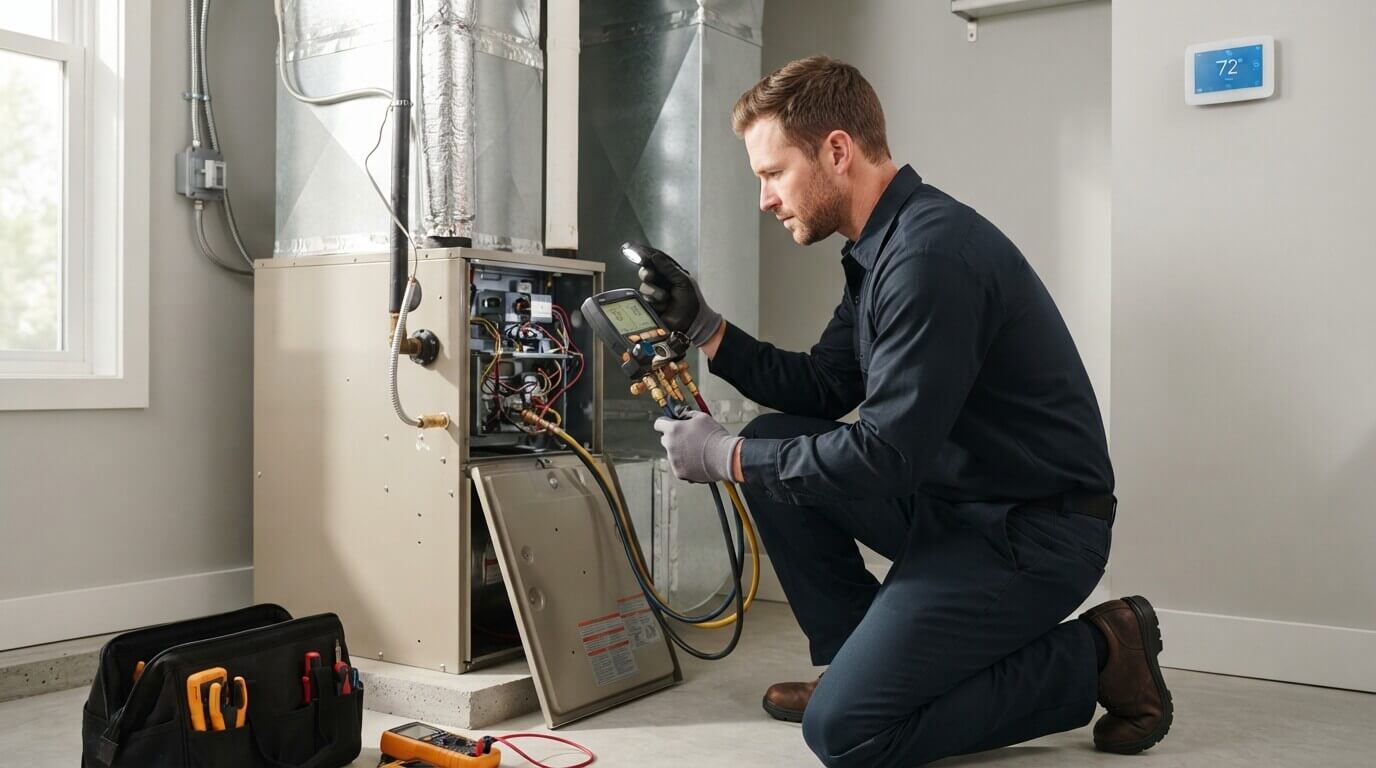
HVAC maintenance is increasingly important as challenging environmental conditions place greater stress on home comfort systems. Extreme heat, high humidity, and elevated pollen counts can reduce HVAC efficiency, increase energy consumption, and accelerate system wear. Understanding how these factors affect your HVAC system can help homeowners take proactive steps to maintain reliable performance, indoor comfort, and healthier air quality.
The difference between a good installation and a disappointing one often has less to do with the brand on the equipment and more to do with how the system is sized, installed, documented, and tested. Knowing what to ask before signing a contract can make it easier to compare contractors and avoid unexpected costs.
The load calculation is the whole ballgame
Ask any contractor who quotes a new system this question: “Did you run a Manual J load calculation?”
A Manual J is the industry-standard calculation used to determine what size heating and cooling system a house actually needs. It considers factors such as square footage, ceiling height, window area and orientation, insulation levels, duct location, and local design temperatures. A proper calculation takes more than simply looking at the existing equipment.
Some companies may instead look at the old unit, read the tonnage from the data plate, and recommend the same size. That approach does not account for changes to the home or whether the previous system was correctly sized in the first place.
An oversized system is not necessarily more powerful in a useful way. It can satisfy the thermostat quickly, shut off, and fail to run long enough to distribute air evenly or remove sufficient moisture. This can contribute to uneven temperatures, humidity problems, and unnecessary wear on components.
If a contractor cannot explain how the recommended system size was determined, ask for more information before accepting the quote.
Get the scope in writing, not just the price
Two quotes that both say “new 4-ton system — $14,500” can describe completely different jobs. One may include a new line set, equipment pad, duct transition modifications, properly sized return air, thermostat, permits, and disposal of the old equipment. Another may include only equipment and basic labor, with additional work appearing later as a change order.
Before you compare numbers, ask each contractor to put the complete scope in writing:
- What equipment is being installed, including model numbers for the outdoor unit, indoor unit, and coil
- Whether the line set is being replaced or reused
- What is happening to the ductwork, plenum, and return-air system
- Whether a permit is required and who will arrange the inspection
- What thermostat, condensate, electrical, and related work is included
- What the parts and labor warranties cover and how long they last
- Whether disposal and haul-away of the old equipment are included
Once the scope is documented, the prices become easier to compare. Without that information, two apparently similar quotes may actually represent very different installations.
Permits are not optional, and skipping them is a warning sign
Permit requirements vary by jurisdiction, but HVAC system replacements commonly involve permits and inspections. A contractor may be tempted to skip the process because it adds a fee and another scheduling step, but homeowners should understand what they may lose by allowing permitted work to be avoided.
An unpermitted installation can create complications during a future home sale, potentially causing delays when work needs to be documented. It can also create questions about whether important parts of the installation were properly inspected.
Depending on the system, an inspection may involve items such as electrical connections, gas lines, venting, condensate drainage, or other components. The exact requirements depend on local building and mechanical codes.
Before work begins, ask whether a permit is required in the area and who is responsible for obtaining it. A clear answer is preferable to discovering later that required paperwork was never completed.
Watch how a company behaves on a repair call
An HVAC diagnostics and repair visit can reveal a great deal about how an HVAC company approaches its work. It also gives homeowners an opportunity to evaluate communication and diagnostic practices before committing to a major replacement.
Good signs
- The technician diagnoses the problem before recommending a solution and explains what was found
- Repair and replacement are discussed separately when both options are reasonable
- The diagnostic fee is disclosed before the appointment
- The repair price is clearly explained rather than immediately shifting the conversation toward monthly payments for a new system
Warning signs
- A major component is declared defective without showing evidence or explaining the diagnostic process
- A repair is dismissed solely because the system is considered old
- A quote is presented as urgent or available only for a very short period
- A replacement quote is presented before the existing problem has been properly diagnosed
Age alone does not determine whether a system should be repaired or replaced. A fifteen-year-old furnace with a failed inducer motor may present a very different situation from a twelve-year-old furnace with a confirmed cracked heat exchanger. The cost of the repair, remaining equipment life, efficiency, safety, and overall condition should all be considered.
Having a reliable furnace repair cost guide available can also help homeowners understand typical repair categories and ask more informed questions during a service visit.
Brand matters less than you may think
HVAC manufacturers offer equipment at different price and performance levels, but the brand name alone does not determine how well a system will perform over its lifetime. Installation quality and system design can have a significant effect on performance.
Important factors include:
- Correct equipment sizing
- Correct refrigerant charge measured according to manufacturer specifications
- Adequate return air and properly sized ductwork
- Properly sealed duct connections
- A commissioning process that verifies airflow, temperature performance, and other installation requirements
A carefully installed mid-range system can perform better than a premium system that was improperly sized or installed.
For homeowners comparing brands, it is more useful to examine measurable specifications such as efficiency ratings, equipment features, warranty terms, and compatibility with the home’s existing ductwork than to rely solely on brand reputation.
It is also normal for HVAC companies to specialize in a limited number of manufacturers. Ask which brands a contractor regularly installs and which ones the company only services. This can provide a clearer picture of the contractor’s actual experience with the equipment being proposed.
Check the license, then check the reviews the right way
Before hiring an HVAC contractor, verify the company’s license with the appropriate state or local licensing authority. In California, for example, homeowners can use the Contractors State License Board to check licensing information and review details such as classification, bond status, and workers’ compensation information where applicable.
Reviews can also provide useful information, but they are most helpful when read critically. Five-star reviews can show that customers were satisfied, while one-star reviews may involve circumstances that are difficult to evaluate from a short review alone.
Three- and four-star reviews can sometimes provide more useful details about how a company responds when something goes wrong. Look for recurring patterns involving communication, scheduling, workmanship, warranty service, and how complaints were handled.
The goal is not to find a contractor with no negative reviews. It is to understand whether there are consistent patterns that should be discussed before hiring.
The questions to ask on the phone
A few straightforward questions can make the initial screening process much easier. Ask every company being considered:
- Are you licensed, bonded, and insured, and what is your license number?
- Will you perform a Manual J load calculation before recommending a system?
- Will you obtain any required permits and arrange the inspection?
- What exactly is included in the quote?
- What does the labor warranty cover, and who handles warranty service?
- Which brands do you regularly install, and which do you only service?
- If the existing system can be repaired, will the repair be diagnosed and priced before replacement is recommended?
The answers can help homeowners identify differences between contractors and understand the value of seasonal maintenance before spending thousands of dollars. It can also help to know what to look for in an HVAC installer and how to evaluate the HVAC installation cost in Sacramento when comparing quotes. A clear, detailed response is generally more useful than a vague promise that everything will be handled.
The Bottom Line
Choosing an HVAC contractor does not have to be based entirely on brand names or the lowest initial quote. A better starting point is understanding how the system will be sized, what the installation includes, whether required permits will be obtained, and how the contractor approaches diagnosis and repairs.
Ask for the sizing information, get the complete scope in writing, verify the license, review the warranty terms, and pay attention to how questions are answered before signing a contract. Taking those steps can make it easier to compare HVAC companies and reduce the risk of unexpected costs during or after the installation.

