
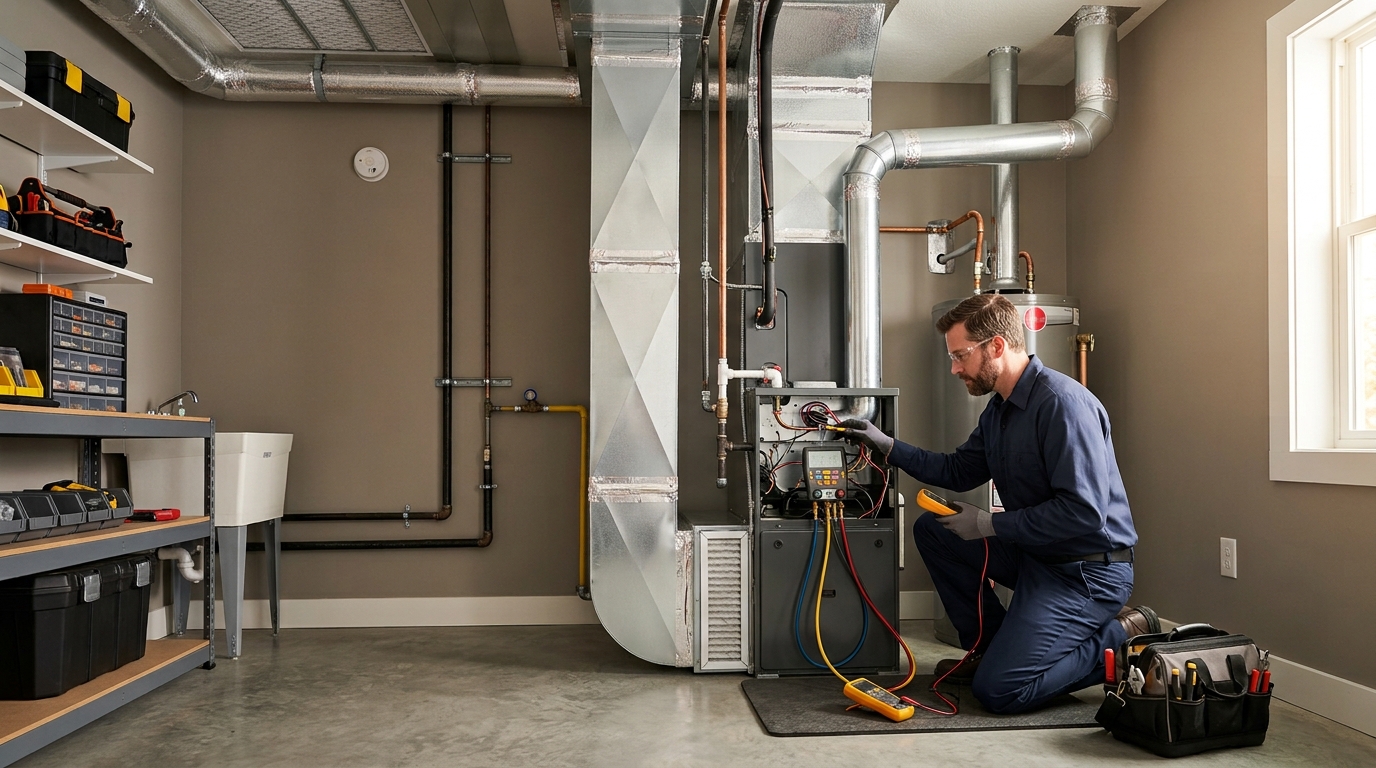
When your furnace unexpectedly stops working, it creates immediate discomfort and worry. Understanding HVAC diagnostics and repair can help homeowners identify the real cause of heating problems, avoid unnecessary replacements, and protect the long-term performance of their systems. Homeowners need not only prompt service but also affordable repair solutions. The stress of a cold home, coupled with concern about unexpected costs, can be overwhelming. The key to effective and truly affordable furnace repair starts with accurate diagnostics.
This comprehensive guide will help you understand common furnace issues and their solutions. We will explore typical repair costs, essential signs that indicate a problem, and how to decide between repairing and replacing your unit. We will also share valuable DIY troubleshooting steps, tips for choosing a reliable local HVAC company, and the long-term benefits of regular maintenance. Our goal is to empower you with the knowledge to make informed decisions about your home’s heating system.
A furnace is a complex system, and when it malfunctions, identifying the root cause quickly and accurately is paramount. In Frisco, TX, where winter temperatures can drop significantly, a reliable heating system isn’t just about comfort—it’s about safety and peace of mind. Precision diagnostics are the foundation of any effective and affordable repair, preventing unnecessary part replacements and ensuring that the actual problem is addressed.
Precision HVAC Diagnostics and Repair for Common Furnace Failures
Many furnace issues stem from a handful of common component failures. Understanding these, and how professional technicians approach them, can shed light on the importance of expert diagnostic work.
- Flame Sensors: A dirty or faulty flame sensor is a frequent culprit when a furnace isn’t producing heat. This small rod detects the presence of a flame, signaling to the furnace that it’s safe to continue operating. If it’s caked with soot, it might fail to detect a flame, causing the furnace to shut down as a safety measure. Cleaning or replacing this component is often a straightforward fix, but requires careful handling.
- Hot-Surface Ignitors: Modern furnaces typically use a hot-surface ignitor to light the gas burner. If this ceramic component cracks or burns out, the furnace won’t be able to ignite, leading to no heat. Diagnosing a failing ignitor involves testing its electrical resistance and visual inspection.
- Run Capacitors: For furnaces with a blower motor, a run capacitor provides the necessary electrical boost to start and keep the motor running efficiently. When a capacitor weakens or fails, the blower motor might struggle to start, hum loudly without spinning, or simply not operate at all. This can lead to issues like weak airflow or the furnace overheating due to lack of air circulation.
- Blower Motors: The blower motor is responsible for circulating heated air throughout your home. A failing motor can result in insufficient airflow, uneven heating, or unusual noises. Diagnosing a blower motor issue involves checking its electrical connections, power supply, and the motor itself for signs of wear or damage.
- Short Cycling: When a furnace turns on and off too frequently, it’s known as short cycling. This can be caused by a variety of issues, including a clogged air filter, an improperly sized furnace, a malfunctioning thermostat, or problems with the flame sensor or limit switch. Pinpointing the exact cause of short cycling requires a thorough diagnostic process, as the symptoms can overlap.
For all these issues, the initial diagnostic visit is crucial. While smaller repairs like cleaning a flame sensor or replacing a capacitor can fall into a moderate cost range, more complex issues like a faulty ignitor or a struggling blower motor can involve higher expenses. A professional technician’s ability to perform accurate diagnostics ensures that you’re paying for the right solution, not a series of educated guesses. Without this precision, homeowners risk paying for repairs that don’t solve the underlying problem, leading to recurring issues and escalating costs.
Cost Implications of Misdiagnosis vs. Targeted Troubleshooting
The financial impact of a furnace repair extends beyond the immediate service fee. A misdiagnosis can lead to significant and avoidable costs for homeowners in Frisco, TX. When a technician fails to correctly identify the root cause of a furnace problem, it can result in:
- Unnecessary Component Replacement: Imagine replacing an expensive part, only to find the original problem persists because a simpler, underlying issue was missed. This adds to your repair bill without providing a lasting solution.
- Secondary Damage: A problem left unaddressed or improperly fixed can lead to a cascade of failures. For example, a minor electrical issue that isn’t properly diagnosed could eventually lead to damage to the control board or other critical components, turning a relatively simple fix into a much more expensive repair.
- Repeated Service Calls: If the initial repair doesn’t resolve the issue, you’ll likely face additional service calls, each incurring diagnostic fees and potentially more repair costs. This cycle of troubleshooting can quickly erode the “affordability” aspect of your furnace repair.
Targeted troubleshooting, on the other hand, begins with a comprehensive diagnostic process. This typically includes:
- Electrical Testing: Technicians use specialized tools to check voltage, amperage, and continuity across various electrical components, including the thermostat, control board, and motor windings. This helps identify shorts, open circuits, or power supply issues.
- Component Inspection: A visual inspection of all major components—burners, heat exchanger, blower, wiring, and ductwork—can reveal obvious signs of wear, corrosion, or damage.
- Performance Evaluation: Monitoring the furnace’s operation cycle, temperature differentials, and airflow helps confirm if the system is meeting its intended performance specifications.
A thorough diagnostic visit, even with an initial fee, is an investment in identifying the correct solution from the start. This approach ensures that any recommended repairs are truly necessary and will effectively resolve the issue, ultimately saving you money and frustration in the long run. The average repair cost for furnaces in North Texas generally falls within a moderate range for many common issues, but this average relies heavily on accurate problem identification. Without it, costs can quickly escalate beyond what’s considered typical.
Key Signs That Warrant Professional System Evaluation
Recognizing the early warning signs of a furnace problem can be crucial for preventing minor issues from escalating into major, costly repairs. As homeowners in Frisco, TX, we should be attuned to our heating systems, especially as the colder months of late 2026 approach. Prompt action based on these indicators can save both discomfort and expense.
Identifying Electrical and Mechanical Warning Signs
Your furnace often communicates its distress through various sensory cues. Paying attention to these can help you determine when it’s time to call a professional.
- Delayed Ignition: When you hear a “whoosh” sound several seconds after the furnace kicks on, it could indicate delayed ignition. This happens when gas builds up before igniting, which can be dangerous and stressful for the furnace’s components. It often points to issues with the ignitor or gas valve.
- Popping Noises: While some operational noises are normal, loud popping or banging sounds are not. These can result from expanding and contracting ductwork, but more seriously, they could indicate issues within the furnace itself, such as a dirty burner or a failing heat exchanger. A professional evaluation is essential to rule out safety hazards.
- Weak Airflow: If you notice that the air coming from your vents isn’t as strong as it used to be, or if some rooms are significantly colder than others, it could be a sign of weak airflow. This might be due to a clogged air filter, issues with the blower motor or fan, or blockages in the ductwork. Reduced airflow not only compromises comfort but also forces your furnace to work harder, increasing energy consumption and wear.
- Yellow Burner Flame: When your furnace is operating correctly, the burner flame should typically be a steady blue. A yellow or orange flame, especially if it’s flickering, is a critical warning sign. This often indicates incomplete combustion, which can produce carbon monoxide—a colorless, odorless, and highly toxic gas. If you observe a yellow flame, it’s imperative to shut off your furnace and contact an HVAC professional immediately for a safety inspection.
- Temperature Fluctuations: If your home’s temperature swings wildly, or if the furnace struggles to maintain the thermostat setting, it may indicate problems affecting overall heating performance. This could be due to a faulty thermostat, a malfunctioning limit switch, or issues with the furnace’s heating elements. Consistent temperature fluctuations not only impact comfort but also signal inefficiency and potential component stress.
Safe Homeowner Checks Prior to Calling a Technician
Before reaching out for professional help, there are several simple, safe troubleshooting steps you can take. These checks can sometimes resolve minor issues, saving you a service call, or at least provide valuable information to the technician.
- Thermostat Settings: Double-check that your thermostat is set to “heat” and that the temperature setting is above the current room temperature. Ensure the fan setting is on “auto” unless you specifically want continuous airflow. A low battery in a digital thermostat can also cause issues.
- Air Filters: A clogged air filter is one of the most common causes of furnace problems, leading to reduced airflow, overheating, and decreased efficiency. Inspect your filter and replace it if it’s dirty. We recommend checking filters monthly, especially during peak heating season.
- Switch Positions: Locate the power switch for your furnace (often found on or near the unit, resembling a light switch) and ensure it’s in the “ON” position. Also, check the emergency shut-off switch, which might be located at the top of your basement stairs or in a utility closet.
- Circuit Breakers: A tripped circuit breaker can cut power to your furnace. Go to your electrical panel and look for any tripped breakers (usually halfway between “ON” and “OFF”). Reset any that are tripped. If the breaker trips again immediately, do not continue resetting it, as this indicates an electrical problem that requires professional attention.
- Gas Supply: For gas furnaces, ensure the gas valve leading to the furnace is fully open. If other gas appliances in your home are working, then the main gas supply is likely fine.
Here is a list of basic pre-service troubleshooting steps:
- Verify thermostat is set to “Heat” and desired temperature.
- Check and replace dirty air filters.
- Confirm furnace power switch is “ON.”
- Inspect and reset tripped circuit breakers.
- Ensure gas supply valve to furnace is open.
- Listen for unusual noises or smells.
- Note any error codes displayed on the furnace.
By performing these checks, you can often resolve simple issues or provide the technician with a clearer picture of the problem, potentially streamlining the diagnostic process and ensuring more affordable furnace repair in Frisco, TX.
Repair vs. Replace: Navigating the 50% Rule and Equipment Age
One of the most significant decisions homeowners face regarding their furnace is whether to repair a failing unit or consider HVAC system replacement. This choice has substantial financial implications and impacts long-term comfort and energy efficiency. In Frisco, TX, where heating is essential for several months of the year, making an informed decision is critical.
Applying the Age and Cost Matrix to HVAC Diagnostics and Repair
The decision to repair or replace often hinges on two primary factors: the age of your furnace and the estimated cost of repairs relative to a new system.
- System Lifespan: Furnaces in North Texas typically last between 15 to 20 years with proper maintenance. Without consistent annual tune-ups, this lifespan can significantly decrease, often falling into the 12 to 15-year range. As a furnace approaches or exceeds its expected lifespan, the likelihood of needing frequent and expensive repairs increases. An older unit is also likely to be less energy-efficient than modern models, leading to higher utility bills.
- The 50% Rule: A common guideline used by HVAC professionals is the “50% rule.” This suggests that if the cost of a repair is 50% or more of the cost of a new furnace installation, replacement is generally the more cost-effective option. For example, if a new furnace installation typically falls within a certain range, and your repair estimate is approaching half of that amount, it’s wise to consider replacement. This rule helps homeowners avoid pouring money into an aging system that will likely face other expensive repairs soon.
- Operating Efficiency: Older furnaces, even if working, are often much less efficient than newer models. They may have lower AFUE (Annual Fuel Utilization Efficiency) ratings, meaning a larger percentage of the fuel they consume is wasted. Replacing an inefficient, aging furnace with a high-efficiency model can lead to substantial energy savings over time, offsetting a portion of the initial replacement cost.
- Cumulative Costs: Consider the cumulative cost of repairs over the past few years. If you’ve been consistently spending significant amounts on repairs, these costs can quickly add up, potentially surpassing the investment in a new, reliable system.
Here’s a simplified table illustrating the repair vs. replacement cost thresholds:
Furnace Age (Years) Repair Cost vs. New Unit Cost Recommendation Less than 10 Below 25% Repair 10-15 25% – 50% Evaluate Over 15 Above 50% Replace This matrix provides a general framework, but a professional technician can offer a more tailored recommendation based on the specific condition of your unit and your long-term heating needs.
Long-Term Value of Preventive Diagnostic Maintenance
While we often focus on repairs when something breaks, the true secret to long-term furnace affordability and reliability lies in consistent residential HVAC maintenance. Just like regular oil changes for your car, annual furnace tune-ups are an investment that pays dividends.
- Annual Tune-ups: Scheduling professional maintenance each fall (or late summer, in anticipation of the cooler Frisco, TX weather) ensures that your furnace is thoroughly inspected, cleaned, and calibrated. This includes checking electrical connections, lubricating moving parts, inspecting the burner, and testing safety controls.
- Heat Exchanger Integrity: During maintenance, technicians pay close attention to the heat exchanger. This critical component separates combustion gases from the breathable air in your home. Cracks in the heat exchanger can be a serious safety hazard, potentially allowing carbon monoxide to leak into your living space. Early detection of any issues can prevent dangerous situations and costly emergency repairs.
- Safety Controls: Furnaces are equipped with various safety controls, such as the limit switch and flame sensor, which prevent overheating and gas leaks. Regular maintenance ensures these controls are functioning correctly, providing peace of mind and protecting your home.
- Energy Savings: A well-maintained furnace operates more efficiently, consuming less energy to produce the same amount of heat. This translates directly into lower monthly utility bills. Over the years, these energy savings can significantly offset the cost of annual maintenance.
- Extended Lifespan: Furnaces that receive consistent annual maintenance can often exceed their average lifespan, sometimes lasting 18 to 22 years. This is a considerable advantage compared to units that receive no maintenance, which may only last 12 to 15 years. Extending the life of your furnace delays the significant expense of a full replacement.
By investing in preventive diagnostic maintenance, homeowners in Frisco, TX, can proactively address minor issues before they become major breakdowns, ensure the safe operation of their system, reduce energy consumption, and ultimately achieve greater long-term affordability and reliability for their home heating.
Frequently Asked Questions About HVAC Diagnostics and Repair
When facing furnace issues, homeowners often have many questions about the process, costs, and best course of action. Here, we address some of the most common inquiries to help you navigate furnace repair and maintenance in Frisco, TX.
What does a standard HVAC diagnostic service call include?
A standard HVAC diagnostic service call in Frisco, TX, is designed to thoroughly assess your furnace’s condition, identify the root cause of any problems, and provide a clear path forward. While specific inclusions can vary slightly by provider, a reputable service call typically involves:
- Initial System Check: The technician will first gather information from you about the symptoms you’re experiencing and the history of your furnace.
- Visual Inspection: A comprehensive visual inspection of the entire furnace unit, including the burners, heat exchanger, blower assembly, wiring, and duct connections, looking for obvious signs of wear, damage, or corrosion.
- Electrical Testing: Using specialized tools, the technician will test key electrical components such as the thermostat wiring, control board, capacitors, and motors to ensure proper voltage, amperage, and continuity.
- Airflow Measurement: Checking the airflow across the system to ensure it’s adequate and balanced, which can indicate issues with the blower, filter, or ductwork.
- Safety Controls Check: Verifying that all safety mechanisms, including the flame sensor, limit switch, and pressure switch, are functioning correctly to prevent dangerous operation.
- Operational Cycle Observation: The technician will often run the furnace through a full cycle to observe its performance, listen for unusual noises, and confirm proper ignition and heating.
- Written Estimate: After diagnosing the problem, the technician will provide a detailed explanation of the issue and a written estimate for the necessary repairs, outlining parts and labor.
This diagnostic visit is crucial for accurate problem identification and forms the basis for any subsequent repairs, ensuring that the work performed is targeted and effective.
How do I know if a heating system should be repaired or replaced?
Deciding whether to repair or replace your heating system is a significant financial and comfort decision. We recommend considering several factors:
- Equipment Age: As discussed, furnaces typically last 15-20 years with proper maintenance. If your furnace is approaching or has exceeded this age, replacement often makes more sense, even for moderate repairs. An older unit is more prone to breakdowns and will likely be less energy-efficient.
- Repair Frequency: If your furnace requires frequent repairs, especially multiple times within a single heating season, the cumulative cost can quickly add up. At some point, these recurring expenses will outweigh the investment in a new, reliable system.
- Replacement Cost Threshold: Apply the “50% rule.” If the estimated repair cost is 50% or more of the cost of a new furnace installation, replacement is usually the more economical choice in the long run. New furnace installations, including the unit and labor, generally represent a substantial investment, so comparing repair costs to this benchmark is vital.
- Heating Performance: Are you experiencing uneven heating, cold spots, or a general lack of comfort throughout your home, even after repairs? This could indicate that the furnace is no longer adequately sized or capable of meeting your home’s heating demands.
- Energy Efficiency: Older furnaces are typically far less energy-efficient than modern high-efficiency models. If your utility bills have been steadily increasing, a new furnace could offer significant energy savings that help offset the upfront cost over its lifespan.
A reputable HVAC professional can provide an objective assessment, helping you weigh these factors and make the best decision for your Frisco, TX home and budget.
Can regular diagnostic maintenance prevent emergency heating breakdowns?
Absolutely. Regular diagnostic maintenance is one of the most effective strategies for preventing unexpected and often costly emergency heating breakdowns. Here’s why:
- Early Detection: During an annual tune-up, technicians perform a thorough inspection and diagnostic checks. This allows them to identify minor issues—like a loose wire, a slightly corroded terminal, or a weakening capacitor—before they escalate into major failures. Addressing these small problems proactively prevents them from causing a complete system shutdown during the coldest part of the year.
- Component Wear: Maintenance includes cleaning and lubricating moving parts, which reduces friction and wear. It also involves checking for signs of stress or fatigue on critical components. By mitigating wear and tear, maintenance helps extend the life of individual parts and the furnace as a whole.
- Efficiency Retention: A well-maintained furnace operates at its peak efficiency. This not only saves you money on energy bills but also reduces the strain on the system. When a furnace runs efficiently, its components are less likely to overheat or fail prematurely.
- Extended Lifespan: As mentioned earlier, furnaces that receive consistent annual maintenance tend to last significantly longer—often 18-22 years—compared to those that are neglected. This means you get more years of reliable service from your investment, delaying the need for a costly replacement.
- Safety Assurance: Maintenance checks ensure that safety controls are functioning properly, reducing the risk of dangerous situations like carbon monoxide leaks or electrical fires.
While no amount of maintenance can guarantee a furnace will never break down, it dramatically reduces the likelihood of emergency situations. For homeowners in Frisco, TX, investing in annual diagnostic maintenance is a smart, proactive approach to ensuring reliable heating, maximizing efficiency, and avoiding the inconvenience and expense of unexpected repairs during peak demand times.
Conclusion
Navigating furnace repair in Frisco, TX, can seem daunting, but with the right knowledge and a proactive approach, homeowners can ensure their heating systems remain reliable and affordable. We’ve explored the critical role of precision troubleshooting, emphasizing that accurate diagnostics are the cornerstone of effective and economical repairs. From identifying common component failures like flame sensors and ignitors to understanding the significant cost implications of misdiagnosis, it’s clear that expert evaluation is invaluable.
We’ve also highlighted the key signs that warrant professional attention, such as delayed ignition, yellow flames, and weak airflow, while empowering you with safe DIY troubleshooting steps to take before calling a technician. The decision to repair or replace your furnace is a weighty one, and by applying the “50% rule” and considering your unit’s age and operating efficiency, you can make an informed choice that benefits your comfort and your wallet in the long term.
The most effective strategy for long-term reliability and affordability is preventative care, including seasonal furnace maintenance to identify developing problems before they become costly breakdowns. Regular diagnostic maintenance not only extends your furnace’s lifespan and retains its energy efficiency but also significantly reduces the risk of inconvenient and expensive emergency breakdowns. By prioritizing precision troubleshooting, understanding your system’s needs, and committing to preventative care, homeowners in Frisco, TX, can enjoy consistent warmth, energy savings, and peace of mind for many heating seasons to come.

