
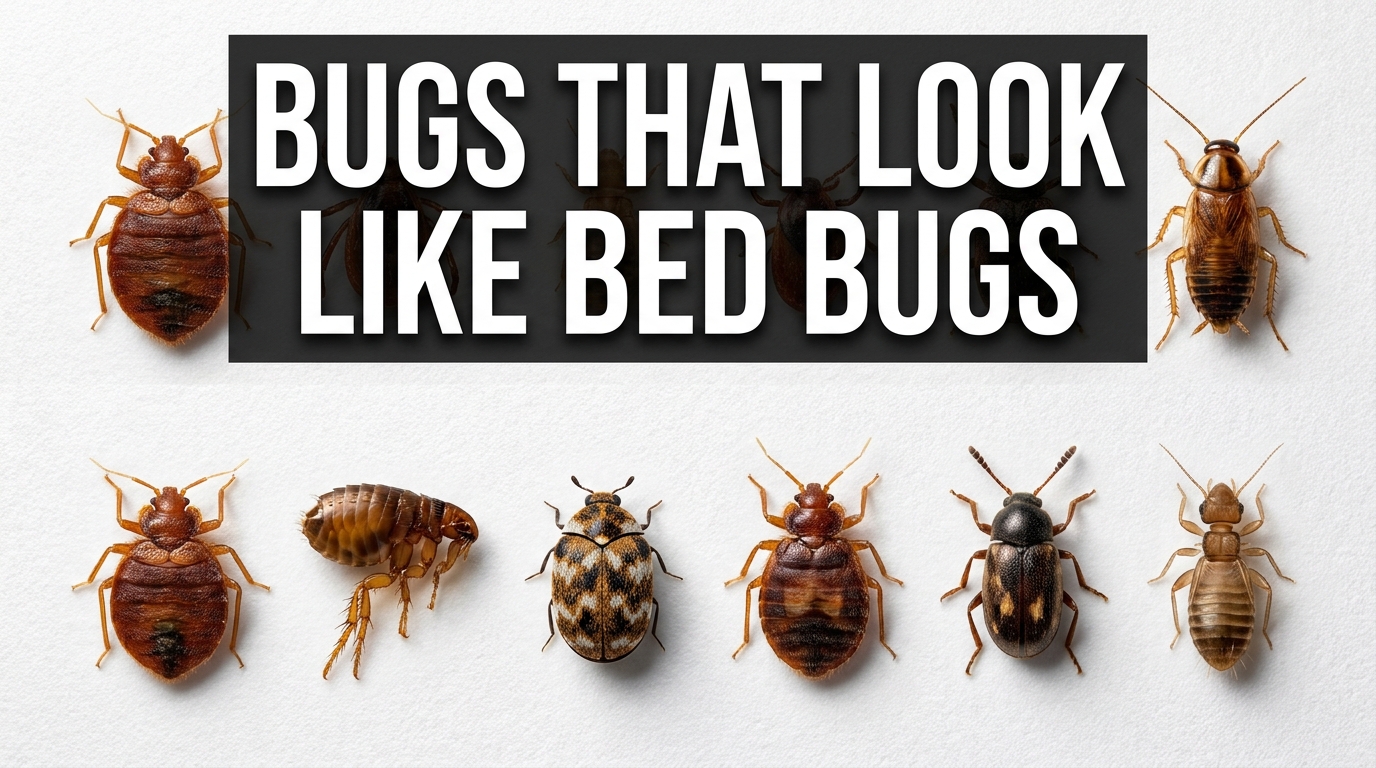
You flip back your mattress cover, spot a tiny reddish-brown bug, and your stomach drops.
Is that a bed bug?
Before you call an exterminator or throw out your mattress, stop. There are dozens of bugs that look like bed bugs — and misidentifying them is one of the most expensive mistakes homeowners make. According to pest control industry research via the National Pest Management Association (NPMA), bed bug treatments can cost anywhere from $300 to over $1,500 per room. Treating the wrong pest wastes that entire budget.
This guide breaks down every insect that resembles a bed bug — with real identification tips, comparison tables, and expert-backed guidance — so you can know exactly what you’re dealing with before making a single call.
What Does a Bed Bug Actually Look Like?
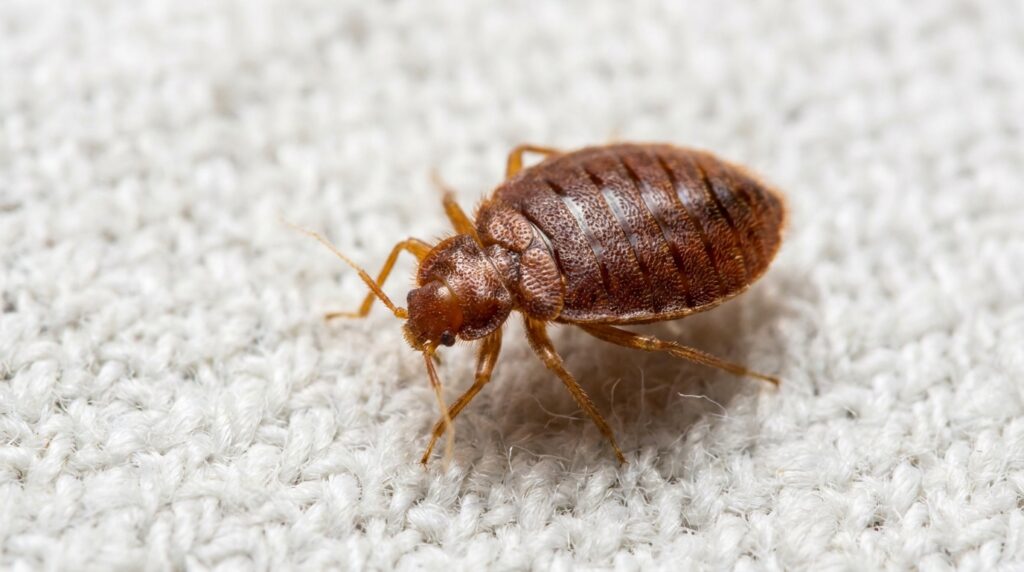
Before you can identify bed bug look-alikes, you need a crystal-clear picture of the real thing.
Adult bed bugs (Cimex lectularius) have a very specific set of characteristics that set them apart:
| Feature | Bed Bug Description |
|---|---|
| Size | 1–7 mm (about the size of an apple seed when adult) |
| Shape | Oval, flat when unfed; balloon-like after feeding |
| Color | Reddish-brown (darker after a blood meal) |
| Legs | 6 legs |
| Wings | None — bed bugs cannot fly |
| Antennae | Short, 4-segmented |
| Odor | Musty, sweet-smelling when disturbed |
| Movement | Crawl; do not jump or fly |
Nymphs (baby bed bugs) are much harder to spot — they start translucent or whitish-yellow and are only about 1.5 mm in size. They turn reddish-brown after their first blood meal.
One critical detail most people miss: bed bugs leave signs, not just bites. Look for dark rust-colored fecal spots on your sheets, shed exoskeletons near mattress seams, and tiny white eggs (about 1 mm) in crevices.
Why Misidentification Is So Common
Here’s the uncomfortable truth: even pest professionals sometimes need a magnifying glass and field guide to make a confident call on sight alone.
Most bugs that resemble bed bugs share similar traits:
- Small body (1–5 mm)
- Brown or reddish-brown coloring
- Oval or flat body shape
- Found in or near sleeping areas
The problem is that people often find one bug, panic, and assume the worst. According to a study published in the Journal of Medical Entomology, misidentification of bed bugs is documented even among healthcare professionals, leading to unnecessary chemical treatments.
Panic leads to expensive, sometimes toxic mistakes. Knowing your bugs is the first line of defense.
15 Bugs That Look Like Bed Bugs (With How to Tell Them Apart)
1. Bat Bugs (Cimex adjunctus)
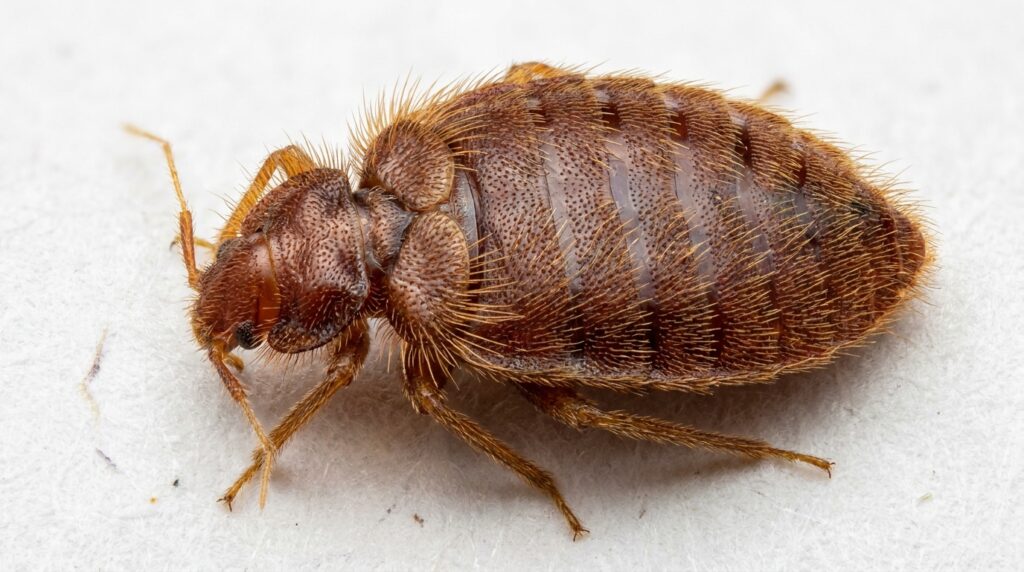
If there’s one bug that could be mistaken for a bed bug by even a trained eye, it’s the bat bug.
Bat bugs are nearly identical to bed bugs in size, color, and shape. The only reliable physical difference? The hairs (called cilia) on their pronotum (the area just behind the head) are longer than a bed bug’s. You literally need a magnifying glass to see this.
Key difference: Bat bugs primarily feed on bats. They only bite humans when their bat host colony has been removed or disturbed — usually found in attics, chimneys, or wall voids. If you’re seeing bugs that look like bed bugs and you’ve had bats in your home, that’s your first big clue.
What to do: Have a pest professional identify the species AND locate any bat roost. Treating bed bugs when you actually have bat bugs will fail completely.
2. Fleas (Siphonaptera)
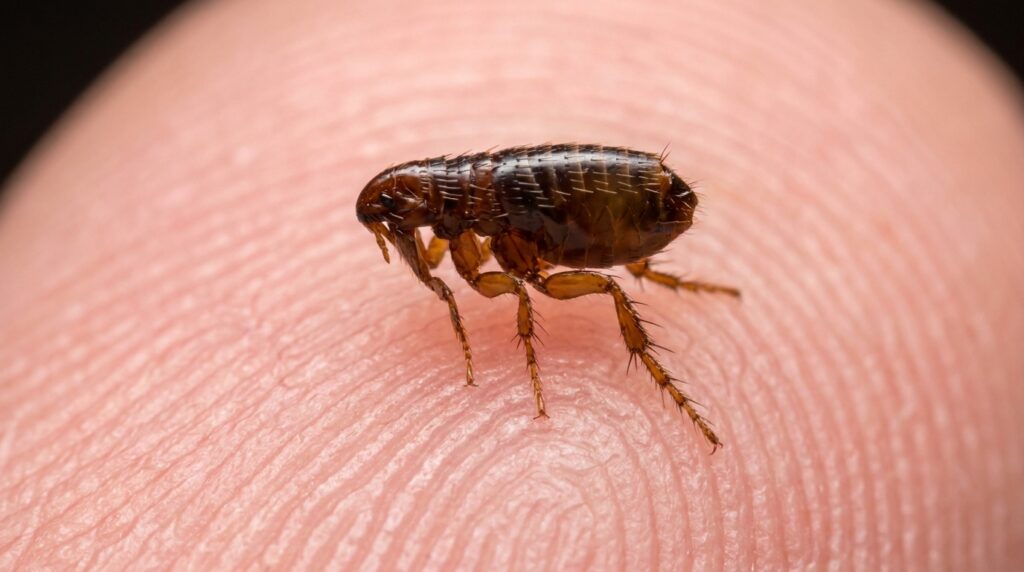
Flea bugs that look like bed bugs are one of the most common cases of misidentification — especially in homes with pets.
Here’s how to tell them apart quickly:
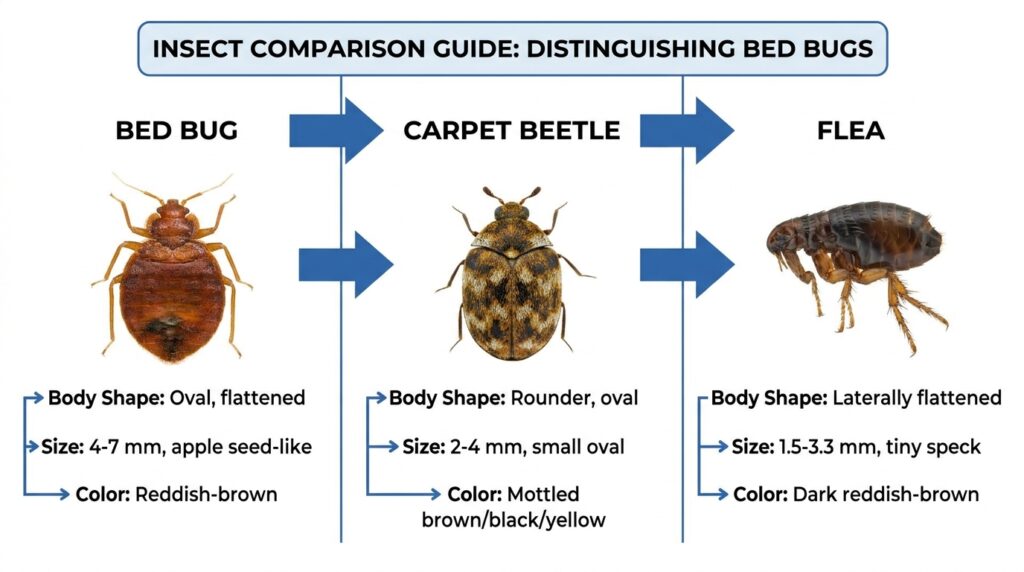
| Feature | Flea | Bed Bug |
|---|---|---|
| Body Shape | Laterally flat (side-to-side) | Dorsoventrally flat (top-to-bottom) |
| Color | Very dark brown, almost black | Reddish-brown |
| Legs | Long hind legs for jumping | Short, equal-length legs |
| Movement | Jumps up to 13 inches | Only crawls |
| Bite Pattern | Random, often on ankles/lower legs | Linear “breakfast, lunch, dinner” rows |
Fleas (Siphonaptera) are also vectors for diseases like murine typhus and cat scratch disease, making accurate identification important for health reasons too.
Quick test: If the bug jumps when you try to catch it, it’s a flea, not a bed bug.
3. Carpet Beetles (Anthrenus and Attagenus species)
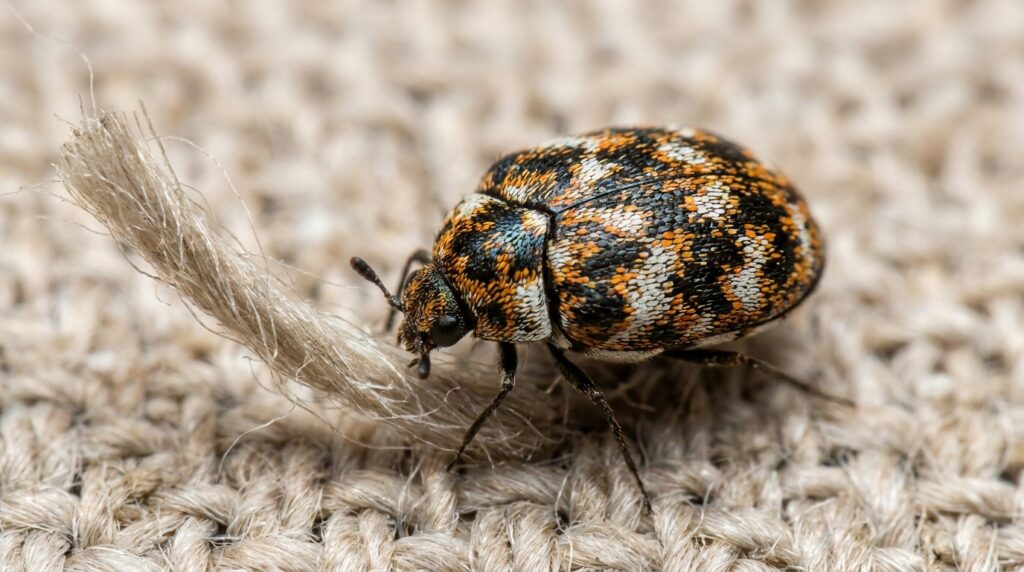
Carpet beetles are one of the most frequent bed bug imposters — and their larvae are often the real source of confusion.
Adult carpet beetles are small (2–4 mm), oval, and often found near beds and upholstered furniture. However, the adults are patterned with black, white, and orange/yellow scales — quite different from the uniform reddish-brown of a bed bug.
The larvae are the bigger problem. They’re fuzzy, carrot-shaped, and brown — and they cause real damage to carpets, clothing, and upholstery. People sometimes mistake shed carpet beetle larval skins for bed bug shed exoskeletons.
Critical distinction: Carpet beetles do NOT bite humans. If you’re finding bugs but have no bite marks on your body, carpet beetles are far more likely than bed bugs.
Signs of carpet beetles vs bed bugs:
- Carpet beetles: damaged fabric, shed bristly larval skins, adult beetles near windows (they’re attracted to light)
- Bed bugs: blood spots on sheets, musty odor, bites in linear patterns
The University of California Integrated Pest Management Program offers excellent guidance on distinguishing these two pests.
4. Spider Beetles (Ptinus species)
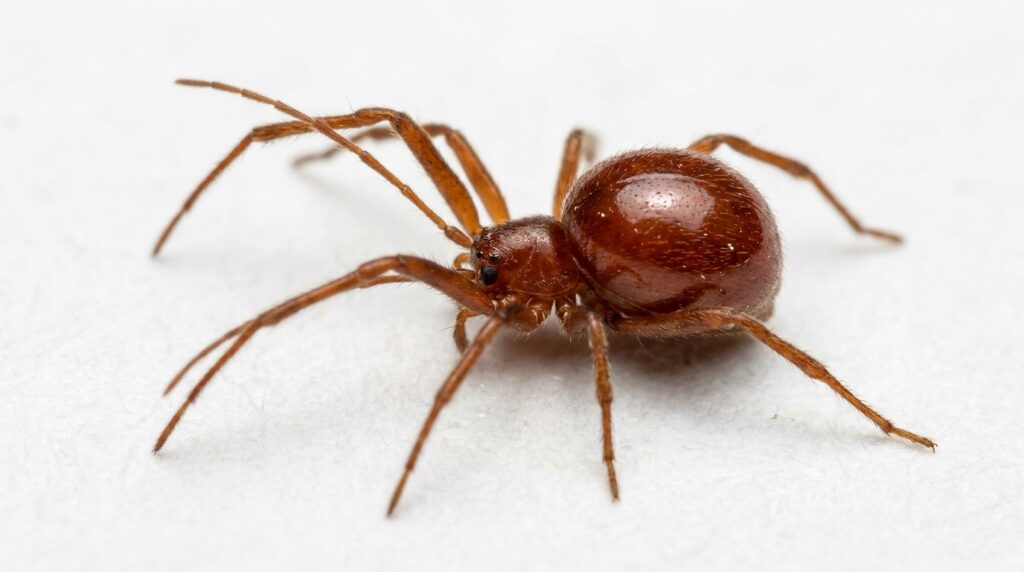
Spider beetles are probably the sneakiest imposter on this list.
When engorged (full of food), a spider beetle has a perfectly round, globular, reddish-brown to dark brown body that closely mimics a fed bed bug. Add in their relatively long legs, and you’ve got a convincing mimic.
The key differences:
- Spider beetles have longer, more spider-like legs compared to the stubby legs of bed bugs
- They have two clubbed antennae that stick out prominently
- They do NOT feed on blood — they eat stored food, grains, dried organic materials, and even dead insects
- Found in pantries, storage areas, and near food sources more than sleeping areas
Size: 1–5 mm — directly in the bed bug range, which doesn’t help.
If you find what looks like a round bed bug near your pantry or stored dry goods, spider beetles are a very strong candidate.
5. Cockroach Nymphs
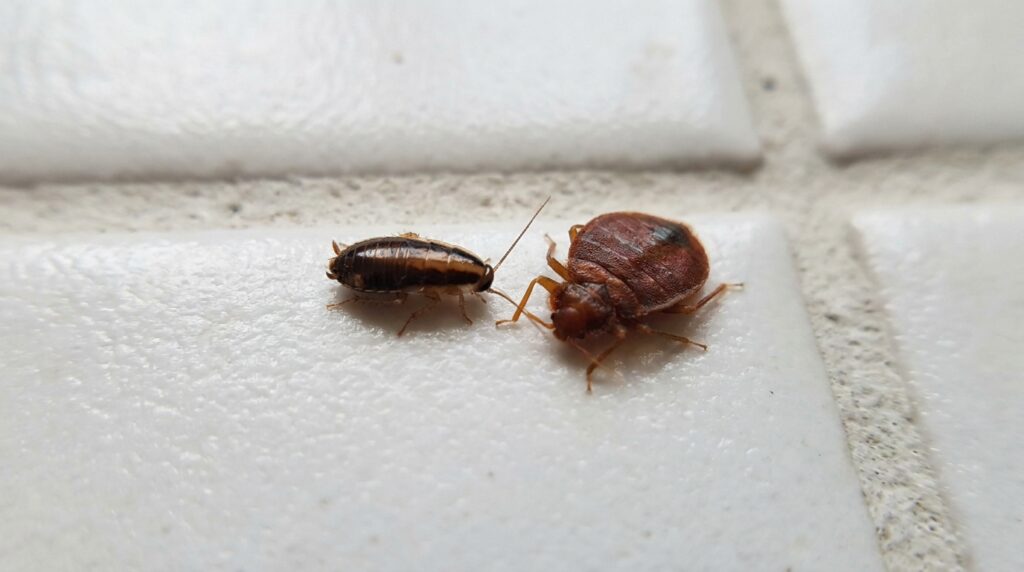
Young cockroaches in their earliest instars (developmental stages) can genuinely fool people who aren’t looking closely.
Newly hatched cockroach nymphs are:
- Very small (1–3 mm)
- Dark brown to reddish-brown
- Wingless
- Fast-moving
The differences become clear with a closer look. Cockroach nymphs have a longer, more cylindrical body compared to the flatter oval of a bed bug. They also have more prominent, longer antennae.
Critically — cockroach nymphs move very fast and scatter when exposed to light. Bed bugs are slower and more deliberate in movement.
The EPA’s guide on cockroach identification can help you understand what species you might have and how to manage them.
6. Booklice (Psocoptera)
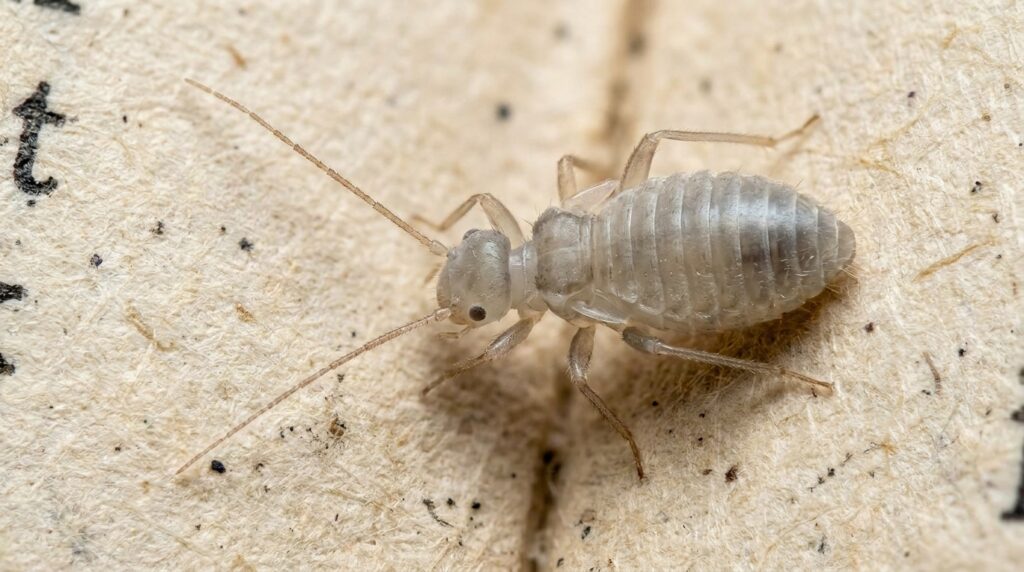
Booklice are often found in bedrooms, on book pages, or in humid corners — leading people to associate them with sleeping areas and assume the worst.
But the comparison to bed bugs really only holds at a distance:
- Booklice are pale gray, translucent, or white — not reddish-brown
- They’re soft-bodied with a distinctly different texture
- They have very long antennae relative to their body
- Size is 1–2 mm — even smaller than most bed bugs
- They feed on mold, fungi, and starchy materials — never on blood
Booklice infestations usually signal a humidity problem in your home. Reducing moisture with a dehumidifier often eliminates them without any chemical treatment.
If you’re finding tiny, pale bugs in books, near window sills, or on moldy surfaces — booklice are almost certainly the answer, not bed bugs.
7. Ticks
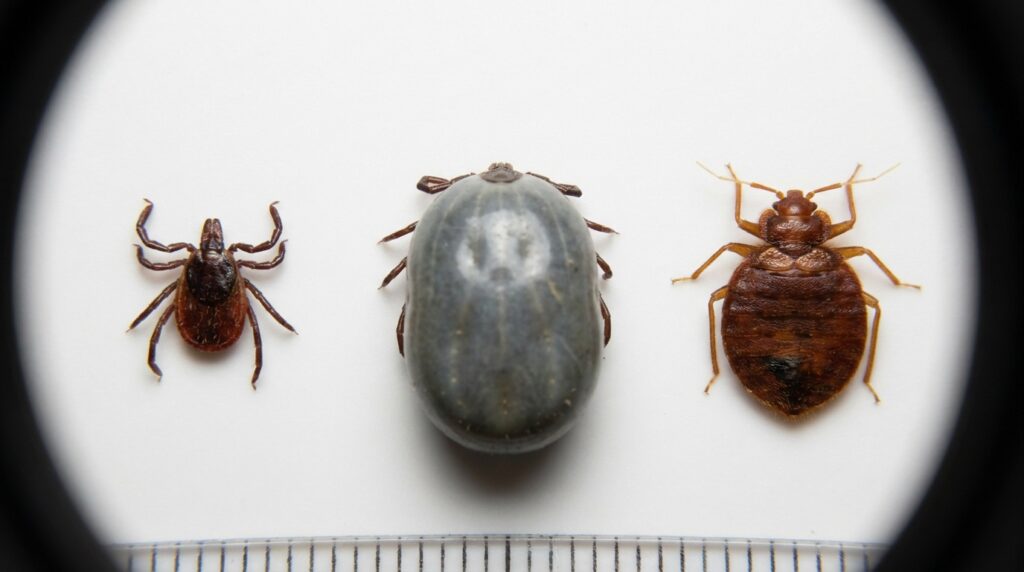
Unfed ticks — especially young nymph-stage ticks — are one of the more alarming cases of bed bug confusion because ticks do feed on blood.
Similarities that cause confusion:
- Flat, oval body when unfed
- Reddish-brown coloration
- Small size (nymph ticks can be 1–2 mm)
- Found in bedding if they’ve hitched a ride on a pet or person
Key differences:
- Ticks have 8 legs (they’re arachnids, not insects)
- Their body shape changes dramatically when engorged — they balloon into a gray, bean-like shape
- Ticks’ mouthparts are visible from above, pointing forward from the head
- Ticks are more commonly found in wooded or grassy areas, not urban apartments
The CDC’s tick identification resources are the gold standard for differentiating tick species and assessing the risk of tick-borne diseases like Lyme disease.
8. Head Lice and Body Lice (Pediculus humanus)
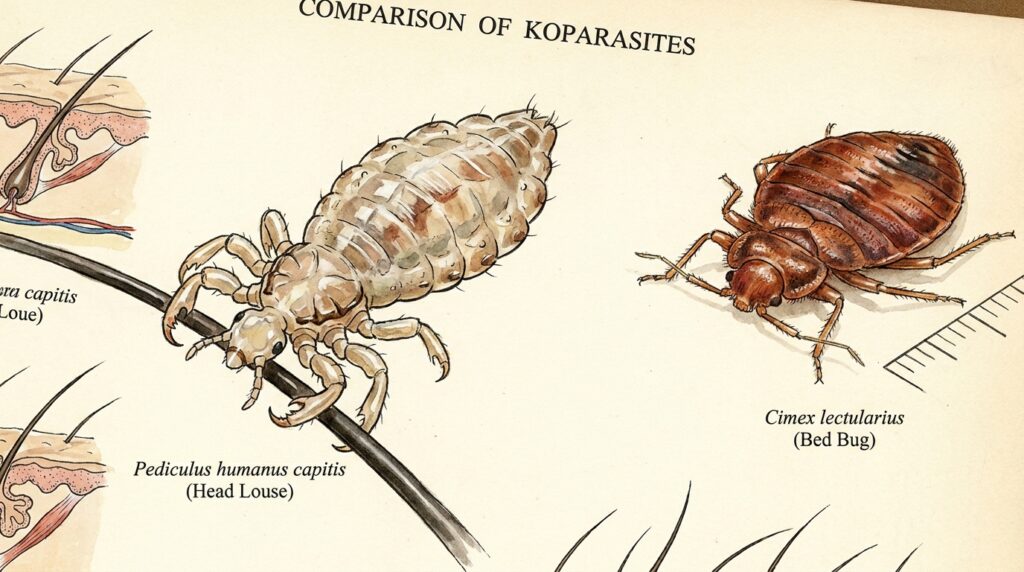
Head lice and body lice cause significant panic — partly because they’re associated with the same symptoms (itching, disrupted sleep) and partly because they can be found in bedding.
Body lice in particular are found in clothing and bedding seams, which is the main confusion point with bed bugs.
Lice differences:
- Body is more elongated than oval (football-shaped vs. apple-seed shaped)
- Legs have distinctive curved claws for gripping hair
- Lice are very pale tan to grayish-white, not reddish-brown
- They move differently — lice grip and crawl rather than the more deliberate scurry of bed bugs
The biggest practical difference? Lice are found on the body itself — in hair, on skin, or in clothing worn close to skin. Bed bugs prefer to hide in furniture, walls, and mattress seams, only coming out to feed.
9. Swallow Bugs (Oeciacus vicarius)
Swallow bugs are close relatives of bed bugs that feed on cliff swallows. They look almost identical to bat bugs and bed bugs but are found specifically in the nests of swallows — which are common on building eaves and bridges.
Like bat bugs, they only become a human nuisance when their bird host leaves or the nest is disturbed. They’ll migrate indoors looking for a blood meal.
Identification tip: If you’re seeing what look like bed bugs only in late summer (when swallows migrate) and they’re coming from attic or roof areas, swallow bugs are very likely the culprit.
The distinction matters because swallow bug treatment focuses on removing bird nests and sealing entry points — very different from a standard bed bug protocol.
10. Grain Mites (Acarus siro)
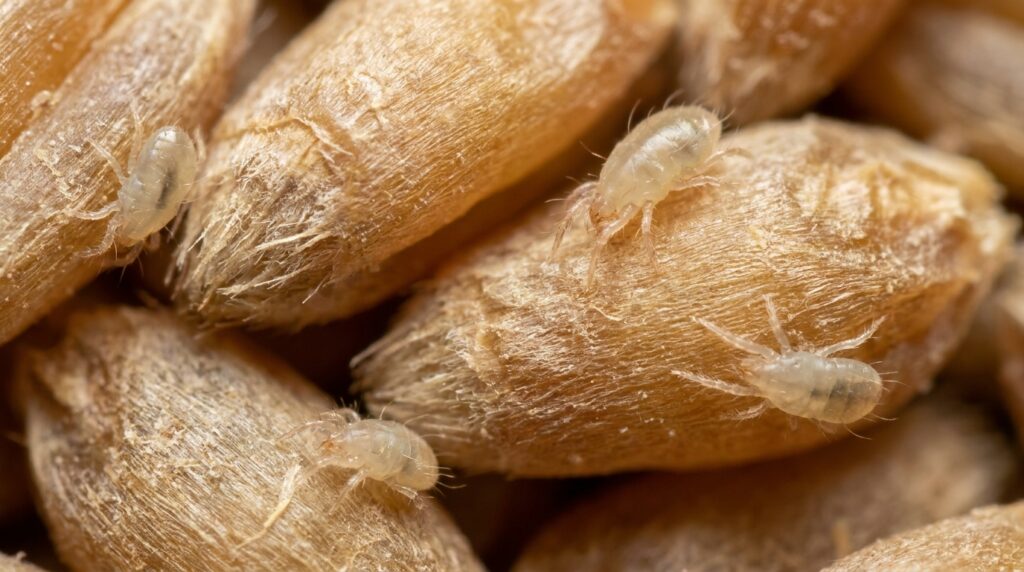
Grain mites are tiny (0.3–0.5 mm), almost invisible to the naked eye, and often create a dusty, moving layer on infested food or surfaces. They’re found in kitchens, pantries, and humid storage areas.
At a glance, a large concentration of grain mites on a surface can alarm homeowners who think they’re seeing tiny bed bug nymphs. But:
- Grain mites are white to translucent — not reddish-brown
- They have 8 legs (arachnids)
- They cause skin irritation and allergic reactions (grocer’s itch) but don’t bite like bed bugs
- Infestations are always associated with stored food or high humidity
If you’re finding what look like tiny bugs near your cereal, flour, or pet food — it’s grain mites, not bed bugs.
11. Flaxseed Bugs / False Chinch Bugs (Nysius ericae)
These small, oval, grayish-brown bugs are roughly 3–4 mm — right in bed bug territory. They’re plant feeders that occasionally migrate indoors in large numbers, especially in late summer and fall when host plants dry up.
Key differences:
- They have visible wings laid flat over their backs (bed bugs are wingless)
- Body is more elongated and grayish
- Found near windows and exterior walls during migration events
- Do NOT feed on blood — they’re purely plant-juice feeders
If you’re suddenly seeing dozens of small brown bugs near your windows or doors in late summer, false chinch bugs are a strong possibility.
12. Drugstore Beetles (Stegobium paniceum)
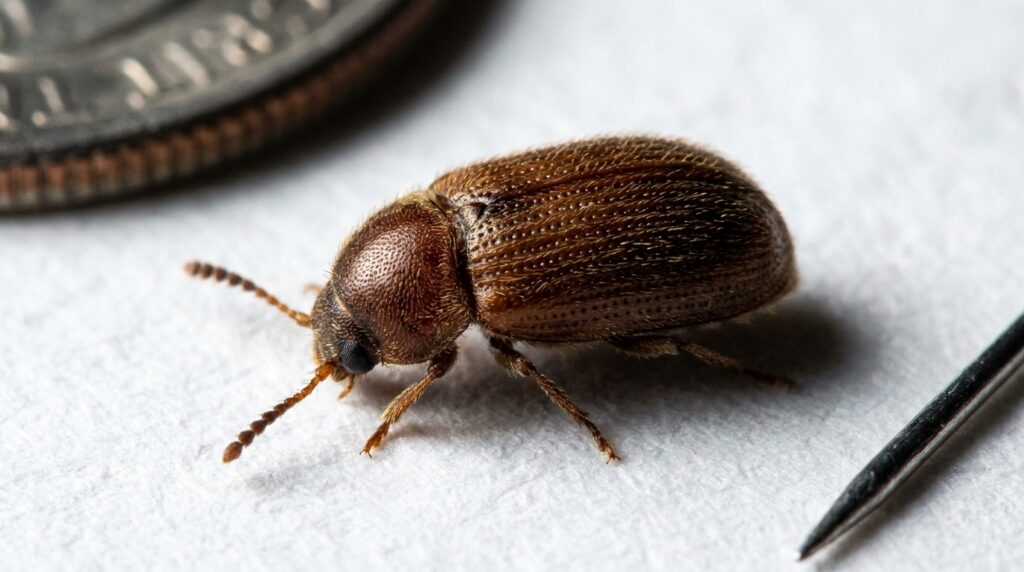
Drugstore beetles are small (2–3.5 mm), oval, and reddish-brown — a combination that creates instant bed bug panic when found in a bedroom.
However:
- They have visible wing covers (elytra) with fine longitudinal grooves
- Their body is slightly humped at the thorax, giving a more rounded appearance than a flat bed bug
- They feed on dried herbs, spices, pharmaceuticals, book bindings — not blood
- They’re found near food storage, not primarily in mattress seams
The “drugstore” name comes from their historic ability to chew through pill packages and pharmaceutical products.
13. Mites (Various Species)
Mites are a broad category of tiny arachnids — and several species cause enough skin irritation to convince people they have bed bugs.
Bird mites and rodent mites are the most bed-bug-like in behavior because they do feed on blood — just from birds and rodents rather than humans. When their primary host is removed (e.g., a bird nest cleaned out), they’ll seek human hosts.
Mite differences:
- 8 legs — they’re arachnids, not insects
- Extremely tiny — most are 0.5–1 mm, often barely visible
- Many are transparent or pale
- Cause intense itching and skin reactions but leave no visible bite marks
The University of Florida IFAS Extension has detailed identification guides for the various mite species commonly found in homes.
14. Assassin Bugs (Nymphs)
Young assassin bug nymphs are oval, flat, and reddish-brown in color — practically a description template for bed bugs.
The difference becomes clearer with a closer look:
- Assassin bug nymphs have a distinctive elongated head with a curved, beak-like rostrum (mouthpart)
- They’re larger than bed bugs at comparable life stages
- Found outdoors or in areas with insect prey — they’re predatory hunters, not blood feeders (with the exception of the kissing bug, described below)
15. Kissing Bugs (Triatominae)
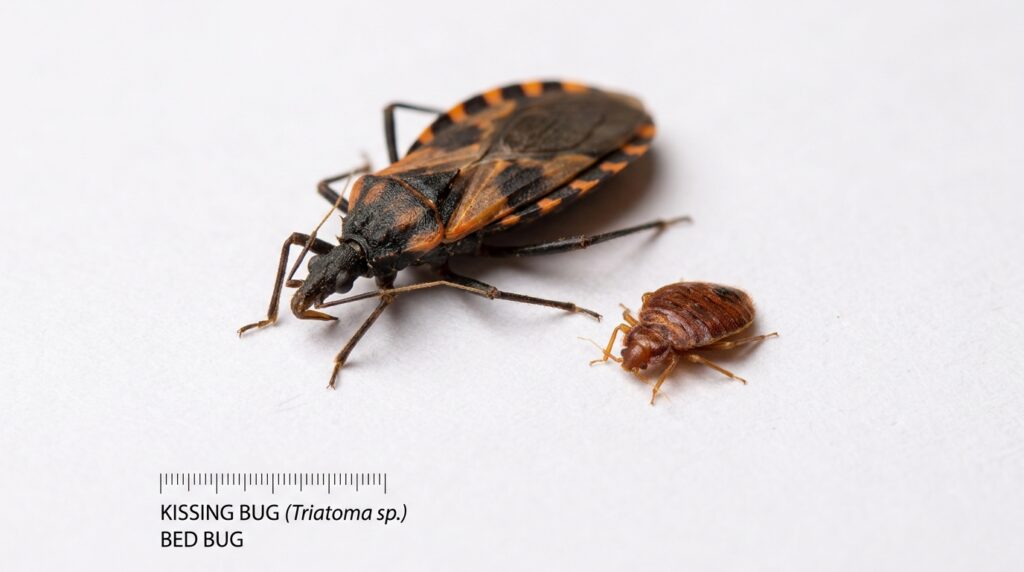
This is one case where the stakes of misidentification are genuinely serious.
Kissing bugs (Triatoma species) DO bite humans, primarily around the face during sleep. They’re found mainly in the southern states and are vectors for Chagas disease (Trypanosoma cruzi) — a serious parasitic illness.
Kissing bug vs bed bug:
| Feature | Kissing Bug | Bed Bug |
|---|---|---|
| Size | 14–21 mm | 1–7 mm |
| Color | Dark brown/black with orange-red banding | Uniform reddish-brown |
| Wings | Yes, functional wings | None |
| Shape | More elongated/teardrop | Oval and flat |
| Biting behavior | Around mouth/face | Any exposed skin |
If you find what looks like a large bed bug with orange banding and wing covers, do not crush it — the CDC recommends capturing it and having it identified to assess Chagas disease risk.
Quick Comparison Table — All 15 Bed Bug Look-Alikes
| Bug | Size | Color | Bites Humans? | Key Difference |
|---|---|---|---|---|
| Bat Bug | 4–5 mm | Reddish-brown | Rarely | Longer pronotal hairs |
| Flea | 1–3 mm | Very dark brown | Yes | Jumps; laterally flat |
| Carpet Beetle | 2–4 mm | Patterned | No | Patterned scales; no bites |
| Spider Beetle | 1–5 mm | Reddish-brown | No | Round globe shape; spider-like legs |
| Cockroach Nymph | 1–3 mm | Dark brown | No | Elongated; very fast |
| Booklice | 1–2 mm | Pale gray/white | No | Pale; near mold/books |
| Tick (nymph) | 1–2 mm | Brown to red | Yes | 8 legs; engorges differently |
| Head/Body Louse | 2–3 mm | Pale tan | Yes (via host) | Clawed legs; on body/clothing |
| Swallow Bug | 3–4 mm | Reddish-brown | Rarely | Near bird nests |
| Grain Mite | 0.3–0.5 mm | White/translucent | No (irritant) | 8 legs; near food |
| False Chinch Bug | 3–4 mm | Grayish-brown | No | Has wings; plant feeder |
| Drugstore Beetle | 2–3.5 mm | Reddish-brown | No | Grooved wing covers; humped |
| Mites (Bird/Rodent) | 0.5–1 mm | Transparent/red | Occasionally | 8 legs; from bird/rodent nests |
| Assassin Bug (nymph) | 3–8 mm | Reddish-brown | Rarely | Elongated beak; predator |
| Kissing Bug | 14–21 mm | Dark with orange banding | Yes | Much larger; has wings |
How to Confirm You Actually Have Bed Bugs
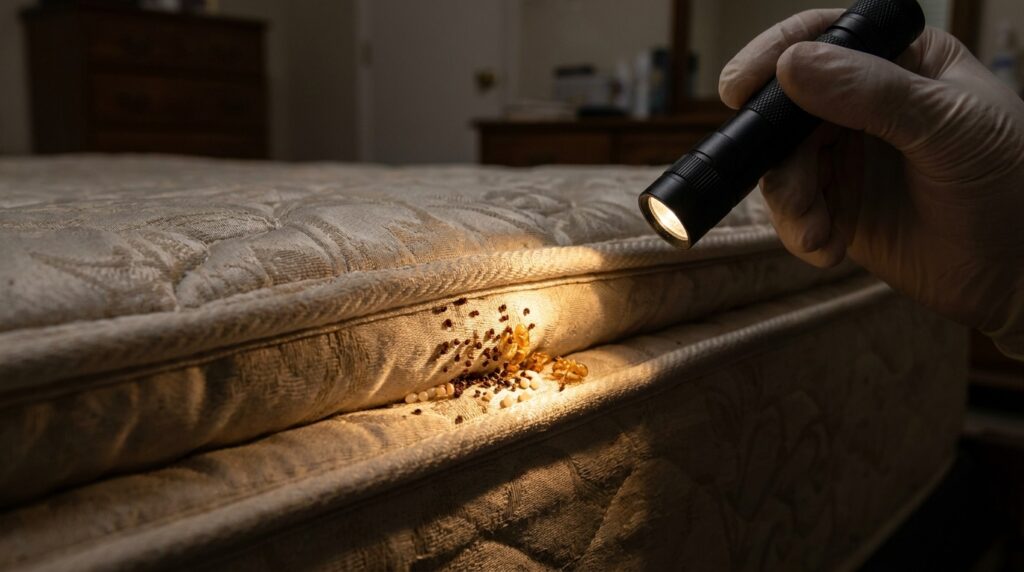
Finding a bug that looks like a bed bug is just the start. Real confirmation requires looking for the full picture of evidence.
The 5 Definitive Signs of a Bed Bug Infestation
1. Fecal Stains Dark, rust-colored dots about the size of a period (.) — found on mattress seams, box springs, and nearby walls. These are digested blood excreted by the bug.
2. Shed Exoskeletons (Cast Skins) Bed bugs molt 5 times before reaching adulthood. These translucent, hollow shells look exactly like live nymphs and are one of the most reliable signs.
3. Live Bugs in Harborage Areas Check: mattress seams and tufts, box spring interior, bed frame joints and screw holes, headboard, nightstand drawers, behind picture frames and electrical outlet covers.
4. Blood Smears on Bedding Small red or rust smears on sheets or pillowcases from accidentally crushing a fed bug during sleep.
5. Musty Odor A heavy infestation produces a distinctive sweet, musty, or “coriander-like” scent. Research has linked this odor to specific alarm pheromones released by bed bugs.
Pro tip: Use a bright flashlight and credit card to scrape along mattress seams. What falls out tells the story.
H2: Expert Tips — How Pest Professionals Identify Bed Bugs
We spoke with publicly available guidance from certified pest management professionals, including resources from the National Pest Management Association (NPMA) and the Entomological Society of America, to compile the following expert tips:
1. Collect a specimen before calling Don’t squash it. Use tape to capture the bug on a white piece of paper, or place it in a sealed plastic bag or small jar. Many pest companies will identify it for free or at low cost.
2. Use a 10x loupe or strong magnifying glass The difference between a bat bug and a bed bug comes down to hair length on the pronotum — invisible without magnification.
3. Check for bites patterns Bed bug bites typically appear in a line or cluster — the classic “breakfast, lunch, and dinner” row. Flea bites are usually on ankles; scabies bites prefer webbing between fingers and wrists.
4. Consider the location Bed bugs are almost exclusively found in sleeping areas and adjacent hiding spots. If you’re finding bugs in a pantry or kitchen — it’s almost certainly not a bed bug.
5. Get a professional inspection before treating The EPA recommends confirming identification before beginning any treatment. Applying bed bug treatments to carpet beetles or spider beetles is a waste of money and can expose you to unnecessary chemicals.
6. Use bed bug interceptor traps Passive interceptor monitors placed under bed legs can help confirm whether true bed bugs are present — they cannot climb out of the well.
Tiny Bugs in Bed That Are Not Bed Bugs — A Special Note
If you’re finding very tiny, almost microscopic bugs in your bed, here’s a reality check: the most common culprits are not bed bugs.
Dust mites (Dermatophagoides pteronyssinus) are the #1 tiny bug in beds. They’re 0.2–0.3 mm — completely invisible to the naked eye — and feed on shed human skin cells. According to the Asthma and Allergy Foundation of America, up to 20 million people in the U.S. are allergic to dust mites. They cause itching and allergic reactions but are not bed bugs and are handled with allergen-proof mattress covers and regular washing.
Other tiny bed-related bugs:
- Mold mites — white, found near humidity
- Clover mites — very tiny, red, come in from outdoors
- Scabies mites — burrow into skin; cause intense itching; require medical treatment, not pest control
If what you’re seeing is truly dust-like and requires a magnifying glass, you’re almost certainly not looking at bed bugs.
Flat Bugs That Look Like Bed Bugs — Why Flat Matters
One of the most useful physical shorthand for bed bugs is their flatness when unfed. This is an evolutionary adaptation that lets them hide in extremely narrow cracks.
But several other insects share this trait:
- Flat grain beetles (Oryzaephilus surinamensis) — very flat, 2–3 mm, found in stored grains
- Bark beetles (various species) — flat, brown, found in firewood brought indoors
- Apple seed bugs — flat, brown, sometimes found in homes near fruit
The shape alone isn’t enough to identify a bed bug. You need the full picture: flat + oval + reddish-brown + wingless + near sleeping area + blood feeding signs.
What to Do If You’re Not Sure
Not sure what you’re dealing with? Here’s a logical action plan:
Step 1: Don’t panic or throw things out Premature disposal of mattresses is one of the most expensive and unnecessary reactions. Even if it IS a bed bug, mattress encasements and professional treatment are usually the better path.
Step 2: Capture the bug safely Use a piece of tape pressed over the bug on a white surface, or place it in a small jar with rubbing alcohol. Never crush it with your fingers.
Step 3: Photograph it Use your phone’s macro mode (or a magnifying clip). Get multiple angles — top, side, and close-up of the head region. This photo alone can often resolve the identification.
Step 4: Use a trusted identification resource
- BugGuide.net — a peer-reviewed community of entomologists
- iNaturalist — AI-powered insect identification with expert verification
- University Extension Programs — your state university often offers free pest ID through their extension service
Step 5: Contact a licensed pest management professional If you genuinely suspect bed bugs after all of the above, contact a licensed, certified pest control company. Ask for a formal inspection — not just a quote for treatment.
Frequently Asked Questions (FAQs)
What bugs look the most like bed bugs?
The bugs that most closely resemble bed bugs are bat bugs, swallow bugs, and spider beetles. Bat bugs and swallow bugs are virtually identical to bed bugs without a microscope — they’re so similar that entomologists at the NPMA consider them the most commonly confused species. Spider beetles, when engorged, have a very similar globular reddish-brown body.
I found tiny brown bugs in my bed but no bites. Is it bed bugs?
Not likely. The absence of bites is a meaningful clue — bed bugs almost always leave evidence on skin. The most probable candidates for tiny brown bugs in bed with no bites are carpet beetle larvae, spider beetles, or even drugstore beetles that have wandered into the room. Conduct a thorough inspection of mattress seams for fecal stains and shed skins before assuming bed bugs.
Can beetles look like bed bugs?
Yes — several beetles that look like bed bugs cause frequent misidentification. Drugstore beetles, spider beetles, and carpet beetles (adults) are the most common. All are roughly the same size range (1–5 mm) and brownish in color. The key distinction is that beetles have visible wing covers (elytra) and a more defined three-part body structure (head, thorax, abdomen clearly separated). Bed bugs lack wings entirely and have a broader, flatter profile.
Are bed bug look-alikes dangerous?
Most bed bug imposters are nuisance pests that pose little direct health risk. However, a few are exceptions:
- Kissing bugs — potential Chagas disease vector; seek immediate medical guidance if bitten
- Ticks — vectors for Lyme disease, Rocky Mountain spotted fever, and others
- Fleas — can transmit murine typhus, cat scratch disease, and tapeworms
- Scabies mites — require prescription medical treatment, not pest control
Always identify the bug accurately before assuming the health risk is minimal.
How do I tell the difference between fleas and bed bugs?
The fastest way: watch it move. A flea will jump — sometimes several inches — when disturbed. Bed bugs only crawl. Visually, fleas are also much darker (near-black brown), and their body is compressed from side to side rather than top to bottom. Flea bites tend to cluster around the ankles and lower legs, while bed bug bites appear on any exposed skin during sleep, often in a linear row.
Conclusion — Identify First, Treat Second
Here’s the takeaway from everything you’ve read:
Most of the time, the bug you found is NOT a bed bug.
That’s not wishful thinking — it’s statistics. The wide variety of insects that look like bed bugs, combined with the fact that genuine bed bug infestations are less common than the media suggests, means that misidentification is the norm rather than the exception.
Before you spend hundreds of dollars on treatment, throw out furniture, or expose your family to pest control chemicals:
- Capture the bug without crushing it
- Photograph it from multiple angles
- Check for the full evidence profile (fecal stains, cast skins, blood spots, musty odor)
- Cross-reference with this guide and identification tools like BugGuide.net
- Consult a licensed pest professional for a formal inspection
If you do have bed bugs, early treatment is always cheaper and more effective than waiting. The EPA’s comprehensive bed bug treatment guide is a trustworthy place to start understanding your options.
If you don’t — and odds are you don’t — you’ve just saved yourself a significant amount of money, stress, and unnecessary chemical exposure.
Knowledge is always the most powerful pest control tool you have.

