
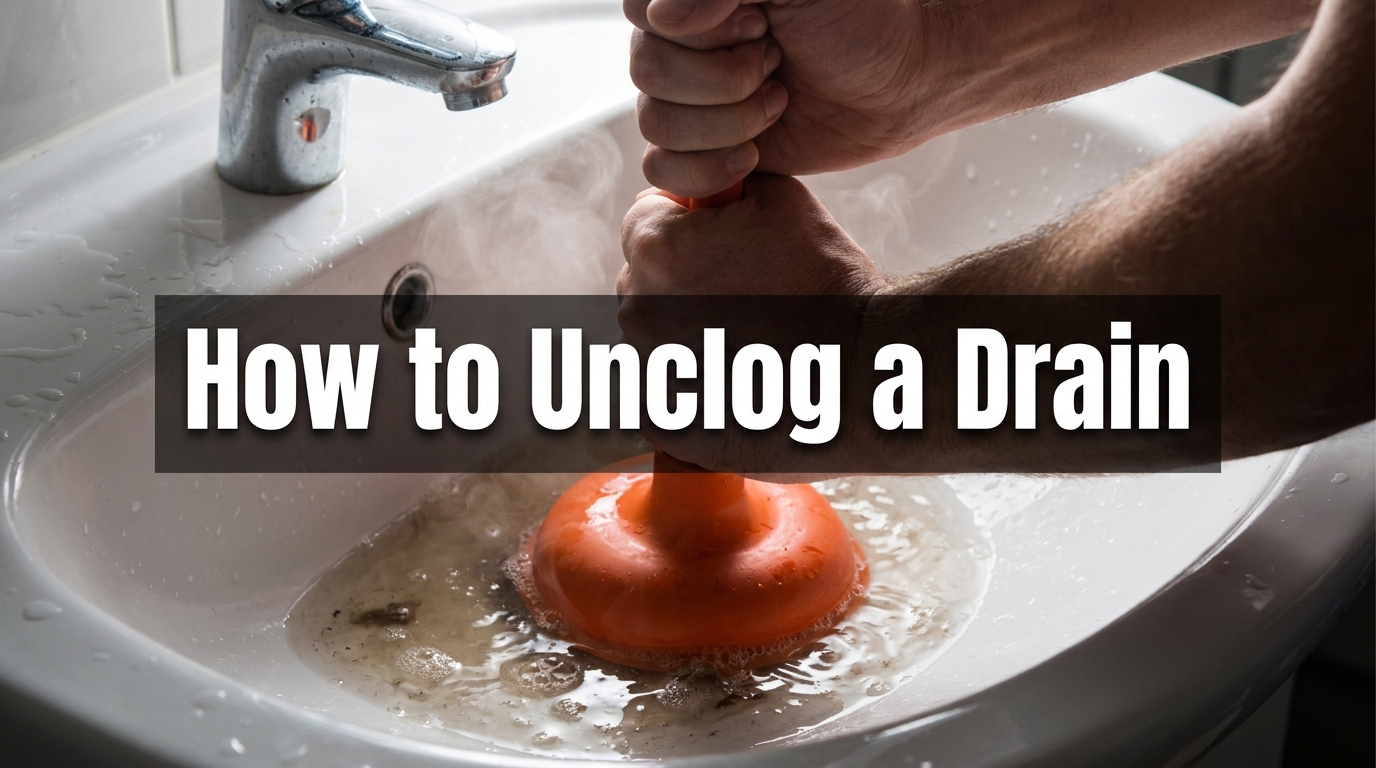
There’s nothing quite like standing in the shower while water rises to your ankles. Or watching the kitchen sink slowly fill up as you do the dishes. Clogged drains have a way of turning an ordinary day into a frustrating one — fast.
The good news? Most drain clogs are completely fixable on your own, without spending $100+ on a plumber visit. You just need to know which method to use and in what order.
This guide walks you through every proven technique for unclogging a drain — from the simplest fixes you can do in 5 minutes to more serious approaches for stubborn blockages. By the end, you’ll know exactly what to do the next time your drain decides to misbehave.
What Causes a Clogged Drain?
Before jumping into fixes, it helps to understand why drains clog. The cause usually determines the best solution.
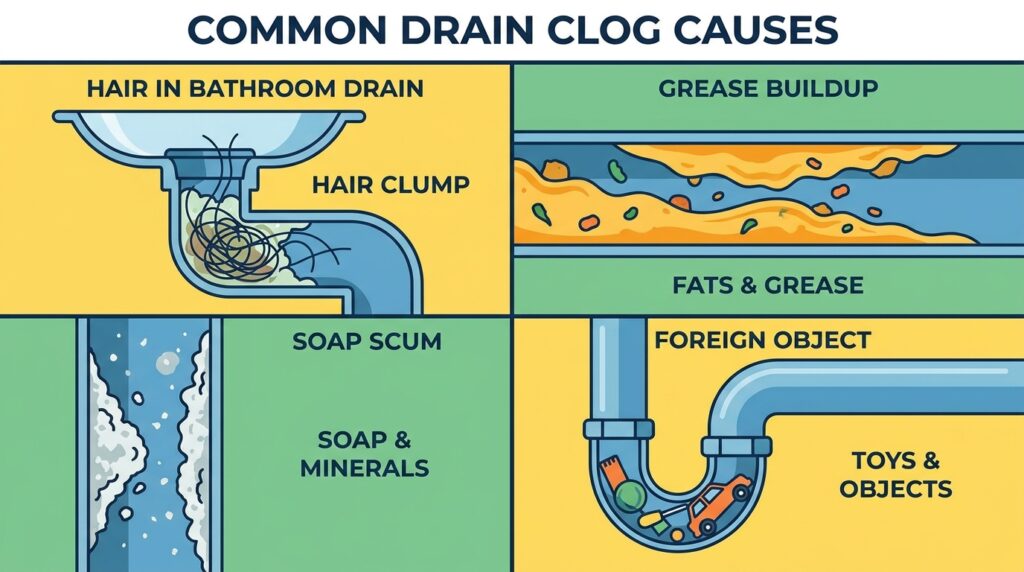
According to This Old House, the most common culprits include:
- Hair — The number one cause in bathroom sinks, showers, and tubs. Hair tangles with soap and forms a dense mat over time.
- Grease and food scraps — Kitchen sinks clog when cooking fat, oils, and food particles build up along pipe walls.
- Soap scum — Traditional bar soaps contain fat. Over time, soap residue combines with minerals in hard water and narrows your pipes.
- Toothpaste, dental floss, and cotton products — Common in bathroom sinks, these materials don’t dissolve and accumulate in the drain.
- Foreign objects — Small toys, jewelry, or bottle caps that accidentally fall in.
- Mineral buildup — Homes with hard water develop calcium and lime deposits inside pipes, gradually restricting flow.
Knowing the likely cause helps you choose the right approach. A hair clog responds well to a drain hook. A grease clog needs hot water and dish soap. A mineral buildup may need a chemical descaler.
Tools and Supplies You’ll Want Nearby
You don’t need a plumber’s truck. Most drain clogs can be handled with one or more of these items:
| Tool/Supply | Best For | Approximate Cost |
|---|---|---|
| Plunger (cup or flange) | Sink, tub, toilet clogs | $10–$25 |
| Drain snake / hand auger | Deep or stubborn clogs | $20–$50 |
| Zip-It drain tool | Hair clogs near the drain opening | $3–$8 |
| Baking soda + white vinegar | Mild clogs and odors | Under $5 |
| Dish soap + boiling water | Grease clogs | Under $5 |
| Enzyme drain cleaner | Organic buildup, regular maintenance | $10–$20 |
| Pipe wrench | Removing P-trap | $15–$30 |
| Bucket and rubber gloves | Any method | $5–$10 |
For most households, keeping a plunger, a Zip-It tool, and a box of baking soda on hand will solve the majority of problems before they get worse.
How to Unclog a Drain: 8 Methods That Work
Work through these methods from simplest to most involved. Most clogs resolve with the first two or three.
Method 1: Boiling Water (The Easiest First Step)
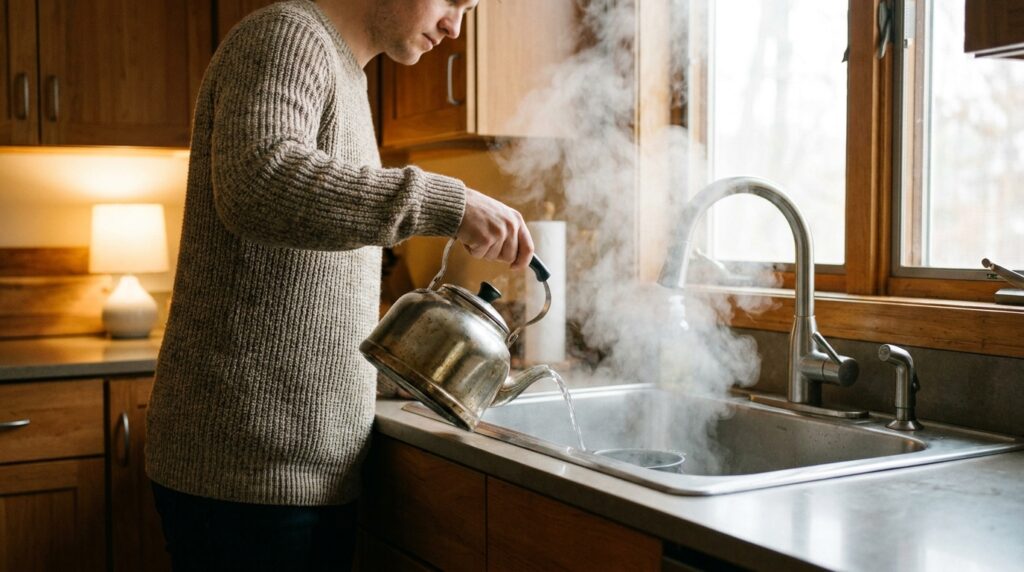
This method works best on grease and soap-based clogs and takes about 5 minutes, especially when normal water pressure is affected by buildup.
Steps:
- Boil a full kettle of water (about 6–8 cups).
- Pour it directly into the drain in two or three stages, allowing 5–10 seconds between each pour.
- Run the hot tap for 30 seconds after to check flow.
Important: Don’t use boiling water on PVC pipes — the extreme heat can soften or warp them. Use the hottest tap water possible instead, or limit yourself to very hot (not boiling) water. The Spruce recommends this distinction specifically for plastic pipes common in newer homes.
This won’t work on hair clogs or hard blockages, but for early-stage grease buildup, it’s surprisingly effective.
Method 2: Baking Soda and Vinegar
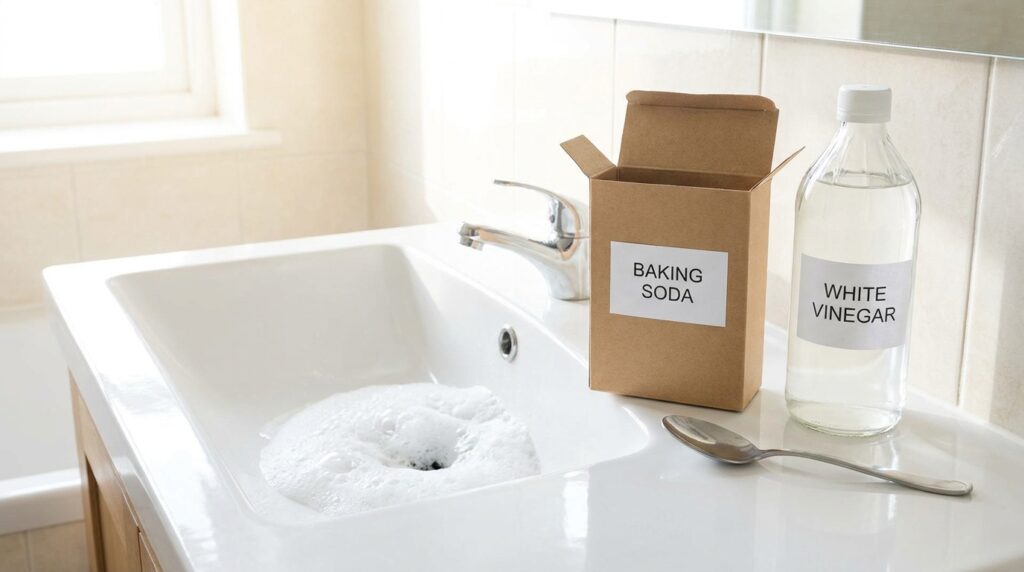
This is the classic DIY combo — and it works well on mild organic clogs and deodorizing drains.
Steps:
- Pour a pot of boiling water down the drain first (skip if PVC pipes).
- Pour ½ cup of baking soda directly into the drain. Let it sit for a few minutes.
- Follow with a mixture of ½ cup white vinegar + ½ cup very hot water.
- Cover the drain immediately with a drain stopper or cloth to force the reaction downward.
- Wait 15–20 minutes.
- Flush again with a full kettle of hot water.
The chemical reaction between baking soda (a base) and vinegar (an acid) creates fizzing that can break apart soft clogs and clear away buildup on pipe walls.
This isn’t the most powerful method for severe blockages, but it’s safe, non-toxic, and great for monthly maintenance. According to Bob Vila, using this combination once a month is one of the best ways to prevent clogs from forming in the first place.
Method 3: Dish Soap and Hot Water (For Kitchen Sinks)
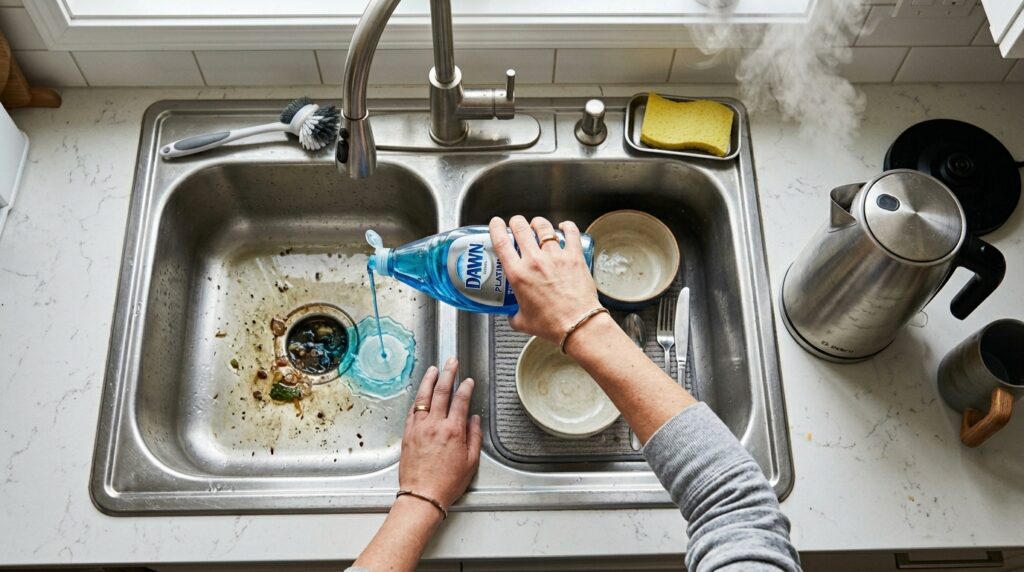
For kitchen sink clogs caused by grease and cooking oil, dish soap is surprisingly effective.
Steps:
- Squirt a generous amount of dish soap (about 2–3 tablespoons) into the drain.
- Pour a large pot of very hot water down slowly — let the soap lubricate the pipe walls.
- Repeat if needed.
Dish soap breaks down grease the same way it cleans a pan — it’s a degreasing agent. Combined with hot water, it can flush a greasy blockage through the pipe.
Method 4: Using a Plunger
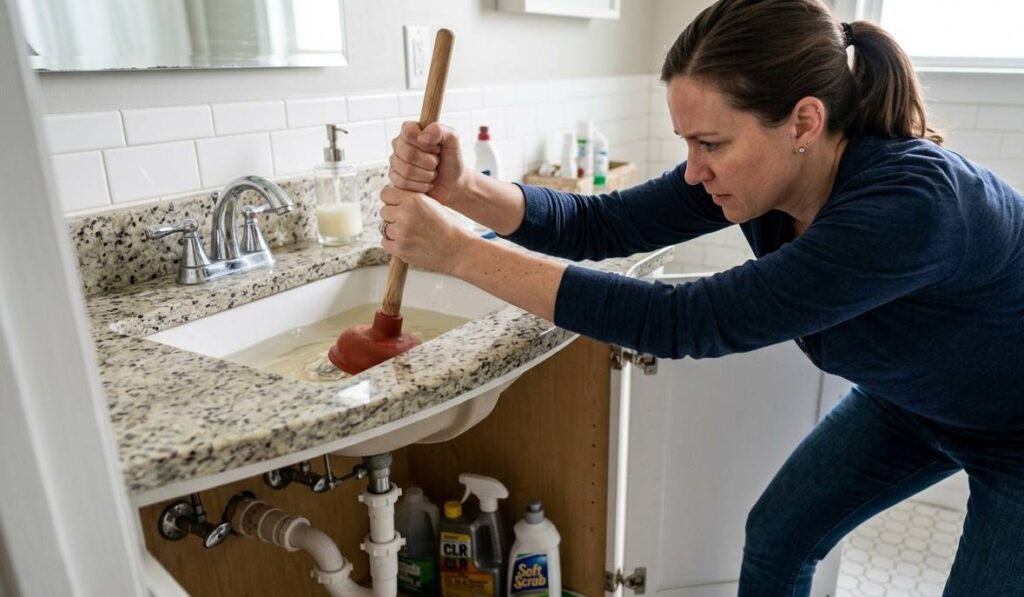
A plunger is one of the most effective tools for clearing drain clogs. Many people only associate plungers with toilets, but a standard cup plunger works great on sinks and tubs.
Steps:
- Remove any visible debris from the drain opening.
- Fill the sink with 1–2 inches of water — enough to submerge the plunger cup.
- If your sink has an overflow hole (that small hole near the top of the basin), cover it with a wet cloth to create suction.
- Position the plunger directly over the drain and press down firmly to form a seal.
- Plunge vigorously 15–20 times using an up-and-down pumping motion.
- Pull the plunger off sharply on the final stroke to break the seal and dislodge the clog.
- Run the water to check flow.
Repeat 2–3 times if needed. According to Angi, plunging is the recommended first mechanical step for most sink and tub clogs — before reaching for any chemicals.
Tip: For double kitchen sinks, plug the second drain before plunging to keep pressure focused on the clogged side.
Method 5: The Zip-It Drain Hair Removal Tool
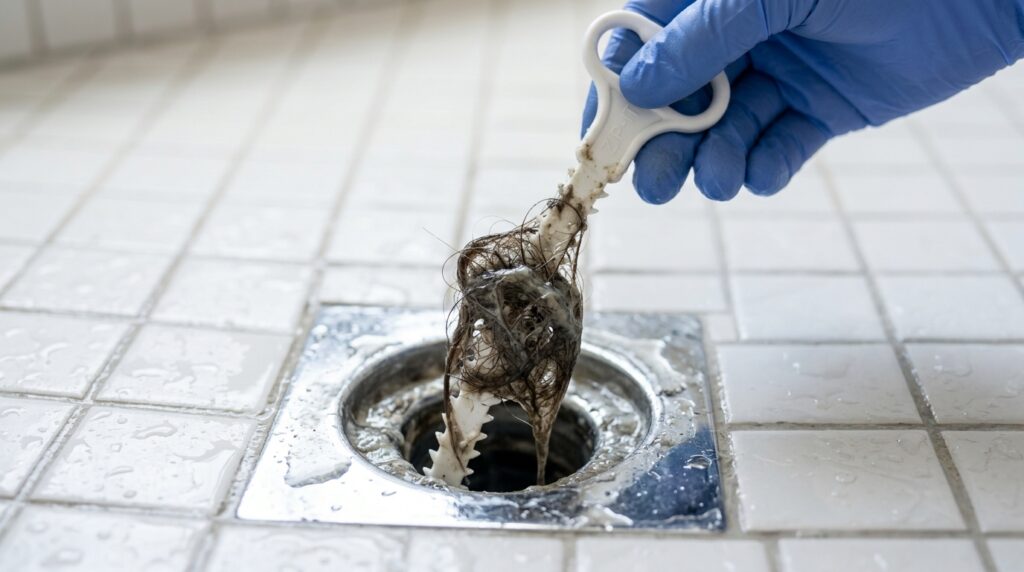
For hair clogs near the drain opening — extremely common in bathroom sinks and showers — a Zip-It or similar barbed plastic drain snake is the fastest, most satisfying fix.
Steps:
- Remove the drain cover/stopper if possible.
- Insert the Zip-It tool into the drain (it bends around the P-trap easily).
- Twist as you push it in, then slowly pull it back out.
- The barbs grab hair and debris as you pull.
- Remove the clump from the tool (wear gloves — it’s gross), and dispose of it in the trash.
- Repeat 2–3 times until no more material comes out.
- Flush with hot water.
These tools are available at any hardware store or online for under $10 and are reusable. The American Cleaning Institute recommends regular hair removal as one of the simplest ways to maintain healthy drains.
Method 6: Using a Drain Snake (Hand Auger)
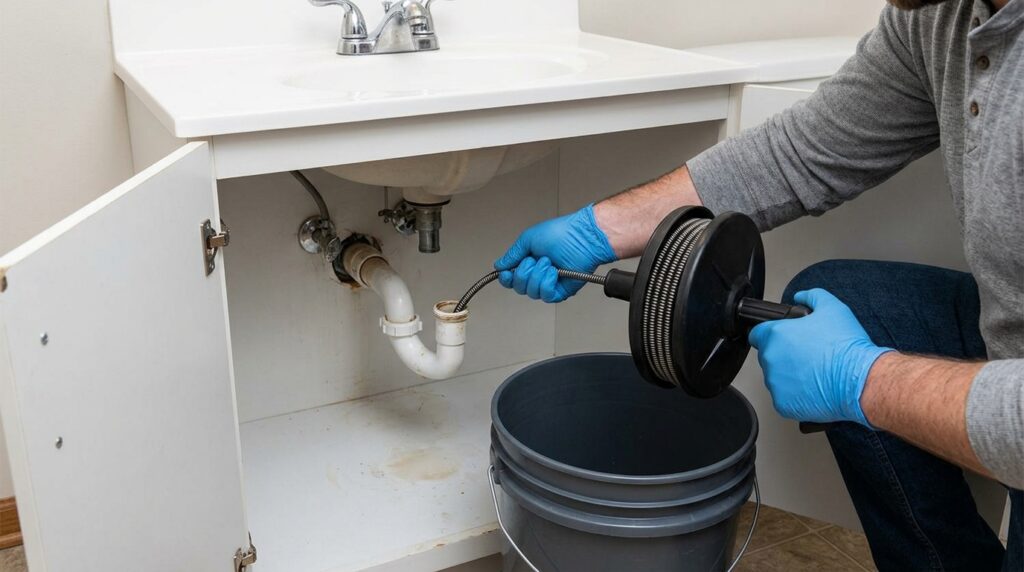
When a plunger and surface tools fail, a drain snake (also called a hand auger) lets you physically reach deeper clogs in the pipe.
Steps:
- Place a bucket under the P-trap (the curved pipe under the sink) in case of spills.
- Feed the snake cable into the drain opening.
- When you feel resistance, you’ve hit the clog. Turn the handle clockwise to drive the auger tip into the blockage.
- Once you’ve broken through or hooked the clog, slowly retract the snake while continuing to turn the handle.
- Pull out whatever material comes with it.
- Flush the drain with hot water.
Drain snakes are available for rent at most hardware stores like Home Depot or can be purchased for $20–$50. For clogs beyond 20 feet, a motorized version is worth considering.
Method 7: Cleaning the P-Trap
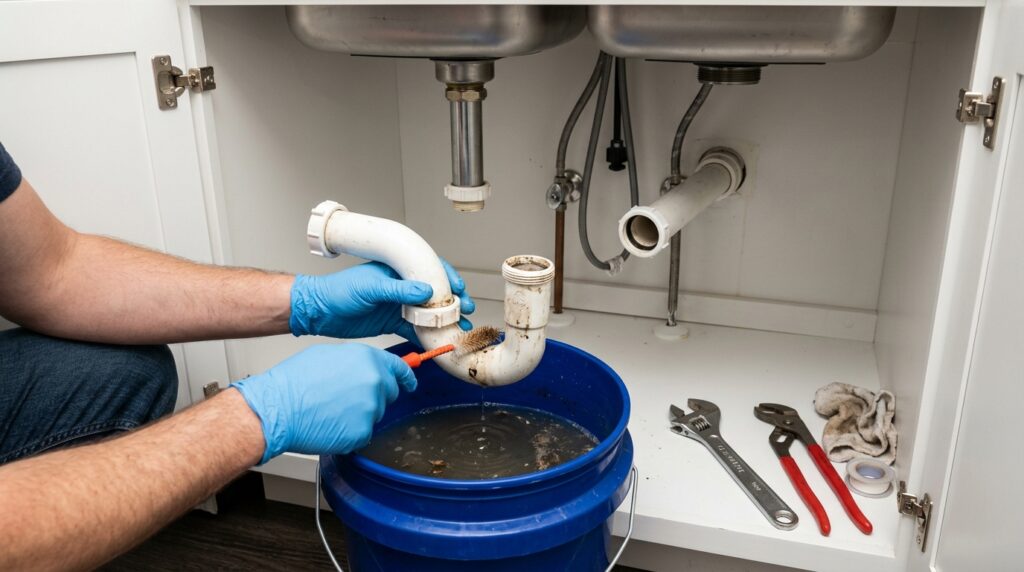
The P-trap is the curved pipe section directly beneath your sink. It holds a small amount of water to block sewer gases from entering your home — but it also traps debris. If water is backing up into the sink and other methods haven’t worked, the P-trap is often the culprit.
Steps:
- Place a bucket under the P-trap.
- Use pliers or a pipe wrench to loosen the slip-joint nuts on both ends of the P-trap (most can be loosened by hand).
- Remove the P-trap and empty the water/debris into the bucket.
- Clean the P-trap under running water, using a small bottle brush if needed.
- Inspect the pipe above and below for additional blockage — use a flashlight.
- Reinstall the P-trap, hand-tightening the nuts until snug.
- Run water to test for leaks and proper flow.
This is one of the most effective DIY methods for sink clogs because you’re directly accessing the most common clog location. Family Handyman considers P-trap cleaning a core plumbing skill every homeowner should know.
Method 8: Enzyme Drain Cleaners (Best for Maintenance)
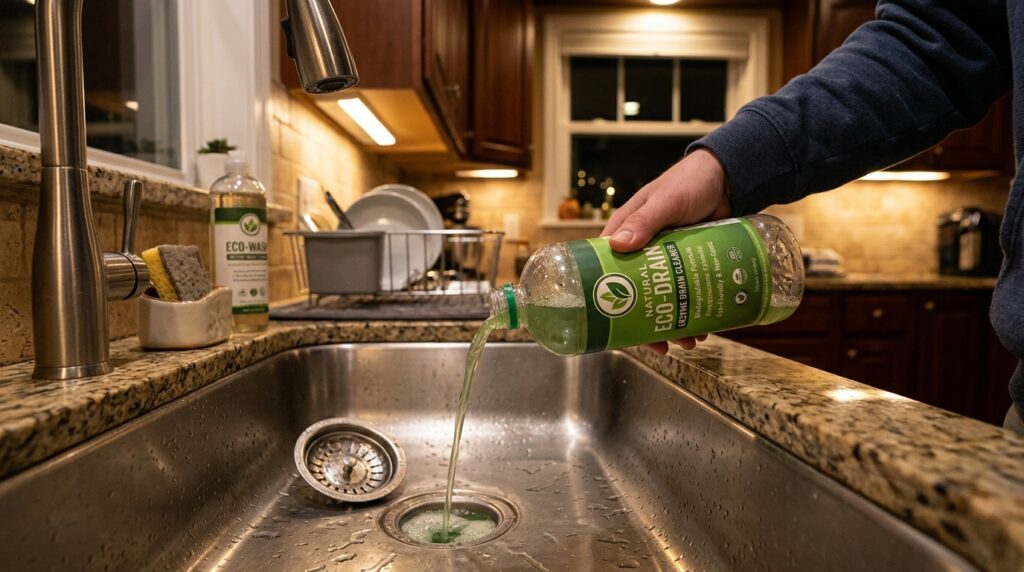
Unlike harsh chemical drain cleaners (think Drano), enzyme-based cleaners use natural bacteria to digest organic matter like hair, grease, and food particles. They’re slower but much safer for your pipes and the environment.
Best for: Monthly maintenance, slow-draining sinks that aren’t fully blocked, preventing recurring clogs.
How to use: Follow the product label — most require pouring the solution into the drain at night and letting it sit for 6–8 hours before flushing.
Popular options include Green Gobbler and Bio-Clean, which use bacterial enzyme formulas to break down organic debris over time.
Note on chemical drain cleaners: Products like Drano or Liquid-Plumr can be effective, but regular use damages older pipes and can create hazardous chemical reactions if mixed with other cleaners. The Environmental Protection Agency (EPA) recommends choosing safer chemical alternatives when possible.
How to Unclog Different Types of Drains
Different drains have slightly different approaches. Here’s a quick breakdown:
How to Unclog a Bathroom Sink Drain
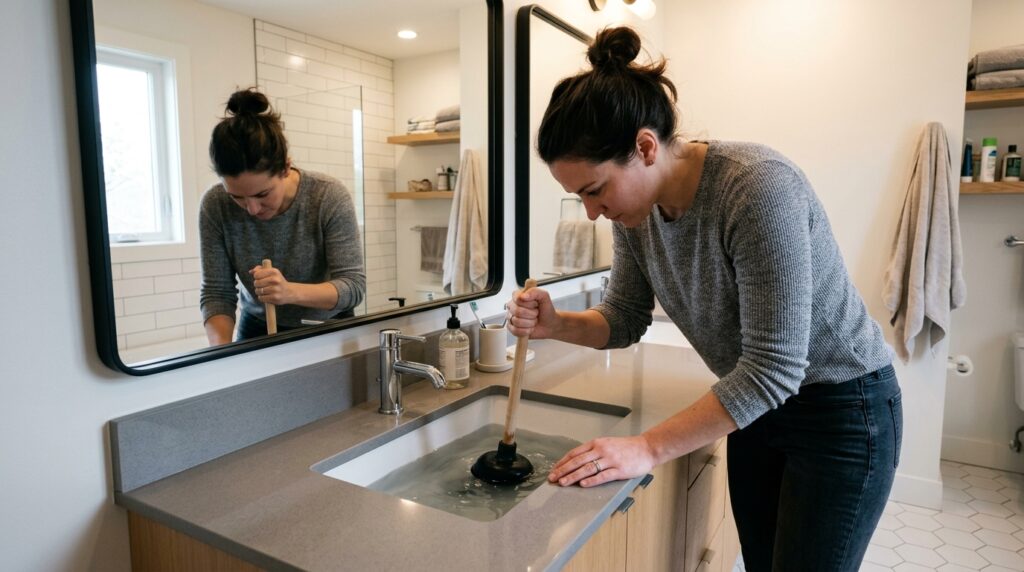
Bathroom sink clogs are almost always caused by hair and soap scum building up near the drain stopper.
Best approach:
- First, remove and clean the drain stopper. On most bathroom sinks, you can unscrew it or pull it straight up.
- Use a Zip-It tool to pull out hair clogs just below the stopper.
- Follow with the baking soda and vinegar method.
- If still blocked, plunge with a cup plunger.
Most bathroom sink clogs resolve within 10 minutes using this sequence.
How to Unclog a Shower or Bathtub Drain
Keeping the shower area functional is also important for homeowners making accessible bathroom modifications, particularly when improving a bathroom for easier and safer daily use.
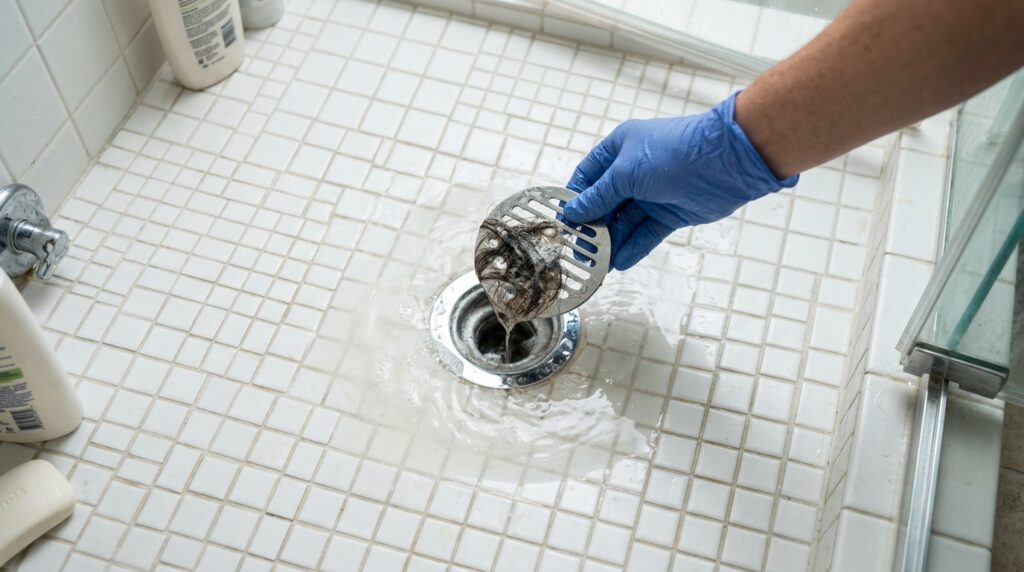
Shower and tub drains clog almost exclusively from hair. The fix is usually straightforward.
Best approach:
- Remove the drain cover (usually just lifts off or has one screw).
- Reach in with a finger or use a Zip-It to pull out the hair mass.
- Flush with hot water.
If the clog is deeper — water drains very slowly after clearing surface hair — use a drain snake.
Tip: Installing an inexpensive TubShroom or mesh drain screen catches hair before it enters the pipe and eliminates most shower drain clogs entirely.
How to Unclog a Kitchen Sink Drain
Kitchen sinks clog from grease, food debris, and dishwasher backflow.
Best approach:
- Start with dish soap and hot water.
- If that fails, plunge — cover the second drain first if it’s a double sink.
- For persistent clogs, clean the P-trap.
Never pour grease down the drain. Even in small amounts, cooking fat solidifies in pipes and causes major buildup. According to the Water Environment Federation, grease poured down kitchen drains is one of the leading causes of residential sewer clogs nationwide.
How to Unclog a Garbage Disposal Drain
If you have a garbage disposal, the issue might be the disposal itself rather than the drain pipe. Try:
- Press the red reset button on the bottom of the disposal unit.
- Use the hex wrench (usually included with the unit) in the center socket on the bottom to manually crank the blades free.
- Never put fibrous foods (celery, artichokes), starchy foods (potato peels, pasta), or grease down the disposal.
If the disposal runs but water backs up, the clog is in the drain pipe — use the methods above.
Expert Tips to Prevent Clogged Drains
Prevention is always easier (and cheaper) than the fix. Here are the habits that plumbing professionals recommend:
- Use drain screens everywhere. Mesh or silicone drain covers cost $3–$10 and catch hair, debris, and food before it enters the pipe. This single step eliminates the majority of drain clogs.
- Never pour cooking grease down the drain. Let it cool, pour it into a container, and throw it in the trash.
- Run hot water after every use of the kitchen sink. This keeps grease in liquid form as it travels through the pipe.
- Clean drain stoppers weekly. Hair collects around bathroom stoppers fast. A quick weekly wipe takes 30 seconds.
- Do a monthly baking soda flush. Pour ½ cup of baking soda, followed by ½ cup of vinegar, into each drain once a month. It keeps buildup from forming.
- Don’t flush “flushable” wipes. Despite the labeling, many wipes don’t break down like toilet paper and contribute to pipe and sewer clogs.
- Soften hard water if you have it. A whole-house water softener prevents the mineral scale that slowly narrows pipes over years.
When to Call a Plumber
Most drain clogs are DIY-friendly. But some situations call for professional help:
- Multiple drains are slow or clogged at the same time. This points to a clog in your main sewer line, not an individual pipe — a problem that requires professional snaking or hydro-jetting.
- Water backs up into other fixtures. If flushing the toilet causes the tub to back up, or running the dishwasher backs up the sink, call a plumber.
- Persistent gurgling sounds from pipes. Gurgling usually means air is trapped in the line, which can indicate a venting or main line issue.
- Foul sewage odor throughout the house. This can mean a broken seal or sewer line damage — not something to DIY.
- You’ve tried every method and the drain is still blocked. A licensed plumber has professional-grade equipment that can clear almost any blockage.
A typical professional drain clearing costs $100–$250 according to HomeAdvisor. Main line snaking or hydro-jetting runs higher. Getting a few quotes is worth it for major issues.
Chemical Drain Cleaners: Pros and Cons
Before reaching for commercial chemical drain cleaners, it’s worth understanding what you’re getting.
| Chemical Drain Cleaner (e.g., Drano) | Enzyme Cleaner | |
|---|---|---|
| How it works | Caustic chemicals dissolve clogs fast | Bacteria digest organic matter slowly |
| Speed | 15–30 minutes | 6–8+ hours |
| Effectiveness | High for immediate clogs | Best for maintenance/prevention |
| Pipe safety | Can damage older pipes with repeated use | Completely safe for all pipes |
| Environment | Toxic chemicals enter waterways | Eco-friendly |
| Odor | Strong, toxic fumes | Minimal odor |
| Cost | $5–$10 | $10–$20 |
If you do use a chemical cleaner, follow the instructions precisely, ensure good ventilation, and never mix it with other cleaning products — the chemical reactions can be dangerous.
FAQs: How to Unclog a Drain
1. What is the fastest way to unclog a drain?
For most clogs, plunging is the fastest mechanical fix. For grease clogs in the kitchen, dish soap and boiling water often works in under 5 minutes. If the clog is hair near the drain opening, a Zip-It tool removes it in 2–3 minutes.
2. Can I use baking soda and vinegar to unclog a drain?
Yes — this combination works well for mild organic clogs and helps deodorize drains. It’s not powerful enough for severe blockages but is excellent for maintenance and early-stage buildup. Use it monthly to keep drains flowing freely.
3. Is it safe to use Drano or Liquid-Plumr?
These chemical drain cleaners are effective but come with trade-offs. Occasional use is generally safe for most modern pipes. However, regular use can corrode older metal pipes and damage PVC plumbing. They’re also hazardous if inhaled or mixed with other chemicals. Try mechanical methods first.
4. How do I unclog a drain without a plunger?
You have several options: the baking soda and vinegar method, a Zip-It tool for hair clogs, dish soap with hot water for kitchen sinks, or cleaning the P-trap manually. A wire coat hanger bent into a hook can also pull out hair clogs if you don’t have a Zip-It.
5. When should I stop trying to fix a clogged drain myself?
Call a plumber if: multiple drains are slow at once, sewage smell persists, water backs up into other fixtures, or the drain hasn’t responded to multiple DIY attempts. These signs often point to a main sewer line problem that requires professional equipment.
Conclusion
A clogged drain doesn’t have to mean an expensive plumber call or a ruined evening. In most cases, the right tool and a few minutes of effort are all it takes.
Start with the simplest fixes — hot water, baking soda and vinegar, or a quick pull with a Zip-It tool. Work your way up to plunging, drain snaking, or cleaning the P-trap if needed. And once you’ve solved the problem, put a few preventive habits in place: drain screens, a monthly baking soda flush, and keeping grease out of the sink.
Most drain clogs are a DIY job. Now you’ve got everything you need to handle it.
Ready to take action? Grab a Zip-It tool and a plunger — the two most useful items for drain clogs — and keep them under the sink. You’ll thank yourself the next time water starts backing up.

