
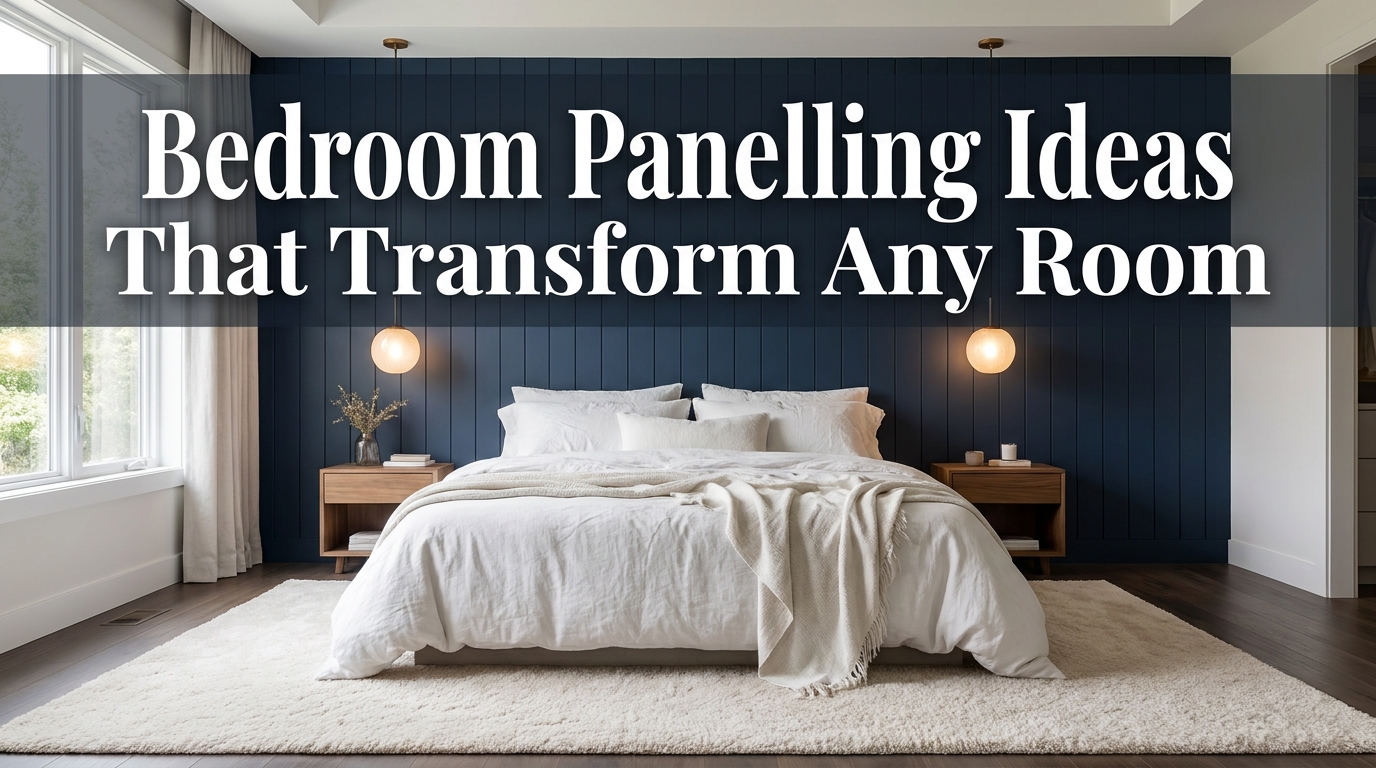
You know that moment when you walk into a hotel room and the wall behind the bed stops you in your tracks? That textured, layered, impossibly polished look? Chances are, what you’re admiring is bedroom panelling — and it’s not nearly as expensive or complicated to achieve as it looks.
Bedroom panelling has quietly gone from a “rich person renovation” to one of the most accessible, high-impact upgrades homeowners and renters are doing right now. Whether you’re staring at four flat, boring walls or just want one dramatic focal point, wall panelling ideas can completely reshape how a bedroom feels — without knocking down a single wall.
This guide walks you through everything: the different types of bedroom panelling, how to choose the right style for your space, the best panelling behind bed configurations, costs, DIY tips, and the design mistakes most beginners make. By the end, you’ll know exactly what direction you want to go — and how to get there.
What Is Bedroom Panelling and Why Is It So Popular?
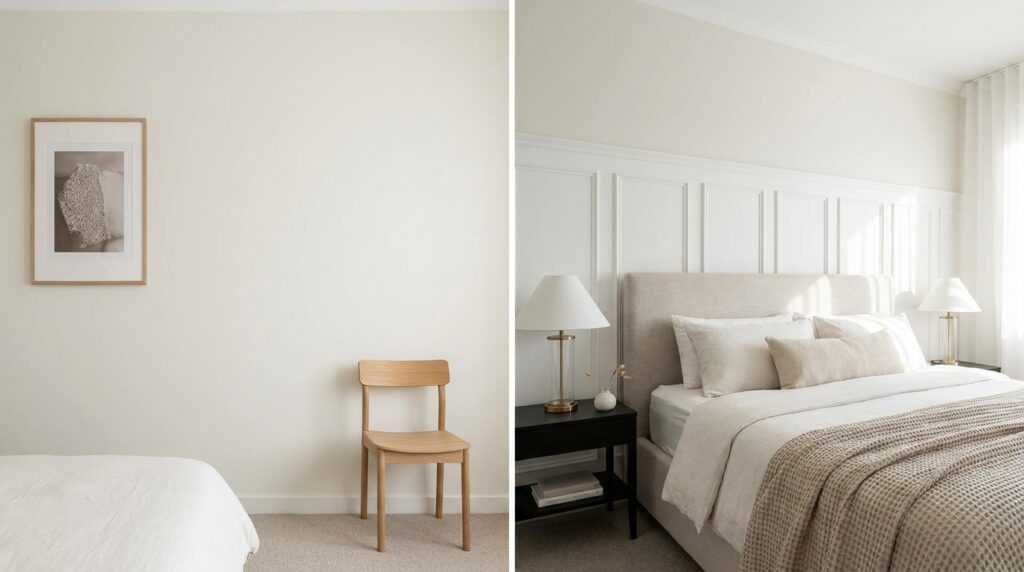
Bedroom panelling refers to the installation of decorative or structural panels on one or more walls in a bedroom. These panels can be made from wood, MDF, PVC, or composite materials and come in countless styles — from classic raised frames to modern flat slats.
The appeal is straightforward: panelling adds dimension and architectural interest to what would otherwise be a flat, featureless wall. It also has a way of making a room feel more intentional — like it was designed, not just painted.
According to annual interior design survey findings, accent walls and architectural details like panelling rank consistently among the top bedroom renovation requests. And it’s not hard to see why. In an era where people are spending more time at home, the bedroom has become a space people actually want to invest in.
Beyond aesthetics, panelling also offers a few practical perks:
- Texture and warmth — especially with wood panels, rooms instantly feel cozier
- Noise dampening — thicker panel materials can subtly reduce echo
- Hiding imperfections — panels cover uneven plaster, old wallpaper damage, or dated wall textures
- Added home value — tasteful architectural detail can positively influence resale appeal, according to real estate research
Types of Bedroom Panelling: A Complete Overview
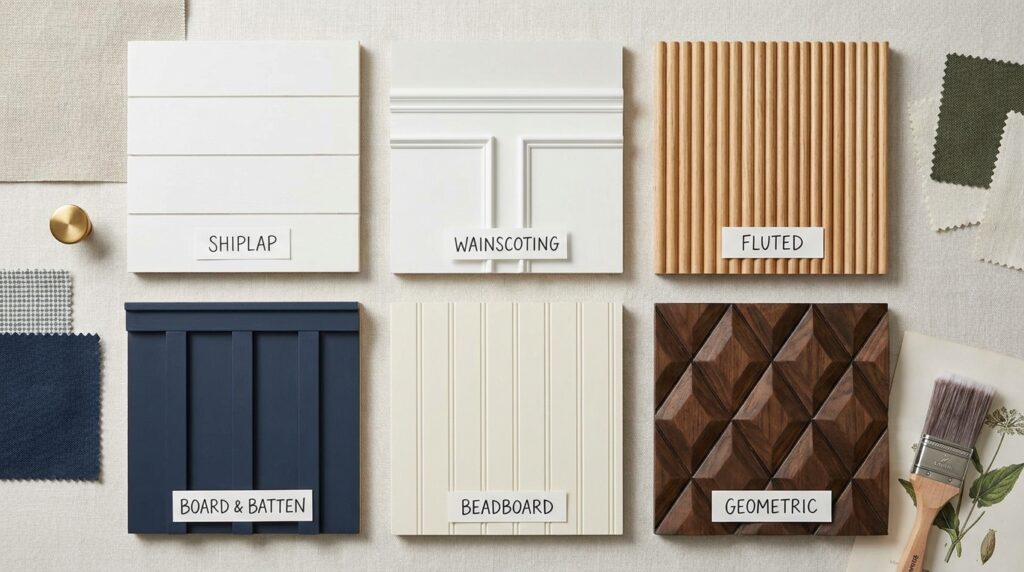
Not all panelling looks the same, and choosing the right type is probably the most important decision you’ll make. Here’s a breakdown of the most popular styles:
1. Shiplap Panelling
Shiplap is horizontal wood planking with small gaps between boards, originally used in construction but now beloved in interior design — largely thanks to the popularity of farmhouse and coastal aesthetics. It works particularly well in relaxed, casual bedroom styles.
Best for: Farmhouse, coastal, Scandinavian, and casual modern bedrooms
Material options: Real wood, MDF, PVC
2. Wainscoting
Wainscoting covers the lower portion of a wall — typically the bottom third — with panels and a chair rail trim on top. It’s one of the oldest panelling traditions in interior design and remains timeless across nearly every style.
Best for: Traditional, transitional, and classic bedroom styles
Height: Usually 32–48 inches from the floor
3. Board and Batten
This style alternates wide flat boards with narrow strips (battens) running vertically. It creates a clean, structured look and is extremely DIY-friendly. Board and batten panelling has surged in popularity in modern farmhouse and contemporary bedrooms.
Best for: Modern farmhouse, transitional, children’s bedrooms
DIY difficulty: Low to moderate
4. Fluted or Reeded Panelling
Fluted panels feature repeated vertical grooves that create a rhythm of light and shadow. This is one of the most popular choices right now for creating a high-end, boutique hotel feel. You’ll often see it used as panelling behind the bed as a statement headboard wall.
Best for: Contemporary, Art Deco, luxe minimalist bedrooms
DIY difficulty: Moderate — requires more precision
5. Beadboard
Beadboard consists of narrow vertical planks with a bead (small ridge) between each board. It has a cottage, casual feel and is often used in lower-wall applications similar to wainscoting.
Best for: Cottage, coastal, children’s rooms, bathrooms
Material options: Real wood, MDF, composite
6. Geometric or Framed Panel Moulding
This involves creating decorative rectangular or square frames directly on the wall using flat trim or moulding pieces. It’s essentially painting and trimwork combined — and it creates that classic “box panel” look seen in Georgian and colonial-style interiors.
Best for: Traditional, glam, eclectic bedrooms
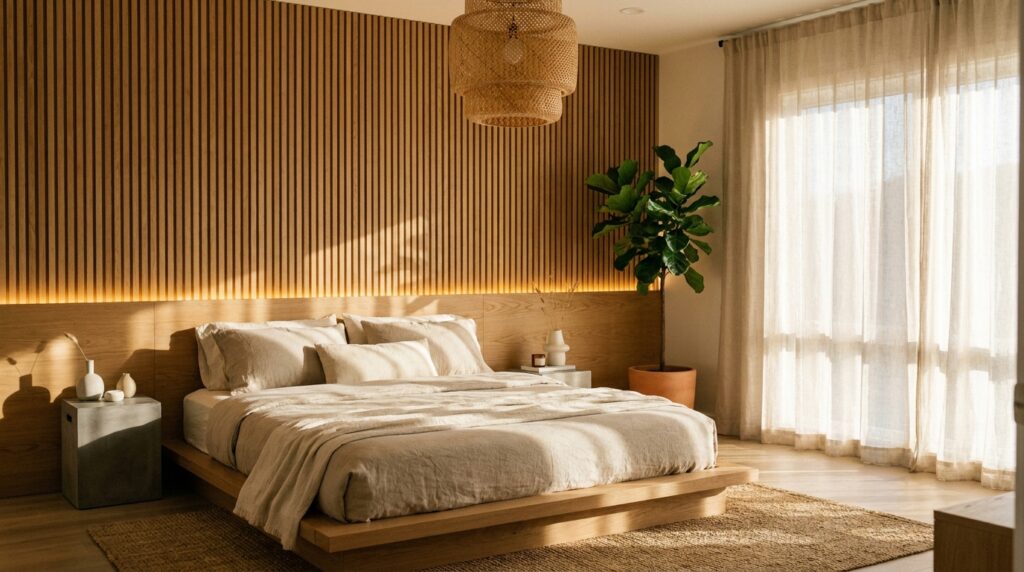
7. Slatted Wood Panelling
Thin wooden slats installed horizontally or vertically (with gaps between them) create a modern, warm, and architectural look. This style bridges the gap between raw, natural warmth and sleek contemporary design.
Best for: Japandi, Scandinavian, contemporary modern bedrooms
Bedroom Panelling Ideas by Style
Now let’s get into real-world bedroom panelling ideas broken down by interior style so you can find your direction quickly.
Modern and Minimalist Bedroom Panelling
Less is more here. Think clean lines, monochromatic color palettes, and panels that add texture without visual noise.
Top choices: Vertical flat-slat panels, fluted panelling in muted tones, simple horizontal shiplap
Color palette: White, off-white, warm gray, greige, soft black
Pro tip: Paint the panels the same color as the wall for a tone-on-tone effect — it reads as sophisticated rather than stark.
Farmhouse Bedroom Panelling
The farmhouse look thrives on warmth, imperfection, and natural materials. Shiplap and board and batten are the natural heroes here.
Top choices: White-painted shiplap, vertical board and batten, natural wood beadboard
Color palette: Crisp white, cream, sage green, dusty blue
Pairing tip: Combine panelled walls with exposed wooden ceiling beams for maximum farmhouse impact. Bedroom design research highlights this combination as a popular bedroom look.
Traditional and Classic Bedroom Panelling
Traditional panelling is about heritage and craftsmanship. Think raised-panel wainscoting, framed box moulding, and rich wood tones.
Top choices: Full-height raised panel wainscoting, Georgian-style box moulding, painted wood panelling in deep tones
Color palette: Navy, forest green, burgundy, warm white, classic cream
Pairing tip: Add crown moulding at the ceiling to complete the architectural look.
Glam and Luxe Bedroom Panelling
If your goal is boutique-hotel drama, this is your category. Fluted panels, velvet textures, and moody palettes create spaces that feel indulgent.
Top choices: Fluted or reeded panels, mirrored panel inserts, lacquered high-gloss finishes
Color palette: Charcoal, deep emerald, blush pink, rich caramel
Pairing tip: Pair fluted wall panels with brass hardware and a statement chandelier for a true five-star feel.
Scandinavian and Japandi Bedroom Panelling
Both styles celebrate natural materials, functional beauty, and calm energy. Slatted wood panels, light oak tones, and negative space define this look.
Top choices: Thin wood slats, natural-finish tongue and groove, light-stained pine panels
Color palette: Warm white, oat, blonde wood, muted terracotta
Pairing tip: Leave some panels unsealed or lightly oiled rather than painted to preserve the organic wood texture.
Children’s Bedroom Panelling
Panelling in kids’ rooms adds character without overwhelming small spaces. It’s also a clever way to hide wear and tear.
Top choices: Lower-wall board and batten, painted beadboard, colorful framed moulding
Color palette: Pastels, bold primaries (used sparingly), classic navy and white
Pro tip: Wainscoting up to 48 inches protects the lower wall from scuffs and crayon damage while still looking stylish.
Panelling Behind Bed: The Accent Wall Done Right
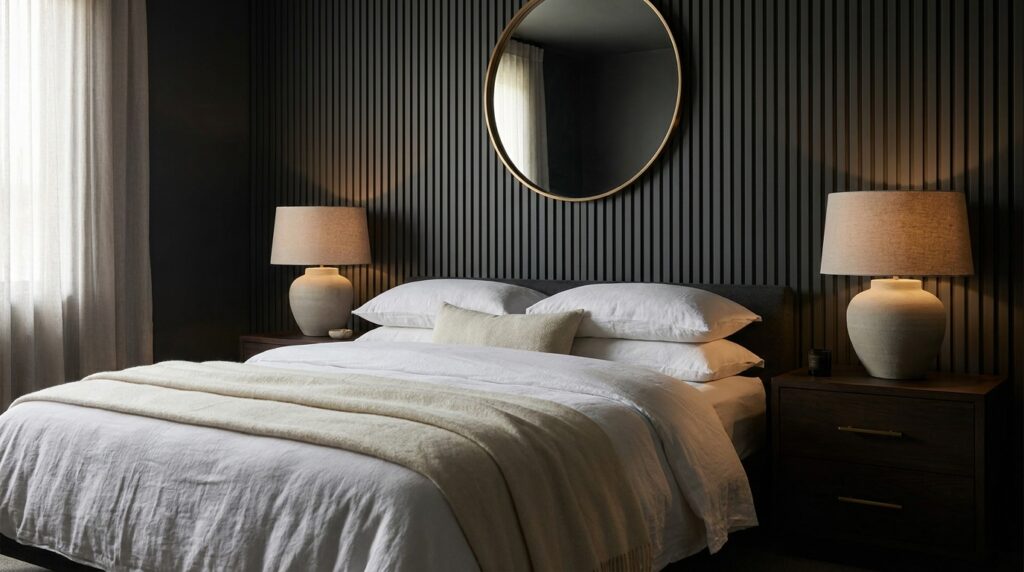
Of all the bedroom panelling ideas in this guide, the most popular request by far is panelling behind the bed — and for good reason.
The wall behind your bed is the natural focal point of any bedroom. It’s what you see first when you walk in. It frames your entire sleeping space. A well-designed panelled headboard wall can make the bed feel intentional, grounded, and luxurious — even if the rest of the room is fairly simple.
Why Panelling Behind the Bed Works So Well
- It functions as a built-in headboard, even if you don’t have a physical one
- It draws the eye immediately, creating that pulled-together “designed” look
- It adds depth and shadow that make the room feel larger, not smaller
- It’s one wall — which keeps cost and labor manageable
Best Panel Styles for Behind the Bed
| Panel Type | Aesthetic | Difficulty | Approx. Cost Per Wall |
|---|---|---|---|
| Fluted MDF | Luxe, contemporary | Moderate | $300–$800 |
| Shiplap | Farmhouse, coastal | Easy | $200–$600 |
| Board and batten | Modern farmhouse | Easy | $150–$500 |
| Geometric moulding | Traditional, classic | Moderate | $100–$400 |
| Slatted wood | Japandi, Scandi | Moderate | $400–$1,000 |
| Wallpaper-inset panels | Eclectic, glam | Easy | $200–$700 |
Note: Costs are estimates for a standard 10×10 ft wall, DIY installation, materials only. Professional installation adds labor costs.
How High Should Panelling Behind Bed Go?
This depends on your ceiling height and the look you’re going for:
- Full ceiling height — most dramatic, works best in rooms with 9+ ft ceilings
- Partial height (headboard zone) — typically 48–72 inches from the floor; feels intentional without overwhelming
- Floor-to-ceiling with a floating shelf or ledge — adds function (books, lamps, plants) at the top of the panel section
Color Strategy for Headboard Walls
The most common approach is to paint the panelled wall a contrasting or deeper color than the rest of the room. This creates the illusion that the bed is nestled into a designed alcove.
Popular combinations:
- White walls + navy panelling behind bed
- Cream walls + sage green or forest green panelling
- Gray walls + charcoal panelling (tone-on-tone)
- White walls + warm terracotta or dusty rose panelling
Wall Panelling Ideas for Every Budget
One of the biggest misconceptions about bedroom panelling is that it’s expensive. It doesn’t have to be. Here’s how to get the look at different price points.
Budget: Under $200
Options:
- Peel-and-stick foam or PVC panels — Available from online marketplaces and home improvement stores, these can mimic the look of real panelling for minimal cost
- Painted geometric moulding from craft store trim — Thin trim strips from a home improvement store glued directly to the wall, then painted to match
- Peel-and-stick wallpaper inside moulding frames — creates a framed panel effect
Best for: Renters, beginners, temporary installs
Mid-Range: $200–$600
Options:
- MDF board and batten — Pre-cut MDF sheets from your local lumber yard, glued and nailed to the wall
- Shiplap planks — Pine shiplap boards are affordable and widely available
- Beadboard panels — Often sold in 4×8 sheets that can be cut to size
Best for: Homeowners doing their first panel project, beginner to intermediate DIYers
Premium: $600–$2,000+
Options:
- Custom fluted MDF or solid wood panels — Cut to exact dimensions, often painted or stained
- Real oak or walnut slatted panels — Warm, natural, and genuinely luxurious
- Professional installation — If time or skill is a limiting factor, hiring a finish carpenter ensures clean results
Best for: Primary bedrooms, high-visibility renovations, homeowners prioritizing longevity
How to Install Bedroom Panelling: A Beginner’s Overview
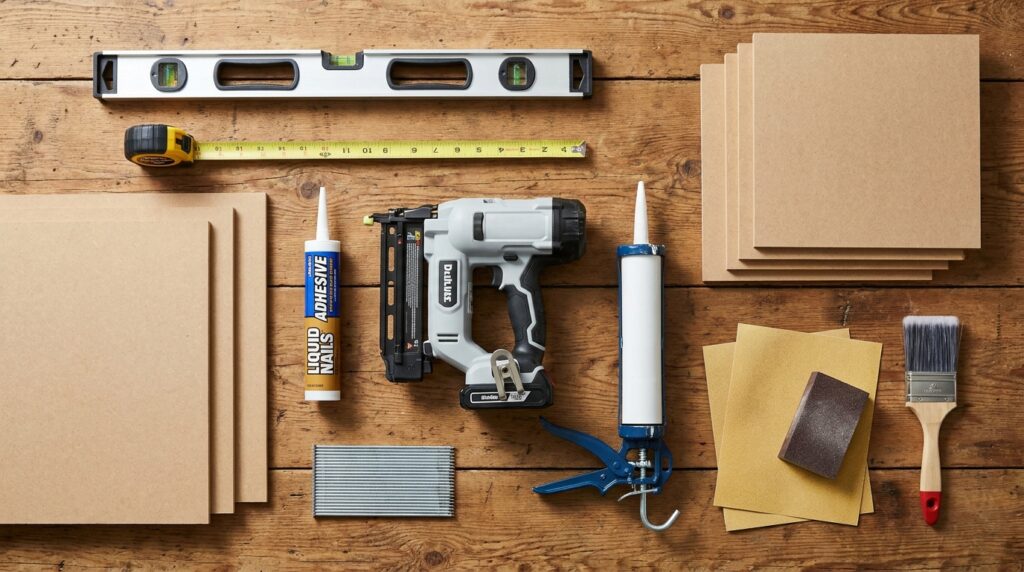
You don’t need to be a contractor to install wall panelling. For beginner-friendly styles like board and batten or shiplap, the process is genuinely manageable over a weekend. Here’s a general workflow:
Step 1: Plan and Measure
Sketch your wall and decide on your panel layout — spacing between battens, total height, and any electrical outlets or switches to work around. Most designers recommend spacing battens between 6 and 16 inches apart, depending on the look you want.
Step 2: Gather Your Materials
For a standard board and batten wall, you’ll need:
- MDF or solid wood boards (typically 1×3 or 1×4 for battens, 1×6 for base and top plates)
- Liquid nails or construction adhesive
- Finishing nail gun and nails (or hammer and finishing nails)
- Level, measuring tape, pencil
- Caulk and caulk gun
- Primer and paint
Step 3: Install the Base Plate and Top Rail
Start by nailing a horizontal board at the base of the panel area and another at the top. These define your panel height and keep everything aligned.
Step 4: Install Vertical Battens
Measure and mark equal spacing across the wall. Cut your vertical battens to fit between the top and bottom rail, then glue and nail them in place. Use your level constantly — even small deviations become obvious once painted.
Step 5: Fill, Sand, Prime, and Paint
This is arguably the most important step. Fill all nail holes and seams with lightweight spackling compound, sand smooth, apply a coat of primer, and then paint. The paint job is what makes panelling look professional or amateurish — don’t rush it.
Step 6: Caulk All Seams
Run a thin bead of paintable caulk along every edge where panels meet the wall, ceiling, or each other. This creates the illusion of seamless, built-in architecture.
Expert Tips for Stunning Bedroom Panelling
We’ve pulled together advice that separates truly professional-looking results from DIY projects that just look like… DIY projects.
1. Always paint panels and wall the same color. Unless you want the panels to visually pop as a contrast element, painting the trim and the background wall the same color creates a seamless, built-in look. This works especially well with white and off-white tones.
2. Lighting is the secret weapon. Panel textures are created by shadow — so your lighting matters enormously. Warm, directional lighting (like wall sconces flanking the bed) will dramatically highlight the depth of your panels. Flat overhead lighting will flatten them.
3. Consider your wall’s existing texture. Smooth walls make panelling installation much easier. If your walls have a heavy orange-peel or knockdown texture, skim-coating with joint compound before panelling will give you a far cleaner result.
4. Don’t skip the primer. MDF especially is thirsty — it absorbs paint unevenly without primer. Always prime before painting, even if using a paint-and-primer-in-one product.
5. Use a laser level, not just a bubble level. For long horizontal or vertical runs, a cross-line laser level ensures your boards are perfectly true over the full wall length. A bubble level only checks short segments.
6. Panel proportion matters more than you think. Battens spaced too close together in a small room make the wall feel busy. Battens too far apart in a large room can look sparse. A general rule: in rooms under 12 ft wide, keep batten spacing at 12 inches or less.
7. Don’t forget the return. If your panelled wall turns a corner, the adjacent wall needs a “return” panel to finish the edge cleanly. This small detail is what makes a renovation look truly custom versus afterthought.
Pros and Cons of Bedroom Panelling
Pros
Cons
Bedroom Panelling Color Ideas
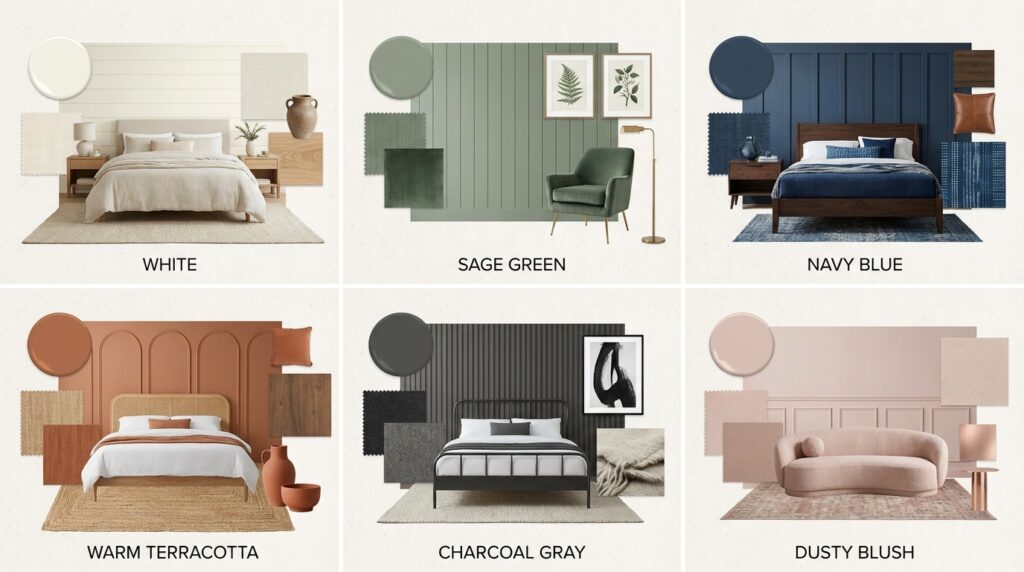
Color choice can make or break your panelling project. Here are some of the most popular and effective palettes right now:
| Color | Best Panel Style | Mood |
|---|---|---|
| Crisp White | Any style | Clean, fresh, timeless |
| Deep Navy | Wainscoting, board and batten | Dramatic, cozy, sophisticated |
| Sage Green | Shiplap, board and batten | Calm, nature-inspired, soft |
| Warm Terracotta | Geometric moulding, flat panels | Earthy, inviting, bohemian |
| Charcoal Gray | Fluted, slatted | Modern, moody, luxe |
| Dusty Blush | Framed moulding, beadboard | Romantic, soft, feminine |
| Forest Green | Full wainscoting, raised panels | Elegant, rich, dramatic |
| Natural Wood | Slatted, shiplap | Organic, warm, Japandi |
According to annual color reports, earthy mid-tones like sage, warm terracotta, and muted greens have dominated bedroom color choices for the past two years — and they work beautifully behind panels because the texture adds dimension even in subtle shades.
Common Bedroom Panelling Mistakes to Avoid
Even experienced DIYers hit snags. Here are the most common bedroom panelling mistakes — and how to avoid them.
Not accounting for outlets and switches Mark all electrical outlets before you start. Panels need to be notched or cut around them precisely. Never cover a live outlet with a panel — this is a safety hazard and code violation in most jurisdictions.
Skipping wall prep Painting over textured walls without skim-coating means your panels sit unevenly, gaps appear, and the final paint job shows every flaw. Surface prep is not optional.
Using the wrong adhesive Construction adhesive is non-negotiable for MDF. Relying only on nails leaves gaps and future movement in the panels.
Painting before caulking The order matters: caulk all seams first, smooth them, let dry, then paint. Painting first and then caulking creates a visible color overlap that looks messy.
Forgetting scale A small bedroom with ceiling-height board and batten panelling using wide boards can feel claustrophobic. In tighter spaces, use narrower battens and smaller panel proportions.
Not planning for the ceiling line Where your panelling meets the ceiling matters. Without crown moulding or a clean transition piece, the top of the panel looks unfinished.
Bedroom Panelling for Renters: No-Nail Solutions
If you’re renting and love the look of bedroom panelling, you’re not out of options. Here are approaches that don’t require permanent installation:
Peel-and-Stick Panel Tiles Several online retailers offer adhesive-backed foam or PVC panels that mimic wood or 3D textures. They peel off without damaging paint in most cases (test a small area first).
Removable Adhesive Trim You can buy thin flexible trim strips and attach them with Command adhesive strips to create a framed panel moulding effect. Lightweight, genuinely reversible, and surprisingly convincing once painted.
Freestanding Panel Screens or Room Dividers A beautiful folding screen or slatted room divider positioned behind the bed gives a panelled backdrop effect without touching the wall at all.
Temporary Wallpaper Products like peel-and-stick wallpaper or removable wallpaper offer high-quality peel-and-stick wallpaper in panel-inspired geometric patterns. They look stunning and remove cleanly.
Bedroom Panelling Trends in 2026
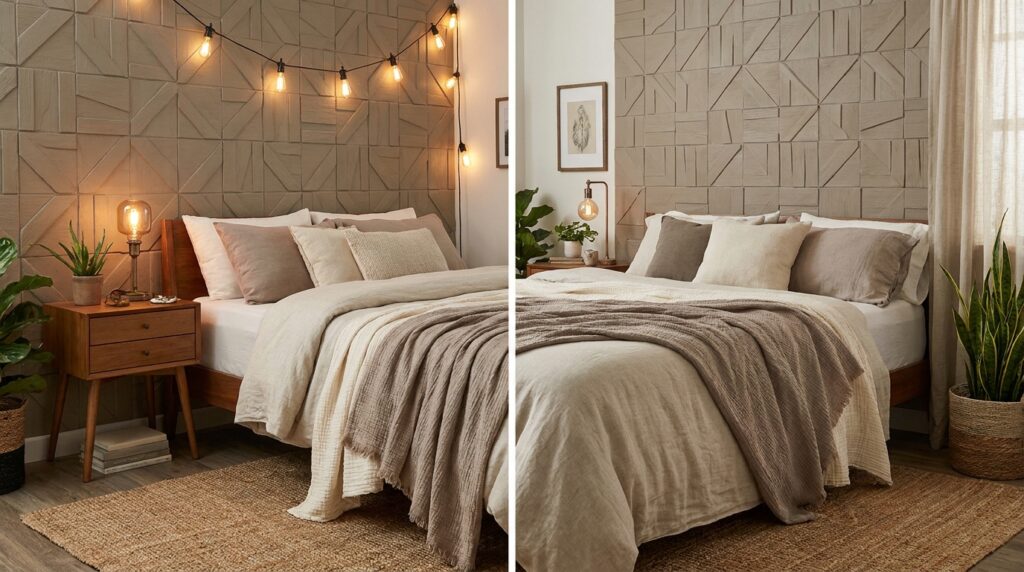
The world of bedroom wall panelling ideas evolves every season. Here’s what’s defining the look in 2026:
Curved and Arched Panels Straight edges are giving way to softened, curved panel sections — especially curved arch-top panels above a bed. This adds sculptural, almost furniture-like quality to walls and is heavily inspired by biophilic design principles that favor organic forms over rigid geometry.
Dark and Moody Panelling Deep, saturated panel colors — charcoal, forest green, plum, near-black navy — are dominating primary bedrooms. Combined with warm lighting, they create a cocooning effect that feels both dramatic and deeply relaxing.
Natural and Unmilled Wood Raw, lightly finished wood with visible grain and natural variation is trending as a direct reaction to the years of cold, ultra-minimalist white-panel saturation. Think live-edge shelving meets wall panelling.
Integrated Lighting in Panels Panels with built-in LED strip lighting along the edges or behind slatted sections create a glow that’s part architectural, part ambient lighting design — and it photographs beautifully.
Japandi Slats The Japandi aesthetic — a fusion of Japanese minimalism and Scandinavian warmth — continues to drive demand for thin, evenly spaced vertical wood slats in light natural finishes.
FAQs
1. Is bedroom panelling a good idea?
Yes — bedroom panelling is one of the most cost-effective ways to add visual character and architectural interest to a bedroom. It works in virtually every style and budget range, from budget peel-and-stick options for renters to custom wood installations for high-end primaries. When done well, it can also add perceived value to a home.
2. How much does it cost to panel a bedroom wall?
The cost varies significantly by material and method. A DIY board and batten accent wall can cost as little as $150–$300 in materials. Mid-range shiplap or MDF panel projects typically run $300–$700. Custom fluted or slatted wood installations can reach $1,000–$2,500 or more, especially with professional labor. The industry research notes that architectural millwork consistently returns strong value in primary bedroom spaces.
3. What is the best material for bedroom wall panelling?
MDF (medium-density fiberboard) is the most popular choice for painted panelling because it’s affordable, smooth, easy to work with, and takes paint beautifully. Real wood (pine, oak, cedar) is preferred for natural-finish looks. PVC and composite panels are the best choice for humid environments or moisture-prone spaces. The material comparison guide is a useful resource for comparing options.
4. Can you do bedroom panelling yourself, or do you need a professional?
Many bedroom panelling styles — especially board and batten, shiplap, and basic geometric moulding — are genuinely DIY-friendly, even for beginners. You’ll need basic tools (a miter saw or circular saw, nail gun, level) and patience for prep and painting. More complex installations like full-room raised-panel wainscoting or custom fluted panels are better handled by a finish carpenter for best results.
5. What kind of panelling is best behind a bed?
For the wall behind a bed, fluted or reeded MDF panels are currently the most popular choice for a contemporary luxe look. Shiplap works beautifully in farmhouse and coastal rooms. Board and batten suits modern farmhouse and transitional aesthetics. The best choice depends on your overall bedroom style — but any panel style that adds vertical or horizontal texture will make the headboard wall feel more intentional and dramatic.
Conclusion
Bedroom panelling is one of those design upgrades that looks far more complicated than it actually is — and pays off far more than you’d expect. Whether you’re drawn to the casual warmth of shiplap, the sculptural drama of fluted panels, or the classic elegance of wainscoting, there’s a wall panelling idea that fits your bedroom, your budget, and your skill level.
The most important first step? Pick one wall. Just one. Most people start with the panelling behind the bed, and for good reason — it’s the focal point of the entire room, and a single well-executed accent wall can make the rest of the bedroom feel cohesive by extension.
Take your time planning the layout, invest in proper prep and paint, and don’t skip the caulk. Those three things alone separate professional-looking results from average ones.
Ready to start your bedroom panelling project? Begin by choosing your style, measuring your accent wall, and picking up some sample trim strips from your local home improvement store to test the look before committing. You might be surprised how quickly a weekend of work can transform a room you sleep in every single night.

