
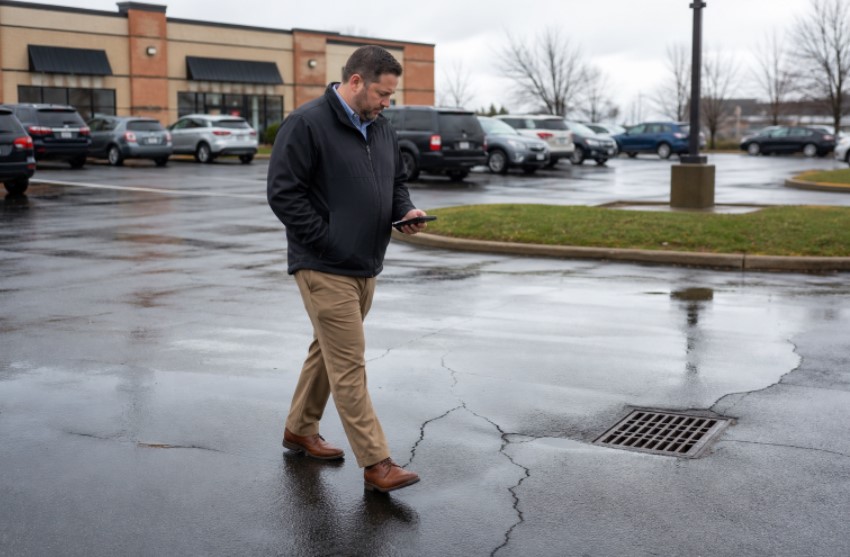
Key Takeaways
- Small cracks and drainage issues can become expensive pavement failures when left unaddressed.
- Seasonal inspections help property managers prioritize hazards, repairs, and future capital projects.
- Drainage, timely crack sealing, durable repairs, and visible markings all contribute to a safer lot.
- The right repair depends on the cause and extent of the damage, not just what is visible on the surface.
- Green infrastructure options can help manage runoff when they fit the property’s layout and maintenance capacity.
A commercial parking lot is one of the first parts of a property that customers, employees, delivery drivers, and visitors experience. Keeping it functional supports safe access, smoother traffic flow, and a better overall impression. Working with an experienced NJ commercial asphalt contractor can help property managers evaluate visible problems before they become disruptive repairs.
Parking lot care is not limited to filling potholes. It includes watching for water, tracking cracks, maintaining drainage components, refreshing markings, and making repair decisions based on how the pavement is actually performing. A consistent maintenance plan gives owners more control over timing, budgets, and tenant or customer inconvenience.
Why Parking Lot Maintenance Matters
A parking lot serves as an access route for shoppers, workers, emergency vehicles, trash collection, loading activity, and daily deliveries. Cracks, loose edges, faded striping, and standing water can create trip hazards, vehicle damage concerns, and confusion in busy areas. Planned maintenance is usually easier to schedule than emergency work after a major pavement failure.
How Each Season Affects Pavement
Asphalt responds to weather, moisture, and traffic year-round. Winter brings freeze-and-thaw cycles that can expand water inside cracks. Spring often reveals potholes, soft areas, and drainage issues after thawing ground conditions. Summer heat and repeated heavy loads can contribute to surface wear and wheel-path depressions. In the fall, leaves and debris can block drains and cause moisture to accumulate against the pavement.
For example, a retail lot may look sound in late fall, with only a few narrow cracks near the driving lanes. If water enters those cracks and freezes repeatedly during winter, the surface can break apart and form potholes by early spring.
A Practical Inspection Checklist
Conduct a full inspection at least once per season, as well as after severe storms, snow events, nearby construction, or an unusual increase in truck traffic. A simple site map and photo log can make recurring trouble spots easier to identify.
- Walk the full lot and note cracks, depressions, uneven areas, loose edges, and damaged curbs.
- Check for standing water after rainfall, especially near entrances, drains, and pedestrian routes.
- Inspect catch basins, gutters, downspouts, and visible drainage paths for blockage or damage.
- Review parking lines, arrows, fire lanes, accessible spaces, and crosswalks for fading.
- Photograph each concern and record its location, size, and date.
- Compare the current inspection with prior notes to see whether damage is stable or spreading.
Common Types of Asphalt Damage
Visible pavement damage can offer useful clues, although the surface does not always reveal the entire cause. Transverse and longitudinal cracks commonly develop as asphalt ages or moves with temperature changes. Alligator cracking, which resembles a web of connected cracks, may indicate structural weakness below the surface. Potholes form when broken pavement and water exposure worsen over time.
Other common concerns include rutting in wheel paths, raveling where aggregate becomes loose, and edge breakup where pavement lacks support or receives repeated water exposure. A small isolated crack may only need cleaning and sealing, while widespread cracking may require a closer review of the base, drainage, and traffic loads.
When to Repair, Resurface, or Rebuild
Repair choices should match the condition of the lot and the cause of the failure. Covering damaged pavement without correcting trapped water or a weak base can lead to another repair soon afterward.
- Small, isolated cracks: Clean and seal them before water reaches lower pavement layers.
- Localized potholes: Remove failed material and install a proper patch with sound edges.
- Widespread surface aging: Consider whether a surface treatment or overlay is appropriate.
- Deep rutting or broad cracking: Investigate drainage and the pavement base before choosing a solution.
- Repeated failures in the same area: Review truck routes, subgrade conditions, and nearby water sources.
The Role of Drainage
Water management belongs in every pavement assessment. Clogged catch basins, poor grading, damaged curbs, disconnected downspouts, and low areas can allow water to remain where it does the most harm. Proper maintenance of parking lot runoff features also helps property teams identify when drainage components need cleaning, repair, or more detailed evaluation.
Drainage problems affect more than asphalt. They can create slippery sidewalks, stain concrete, damage landscaping, and carry sediment or pollutants toward nearby stormwater systems. Addressing the direction and collection of water often protects the repair investment made in the pavement itself.
Pavement Markings and Site Safety
Clear pavement markings help drivers and pedestrians understand where to go without hesitation. Keep parking stalls, accessible spaces, fire lanes, loading zones, directional arrows, crosswalks, and curb markings visible. Coordinate striping with resurfacing or repairs whenever possible so the finished layout is consistent.
An office property can improve daily circulation simply by repainting faded arrows and creating a clearly marked delivery area. A review of traffic flow is especially useful after changes to entrances, tenant spaces, building additions, or loading operations.
Sustainable Options for Commercial Lots
Some commercial sites can incorporate features that manage runoff and reduce heat around paved areas. Options may include porous asphalt, permeable pavers in low-speed areas, rain gardens, vegetated swales, planted drainage islands, and carefully placed shade trees. The types of green infrastructure used in parking areas show how permeable pavement, bioretention, and swales can be integrated where soil, grading, traffic, and local requirements support them.
These features still require routine care. Inlets must remain clear, planted areas need upkeep, and permeable surfaces may need cleaning to avoid clogging. A sustainable design should be selected for its long-term practicality, not only its initial appearance.
How to Build a Year-Round Maintenance Plan
Winter Planning
Document existing cracks, confirm drainage paths, seal suitable openings before harsh weather, and identify areas that need closer observation after snow and ice events.
Spring Review
Inspect for potholes, frost-related damage, soft spots, and standing water. Address urgent hazards before increased seasonal traffic puts more stress on weakened areas.
Summer Work
Use favorable weather for larger repairs, resurfacing, surface treatments, and pavement marking projects. Plan traffic control so customers and deliveries can still move safely through the site.
Fall Preparation
Clear drains and debris, inspect pavement edges, refresh records, and schedule work that will help the lot enter winter in better condition.
Organize findings into three practical categories: Now for immediate hazards, This Season for repairs that should be scheduled promptly, and Future Budget for larger projects that need planning and funding. Consistent inspections, sound drainage, timely repairs, and clear records can help a commercial parking lot remain safer and more dependable throughout 2026 and beyond.

