
Key Takeaways
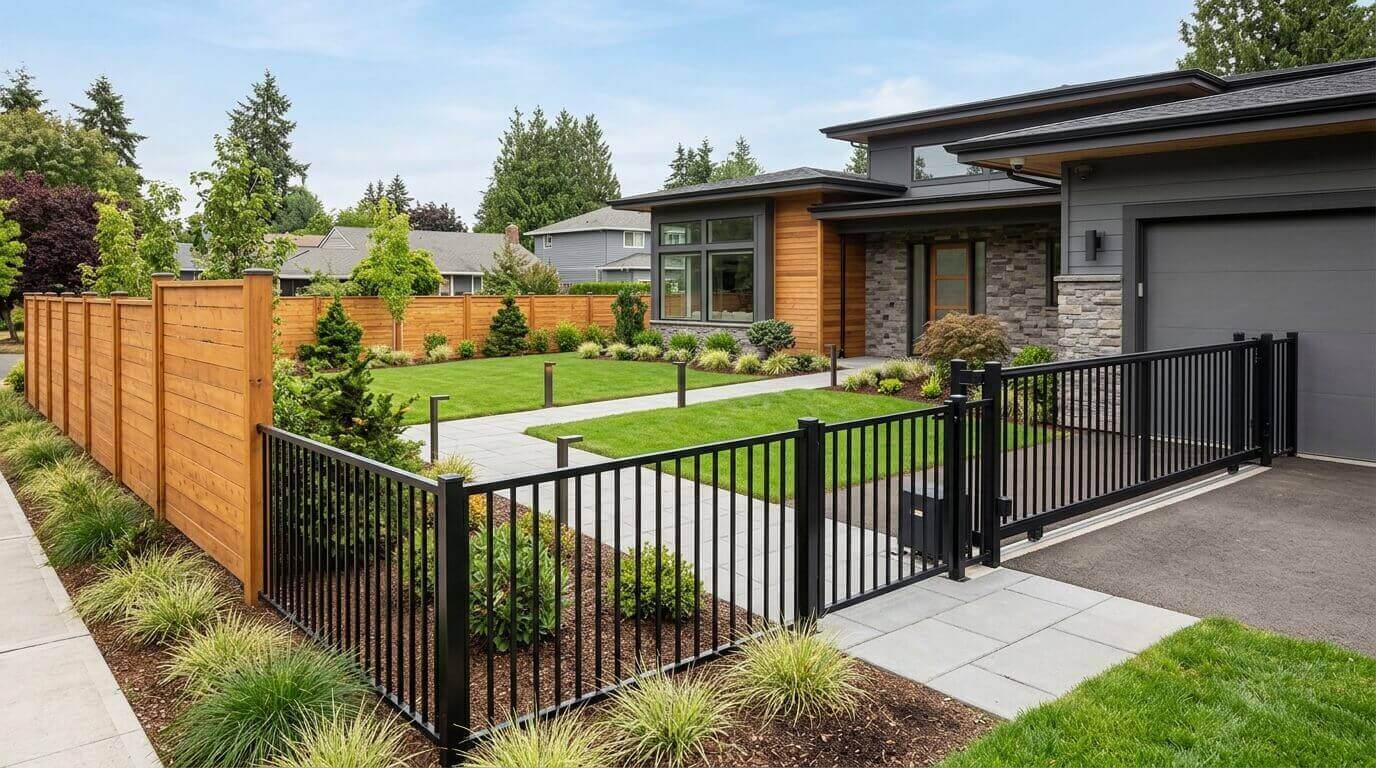
- A complete property perimeter can combine physical fencing, controlled entry, video visibility, monitoring, and landscape maintenance.
- Different companies can address separate parts of a perimeter, including fencing, cameras, monitored security, automated access, and landscaping.
- Fence selection should account for property use, gate placement, soil conditions, drainage, wind exposure, and maintenance.
- Automated gates require appropriate safety measures, including obstruction detection, safe control placement, and regular inspections.
- Landscaping can affect visibility, drainage, equipment access, and the long-term condition of fences and gates.
Why Does a Layered Property Perimeter Work Better?

What does a well-planned property perimeter actually need? For many homeowners and facility managers, the answer goes beyond a fence.
A privacy fence can define a backyard, a chain-link enclosure can manage access, and an ornamental metal perimeter can provide a more open appearance. Cameras, gate controls, alarms, lighting, and landscaping can address other practical aspects of managing the property’s boundaries.
A practical perimeter may include six connected layers:
- Physical fencing
- Pedestrian and vehicle gates
- Access control
- Video coverage
- Alarm or monitoring systems
- Clear sightlines and landscape maintenance
These elements do not necessarily need to come from one company. Different specialists can handle different parts of the system depending on the property’s layout, purpose, budget, and maintenance requirements.
For commercial properties, commercial chain link fencing can be one option when visibility, controlled access, and a clearly defined boundary are important considerations.
How Were These Companies Selected?
This resource focuses on companies with different, complementary roles rather than businesses offering identical services. The selection considers service categories, documented capabilities, operational scale, and practical relevance to residential, commercial, and industrial properties.
Fence Concepts is included for its fencing and gate-related services. Ring addresses video visibility and connected security devices. ADT focuses on professionally monitored security. Chamberlain Group provides automated access technologies, while BrightView operates in commercial landscape management.
The purpose is to show how different components can contribute to a property perimeter without assuming that every property requires the same combination of products or services.
Fence Concepts
Fence Concepts focuses on fencing and gate systems for residential, commercial, and industrial properties. Founded in 2008, the company describes an approach that considers factors such as property layout, soil conditions, wind exposure, gate placement, and long-term use.
A fence does more than mark a boundary. Its height, material, opening locations, and gate configuration can affect privacy, visibility, pedestrian movement, vehicle access, and maintenance.
Property owners researching a fence company Edmond property owners can rely on should consider factors such as installation methods, material options, site conditions, maintenance requirements, and the intended purpose of the fence rather than focusing only on appearance.
Why Is It On the List?
Fence Concepts states that it:
- Serves 10 Oklahoma communities.
- Works across residential, commercial, and industrial property types.
- Operates with nine dedicated installation crews.
- Offers materials including Western red cedar, chain link, metal, ornamental iron, vinyl, and composite.
- Provides installation, repairs, maintenance, specialty fencing, temporary fencing, and gate automation.
- Includes a 1-year workmanship warranty on installations.
For a property perimeter, the more important consideration is how the selected material, gate configuration, site conditions, and intended use fit together.
For example, chain-link fencing may prioritize visibility and controlled access, while a solid privacy fence may place greater emphasis on screening and separation.
Ring
Ring addresses the video-visibility portion of a property perimeter. Its product range includes video doorbells, outdoor cameras, alarms, sensors, app alerts, spotlights, floodlights, and sirens.
Cameras can be useful around driveway gates, side entrances, detached garages, delivery areas, pool enclosures, and other access points where visual awareness is important.
Why Is It On the List?
A fence establishes a physical boundary, while a camera can provide information about activity near a particular part of that boundary.
For example, a camera positioned toward a side gate can help a homeowner observe activity around an entrance without requiring coverage of the entire property. The fence directs movement toward the gate, while the camera provides visibility at that access point.
Camera placement should also account for privacy. Devices should generally focus on the property owner’s entrances, walkways, yard, or other relevant areas rather than unnecessarily recording neighboring windows, patios, or private outdoor spaces.
ADT
ADT represents the professional-monitoring portion of a perimeter system. The company reports more than 6 million customers, over 13,000 professionals, and more than 150 locations in the United States.
Monitored security can provide an additional response layer when connected sensors or alarms identify an event.
Why Is It On the List?
ADT does not replace fencing, gates, or other physical barriers. Instead, monitored security can operate alongside them.
For example, a property with a chain-link or ornamental metal perimeter can use fencing to establish the boundary while monitored security equipment handles certain after-hours alerts or intrusion events.
The appropriate arrangement depends on the property’s layout, equipment, monitoring service, and response procedures. Security monitoring is therefore best considered as one component of a broader property plan.
Physical barriers and other security measures can also form part of a wider site-safety strategy, particularly for commercial properties where access points and construction-related risks need to be considered together. Physical security in commercial construction covers some of these broader considerations.
Chamberlain Group
Chamberlain Group supports automated access through brands such as LiftMaster, Chamberlain, and myQ.
These technologies can be relevant to driveway gates, garages, multifamily properties, commercial entrances, and industrial facilities where vehicle access needs to be managed consistently.
Why Is It On the List?
Gate automation depends partly on the physical gate itself. The gate must be appropriate for the operator, expected traffic, available space, and operating conditions.
Before installing an automated gate system, property owners should consider:
- Power-outage operation
- Battery backup
- Emergency-release mechanisms
- Gate weight and dimensions
- Slope and surface conditions
- Vehicle detection
- Maintenance requirements
Gate safety deserves particular attention. Automatic gates should use appropriate entrapment-protection measures, including obstruction detection and reversing mechanisms where applicable.
Control devices and moving components should also remain accessible for inspection and maintenance.
BrightView
BrightView represents the landscape-management side of a property perimeter. Landscaping can affect how easily fences, gates, cameras, lighting, and other perimeter components can be accessed and maintained.
The company reports a workforce of approximately 21,500 team members serving commercial landscaping clients across the United States.
Why Is It On the List?
Plants and landscape features can influence the practical performance of a perimeter.
Shrubs should not press against fence panels, cover address markers, block cameras, or interfere with gate hinges and control boxes.
Clear drainage around posts can also help reduce standing water near structural components. Landscape planning should therefore consider plant growth, drainage, visibility, maintenance access, and equipment clearance.
Before landscaping or property cleanup begins, yard debris removal and lawn preparation can help keep fence lines, gates, drainage areas, and equipment routes clear.
How Should You Choose the Right Property Perimeter Company?
Choosing a company starts with identifying what the property actually needs. A residential backyard may require a different combination of fencing, access control, lighting, and landscaping than a commercial or industrial facility.
1. Does the Contractor Understand the Site?
The property should be evaluated for soil conditions, drainage, wind exposure, slopes, existing structures, utilities, access routes, and applicable local requirements.
These factors can influence fence placement, post installation, gate operation, and long-term maintenance.
2. What Exactly Is Included in the Estimate?
A detailed estimate should identify relevant costs and responsibilities, including:
- Fence materials
- Posts and hardware
- Gates
- Gate automation
- Removal of existing structures
- Repairs
- Labor
- Permits, where applicable
- Site preparation
A clear scope makes it easier to compare proposals without focusing only on the initial price.
3. What Is the Main Purpose of the Fence?
Fence height, material, and configuration should reflect the property’s actual needs.
The primary goal may be:
- Privacy
- Pet containment
- Controlled vehicle access
- Pedestrian control
- Visibility
- Property separation
- A combination of these objectives
The appropriate design can change depending on which goal has the highest priority.
4. Is There Enough Clearance Around Equipment?
Cameras, lights, gate operators, utility boxes, hinges, latches, and other components need enough space for normal operation and future maintenance.
Landscape growth should also be considered. A plant that is small when installed may eventually obstruct a camera, restrict a gate, or make equipment difficult to inspect.
5. How Will the Perimeter Be Maintained?
A perimeter should be inspected periodically rather than only when something stops working.
Posts, fasteners, hinges, latches, operators, camera positions, drainage areas, and landscape growth should be checked at least annually and after significant storms.
What Should Be Considered Before Installation?
Several site conditions can influence the design and long-term performance of a property perimeter.
Wind Exposure
Tall or solid fencing can experience substantial wind pressure. Post spacing, foundation requirements, materials, and structural design should be appropriate for the site and fence type.
Drainage
Water that repeatedly collects around posts or gates can contribute to deterioration and ground movement. Drainage should therefore be considered during the planning stage.
Soil Movement
Soil type and movement can affect post stability and gate alignment. Installation methods should account for the conditions found on the property.
Privacy and Visibility
A completely solid barrier can provide privacy but may also create concealed areas. Depending on the property, partial visibility or a combination of fence styles may provide a better balance.
Emergency Access
Gate openings should not interfere with necessary emergency access. Automated systems should also have appropriate procedures for power loss or equipment failure.
Conclusion
A property perimeter is not necessarily a single product or service. It can be a combination of physical barriers, gates, access controls, cameras, monitoring systems, lighting, and landscape management.
The companies discussed here illustrate how those functions can be divided among different specialists. Fence providers can address the physical boundary, camera systems can improve visibility, monitoring services can add an alert and response layer, automated access systems can manage vehicle movement, and landscaping can help keep the overall setup accessible and maintainable.
The most practical approach is to start with the property’s actual requirements, evaluate site conditions, define access and privacy goals, and then select the individual components that address those needs. Regular inspections and maintenance can help keep the perimeter functional as the property, equipment, and surrounding landscape change.

