
If you have been wondering when to plant potatoes in Kansas, the short answer is mid-March through mid-April for most of the state, with soil temperature being the real deciding factor rather than the calendar date alone. Kansas gardeners have long used St. Patrick’s Day as a rough marker, but the actual right time depends on where you live, how the soil has warmed up that year, and whether you are growing a spring or fall crop. This guide walks through the exact timing for every region of the state, how to confirm your soil is ready, and the planting and care steps that lead to a strong harvest.
Potatoes are a cool-season crop that tolerates light frost on the soil surface but not hard freezes once shoots emerge. Getting the timing right matters more than most gardeners realize, because planting too early in cold, wet soil often leads to rotted seed pieces, while planting too late shortens the window before summer heat slows tuber development. The sections below cover soil temperature targets, regional planting windows, seed potato preparation, step-by-step planting instructions, ongoing care, and a fall planting option that many Kansas gardeners overlook.
Quick Answer: Best Time to Plant Potatoes in Kansas
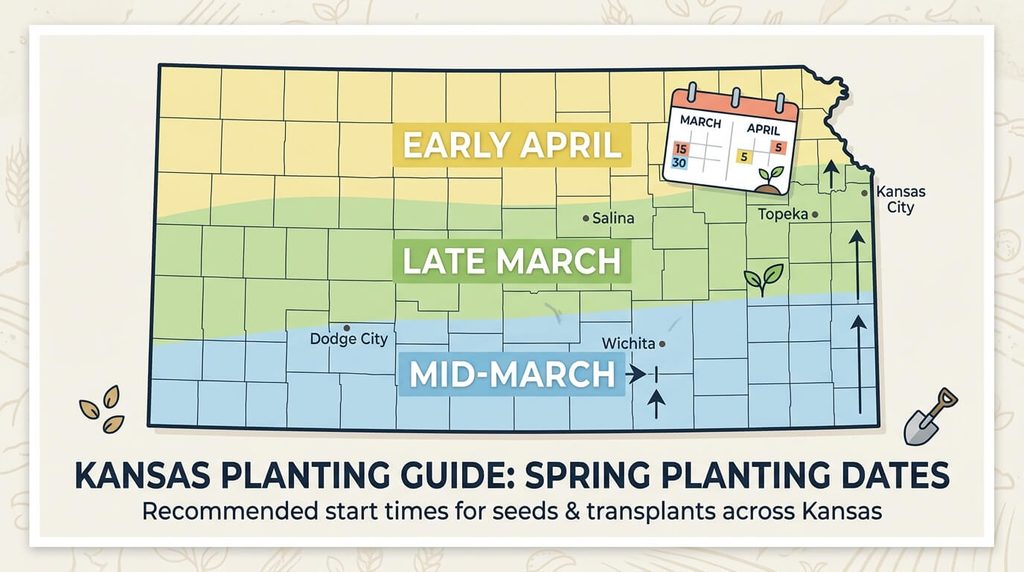
For most of Kansas, the ideal planting window falls between mid-March and mid-April, with St. Patrick’s Day (March 17) commonly used as a traditional reference point. Kansas State University horticulture specialists have noted that any time from mid- to late-March works well for home gardeners, and the exact date should shift a few weeks earlier or later depending on your region and how quickly the soil warms that particular spring.
Gardeners in warmer, southern parts of the state can often plant slightly earlier, while those in the far northwest may need to wait until early April or later. A second, smaller planting window opens in early to mid-July for gardeners who want a fall harvest, which is covered in more detail further down this guide.
Why Soil Temperature Matters More Than the Calendar
Calendar dates are a helpful starting point, but soil temperature is what actually determines whether seed potatoes will sprout or simply rot in the ground. Seed pieces need soil that has warmed enough for active growth, and planting into cold, saturated soil is one of the most common reasons home gardeners lose part of their crop.
Most university extension guidance agrees on a similar range for potatoes. Soil at planting depth should reach at least 45°F, since colder soil leaves seed pieces sitting dormant and vulnerable to rot for a week or more before conditions improve. Once the soil warms into the 45°F to 55°F range, sprouting speeds up and the risk of disease drops considerably.
After planting, the plants themselves prefer daytime air temperatures in the upper 60s to low 70s for shoot emergence, and tuber formation happens best when soil temperatures sit between roughly 50°F and 60°F. Temperatures much above 80°F at tuber level slow down or stop tuber development entirely, which is one reason Kansas gardeners are encouraged to get potatoes in the ground before the heat of late spring arrives.
You do not need to guess at soil temperature. A basic soil thermometer inserted two to three inches deep gives an accurate reading, and a free statewide soil temperature tracking tool updates readings from dozens of weather stations in real time.
Regional Planting Windows Across Kansas
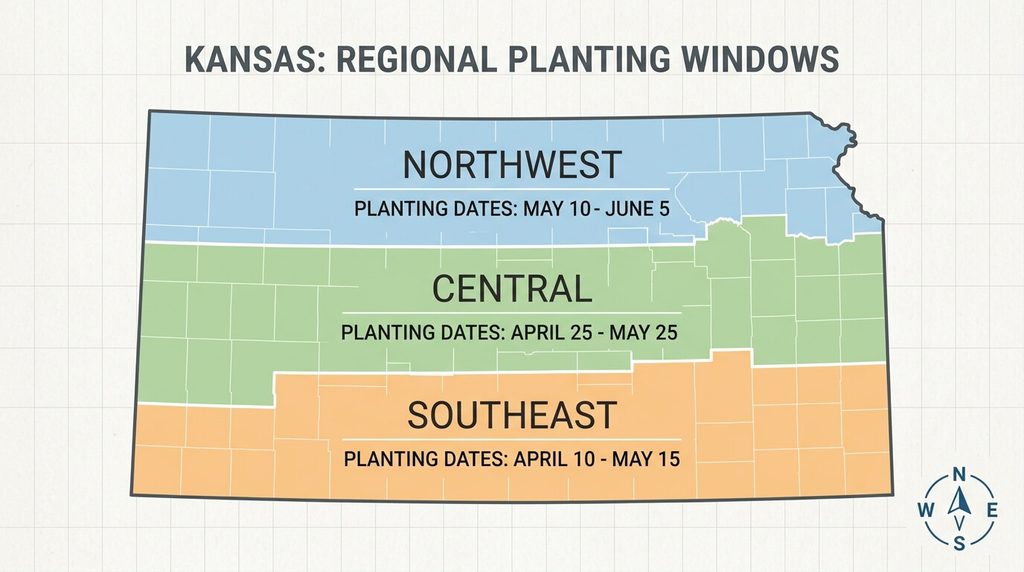
Kansas spans a wide range of climate zones from the drier, cooler northwest to the more humid southeast, so planting dates genuinely differ depending on where your garden sits. The table below breaks down general planting windows by region, though local weather in any given year can shift these dates by a week or two in either direction.
| Region | Example Areas | Typical Last Frost | Suggested Planting Window |
|---|---|---|---|
| Southeast and South-Central Kansas | Wichita, Hutchinson | Early to mid-April | Mid-March to early April |
| Northeast and East-Central Kansas | Kansas City area, Topeka, Manhattan | Early to mid-April | Mid-March to mid-April |
| Central Kansas | Salina | Early to mid-April | Mid- to late-March |
| Northwest Kansas | Goodland, Colby | Late April to early May | Mid-April to early May |
Gardeners in the Kansas City metro area are sometimes given a slightly wider window, with local garden centers recommending planting anywhere from early March through early April depending on the season. Because frost dates in Kansas can shift by five to nine weeks between the earliest and latest recorded years at a given location, it is worth checking a current seasonal outlook rather than relying only on averages.
If you also grow other crops with strict timing needs, comparing regional planting calendars can help you plan your whole garden season at once. Kansas gardeners working across multiple crops often find it useful to review a broader guide like when to plant garlic in Indiana for a sense of how fall-planted crops fit around spring potato planting, since the two often share bed space in a rotation.
Choosing and Preparing Seed Potatoes
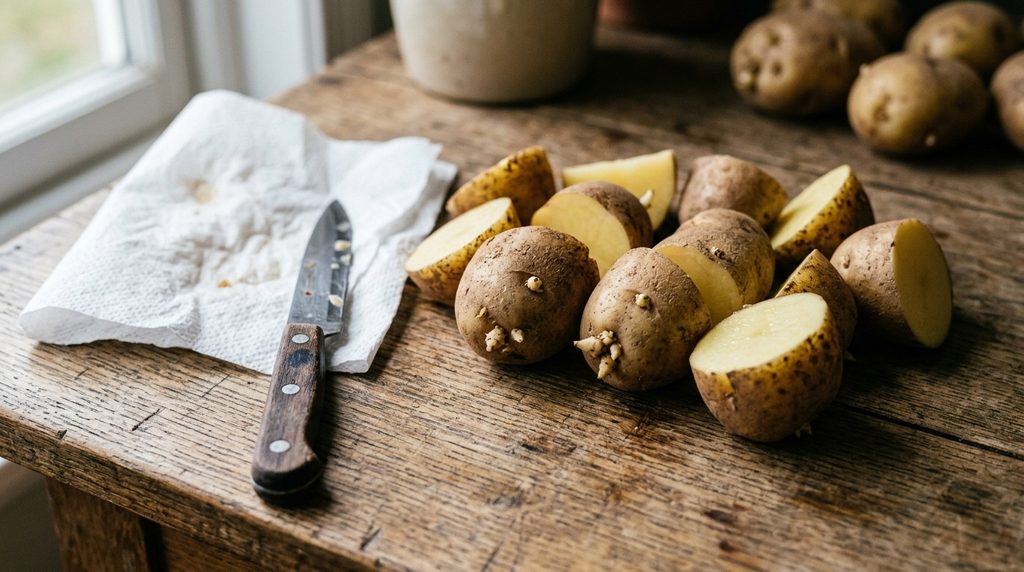
Seed potatoes are not the same as the potatoes sold for cooking in the grocery store’s produce section. Certified seed potatoes are grown and inspected specifically to be disease-free, and they carry enough stored starch to sprout reliably once soil temperatures allow, which is why extension experts consistently recommend buying seed potatoes rather than repurposing kitchen potatoes.
Popular varieties grown in Kansas gardens include red-skinned types such as Norland and Red Pontiac, white-skinned types such as Kennebec and Superior, and russet types such as Norkotah. Each variety differs slightly in maturity time and texture, so it helps to match your choice to how you plan to use the harvest, whether that is boiling, baking, roasting, or storing through winter.
Here is a simple process for preparing seed potatoes before planting:
- Select firm, certified seed potatoes with no soft spots, mold, or shriveling.
- Cut larger potatoes into pieces roughly the size of a golf ball, making sure each piece has at least one or two healthy eyes (small buds).
- Aim for each seed piece to weigh between 1.5 and 2 ounces; one pound of seed potatoes typically yields 8 to 10 usable pieces.
- Let the cut pieces sit at room temperature for two to three days before planting so the cut surface can heal over, a process called suberization that helps prevent rot in the ground.
- Small, whole seed potatoes under about 2 ounces can be planted uncut.
Step-by-Step: How to Plant Potatoes in Kansas
Once your soil has reached at least 45°F and your regional planting window has arrived, the actual planting process is straightforward. Following consistent spacing and depth gives the plants room to develop a full set of tubers without crowding.
- Choose a spot with full sun and loose, well-drained soil. Heavy clay soil should be amended with compost before planting.
- Dig furrows about 4 inches deep and space rows 2 to 3 feet apart.
- Place seed pieces cut-side down and eye-side up, spacing them 10 to 12 inches apart within the row.
- Cover with about 3 to 4 inches of soil, leaving the furrow slightly shallow at first so you can add soil later as plants grow.
- Water gently after planting if the soil is dry, but avoid soaking newly planted seed pieces in already wet ground.
- Expect emergence in roughly 2 to 4 weeks; cool spring soil can sometimes push this closer to mid-to-late April even from an early planting date.
Caring for Potato Plants After Planting
Once shoots appear above ground, the main task shifts to hilling, which means pulling loose soil up around the base of each plant as it grows. New tubers form above the original seed piece, and if they are left exposed to sunlight they turn green and develop a bitter, toxic compound called solanine, so keeping them covered is not optional.
Hill soil around the stems two or three times during the growing season, aiming for a final ridge height of about 8 to 12 inches. Water consistently, since irregular watering is one of the most common causes of oddly shaped or hollow tubers. Straw mulch after hilling helps retain soil moisture and keeps soil temperatures from spiking during hot stretches, which also happens to make it harder for Colorado potato beetles to reach the base of the plant.
Keep an eye out for pest pressure throughout the season. Colorado potato beetles are the most common pest problem for Kansas potato growers, and hand-picking adults and larvae early in an infestation is often enough to prevent serious damage in a home garden. If broader garden pest issues come up in the same bed, a resource like how to get rid of crabgrass can help you manage weed pressure around vegetable rows without disturbing shallow potato roots.
Fall Potato Planting in Kansas
Spring is not the only option. Many Kansas gardeners plant a second crop in early to mid-July for a harvest around late October or early November, sometimes referred to informally as a “Christmas potato” crop because the tubers store well through the holidays.
Fall planting comes with a different set of challenges. Summer heat can stress newly planted seed pieces, so it helps to plant slightly deeper, around 4 to 5 inches, and apply a heavier layer of mulch immediately after planting to keep the soil cooler. Consistent watering becomes even more important in July planting, since soil dries out faster in summer heat than it does in cool spring conditions.
| Planting Season | Typical Planting Window | Planting Depth | Key Challenge |
|---|---|---|---|
| Spring | Mid-March to mid-April | 3 to 4 inches | Cold, wet soil and late frost |
| Fall | Early to mid-July | 4 to 5 inches | Summer heat and fast soil drying |
Common Mistakes to Avoid
Even experienced gardeners run into a few recurring problems with potato timing and planting. Reviewing these ahead of time can save an entire section of your garden.
- Planting before soil reaches 45°F, which leads to seed piece rot in cold, damp ground.
- Using grocery store potatoes instead of certified seed potatoes, which often carry disease and may be treated with sprout inhibitors.
- Skipping the curing period after cutting seed pieces, which raises the risk of rot at the cut surface.
- Planting in heavy, poorly drained soil without amending it first, since potatoes are especially prone to rot in waterlogged ground.
- Failing to hill soil around plants, which allows tubers to green and develop solanine.
- Letting soil dry out completely and then overwatering, which causes cracked or misshapen tubers.
Troubleshooting: Why Potatoes Fail to Come Up
If your potatoes have not emerged within about four weeks of planting, a few factors are usually to blame. Cold, wet soil is the most frequent cause, since it slows sprouting and can cause seed pieces to rot before they ever send up a shoot. Digging carefully near the row to check for a rotted, mushy seed piece will usually confirm this.
Planting too deep in heavy soil can also delay or prevent emergence, since dense clay makes it harder for shoots to push through. If you suspect this, gently loosen the surface soil above the row rather than digging up the seed piece itself. In dry years, seed pieces planted in soil that never receives moisture after planting may simply sit dormant, so a light watering can sometimes jump-start delayed sprouting.
When to Harvest
Potatoes are ready for harvest based on plant appearance rather than a fixed date. New, smaller potatoes can be gently dug out from the side of the row once plants are flowering, while the main harvest should wait until the vines begin to yellow and die back, which typically happens in early to mid-summer for a spring crop planted in March or April.
Dig carefully with a garden fork to avoid nicking the tubers, then let harvested potatoes air-dry in a shaded spot for a day or two before moving them to a cool, dark storage location. Avoid washing potatoes before storage, since excess moisture encourages rot.
Frequently Asked Questions
What is the best month to plant potatoes in Kansas?
Mid-March through mid-April is the best general window for most of the state, with exact timing depending on your region and how quickly the soil warms that year. Northwest Kansas often needs to wait until early April, while central and eastern parts of the state can typically plant a few weeks earlier.
Can I plant potatoes too early in Kansas?
Yes. Planting before the soil reaches at least 45°F increases the risk of seed piece rot, since cold, damp soil holds moisture around the seed without providing enough warmth for sprouting. It is better to wait a week or two than to plant into soil that has not warmed sufficiently.
Do potatoes need to go in after the last frost?
Not necessarily. Seed potatoes are planted below the soil surface, so they are protected from light frost while underground, and the traditional St. Patrick’s Day planting date in Kansas typically falls before the average last frost in most regions. Emerging shoots are more sensitive to frost, so a late cold snap after plants have sprouted can still cause damage.
How deep should potato seed pieces be planted?
For spring planting, 3 to 4 inches deep is standard, while fall crops planted in summer heat benefit from slightly deeper planting at 4 to 5 inches to keep seed pieces cooler and better protected from drying out.
Can I grow a second, fall crop of potatoes in Kansas?
Yes. Planting in early to mid-July allows for a fall harvest, though summer heat requires extra attention to mulching and watering to keep the soil from getting too hot for tuber development.
Why did some of my potatoes turn green, and are they safe to eat?
Green potatoes have been exposed to sunlight, which triggers the formation of solanine, a compound that tastes bitter and can be harmful if eaten in quantity. Cut away any green portions before cooking, and prevent the issue going forward by hilling soil consistently over the growing tubers.
How long does it take potatoes to sprout after planting?
Most seed potatoes take roughly 2 to 4 weeks to emerge after planting, depending on soil temperature. Cooler spring soil in Kansas often means shoots do not appear until mid- to late April, even from a mid-March planting date.
What type of soil works best for potatoes in Kansas?
Loose, well-drained soil with good organic matter content produces the best results. Heavy clay soil should be amended with compost before planting, since dense, poorly drained ground raises the risk of rot and misshapen tubers.
Final Thoughts
Timing your potato planting around soil temperature rather than a fixed date is the single biggest factor separating a strong Kansas potato harvest from a disappointing one. Start with the mid-March to mid-April window as your general guide, confirm your soil has warmed past 45°F, choose certified seed potatoes, and hill consistently as plants grow. If you are planning out a full garden season, it can help to map your potato bed alongside other timed plantings, including cool-season crops like grass and lawn projects; a resource such as when to plant grass seed in NC offers a useful comparison for how regional timing principles apply across different plant types, even outside Kansas itself. With the right timing and a bit of attention through the season, home-grown potatoes are one of the most rewarding crops a Kansas garden can produce.

