
If you have ever planted tulip bulbs too early and watched them rot in the ground, you already know that timing is everything. Knowing when to plant tulips in North Carolina depends on where you live in the state, since the mountains, the Piedmont, and the coast all cool down at different rates each fall. For most of North Carolina, the safe planting window falls between mid-October and early December, once nighttime temperatures settle into the 40s. This guide breaks down exactly when to plant based on your region, how to check your soil instead of guessing, and what to do if you live somewhere the ground rarely gets cold enough on its own.
Quick Answer: The Best Time to Plant Tulips in North Carolina
In short, plant tulip bulbs once the soil at a 6-inch depth cools to around 60°F or lower, which typically happens:
- Western mountains (Asheville, Boone, Hendersonville): mid-October to early November
- Piedmont (Charlotte, Raleigh, Greensboro, Winston-Salem): late October to early December
- Coastal Plain and Outer Banks (Wilmington, Fayetteville, New Bern): late November through December, with pre-chilled bulbs
If you only remember one rule, remember this: plant late rather than early. Tulips that go into warm soil are far more likely to rot or sprout too soon than ones planted a few weeks late.
Why Timing Matters So Much for Tulips
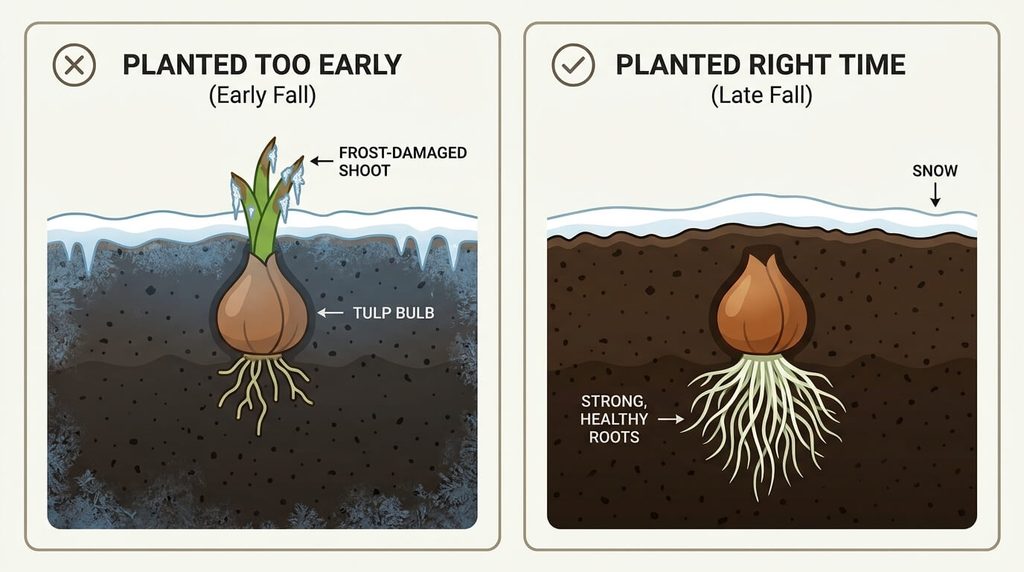
Tulips are not like most plants you tuck into the ground and forget about. Each bulb needs a long stretch of cold before it can produce a flower stem in spring, a process gardeners call vernalization. Without enough cold exposure, a tulip either refuses to bloom or pushes up a short, weak stem close to the ground. Extension horticulture agents in North Carolina describe this chilling requirement as roughly 12 to 16 weeks of temperatures between 32°F and 45°F, which is why fall planting timed correctly matters so much in a state where winters can be mild.
Plant too early, while the soil is still holding onto summer warmth, and the bulb may try to grow immediately instead of resting. Those premature shoots are then exposed to the first hard freeze and often die back before spring even arrives. Plant too late, after the ground has frozen solid, and the roots never get the chance to establish before winter locks everything in place.
North Carolina’s Growing Zones and What They Mean for Planting
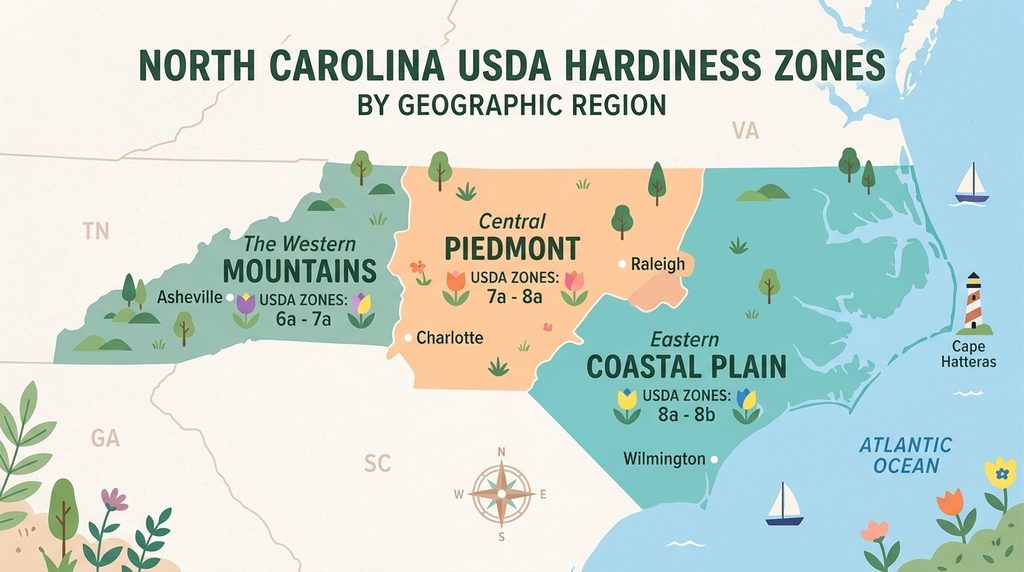
North Carolina’s geography stretches from high mountain ridges to flat coastal plains, so a single statewide planting date does not work well. According to the 2023 USDA Plant Hardiness Zone Map, the state spans USDA zones 6a through 9a, based on average annual minimum winter temperatures. That range matters for tulips because it directly affects how quickly your soil cools in autumn and how reliably your bulbs will receive enough chilling hours.
Broadly speaking, the western mountains sit in the cooler zones 6a to 7b, the Piedmont falls mostly into zones 7b to 8a, and the coastal plain and Outer Banks warm up into zones 8a to 9a. Knowing your specific zone helps you decide not just when to plant but whether your tulips are likely to return the following spring without extra help.
The Best Planting Window for Each Region
Rather than relying on a single calendar date, match your planting window to your part of the state. The table below summarizes what North Carolina Cooperative Extension offices across different counties recommend for their local climates.
| Region | Approx. USDA Zone | Typical Planting Window | Notes |
|---|---|---|---|
| Mountains (Asheville, Boone, Waynesville) | 6a–7b | Mid-October to early November | Soil cools fastest here; earliest safe window in the state |
| Piedmont (Charlotte, Raleigh, Greensboro) | 7b–8a | Late October to early December | Most flexible window; watch soil temperature closely |
| Coastal Plain and Outer Banks (Wilmington, Fayetteville, New Bern) | 8a–9a | Late November through December | Pre-chilling bulbs is strongly recommended |
Extension horticulture staff in the eastern part of the state note that this region’s soil often stays warm well into fall, and they specifically recommend planting tulips in December using bulbs that have already been pre-chilled for several weeks, since natural winter chilling alone is often not reliable enough there.
How to Check If Your Soil Is Actually Ready
Calendar dates are a helpful starting point, but your soil does not read a calendar. The most accurate way to time your planting is to measure soil temperature directly rather than guessing based on the weather forecast.
- Push a basic soil or compost thermometer about 6 inches into the planting area, which mimics the depth tulip bulbs will sit at.
- Take the reading in the morning for a few consecutive days, since soil temperature fluctuates less at that time.
- Wait until the reading holds steady at 60°F or below before planting.
- If you do not own a thermometer, use nighttime air temperature as a rough substitute. Extension guidance suggests planting once nights consistently fall into the 40s Fahrenheit.
County offices of North Carolina Cooperative Extension specifically recommend waiting until soil temperature drops to 60°F or lower before placing spring-flowering bulbs like tulips, daffodils, and hyacinths in the ground.
Do You Need to Pre-Chill Tulip Bulbs in North Carolina?
This is one of the most overlooked steps for gardeners in the eastern half of the state. Tulips evolved in climates with long, consistently cold winters, and much of North Carolina’s coastal plain simply does not get cold enough for long enough to satisfy that requirement naturally.
If you live in the Coastal Plain, the Sandhills, or near the coast, plan to refrigerate your bulbs for 8 to 10 weeks before planting. A few practical points make this process easier:
- Store bulbs in a mesh or paper bag, never sealed plastic, so air can circulate.
- Keep the refrigerator temperature between 35°F and 45°F.
- Never store bulbs near apples or other ripening fruit. Fruit releases ethylene gas, which can damage the flower bud inside the bulb before it ever gets planted.
- After the chilling period, plant the bulbs as soon as possible, ideally in December once the harshest heat has passed.
This same chilling principle applies to other fall-planted bulbs, so if you are also getting a vegetable bed ready for the season, our garlic planting timing guide walks through a similar cold-requirement process for a different climate, which is useful context if you are new to bulb planting in general.
Step-by-Step: How to Plant Tulip Bulbs in North Carolina
Once your timing and soil temperature line up, planting itself is fairly simple. Follow these steps for the best results.
- Choose a sunny, well-drained spot. Tulips need at least 6 hours of direct sun and hate sitting in soggy ground. Raised beds work well if your yard tends to hold water.
- Loosen and amend the soil. North Carolina’s clay-heavy soil benefits from compost or leaf mulch worked in before planting, since clay drains poorly on its own.
- Dig to the right depth. Plant bulbs about 6 to 8 inches deep, or roughly three times the bulb’s height, measuring from the top of the bulb to the soil surface.
- Space bulbs properly. Leave 4 to 6 inches between bulbs for a solid color block, or up to 8 inches apart if you want a more natural, scattered look.
- Orient the bulb correctly. Place the pointed end facing up. If you are unsure which end is which, plant it on its side; the shoot will still find its way to the surface.
- Water once, thoroughly. A deep watering right after planting helps settle the soil and kickstarts root growth, but avoid watering again until spring unless the fall is unusually dry.
- Mulch after the ground begins to cool. A 2-inch layer of straw or shredded leaves helps regulate soil temperature and prevents the freeze-thaw cycle from pushing bulbs upward.
Will Tulips Come Back Every Year in North Carolina?
This is where North Carolina gardeners often run into disappointment. In cooler northern states, many tulip varieties reliably return for several years. In much of North Carolina, especially the Piedmont and coastal regions, that is often not the case.
Extension agents in the eastern part of the state are candid about this limitation, noting that tulips are frequently treated as annuals there because the climate and soil temperatures tend to stay too warm for bulbs to reliably rebuild the energy reserves needed for a repeat bloom. That does not mean tulips are not worth planting. It simply means many gardeners plan to replace some or all of their bulbs each fall rather than expecting the same display year after year, similar to how you might treat a bed of annual flowers.
If a perennial display matters to you, choosing the right varieties makes a real difference, which brings us to the next section.
Best Tulip Varieties for North Carolina Gardens
Not all tulips perform the same way in a warmer climate. Some are bred for a single spectacular season, while others have a better track record of returning.
| Variety Type | Typical Bloom Time | Height | Likelihood of Returning in NC |
|---|---|---|---|
| Darwin Hybrid Tulips | Mid to late spring | 20–28 inches | Moderate; among the best repeat performers |
| Species (Botanical) Tulips | Early spring | 4–8 inches | Higher; naturalize well in warmer zones |
| Fringed and Parrot Tulips | Mid spring | 16–22 inches | Low; best treated as annuals |
| Single Late Tulips | Late spring | 18–26 inches | Low to moderate |
Darwin Hybrids are often the first recommendation for North Carolina gardens because of their sturdy stems and relatively strong return rate. Species tulips are smaller and less showy individually, but their genetics are closer to wild tulips, which makes them more tolerant of milder winters.
Common Mistakes to Avoid
A few missteps account for most of the disappointing tulip displays in North Carolina yards. Watch out for these:
- Planting too early. Warm soil in September or early October encourages rot and premature sprouting.
- Skipping the pre-chill step in warmer zones. Bulbs planted without enough cold exposure often produce short, weak stems or no flower at all.
- Planting in low, soggy spots. Standing water is one of the fastest ways to lose bulbs to rot.
- Planting too shallow. Shallow bulbs are more exposed to temperature swings and are easier targets for squirrels.
- Cutting foliage too soon after blooming. The leaves need to yellow and die back naturally so the bulb can store energy for next year.
- Forgetting to water after planting. Fall soil can be surprisingly dry, and that first watering is what triggers root development.
Caring for Tulips After Planting
Once your bulbs are in the ground, care through winter and spring is fairly hands-off. Here is what actually matters during each stage.
Through winter: Leave the bed alone aside from mulching. There is no need to water again unless the season is unusually dry, since too much moisture during dormancy encourages rot.
As shoots emerge in spring: Watch for green tips pushing through the mulch, usually in late winter or very early spring depending on your region. Pull back heavy mulch if it seems to be smothering new growth.
During bloom: Aim for about 1 inch of water per week if rainfall is light. Avoid overhead watering that keeps petals wet for long periods, since this can encourage fungal issues.
After blooming: Deadhead spent flowers to prevent the plant from wasting energy on seed production, but leave the foliage in place until it yellows and dies back on its own, typically 6 to 8 weeks after bloom.
If you are planning a broader flower bed rather than a single row of tulips, it can help to think about the surrounding landscape design at the same time. Our low-maintenance front yard landscaping guide covers layout ideas that pair well with seasonal bulb plantings if you want color without a high-maintenance yard.
Troubleshooting: Why Your Tulips Might Not Bloom
If last year’s tulips let you down, the cause is usually one of a handful of common issues.
No flowers at all, just leaves: This is almost always a chilling problem. The bulb did not get enough cold exposure, often because it was planted too late for natural chilling or was not pre-chilled in a warmer region.
Short, stunted stems close to the ground: Same root cause as above, an incomplete chilling period, though it can also happen when bulbs are planted too shallow.
Bulbs rotted before spring: Usually caused by poor drainage or planting while soil was still warm and moist. Improving drainage with compost or raised beds solves this for future seasons.
Squirrels or voles dug up the bulbs: Tulip bulbs are a favorite snack for local wildlife. A layer of chicken wire pinned just under the soil surface, or interplanting with daffodils, which most animals avoid, can help protect them.
Frequently Asked Questions
What month is best to plant tulip bulbs in North Carolina?
For most of the state, late October through November is the sweet spot, once nighttime temperatures settle into the 40s. Mountain gardeners can often start in mid-October, while coastal and Sandhills gardeners usually wait until late November or December.
Can I still plant tulips in December in North Carolina?
Yes, and in warmer coastal areas December is often recommended rather than discouraged. Just make sure bulbs have had adequate pre-chilling if you live where winter soil temperatures rarely drop low enough on their own.
Do tulips come back every year in North Carolina?
Not reliably in most parts of the state. Many gardeners, especially in the Piedmont and coastal plain, treat tulips as annuals and replant some or all bulbs each fall. Darwin Hybrid and species tulips tend to have the best return rates.
How deep should I plant tulip bulbs in North Carolina’s clay soil?
Plant bulbs 6 to 8 inches deep, and amend heavy clay with compost or leaf mulch first to improve drainage. Poor drainage is one of the leading causes of bulb rot in clay-heavy yards.
Should I refrigerate tulip bulbs before planting in North Carolina?
If you live in the coastal plain, Sandhills, or another warmer zone, refrigerating bulbs for 8 to 10 weeks before planting is strongly recommended. Store them in a mesh bag away from ripening fruit.
What soil temperature is ideal for planting tulips?
Aim for soil at 60°F or below, measured about 6 inches deep. Planting into warmer soil increases the risk of rot and premature sprouting.
Can tulip bulbs survive North Carolina summers left in the ground?
Many struggle to survive the combination of summer heat and humidity, particularly in warmer zones. Some gardeners dig up bulbs after foliage dies back and store them in a cool, dry place until the next planting season.
What tulip varieties grow best in North Carolina gardens?
Darwin Hybrid tulips and species (botanical) tulips generally perform best, offering sturdier stems and a higher chance of returning in future years compared to fringed or parrot varieties.
Final Thoughts
Getting the timing right is genuinely the biggest factor separating a strong spring tulip display from a disappointing one in North Carolina. Match your planting window to your region, check soil temperature instead of relying on the calendar alone, and pre-chill your bulbs if you garden anywhere near the coast. If you are already thinking about your fall yard checklist, it is worth tackling lawn care at the same time; our guide to planting grass seed in North Carolina covers the timing for cool-season lawns, which often overlaps with bulb planting season. Mark your calendar, grab a soil thermometer, and get those bulbs in the ground while the timing is still on your side.

