
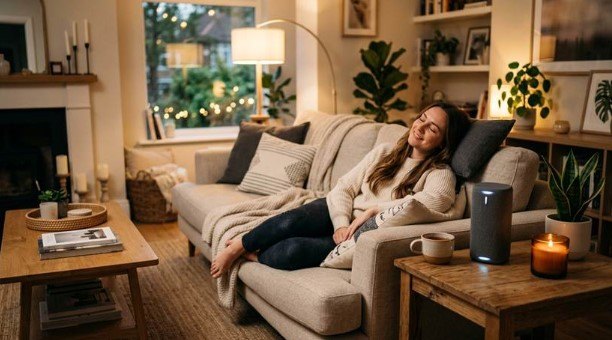
There’s something about walking into a home where soft music is playing in the background. A well-planned home music system can immediately make a space feel warmer, more inviting, and more alive. And yet, most of us treat our homes like silent boxes — we’ll spend hours picking the right paint color or the perfect throw pillows, but completely ignore the one thing that can change the entire mood of a room in seconds: sound.
Why Sound Matters More Than You Think
Interior designers have known this for years. Walk into any high-end hotel lobby, upscale restaurant, or boutique spa, and you’ll notice they all have one thing in common — carefully chosen background music. It’s not an afterthought. It’s part of the design.
The science backs this up too. Research from the University of Sussex found that listening to relaxing music at home can reduce cortisol levels (the stress hormone) by up to 25%. Another study published in the Journal of Environmental Psychology showed that appropriate background music makes spaces feel more comfortable and increases the time people want to spend in them.
Your home deserves the same attention, because a well-designed space is shaped not only by furniture and color but also by the atmosphere created within different interior design styles. And the good news? You don’t need an expensive sound system or a music degree to create a home music system that works beautifully for your space.
Room-by-Room Guide to Home Music
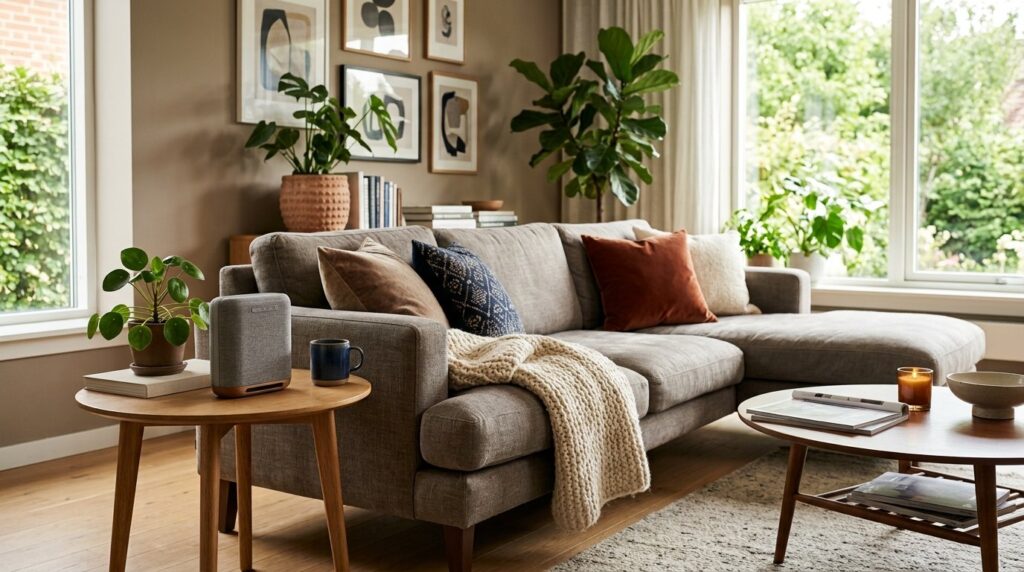
Not every room needs the same vibe. Here’s what actually works:
| Room | Best Sound Type | Why It Works |
| Living Room | Jazz, lo-fi, acoustic playlists | Creates a warm, social atmosphere without overpowering conversation |
| Kitchen | Upbeat indie, pop, world music | Energizes cooking and makes meal prep feel less like a chore |
| Bedroom | Ambient, nature sounds, classical | Slows heart rate and prepares the body for restful sleep |
| Bathroom | Spa music, rain sounds, soft piano | Transforms a regular shower into a mini spa experience |
| Home Office | Instrumental, lo-fi beats, brown noise | Improves focus without the distraction of lyrics |
The key is matching the energy of the music to the purpose of the room and the overall atmosphere you want to create, much like designing a bohemian green couch living room around layered textures, lighting, and warmth. You wouldn’t play heavy rock in a room designed for meditation, and you wouldn’t play whale sounds in the kitchen while making breakfast. It sounds obvious, but most people just hit shuffle on a random playlist and call it a day.
Building Your Home Sound Library
Here’s where it gets practical. You need a collection of audio that you can rely on — not just whatever algorithm decides to play next.
YouTube is honestly one of the best free sources for ambient and background audio. There are thousands of channels dedicated to lo-fi study beats, rain sounds, fireplace crackling, café ambiance, nature soundscapes — you name it. Some of these videos are 8 to 10 hours long, perfect for leaving on all day.
The problem? Streaming eats bandwidth, and the audio quality through YouTube’s compression isn’t great — especially if you have a decent speaker setup at home. YouTube compresses audio to save bandwidth, and you can actually hear the difference on anything better than cheap earbuds.
A smarter approach is to download the audio in a lossless format so you can play it offline anytime without buffering or quality loss. A free YouTube to WAV converter lets you save any YouTube audio as an uncompressed WAV file — which means you’re getting the full sound quality without any data stripped away. Save your favorite ambient tracks once, and you have a permanent offline library for every room in your house.
I started doing this about six months ago. I’ve got a folder on my laptop with about 30 ambient tracks — rain on a tin roof, Japanese garden sounds, soft piano collections, café chatter. I just AirPlay them to whatever room I’m in. No ads, no buffering, no algorithm hijacking my vibe.
Budget-Friendly Speaker Setup for Every Room
You don’t need to spend a fortune. Here’s a realistic setup that covers most homes:
- Living room: One decent Bluetooth speaker ($40–80) or a soundbar you already own
- Kitchen: A small waterproof speaker ($20–40) — nothing fancy, just loud enough to hear over the exhaust fan
- Bedroom: A bedside speaker with a sleep timer ($30–50) — crucial so it doesn’t play all night
- Bathroom: A suction-cup waterproof speaker ($15–25) — stick it to the shower wall
- Home office: Over-ear headphones or a desktop speaker ($30–60)
Total investment? Roughly $100–200 to cover your entire home, and combining the setup with elements such as window treatments can further shape how comfortable and balanced each room feels. Compare that to a single accent chair or a set of curtains, and it’s honestly the best value upgrade you can make for your living space.
5 Quick Tips for Better Home Audio
- Place speakers at ear level. Sound travels in straight lines. A speaker on the floor or on top of a tall shelf loses impact. Eye level (or slightly above) is the sweet spot.
- Don’t blast it. Background music should be background. If you have to raise your voice to talk over it, it’s too loud. Aim for a volume where you can still hear it clearly but it doesn’t dominate the room.
- Use WAV or FLAC files for quality speakers. If you’ve invested in a nice speaker, feed it nice audio. Compressed MP3s sound flat and lifeless on good hardware. Lossless formats like WAV preserve every detail.
- Create playlists for different times of day. Morning energy, afternoon focus, evening wind-down. Three playlists cover 90% of your home audio needs.
- Use timers. Falling asleep to music is great. Waking up at 3 AM because the 10-hour rain video is still blasting? Not great. Most speakers have sleep timer features — use them.
The Mood-Music Cheat Sheet
Save this for quick reference:
| Mood You Want | What to Play | Where to Find It |
| Calm & Peaceful | Rain sounds, soft piano, ambient pads | YouTube → search ‘ambient rain sounds 8 hours’ |
| Energized & Motivated | Upbeat lo-fi, indie pop, world beats | YouTube → search ‘morning energy playlist’ |
| Focused & Productive | Brown noise, instrumental hip-hop, classical | YouTube → search ‘deep focus music’ |
| Romantic & Cozy | Jazz, bossa nova, candlelight playlists | YouTube → search ‘romantic jazz evening’ |
| Sleepy & Drowsy | White noise, delta waves, nature at night | YouTube → search ‘sleep sounds 10 hours’ |
Final Thoughts
Your home already has a visual personality — the colors, the furniture, the art on the walls. But it’s missing a dimension that most people overlook: sound.
Adding the right music to your home isn’t decorating with sound. It’s completing the experience. And unlike that expensive rug you’ve been eyeing, it costs almost nothing and makes an immediate difference the moment you press play.
Start small. Pick one room. Find one playlist or ambient track that fits the vibe. Play it tomorrow morning and see how different that space feels.
You’ll wonder why you didn’t do it sooner.
FAQs
Does background music really reduce stress at home?
Yes. Multiple studies show that listening to calming music at home lowers cortisol levels and reduces perceived stress. Nature sounds and classical music are particularly effective. Even 15–20 minutes of background music during your evening routine can measurably improve relaxation.
What’s the best type of music for sleeping?
Ambient music, white noise, rain sounds, and tracks with a tempo below 80 BPM work best for sleep. Avoid anything with lyrics or sudden changes in volume. Delta wave tracks and brown noise are especially popular for deep sleep.
Can I use YouTube audio for my home sound system?
Yes, YouTube has a massive library of free ambient music, nature sounds, and lo-fi playlists. For better audio quality, consider downloading tracks in WAV format for offline playback — this avoids streaming compression and buffering issues.
How loud should background music be at home?
Background music should sit at about 40–50 decibels — roughly the volume of a quiet conversation. You should be able to hear it clearly but still hold a normal conversation without raising your voice. Most smart speakers let you set specific volume percentages.
Do I need expensive speakers for home ambiance?
Not at all. A $30–50 Bluetooth speaker is more than enough for most rooms. The key is placement (ear level), audio quality (use lossless files when possible), and choosing the right music for each space. Expensive speakers help, but they’re not necessary for a great home audio experience.

