
Many of us love the unique charm of older homes. These properties, rich with history, often come with hidden challenges. One of the most important is their aging electrical system. Outdated wiring and electrical panels can be more than just inconvenient. They can pose serious safety risks and struggle to power our modern lives.
Ensuring your home’s electrical system is safe and efficient is vital. It protects your property and the people living in it. In this guide, we will explore the essential residential electrical services specifically for older homes. We will help you understand common issues. We will also show how to upgrade your electrical system for safety and current needs.
We will cover key topics like recognizing dangerous electrical panels. We will discuss how to address common safety issues like knob-and-tube wiring. We will also look at modern upgrades, such as EV chargers and whole-home surge protection. Our goal is to provide clear, actionable information. This will help you maintain a safe and reliable electrical system in your older home.
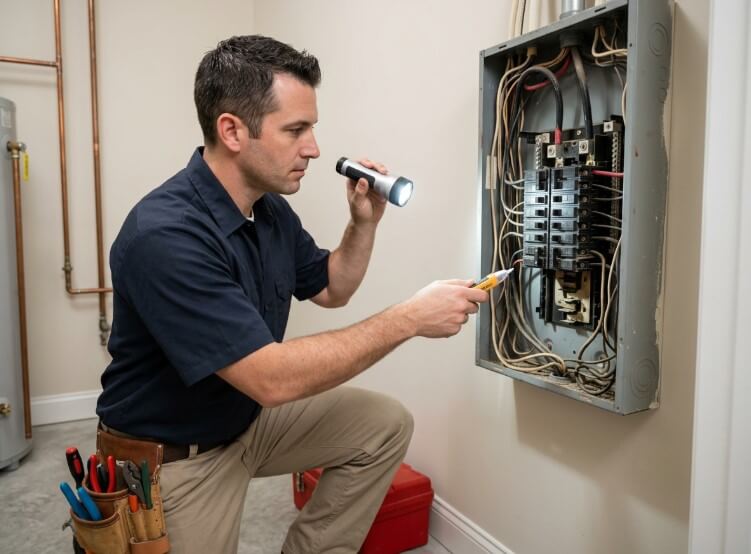
Older homes often present a unique set of electrical challenges that newer constructions simply don’t face. Decades of wear and tear, coupled with outdated building codes and materials, can leave these charming residences vulnerable to electrical hazards. Addressing these issues proactively is not just about convenience; it’s about safeguarding your property and loved ones. We find that a comprehensive approach, starting with thorough home inspections, is often the best first step. These inspections can identify potential hazards, assess the capacity of your existing system, and pinpoint areas that require immediate attention or future upgrades.
Following an inspection, common services for aging infrastructure include panel upgrades, which increase the electrical capacity of your home, and complete rewiring, a more extensive solution for widespread issues. Load calculations are critical to ensure that any upgrades match your current and future power demands, preventing overloads. Furthermore, code corrections ensure that your electrical system meets the latest safety standards, which are often far more stringent than when the home was originally built. Safety assessments are ongoing, ensuring that as we integrate new technologies and appliances into our homes, the electrical system can handle the demand without compromising safety. These foundational services are paramount to transforming an older home’s electrical system from a potential liability into a reliable, safe, and efficient power source.
Essential Residential Electrical Services for Upgrading Outdated Wiring
One of the most significant electrical concerns in older homes is the presence of outdated wiring types that are no longer considered safe or adequate for modern power demands. We frequently encounter homes with knob-and-tube wiring, which was common from the 1880s to the 1940s. This system lacks a ground wire, making it incompatible with many modern appliances and increasing the risk of shock and fire. Similarly, cloth-insulated wiring, found in homes built through the mid-20th century, can become brittle and degraded over time, exposing bare conductors.
Even more recently, homes built between 1965 and 1973 often utilized aluminum branch wiring. While aluminum was a cheaper alternative to copper, it has a higher rate of thermal expansion and contraction. This characteristic can cause connections at outlets, switches, and circuit breakers to loosen over time, leading to arcing, overheating, and a significant fire risk. We know that these issues require expert attention. The primary solution for these hazardous wiring types is copper rewiring, which involves replacing the old, unsafe wires with modern, grounded copper alternatives. This process ensures safety, reliability, and compliance with current electrical codes.
Beyond just the wires, modern safety devices are crucial. Arc Fault Circuit Interrupters (AFCI) breakers detect dangerous electrical arcs that older wiring might produce, tripping the circuit before a fire can start. Ground Fault Circuit Interrupters (GFCI) protection, typically found in bathrooms, kitchens, and outdoor areas, guard against severe electrical shocks. Integrating these safety features into a newly rewired system is a fundamental part of comprehensive residential electrical services for older homes, ensuring peace of mind for homeowners.
Determining Panel Upgrades Versus Full Home Rewiring
Deciding whether your older home needs a simple panel upgrade or a full home rewiring can be a complex decision, often requiring a professional assessment. We often see homes originally equipped with 60-amp or 100-amp panels, which were sufficient for the electrical needs of past generations. However, with today’s proliferation of high-demand appliances, electronics, and smart home devices, these older panels can quickly become overwhelmed. Signs that you might need a panel upgrade include frequent breaker trips, lights dimming when major appliances turn on, or the use of multiple extension cords due to a lack of sufficient outlets. A 200-amp upgrade is typically the standard for modern homes, providing ample capacity for current and future electrical demands.
A full home rewiring, on the other hand, is a more extensive and often more costly undertaking. This service is typically recommended when the existing wiring throughout the home is severely outdated, damaged, or poses significant safety risks, such as the presence of knob-and-tube or aluminum branch wiring. Ungrounded receptacles, which are common in older homes, are another indicator that a full rewiring might be necessary, as they cannot safely accommodate modern three-prong plugs. While a panel upgrade addresses the “brain” of your electrical system, a full rewiring addresses the “nervous system.” We conduct thorough system capacity evaluations to determine the most appropriate course of action, balancing safety, functionality, and your budget. Our goal is always to provide a solution that not only meets current code requirements but also enhances your home’s long-term electrical reliability and safety.
Recognizing Safety Hazards and Emergency Situations in Older Homes
The charm of an older home can sometimes mask underlying electrical dangers that have accumulated over decades. We understand that recognizing these hazards is the first step toward ensuring safety. An outdated electrical panel, often characterized by fuses instead of circuit breakers, or by specific problematic brands, is a visual cue of potential danger. Beyond the panel itself, hazardous equipment within the wiring system, such as frayed wires, ungrounded outlets, or improperly installed connections, can significantly increase fire risks.
Emergency indicators, such as a burning smell, sparks, or buzzing sounds from outlets or switches, demand immediate attention. Even subtle signs like warm outlets or light switches can signal an underlying problem. The constant thermal expansion and contraction of older wiring, especially aluminum, can loosen connections over time, creating arcing and fire hazards that are not always immediately visible. We cannot overstate the importance of vigilance and prompt action when these warning signs appear.
Identifying Dangerous Breaker Panels and Fire Risks
Certain electrical panels installed in older homes are notoriously unsafe and have been linked to numerous house fires. We frequently encounter Federal Pacific Electric (FPE) Stab-Lok panels, Zinsco panels, and certain Challenger panels. These brands are recognized fire hazards because their circuit breakers often fail to trip when an overload or short circuit occurs. Instead of cutting off power to prevent overheating, these faulty breakers can continue to supply electricity, leading to overheated wires, arcing, and potentially a fire.
The design flaws in these panels are well-documented. For instance, Federal Pacific Stab-Lok breakers have a high rate of failure to trip, with some estimates suggesting a failure rate as high as 60% in some models. Zinsco panels are known for their aluminum busbars, which can corrode and overheat, causing breakers to melt onto the busbar and preventing them from tripping. When breakers fail to trip, it can result in overheated busbars and severe arcing hazards within the panel itself, often without any visible external signs until it’s too late. If your home has one of these panels, we strongly recommend a professional inspection and replacement to mitigate these serious fire risks.
Emergency Response and When to Call an Electrician
Knowing when to call an electrician, especially in an emergency, is crucial for your safety. We categorize an electrical emergency as any situation that poses an immediate threat of fire, electric shock, or significant property damage. If you notice a burning odor emanating from outlets, switches, or your electrical panel, or if you see active sparks or flames, evacuate immediately and call 911, followed by a qualified electrician. Similarly, a complete loss of power in your home, particularly if your neighbors still have electricity, could indicate a serious issue with your main service.
Other urgent signs include buzzing switches or outlets, which can signal loose connections or internal arcing, and outlets or light switches that feel warm to the touch. These are not minor inconveniences; they are critical indicators that your electrical system is under stress and could be failing. We advise against attempting to diagnose or fix these issues yourself, as doing so can be extremely dangerous. For these situations, a prompt response from a professional is essential. Many providers of licensed residential electrical services offer 24/7 emergency response to address these critical issues swiftly and safely, ensuring your home is protected around the clock.
Modernizing Older Homes with Advanced Power Solutions
While older homes offer undeniable character, their electrical systems were simply not designed for the demands of 21st-century living. We recognize that modernizing these systems goes beyond just fixing hazards; it’s about integrating advanced power solutions that enhance convenience, efficiency, and safety. This often involves planning for high-demand appliances, electric vehicles, and sophisticated smart home technologies.
Installing dedicated circuits is a foundational step in modernization, ensuring that high-power devices like refrigerators, microwaves, or specialized workshop tools have their own dedicated power supply, preventing overloads. For electric vehicle owners, installing a home EV charger is a game-changer, but it requires careful planning for appropriate voltage and amperage. Whole-home surge protection becomes essential to safeguard sensitive electronics from both external and internal power fluctuations. Furthermore, considering backup power solutions like generators can provide peace of mind during outages. All these modern upgrades require careful adherence to municipal permits and local electrical codes to ensure safety and compliance.
Specialized Residential Electrical Services for Modern Power Demands
As our lives become increasingly electrified, older homes often struggle to keep up with the power demands of modern technology. We specialize in upgrading older electrical systems to safely accommodate these new requirements. One of the most common requests we receive today is for the installation of Level 2 EV charging stations. These chargers require a dedicated 240V circuit, often with a 60-amp supply, which is a significant draw that most older electrical panels cannot handle without an upgrade. Proper installation ensures efficient charging and prevents strain on your home’s electrical system.
Beyond EV chargers, many modern appliances and home additions require dedicated appliance lines. High-power items like induction cooktops, tankless water heaters, or even a home gym with specialized equipment, benefit from their own circuits to prevent tripping breakers and ensure optimal performance. We also help integrate smart switches, allowing homeowners to control lighting and other devices remotely or through voice commands, adding convenience and energy efficiency. For homes with children, upgrading to tamper-proof outlets offers an added layer of safety, preventing accidental electrical shocks. These specialized services are crucial for transforming an older home into a fully functional and technologically advanced living space, ready for the challenges of today and tomorrow.
Whole-Home Surge Protection, Generators, and Permit Requirements
Protecting your home’s sensitive electronics from power fluctuations is more critical than ever. We’ve learned that about 80% of residential surges originate inside the home, caused by high-powered appliances like air conditioners, hair dryers, and garage door openers. These “mini-surges” gradually degrade circuit boards and shorten the lifespan of your electronics. Whole-home surge protection, typically a Type 2 device installed at your main electrical panel, defends against both internal surges and external events like lightning strikes, safeguarding all connected devices.
For uninterrupted power, especially in regions prone to outages, generators are an invaluable investment. We help homeowners choose between standby generators and portable generators, each offering distinct advantages. Standby generators, permanently installed and connected to your home’s natural gas or propane line, automatically kick on during an outage via an automatic transfer switch. Portable generators, while more affordable, require manual setup, fueling, and connection via a portable transfer switch.
| Feature | Standby Generators | Portable Generators |
|---|---|---|
| Fuel Source | Natural Gas or Propane | Gasoline, Propane, or Diesel |
| Operation | Automatic (with transfer switch) | Manual (requires setup and fueling) |
| Installation | Permanent, wired into home’s electrical system | Portable, plug-in via transfer switch |
| Power Output | Higher (typically 14–22 kW for whole home) | Lower (for essential circuits or limited appliances) |
| Cost | Higher upfront cost, lower running cost | Lower upfront cost, higher running cost |
| Convenience | Hands-off, immediate power during outages | Requires manual intervention and refueling |
| Safety | Safer, professionally installed, outdoor unit | Risk of carbon monoxide poisoning if used indoors |
| Permits | Required for installation | May not require permits (check local codes) |
Crucially, any significant electrical work, including panel upgrades, EV charger installations, or generator installations, almost always requires municipal permits. We handle the permit processing to ensure all work adheres to the National Electrical Code (NEC) and local building codes. This not only guarantees the safety and quality of the installation but also protects your home’s value and ensures compliance for insurance purposes.
Frequently Asked Questions
When considering electrical services for an older home, homeowners often have similar questions regarding costs, regulations, and common issues. We aim to provide clear answers to help you navigate these decisions with confidence.
How much does a residential electrical service call typically cost?
The cost of a residential electrical service call can vary widely based on several factors, including your location, the complexity of the issue, and the electrician’s pricing structure. We find that most companies charge a diagnostic fee for the initial visit, which may or may not include the first hour of labor. Following the diagnostic, additional labor is typically billed at hourly rates, often prorated in 15-minute increments. For smaller, straightforward repairs, some electricians might offer flat-rate projects with upfront estimates. Larger projects like panel upgrades or rewiring will almost always require an on-site assessment to provide a detailed, fixed-price proposal. We always recommend getting clear, upfront estimates before any work begins to avoid surprises.
Do I need a permit for major electrical repairs or upgrades in an older home?
Yes, almost all major electrical repairs or upgrades in an older home will require a permit from your local municipality. This includes, but is not limited to, panel upgrades, full home rewiring, adding new circuits for EV chargers or large appliances, and generator installations. Permits ensure that the work is inspected by a qualified municipal inspector and that it complies with the National Electrical Code (NEC) and any local amendments. This process is critical for safety verification, protecting your home’s value, and ensuring your insurance remains valid. Reputable electricians will handle the permit filing process on your behalf, ensuring all necessary inspections are scheduled and passed.
Why do my lights flicker when high-power appliances turn on?
If your lights flicker or dim when high-power appliances like your air conditioner, microwave, or hair dryer turn on, it’s a strong indicator that your electrical system is struggling to meet the demand. This often points to a few potential issues: circuit overload, voltage drop, or insufficient service capacity. A circuit overload means too many devices are drawing power from a single circuit, causing a temporary voltage drop. In older homes, this can also signal that the main electrical service (e.g., a 60-amp or 100-amp panel) is simply not powerful enough for today’s needs. The wiring itself might also be undersized for the load, leading to voltage fluctuations. We recommend having a professional assess your system to determine if dedicated circuits are needed for high-draw appliances or if a full service capacity upgrade is necessary to ensure stable and safe power delivery.
Conclusion
The journey of owning an older home is a rewarding one, filled with character and history. However, ensuring its electrical system is safe, efficient, and capable of meeting modern demands is a critical responsibility. As we’ve explored, from recognizing the dangers of outdated wiring like knob-and-tube and aluminum to understanding the necessity of panel upgrades and whole-home surge protection, proactive measures are key.
Investing in these essential residential electrical services is not just about fixing problems; it’s about enhancing your property’s safety, improving its electrical reliability, and ultimately increasing its long-term value. Whether it’s upgrading to a 200-amp panel, installing a Level 2 EV charger, or safeguarding your home with a standby generator, professional electrical expertise ensures that these crucial modifications are done correctly and to code. Don’t let the charm of your older home be overshadowed by electrical concerns. By taking proactive steps, you can enjoy the best of both worlds: timeless appeal with modern electrical peace of mind.

