
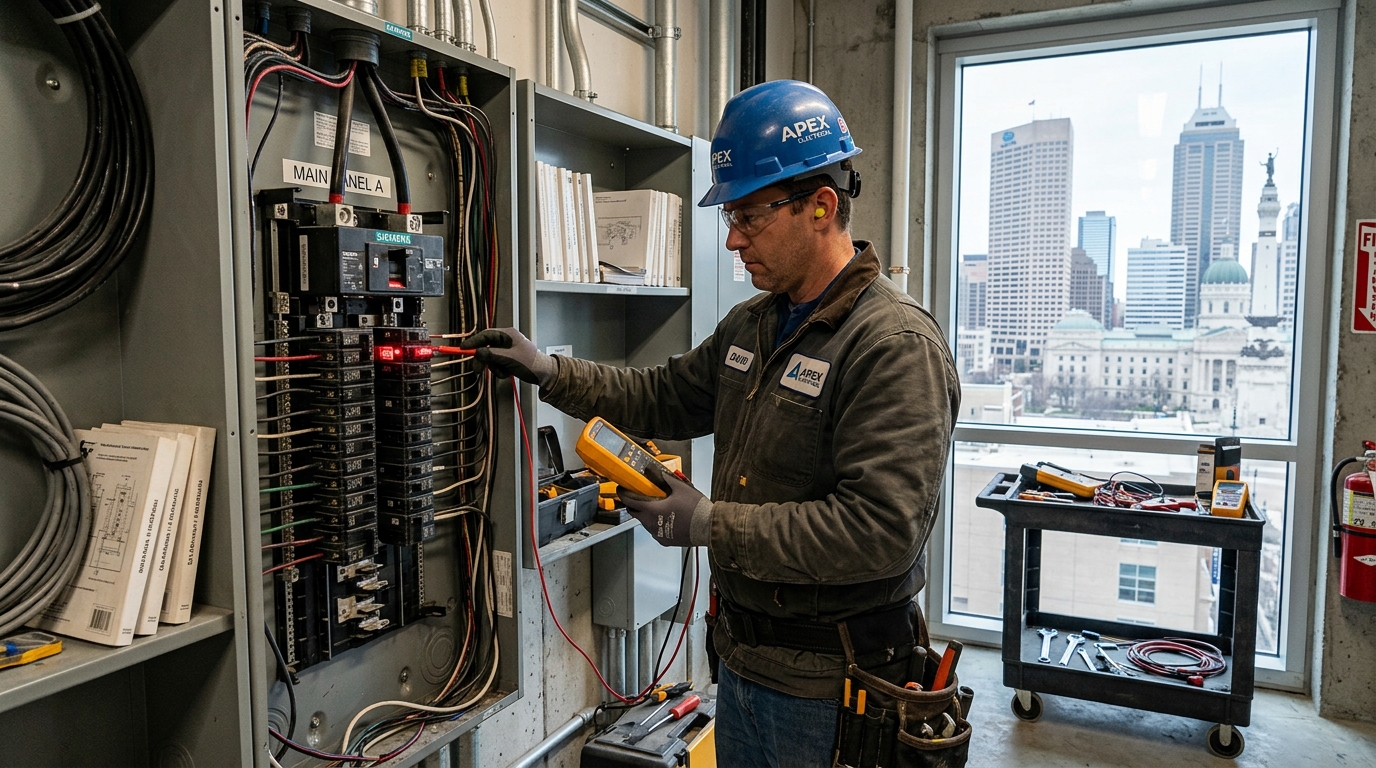
In the bustling heart of downtown Indianapolis, a sudden electrical emergency can bring daily life and business operations to a jarring halt. Whether it’s the unsettling smell of burning wires, a complete power outage disrupting critical systems, or sparks from an outlet, these incidents are far more than mere inconveniences. They present immediate safety hazards and can lead to significant financial losses for both residents and businesses.
We understand the critical nature of these situations. When an electrical fault strikes unexpectedly, prompt and professional intervention is not just helpful—it’s essential for safety and continuity. Waiting for standard business hours is often not an option, especially in a dynamic urban environment.
This comprehensive guide will explore the various types of electrical emergencies faced in downtown Indianapolis, the crucial risks of delaying professional service, and how dedicated 24-hour electricians provide immediate, expert assistance. We will cover response times, safety protocols, and what residents and businesses should look for in reliable emergency electrical services. For those seeking robust local 24-hour electrical solutions to keep our city powered and secure, we aim to provide clarity and actionable insights.
Electrical emergencies in downtown Indianapolis can manifest in many forms, ranging from the subtle to the catastrophic. They often involve critical components like overheated panels, which can pose severe fire risks, or sparking outlets that signal immediate danger. Structural damage to electrical infrastructure, perhaps from an external impact or internal fault, can lead to widespread power outages or localized failures. Even issues seemingly contained, like persistent circuit breaker trips, can indicate deeper problems within the electrical grid of a building.
The complexity of downtown Indianapolis’s infrastructure, with its mix of historic buildings, modern high-rises, and diverse commercial establishments, means that electrical issues can have varied impacts. A grid failure in one area could cascade, affecting multiple properties and disrupting daily activities for countless individuals. Recognizing these urgent hazards promptly is the first step toward mitigating their impact.
Common Warning Signs and Immediate Safety Threats
Identifying an electrical emergency isn’t always about a dramatic explosion or a complete blackout. Often, there are subtle but critical warning signs that demand immediate attention. These include:
- Burning Odors: An unexplained burning smell, particularly one resembling plastic or rubber, emanating from outlets, switches, or electrical panels, is a strong indicator of overheating wires or components. This is a significant fire hazard.
- Buzzing or Humming Breakers/Panels: While some electrical hum is normal, loud or persistent buzzing or crackling sounds from your breaker panel or outlets can signal loose connections, overloaded circuits, or failing components.
- Water Intrusion: Any contact between water and electrical systems, whether from a burst pipe, a leaking roof, or floodwaters, creates an extremely dangerous situation with the risk of electrocution and short circuits. Wet electrical panels are among the most dangerous scenarios electricians encounter.
- Arcing Outlets or Switches: Visible sparks or flashes when plugging in an appliance, flipping a switch, or simply observing an outlet, indicate arcing. This is a sign of a severe electrical fault that can quickly escalate into a fire.
- Flickering or Dimming Lights: While sometimes a utility issue, localized flickering or dimming lights, especially when appliances are turned on, can point to overloaded circuits, loose wiring, or an impending panel failure.
- Warm or Discolored Outlets/Switches: Electrical components should not be hot to the touch. Warm or discolored outlets, switches, or wall plates suggest excessive heat build-up, indicating a potential fire hazard.
- Repeated Circuit Breaker Tripping: While an occasional trip is normal, a breaker that trips frequently, especially after being reset, indicates a persistent overload or short circuit that needs professional diagnosis.
- Minor Shocks or Tingles: Even a slight shock or tingle when touching an appliance or switch is a serious warning sign of faulty wiring or improper grounding, posing a risk of more severe electrocution.
When you encounter any of these symptoms, the safest course of action is to assume an immediate electrical hazard is present.
The Financial and Structural Risks of Delayed Action
Delaying professional electrical service during an emergency is a gamble with potentially devastating consequences. The immediate danger is often a structure fire. Electrical failures are a leading cause of commercial building fires, accounting for 18% of all non-residential building fires, and approximately one-third of all structure fires originate from electrical problems. For businesses, this can mean not just property destruction but also irreparable loss of data, inventory, and customer trust.
Beyond fire, the financial implications are staggering. Businesses in downtown Indianapolis face immense pressure to maintain operations, and unplanned electrical downtime can be crippling. Statistics show that businesses lose an average of $5,600 per minute during unplanned electrical downtime. A one-hour outage, for some facilities, can translate to hundreds of thousands of dollars in lost revenue, production, and perishable goods. This doesn’t even account for the cost of equipment destruction, which can range from minor repairs to complete replacement of expensive machinery or IT infrastructure.
Furthermore, delaying repairs can lead to insurance invalidation. Many commercial insurance policies explicitly require all electrical work to be performed by licensed professionals. DIY attempts or prolonged neglect of known hazards can void warranties and make it challenging to file claims for damages that could have been prevented. The ripple effect of a single electrical emergency can impact business continuity, employee safety, and long-term financial stability.
Core Capabilities of Local 24-Hour Electrical Solutions
When an electrical emergency strikes in downtown Indianapolis, the ability to rapidly diagnose and resolve the issue is paramount. Local 24-hour electrical solutions are equipped with specialized knowledge and tools to handle a wide array of urgent situations, ensuring infrastructure stability and technical troubleshooting even in the most challenging circumstances. These services go beyond simple repairs, focusing on critical power restoration and comprehensive infrastructure repair to get your systems back online safely and efficiently.
Critical Power Restoration and Infrastructure Repair
A key capability of 24-hour electricians is their proficiency in critical power restoration. This involves addressing issues that directly impact a building’s primary power supply or distribution. Common emergency services include:
- Transformer Troubleshooting and Repair: Transformers are vital for regulating voltage. A malfunctioning transformer can lead to power fluctuations, outages, or even fires. Emergency electricians can diagnose and often repair or temporarily bypass issues to restore power.
- Breaker Replacement and Panel Repair: Overloaded or faulty circuit breakers are a frequent cause of power loss. 24-hour services can quickly replace failing breakers or perform repairs on damaged electrical panels, which are the heart of a building’s electrical system.
- Generator Failover and Repair: For businesses and critical facilities relying on backup generators, ensuring their functionality during an outage is crucial. Emergency electricians can troubleshoot generator failures and ensure proper automatic transfer switch (ATS) operation for seamless power transitions.
- Mitigation of Transient Surges: Lightning strikes or utility grid fluctuations can cause power surges that damage sensitive electronics. Emergency services can assess surge damage and implement solutions, including surge protection, to prevent future occurrences.
These specialized interventions are designed to not only fix the immediate problem but also ensure the long-term reliability and safety of the electrical infrastructure. For more detailed insights into the comprehensive offerings available, exploring dedicated resources on emergency electrical services can provide valuable context for businesses and residents alike.
Residential vs Commercial Local 24-Hour Electrical Solutions
While both residential and commercial properties in downtown Indianapolis require prompt emergency electrical service, the nature of these services often differs significantly due to varying electrical demands and system complexities.
| Feature | Residential Emergency Electrical Needs | Commercial Emergency Electrical Needs |
|---|---|---|
| Power System | Primarily single-phase wiring (120V/240V) | Often 3-phase systems (208V, 480V) for heavy machinery and equipment |
| Voltage Demands | Lower voltage for household appliances, lighting, and general use | Higher voltage for industrial equipment, HVAC, data centers, and specialized machinery |
| System Complexity | Simpler wiring, fewer circuits, generally easier to diagnose | Highly complex configurations, intricate panels, and extensive conduit runs |
| Impact of Outage | Inconvenience, loss of heating/cooling, food spoilage, and safety risks | Significant financial loss, production downtime, data loss, safety compliance issues, and regulatory penalties |
| Typical Issues | Tripping breakers, sparking outlets, partial power loss, and burning smells | Main panel failures, transformer issues, motor control problems, large-scale power outages, and specialized equipment repair |
| Code Compliance | National Electrical Code (NEC) and local residential codes | NEC, local commercial building codes, OSHA regulations, and industry-specific standards |
| High-Density Housing | Individual unit issues and common-area power problems | Often involves entire building infrastructure, shared systems, and critical business operations |
Response Times and On-Site Safety Protocols in Downtown Indy
In an electrical emergency, every second counts. This is particularly true in a dense urban environment like downtown Indianapolis, where rapid response can mean the difference between a minor disruption and a major catastrophe. Our commitment to prompt service is underpinned by strategic planning and rigorous safety protocols, ensuring that when you call, help is not only on its way quickly but also arrives prepared to handle the situation safely and effectively.
The 60-Minute Response Standard and Fleet Readiness
For critical electrical emergencies in the Indianapolis metro area, our goal is to achieve an average response time of 30-45 minutes. This commitment is often referred to as the ’60-Minute Rule’ in the industry, aiming to have a technician on-site within an hour of your call. This rapid response is made possible by several key factors:
- Strategic Technician Placement: Our teams are strategically positioned throughout central Indiana, including Marion County, allowing us to dispatch the closest available technician to downtown Indianapolis.
- GPS-Routed Crews: Advanced GPS routing systems enable us to identify the most efficient path through downtown traffic, minimizing travel time and ensuring our crews navigate the urban corridor effectively.
- Fully Stocked Emergency Vehicles: Our emergency vehicles are equipped as “rolling electrical parts warehouses,” stocked with a comprehensive inventory of commercial-grade parts and diagnostic tools. This readiness often allows for immediate repairs without needing to source materials, saving crucial time.
- 24/7 Emergency Dispatch: We utilize human dispatchers, not automated systems, who provide reassurance and clear safety instructions while a technician is en route. This personalized approach ensures that your emergency is understood and prioritized correctly.
Factors such as time of day, severe weather, and the specific location within downtown Indianapolis can influence arrival times, but our systems are optimized to overcome these challenges and ensure the fastest possible response.
Code Compliance and Modern Diagnostic Testing
Safety and code compliance are non-negotiable, especially during emergency repairs. Our 24-hour electricians adhere strictly to the highest industry standards to ensure that all work is not only effective but also safe and legal.
- National Electrical Code (NEC) Adherence: All emergency repairs are performed in strict accordance with the current National Electrical Code and local amendments specific to Indianapolis and Marion County. This ensures that electrical systems meet the highest safety benchmarks.
- OSHA Regulations: Our technicians are trained and operate under Occupational Safety and Health Administration (OSHA) guidelines, including the use of OSHA-compliant Personal Protective Equipment (PPE) during all emergency interventions.
- Lockout-Tagout Procedures: For any work on energized equipment, rigorous lockout-tagout procedures are followed to prevent accidental energization and protect technicians and building occupants.
- Advanced Diagnostic Tools: We leverage modern diagnostic technologies to quickly and accurately identify the root cause of electrical issues. This includes:
- Thermal Imaging: Infrared scanning cameras are used to detect overheating connections, overloaded circuits, and hidden electrical faults that are not visible to the naked eye. This helps in preventing potential fires and system failures.
- Voltage and Amperage Meters: Precise measurements ensure that circuits are operating within safe parameters and help pinpoint anomalies.
- Circuit Tracers: These tools quickly identify specific circuits, reducing diagnostic time and ensuring accurate isolation of problems.
- UL-Listed Components: Only Underwriters Laboratories (UL)-listed, commercial-grade replacement parts are used in all repairs, guaranteeing quality, safety, and compatibility with existing systems.
Before restoring power, comprehensive testing is conducted to verify the integrity and safety of all repairs. This meticulous approach ensures that the emergency is resolved thoroughly and that the electrical system is left in a safe, compliant, and reliable state, meeting 2026 standards for electrical integrity.
Navigating Emergency Costs and Preparatory Steps
Understanding the cost of 24-hour emergency electrical services and knowing how to prepare for potential incidents are crucial aspects of property management in downtown Indianapolis. While emergency services inherently involve higher rates due to immediate dispatch and after-hours labor, transparency in pricing and proactive planning can significantly mitigate stress and expense.
Proactive Planning and Local 24-Hour Electrical Solutions
The best electrical emergency is the one that never happens. Proactive planning and regular maintenance are key to reducing the likelihood of urgent calls. We advocate for several strategies to enhance electrical safety and reliability:
- Panel Modernization and Upgrades: Electrical panels older than 25 years are often a source of emergency situations. Homeowners with aging systems should also understand the electrical services for older homes that may be needed to improve safety and reliability. Upgrading outdated electrical systems improves safety, efficiency, and can prevent future failures.
- AFCI and GFCI Protection: Arc Fault Circuit Interrupters (AFCIs) and Ground Fault Circuit Interrupters (GFCIs) are critical safety devices that detect dangerous electrical conditions and quickly cut power, preventing fires and electrocution. Ensuring these are installed and functioning correctly is vital.
- Whole-Building Surge Suppression: Installing comprehensive surge protection systems can safeguard sensitive electronics and critical equipment from damaging power surges, whether from lightning or utility fluctuations.
- Regular Electrical Inspections: Periodic inspections by a qualified electrician can identify potential problems before they escalate into emergencies. Thermal imaging during these inspections can reveal hidden dangers.
- Safety Documentation and Continuity Planning: For businesses, maintaining up-to-date electrical system diagrams and having a documented emergency response plan, including contact information for 24-hour electrical services, is essential for business continuity.
By investing in these proactive measures, residents and businesses can significantly reduce their risk of experiencing disruptive and costly electrical emergencies. These steps are integral to robust local 24-hour electrical solutions that focus on prevention as much as response.
Essential Credentials and Pricing Transparency
When selecting a 24-hour emergency electrician, verifying their qualifications and understanding their pricing structure are paramount.
- Essential Credentials:State Licensing: Ensure the electrician and their company are fully licensed by the state of Indiana. This verifies they meet minimum competency standards.
- Master Electrician Oversight: For complex emergency situations, particularly in commercial settings, the oversight of a Master Electrician indicates the highest level of professional competence and experience.
- Insurance and Bonding: The company should carry comprehensive liability insurance and be bonded. This protects you from financial responsibility in case of accidents or damage during repairs.
- OSHA Training: Technicians should have up-to-date OSHA safety training, especially for high-risk emergency work.
- Commercial-Specific Expertise: For businesses, ensure the electricians have proven experience with commercial electrical systems, including 3-phase power and specialized equipment.
- Pricing Transparency:Emergency Surcharges: 24-hour emergency services typically involve higher costs due to after-hours labor premiums, immediate dispatch, and the specialized nature of the work. These surcharges are standard for the industry.
- Written Estimates: A reputable service provider will offer clear pricing and provide a written estimate before beginning any significant repairs. While an exact quote might be challenging before a full diagnosis, they should explain their fee structure upfront.
- Diagnostic Fees: Expect a diagnostic or emergency response fee for mobilizing a technician, even if the repair is minor or can be postponed.
- Value Over Lowest Bid: While cost is a factor, prioritizing the lowest bid for emergency electrical work can be a false economy. Investing in quality service from licensed, insured professionals ensures accurate diagnosis, safe repairs, and long-term reliability. A broad price range for professional emergency installation or repair could be anywhere from a few hundred dollars for minor issues to several thousands for complex system overhauls, depending on the severity, parts needed, and time of service.
Frequently Asked Questions About Indianapolis Emergency Electricians
Property owners in downtown Indianapolis often have similar questions when faced with an electrical emergency. Addressing these common concerns can provide clarity and peace of mind.
What should property owners do immediately while waiting for an emergency electrician?
Safety is the absolute priority. While waiting for an emergency electrician to arrive, follow these critical steps:
- Panel Shutdown (if safe): If you can safely access your electrical panel and identify the affected circuit or the main breaker, turn off the power. This can prevent further damage or fire. Do not attempt this if there is water present, sparking, or if you feel any risk.
- Area Evacuation: If there’s smoke, burning smells, sparks, or any visible fire, evacuate the affected area immediately and ensure everyone is safe. Call 911 if there is a fire.
- Unplug Devices: Unplug sensitive electronics or appliances from affected outlets, especially if you suspect a surge or faulty wiring.
- Fire Containment (Electrical Fires): Never use water on an electrical fire. If it’s a small, contained electrical fire, use a Class C fire extinguisher (designed for electrical fires) if one is readily available and you are trained to use it. Otherwise, evacuate.
- Observe and Document: Note down any unusual sounds, smells, flickering lights, or specific events that occurred before the emergency. This information is invaluable for the electrician.
- Clear Path: Ensure the path to your electrical panel and the problem area is clear for the electrician.
- Use Flashlights: Rely on flashlights or battery-powered lanterns instead of candles for illumination during power outages.
How fast do emergency electrical crews arrive in the downtown Indianapolis area?
For critical emergencies in the downtown Indianapolis metro area, our goal is to maintain a sub-60-minute response time. This means you can typically expect an emergency electrical crew to arrive within 30-45 minutes of your call. This rapid dispatch is a result of:
- Strategic Location: Electricians are positioned to cover central Indiana efficiently.
- Traffic Navigation: Crews are experienced in navigating downtown traffic patterns and utilize GPS routing for the quickest routes.
- Priority Dispatch: Emergency calls are given immediate priority, ensuring that a technician is dispatched without delay.
While factors like extreme weather, widespread outages, or peak traffic hours can occasionally impact these times, every effort is made to reach your location as quickly and safely as possible.
What factors determine the overall cost of after-hours electrical services?
The cost of 24-hour emergency electrical services in downtown Indianapolis is influenced by several key factors:
- Diagnostic Complexity: The time and effort required to accurately diagnose the root cause of the problem. More intricate issues or those requiring specialized equipment (like thermal imaging) may incur higher diagnostic fees.
- Replacement Components: The cost of any parts or materials needed for the repair. Commercial-grade components, specialized equipment, or unique parts can be more expensive.
- Labor Premiums: Emergency services outside of standard business hours (evenings, weekends, holidays) typically include higher labor rates due to overtime pay for technicians.
- Municipal Permits: For certain repairs, especially those involving significant changes to the electrical system, a municipal permit from the city of Indianapolis or Marion County may be required. The cost of the permit and the time involved in obtaining it will be factored in.
- Travel Considerations: While minimized for downtown Indianapolis, travel time and fuel costs are part of the overall service charge.
Reputable emergency electricians will provide a transparent breakdown of these costs, including any emergency response fees, before proceeding with repairs.
Conclusion
In the dynamic urban landscape of downtown Indianapolis, the integrity of your electrical system is paramount. Electrical emergencies, from flickering lights to full-scale power outages, demand immediate attention to safeguard lives, protect property, and ensure business continuity. We’ve seen that delaying professional intervention carries significant financial and structural risks, including the potential for devastating fires and costly downtime.
Fortunately, dedicated 24-hour electrical services offer round-the-clock protection. These professionals are equipped with the expertise, tools, and rapid response capabilities to tackle any emergency, adhering to strict safety protocols and code compliance. From critical power restoration for commercial enterprises to essential repairs for residential properties, their commitment ensures electrical integrity even in the most challenging situations.
By understanding the common warning signs, taking proactive preventative measures, and knowing what to expect from qualified emergency electricians, residents and businesses in downtown Indianapolis can be better prepared for the unexpected. Choosing licensed, insured, and experienced professionals who prioritize transparency and safety is not just a convenience—it’s an investment in your peace of mind and the continued vibrancy of our city. As we move through August 2026, the demand for reliable, immediate electrical expertise remains a cornerstone of a thriving urban environment.

