
Most people picture gardens bursting with cheerful yellows and soft pinks. But there’s a whole other world of gardening, one that leans into shadow, mystery, and deep, brooding color.
Gothic flowers have surged in popularity over the last decade, finding their way into dark-themed weddings, moody interior arrangements, Halloween displays, and dedicated goth gardens that stop people in their tracks.
And here’s what surprises most beginners: many of the most beautiful gothic flowers are also some of the easiest plants to grow. You don’t need a dramatic moor in England or a Victorian greenhouse to pull this off.
Whether you’re building a full goth garden, planning a gothic flower bouquet, or simply hunting for the most interesting dark plants you’ve never heard of, this guide covers 15 real gothic flowers by name, with growing tips, symbolism, and everything in between.
What Makes a Flower “Gothic”?
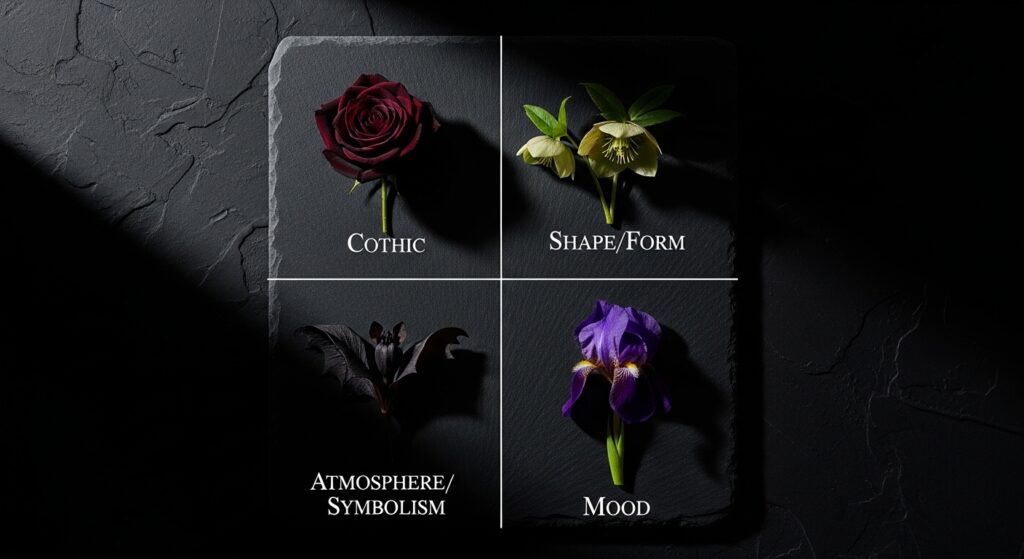
Before diving in, it’s worth understanding what qualifies a flower as gothic. The aesthetic isn’t random — it has a few consistent traits:
- Color: Black, near-black, deep burgundy, dark purple, midnight blue, and blood red
- Shape: Unusual, dramatic, or even unsettling forms — drooping bells, skull-like hoods, spidery petals
- Symbolism: Historical associations with death, mystery, magic, or the supernatural
- Atmosphere: Flowers that feel like they belong in a Victorian garden, a ghost story, or a Tim Burton film
Not every dark flower is gothic, and not every gothic flower is black. What matters is the overall mood — and the 15 plants below all deliver it.
15 Gothic Flowers: Names, Details & Growing Guide
1. Black Rose (Rosa ‘Black Baccara’ / ‘Midnight Blue’) — The Icon of Gothic Flowers
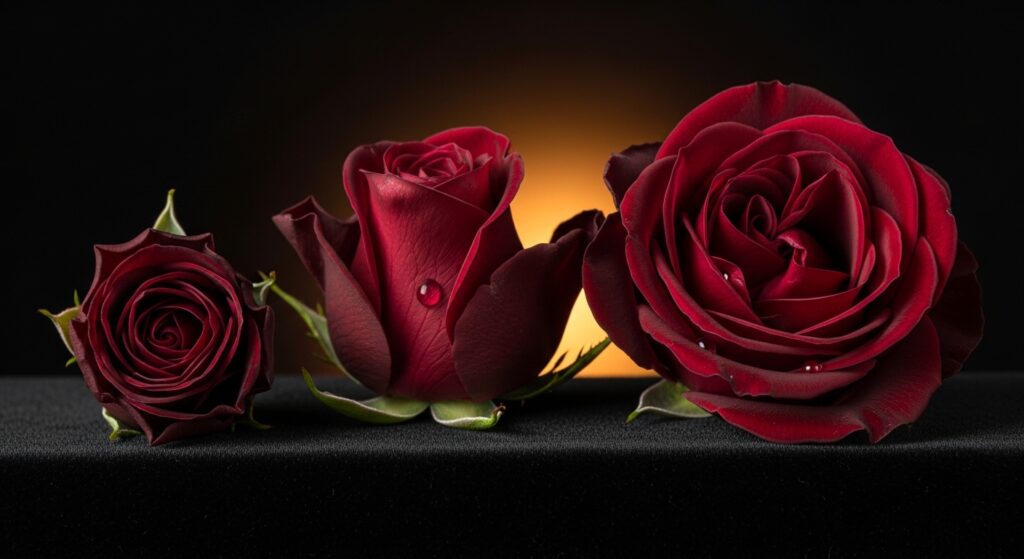
No flower is more synonymous with the gothic aesthetic than the black rose.
True black roses don’t exist in nature — but several cultivars come breathtakingly close. Rosa ‘Black Baccara’ produces deep, velvety blooms of such dark crimson they appear black in low light. ‘Midnight Blue’ leans toward deep violet-black, while ‘Black Magic’ is a near-black scarlet hybrid tea.
Why they’re gothic: The rose’s association with love and death goes back centuries. In Victorian floriography (the language of flowers), black roses symbolized mourning, farewell, and the end of things.
Growing tips:
- Full sun, well-drained soil
- USDA zones 5–9
- Prune in early spring for best blooms
- Watch for black spot disease (ironic, but real)
| Variety | Color | Notes |
|---|---|---|
| ‘Black Baccara’ | Deep crimson-black | Most popular; stunning cut flower |
| ‘Midnight Blue’ | Dark violet-purple | True blue-black; fragrant |
| ‘Black Magic’ | Near-black scarlet | Long stems; excellent for bouquets |
| ‘Tuscany Superb’ | Dark velvet crimson | Old-fashioned, romantic form |
2. Hellebore (Helleborus spp.) — The Gothic Garden’s Most Beloved Plant
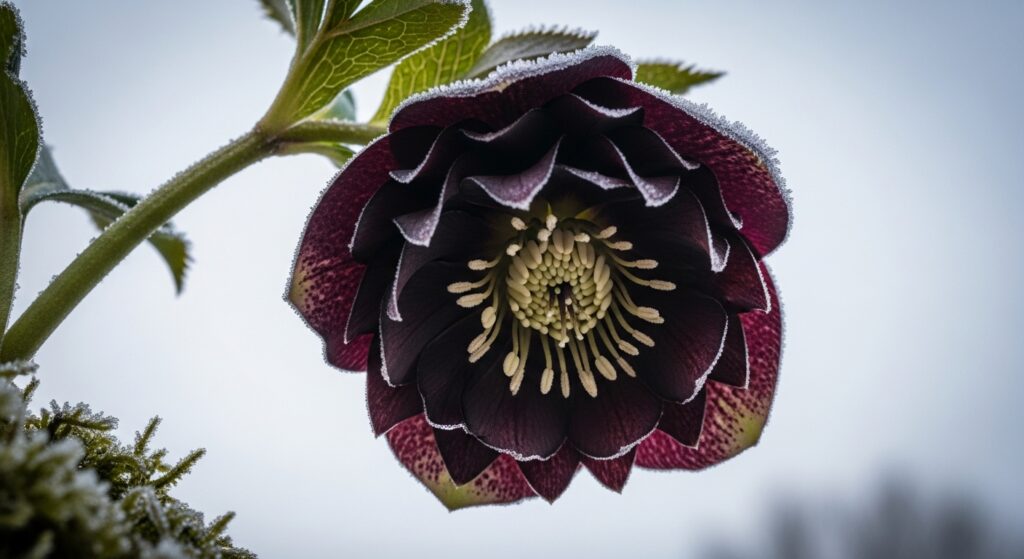
If gothic flowers had a mascot, it would be the hellebore.
Also called the Christmas Rose or Lenten Rose, hellebores bloom in the dead of winter — sometimes pushing through snow. Their downward-nodding blooms in shades of deep plum, near-black, burgundy, and slate purple feel genuinely otherworldly.
Helleborus niger and the hybrid H. × hybridus are the most widely grown. The darkest-flowered varieties, especially those in the ‘Double Ellen Purple’ or ‘Onyx Odyssey’ series, are staples of goth garden planting schemes.
Why they’re gothic: Hellebores have a long association with sorcery, poison, and the underworld in Greek and European folklore. They’re toxic — and they bloom when almost nothing else dares to.
Growing tips:
- Deep shade to partial shade
- Zones 4–9; winter-blooming
- Long-lived perennials; slow to establish but worth it
- Toxic to humans and pets — handle with gloves
3. Black Bat Flower (Tacca chantrieri) — The Most Gothic Plant on Earth
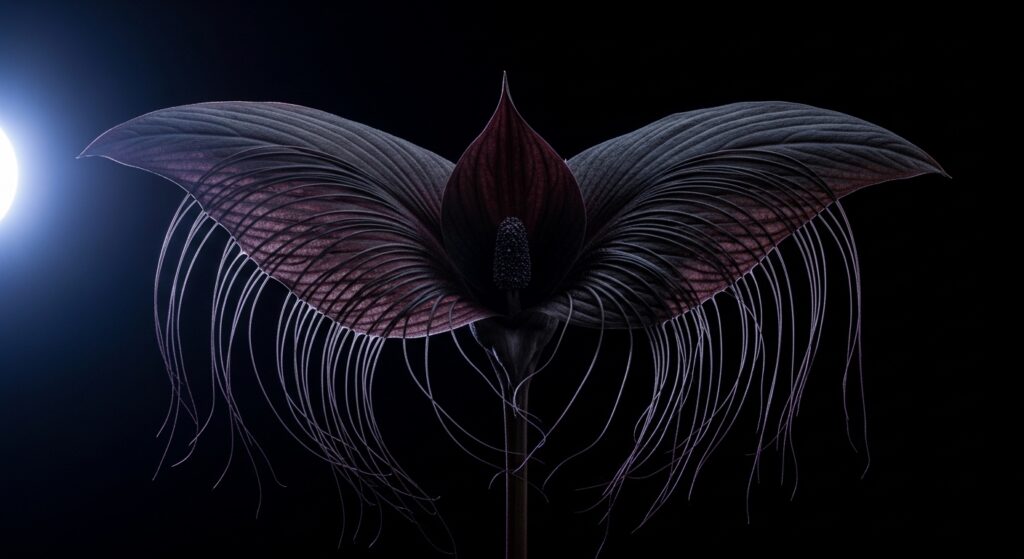
Few plants look as genuinely supernatural as Tacca chantrieri — the Black Bat Flower.
The flowers are deep black-purple, bat-wing shaped, and trail long, whisker-like filaments that can reach over a foot in length. The overall effect is less “garden flower” and more “creature from another dimension.”
Native to Southeast Asia, it’s grown as a houseplant or conservatory specimen in colder climates. The Black Bat Flower thrives in high humidity and indirect light — the conditions of a shadowy tropical forest floor.
Why it’s gothic: It looks like a bat in mid-flight. Nothing more needs to be said.
Growing tips:
- High humidity (mist regularly or use a pebble tray)
- Indirect bright light — no direct sun
- Zones 10–11 outdoors; houseplant elsewhere
- Keep soil consistently moist but never waterlogged
4. Dark Dahlia (Dahlia ‘Black Satin’ / ‘Arabian Night’) — Gothic Drama at Scale
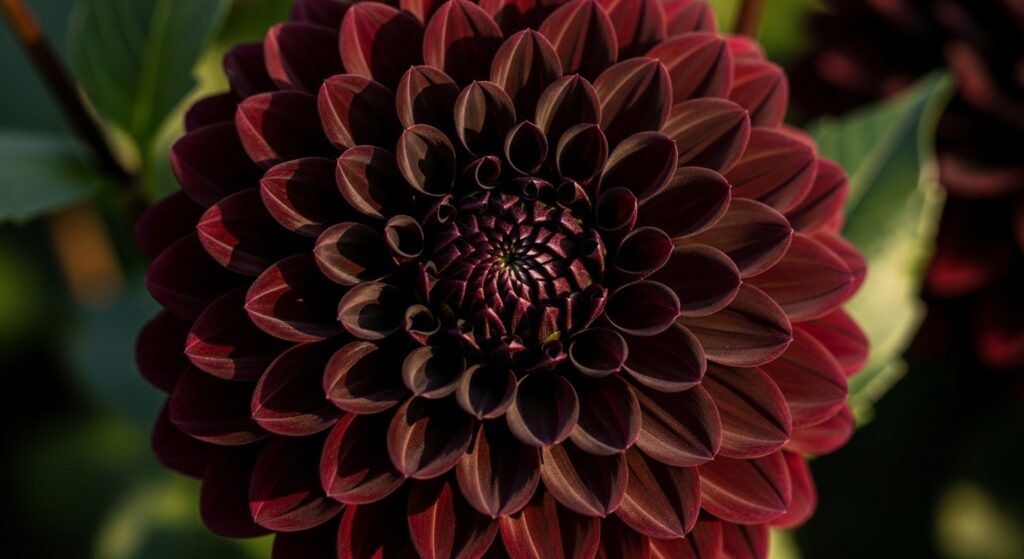
Dahlias might seem too cheerful for a goth garden — until you meet the dark varieties.
‘Black Satin’, ‘Arabian Night’, and ‘Karma Choc’ produce deeply saturated blooms in near-black burgundy, dark chocolate, and blood red. At their darkest, these flowers absorb light rather than reflecting it — giving them a depth that lighter flowers simply can’t match.
The American Dahlia Society catalogs hundreds of dark-flowered cultivars, many of which have become go-to choices for gothic bouquets and Halloween arrangements.
Why they’re gothic: The original “Black Dahlia” — the notorious 1947 murder case — forever linked this flower to dark mystery in popular culture. The plant itself delivers on that dramatic reputation.
Growing tips:
- Full sun, rich well-drained soil
- Zones 8–11 (lift tubers in colder climates)
- Stake tall varieties against wind
- Peak bloom: late summer to first frost
5. Monkshood (Aconitum napellus) — The Most Dangerous Gothic Flower
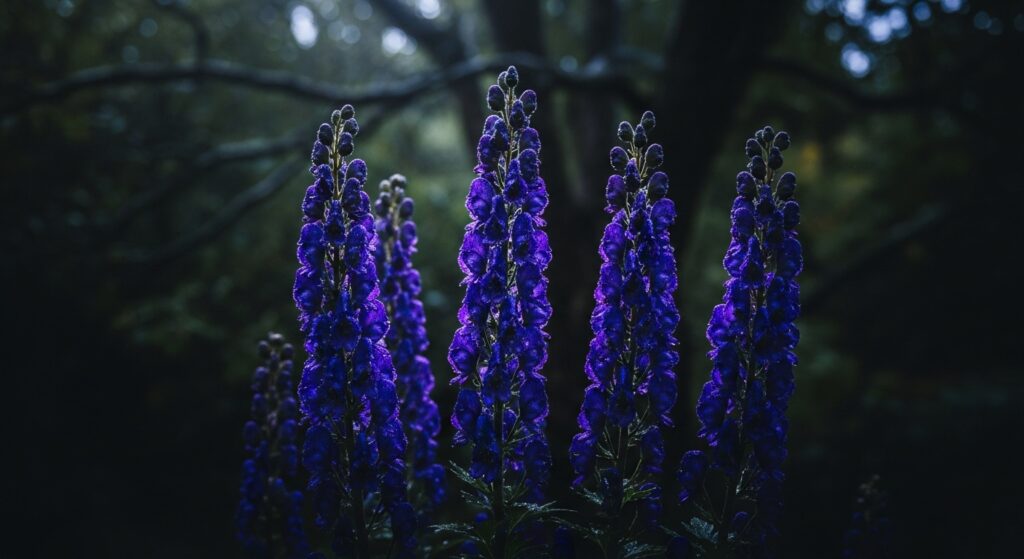
Monkshood is strikingly beautiful and genuinely deadly — a gothic combination that’s hard to beat.
The hood-shaped deep purple-blue flowers give it an architectural elegance, but Aconitum napellus is considered one of the most toxic plants in the Northern Hemisphere. It was historically known as “wolf’s bane” and used in poison arrows across ancient Europe and Asia.
Despite this, it’s a popular cottage and gothic garden perennial — grown safely as long as you wear gloves when handling it and keep it away from children and pets.
Why it’s gothic: Rich mythology, deeply saturated near-black purple blooms, and the fact that it was historically used to detect werewolves. Genuinely gothic.
Growing tips:
- Partial shade to full sun in cool climates
- Zones 3–7; prefers cool, moist conditions
- Toxic — always wear gloves; wash hands thoroughly
- Long-blooming: summer through early fall
6. Black Pansy (Viola ‘Molly Sanderson’ / ‘Black Magic’) — Small but Powerfully Dark
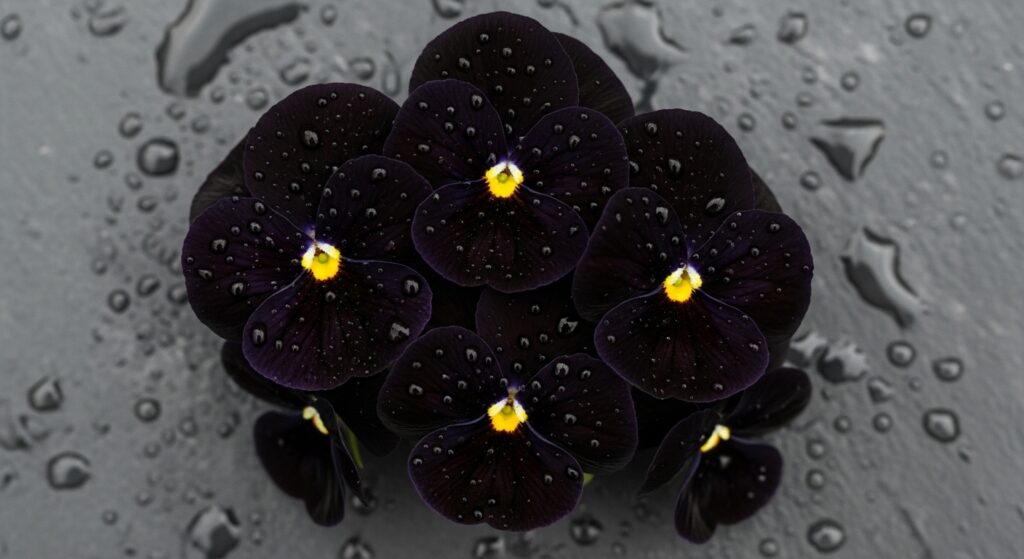
Often underestimated, the black pansy punches well above its weight in the gothic garden.
Varieties like ‘Molly Sanderson’ and ‘Black Magic’ produce near-black velvety blooms with a tiny yellow eye — creating a face-like appearance that’s somewhere between whimsical and unsettling. Exactly where gothic flowers should be.
Viola cultivation is beginner-friendly: they’re hardy, prolific, and cheap to buy as bedding plants. Mass plantings create a dark carpet effect that works brilliantly as edging in goth garden borders.
Why they’re gothic: In Hamlet, Ophelia distributes pansies for “thoughts” — the flower has centuries of melancholic literary association.
Growing tips:
- Full sun to partial shade
- Zones 6–10 as perennials; grown as annuals elsewhere
- Ideal for containers, window boxes, borders
- Deadhead regularly for continuous bloom
7. Scabiosa ‘Black Night’ — Pincushion Flower of the Dark
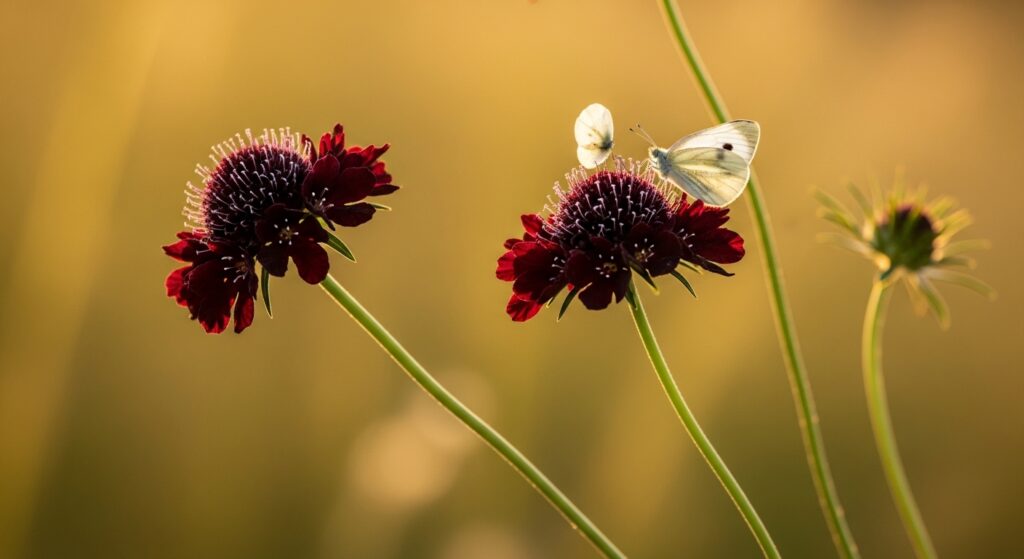
Scabiosa atropurpurea ‘Black Night’ produces deep, almost black-maroon pompom flowers on long wiry stems — graceful, delicate, and undeniably dark.
It’s a fantastic addition to gothic bouquets because the flower heads are soft and airy, providing textural contrast to heavier blooms like roses and dahlias.
The RHS Award of Garden Merit variety performs reliably and self-seeds freely, naturalizing beautifully in mixed borders.
Growing tips:
- Full sun, well-drained soil
- Annual in most zones; self-seeds readily
- Excellent for cutting and drying
- Attracts butterflies even in its darkest forms
8. Chocolate Cosmos (Cosmos atrosanguineus) — The Flower That Smells Like Cocoa
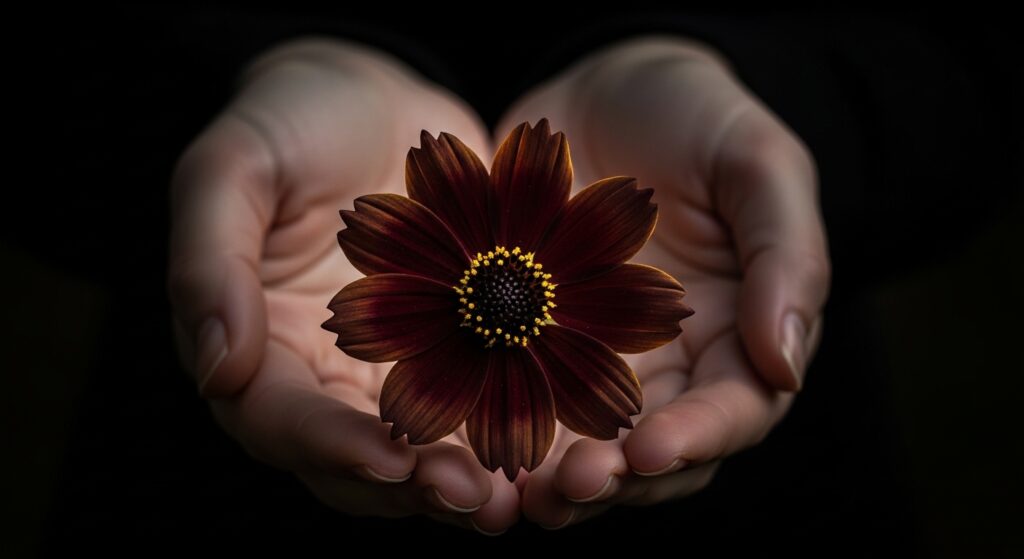
The Chocolate Cosmos is as close to a perfect gothic flower as nature gets — deep burgundy-brown blooms so dark they’re nearly black, with an extraordinary scent of warm cocoa and vanilla.
Native to Mexico and now extinct in the wild, Cosmos atrosanguineus survives only through cultivation — adding a layer of ghostly melancholy to its story.
Why it’s gothic: Extinct in the wild. Smells of chocolate and mystery. Nearly black. The backstory alone qualifies it.
Growing tips:
- Full sun, well-drained soil
- Zones 9–11 (lift tubers for winter in cold climates)
- Slow to bloom from seed — buy tubers for faster results
- Rich, moist soil improves flower size
9. Black Hollyhock (Alcea rosea ‘Nigra’) — Towering Victorian Gothic
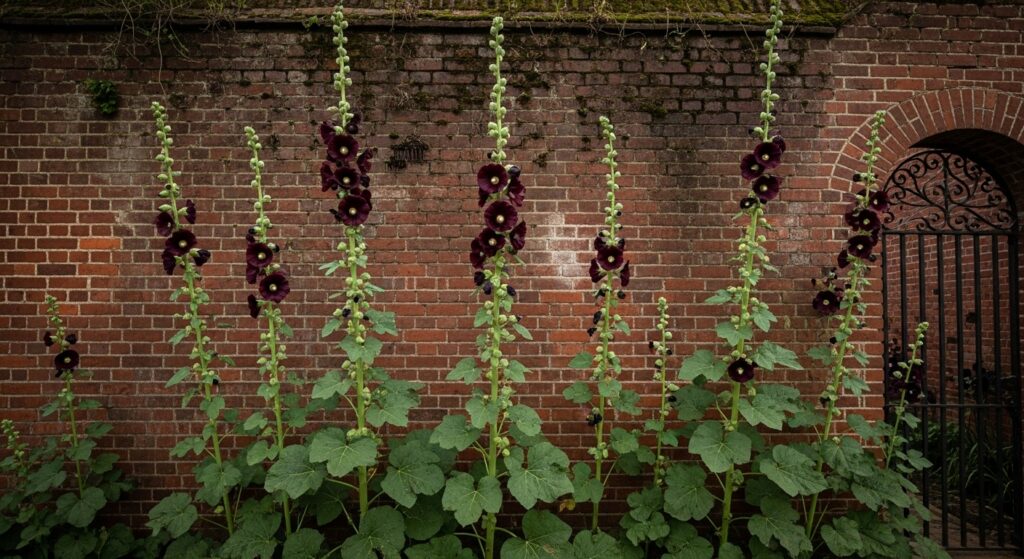
The Black Hollyhock is one of the oldest ornamental dark flowers in cultivation.
Alcea rosea ‘Nigra’ produces tall spires of deep burgundy-maroon blooms that are nearly black — historically grown in cottage gardens and walled estates throughout England. There’s something deeply Victorian about a black hollyhock against an old brick wall.
Why it’s gothic: Featured in classic European garden history, associated with old manor houses and overgrown estate gardens. Genuinely antique in character.
Growing tips:
- Full sun, well-drained soil
- Biennial or short-lived perennial; self-seeds
- Zones 3–9; very cold-hardy
- Stake in exposed positions — can reach 6–8 feet
10. Queen of the Night Tulip (Tulipa ‘Queen of the Night’) — The Gothic Tulip
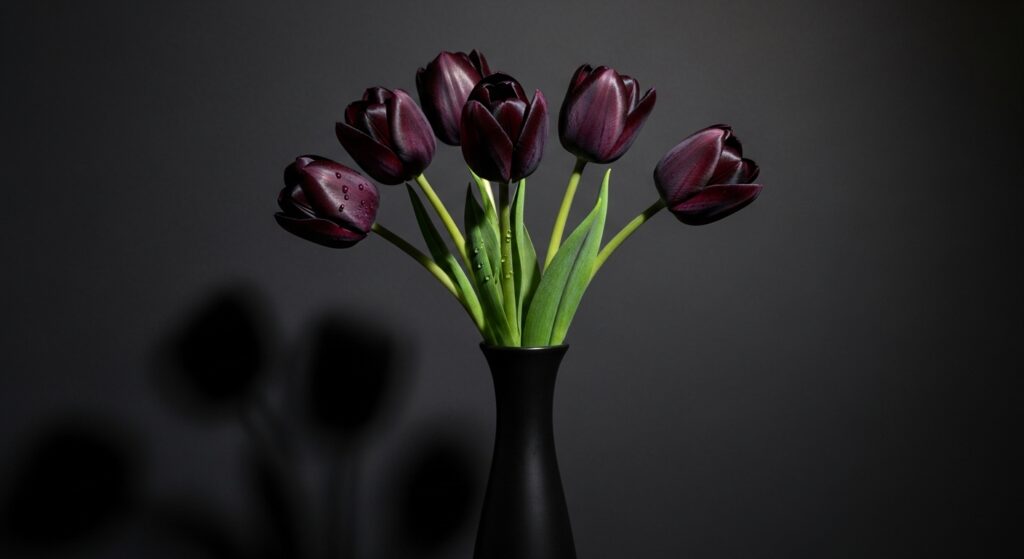
The ‘Queen of the Night’ tulip is the single most requested variety for gothic and dark-themed flower arrangements — and it delivers completely.
Deep maroon-black, satiny, and elegantly cup-shaped, this tulip looks like it was designed for a vampire’s garden. It blooms in mid-to-late spring and holds its color beautifully as a cut flower.
Growing tips:
- Full sun, well-drained soil
- Plant bulbs in autumn; zones 3–8
- Excellent in containers or formal borders
- Pair with white tulips for maximum gothic contrast
11. Fritillaria (Fritillaria meleagris) — The Checkered Death Bell
The Snake’s Head Fritillary is one of the most unusual native wildflowers in the UK — and one of the most gothic.
Its nodding, bell-shaped blooms are patterned with a strange checkerboard of deep purple and white — a pattern so improbable it looks manufactured. Growing in damp meadows, the flowers hang silently in the spring mist like tiny lanterns at a funeral.
Fritillaria meleagris is a protected species in parts of the UK and listed as a priority species under the UK Biodiversity Action Plan.
Growing tips:
- Damp soil; partial shade
- Zones 3–8; naturalizes in grass
- Plant bulbs in autumn; do not disturb once established
- Works beautifully under trees or in wild garden areas
12. Nigella (Nigella damascena) ‘Black Pod’ — Love-in-a-Mist
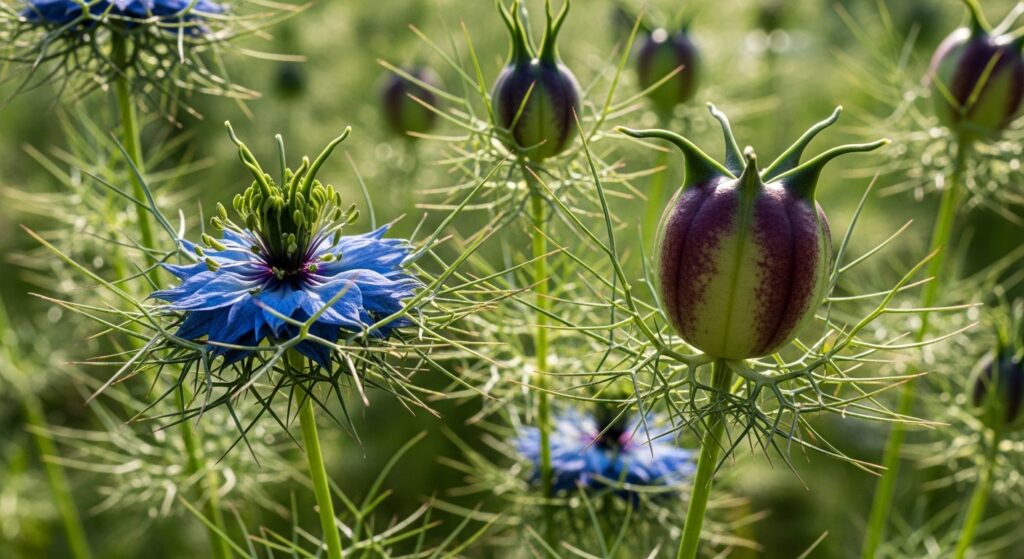
Nigella grows wispy, finely divided foliage that surrounds the flower like a mist or a spider’s web — hence “Love-in-a-Mist.” The dark-seeded pod varieties add a gothic bonus: striking black-veined seed pods that dry beautifully for arrangements.
The deep blue-black flowered forms, combined with those extraordinary architectural seed pods, make Nigella a gothic garden essential.
Growing tips:
- Full sun, direct sow in spring or autumn
- Hardy annual; self-seeds freely
- Don’t transplant — sow where they are to grow
- Seed pods are as decorative as the flowers
13. Dark Iris (Iris ‘Superstition’ / ‘Before the Storm’) — Velvet Thunder
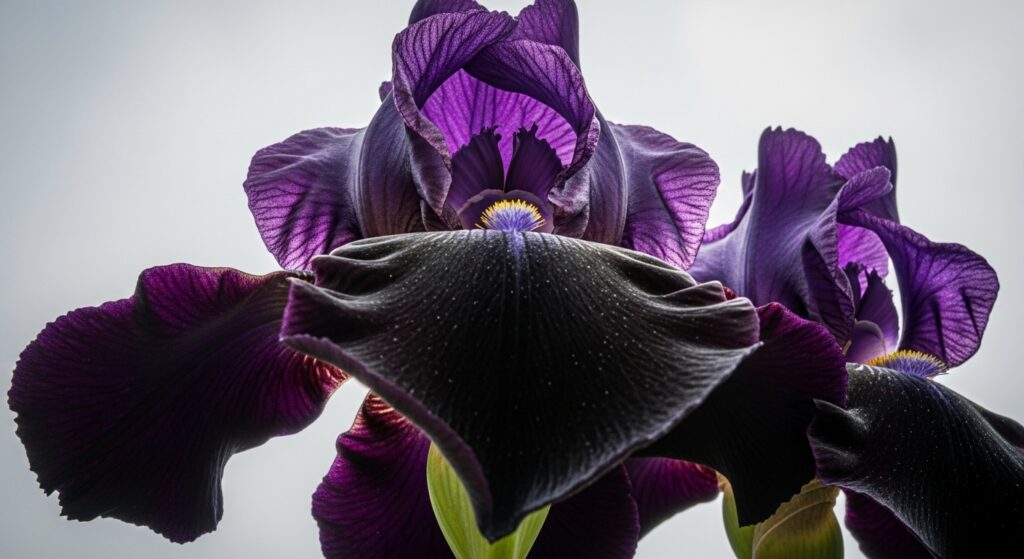
Bearded irises come in nearly every color — including the most jaw-dropping near-blacks.
‘Superstition’ and ‘Before the Storm’ are the most celebrated dark iris cultivars, producing silky violet-black falls with an almost iridescent depth. The American Iris Society actively promotes and awards the darkest varieties, recognizing their exceptional ornamental quality.
Why they’re gothic: The combination of extravagant form and near-black color is pure gothic theater. Few garden perennials are this dramatic.
Growing tips:
- Full sun, excellent drainage (rhizomes must not sit in wet soil)
- Zones 3–9; very cold-hardy
- Divide clumps every 3–4 years for best flowering
- Bloom in late spring to early summer
14. Deadly Nightshade (Atropa belladonna) — The Gothic Witch’s Plant
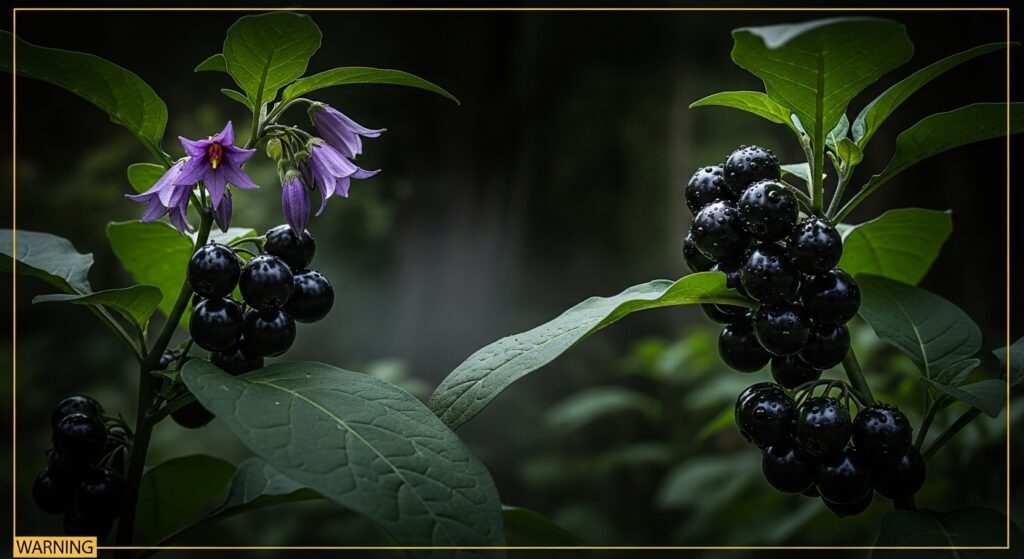
No gothic plant list is complete without Atropa belladonna — Deadly Nightshade.
Glossy black berries, dull purple bell-shaped flowers, and a history so steeped in poison, witchcraft, and Renaissance Italy that it’s almost a cliché. The name belladonna (“beautiful woman”) comes from its historical use in Italian Renaissance cosmetics as an eye-drop to dilate pupils.
The poison control database lists it among the most dangerous plants in Europe and North America.
Why it’s gothic: It practically invented the gothic aesthetic — poison, beauty, witches, and Renaissance courtesans. It doesn’t get more gothic than this.
15. Black-Eyed Susan Vine / Dark Rudbeckia — Gothic Gold Meets Shadow
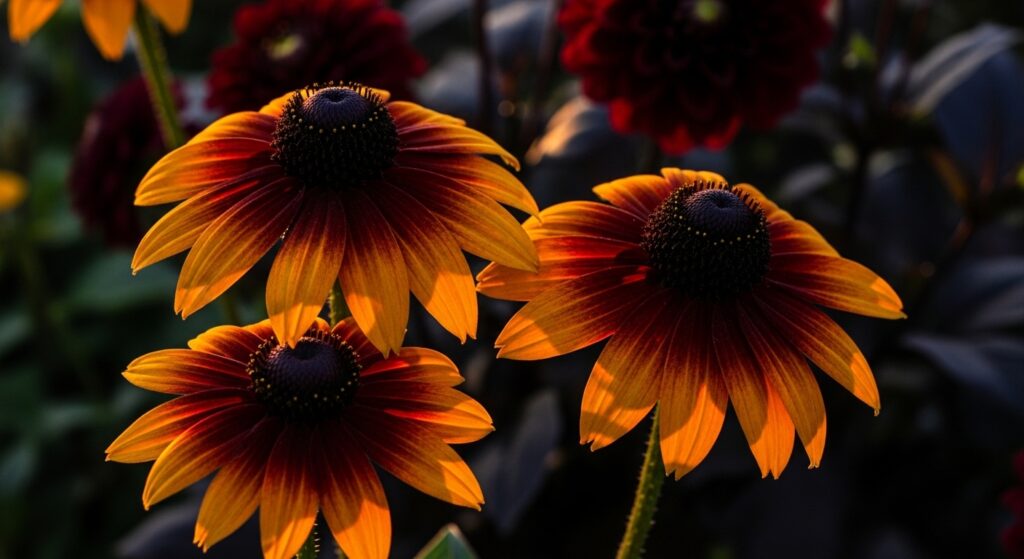
As a counterpoint to all the pure darkness above, the ‘Cherry Brandy’ Rudbeckia deserves a mention for gothic gardens that want some warmth in their shadow palette.
This variety of coneflower produces deep burnt-orange petals around a very dark, almost black center cone — creating a smoldering ember effect that works beautifully when layered between the deep purples and near-blacks of a goth planting scheme.
Growing tips:
- Full sun, average soil
- Annual or short-lived perennial; zones 4–9
- Sow from seed in spring
- Excellent late-season color when many gothic plants are fading
Gothic Flower Bouquet Ideas
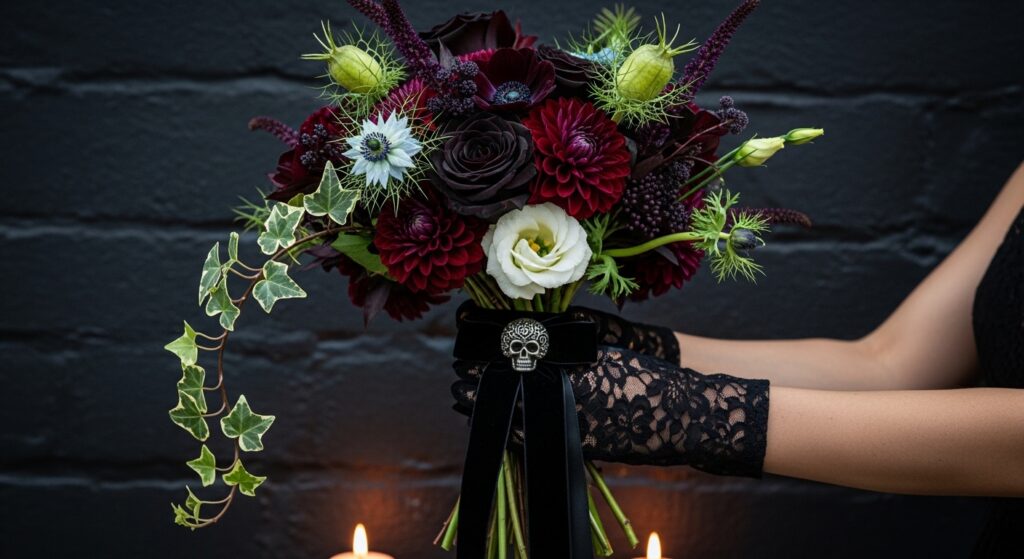
One of the most practical applications of gothic flowers is arrangement — whether for a dark-themed wedding, Halloween event, or everyday home décor.
Classic Gothic Bouquet Combination:
- Black Baccara roses (structure and icon status)
- Dark dahlias ‘Arabian Night’ (depth and volume)
- Black pansies (filler and delicacy)
- Nigella seed pods (texture and drama)
- Chocolate cosmos (scent and near-black color)
- Dark ivy or black-sprayed eucalyptus (foliage)
Gothic Wedding Bouquet Tips:
- Dark ribbon (deep burgundy, black velvet, or gunmetal grey) replaces the traditional white
- Add gothic charms, chains, or brooch pins to the stem wrap
- Pair with white or pale blooms (lily of the valley, white lisianthus) for contrast — pure black with zero contrast looks flat
- Spray-paint fresh or dried flowers black as a budget option for filler blooms
Building Your Goth Garden: Design Principles
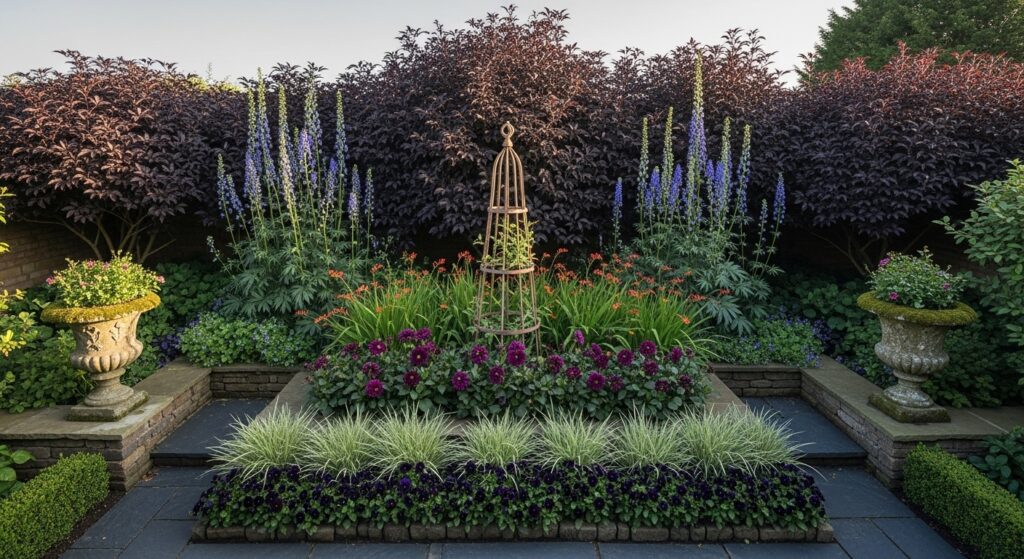
A goth garden isn’t just a collection of dark flowers — it’s a designed atmosphere.
Structure first: Use dark-leaved shrubs like Sambucus nigra ‘Black Lace’ (Black Lace Elderflower) or Physocarpus ‘Diabolo’ as backbone plants. Their near-black foliage provides the dark canvas that makes your gothic flowers pop.
Layer your darks: Don’t plant only jet-black flowers. A goth garden uses deep purples, burgundies, chocolates, and dark blues as a full palette — with black as the accent, not the base.
Add gothic hardscape: Wrought iron plant supports, aged stone or concrete planters, moss-covered statues, and dark slate mulch all contribute to the atmosphere without a single plant being involved.
Moonlight matters: Many gothic gardeners plant white and pale silver flowers alongside the dark ones — for the night. Pale flowers glow in moonlight, creating an ethereal effect that dark flowers alone can’t produce.
Expert Tips: Gothic Garden Planning
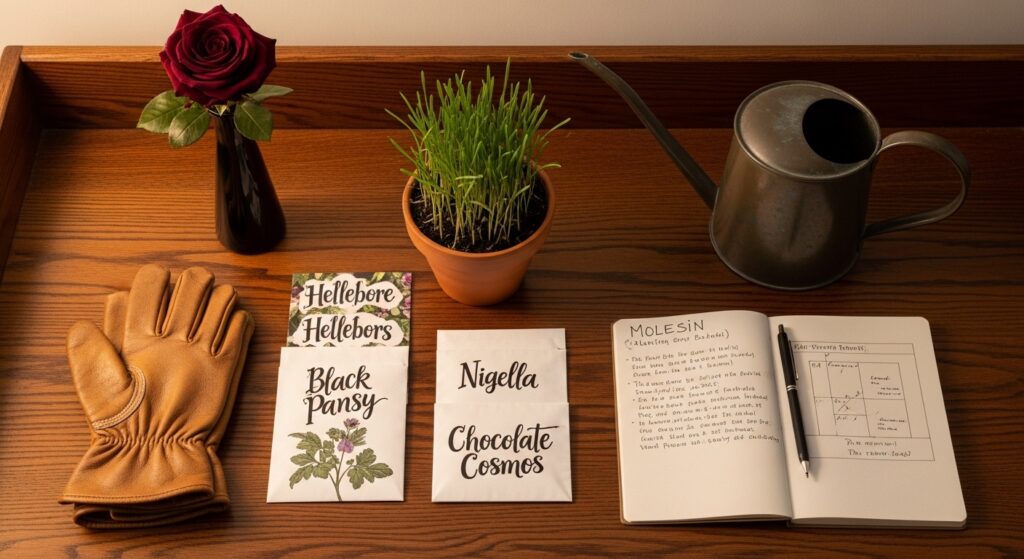
Tip 1 — Embrace contrast. The most impactful gothic gardens place very dark blooms next to very pale ones. Pure-black gardens without contrast can look muddy, not dramatic.
Tip 2 — Go for texture variety. Mix spiky (Monkshood), nodding (Hellebore), flat (Dahlia), and wispy (Nigella) forms. Texture contrast is as important as color in a goth planting.
Tip 3 — Use dark-leaved foliage plants. Ophiopogon planiscapus ‘Nigrescens’ — the Black Mondo Grass — is one of the most useful gothic ground covers available. It’s genuinely near-black and thrives in shade.
Tip 4 — Think about bloom succession. Hellebores bloom in winter, tulips in spring, irises in late spring, dahlias in summer-fall. Plan your gothic garden to have dark interest across the seasons.
Tip 5 — Use containers for tender gothics. Bat flowers, chocolate cosmos, and tropical dark-leafed cannas can all be grown in pots and brought indoors over winter in cold climates.
Flowers That Symbolize Gothic Themes: Quick Reference
| Flower | Gothic Symbolism |
|---|---|
| Black Rose | Mourning, farewell, passionate tragedy |
| Hellebore | Sorcery, protection, the underworld |
| Monkshood | Danger, power, warning |
| Black Pansy | Dark thoughts, melancholy, remembrance |
| Nightshade | Witchcraft, poison, seduction |
| Fritillary | Fragile beauty, death’s patterning |
| Chocolate Cosmos | Extinction, sweetness in darkness |
| Dark Iris | Mystery, royalty, the ineffable |
Frequently Asked Questions
What are gothic flowers called?
Gothic flowers is an umbrella term for dark, moody, or dramatically colored blooms used in goth-themed gardens and arrangements. Specific gothic flower names include: Black Baccara Rose, Hellebore (Helleborus spp.), Black Bat Flower (Tacca chantrieri), Monkshood (Aconitum napellus), ‘Queen of the Night’ Tulip, Black Dahlia, Black Pansy, and Chocolate Cosmos. Many of these are also simply called “black flowers” or “dark flowers.”
What black flowers exist in real life?
Truly black flowers are rare — most “black” flowers are very deep shades of purple, maroon, or burgundy. Real-world examples that come closest to true black include: Tacca chantrieri (Black Bat Flower), Tulipa ‘Queen of the Night’, Rosa ‘Black Baccara’, Viola ‘Molly Sanderson’, Iris ‘Before the Storm’, and Alcea rosea ‘Nigra’. All are genuinely available and can be grown in home gardens.
What plants are used in goth gardens?
Beyond the flowers, a gothic garden typically includes dark-foliage shrubs like Sambucus nigra ‘Black Lace’, black mondo grass (Ophiopogon planiscapus ‘Nigrescens’), dark-leaved Physocarpus, purple Cotinus (smoke bush), and architectural plants like black bamboo (Phyllostachys nigra). These form the dark structural backbone around which gothic flowers are arranged.
What is a good gothic flower for beginners?
Hellebores and black pansies are the easiest gothic flowers to start with. Both are readily available at garden centers, tolerate shade, are long-lived, and require minimal care. ‘Queen of the Night’ tulips are also excellent for beginners — simply plant bulbs in autumn and wait for the show in spring.
Can I make a gothic flower bouquet at home?
Absolutely. A DIY gothic bouquet can be built with flowers sourced from florists, supermarkets, or your own garden. Key ingredients: dark roses (ask for ‘Black Baccara’ or closest red-black available), dark dahlias or anemones, black or very dark purple lisianthus, and textural fillers like dried seed pods or dark eucalyptus. Wrap in black ribbon and secure with a dark pin or brooch. Several online guides from florists like Bloom & Wild also offer dark-themed arrangement tutorials.
Conclusion: Let Your Garden Go Dark
Gothic flowers aren’t just a trend — they’re a genuine design philosophy that treats darkness as a feature, not a flaw.
From the near-black velvety petals of ‘Black Baccara’ roses to the supernatural drama of the Black Bat Flower, from the poison-beautiful Monkshood to the winter-blooming mystery of hellebores — there is no shortage of extraordinary plants to build a goth garden around.
The best gothic gardens aren’t simply dark — they’re atmospheric. They use shadow, contrast, texture, and carefully chosen symbolism to create outdoor spaces that feel genuinely otherworldly.
Ready to go gothic? Start with two or three plants from this list that suit your climate and light conditions. Source them from reputable nurseries like Crocus (UK) or White Flower Farm (USA), and begin building your dark garden one moody bloom at a time.
The garden doesn’t have to be bright to be beautiful.
Also Read: Flowers That Look Like Flames: 12 Real Fire Flowers That Will Ignite Your Garden

