
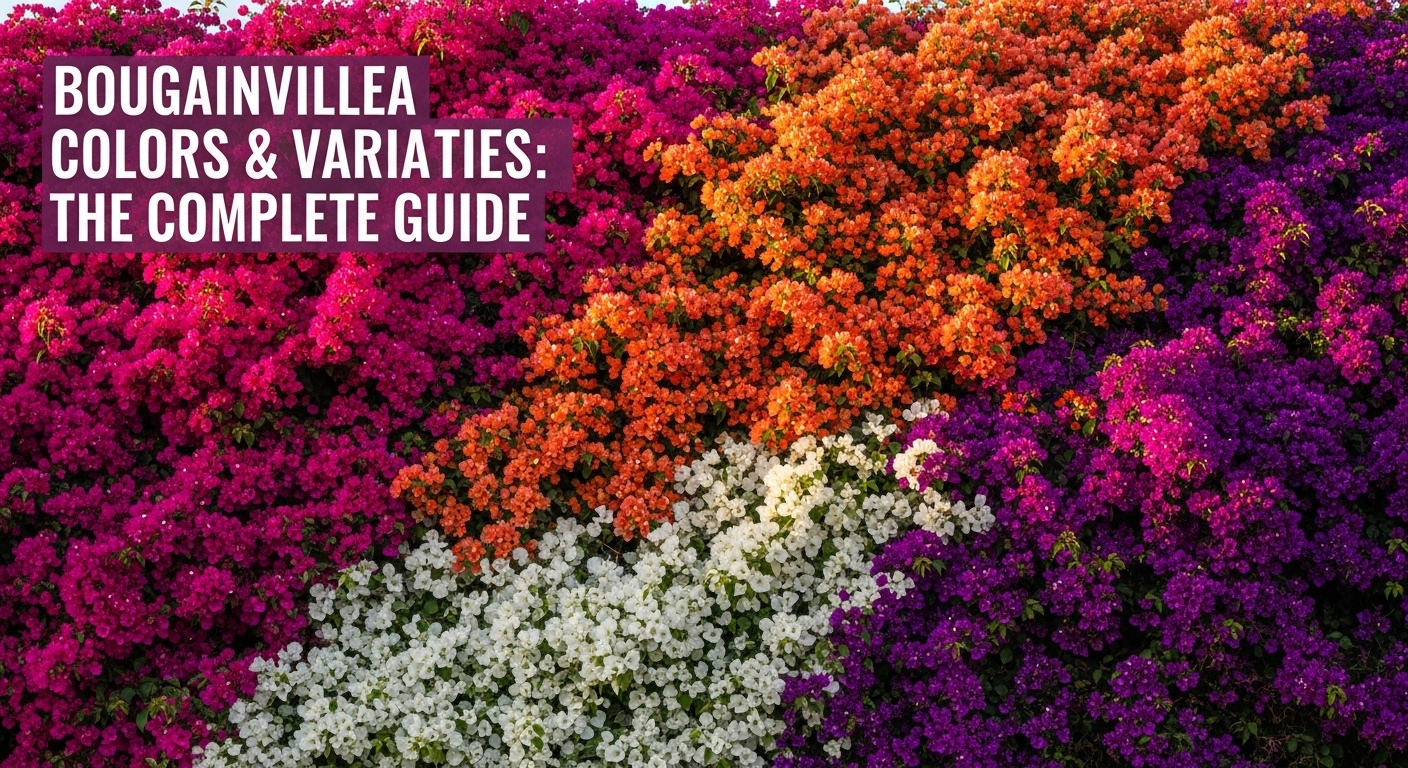
The first time most people see a bougainvillea in full bloom, they stop walking. It’s hard not to.
A wall completely swallowed by thousands of electric-pink bracts. A trellis dripping in orange-coral clusters. An archway lit up in deep violet — so vivid it almost looks painted on.
Bougainvillea does that to people. And once you’re hooked, the first question is always the same: “How many colors do they actually come in?”
The answer is more interesting than you might expect. There are over 300 named bougainvillea varieties, with bracts ranging from snow white and pale lavender to brick red and golden yellow. They grow as climbing vines, compact shrubs, hanging baskets, and even ground cover — making them one of the most versatile flowering plants in the world.
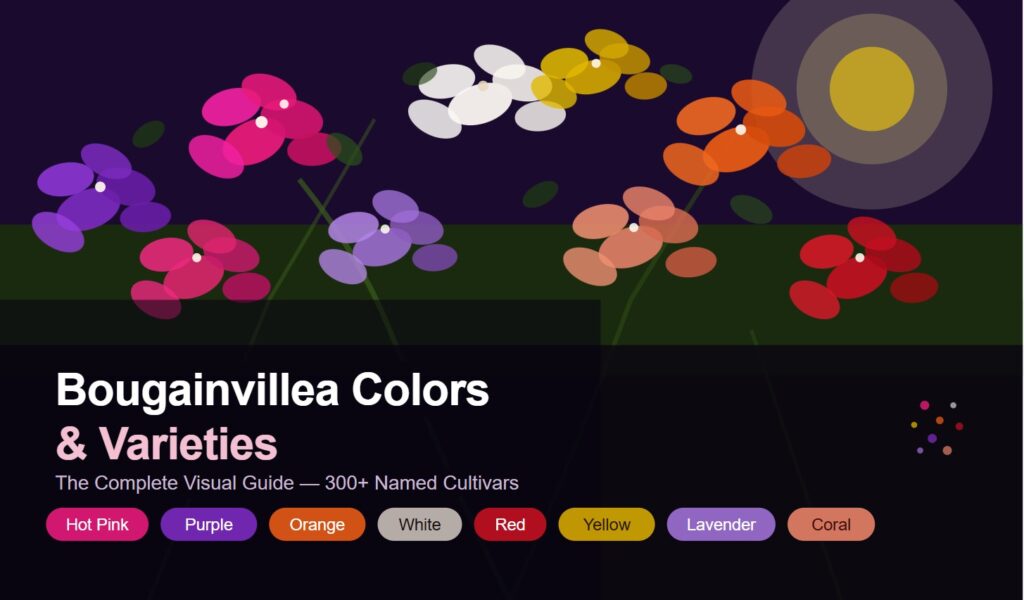
This guide covers every major bougainvillea color category, the best named varieties to grow, rare finds worth hunting for, and expert tips on choosing the right type for your space. Whether you’re a curious beginner or planning a full garden design, this is the reference you’ll come back to.
What Are Bougainvillea? A Quick Primer
Before diving into the varieties, it helps to understand what you’re actually looking at when a bougainvillea blooms.
Bougainvillea is a genus of thorny ornamental plants native to South America — primarily Brazil, Peru, and Argentina. The genus belongs to the Nyctaginaceae family and was first described by European botanists in the 1760s during Louis Antoine de Bougainville’s circumnavigation voyage (hence the name).
Here’s the twist most people don’t know: those colorful “petals” aren’t petals at all. They’re modified leaves called bracts. The actual flowers are the tiny, tubular, cream-white structures nestled inside the bracts — often overlooked entirely.
This distinction matters because it explains why bougainvillea stays “in bloom” for so long. Bracts are tougher than petals. They hold their color for weeks or even months, making bougainvillea one of the longest-blooming ornamental plants available to gardeners.
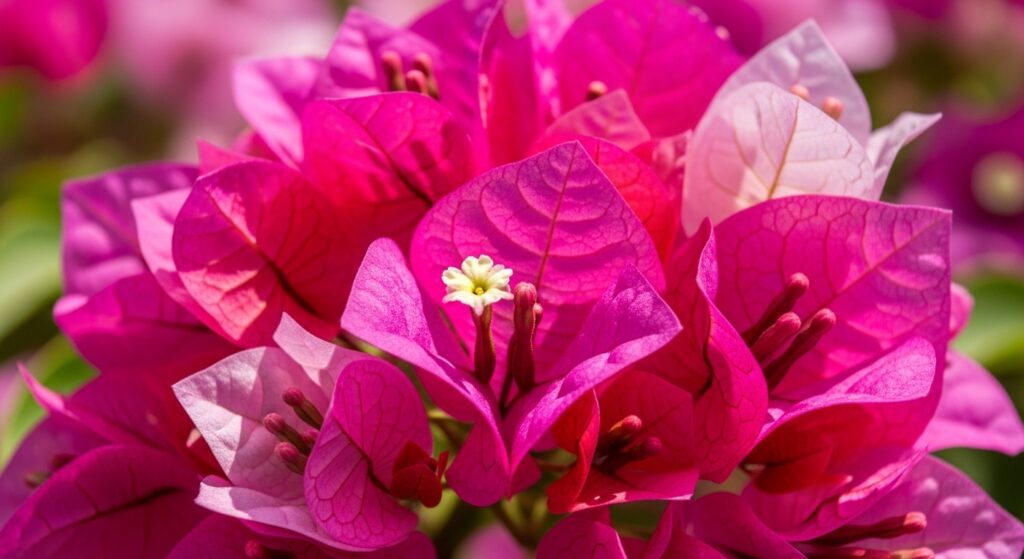
Bougainvillea bract closeup showing true white tubular flower inside colorful pink bracts
How Many Colors of Bougainvillea Are There?
This is one of the most searched questions about the plant — and the answer genuinely surprises people.
Bougainvillea bracts naturally occur across a spectrum of around 12–15 distinct color families, including:
- Magenta and hot pink (the most common)
- Purple and violet
- Red and crimson
- Orange and coral
- Salmon and peachy-pink
- Yellow and golden
- White and cream
- Lavender and lilac
- Brick red / burgundy
- Multi-colored / variegated (bi-color bracts on a single plant)
Through selective breeding and hybridization — which has been active since the 19th century — cultivators have extended this palette even further. Today, some varieties produce bracts in two or three tones simultaneously on a single stem.
So while bougainvillea isn’t quite the whole rainbow (true blue and pure black don’t exist in the genus), the range is impressively wide for a single plant group.
Bougainvillea Varieties by Color: Named Cultivars & Descriptions
Here’s a breakdown of the best-known named varieties organized by color. This is where most gardeners want to spend their time — matching a plant to a specific look or color palette.
Pink & Hot Pink Varieties
Pink is the color most people picture when they think of bougainvillea, and for good reason — it’s the dominant shade across many of the most popular cultivars.
‘Barbara Karst’ — One of the most widely grown varieties in the US and UK. Deep magenta-red in warm climates, hot pink in cooler conditions. Vigorous climber. Excellent for fences and walls.
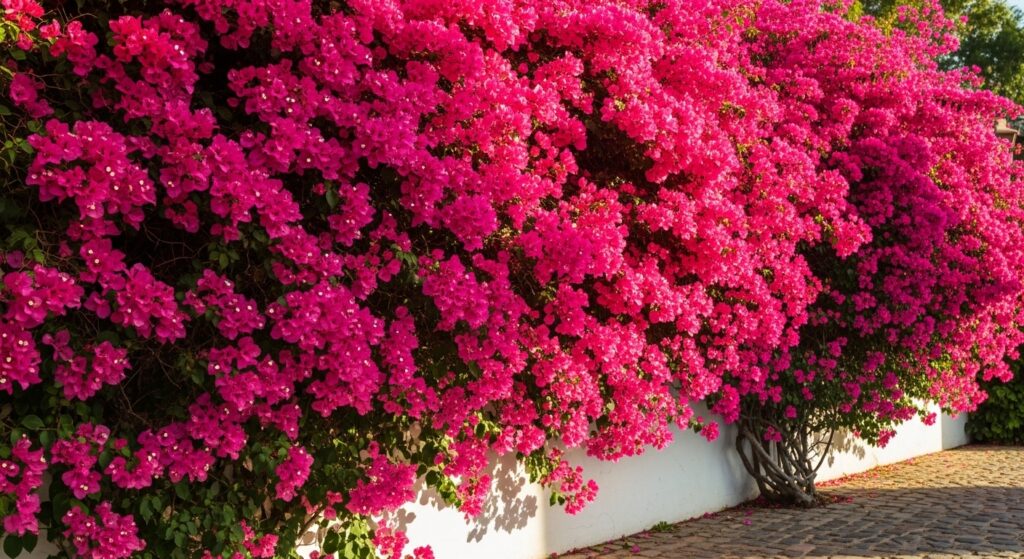
Barbara Karst bougainvillea hot pink variety in full bloom covering white stucco garden wall
‘Raspberry Ice’ — A variegated variety with dark green leaves edged in cream and vivid hot-pink bracts. Compact growth habit, ideal for containers and hanging baskets.
‘Spectabilis’ — One of the original species varieties. Deep rosy-pink bracts, highly tolerant of heat and drought. Common along highways and coastal gardens in Florida and California.
‘Poulton’s Special’ — Magenta-pink with a slightly warmer tone. Very free-flowering and great for container gardening.
Purple & Violet Varieties
Purple bougainvillea is among the most dramatic color options available — deep, saturated, and unforgettable against a bright blue sky.
‘James Walker’ — A classic deep purple variety, widely grown in warmer climates. Large bracts and vigorous climbing habit. Often mistaken for violet.
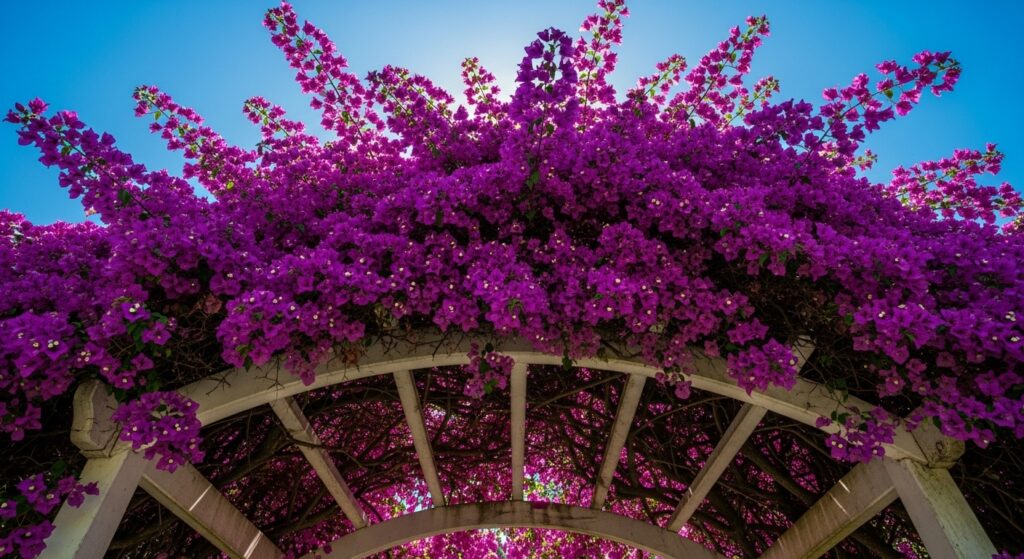
James Walker deep purple bougainvillea variety covering a white garden pergola against blue sky
‘Louis Wathen’ — Deep orange-purple bi-color that transitions as the bracts age. A visually complex and rewarding choice.
‘Purple Queen’ — True deep purple bracts, compact shrub form. Works well as a standalone specimen plant or in a large container.
‘Moneth’ (also known as ‘Purple Robe’) — Rosy-purple bracts, exceptionally free-flowering throughout the warm season.
Red & Crimson Varieties
Red bougainvilleas are bold, architectural, and make a powerful statement in any garden.
‘Scarlett O’Hara’ — Bright scarlet-red. A vigorous and fast-growing climber. One of the most popular varieties in tropical gardens. Excellent performance in USDA hardiness zones 9–11.
‘San Diego Red’ — Deeper, brick-red bracts compared to Scarlett O’Hara. Very cold-tolerant for a bougainvillea. Also called ‘Hawaian Scarlet’ in some markets.
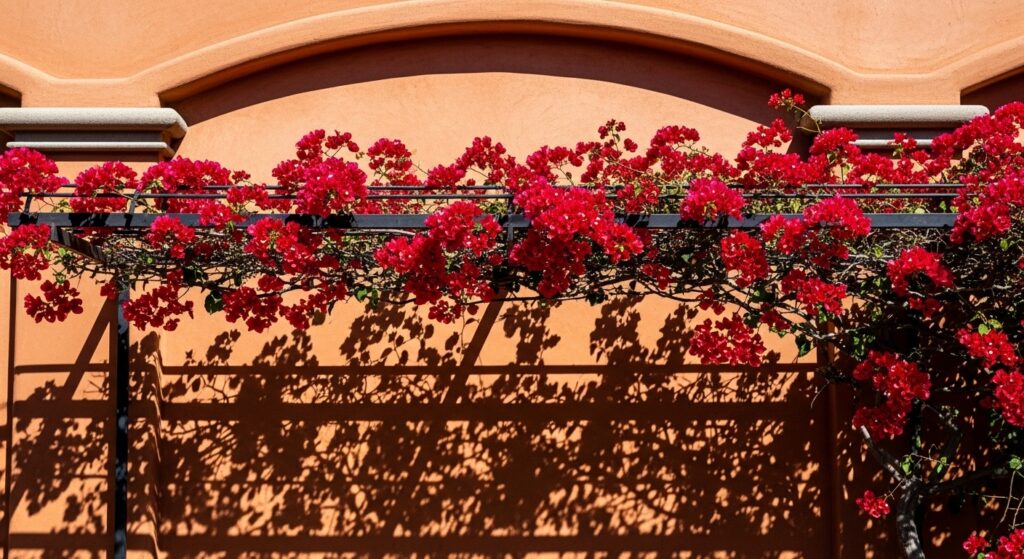
San Diego Red crimson bougainvillea trained along wrought iron trellis on terracotta garden wall
‘Crimson Jewel’ — Rich crimson with smaller, denser clusters. More compact growth than many red varieties, making it good for containers.
‘Afterglow’ — A salmon-red that shifts toward orange depending on light conditions. Unusual and eye-catching.
Orange & Coral Varieties
Orange bougainvillea is rarer than pink or purple but no less striking. These varieties are particularly popular in Mediterranean-style gardens.
‘Mandarin’ — Pure, clear orange bracts. One of the truest orange varieties available. Compact and free-flowering.
‘Camarillo Fiesta’ — A spectacular bi-color with hot pink and gold/orange bracts appearing on the same plant. One of the most visually dramatic varieties in existence.
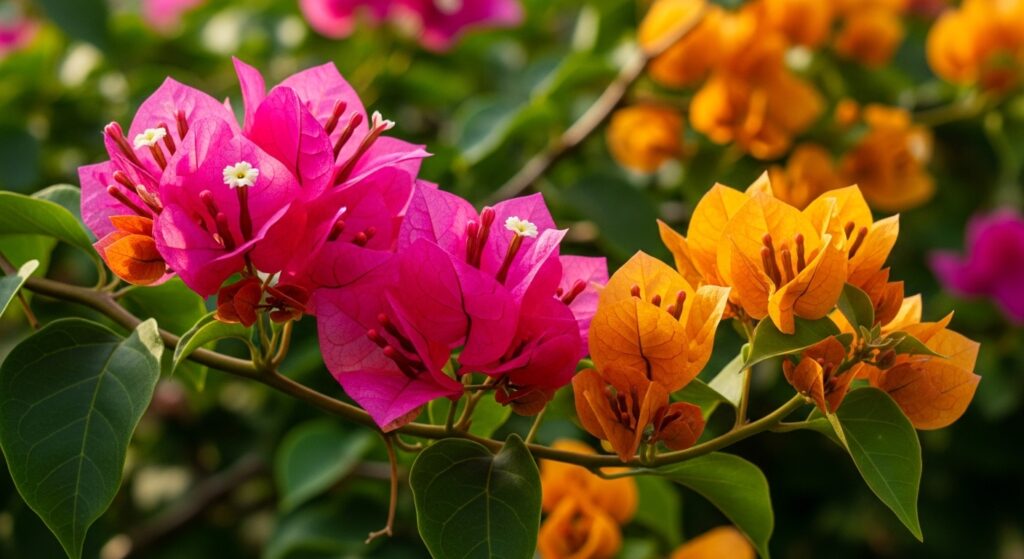
Camarillo Fiesta bicolor bougainvillea showing pink and orange gold bracts on the same plant simultaneously
‘Sundown’ — Peachy-salmon to light orange tones. Fades beautifully as bracts age, producing a multi-toned effect. Also sold as ‘Caribbean Sunset’.
‘Orange King’ — Deeper amber-orange bracts with bronze tones. Large, showy clusters.
White & Cream Varieties
White bougainvillea has a quiet elegance that works beautifully in modern, minimalist, or tropical garden designs.
‘Miss Alice’ — Perhaps the most popular white bougainvillea in the world. Nearly thornless, compact, and produces masses of snow-white bracts. Perfect for containers and small spaces. Also called ‘Torch Glow’ in some nurseries.
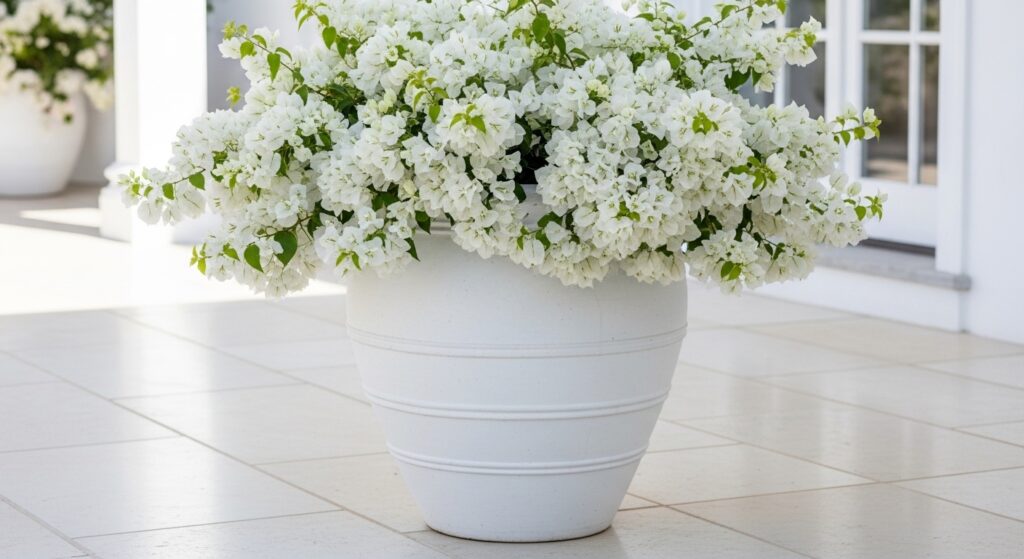
Miss Alice white bougainvillea variety in terracotta container on sunny patio overflowing with white bracts
‘White Madonna’ — Crisp white bracts, fast-growing climber. Very effective against dark stone or brick walls.
‘Jamaica White’ — White with a faint lilac tinge when young. Vigorous grower, excellent for arbors and pergolas.
Yellow & Gold Varieties
Truly yellow bougainvillea is the rarest category — and arguably the most coveted by collectors.
‘Golden Glow’ — Warm golden-yellow bracts that deepen in full sun. One of the few genuinely yellow varieties widely available.
‘California Gold’ — Golden yellow with occasional orange tints. Moderate vigor. Popular in West Coast US gardens.
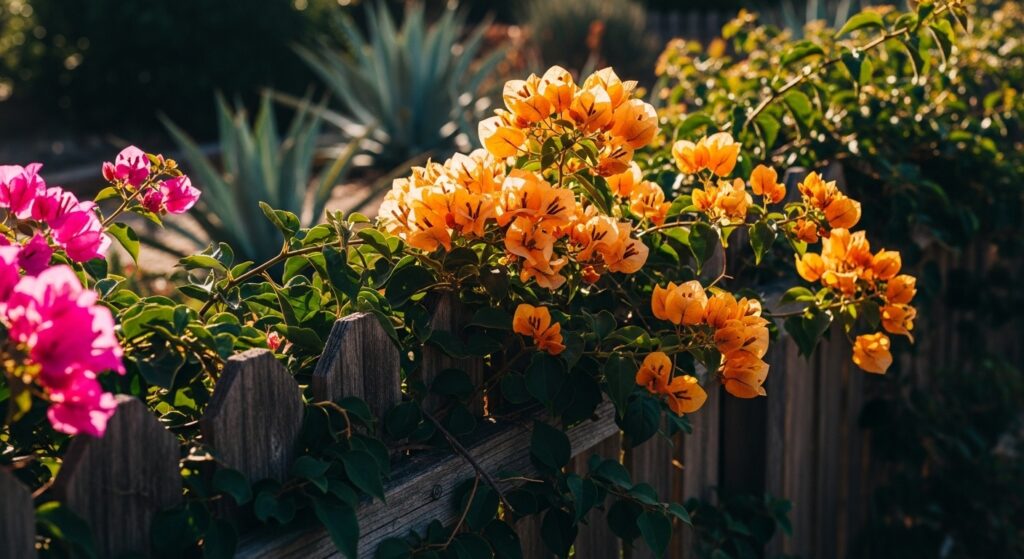
‘Limberlost Beauty’ — A pale yellow that ages to cream. Subtle and sophisticated.
‘Gold Rush’ — Bright, saturated golden yellow. Slightly more vigorous than California Gold.
Multi-Color & Variegated Varieties
Some of the most stunning bougainvilleas aren’t one color at all — they’re two, three, or even four shades blooming simultaneously on a single plant.
‘Mary Palmer’ — A landmark variety. Produces both white and deep magenta bracts on the same plant at the same time. Discovered as a natural mutation and named after Mary Palmer, who found it in India in the 1930s. Now one of the most widely planted bougainvilleas globally.
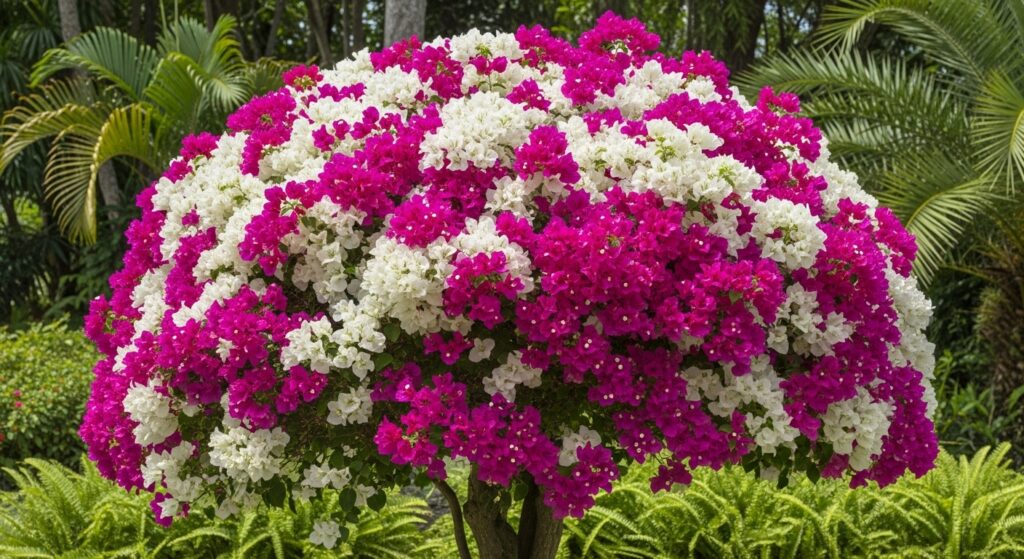
Mary Palmer bougainvillea bicolor variety showing white and magenta bracts blooming together on the same plant
‘Camarillo Fiesta’ — Already mentioned in orange, but worth noting again: it consistently produces both pink and gold bracts, sometimes even on the same branch.
‘Torch Glow’ — Upright, bushy form with bicolor pink-and-white bracts. Unusual non-climbing habit makes it ideal for standalone plants.
‘Delta Dawn’ — Starts with gold-orange bracts that transition to pink as they age. The same plant can carry bracts in multiple stages simultaneously, creating a multicolored display.
Bougainvillea by Growth Type: Not Just Climbers
Most people think of bougainvillea as a vine, but there’s actually significant variation in growth habit. Choosing the right type for your space matters as much as choosing the right color.
| Growth Type | Best Varieties | Ideal Use |
|---|---|---|
| Vigorous Climbers | Barbara Karst, Scarlett O’Hara, James Walker | Walls, fences, pergolas |
| Compact Shrubs | Miss Alice, Crimson Jewel, Purple Queen | Containers, borders |
| Semi-Dwarf | Raspberry Ice, Poulton’s Special | Hanging baskets, balconies |
| Ground Cover | ‘Rosenka’, ‘Temple Fire’ | Slopes, erosion control |
| Standard/Tree Form | Barbara Karst (trained), Mary Palmer | Specimen plants, entrances |
Bougainvillea ground cover varieties are particularly useful in California and the American Southwest for managing slopes and suppressing weeds while adding vivid color. ‘Temple Fire’ and ‘Rosenka’ are the most popular choices in this category.
Rare Bougainvillea Colors Worth Hunting For
Beyond the standard palette, there are a handful of varieties that serious collectors actively seek out.
True Lavender Varieties — Genuine soft lavender (not purple) is very difficult to achieve in bougainvillea. The variety sometimes marketed as ‘Lavender Queen’ tends toward purple. True lavender shades are more common in newer Thai and Indian cultivars, some of which have not yet been formally named for Western markets.
‘President’ — A deep magenta-red variety that produces dramatically large bracts. Sometimes sold as a specialty item at boutique nurseries.
Variegated-leaf varieties — Several cultivars (like ‘Raspberry Ice’ and ‘Snow Cap’) have both colorful bracts AND cream-edged or gold-edged leaves, adding a second layer of visual interest even when not in bloom.
Thai hybrids — Thailand has an exceptionally active bougainvillea breeding culture, and Thai nurseries have developed varieties with unusual forms including double-layered bracts and exceptionally compact habits. Some of these are gradually becoming available through specialty importers in the US and Europe.
Bougainvillea Species: The Three Main Parents
The hundreds of cultivated varieties almost all descend from three wild species:
- Bougainvillea glabra — The most common species in cultivation. Smaller bracts, very free-flowering. Parent of many pink and purple cultivars. Native to Brazil.
- Bougainvillea spectabilis — Larger bracts, more drought-tolerant, less free-flowering but very vigorous. Parent of many red and pink cultivars. Also native to Brazil.
- Bougainvillea peruviana — The “Peruvian Bougainvillea.” Smaller plant with rounded bracts in bright magenta-pink. Less common in cultivation but parent of several hybrid varieties.
Most garden varieties are hybrids — particularly crosses between B. glabra and B. spectabilis — which is why bougainvillea cultivars can vary so dramatically in vigor, bract size, and flowering habit.
Bougainvillea Growing Basics: What Every Gardener Should Know
Understanding the basics helps you get more out of whichever variety you choose.
Sunlight — Bougainvillea needs at least 6 hours of direct sun per day. In shadier conditions, they produce fewer bracts. Full sun is ideal.
Hardiness — Most varieties are hardy in USDA zones 9–11. In cooler zones (7–8), they can be grown in containers and brought indoors in winter.
Watering — Less than you think. Bougainvillea performs best with periods of mild stress between waterings. Overwatering produces lush foliage but fewer flowers. The University of Florida Extension confirms that controlled drought stress is one of the best ways to trigger heavy flowering.
Fertilizing — Use a fertilizer lower in nitrogen and higher in phosphorus and potassium during the blooming season. High nitrogen feeds the leaves at the expense of flowers.
Pruning — Flowers form on new growth, so regular pruning encourages more blooms. Heavy pruning after each bloom cycle keeps plants compact and productive.
Containers — Bougainvillea actually blooms more when root-bound. Don’t rush to re-pot. This makes them excellent container plants in cooler climates.
Expert Tips: Getting the Best Color Display
Here are insights gathered from experienced bougainvillea growers and garden designers:
- Pair complementary colors for impact. Planting ‘Barbara Karst’ (hot pink) next to ‘Mary Palmer’ (white + magenta) or a yellow variety creates a layered, gallery-wall effect. Many Mediterranean and Caribbean resort gardens use this technique intentionally.
- Slight root stress triggers blooming. If your bougainvillea is producing leaves but not many bracts, try reducing watering significantly for two to three weeks. This mild stress often triggers a heavy bloom flush.
- Color can vary by climate. ‘Barbara Karst’ is a great example — it looks more magenta-red in hot, dry conditions and shifts toward bright pink in cooler or more humid climates. If your plant’s color doesn’t match the nursery photo, consider environmental factors before concluding it’s the wrong variety.
- Newer hybrids bloom almost year-round. Older varieties bloom seasonally (typically spring and fall), but many modern hybrids — particularly compact ones like ‘Miss Alice’ — will rebloom frequently in suitable climates with proper care.
- Don’t confuse common names. Bougainvillea common names are notoriously inconsistent. ‘San Diego Red’, ‘Hawaian Scarlet’, and ‘Crimson Lake’ can all refer to the same or very similar plants depending on the nursery and region. Always try to get the cultivar name confirmed.
Quick Visual Reference: Bougainvillea Color & Variety Table
| Variety Name | Bract Color | Growth Habit | Best For |
|---|---|---|---|
| Barbara Karst | Magenta/Hot Pink | Vigorous climber | Walls, fences |
| Miss Alice | White | Compact shrub | Containers |
| Scarlett O’Hara | Bright Red | Vigorous climber | Large spaces |
| James Walker | Deep Purple | Climber | Pergolas |
| Camarillo Fiesta | Pink + Orange/Gold | Moderate climber | Feature plant |
| Mary Palmer | White + Magenta | Vigorous climber | Specimen plant |
| Golden Glow | Yellow | Moderate climber | Color contrast |
| Raspberry Ice | Hot Pink (variegated leaf) | Semi-dwarf | Baskets, pots |
| San Diego Red | Crimson/Brick Red | Vigorous climber | Screens, walls |
| Mandarin | Clear Orange | Compact | Borders |
| Sundown | Coral/Salmon | Moderate | Mixed borders |
| Purple Queen | Deep Purple | Compact shrub | Containers |
FAQs: Bougainvillea Colors & Varieties
Q1: How many colors of bougainvillea are there?
Bougainvillea bracts naturally occur in roughly 12–15 color families, including magenta, pink, red, orange, coral, salmon, yellow, gold, white, cream, purple, violet, lavender, and bi-color combinations. With modern hybrids and cultivars, the total palette is broader still. There is no true blue or black bougainvillea.
Q2: What is the rarest bougainvillea color?
True golden yellow is considered among the rarest bougainvillea colors. Varieties like ‘California Gold’ and ‘Golden Glow’ are harder to find than pink or purple types and generally command higher prices at specialist nurseries. Soft lavender is also exceptionally rare.
Q3: What is the most popular bougainvillea variety?
‘Barbara Karst’ is widely regarded as the most popular bougainvillea variety in the United States and many parts of the world. It’s valued for its intense color, vigorous growth, heat tolerance, and reliability. ‘Mary Palmer’ (bi-color) and ‘Miss Alice’ (white, compact) are also among the top sellers globally.
Q4: Can bougainvillea grow in pots?
Yes, and they often thrive in containers. Bougainvillea actually flowers more prolifically when slightly root-bound, making them well-suited to large pots and planters. Container growing also makes them viable in cooler climates (Zones 7–8) where they can be brought indoors during winter.
Q5: What’s the difference between bougainvillea species and varieties?
A species refers to a naturally occurring wild plant (like Bougainvillea glabra or B. spectabilis). A variety or cultivar is a named selection bred or selected for specific traits — color, size, leaf pattern, or growth habit. Almost all bougainvilleas sold in garden centers are cultivated varieties (cultivars), often hybrids between two or more species.
Conclusion: Finding Your Perfect Bougainvillea
Bougainvillea is one of those rare plants that genuinely rewards curiosity. The more you explore the variety names, color forms, and growth habits, the more you realize how much range exists within a single genus.
If you’re just starting out, ‘Barbara Karst’ or ‘Miss Alice’ are forgiving, widely available, and reliable. If you’re ready to experiment, ‘Mary Palmer’ (bi-color), ‘Camarillo Fiesta’ (pink + gold), or any of the yellow cultivars will give your garden something genuinely unusual.
The key is to match color and growth habit to your specific space, climate, and vision — and then give the plant what it loves most: sun, well-draining soil, and a little tough love on the watering.
Ready to find your perfect variety? Start by checking with your local cooperative extension service (like the University of California Cooperative Extension) or a specialty nursery that stocks named cultivars rather than generic “bougainvillea.” The right name makes all the difference.
Also Read: Flowers That Look Like Flames: 12 Real Fire Flowers That Will Ignite Your Garden

