
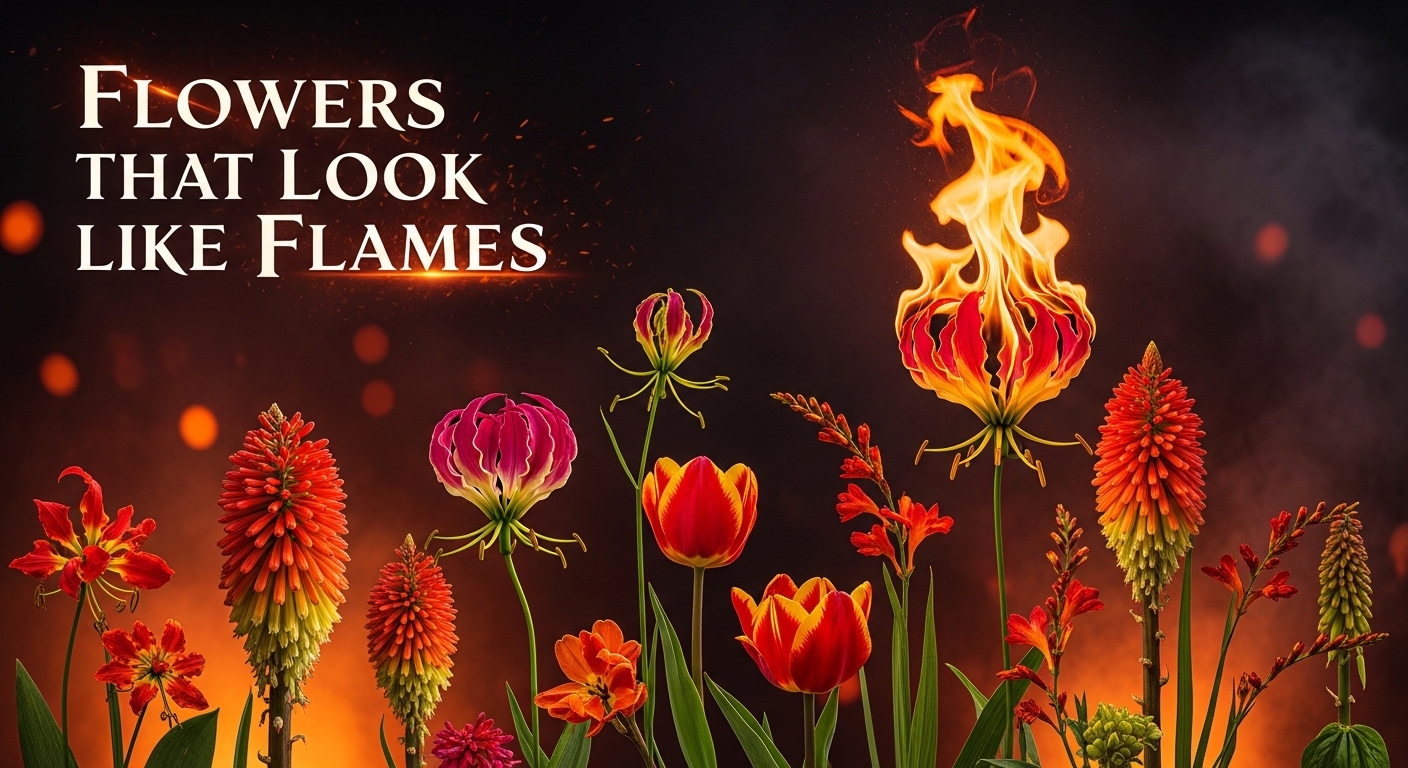
Imagine walking through a garden and stopping dead in your tracks — not because you smelled something, but because you saw something that looked like it was actually burning.
That’s exactly what happens when you come across flowers that look like flames. Spikes of orange and red shooting upward like torches. Petals curling and rippling like real fire caught mid-flicker. These plants don’t just add color to a garden — they add drama.
Whether you’re a gardener looking for a showstopper, a floral designer chasing something extraordinary, or simply curious about what fire flowers look like in real life, this guide covers every flame-inspired bloom worth knowing about.
From the iconic Red Hot Poker to the breathtaking Gloriosa Flame Lily, here are 12 real flowers that look like fire — with names, growing tips, and everything you need to bring the heat to your outdoor space.
What Makes a Flower Look Like a Flame?
Before diving into the list, it helps to understand what puts a flower in the “fire” category. A few key traits make a bloom look like it’s burning:
- Color: Deep reds, bright oranges, golden yellows — the classic fire palette
- Shape: Upward-pointing petals, torch-like spikes, or reflexed (curled-back) petals
- Movement: Feathery, wispy textures that seem to flicker in the breeze
- Gradient: Many fire flowers shift from red at the base to orange or yellow at the tips — just like real flames
Not every fire flower checks all four boxes, but most check at least two. That’s what makes them so visually striking.
12 Flowers That Look Like Flames (Fire Flower Names & Details)
1. Red Hot Poker (Kniphofia uvaria) — The Most Famous Fire Flower
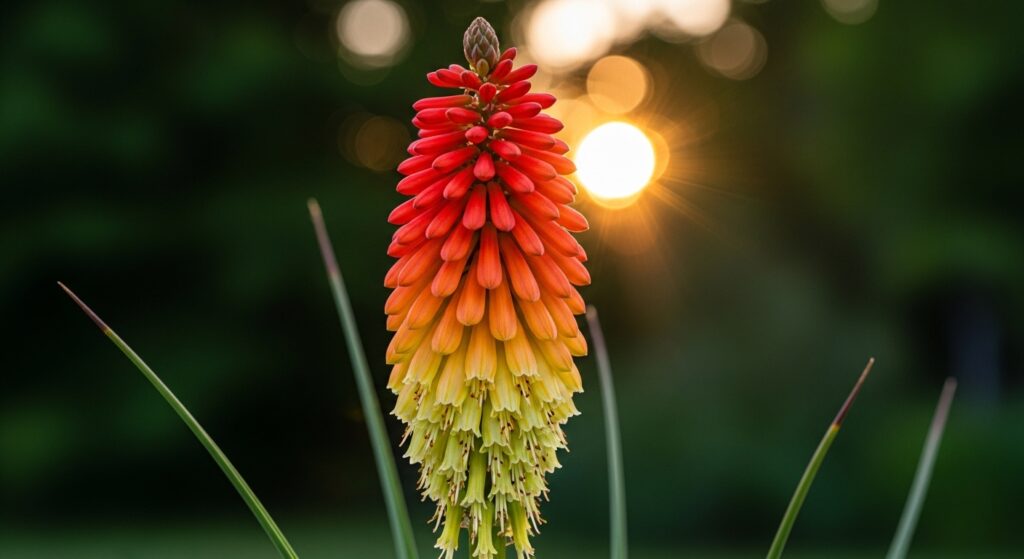
Red Hot Poker Kniphofia uvaria fire flower torch lily with red orange yellow gradient
If there’s one plant that has earned the title of fire flower, it’s the Red Hot Poker.
Also called Torch Lily or Tritoma, this South African native produces tall, upright spikes topped with dense clusters of tubular flowers. The classic variety opens red or orange at the top and fades to yellow at the base — a gradient almost identical to a burning flame.
Kniphofia grows in USDA hardiness zones 5–9, thrives in full sun, and is drought-tolerant once established — making it as tough as it is gorgeous.
Quick Facts:
| Feature | Details |
|---|---|
| Fire flower name | Red Hot Poker / Torch Lily |
| Bloom season | Late spring to fall |
| Height | 2–5 feet |
| Sun needs | Full sun |
| USDA zones | 5–9 |
| Best for | Borders, wildlife gardens |
Expert Tip: Hummingbirds absolutely love Kniphofia. Plant it near a window and watch the show.
2. Gloriosa Lily (Gloriosa superba) — The Flame Lily
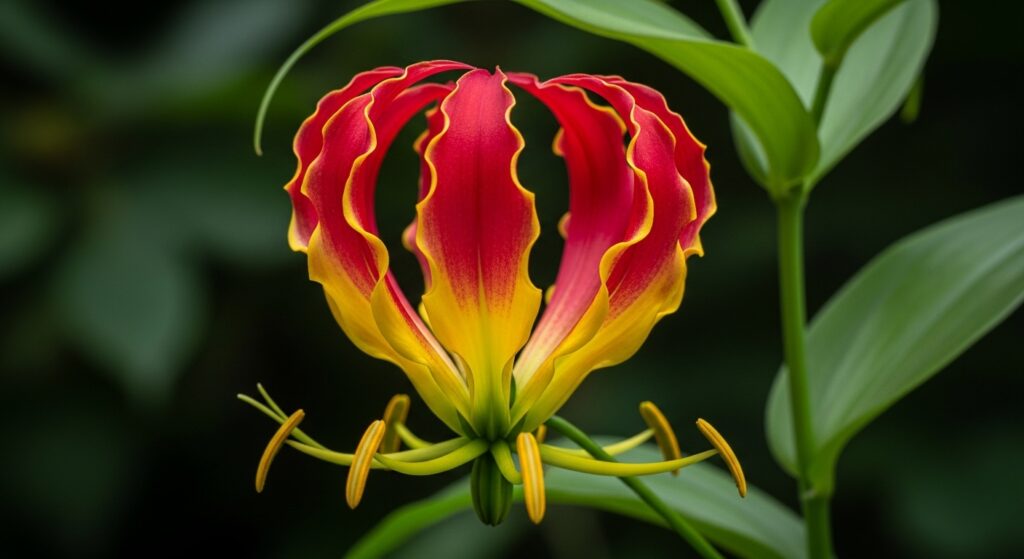
Gloriosa superba flame lily flower that looks like fire with red and yellow petals
Few plants earn their common name as completely as the Flame Lily.
Gloriosa superba features petals that reflex dramatically — curling backward like flames leaping upward. Each petal is a gradient of deep crimson fading to golden yellow at the tips, with wavy, crinkled edges that amplify the fire effect.
It’s the national flower of Zimbabwe and protected by law there. In India, it’s also recognized under the Wildlife Protection Act due to its rarity and ecological significance.
This climber grows from tubers, reaches up to 6 feet, and blooms in summer. It’s ideal for trellises, fences, or container gardens in zones 8–11.
⚠️ Safety note: All parts of Gloriosa superba are highly toxic. Keep away from children and pets.
3. Flame Tulip (Tulipa fire varieties) — Classic Fire in the Spring Garden
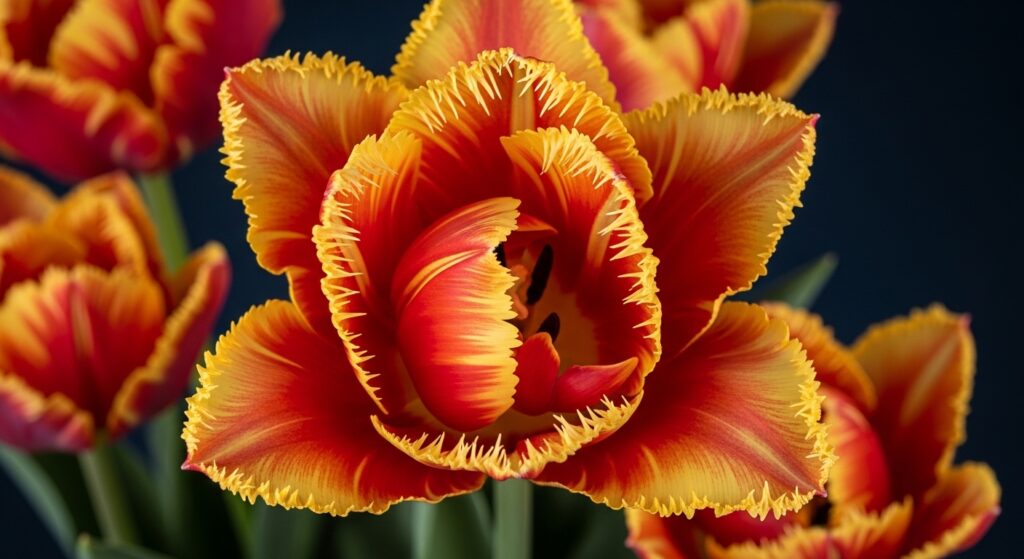
Flaming Parrot flame tulip with red yellow streaked petals resembling fire
Spring gardeners know that nothing says “fire” quite like a flame-patterned tulip.
Several tulip cultivars are specifically bred with streaked, feathered, or bicolor petals in red, orange, and yellow. Varieties like ‘Prinses Irene’, ‘Orange Favourite’, and ‘Flaming Parrot’ are especially known for their flame-like appearance.
The Flaming Parrot tulip is particularly dramatic — its fringed, ruffled petals in red and yellow genuinely resemble flickering fire tongues.
Tulip cultivation is well-documented by horticultural extension services. Plant bulbs in fall for spring blooms in zones 3–8.
Best flame tulip varieties:
- ‘Flaming Parrot’ — ruffled red/yellow; dramatic fire look
- ‘Prinses Irene’ — orange with purple flame streaks
- ‘Orange Favourite’ — deep orange with subtle feathering
- ‘Fire Queen’ — rich scarlet with pointed petals
4. Crocosmia ‘Lucifer’ — A Firestorm on Arching Stems
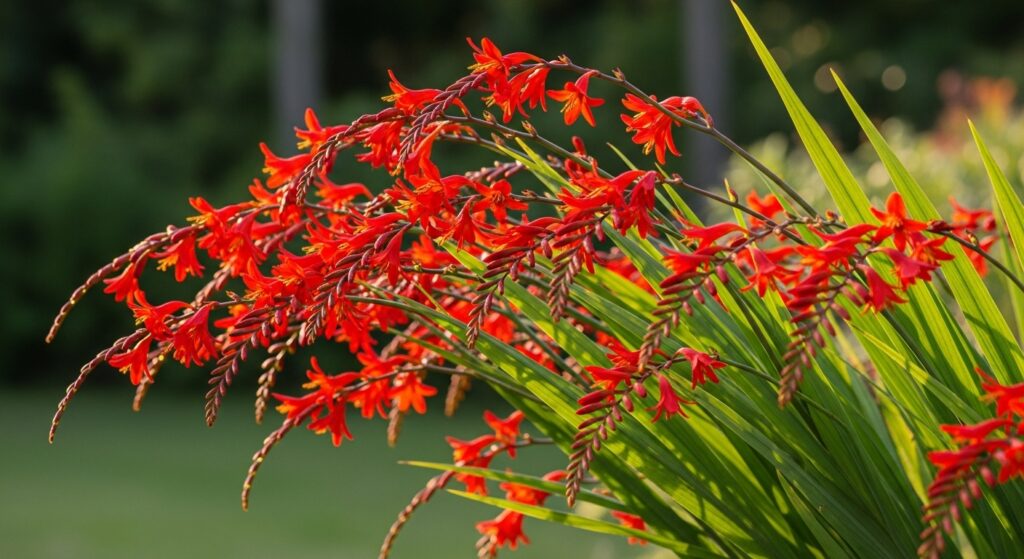
Crocosmia Lucifer scarlet orange arching fire flower stems in summer garden
If you want a fire flower that actually moves like fire, Crocosmia ‘Lucifer’ is your answer.
This perennial produces long, arching stems lined with brilliant scarlet-orange flowers. When a breeze hits them, the whole plant sways and shimmers like flames in the wind. It’s one of the most dramatic fire-effect plants you can grow.
Crocosmia grows in zones 5–9 and spreads readily from corms, making it a plant that rewards you more each year. The variety ‘Lucifer’ is the most fiery of the species, with blooms so vivid they almost glow.
Pros:
- Easy to grow; spreads naturally
- Long bloom season (July–September)
- Excellent cut flower
Cons:
- Can become invasive in mild climates
- Dies back completely in winter
5. Bird of Paradise (Strelitzia reginae) — Tropical Fire
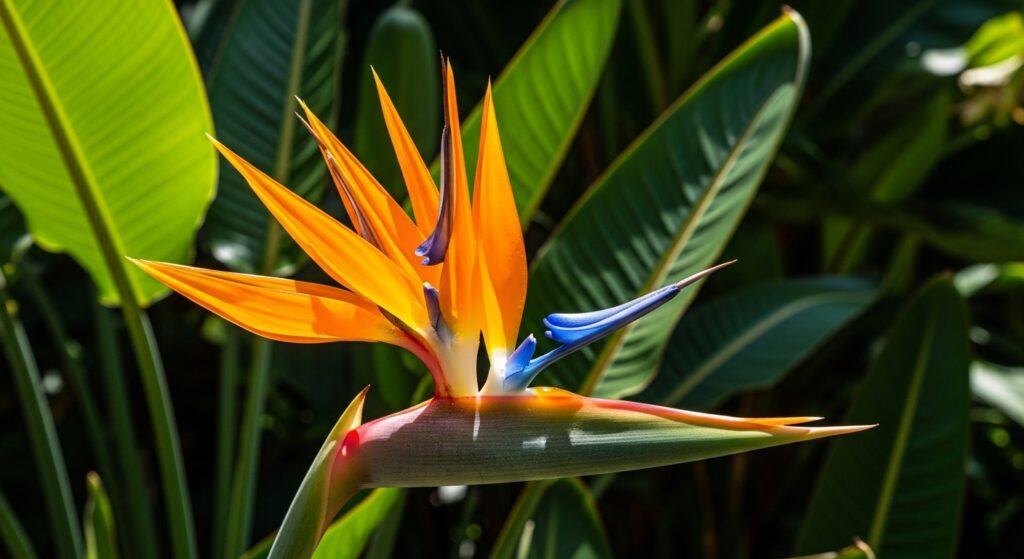
Bird of Paradise Strelitzia reginae orange fire-colored flower with blue petals
Strelitzia reginae may not scream ‘fire’ at first glance — but look closely and you’ll see it, and gardeners interested in growing this tropical plant can learn how to plant Bird of Paradise seeds.
The bright orange sepals rise like flames above a vivid blue “beak,” creating a silhouette that has been compared to both a bird in flight and a torch. It’s one of the most recognized tropical flowers in the world, native to South Africa.
The Strelitzia grows in zones 9–11 outdoors but thrives as a houseplant anywhere. Its fire-like orange and deep yellow coloring makes it a natural choice for fire-themed arrangements.
6. Helenium (Helenium autumnale) — Autumn Fire
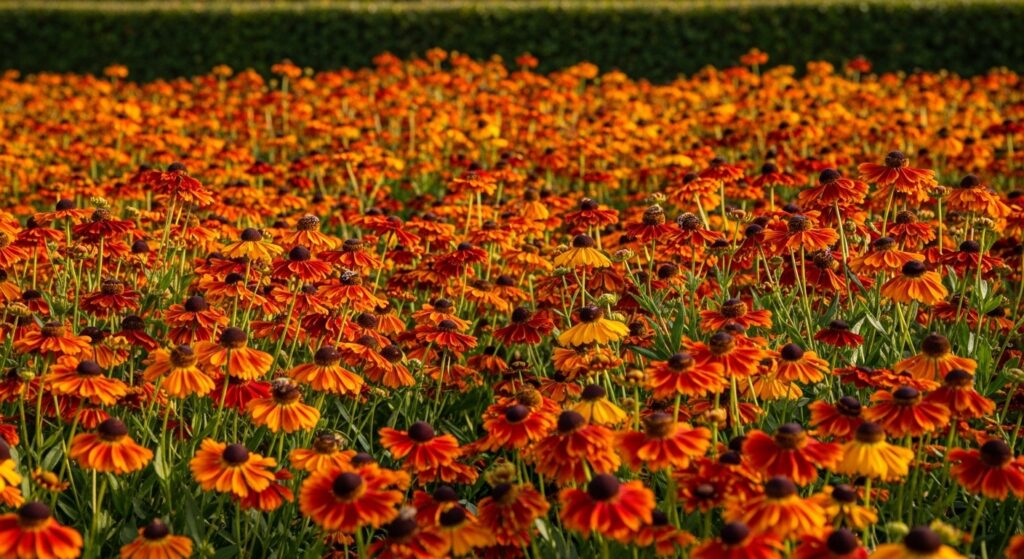
Helenium autumnale mass planting of fire-colored amber orange flowers in summer garden
Also known as Sneezeweed (misleadingly — it won’t make you sneeze), Helenium produces masses of daisy-like flowers with pinwheel petals in warm amber, orange, red, and gold.
What makes Helenium look like fire isn’t one individual bloom — it’s the sheer volume of them. A mature clump in full bloom resembles a brush fire of warm color.
Helenium blooms late summer into fall (zones 3–8), making it one of the best fire-effect plants for extending the season when most other flowers are done.
7. Gaillardia (Gaillardia x grandiflora) — The Blanket Flower Inferno
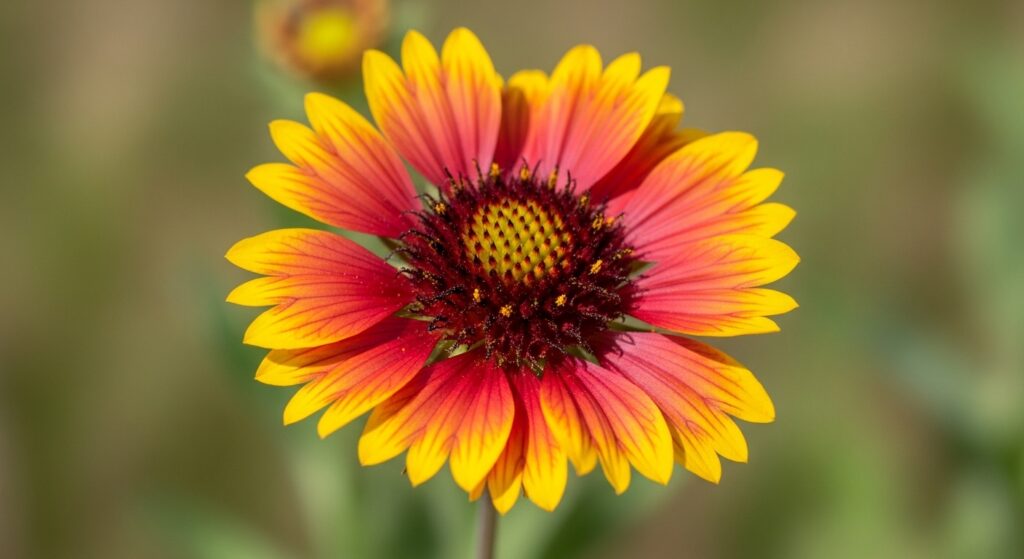
Gaillardia blanket flower with red orange yellow flame gradient petals close-up macro
Gaillardia might be the most perfectly flame-colored flower on this list.
Each bloom is a radiating burst of red in the center fading to bright yellow or orange at the petal tips — an almost textbook flame gradient. The petals themselves are slightly tubular and ragged, giving them a flickering quality.
Known as the Blanket Flower, Gaillardia is native to North America and beloved by bees, butterflies, and hummingbirds. It thrives in zones 3–10, tolerates drought and poor soil, and blooms prolifically from early summer to frost.
This is arguably the best fire flower for beginners — it’s nearly impossible to kill.
8. Campsis radicans — Trumpet Vine
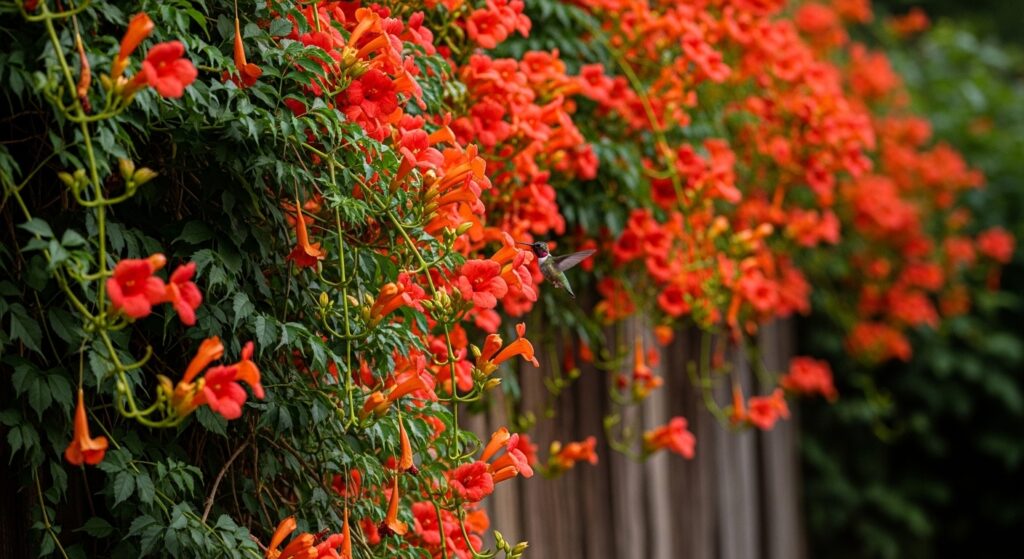
Trumpet Vine Campsis radicans orange red tubular fire flowers covering garden wall
The Trumpet Vine (also called Trumpet Creeper) isn’t famous for symbolism, but it deserves a place on this list for one reason: its flowers look like little trumpets of fire.
Clusters of vivid orange-red tubular blooms crowd the vine in mid-to-late summer. The intense color and clustered arrangement create a wall-of-flame effect when the plant is in full bloom.
Campsis radicans is native to the eastern US, extremely vigorous, and attracts hummingbirds reliably. Grow it on a fence or trellis in zones 4–9 — but be prepared to manage its enthusiasm.
9. Alstroemeria — Peruvian Fire Lily
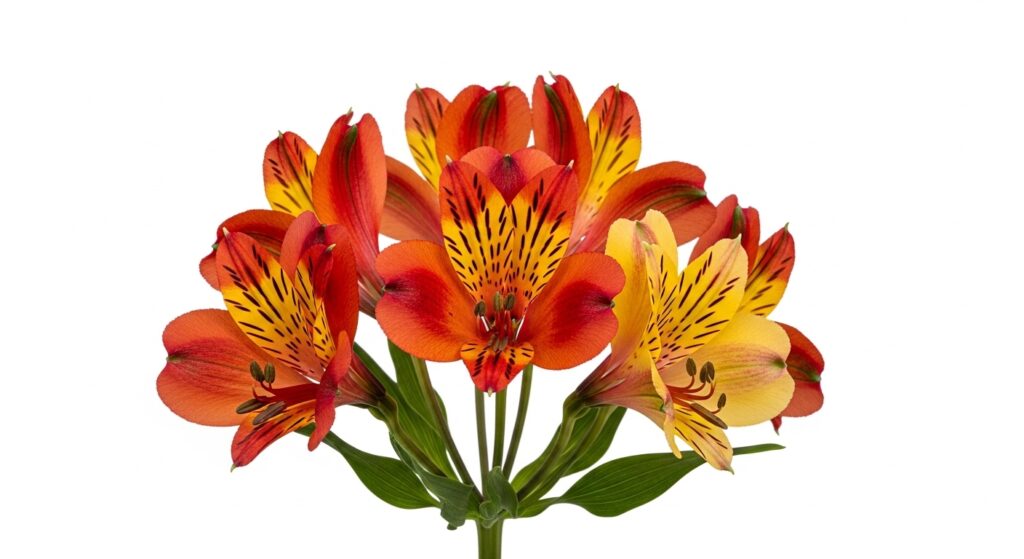
The Peruvian Lily (Alstroemeria) is often sold in fire-themed mixed bouquets for good reason.
Many varieties bloom in flaming combinations of red, orange, and yellow with streaked, flame-like markings on the inner petals. The streaks look painted on — and they’re part of what botanists call a “nectar guide” for pollinators.
Alstroemeria blooms for months (zones 7–10), making it one of the longest-performing fire-effect perennials available.
10. Dahlia — ‘Bishop of Llandaff’ and Fire Varieties
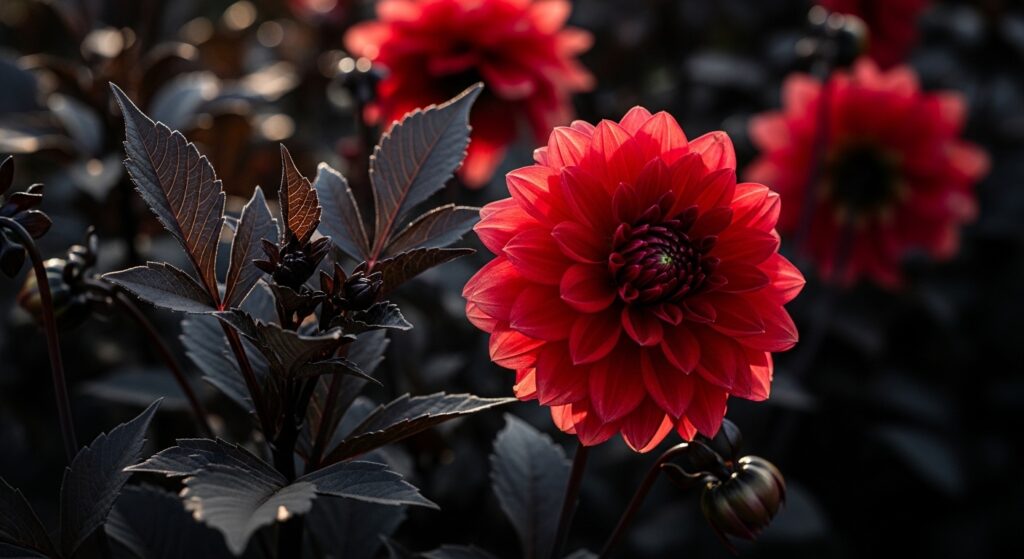
Dahlia Bishop of Llandaff scarlet red fire flower against dark bronze foliag
Dahlias come in hundreds of forms and colors, but the deep crimson and fiery orange varieties — especially ‘Bishop of Llandaff’ with its scarlet blooms and near-black foliage — create a stunning fire contrast.
Dinner plate dahlias in orange and red are staples of late-summer fire-themed garden schemes. The American Dahlia Society catalogs thousands of cultivars, many of which fit squarely in the fire-flower category.
11. Leonotis leonurus — Lion’s Ear
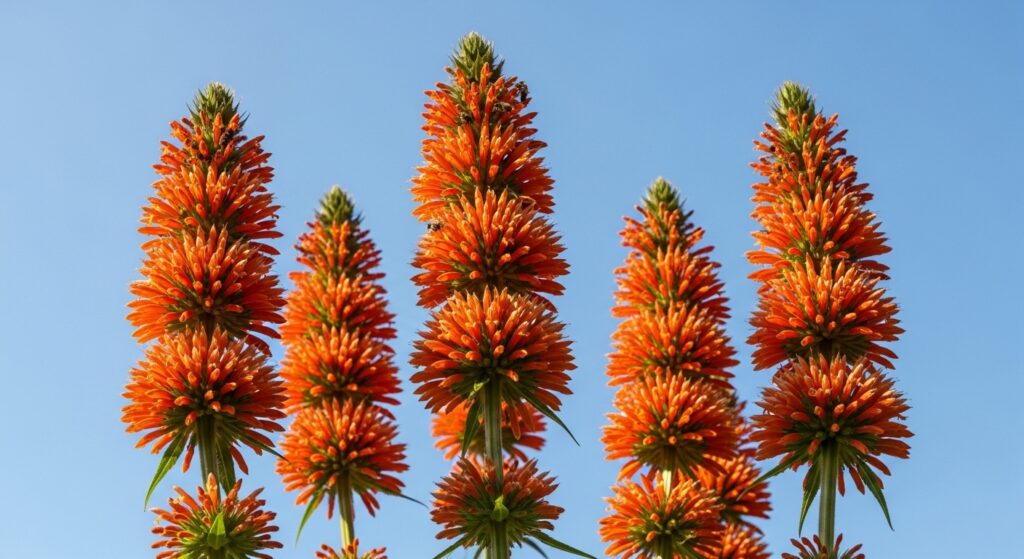
Leonotis leonurus Lion’s Ear plant with whorls of vivid orange tubular fire flowers
This South African shrub produces whorls of vivid orange flowers arranged in rings up tall, square stems — creating a torch-like structure that is genuinely reminiscent of fire.
Leonotis is heat and drought-tolerant (zones 8–11), making it ideal for hot, dry climates. It’s also popular in traditional medicine. The tubular flowers are a magnet for sunbirds and hummingbirds.
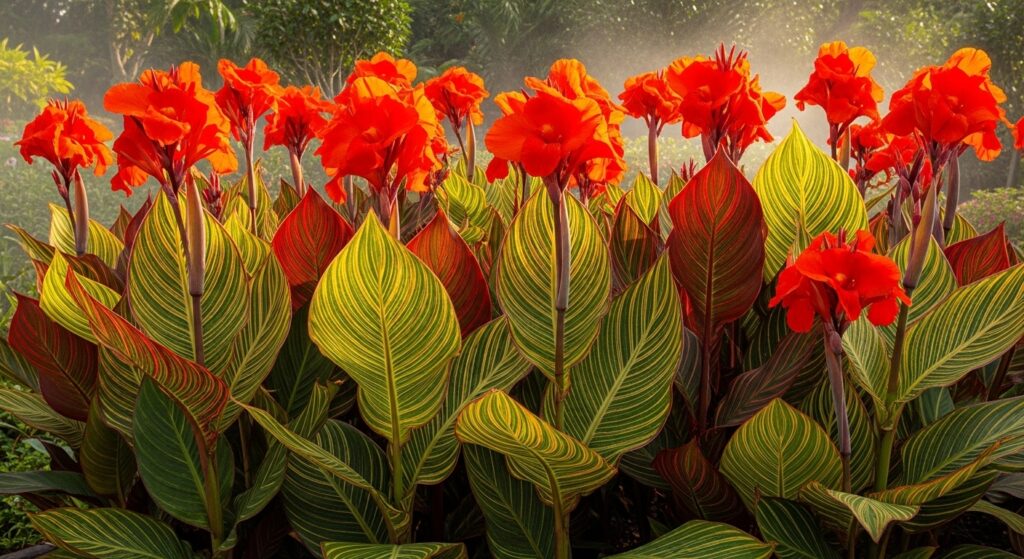
12. Canna Lily — Tropical Fire on a Grand Scale
Botanical infographic poster of 12 flowers that look like flames in watercolor illustration style
Few plants deliver fire drama at scale the way a tall Canna Lily does.
Varieties like ‘Tropicanna’ and ‘Australia’ combine enormous paddle-shaped leaves in bronze or striped patterns with blazing orange, red, or yellow blooms — a full theatrical production of color and form.
Canna lilies thrive in zones 7–11 and can be grown as annuals or overwintered as rhizomes in colder climates.
Flowers That Symbolize Fire: Meaning & Symbolism
Many of these fire-looking flowers carry deeper cultural meanings. Here’s a quick reference:
| Flower | What It Symbolizes |
|---|---|
| Red Hot Poker | Energy, passion, bold vitality |
| Gloriosa Lily | Glory, ambition, pride (also: danger) |
| Flame Tulip | Perfect love, desire, fierce passion |
| Gaillardia | Cheerfulness, resilience, warmth |
| Bird of Paradise | Freedom, joy, tropical paradise |
| Crocosmia ‘Lucifer’ | Intensity, fiery spirit, boldness |
| Canna Lily | Confidence, lasting beauty, indulgence |
In the language of flowers (also called floriography), red and orange blooms have long represented passion, desire, and transformation — all energies associated with fire.
Expert Tips: Growing Fire Flowers Successfully
Whether you’re building a dedicated fire-themed garden bed or just adding a few flame-effect plants to an existing border, here are pro-level tips to get the best results:
- 1. Layer heights for a flame silhouette
Place tall fire flowers (Red Hot Poker, Canna) at the back, mid-height plants (Crocosmia, Helenium) in the middle, and low growers (Gaillardia, Flame Tulip) at the front. The layered effect mimics the base-to-tip shape of real fire. - 2. Combine warm colors strategically
Don’t just throw red and orange together randomly. Use deep crimson as an anchor, bright orange as the main event, and golden yellow as accent highlights — matching the actual color zones in a flame. - 3. Choose drought-tolerant varieties for low-maintenance fire
Gaillardia, Red Hot Poker, and Leonotis are all drought-tolerant. Group them together for a fire garden that barely needs watering once established. - 4. Add dark foliage as contrast
Pairing fire-colored flowers with dark or near-black foliage (like Dahlia ‘Bishop of Llandaff’ or dark-leaved Canna) makes the colors pop even more dramatically. - 5. Cut for indoor arrangements
Kniphofia, Crocosmia, Alstroemeria, and Gloriosa Lily are all excellent cut flowers. A vase of mixed fire flowers is genuinely stunning.
Frequently Asked Questions
What is the fire flower called in real life?
Several real flowers go by the name “fire flower.” The most iconic is the Red Hot Poker (Kniphofia uvaria), also called Torch Lily. The Gloriosa Lily (Gloriosa superba) is officially named the Flame Lily. Gaillardia (Blanket Flower) and Crocosmia ‘Lucifer’ are also commonly called fire flowers due to their vivid flame-like colors.
What flower represents fire?
In symbolism and floriography, the Red Tulip, Gloriosa Lily, and Red Poppy are most often cited as flowers that represent fire — symbolizing passion, desire, and burning intensity. The Gaillardia (Blanket Flower) is also strongly associated with fire, partly because of its flame-gradient coloring.
What flower means fire?
The Gloriosa superba (Flame Lily) is one of the most literally named fire flowers — its name and appearance both reference fire directly. In the language of flowers, red and orange roses, flame tulips, and Red Hot Pokers all convey meanings tied to fire: passion, intensity, and energy.
Are there any blue fire flowers?
In nature, blue flowers that look like fire are extremely rare because blue pigments in flowers don’t typically combine with the warm tones of fire. However, some breeders have experimented with unusual cultivars. The closest you’ll get is Agapanthus paired with orange companions in a fire-themed arrangement.
What is the easiest fire flower to grow for beginners?
Gaillardia (Blanket Flower) is widely considered the easiest fire-looking flower to grow. It tolerates poor soil, drought, and heat; blooms for months; and re-seeds itself. It’s nearly foolproof and produces the classic red-to-yellow flame gradient reliably every year.
Conclusion: Bring the Heat to Your Garden
Nature’s fire flowers are some of the most dramatic, attention-grabbing plants you can grow or arrange. Whether it’s the torch-like spikes of Kniphofia, the reflexed crimson flames of Gloriosa superba, or the simple but perfect fire gradient of Gaillardia — there’s a fire flower for every garden style, skill level, and climate.
The best approach? Mix several together. Layer heights, combine textures, and let warm colors build on each other. Done right, a fire-themed garden bed stops people in their tracks — just like real flames do.
Ready to start your fire garden?
Pick two or three flowers from this list that suit your climate and growing conditions, source them from a reputable nursery like American Meadows or RHS-approved suppliers, and plant them where they’ll get full sun.
Your garden is about to get a whole lot hotter.

