
Late-night pizza left on the counter after everyone’s gone to bed is one of those situations almost everyone has faced. The next morning, the question is always the same: is it still okay to eat, or does it belong in the trash? How long can pizza sit out really comes down to a fairly simple food safety principle, and once you understand it, deciding what to do with that leftover box gets a lot easier.
Cheese, meat toppings, and sauce all sit in that gray zone where bacteria thrive, so timing matters more than most people realize.
The Two Hour Rule Explained
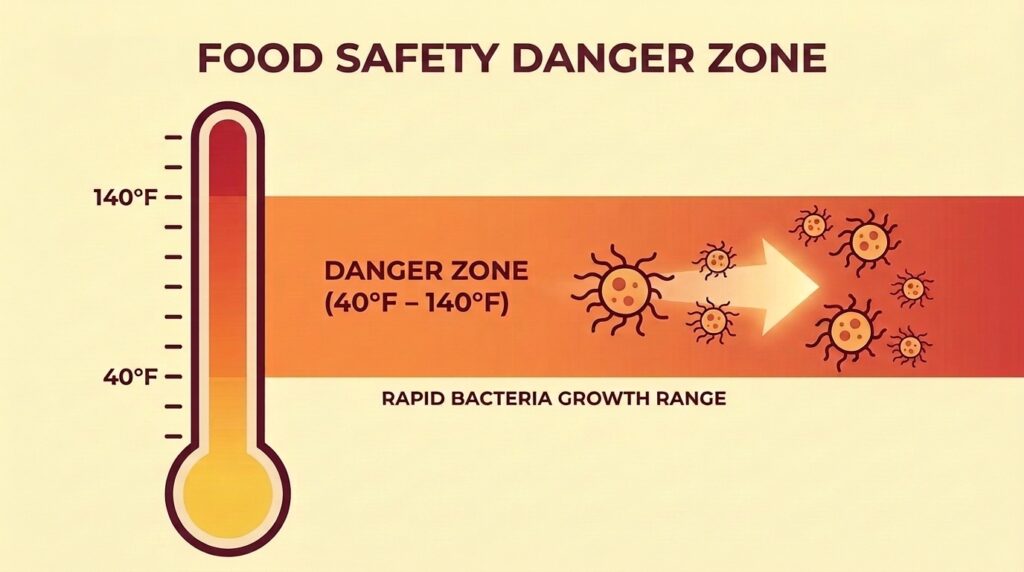
Food safety guidelines built around what’s called the danger zone govern how long any perishable food, pizza included, can safely stay unrefrigerated. That range sits between 40°F and 140°F, and it’s the temperature window where bacteria multiply fastest.
Federal guidance on the temperature danger zone states plainly that food should never sit unrefrigerated for more than two hours. If the room is hotter than 90°F, that window shrinks to just one hour, which matters if pizza is sitting out at an outdoor party or in a warm kitchen during summer.
How Long Can Pizza Sit Out at Room Temp

For a standard indoor room temperature, somewhere around 68°F to 78°F, pizza can stay out safely for up to two hours after it’s cooked or delivered. This applies whether it’s a fresh pie straight from the oven or a delivery box that arrived warm.
Past that window, the risk of bacterial growth climbs quickly, even if the pizza still looks and smells completely normal. That’s part of what makes this particular food safety rule tricky. Nothing about the pizza’s appearance changes to warn you.
How Long Can Pizza Sit Out and Still Be Safe to Eat
Two hours is the standard cutoff, but a few conditions shift that timeline. A pizza sitting in an air-conditioned room stays within safer limits longer than one left near a warm oven, a sunny window, or outside on a hot patio table. As a general rule of thumb though, sticking to the two hour mark regardless of conditions is the safest approach, since it’s difficult to judge exact ambient temperature by feel alone.
How Long Can Pizza Sit Out Before It Needs to Be Refrigerated
Once the two hour mark passes, pizza needs to go into the refrigerator, not because it will necessarily make someone sick immediately, but because the risk compounds the longer it sits. Refrigeration slows bacterial activity significantly, dropping the food back below that 40°F threshold where growth becomes far less likely.
A helpful habit is to set a mental timer the moment the pizza is served or delivered rather than waiting until people are done eating to think about storage. According to food safety guidance shared during large gatherings, one government resource on serving pizza safely recommends placing leftover slices in small, shallow containers if refrigerator space is tight, which helps the food cool faster and more evenly than leaving it in a stacked box.
What Happens If Pizza Sits Out Too Long
Bacteria such as Staphylococcus aureus and certain strains linked to cheese and meat products can multiply rapidly once food crosses into the danger zone for an extended period. Some of these bacteria produce toxins that aren’t destroyed by reheating, meaning warming the pizza back up afterward doesn’t undo the risk.
A registered dietitian interviewed on the topic explained that pizza left out overnight isn’t safe regardless of the toppings involved, since cheese itself is a perishable ingredient that needs refrigeration to stay food-safe, not just fresh-tasting.
Symptoms of foodborne illness from eating pizza left out too long can include nausea, stomach cramps, vomiting, and diarrhea, typically showing up within a few hours to a couple of days after eating.
Signs Pizza Has Gone Bad
Sometimes visual and smell cues do show up, especially after longer periods of improper storage. Watch for the following before eating pizza that’s been sitting for any extended period:
- A sour or off smell coming from the cheese or sauce
- Slimy or tacky texture on the crust or toppings
- Visible mold, which can appear as fuzzy spots in white, green, or black
- Discoloration of the sauce or meat toppings
- A greasy film that feels different from normal cheese oil
If any of these signs are present, it’s best to throw the pizza out rather than take a chance. The same logic applies to checking other perishable items around the kitchen. Learning how to spot spoilage in eggs follows a similar approach of using smell, texture, and appearance together rather than relying on just one signal.
Storing Leftover Pizza the Right Way
Getting pizza into the fridge quickly matters, but how it’s stored afterward also affects both safety and taste.
Steps for proper storage:
- Let the pizza cool slightly, but don’t leave it out longer than the two hour window while waiting.
- Transfer slices into an airtight container or wrap them individually in plastic wrap or foil.
- Avoid stacking too many slices directly on top of each other, since this traps moisture and speeds up sogginess.
- Label the container with the date if it’s likely to sit in the fridge for a few days.
- Store at or below 40°F for the safest results.
Refrigerated pizza generally stays good for three to four days when stored this way. For longer storage, freezing individual slices wrapped tightly can extend usability to one or two months without a major drop in quality.
Reheating Leftover Pizza Safely
Reheating isn’t just about texture and flavor, it’s also a food safety checkpoint. Pizza should be reheated to an internal temperature of at least 165°F to make sure any bacteria that may have developed during storage gets killed off.
A few common reheating methods work well:
| Method | Best For | Approximate Time |
|---|---|---|
| Oven or toaster oven | Crispy crust, even heating | 8-10 minutes at 375°F |
| Stovetop skillet | Single slices, crispy bottom | 5-6 minutes covered |
| Air fryer | Quick reheating with crisp texture | 3-4 minutes at 350°F |
| Microwave | Speed over texture | 1-2 minutes, may soften crust |
Whichever method is used, checking that the cheese is fully melted and the crust is hot throughout is a reasonable visual cue that the slice has reached a safe temperature.
Expert Tips for Handling Pizza Safely
- Set a timer as soon as pizza is served at a party or gathering, rather than relying on memory to track how long it’s been sitting.
- If pizza is being kept warm for serving rather than refrigerated, use a warming tray or oven set low enough to keep the temperature above 140°F.
- When in doubt about how long pizza has been sitting out, it’s safer to throw it away than to risk foodborne illness, especially for young children, older adults, or anyone with a weakened immune system.
- Avoid repeatedly touching leftover slices with bare hands if the pizza has already been sitting for a while, since handling can introduce additional bacteria.
- Reinforcing safe handling habits during gatherings matters just as much as storage. General tips for handling leftovers safely recommend refrigerating perishable food as soon as possible after serving, rather than waiting until the event winds down.
Pros and Cons of Common Pizza Storage Habits
| Habit | Pros | Cons |
|---|---|---|
| Refrigerating within 2 hours | Safest option, preserves flavor longer | Requires remembering to do it promptly |
| Leaving pizza box out overnight | Convenient, no extra effort | Unsafe, risk of foodborne illness |
| Freezing leftover slices | Extends usability for weeks | Texture changes slightly after thawing |
| Reheating before eating | Kills most surface bacteria | Doesn’t neutralize toxins already formed |
Frequently Asked Questions
How long can pizza sit out overnight?
Pizza should never sit out overnight. Even at a comfortable room temperature, the safe window closes at two hours, and anything left out longer should be discarded rather than eaten the next morning.
Is it safe to eat pizza left out for three or four hours?
No. Once pizza has been sitting for more than two hours at room temperature, it’s considered outside the safe zone and should not be eaten, even if it looks and smells fine.
Does the type of topping change how long pizza can sit out?
Not significantly. Cheese and meat toppings are both perishable, so a plain cheese pizza follows the same two hour guideline as one loaded with meat or vegetables.
Can reheating pizza that sat out too long make it safe again?
Reheating kills many bacteria but doesn’t destroy certain toxins that bacteria may have already produced. If pizza has been out longer than the recommended window, reheating does not make it safe to eat.
How can I tell if pizza has gone bad without tasting it?
Look for a sour smell, slimy texture, visible mold, or discoloration in the sauce or toppings. If any of these signs show up, it’s best to throw the pizza away rather than risk eating it.
Keeping Leftover Pizza Safe Going Forward
The two hour guideline isn’t complicated once it becomes a habit, and it applies whether the pizza came from a delivery box, a restaurant, or a homemade pie fresh out of the oven. Setting a timer, storing slices in shallow containers, and reheating to a safe internal temperature covers most of what’s needed to enjoy leftovers without worry. The next time a pizza night runs late, a quick glance at the clock before bed can be the difference between breakfast leftovers and a trip to the trash can.

