
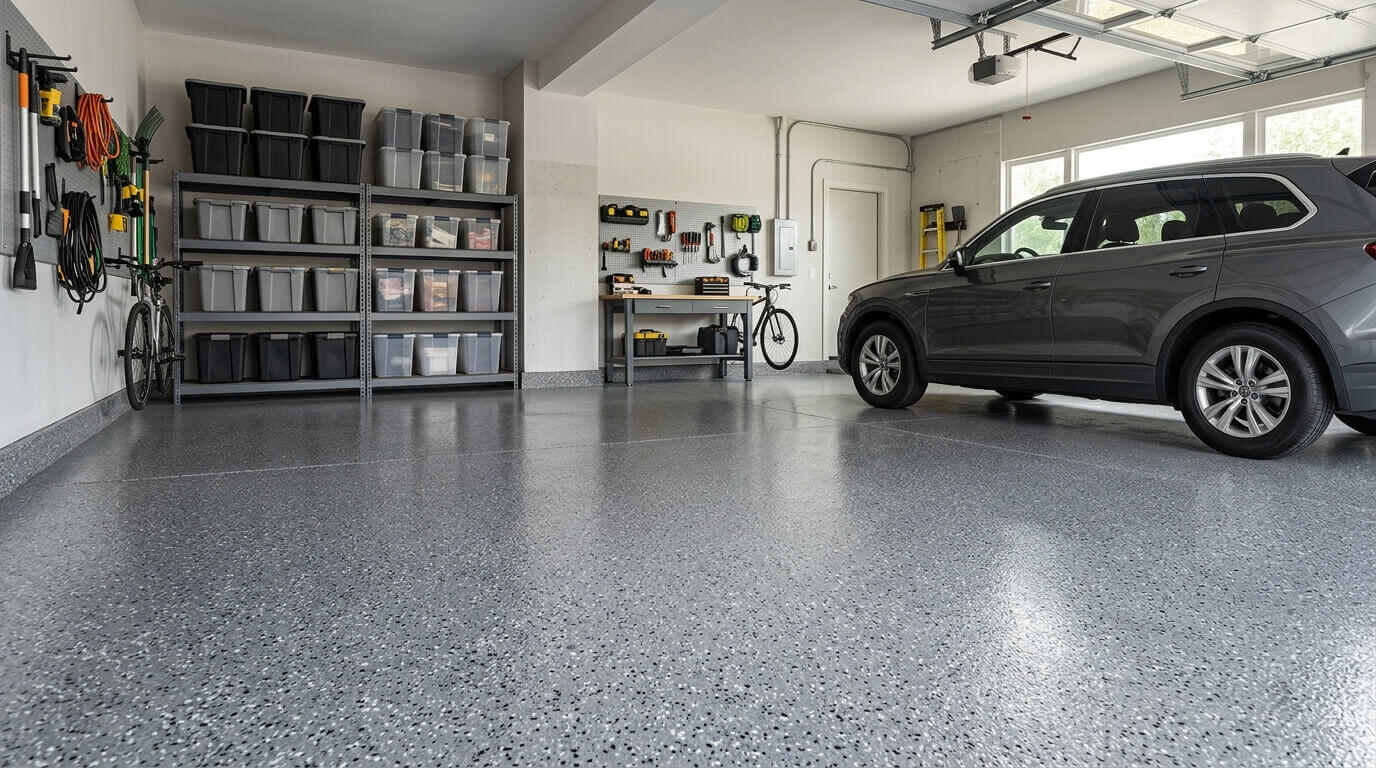
How to choose a durable garage floor coating depends on the condition of the concrete, the activities that take place in the garage, and the amount of maintenance the surface will require. A garage floor may need to withstand parked vehicles, dropped tools, automotive fluids, muddy footwear, road salt, and regular cleaning. The right coating should suit these conditions rather than being selected on appearance alone.
A well-planned coating can make concrete easier to clean, reduce surface dust, and improve the appearance of a garage. However, results depend on proper moisture assessment, concrete repairs, surface preparation, compatible materials, and correct installation. Homeowners considering garage floor coating in Baltimore, MD should evaluate these factors before comparing estimates or selecting a finish.
Key Takeaways
- A garage floor coating is a complete system that may include concrete repairs, surface preparation, base coats, decorative materials, and topcoats.
- Baltimore’s rain, snow, salt, grit, and seasonal changes should be considered when selecting a coating.
- Epoxy, polyurea, polyaspartic, and urethane each have different properties, so homeowners should compare the full system rather than just the product name.
- Concrete condition and moisture levels should be evaluated before installation.
- Proper mechanical preparation, repairs, and dust removal are important for coating adhesion.
- Traction should match how the garage is used, especially where water, oil, mud, or snow may be present.
- Color, texture, and finish should be chosen based on lighting, cleaning needs, and everyday use.
- Homeowners should ask about preparation, moisture testing, cure times, maintenance, and warranty coverage.
- Regular sweeping, prompt spill cleanup, and seasonal inspections can help maintain the finished floor.
Why Garage Floor Coating Requires Careful Planning
A garage floor coating is a system rather than simply a layer of paint. Depending on the product, it may include concrete repairs, mechanical surface preparation, a primer or base coat, decorative flakes, and a protective topcoat.
Each layer has a purpose, and the materials must be compatible with one another and the concrete underneath. Poor preparation, excessive moisture, or incorrect application can contribute to peeling, blistering, discoloration, or premature wear.
Seasonal weather also affects how a garage floor is used. Rainwater, slush, grit, and deicing residue can be tracked inside, while a workshop may expose the surface to dropped tools, oil, and cleaning products. These conditions make it important to consider chemical resistance, abrasion resistance, traction, curing time, and routine cleaning.
When searching for garage floor coating near me, compare the complete installation process rather than relying only on product names, color samples, or the lowest estimate. A suitable coating must match both the condition of the slab and the demands of the space.
Comparing Epoxy, Polyurea, Polyaspartic, and Urethane
Different coating materials offer different benefits. Their actual performance depends on the formulation, film thickness, surface preparation, installation conditions, and the complete system in which they are used.
Epoxy Coatings
Epoxy is a resin-based coating commonly used on concrete floors. It can form a hard, relatively thick finish and provide resistance to many chemicals, stains, and everyday wear when the appropriate system is selected.
Its limitations depend on the formulation and installation. Some epoxy products take longer to cure than fast-curing alternatives, and certain formulations may discolor with prolonged ultraviolet exposure. Concrete moisture and poor surface preparation can also affect adhesion.
Professional coating systems differ considerably from thin do-it-yourself kits. Compare the technical specifications, recommended application thickness, preparation requirements, and intended use rather than assuming all epoxy products perform alike.
Polyurea and Polyaspartic Coatings
Polyurea-based coatings are often chosen for their flexibility and ability to cure quickly. Polyaspartic coatings are commonly used in garage flooring systems, including as protective topcoats, because some formulations offer good abrasion resistance and color stability.
Faster curing can shorten project downtime, but it also requires careful timing during application. Temperature, humidity, product compatibility, and installer experience can affect the finished result.
Ask whether the proposed system uses polyurea or polyaspartic materials in the primer, base coat, or topcoat. These terms are not interchangeable, and the specific product matters more than the general category.
Urethane Topcoats
Urethane coatings may be used as protective top layers over compatible base coats. Depending on the formulation, they can help resist scuffing, abrasion, and certain chemicals while influencing the floor’s gloss and texture.
Compatibility is important. A topcoat should be designed to work with the underlying coating, and the installer should follow the manufacturer’s recoat windows and curing instructions.
The most suitable system is not necessarily the one with the most impressive product label. It is the one that matches the concrete condition, expected traffic, exposure, and maintenance requirements.
Assess Concrete and Moisture Before Coating
Inspect the slab before purchasing materials or approving an installation proposal. Common issues include:
- Cracks, pits, and chipped or spalling concrete.
- Old paint, sealers, or previous coating layers.
- Oil stains, tire marks, grease, and cleaning-product residue.
- Dark patches, damp areas, or signs of moisture intrusion.
- Sections that appear uneven or have deteriorated over time.
Water beading on concrete can indicate the presence of a sealer or surface contamination, while rapid absorption may suggest more porous concrete. Neither observation is a reliable substitute for a proper assessment.
Moisture requires particular attention because concrete can release water vapor even when its surface appears dry. Excessive moisture may interfere with adhesion and contribute to blistering, whitening, or coating failure in susceptible systems.
Ask what moisture testing method will be used, whether the results will be documented, and whether the measured values fall within the coating manufacturer’s requirements. If the slab does not meet those requirements, the underlying cause should be investigated before installation proceeds.
Concrete repairs also need to be suitable for the damage. Minor, stable cracks may be repairable, but significant movement, widespread deterioration, or persistent moisture problems can require further assessment before a coating is applied.
Why Surface Preparation Is Essential for Durability
Surface preparation has a major influence on coating adhesion. Even a high-quality product can fail when applied over weak concrete, oil residue, loose paint, or an unsuitable surface.
A typical preparation process may include:
- Removing oil, grease, loose material, and existing coatings where necessary.
- Mechanically grinding or otherwise profiling the concrete according to the system requirements.
- Repairing appropriate cracks, pits, and damaged areas.
- Removing dust and contaminants before applying the coating.
- Confirming that the surface meets moisture and condition requirements.
The exact process depends on the slab and the product being installed. Ask whether the installer will mechanically grind the concrete, how old coatings will be removed, and how damaged or hollow areas will be handled.
It is also worth asking what happens if the slab fails moisture testing or reveals additional damage during preparation. A written proposal should explain how unexpected repairs will be approved and priced.
Cutting corners at this stage may save time initially but can increase the likelihood of premature coating failure and additional repair costs.
Improving Traction and Floor Safety
A smooth floor can become slippery when exposed to water, oil, mud, or melting snow. The finish should therefore account for the conditions in which people will walk and work.
Decorative flakes, compatible grit additives, and textured finishes can improve traction. However, a heavily textured surface may trap dirt and make routine cleaning more difficult. The objective is to balance grip with practical maintenance.
For a garage that regularly receives wet footwear or vehicle runoff, consider how the surface will perform when damp, how easily spills can be removed, and whether the texture suits the intended activities.
The general principles in clean, dry walking surfaces and prompt correction of hazards provide useful safety context, although workplace regulations do not automatically apply to a private residential garage.
Regular sweeping, prompt spill cleanup, and appropriate drainage remain important even when a textured coating is installed.
Match the Coating to How the Garage Is Used
The right coating depends on what happens in the space each day.
- Daily parking: Consider resistance to tire wear, routine drips, dirt, and cleaning products.
- Workshop use: Look for appropriate abrasion and chemical resistance, impact tolerance, and suitable traction.
- Home gym: Choose a stable surface with a suitable texture, and use protective pads under heavy equipment where needed.
- Storage: Consider how easily the floor can be cleaned and whether the coating helps control concrete dust.
- Vehicle detailing: Evaluate resistance to the cleaners used and the floor’s behavior when exposed to water.
Planning the layout also helps keep the floor accessible. Effective garage storage and organization can keep boxes, tools, and seasonal items off the surface, making routine cleaning and inspections easier.
Choosing Color, Texture, and Finish
Color and texture influence both the appearance and day-to-day maintenance of a coated floor.
Mid-tone blends may make ordinary dust and tire marks less noticeable than very light or very dark solid colors. Decorative flakes can add visual depth and break up the appearance of small debris, while solid finishes provide a simpler look.
Lighting also affects the result. A sample may look different under showroom lights than it does in a garage with fluorescent fixtures, limited daylight, or darker walls.
Before selecting a finish, request a sample or view a completed floor with similar lighting and use conditions. Consider gloss level, texture, and cleaning requirements alongside color.
Appearance should be the final part of the decision rather than a substitute for assessing concrete condition, moisture, preparation, and coating performance.
Questions to Ask Before Hiring an Installer
Before accepting a proposal, ask the installer to explain the complete system and how it will be applied.
- What materials and coating layers are included?
- How will the concrete be cleaned, profiled, and repaired?
- Will moisture testing be performed, and will the results be documented?
- How will the finish balance traction and ease of cleaning?
- What are the curing requirements for foot traffic, stored items, and vehicles?
- What does the written warranty cover, and which conditions are excluded?
- How will additional repairs or unexpected concrete problems be priced?
- What cleaning products and maintenance practices does the manufacturer recommend?
Compare written scopes of work rather than just the total price. Two estimates may describe similar-looking finishes but include different preparation methods, coating thicknesses, materials, or warranty terms.
Maintenance and Common Mistakes to Avoid
Regular maintenance can help preserve the appearance and condition of a properly installed coating. Sweep away grit, clean spills promptly, and use cleaning products approved for the installed system.
Avoid harsh chemicals, abrasive pads, and metal-edged tools that may damage the finish. Inspect the floor periodically for chips, peeling, or changes around garage entrances and other high-traffic areas.
Common mistakes include:
- Selecting a coating based only on price or color.
- Skipping appropriate moisture testing.
- Applying a coating over failing paint or contaminated concrete.
- Ignoring cracks and deteriorated sections.
- Choosing a texture without considering wet-weather traction.
- Returning vehicles before the coating has fully cured.
- Using cleaning products that are incompatible with the finish.
If a coating begins lifting or blistering, simply covering the affected area may not address the underlying cause. Moisture, poor adhesion, contamination, or concrete deterioration may need to be investigated before repairs are made.
Routine maintenance can reduce avoidable wear, but it cannot compensate for inadequate preparation or an unsuitable coating system.
Frequently Asked Questions
Is epoxy the same as garage floor paint?
No. Epoxy is a resin-based coating, while basic floor paint is generally a thinner surface finish with different performance characteristics. The durability of either product depends on its formulation, preparation requirements, and intended use.
Can a coating be applied over cracked concrete?
Sometimes. Minor, stable cracks may be repairable before coating, but active movement, substantial damage, and moisture-related problems should be evaluated first. The repair method must be compatible with the selected system.
How long does a coated garage floor last?
Service life varies according to concrete condition, preparation, coating formulation, installation quality, traffic, exposure, and maintenance. There is no single lifespan that applies to every garage floor.
Can homeowners install a garage floor coating themselves?
Some do-it-yourself products may be suitable for clean, dry, lightly used concrete. Slabs with old coatings, contamination, extensive repairs, moisture concerns, or demanding use may require more specialized preparation and application.
Which garage floor coating is best for wet conditions?
There is no universally best option. The choice depends on the complete coating system, concrete condition, expected water exposure, and surface texture. Ask for product-specific information about moisture tolerance and traction rather than relying on the coating category alone.
How should a coated garage floor be cleaned?
Remove loose dirt and grit regularly, wipe up spills promptly, and clean the surface with a product approved by the coating manufacturer. Avoid abrasive tools or chemicals that may damage the finish.
Conclusion
Choosing a durable garage floor coating starts with understanding the concrete and how the space will be used. Moisture, vehicle traffic, road residue, workshop activities, and cleaning habits all influence the appropriate coating system and surface texture.
Compare epoxy, polyurea, polyaspartic, and urethane products based on their specifications, preparation requirements, compatibility, and expected performance. Make sure moisture testing, concrete repairs, and surface preparation are addressed before installation begins.
Once the floor is installed, regular cleaning and periodic inspections can help maintain its condition. By looking beyond appearance and price and comparing the complete installation process, homeowners can make a more informed decision about a practical, durable, and easier-to-maintain garage floor.

