
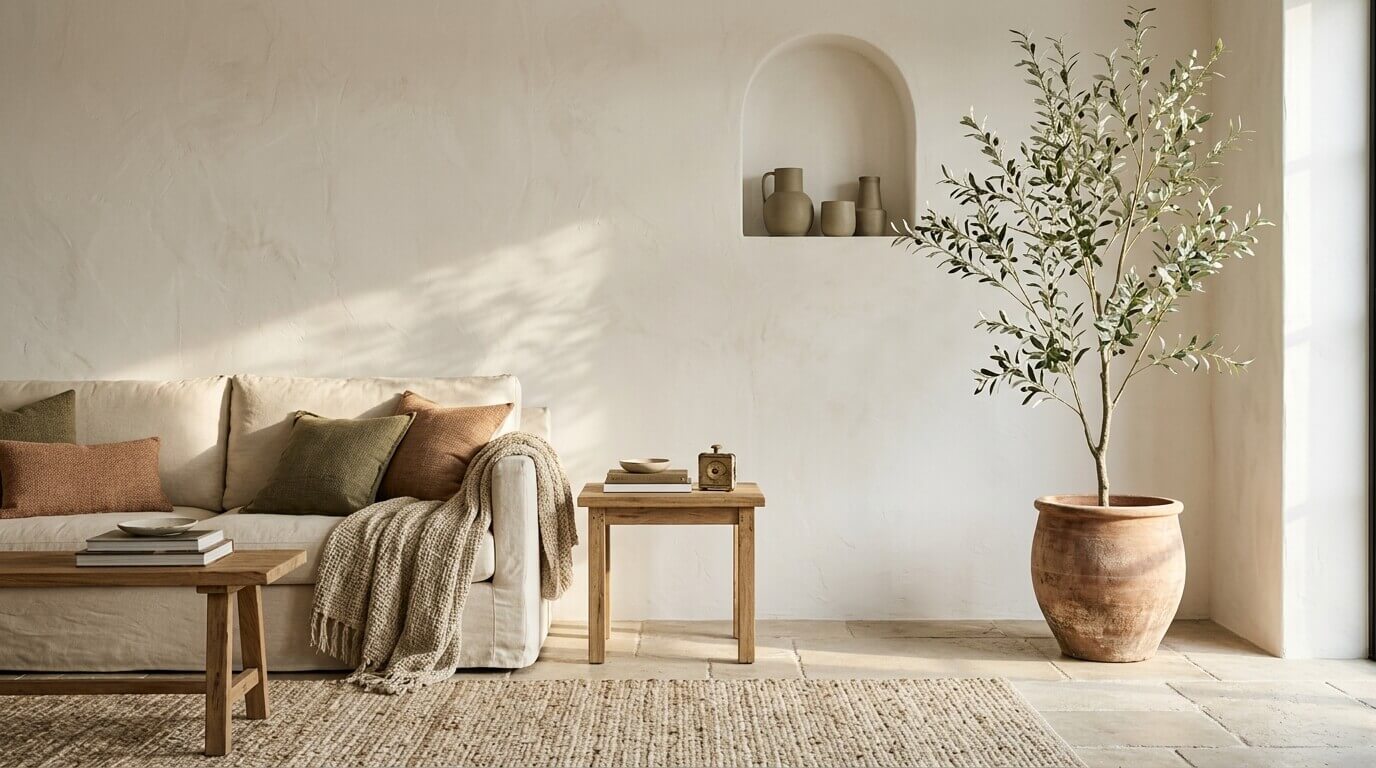
How to style artificial olive trees starts with natural textures, earthy colours and thoughtful placement. These decorative trees can bring the understated character of Mediterranean interiors into a room without requiring the watering, pruning or sunlight needed by a living plant. In Thai, an artificial olive tree is commonly referred to as ต้นโอลีฟปลอม.
To create a balanced look, choose a planter that complements your furniture, give the branches enough room to spread and combine the tree with materials such as linen, wood and terracotta. The goal is to create a relaxed, welcoming atmosphere without overcrowding the space. Even one carefully positioned tree can add warmth and visual interest.
Borrow the Colours of a Mediterranean Afternoon
Imagine a sunlit home with pale walls, rustic furniture and greenery beside an open window. You can recreate elements of that atmosphere without renovating your entire home by exploring different interior design styles and adapting the elements that suit your space.
Start with a colour palette inspired by natural landscapes. Warm white, sandy beige, muted olive green and soft terracotta work beautifully together. Understanding what colors go with sage green can also help you choose complementary shades for walls, cushions and decorative accessories.
Against these understated colours, the silvery-green foliage of an artificial olive tree becomes a gentle focal point rather than an overpowering decoration.
For additional warmth, introduce cushions, woven baskets or ceramic accessories in complementary tones. Keep the stronger colours to a few selected accents so the overall arrangement remains calm and cohesive.
Let the Planter Tell Part of the Story

The container you choose can completely change how an artificial olive tree looks. A glossy modern pot might suit a contemporary interior, while Mediterranean-inspired rooms often benefit from finishes that feel handmade, textured or slightly weathered.
Consider these combinations:
- Terracotta pots: Bring rustic warmth and a traditional countryside feel.
- Textured stone-effect planters: Create an understated, weathered appearance.
- White ceramic containers: Complement bright interiors and pale wooden furniture.
- Woven baskets: Introduce a softer, relaxed look in casual living areas.
Choose a planter that is proportionate to the tree’s height and canopy. A tall tree generally needs a stable, appropriately weighted base to prevent it from tipping over.
Also consider the planter’s shape. Rounded containers can soften rooms with straight furniture lines, while simple cylindrical pots work well in spaces with a more contemporary aesthetic.
Give the Branches Room to Breathe
Mediterranean decorating often emphasises openness, natural light and an easy flow between furniture pieces. Avoid squeezing your artificial olive tree between bulky furniture or placing it where the branches obstruct walkways.
Instead, try positioning it beside a comfortable armchair, near a console table or in an uncluttered living room corner. Make sure the tree does not block doors, windows or frequently used paths.
You can also create a small seating arrangement around it. Pair a linen-covered chair with a wooden side table and a ceramic bowl to introduce different textures without making the area feel crowded.
The arrangement should look collected over time rather than perfectly matched. Mixing a few complementary materials often creates a more natural effect than purchasing every accessory in the same style.
If your room has generous natural light, placing the tree nearby can highlight the details of its foliage. However, an artificial tree does not need sunlight to survive, so it can also work in a location where a living olive tree might struggle.
Mix Old-World Character With Modern Comfort
You do not need antique furniture or exposed wooden beams to achieve a Mediterranean-inspired atmosphere. A contemporary sofa can work alongside rustic pottery, while a simple dining table gains character from natural fabrics and decorative greenery.
The key is to balance contrasting textures. Try combining smooth plaster-inspired surfaces with woven materials, aged-looking ceramics and soft upholstery. Ideas from comfortable living room design can help you balance textures and furniture while maintaining a relaxed atmosphere.
Wood, linen, rattan, stone and matte ceramics are useful materials to consider. They add visual variety without requiring bold patterns or elaborate decorations.
Avoid filling every available corner. Leaving some surfaces and wall areas uncluttered allows the olive tree and other decorative elements to stand out.
Choose the Right Size for Your Space
The size of an artificial olive tree affects how it fits into the room. A large tree can anchor an open living area, while a smaller version may be more suitable for an entryway, bedroom or compact apartment.
Before choosing a location, consider the following:
- Ceiling height: Make sure the tree looks proportionate to the room rather than cramped beneath the ceiling.
- Available floor space: Allow enough room for the planter and the spread of the branches.
- Furniture height: A taller tree can complement a sofa or cabinet, while a smaller one may work better beside a low table.
- Visual balance: Consider nearby furniture, wall art and lighting so the tree does not compete with too many other focal points.
Measure the intended space before placing the tree. Remember to account for the width of its branches as well as the height of the trunk.
Keep the Styling Simple and Consistent
Artificial olive trees are versatile, but their surroundings influence whether they look natural or overly decorative. A few well-chosen accessories can create a cohesive arrangement without turning the room into a themed display.
Repeat one or two materials elsewhere in the room. For example, a terracotta planter might relate to a ceramic bowl, while the tree’s muted green foliage could complement cushions or artwork.
Dust the leaves and branches periodically to maintain their appearance. Gently reshape the branches when needed, following the manufacturer’s care instructions, and keep the planter clean.
There is no need to add greenery to every corner. One artificial olive tree, a few natural textures and a restrained colour palette can be enough to establish a Mediterranean-inspired look.
How Can You Bring Mediterranean Charm Into Your Home?
Styling an artificial olive tree is mainly about proportion, placement and the relationship between colours and materials. Earthy shades, textured planters, natural fabrics and uncluttered furniture arrangements can help create a warm, relaxed interior.
Choose a tree that suits the scale of your room, position it where its foliage can be appreciated and repeat a few complementary colours or textures throughout the space. With these simple choices, an artificial olive tree can become a natural part of your interior rather than an isolated decorative feature.

