
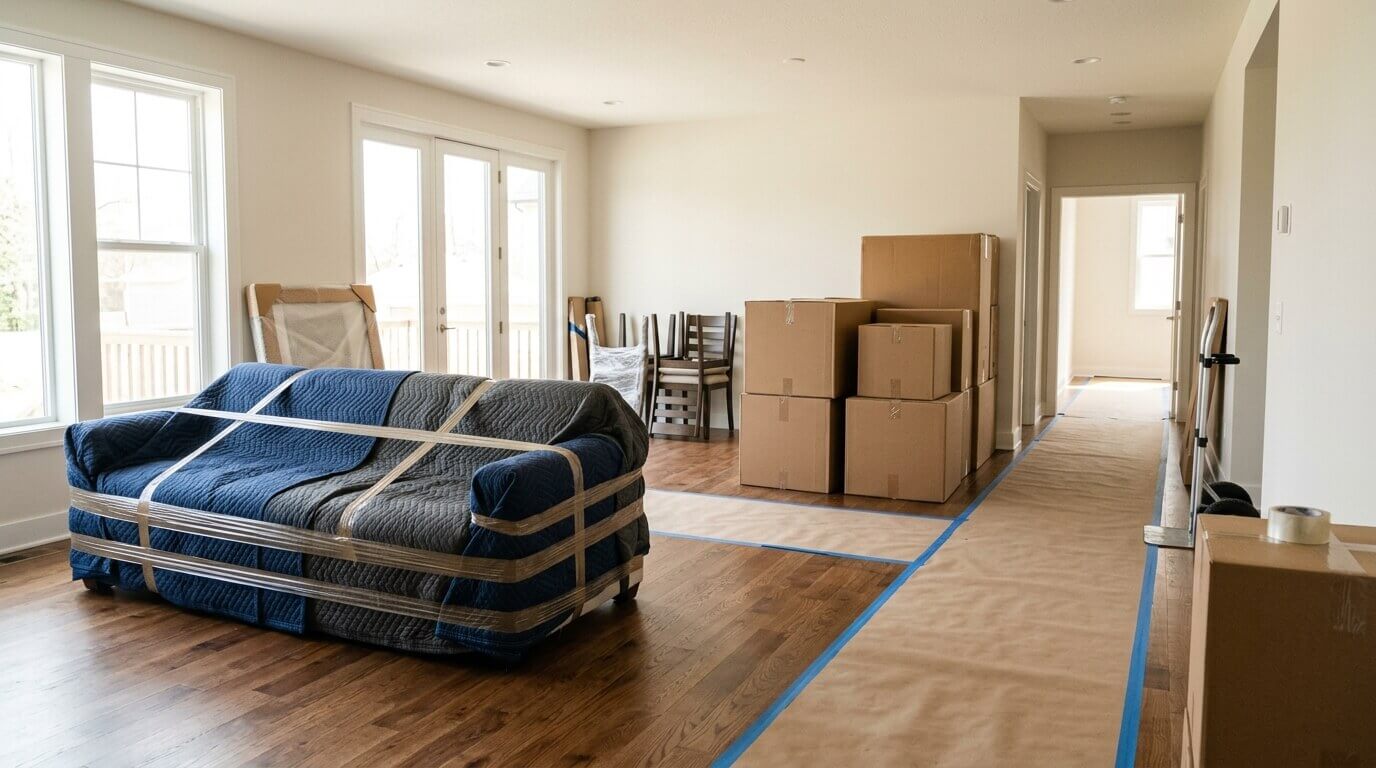
How to protect your home interior during a move starts with planning the route, securing floors and walls, and handling bulky furniture carefully. Moving boxes, appliances and large furniture through narrow hallways can lead to scratched flooring, chipped door frames, damaged plasterboard and stained carpets. Preparing the property before moving day helps reduce these risks and makes the relocation process more manageable.
Whether you are moving into a new house or leaving a rented property, the main priorities are the same: protect vulnerable surfaces, keep walkways clear, use appropriate moving equipment and avoid rushing heavy items through tight spaces.
Secure Your Floors and High-Traffic Pathways
Floors experience considerable wear during a move because people, furniture and equipment repeatedly travel through the same areas. Dragging heavy objects can cause deep gouges that are expensive to repair. Carpeted areas may also develop tears, crushed fibres or stains when they are not adequately protected.
Before moving day, identify the main routes between the entrance, hallways, stairs and rooms where furniture will be collected or placed. Pay particular attention to timber flooring, polished surfaces, tiles and freshly installed carpets.
Understanding how to choose wood and laminate flooring and care for these surfaces can also help homeowners identify suitable protective measures.
Use appropriate floor coverings along high-traffic routes. Depending on the flooring type, these may include protective boards, heavy-duty floor protection sheets or clean, non-slip coverings. Choose materials that will not scratch the finish, trap moisture or create a slipping hazard.
For particularly vulnerable flooring, consider the following precautions:
- Hardwood and laminate: Use protective boards or manufacturer-approved coverings, and avoid dragging furniture across the surface.
- Tiles: Protect vulnerable edges and corners from dropped objects and heavy impacts.
- Carpet: Use suitable carpet protection that will not leave adhesive residue or damage the fibres.
- Stairs and hallways: Secure coverings properly so they do not bunch up or obstruct movement.
- Entryways: Remove loose grit and dirt before placing protective materials to prevent particles from scratching the floor underneath.
Check the protection periodically throughout the move. Shifted coverings, trapped debris and exposed edges can create problems even when the correct materials were used initially.
Guard Your Walls, Doorways and Plasterboard
Moving bulky furniture through standard doorways is a common cause of scuffs, dents and chipped paint. A sofa that clears a doorway easily may still be difficult to manoeuvre around a tight corner or narrow hallway.
Before carrying anything large, measure the furniture and the narrowest parts of the route. Account for door handles, stair railings, light fixtures and other obstacles. Where practical, remove detachable furniture legs or cushions to reduce the item’s dimensions.
To safeguard interior walls, focus on vulnerable corners, doorways and painted surfaces, using suitable coverings and the same care involved in following the right and wrong ways to paint your home.
Practical precautions include:
- Install corner guards: Protect exposed corners and doorway edges where furniture is likely to pass.
- Use moving blankets: Wrap large or awkwardly shaped furniture to reduce the risk of impact damage.
- Remove doors when necessary: If an oversized item cannot pass safely, removing an interior door from its hinges may provide additional clearance.
- Protect stair railings: Use suitable padding to prevent furniture and boxes from scraping painted or wooden surfaces.
- Keep tools and hardware organised: Store removed hinges, screws and door hardware in labelled containers so they do not get lost or scratch nearby surfaces.
Avoid attaching strong adhesive tapes directly to delicate paintwork or recently painted walls unless the product is confirmed to be suitable. Some tapes can pull away paint or leave residue when removed.
Prioritise Safe Handling and Appropriate Equipment
Physical fatigue, awkward lifting positions and inadequate equipment can increase the risk of both personal injury and property damage. When people become tired, they may be more likely to drop furniture, lose control of an item or drag it across the floor.
Before moving heavy objects, assess their weight, shape, grip points and route. Large appliances, solid wood furniture and bulky sofas may require more than one person or specialised moving equipment.
Useful equipment includes:
- Furniture dollies: Help move suitable heavy items across level surfaces when used within their load limits.
- Moving straps: Can assist with controlled lifting when used correctly by trained people.
- Moving blankets: Protect furniture finishes and reduce the chance of scuffs against walls.
- Hand trucks: Help transport suitable boxes and appliances when the load is stable and secured.
- Gripping gloves: May improve handling, provided they are appropriate for the task and equipment.
Do not assume that an item is safe to lift simply because it can be picked up briefly. If it is too heavy, unstable or difficult to grip, use suitable mechanical assistance or seek professional help.
Never attempt to carry an oversized item through a narrow space without checking that you have sufficient clearance and control. Keep children and pets away from moving routes, and make sure everyone involved understands the plan before lifting begins.
Plan Furniture Routes Before Moving Day
A little planning can prevent repeated lifting, unnecessary handling and avoidable damage. Walk through the property before moving furniture and identify narrow doorways, tight corners, staircases and other potential obstacles.
Measure large items before moving them and compare those measurements with the available clearance. If necessary, consider whether furniture can be dismantled safely or whether an alternative route is more practical.
It can also help to review common living room layout mistakes and measure furniture clearances before moving large items into their new positions.
Create a clear path by removing rugs, loose cables, small tables and decorative objects. Keep doorways open where safe, and avoid stacking boxes where they could obstruct movement or emergency exits.
If an item will not fit safely, stop and reassess the situation rather than forcing it through. A different angle, partial disassembly or professional assistance may be necessary.
Protect Furniture and Other Interior Features
Protecting the property also means preventing damage to the furniture and fixtures being moved. Scratched cabinets, chipped table edges and damaged upholstery can occur when items are carried without adequate padding or placed carelessly against hard surfaces.
Wrap furniture with suitable moving blankets and secure them so they do not slip during handling. Use protective padding on fragile edges, glass panels and decorative finishes. Remove loose shelves, detachable legs and other components where the manufacturer permits it.
For appliances, secure doors and removable parts according to the manufacturer’s instructions. Refrigerators, washing machines and other large appliances may require specific preparation before transport. Some appliances must be disconnected or secured by a qualified person.
Avoid placing heavy furniture directly against freshly painted walls or delicate trim when unloading. Leave enough space for people to manoeuvre items into position without scraping nearby surfaces.
When Should You Hire Professional Movers?
Professional assistance may be useful when a move involves heavy appliances, bulky furniture, narrow staircases or delicate interior finishes. Experienced movers generally have access to equipment and protective materials that can make handling large items easier.
When comparing providers, consider their experience, equipment, service terms and approach to protecting the property. For those arranging a local relocation, booking a qualified Brisbane removalist in advance can help with planning the moving route, equipment requirements and timing.
Before confirming a booking, clarify which protective materials are included, whether furniture disassembly is available, and how the company handles accidental damage. Insurance coverage and liability arrangements vary, so review the applicable terms rather than assuming every type of damage will automatically be covered.
Whether you hire professionals or manage the move yourself, clear communication about fragile items, narrow access points and freshly finished surfaces can reduce the likelihood of avoidable problems.
Communicate Clearly With Everyone Involved
Whether you are moving independently or using professional movers, clear communication helps keep the process organised.
Agree on which entrance to use, where items should be placed and which areas need additional protection. Identify fragile furniture, freshly painted surfaces and any obstacles that require special attention.
If professional movers are involved, explain any concerns before work begins. Ask how they plan to protect the floors, navigate narrow access points and handle particularly heavy items.
It is also sensible to inspect the property before and after the move. Photograph existing damage and note any new marks you discover. If damage occurs, document it promptly and follow the relevant company’s claims procedure or the terms of your moving agreement.
A Practical Checklist for Moving Day
Use this checklist before the first item leaves the room.
- Protect the floors: Cover high-traffic routes with suitable, securely positioned materials.
- Clear the pathways: Remove obstacles, loose rugs, cables and decorative items.
- Measure large furniture: Check doorways, corridors, staircases and turns before carrying bulky items.
- Shield vulnerable surfaces: Use suitable padding on corners, railings, door frames and furniture edges.
- Prepare the equipment: Check that dollies, straps and hand trucks are suitable for the loads being moved.
- Use safe lifting methods: Ask for help with heavy or awkward items instead of attempting to manage them alone.
- Protect freshly finished surfaces: Take extra care around new paint, flooring, cabinetry and trim.
- Inspect as you go: Check protective coverings and look for signs of damage throughout the move.
Completing these tasks in advance can reduce last-minute decisions and make it easier to identify problems before they become costly repairs.
How Can You Keep Your Home Interior Safe During a Move?
Protecting a home’s interior during a big move depends on preparation, suitable equipment and careful handling. Floors need protection from heavy foot traffic, walls and door frames need clearance and padding, and bulky furniture should be moved using safe techniques.
Measure routes in advance, secure protective coverings, keep walkways clear and avoid rushing when handling awkward items. If a load is too heavy or difficult to manoeuvre safely, use appropriate equipment or seek professional assistance.
A well-organised move does more than help belongings arrive in good condition. It also reduces the risk of damaging the property, creating unnecessary repair costs and turning an exciting transition into a stressful experience.

