

Dishes come out cloudy, there’s a faint musty smell every time you open the door, and the inside just doesn’t look as bright as it used to. If that sounds familiar, it’s probably time to learn how to clean a dishwasher naturally, using things already sitting in your kitchen cupboard rather than a harsh commercial cleaner. It’s cheaper, gentler on the machine, and honestly not much more effort than tossing in a store-bought tablet.
Why Dishwashers Need Cleaning in the First Place
A dishwasher spends every cycle rinsing away grease, food particles, and hard water minerals, but not all of that residue goes down the drain. Some of it settles into the filter, the spray arm holes, and the rubber door seal over time.
That buildup is exactly why a dishwasher deep clean matters every few weeks, even if the appliance looks fine from a quick glance. Left alone, mineral deposits and trapped food particles can start affecting how well your dishes actually get washed.
What Makes Vinegar and Baking Soda Effective

Distilled white vinegar is a mild acid, which means it’s good at dissolving mineral scale, grease film, and old detergent buildup. Baking soda works the opposite way. It’s mildly abrasive and alkaline, so it lifts stains and neutralizes odors rather than dissolving them chemically.
Used one after the other, never mixed together in the same cycle, they cover two different jobs: vinegar tackles limescale and grease, baking soda tackles smell and surface stains. This combination shows up across most professional appliance-care advice, and for good reason. Detailed step-by-step instructions from a major appliance manufacturer confirm the same order every time: vinegar first, baking soda second, never both at once.
How to Clean a Dishwasher Naturally: Step-by-Step
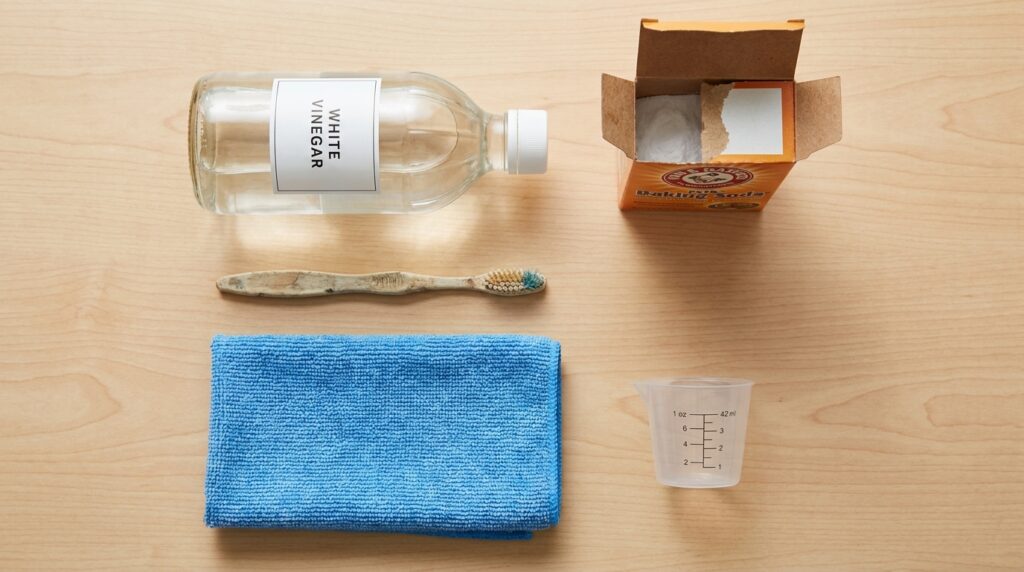
- Empty the dishwasher completely. Remove all dishes so nothing is in the way while you work through the interior.
- Take out the racks and utensil holder. Set them aside so you can reach the bottom of the tub properly.
- Check and clean the filter. Most modern dishwashers have a removable filter at the bottom. Rinse it under warm running water and use an old toothbrush to clear any trapped food.
- Inspect the spray arms. Look for clogged holes and use a toothpick to clear anything blocking water flow.
- Wipe down the interior walls and door. A damp cloth with a small amount of dish soap handles grease and loose grime before the deeper cleaning starts.
- Run a vinegar cycle. Place one to two cups of distilled white vinegar in a dishwasher-safe bowl on the top rack, then run a hot, empty cycle with the heated dry option turned off.
- Add a baking soda cycle. Once the vinegar cycle finishes, sprinkle a cup of baking soda across the bottom of the tub and run a short hot cycle.
- Scrub the door seal. Use a baking soda paste and an old toothbrush along the rubber gasket, where grime and mildew tend to collect.
- Air it out. Leave the door open for a while after the final cycle so everything dries completely instead of trapping moisture.
Cleaning the Filter Properly
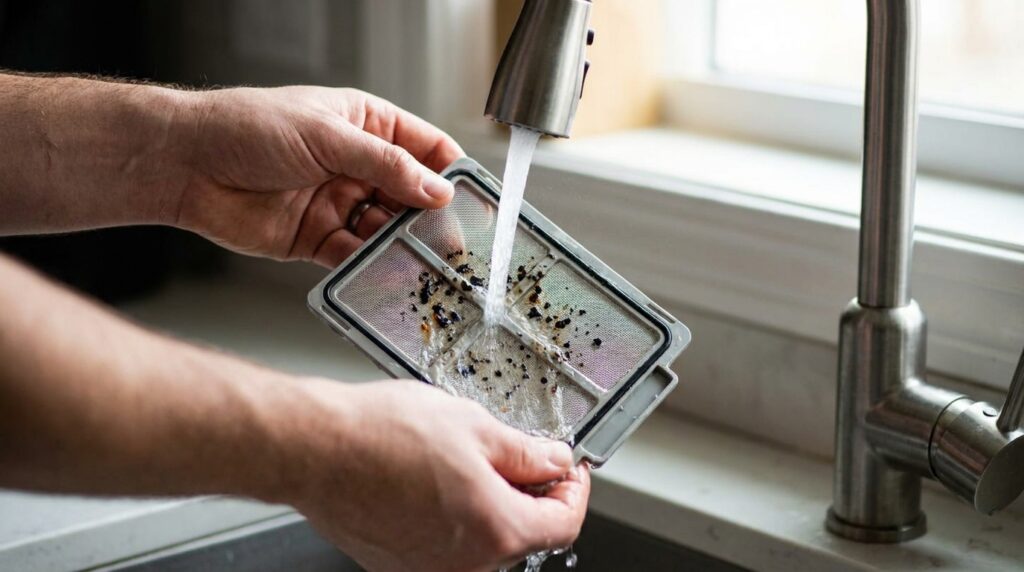
The filter is easy to overlook, but it’s usually the single biggest reason dishes come out gritty or the machine starts smelling musty.
- Twist and lift the filter out according to your model’s manual.
- Rinse thoroughly under warm water, checking both sides.
- Use a soft brush for any stuck-on residue rather than anything abrasive.
- Reinstall it firmly so it locks back into place before running another cycle.
Skipping this step is one of the most common reasons a full vinegar-and-baking-soda routine still doesn’t solve a lingering odor problem.
Freshening Up Between Deep Cleans
A full natural dishwasher cleaner routine doesn’t need to happen every week. Between deeper sessions, a few small habits go a long way toward keeping things smelling fresh.
- Scrape large food scraps off plates before loading, even with newer machines that claim you don’t need to.
- Wipe the door seal with a vinegar-dampened cloth once a week to stop mildew before it builds up.
- Leave the door cracked open after a cycle so moisture can escape instead of sitting trapped inside.
- Run an empty vinegar cycle monthly as light maintenance rather than waiting for a full deep clean.
The same fizzing reaction that clears dishwasher grime is what makes baking soda useful elsewhere in the kitchen too, like lifting stubborn burnt residue off cookware, where the acid-and-base combination does the heavy lifting without scratching the surface.
Natural vs. Store-Bought Dishwasher Cleaners
| Factor | Vinegar and Baking Soda | Commercial Dishwasher Cleaner |
|---|---|---|
| Cost | Very low, reuses pantry items | Moderate, ongoing purchase |
| Scent | Neutral, no added fragrance | Often heavily scented |
| Chemical exposure | Minimal | Varies by product |
| Effectiveness on heavy scale | Good with repeat use | Often stronger for one-time deep buildup |
| Convenience | Requires two separate cycles | Usually a single-step product |
Neither approach is wrong. Many households alternate between the two, using natural methods for regular upkeep and a commercial cleaner for occasional stubborn buildup.
Common Mistakes to Avoid
- Mixing vinegar and baking soda in the same cycle. The fizzing reaction happens instantly and wastes the cleaning power of both ingredients before they can work properly.
- Using vinegar too often. It’s an acid, and frequent exposure can wear down rubber seals and rinse-aid dispensers over time.
- Ignoring the spray arms. Clogged holes limit water pressure no matter how clean the rest of the tub looks.
- Skipping the filter. A clean tub with a dirty filter still leaves food particles circulating through every wash.
- Using colored or scented vinegar. Distilled white vinegar is preferable since it won’t leave staining behind.
A tested walkthrough covering nine practical steps for a full vinegar-based dishwasher clean reinforces several of these same points, particularly the caution around never combining vinegar and baking soda in a single cycle.
Expert Tips for a Deeper Clean
- Run the vinegar cycle on the hottest available setting for maximum grease-cutting power.
- If odors persist after two rounds, check underneath the dishwasher’s lower seal for trapped food that a filter clean alone won’t catch.
- For hard water areas, a slightly higher vinegar ratio helps break down mineral scale that builds up faster than in soft water regions.
- A dishwasher-safe bowl works better than a loose pour for the vinegar step, since it keeps the liquid concentrated rather than spreading thin across the tub.
One appliance-focused breakdown of using baking soda specifically for odor removal notes that baking soda’s deodorizing properties work best when applied directly to the bottom of an already-rinsed tub, rather than mixed into water beforehand.
Pros and Cons of Cleaning a Dishwasher Naturally
| Pros | Cons |
|---|---|
| Inexpensive and uses common pantry items | Takes two separate cycles instead of one |
| No harsh chemical fumes | Less effective on very heavy, long-term buildup |
| Safe for most fabrics, seals, and finishes | Frequent vinegar use can wear rubber parts |
| Naturally deodorizes without added fragrance | Requires manual filter and spray arm checks |
When to Consider a Professional Service Check
Most odor and residue issues resolve with a thorough natural clean, but a few signs point toward something beyond a DIY fix:
- Water isn’t draining properly even after the filter and drain area are clear.
- Dishes consistently come out with a gritty film despite repeated cleaning cycles.
- There’s visible mold growth around the door seal that keeps returning.
- The dishwasher makes unusual grinding or clicking noises during a cycle.
In those cases, an appliance technician can check the pump, drain hose, and internal components that aren’t accessible through a standard cleaning routine. For other serious appliance problems, learn about the signs you need major home appliance repair.
Frequently Asked Questions
How often should I clean my dishwasher naturally?
A full vinegar-and-baking-soda cycle every four to six weeks is usually enough for regular households. Homes with hard water or heavy daily use may benefit from doing it closer to every two to three weeks.
Can I use apple cider vinegar instead of white vinegar?
Yes, though distilled white vinegar is generally preferred since it has no coloring agents that could leave faint staining behind on plastic interiors.
Is it safe to run vinegar and baking soda in the same load?
It’s better to keep them separate. Combining them causes an immediate fizzing reaction that neutralizes much of their individual cleaning power before either has a chance to work properly.
Why does my dishwasher still smell after cleaning?
A lingering odor after a full vinegar and baking soda cycle usually points to the filter, the drain area, or the door seal still holding trapped food particles that the main tub cleaning didn’t reach.
Can baking soda damage my dishwasher over time?
Baking soda is mild and generally safe for regular use. The main thing to avoid is scrubbing hard plastic or stainless surfaces aggressively with a dry paste, which can leave faint scratches over repeated use.
Final Thoughts
A natural dishwasher clean isn’t complicated, and it doesn’t require anything you don’t already have in the kitchen. Vinegar handles the grease and mineral buildup, baking soda handles the odor and surface stains, and a few minutes checking the filter and spray arms rounds out the job. Keep it on a monthly rotation, and your dishwasher will keep performing the way it did on day one.

