
You bring home a bunch of cilantro with big plans for tacos all week, and by day three it’s a slimy, yellowing mess at the bottom of the crisper drawer. If that sounds familiar, you’re not doing anything wrong. Most people never learn how to store fresh herbs to last longer, so the herbs get tossed and the money spent on them gets tossed right along with them.
The good news is that fixing this takes almost no extra effort. A few small changes to how you prep and store herbs before they go in the fridge can stretch their life from a few sluggish days to two or three full weeks.
Why Fresh Herbs Wilt So Fast in the First Place
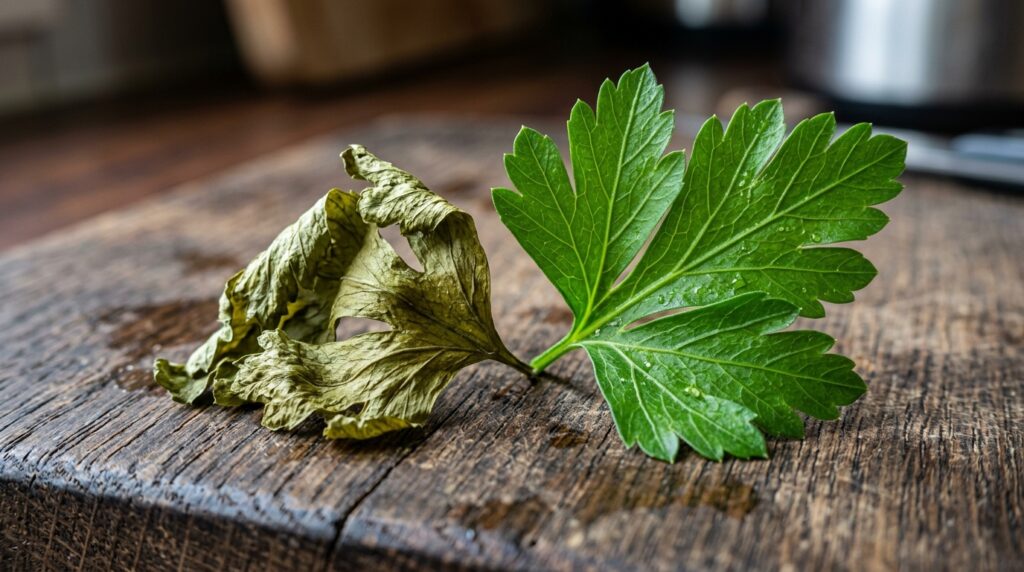
Herbs are cut stems, not whole plants, so the moment they’re harvested they start losing water through their leaves faster than they can replace it. That’s the whole problem in a nutshell. Add warm air, crushed packaging, or a plastic bag with no airflow, and wilting speeds up even more.
Three things push herbs toward the trash faster than anything else:
- Moisture loss through exposed cut stems
- Oxygen exposure, which browns and bruises delicate leaves
- Excess humidity trapped against the leaves, which causes rot and mold
Once you understand these three enemies, the storage methods below will make a lot more sense, because every trick is really just a way of managing water, air, and moisture in a smarter balance.
Soft Herbs vs. Woody Herbs: Storage Isn’t One Size Fits All
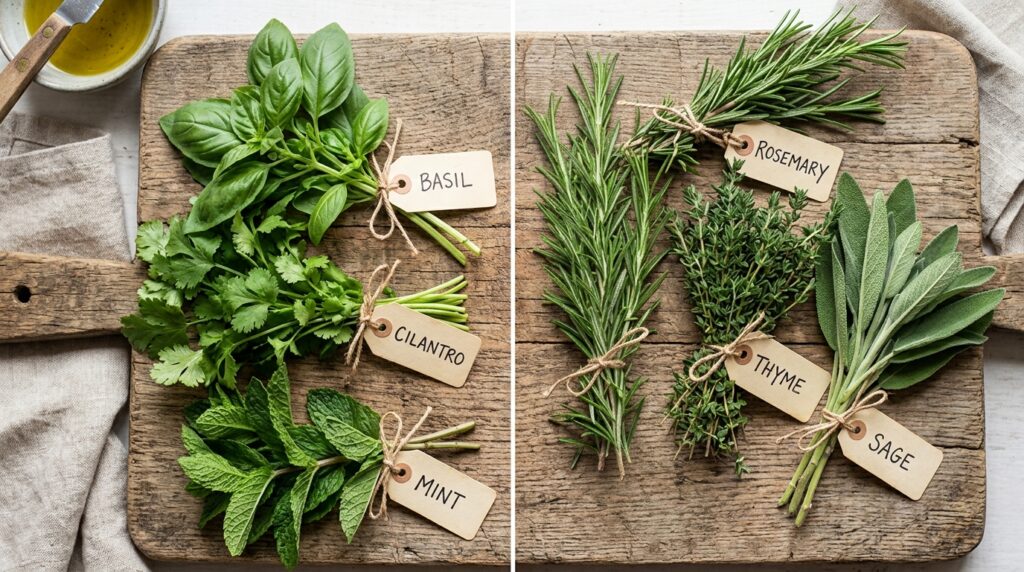
Not every herb behaves the same way in the fridge, and that’s where a lot of people go wrong. Herbs generally fall into two camps, and each one needs a slightly different approach.
Soft, Tender-Stemmed Herbs
Basil, cilantro, parsley, dill, mint, and tarragon have delicate, hollow-ish stems and leaves that bruise easily. These herbs drink water through their cut stems even after harvest, almost like cut flowers, which is exactly why treating them like a small bouquet works so well.
Woody, Firm-Stemmed Herbs
Rosemary, thyme, sage, and oregano have tougher, more fibrous stems and a lower moisture content to begin with. They hold up much better in the fridge without any water at all, as long as they’re kept from drying out completely.
The Water Jar Method: Best for Soft Herbs
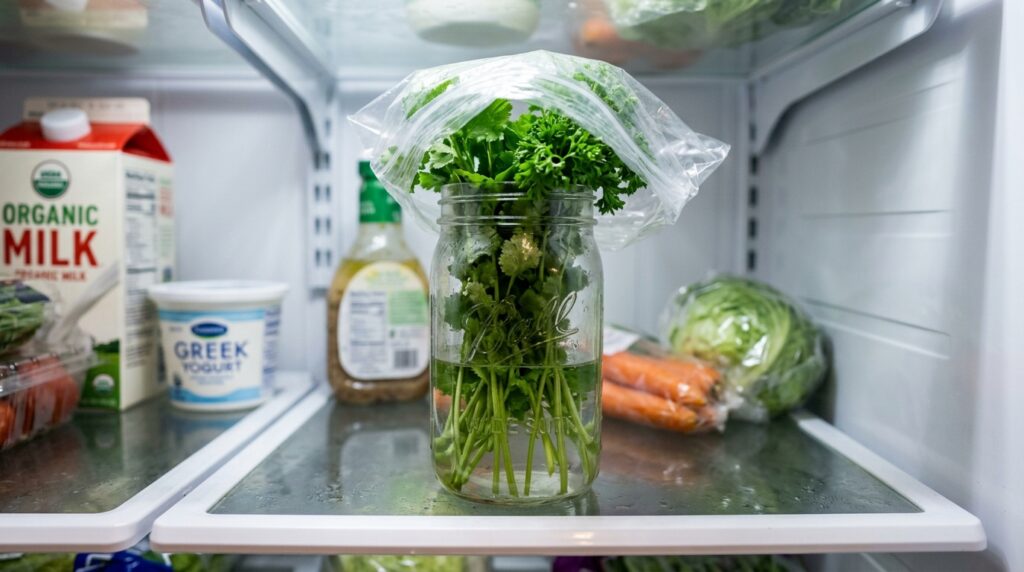
This is the method most home cooks and professional test kitchens land on for parsley, cilantro, mint, and dill, and it consistently gets herbs to the ten-day-to-two-week mark. Testing by outlets like The Kitchn that compared several storage tricks side by side found jarred herbs in water held up noticeably longer than herbs left in their store packaging.
Here’s how to do it:
- Trim about half an inch off the stems, just like you would with cut flowers.
- Remove any rubber bands or twist ties, and pull off yellow or slimy leaves.
- Stand the herbs upright in a jar with an inch or two of water covering just the stems, not the leaves.
- Cover loosely with a produce bag or plastic wrap to trap a little humidity.
- Place the jar on a lower fridge shelf, away from the coldest back wall.
- Swap the water every two to three days so it doesn’t turn cloudy.
Basil is the one big exception here, and it deserves its own section below, so don’t put it in the fridge using this method.
The Damp Towel Method: Best for Woody Herbs
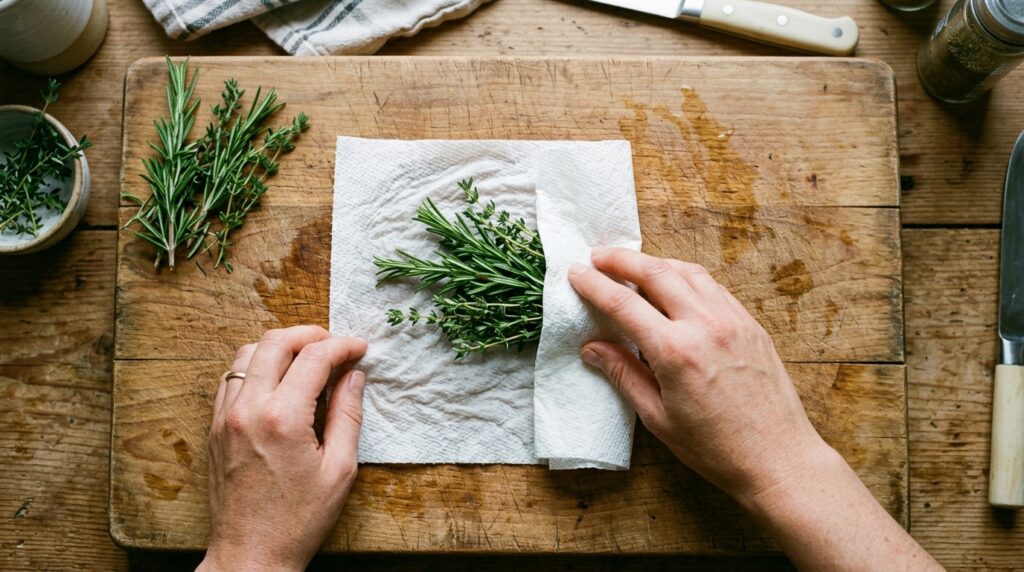
Rosemary, thyme, sage, and oregano don’t need to sit in water. Instead, they respond well to a gentle, consistent level of humidity that a damp paper towel provides.
- Wash the herbs and pat them completely dry first, since trapped moisture from washing is what leads to mold, not the towel itself.
- Lay the sprigs on a slightly damp paper towel or cloth.
- Roll the towel up loosely, like a burrito, so air can still move around the leaves.
- Slide the roll into a partially open zip-top bag or a container with the lid slightly ajar.
- Store it in the crisper drawer.
Woody herbs stored this way can stay usable in the crisper drawer for two to three weeks, which is a big jump from the handful of days most people get by leaving them in their original store bag.
Why Basil Hates the Fridge
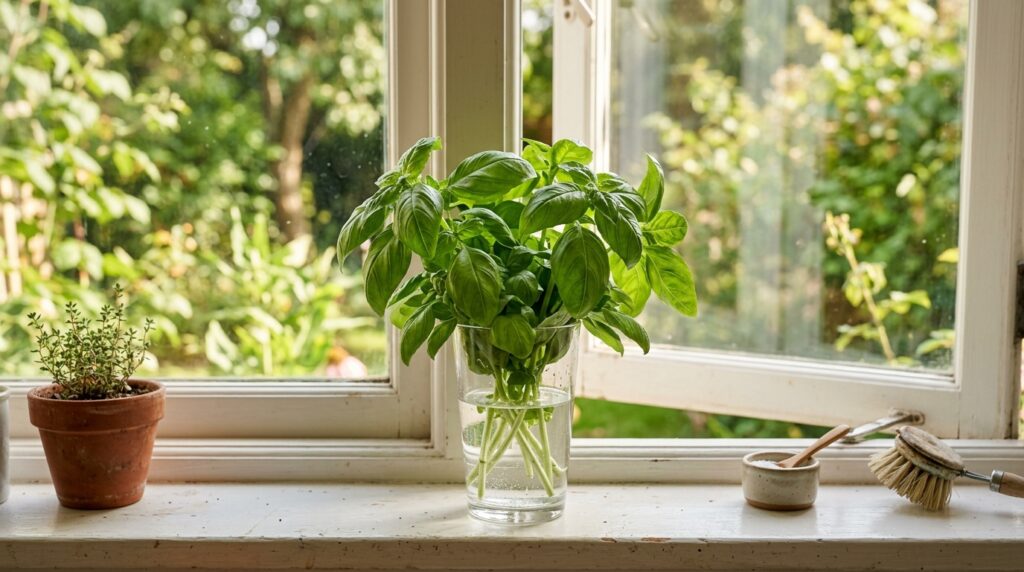
Basil is the odd one out, and it trips up almost everyone at least once. Cold temperatures cause basil leaves to bruise and turn black within a day or two, a reaction to chilling injury rather than actual spoilage.
Instead, treat basil like fresh-cut flowers on the counter:
- Trim the stems and place the bunch in a glass of water.
- Leave it at room temperature, out of direct sunlight.
- Change the water every couple of days.
- Avoid covering it with a plastic bag, since basil prefers open air over trapped humidity.
Stored this way on the counter, a bunch of basil can stay green and fragrant for about a week, sometimes longer. Community food resources like the Wedge Community Co-op’s herb guide point out that basil is really the only common culinary herb that actively suffers from refrigeration, which is worth remembering the next time you’re tempted to toss it straight into the crisper drawer out of habit.
Freezing Herbs for Long-Term Storage
When you’ve got more herbs than you can realistically use in two weeks, freezing is the move. It won’t preserve that crisp, garnish-ready texture, but it locks in flavor beautifully for soups, sauces, marinades, and cooked dishes.
The Ice Cube Method
This is the classic trick, and it works particularly well for parsley, cilantro, dill, basil, and chives.
- Wash and finely chop the herbs.
- Pack them loosely into an ice cube tray, filling each compartment about two-thirds full.
- Top with water or olive oil, depending on how you plan to use them later.
- Freeze until solid, then pop the cubes into a labeled freezer bag.
Government food guidance, including official food storage guidance for fresh herbs, recommends keeping frozen herb cubes for up to about three months for the best flavor and color.
Herb Butter and Herb Oil
Another easy option is folding finely chopped herbs into softened butter, rolling it into a log, and freezing it in slices. This works especially well with rosemary, thyme, and parsley, and it means you always have a flavor-packed pat ready to melt over vegetables, pasta, or grilled meat.
Drying Herbs for a Pantry Stash
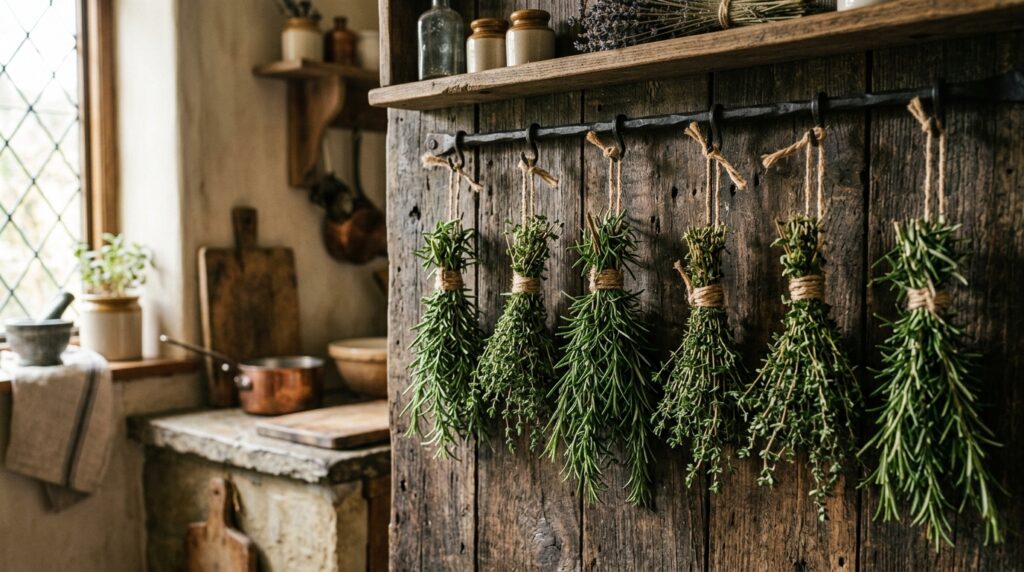
Drying is the oldest storage trick in the book, and it’s still one of the most practical for woody herbs like rosemary, thyme, sage, and oregano, which hold onto their flavor well even after the moisture is gone.
A few reliable ways to dry herbs at home:
- Air-drying: Tie small bundles with kitchen twine and hang them upside down in a dry, well-ventilated spot out of direct sunlight for one to two weeks.
- Oven-drying: Spread herbs on a baking sheet and use the lowest oven setting, checking every 15 to 20 minutes until the leaves crumble easily.
- Microwave-drying: Place herbs between two paper towels and microwave in short 30-second bursts until dried, watching closely to avoid scorching.
Once fully dry and cool, strip the leaves from the stems and store them in a sealed glass jar in a cool, dark cabinet. Dried herbs generally hold decent flavor for six months to a year before they start to fade.
Common Mistakes That Make Herbs Wilt Faster
Even with the right method, a few small habits can undo all your effort. Watch out for these:
- Storing herbs while they’re still wet. Excess surface moisture from washing speeds up mold growth. Always pat herbs dry before wrapping or jarring them.
- Sealing bags completely airtight. A little airflow prevents condensation buildup, which turns leaves slimy.
- Leaving herbs in their original grocery packaging. Those tight plastic clamshells trap ethylene gas and moisture, both of which accelerate decay.
- Forgetting to change the water. Cloudy water in a jar breeds bacteria almost as fast as it does for actual cut flowers.
- Crowding herbs in the coldest part of the fridge. Herbs stored right against the back wall can suffer frost damage, especially delicate soft herbs.
Quick Storage Reference Table
| Herb Type | Best Method | Where to Store | Typical Shelf Life |
|---|---|---|---|
| Basil | Glass of water | Counter, room temperature | 5 to 7 days |
| Parsley, Cilantro, Dill | Water jar | Fridge, lower shelf | 10 to 14 days |
| Mint | Water jar | Fridge, lower shelf | 7 to 10 days |
| Rosemary, Thyme, Sage | Damp towel wrap | Fridge, crisper drawer | 2 to 3 weeks |
| Oregano | Damp towel wrap | Fridge, crisper drawer | 2 to 3 weeks |
| Any herb (chopped) | Ice cube freezing | Freezer | Up to 3 months |
| Woody herbs | Air-drying | Cool, dark pantry shelf | 6 to 12 months |
Expert Tips for Keeping Herbs Fresher, Longer
- Buy herbs as close to when you’ll use them as possible. Freshness at purchase has more impact on shelf life than any storage trick afterward.
- Don’t wash herbs until you’re ready to use or store them, since excess handling bruises the leaves.
- Keep a dedicated jar in your fridge door or lower shelf just for herbs, so you’re not tempted to skip the extra step.
- Label frozen herb cubes with the date and herb type, since frozen basil, parsley, and cilantro can look nearly identical once frozen.
- If a few leaves start to yellow, remove them immediately rather than waiting, since decaying leaves speed up spoilage in everything around them.
Pros and Cons of Each Storage Method
Water Jar Method
- Pros: Simple, keeps texture crisp, works great for soft herbs, no special tools needed
- Cons: Not suitable for woody herbs, requires changing water regularly
Damp Towel Method
- Pros: Long shelf life for woody herbs, minimal maintenance once wrapped
- Cons: Doesn’t work as well for delicate soft herbs, which can get soggy
Freezing
- Pros: Longest storage time, great for meal prep, reduces waste from bulk buying
- Cons: Loses fresh texture, best for cooked dishes rather than garnishes
Drying
- Pros: Very long shelf life, no fridge or freezer space needed
- Cons: Flavor is milder than fresh, texture is unusable for garnishing
FAQs
How long do fresh herbs actually last once stored properly?
Soft herbs like parsley, cilantro, and mint typically last 10 to 14 days when kept in a water jar in the fridge. Woody herbs such as rosemary and thyme can last two to three weeks when wrapped in a damp towel, and frozen herbs hold their flavor for up to about three months.
Can I store all my herbs together in one container?
It’s better to separate soft and woody herbs since they need different humidity levels. Mixing them in one bag or jar often means one type spoils faster while you’re trying to keep the other fresh.
Why do my herbs turn slimy so quickly?
Slime usually comes from trapped moisture combined with little to no airflow. Herbs stored wet in a fully sealed bag or container tend to break down fast, so always dry them thoroughly before storing and leave a little room for air.
Is it better to freeze or dry herbs for long-term storage?
Both work well, but they suit different uses. Freezing keeps more of the herb’s original flavor and is best for herbs you’ll use in cooked dishes later. Drying is more shelf-stable and doesn’t need freezer space, though the flavor is generally milder.
Do I need to wash herbs before storing them?
Only wash herbs right before you plan to use or actively store them using a method that involves drying afterward, like the damp towel method. Washing too early and storing them wet is one of the fastest ways to speed up spoilage.
Final Word
Keeping herbs fresh really comes down to matching the right method to the right herb, then staying consistent with small habits like changing water or checking for yellow leaves. Once you get into the rhythm of jarring your soft herbs and wrapping your woody ones, you’ll notice a lot less waste and a lot more flavor left in every bunch you bring home. Try one of these methods with your next grocery haul and see how much longer your herbs actually last.

