
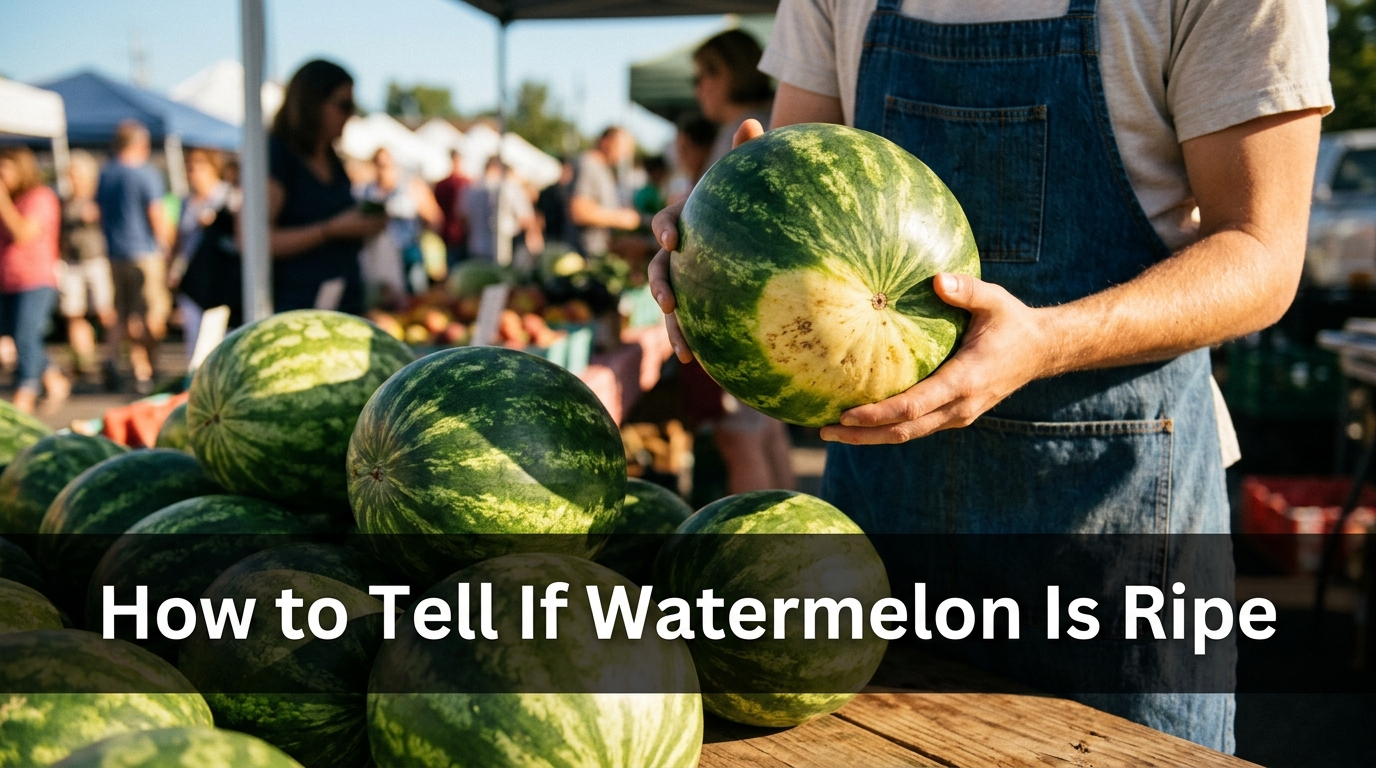
There’s nothing worse than slicing into a watermelon at a summer cookout and finding pale, watery flesh instead of that deep red sweetness everyone was waiting for. Learning how to tell if watermelon is ripe before you ever cut it saves you from that letdown, and it only takes a few seconds once you know what to check.
The good news is you don’t need a farming background. A handful of visual and physical cues, checked together, will tell you almost everything.
The Field Spot Is Your First Clue
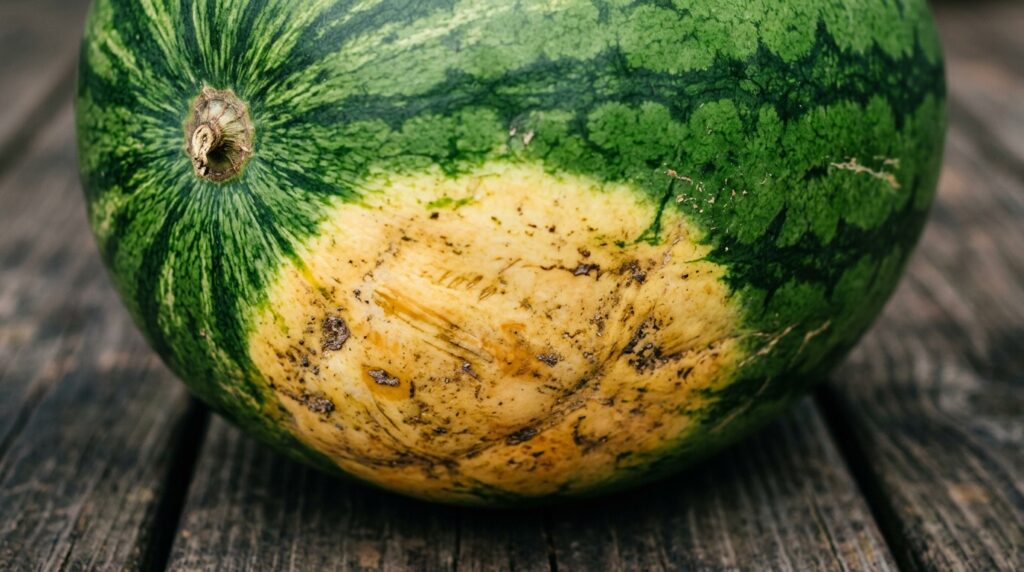
Every watermelon has a spot on its underside where it rested on the ground while growing. This is called the field spot or ground spot, and it’s one of the most reliable signs of ripeness.
A creamy, buttery yellow field spot means the melon spent enough time on the vine to develop real sweetness. A white or pale green spot usually means it was picked too early, and watermelons don’t ripen further once they’re off the vine.
The bigger and more golden that spot, the better your odds of a sweet melon. This lines up with what shows up in a field or ground spot check that produce experts recommend doing before anything else.
Try the Thump Test
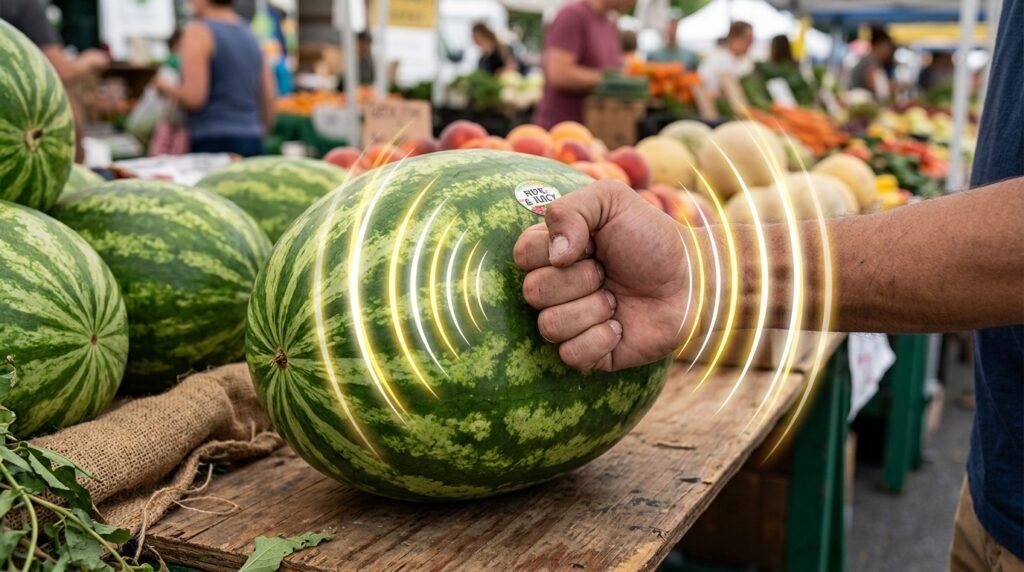
Thumping a watermelon is the move almost everyone has seen someone do at a grocery store, and there’s real logic behind it.
Knock on the rind with your knuckles or the flat of your hand. A ripe watermelon gives off a deep, hollow sound, almost like a drum. An underripe one sounds higher-pitched and tighter, closer to a knock on solid wood.
This method works best when paired with the thump test alongside a look at the field spot, since sound alone can be tricky to judge if you haven’t practiced it much.
What the Sound Actually Means
- Deep, hollow, drum-like: Likely ripe
- High-pitched or tinny: Probably underripe
- Dull thud with no resonance: Possibly overripe
Don’t rely on this one test by itself. It’s subjective, and even experienced pickers admit it takes practice to trust your own ear.
Check the Weight
Pick the watermelon up before you buy it. A ripe one should feel noticeably heavy for its size, since watermelons are roughly 92 percent water.
If you’re comparing two melons that look about the same size, go with the heavier one. That extra heft usually points to more water content and, in turn, more juice and flavor.
Farmers who grow watermelon professionally often mention this as one of the first things they check, right alongside the field spot, because it’s fast and doesn’t require any guesswork about sound.
Look at the Stem and Tendril
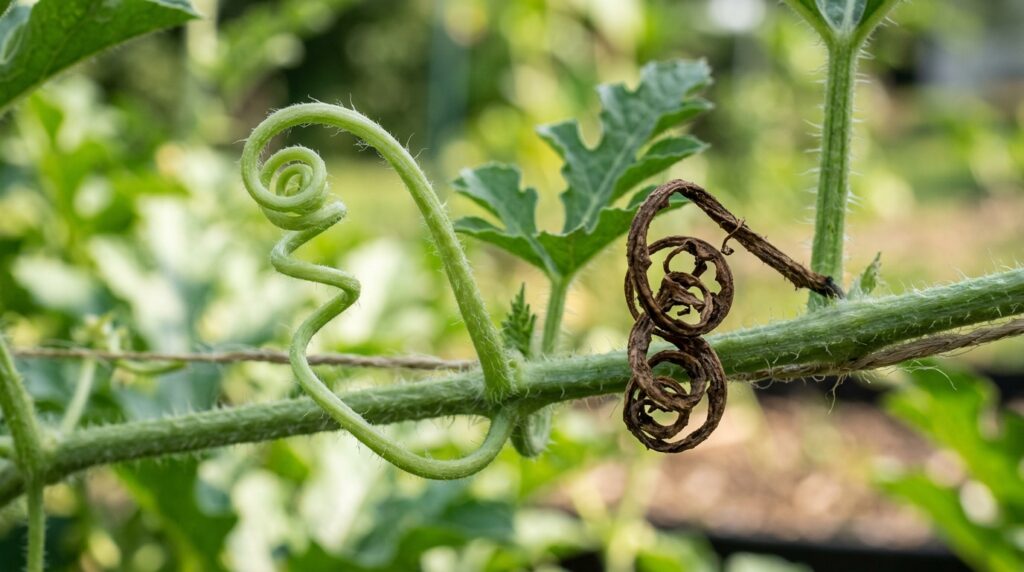
If you’re picking watermelon straight from a garden or a farm stand with the vine still attached, the tendril tells a clear story.
The curly tendril closest to where the stem meets the fruit should be dried out and brown when the melon is ready. A green, still-flexible tendril usually means it was cut too soon.
A university extension fact sheet on selecting ripe watermelon lists the dried tendril as one of the most dependable field indicators available before harvest.
Store-bought melons usually arrive with the stem already trimmed, so this trick mostly helps home gardeners and farmers market shoppers.
Examine the Rind’s Color and Texture
The outer rind gives away more than most people realize. A ripe watermelon typically has a dull, matte finish rather than a glossy shine.
Shiny skin usually signals the melon hasn’t had enough time to mature. Dullness, on the other hand, comes from prolonged sun exposure while it ripened on the vine.
If the watermelon is a striped variety, look for the green bands to be well-defined but slightly faded near the blossom end, which is the opposite side from the stem.
Quick Rind Checklist
| Sign | What It Means |
|---|---|
| Dull, matte skin | Likely ripe |
| Shiny, glossy skin | Likely underripe |
| Uniform round or oval shape | Even sugar distribution |
| Lumpy, irregular shape | Inconsistent growing conditions |
| Deep, uniform color | Good maturity |
Sniff for Sweetness
Smell doesn’t get mentioned as often, but it’s worth a quick check, especially with cut melons at a market stand.
A ripe watermelon usually gives off a faint, sweet aroma near the stem end. If there’s no smell at all, it might just be underripe. If the smell is sour or overly fermented, that’s a sign it has gone past its peak.
This tip shows up in advice from extension specialists who note that a smell test can catch overripe melons that other methods might miss.
Sugar Spots and Webbing on the Rind
Some watermelons develop small brown dots or webbing across the skin, often called sugar spots. These come from natural scarring where bees pollinated the flower, and they’re actually a good sign.
More webbing generally means more sugar developed in that spot as the fruit grew. It’s not a flaw, even though it might look like one at first glance.
Don’t confuse sugar spots with soft, mushy brown patches, which usually point to spoilage rather than ripeness.
Pros and Cons of Each Ripeness Test
No single method is foolproof, so it helps to know the strengths and limits of each one.
Pros
- Combining two or three tests gives far more reliable results than relying on one
- Most checks take only a few seconds and require no tools
- Visual cues like the field spot work even for beginners
Cons
- The thump test is subjective and takes practice to read accurately
- Weight comparisons only work when melons are similar in size
- Tendril checks aren’t possible with pre-cut or already-trimmed store melons
Expert Tips for Picking a Ripe Watermelon Every Time
- Stack at least three signs together. Field spot, weight, and sound checked together beat any single test alone.
- Avoid the shiniest melon in the pile. A slight dullness is actually the better sign here, which surprises a lot of first-time buyers.
- Skip melons with soft spots or cuts. Surface scratches are fine, but soft, mushy areas often mean spoilage has already started.
- Buy pre-cut with visible flesh when unsure. A bright red or pink interior with visible seeds and no white streaking is the safest bet if whole melons feel like a gamble.
- Don’t judge by size alone. Bigger doesn’t always mean sweeter. Focus on the field spot and weight instead.
What Makes Watermelon Worth the Effort
Beyond the sweetness payoff, a ripe watermelon brings real nutritional value to the table. A single cup of diced watermelon has around 46 calories and is roughly 92 percent water, making it one of the more hydrating fruits available.
It’s also known for its lycopene and citrulline content, two plant compounds tied to heart health and improved blood flow, along with a solid dose of vitamin C and vitamin A.
That combination of low calories and high water content is part of why so many people specifically look for a ripe one instead of settling for whatever’s on the shelf.
Common Mistakes When Choosing a Watermelon
- Judging only by color. A deep green rind doesn’t guarantee sweetness if the field spot is pale.
- Skipping the weight check. Two melons of the same size can have very different water content.
- Trusting the thump test alone. It’s the least reliable method on its own and works best paired with a visual check.
- Ignoring shape. Lumpy, irregular melons often grew with inconsistent water and sun, which shows up in uneven flavor.
Frequently Asked Questions
How can you tell if a watermelon is ripe without cutting it?
Check the field spot for a creamy yellow color, pick it up to gauge its weight, and thump the rind for a deep, hollow sound. Combining these three checks is far more reliable than using just one.
What does a ripe watermelon sound like when you thump it?
A ripe watermelon produces a deep, hollow sound similar to a knock on a door. An underripe one tends to sound higher-pitched and tighter, almost metallic by comparison.
Does a yellow spot on a watermelon mean it’s ripe?
Yes. That yellow area is the field spot, where the melon rested on the ground while ripening on the vine. A large, deep yellow spot is one of the strongest signs of a sweet, ripe watermelon, while a white or pale spot suggests it was picked early.
Is a heavier watermelon always sweeter?
A heavier watermelon usually has more water content, which often correlates with juiciness and flavor, but weight should be compared between melons of similar size rather than used as a stand-alone rule.
Can a watermelon ripen after it’s picked?
No. Watermelons stop ripening once they’re removed from the vine, unlike fruits such as bananas or avocados. Whatever sweetness level it has at picking is the sweetness level it will stay at.
Bringing It All Together
Picking a ripe watermelon comes down to reading a few small clues instead of hoping for the best. Check the field spot, feel the weight, give it a thump, and look at the rind’s texture before it ever goes in your cart.
Next time you’re at a market or produce aisle, try stacking two or three of these checks together, and see how much more consistent your watermelons turn out.

