
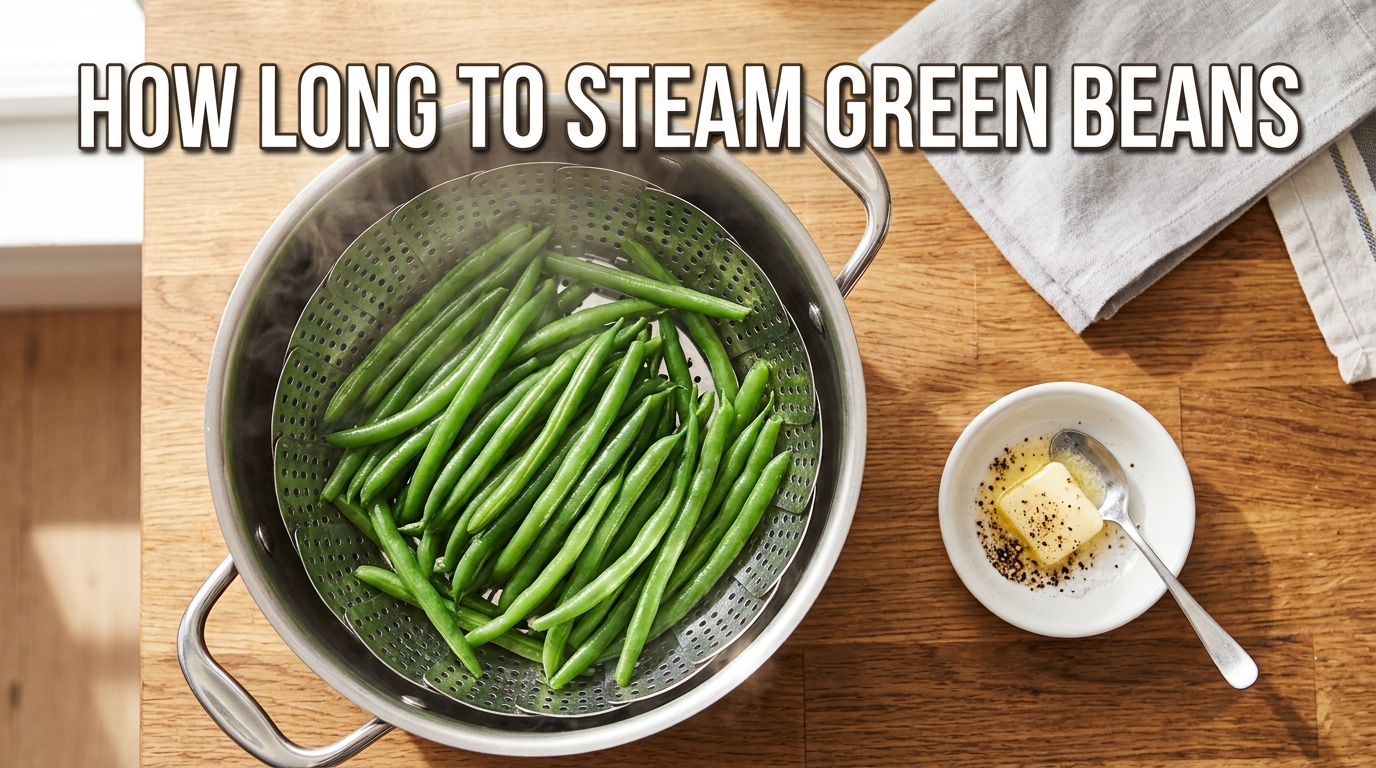
Green beans go from crisp to mushy in about the time it takes to check your phone, so timing really does matter here. If you’re asking how long to steam green beans, the short answer is 4 to 7 minutes once the water is boiling, depending on the method and how tender you like them.
That range covers stovetop steamer baskets, microwave bowls, and electric steamers, and this breakdown walks through each one so you never end up with soggy beans again.
Why Steaming Works Better Than Boiling
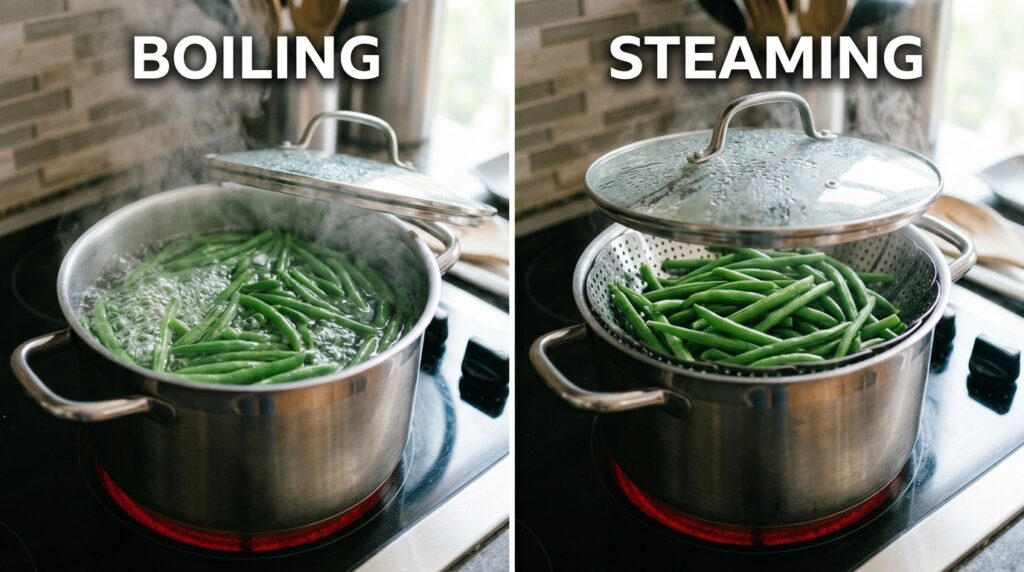
Steaming cooks green beans with hot vapor instead of submerging them in water, so fewer vitamins and minerals leach out during cooking. Boiling can pull water-soluble nutrients like vitamin C straight into the pot, which then gets poured down the drain.
Steaming also gives you more control. Since the beans never touch standing water, there’s less risk of them turning waterlogged or losing their color.
Food writers who’ve compared boiling, steaming, and sautéing side by side generally land on steaming as the gentler, more forgiving method, especially for anyone still learning how the beans behave over heat.
How Long to Steam Green Beans
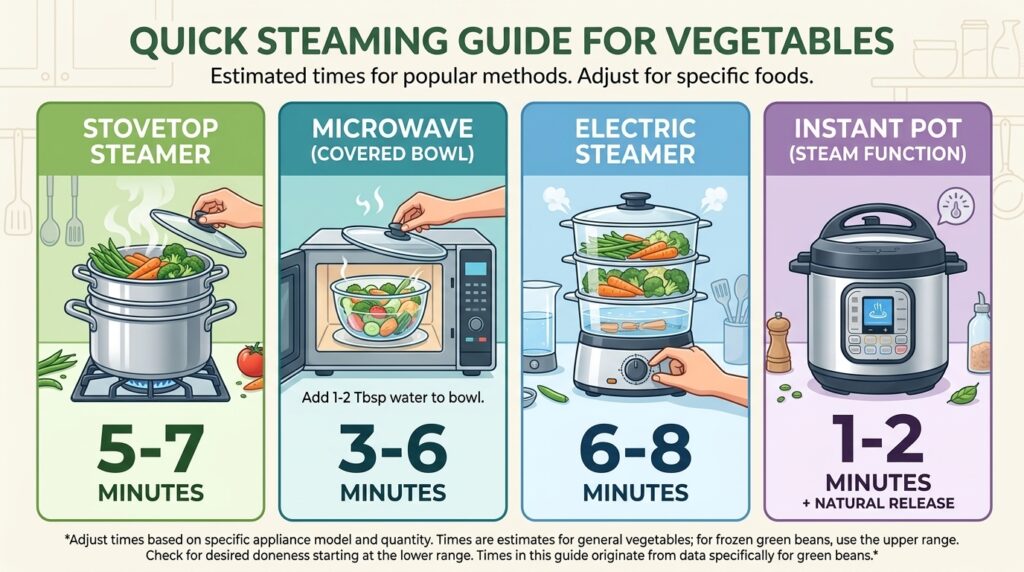
Here’s a fast breakdown you can glance at while the water heats up.
| Method | Time (after water boils) | Texture |
|---|---|---|
| Stovetop steamer basket | 5–7 minutes | Tender-crisp |
| Microwave (covered bowl) | 3–6 minutes | Tender-crisp |
| Electric steamer | 6–8 minutes | Soft, more tender |
| Instant Pot (steam function) | 1–2 minutes + natural release | Tender |
| Frozen green beans, steamed | 6–8 minutes | Tender-crisp |
These times start once the water is actively boiling or the appliance has reached full steam, not from when you first turn on the heat.
Stovetop Steamer Basket Timing
A metal or bamboo steamer basket set over an inch of boiling water is the most common way to steam green beans, and it usually takes 5 to 7 minutes.
Thinner French-style beans, sometimes called haricots verts, cook faster and can be done in as little as 3 to 4 minutes because there’s less mass for the steam to penetrate.
Microwave Steaming Timing
A covered, microwave-safe bowl with a splash of water needs roughly 3 to 6 minutes on high, depending on your microwave’s wattage and how many beans you’re cooking.
Start checking at the 3-minute mark if you’re working with a small batch, since microwaves vary a lot between models.
Electric Steamer and Instant Pot Timing
Electric countertop steamers tend to run a bit longer, closer to 6 to 8 minutes, because the chamber takes time to fill with steam.
If you’re using a pressure cooker’s steam setting, green beans need only 1 to 2 minutes at pressure, followed by a quick release, since the sealed environment cooks much faster.
Step-by-Step: Steaming Green Beans on the Stove
This is the most reliable method if you’re new to steaming vegetables, since you can see and taste-test as you go.
- Rinse the beans and snap or trim off the stem ends.
- Add about an inch of water to a pot and bring it to a boil.
- Place a steamer basket inside, making sure the water sits below the basket’s holes.
- Add the green beans in an even layer and cover with a lid.
- Steam for 5 to 7 minutes, checking at the 5-minute mark.
- Remove immediately once they reach your preferred tenderness.
The technique lines up closely with what’s described in a straightforward stovetop method for steaming green beans, which also covers seasoning options once the beans are done.
How to Tell When Green Beans Are Perfectly Steamed
Timing is only half the equation. The real test is texture and color.
- Color check: Beans should turn a bright, vivid green, not dull olive.
- Fork test: A fork should slide in with slight resistance, not fall through.
- Bite test: There should be a light snap, not a squeak or a mush.
If the beans still taste raw and starchy after the recommended time, give them another minute or two rather than guessing blindly.
Undercooked beans taste grassy and tough, while overcooked ones turn khaki-colored and lose that fresh snap people actually want from a steamed vegetable.
Fresh vs Frozen vs Canned: Do Steaming Times Change?
Not all green beans start from the same place, so it helps to adjust expectations based on what’s in your kitchen.
| Type | Steaming Time | Notes |
|---|---|---|
| Fresh, whole | 5–7 minutes | Best color and snap |
| Fresh, French-cut | 3–5 minutes | Cooks faster due to thinner cut |
| Frozen | 6–8 minutes | No need to thaw first |
| Canned | 2–3 minutes | Already cooked, just needs reheating |
Frozen green beans can go straight from the freezer into the steamer basket. Because they’re colder and often icier on the surface, they typically need a couple of extra minutes compared to fresh.
Canned green beans are already fully cooked during processing, so steaming is really just about warming them through and shouldn’t take more than a few minutes.
Pros and Cons of Steaming Green Beans
Pros
- Retains more vitamin C and B vitamins than boiling
- Keeps the beans bright green and visually appealing
- Requires very little added fat or oil
- Works well for meal prepping in batches
Cons
- Needs a steamer basket, colander, or microwave-safe cover to do properly
- Slightly less flavor infusion compared to sautéing
- Easy to overcook if left unattended
Expert Tips for Better Steamed Green Beans
A few small habits separate good steamed green beans from great ones.
- Cut evenly. Beans of similar length cook at the same rate, so nothing finishes early or late.
- Don’t overcrowd the basket. A packed basket traps steam unevenly and leads to patchy cooking.
- Salt the water, not just the beans. A pinch of salt in the steaming water seasons them from the inside out.
- Use an ice bath for meal prep. Plunging steamed beans into ice water right after cooking locks in color and stops the cooking process, which matters if you’re not eating them immediately.
- Taste before serving. Steaming times are estimates, and stove strength, altitude, and bean freshness all shift the timing slightly.
Home cooks who steam green beans in the microwave often find that starting with less time and adding in short bursts prevents the rubbery texture that comes from overcooking in short, powerful appliances.
Simple Ways to Season Steamed Green Beans
Plain steamed green beans are good, but a few finishing touches make them memorable.
- Melted butter, salt, and cracked black pepper for a classic side dish
- A squeeze of lemon juice with toasted almonds for brightness and crunch
- Minced garlic sautéed briefly in olive oil, tossed with the beans after steaming
- Grated parmesan and a pinch of red pepper flakes for a savory kick
- A splash of soy sauce and sesame oil for an Asian-inspired flavor profile
Anyone looking for extra flavor combinations can find useful ideas in a stovetop steaming walkthrough that also covers pairing beans with different mains.
What You Actually Keep Nutritionally
Green beans are already a low-calorie vegetable, and steaming helps preserve more of what makes them worth eating in the first place.
A single cup of raw green beans has roughly 31 calories, about 2 grams of protein, and close to 3 grams of fiber. They’re also a meaningful source of vitamin C, vitamin K, and folate.
Because steaming uses vapor rather than submersion, it holds onto more of those water-soluble nutrients compared to boiling, based on nutrition breakdowns from registered dietitians covering green bean nutrition.
The seasonal produce data on green beans also notes that a standard serving size is about one cup, which is a helpful reference point when planning meals or side dishes.
Common Mistakes That Ruin Steamed Green Beans
- Starting the timer too early. The clock should start once water is actually boiling or steam is visibly escaping, not when the burner turns on.
- Skipping the lid. An uncovered pot lets steam escape, which means longer cook times and uneven results.
- Letting water touch the beans directly. If water splashes into the basket, the beans essentially boil instead of steam, changing both texture and nutrient retention.
- Walking away. Green beans shift from tender-crisp to mushy in under two minutes, so it’s worth staying close to the stove during the last stretch of cooking.
If you’re also working through other kitchen prep tasks around the house, a quick home and kitchen resource can be handy for general maintenance questions that pop up between cooking projects, though it doesn’t cover recipe timing specifically.
Frequently Asked Questions
How long does it take to steam green beans until tender?
Most fresh green beans reach a tender-crisp texture in 5 to 7 minutes once the steaming water is boiling. For a softer, more fully tender bite, add an extra 2 to 3 minutes.
Do you need to boil water before steaming green beans?
Yes. Bring the water to a full boil first, then add the steamer basket and beans. Starting the beans in cold or lukewarm water leads to uneven cooking and a longer total time.
Can you steam frozen green beans without thawing them first?
Frozen green beans can go straight into the steamer without thawing. They typically need 6 to 8 minutes, a couple of minutes longer than fresh beans, since they start out colder.
Why are my steamed green beans still tough after cooking?
Tough beans usually mean they need more time, or the water wasn’t fully boiling when the timer started. Older, thicker beans also take longer than young, thin ones, so add a minute or two and test again.
Is steaming or boiling better for green beans?
Steaming generally preserves more color, texture, and water-soluble nutrients like vitamin C compared to boiling, since the beans never sit directly in water. Boiling can still work well when beans are being added to soups or dishes where a little nutrient loss doesn’t matter as much.
Wrapping Up
Perfectly steamed green beans come down to timing, heat, and a little attention near the end of cooking. Stick to 5 to 7 minutes for fresh beans on the stovetop, adjust slightly for frozen or French-cut varieties, and pull them the moment they turn bright green and tender-crisp.
Try it tonight with a simple butter and lemon finish, and once you’ve nailed the timing, it becomes second nature every time green beans show up in the crisper drawer.

