

Is your home’s heating and cooling system struggling to keep you comfortable? Knowing the signs your HVAC system needs replacement can help you avoid unexpected breakdowns, rising energy bills, and costly emergency repairs. Frequent repairs, aging equipment, unusual noises, inconsistent temperatures, or declining efficiency are often clear signals that your system is nearing the end of its useful life. Recognizing these warning signs early can help you make a more informed decision about HVAC replacement while keeping your home comfortable, safe, and energy-efficient.
For more foundational information on maintaining your home’s climate control, explore our comprehensive HVAC guide. Ready to discuss your options? Contact us today for a consultation.
As your home’s heating, ventilation, and air conditioning (HVAC) system ages, it inevitably begins to show signs of wear and tear. Ignoring these signals can lead to discomfort, higher utility bills, and even potential safety hazards. Understanding these critical warning signs is the first step toward making an informed decision about replacement.
One of the most obvious indicators is the sheer equipment age. Most HVAC systems are designed to last between 10 to 15 years, with some variations depending on the type of unit and how well it’s been maintained. If your furnace or air conditioner is approaching or has exceeded this timeframe by September 2026, it’s wise to start evaluating its performance. An older system, even if still functioning, is likely operating at a significantly lower efficiency than newer models, costing you more in the long run.
Frequent breakdowns are another major red flag. While an occasional repair might be expected, if you find yourself calling for service multiple times a year, your system is likely on its last legs. These recurring issues often indicate deeper, systemic problems rather than isolated component failures. The cost of these frequent repairs can quickly accumulate, sometimes exceeding the value of the unit itself. It’s often more economical to invest in a new, reliable system than to continually patch up an old one.
Loud noises emanating from your HVAC unit are never a good sign. While some operational sounds are normal, grinding, squealing, banging, or rattling noises suggest internal components are failing. A screeching sound, for instance, could indicate a problem with the motor bearings, while a clanking noise might point to a loose or broken part within the system. These sounds are not just irritating; they can be an early warning of a HVAC emergency, particularly when they occur alongside electrical problems, heating or cooling loss, or repeated system shutdowns.
Unpleasant or unusual odors coming from your vents should also prompt concern. A musty smell often indicates mold or mildew growth within the ductwork or evaporator coil, which can negatively impact indoor air quality. A burning smell, especially from a furnace, could signal an electrical issue or overheating components, posing a fire risk. Gas smells, particularly if you have a gas furnace, are extremely dangerous and require immediate attention from a professional and potentially the gas company.
Finally, poor temperature control throughout your home is a clear indication that your HVAC system is no longer performing optimally. If some rooms are consistently too hot while others are too cold, or if the thermostat setting doesn’t match the actual indoor temperature, your system may be struggling to distribute conditioned air effectively. This could be due to an undersized or oversized unit, ductwork issues, or a failing compressor or heat exchanger. Inconsistent temperatures lead to discomfort and often cause homeowners to crank up the thermostat or air conditioning, further increasing energy consumption.
Calculating the Cost Threshold for an HVAC System Replacement
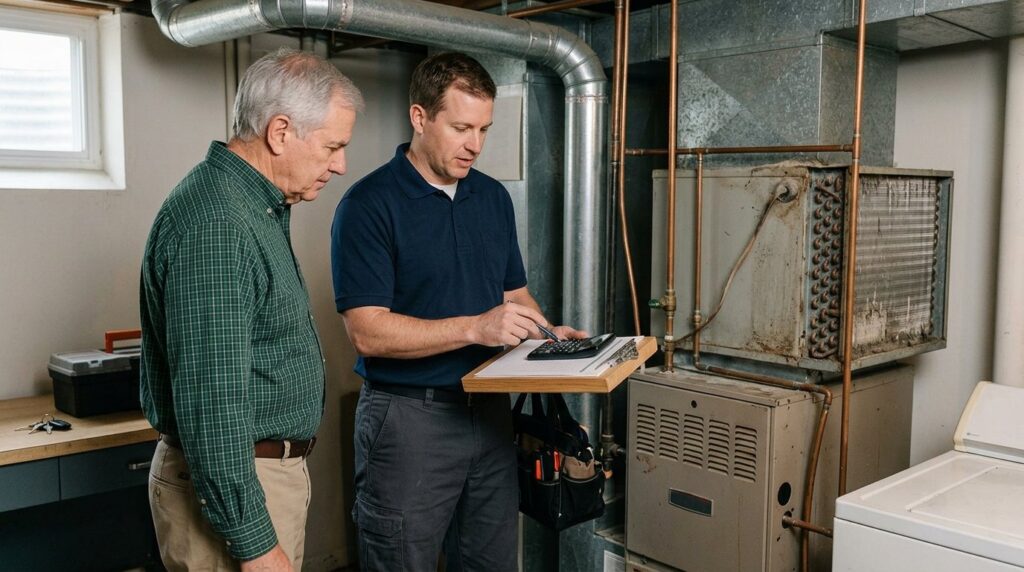
Deciding whether to repair or replace an HVAC system often boils down to a financial calculation. While the immediate cost of a repair might seem appealing, it’s crucial to look at the bigger picture, especially when dealing with an aging unit. We often advise homeowners to consider the “5,000 rule” as a simple guideline. This rule suggests multiplying the age of your system by the cost of the repair. If the total exceeds $5,000, replacement is generally the more financially prudent option. For example, if your 12-year-old system needs a $500 repair, that’s $6,000, indicating replacement should be strongly considered. This rule helps put the repair cost into perspective relative to the system’s remaining lifespan and overall value.
Beyond this rule, track recurring expenses. If you’ve been spending hundreds or even thousands of dollars annually on repairs for the past few years, those costs quickly add up. Each repair, while extending the system’s life temporarily, doesn’t address the underlying component degradation that comes with age. As one part fails, others are likely to follow suit, creating a cycle of costly fixes. Key components like compressors, heat exchangers, and motors are expensive to replace individually, and their failure often signals that the entire system is nearing the end.
Performing a thorough cost-benefit analysis is critical. Compare the estimated cost of a new, high-efficiency system against the projected costs of continued repairs, increased energy bills due to inefficiency, and potential emergency service calls for your current unit. Factor in the expected lifespan of a new system (typically 10-15 years), its warranty, and the significant energy savings it will provide. A new system offers peace of mind, improved comfort, and a substantial return on investment through reduced utility costs and fewer repair headaches. Don’t forget to consider any available rebates or tax credits for energy-efficient upgrades, which can further offset the initial investment.
Diminishing Efficiency and Rising Utility Expenses
One of the most insidious signs that your HVAC system is failing is its declining energy efficiency, which directly translates to rising utility expenses. As heating and cooling equipment ages, its components wear out, leading to less efficient operation. This often manifests as unexplained energy spikes on your monthly utility bills, even if your usage habits haven’t changed significantly. An older system has to work harder and longer to achieve and maintain your desired indoor temperature, consuming more electricity or natural gas in the process.
Modern air conditioners are rated by their Seasonal Energy Efficiency Ratio (SEER), while furnaces use Annual Fuel Utilization Efficiency (AFUE). An older AC unit from the early 2000s might have a SEER rating of 8 or 10, whereas current minimum standards are 13-14 SEER, and high-efficiency models can reach 20 SEER or higher. Similarly, older furnaces might have AFUE ratings in the 60-70% range, meaning a significant portion of the fuel consumed is wasted. Today’s high-efficiency furnaces boast AFUE ratings of 90% or more, converting almost all fuel into usable heat. The difference in these ratings directly impacts your energy consumption and, consequently, your wallet.
Heating efficiency is particularly crucial during colder months. If your furnace is struggling, understanding factors that affect heating performance can help you determine whether poor airflow, component wear, or other system issues are contributing to the problem. This can be exacerbated by heat loss through poorly sealed ducts or an aging system that can no longer adequately distribute heat. Similarly, an inefficient air conditioner will struggle to cool your home during the summer, leading to uncomfortable indoor temperatures and increased running times.
A common symptom of diminishing efficiency is continuous cycling. This means your HVAC unit turns on and off frequently, running for short bursts rather than longer, more consistent cycles. This short-cycling indicates that the system is struggling to reach the thermostat’s set point, or that it’s oversized and quickly overheating/overcooling, then shutting down. Not only does this waste energy, but it also puts excessive strain on the compressor and other critical components, accelerating wear and tear and leading to premature failure. Regular HVAC maintenance can help identify worn components, efficiency problems, and safety concerns before they contribute to premature system failure.
When to Schedule an HVAC System Replacement
Timing is everything when it comes to replacing your HVAC system. While an unexpected breakdown might force your hand, ideally, you want to plan your replacement strategically. The best times to schedule an HVAC system replacement are typically during seasonal transitions, such as spring or fall. During these periods, HVAC contractors are generally less busy than in the peak summer or winter months, which can lead to more flexible scheduling, potentially better pricing, and quicker installation times. It also ensures you’re not left without heating or cooling during extreme weather.
However, some situations demand immediate attention, regardless of the season. Safety risks are paramount. An aging furnace, for instance, can develop cracks in its heat exchanger, leading to dangerous carbon monoxide hazards. Carbon monoxide is an odorless, colorless gas that can be deadly. If your carbon monoxide detector goes off, or if you suspect a leak, evacuate your home immediately and call for professional help. Similarly, electrical issues in an old system can pose fire risks. Prioritizing safety means addressing these concerns promptly, even if it means an unplanned replacement.
Another critical factor influencing replacement timing is the ongoing refrigerant phaseouts. Specifically, R-22 refrigerant, commonly found in older air conditioning systems, was phased out of production and import in the United States by January 1, 2020. While existing R-22 systems can still be serviced, the cost of R-22 refrigerant has become prohibitively expensive due to scarcity. If your older AC unit develops a leak and requires an R-22 recharge, the repair cost might be so high that it makes more financial sense to replace the entire unit with a new one that uses environmentally friendly refrigerants like R-410A or newer alternatives. This regulatory change makes replacement a more attractive option for many homeowners with older AC units.
Integrating Hearth and HVAC System Replacement for Whole-Home Comfort
When considering an HVAC system replacement, it’s an opportune moment to think holistically about your home’s comfort and energy strategy. Many homeowners overlook the potential for integrating hearth products with their HVAC system to create a truly comfortable and efficient living environment. Hearth products, such as gas fireplaces, wood-burning stoves, or pellet stoves, can serve as excellent sources of supplemental heating, especially in specific zones of your home.
Imagine a chilly evening where you want to warm up your living room without running your entire furnace. A modern, efficient gas fireplace can provide localized warmth, creating a cozy ambiance while reducing the strain on your central heating system. This approach can lead to significant improvements in overall energy efficiency and contribute to the system longevity of your primary HVAC unit by reducing its workload.
The true advantage comes when you choose a single provider for both your HVAC and hearth product needs. This unified approach offers numerous benefits that fragmented service cannot match. When you work with a company that specializes in both, you gain access to technicians who understand how these systems interact. They can design a heating solution that optimizes both your central HVAC and any supplemental hearth products, ensuring they work in harmony rather than competing. This expertise can lead to better system sizing, more efficient ductwork, and coordinated maintenance schedules.
Choosing a single, trusted partner for these essential home systems streamlines the entire process. From initial consultation and product selection to installation, maintenance, and emergency services, you’ll have one point of contact. This simplifies communication, enhances accountability, and ensures a consistent level of service. For homeowners seeking comprehensive HVAC solutions that integrate seamlessly with their hearth products, working with a specialized provider offers unparalleled convenience and expertise. This integrated approach not only maximizes comfort but also ensures that both systems are maintained optimally, potentially leading to the 20% lower energy costs reported by homeowners who use a single provider for their core home systems.
Evaluating Equipment Age Against Modern Energy Standards
The age of your HVAC equipment is a critical factor in determining its efficiency and overall performance. As a general rule, we consider the 15-year benchmark to be a significant turning point for most residential heating and cooling systems. While some units may last longer with diligent maintenance, systems older than 15 years, by September 2026, are almost certainly operating at a much lower efficiency than current models. This age gap means they are consuming more energy to deliver less comfort, directly impacting your utility bills.
Modern energy standards have evolved considerably over the past decade. For furnaces, the AFUE (Annual Fuel Utilization Efficiency) standards have steadily increased. Many older furnaces operate with AFUE ratings in the 60-70% range, meaning 30-40% of the fuel they burn is wasted up the chimney. Today, minimum AFUE ratings are typically 80%, with high-efficiency condensing furnaces achieving 90-98% AFUE. Upgrading to a high-efficiency furnace can drastically reduce your natural gas consumption and heating costs.
Similarly, air conditioners have seen significant improvements in their SEER (Seasonal Energy Efficiency Ratio) ratings. As mentioned earlier, older AC units often have SEER ratings below 10, while current minimums are 13-14 SEER, and top-tier models exceed 20 SEER. The higher the SEER rating, the more energy-efficient the unit. Replacing an old, low-SEER unit with a modern, high-SEER system can lead to substantial savings on your electricity bill during cooling seasons.
Beyond basic efficiency, modern HVAC systems incorporate advanced technologies that were unavailable in older models. Smart thermostats, for instance, allow for precise temperature control, remote access via smartphone, and intelligent scheduling that learns your habits, further optimizing energy usage. Many new systems also offer improved indoor air quality (IAQ) features, such as advanced filtration systems, UV lights, and humidifiers/dehumidifiers, which are crucial for homes with allergies or respiratory sensitivities. Furthermore, the industry continues its transition towards eco-friendly refrigerants, moving away from older, ozone-depleting substances like R-22, making newer systems a more environmentally responsible choice. Evaluating your equipment’s age against these modern standards makes a compelling case for replacement.
Key Advantages of Upgrading to Modern High-Efficiency Equipment
Upgrading to a modern, high-efficiency HVAC system offers a multitude of benefits that extend far beyond simply having a working furnace or air conditioner. These advantages contribute to a more comfortable home, significant financial savings, and a reduced environmental footprint.
Foremost among these benefits are the substantial utility savings. As discussed, modern systems are engineered to convert energy much more efficiently than their predecessors. By replacing an old, inefficient unit with a high-efficiency HVAC system, homeowners can improve energy performance while reducing long-term operating costs. In fact, properly maintained, high-efficiency HVAC systems can reduce energy bills by up to 20%. This saving isn’t just a one-time perk; it’s a recurring benefit that adds up to thousands of dollars over the lifespan of the new equipment.
Another significant advantage is the achievement of consistent temperatures throughout your home. Modern HVAC systems, often paired with advanced thermostats and variable-speed technology, are designed to distribute conditioned air more evenly. This eliminates hot and cold spots, ensuring every room maintains a comfortable temperature. The improved airflow and precise control mean fewer temperature fluctuations, leading to a much more pleasant living environment for everyone in the household.
By consuming less energy, high-efficiency systems also contribute to a reduced carbon footprint. Burning less fossil fuel (for furnaces) or using less electricity (for air conditioners and heat pumps) means fewer greenhouse gas emissions. For environmentally conscious homeowners, this is a compelling reason to upgrade, knowing that their investment is contributing to a healthier planet. This aspect aligns with broader community efforts towards sustainability and energy conservation.
Finally, new HVAC systems come with comprehensive warranty coverage, providing peace of mind for your investment. Manufacturers typically offer warranties on parts, and many reputable contractors provide labor warranties as well. This protection against unexpected repair costs in the initial years of ownership is invaluable. It ensures that any potential issues are covered, safeguarding your budget and providing confidence in your new system’s reliability.
To illustrate the stark difference, consider this conceptual comparison:
| Feature / Metric | Old HVAC System (15+ years old) | Modern High-Efficiency HVAC System |
|---|---|---|
| Energy Efficiency | Low (e.g., 8 SEER AC, 60% AFUE Furnace) | High (e.g., 16+ SEER AC, 90%+ AFUE Furnace) |
| Monthly Utility Bills | High, increasing over time | Significantly lower, stable |
| Temperature Consistency | Poor, hot/cold spots | Excellent, even heating/cooling |
| Noise Level | Loud, frequent cycling | Quiet, smooth operation |
| Reliability | Prone to frequent breakdowns | Highly reliable, fewer repairs |
| Environmental Impact | Higher carbon footprint | Reduced carbon footprint |
| Warranty | Expired or limited | Comprehensive parts & labor |
| Comfort Features | Basic thermostat | Smart thermostat, IAQ options |
Frequently Asked Questions About Heating and Cooling Upgrades
Homeowners often have many questions when considering a significant investment like an HVAC system upgrade. Here, we address some of the most common inquiries to help you make an informed decision.
How long does a residential heating and cooling system typically last?
The average lifespan of a residential heating and cooling system varies depending on the type of equipment, its quality, how often it’s used, and critically, how well it’s maintained. Generally, air conditioners and heat pumps tend to last between 10 to 15 years. Furnaces, particularly gas furnaces, often have a slightly longer lifespan, typically ranging from 15 to 20 years. However, these are just averages. The most significant factor influencing longevity is consistent and professional maintenance impact. Systems that receive annual tune-ups and regular filter changes can often exceed these averages, sometimes by 5-10 years, while neglected systems may fail prematurely.
What is the 5,000 rule used for equipment decisions?
The 5,000 rule is a practical guideline used to help homeowners decide whether to repair or replace an aging HVAC system. It works by multiplying the age of your system by the estimated cost of the repair. If the resulting number is greater than $5,000, then replacement is generally recommended over repair. For example, if your system is 10 years old and needs a $600 repair, 10 x $600 = $6,000, which suggests replacement. This rule helps establish a financial threshold and provides a quick way to assess if a repair is a worthwhile investment given the system’s age and potential for future issues. It helps quantify the replacement criteria beyond just the immediate repair estimate.
How much can a modern system upgrade reduce monthly energy bills?
Upgrading to a modern, high-efficiency HVAC system can lead to substantial energy savings. While exact figures depend on your old system’s inefficiency, your home’s insulation, and local climate, homeowners can often expect to see a 20% reduction or more in their monthly energy bills. This figure is supported by data indicating that properly maintained and high-efficiency systems significantly cut down on energy consumption. The improved operational efficiency of new equipment, coupled with advanced features like variable-speed motors and smart thermostats, means the system works smarter, not harder. Investing in high-efficiency equipment is one of the most effective ways to lower your long-term household operating costs.
Conclusion
Recognizing the signs it’s time for an HVAC system replacement is crucial for maintaining your home’s comfort, safety, and energy efficiency. From the tell-tale signs of equipment age and frequent breakdowns to rising utility bills and inconsistent temperatures, these indicators should prompt a proactive assessment of your heating and cooling systems. Choosing proactive replacement over reactive repairs can save you from unexpected emergencies and significant financial strain in the long run.
By upgrading to modern, high-efficiency equipment, you not only enhance your home comfort with consistent temperatures and improved indoor air quality but also take control of your energy management, leading to substantial utility savings and a reduced carbon footprint. Furthermore, considering an integrated approach with hearth products and selecting a single, reliable provider for all your HVAC and hearth needs can streamline service, ensure consistency, and optimize your entire home’s climate control strategy.
Don’t wait for a complete system failure to act. We encourage you to seek a professional assessment of your current HVAC system. An experienced technician can evaluate its condition, discuss the benefits of a new installation, and help you choose the best solution for your home and budget. Invest in your home’s future comfort and efficiency today.

