
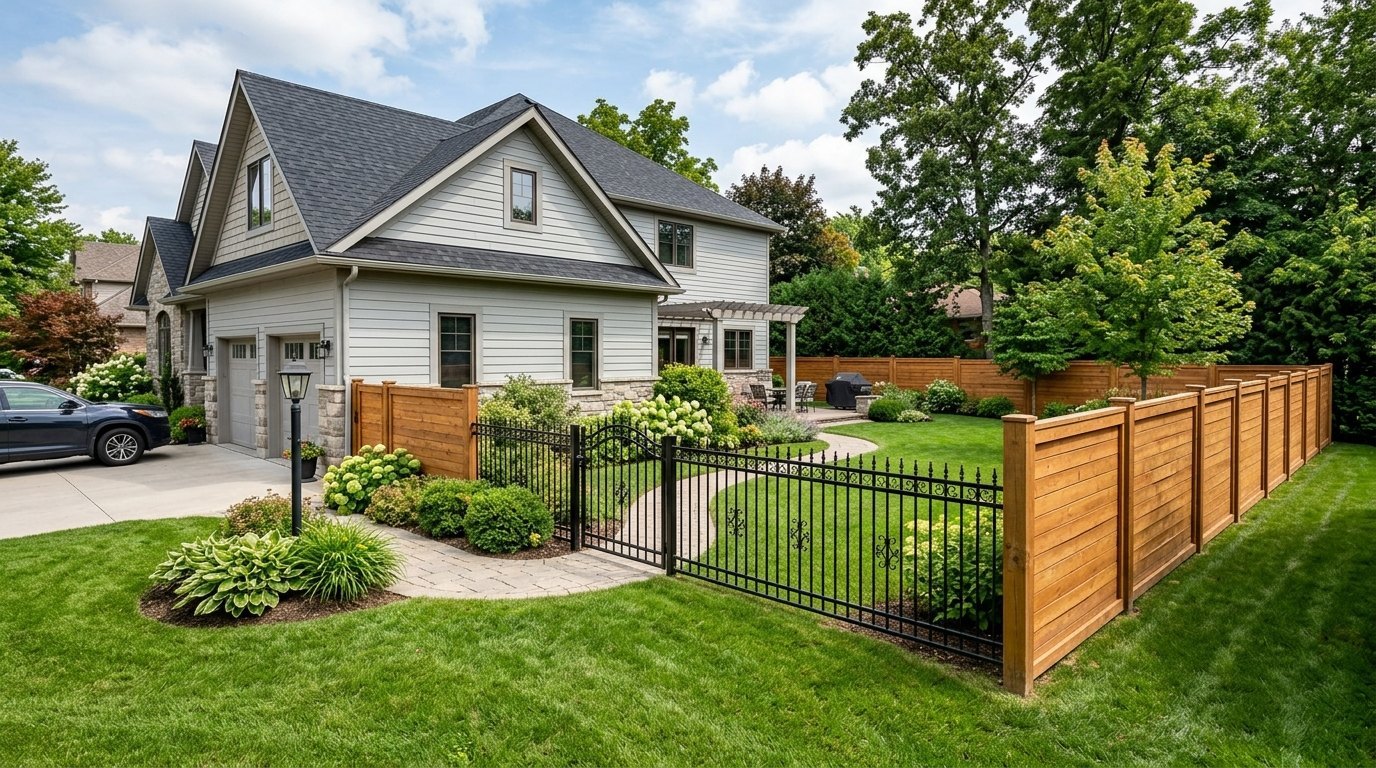
How to choose the right fence for your home starts with understanding your property line, access needs, privacy goals, yard appearance, local rules, and the conditions that can affect how long the fence lasts.
Here’s how to actually choose, step by step.
Check Zoning and HOA Rules Before You Shop Materials
Every city sets its own fence code. Most residential zones cap front yard fences at 3 to 4 feet and backyard fences at 6 to 8 feet. Corner lots often have stricter setback rules because of sightline requirements at intersections, so reviewing practical corner lot landscaping ideas can help you plan the fence alongside the rest of the yard.
If you’re in an HOA, pull the covenant before you fall in love with a style. Many HOAs restrict chain link entirely and require specific colors or materials for anything visible from the street. Skipping this step is the single most common reason homeowners end up tearing down a fence they just paid for.
Call your local building department or check their permit portal before starting, just as careful home renovation planning can help homeowners identify permits, inspections, materials, and project requirements before work begins.
Match the Material to the Job

Fencing material isn’t a style choice first. It’s a function choice first, style second.
- Wood works best for privacy and curb appeal. Cedar and redwood resist rot naturally. Pine needs pressure treatment or it warps within a few seasons.
- Vinyl costs more upfront but needs almost no maintenance. It won’t rot, splinter, or need repainting.
- Aluminum and wrought iron suit pool enclosures and front yards where you want visibility, not privacy. They’re also the most durable against weather.
- Chain link is the cheapest option and the fastest to install. It’s a poor fit for privacy or curb appeal, but it’s hard to beat for containment on a budget.
If you’re not sure which material fits your climate and soil type, a local installer like FencePro can walk the property and flag issues before you commit, things like drainage patterns or expansive clay soil that will shift posts over time.
Factor In Climate and Soil Conditions
Soil composition determines how deep and how wide your posts need to be set. Sandy soil drains fast but holds posts poorly, so it usually needs concrete footings. Clay soil expands and contracts with moisture, which can heave posts out of alignment over a few winters.
Coastal areas bring salt exposure, which corrodes untreated metal fasteners within a couple of years. If you live near the coast, ask specifically for stainless steel or galvanized hardware.
Wind load matters too. A solid privacy fence acts like a sail in high wind. Areas with frequent storms often do better with a semi-privacy design that has small gaps, letting wind pass through instead of pushing the whole panel over.
Plan for the Real Costs, Not Just the Panel Price
Most quotes only show material cost per linear foot. That number hides labor, post depth, gate hardware, and site prep.
Professionally installed fences run about $15 to $25 per linear foot on average, according to home services site Angi, cited by NerdWallet. A standard 150-foot backyard project lands most homeowners in the $2,000 to $5,000 range once labor is included.
Budget for these line items separately:
- Materials and posts
- Labor and equipment rental
- Permit fees, if your city requires one
- Gate hardware and latches
- Old fence removal and disposal
Skipping the removal line item is the most common budget miss. Tearing out an old fence can add several hundred dollars to a project that otherwise looked affordable.
Decide Between DIY and a Professional Crew
DIY installation works fine for short runs of chain link or pre-fab vinyl panels on flat, easy-to-dig soil. Anything beyond 100 feet, on sloped ground, or requiring concrete footings usually calls for a crew.
A professional installer also knows your local frost line, which determines how deep posts need to go so they don’t heave in winter. Getting that depth wrong is invisible until the ground freezes and your fence starts leaning.
Final Check Before You Sign a Contract
Before hiring anyone, confirm three things: a locate service has marked your utility lines, the installer carries liability insurance, and the quote lists post depth and spacing in writing. A fence that’s built to spec on paper is far more likely to still be standing straight in ten years.

