
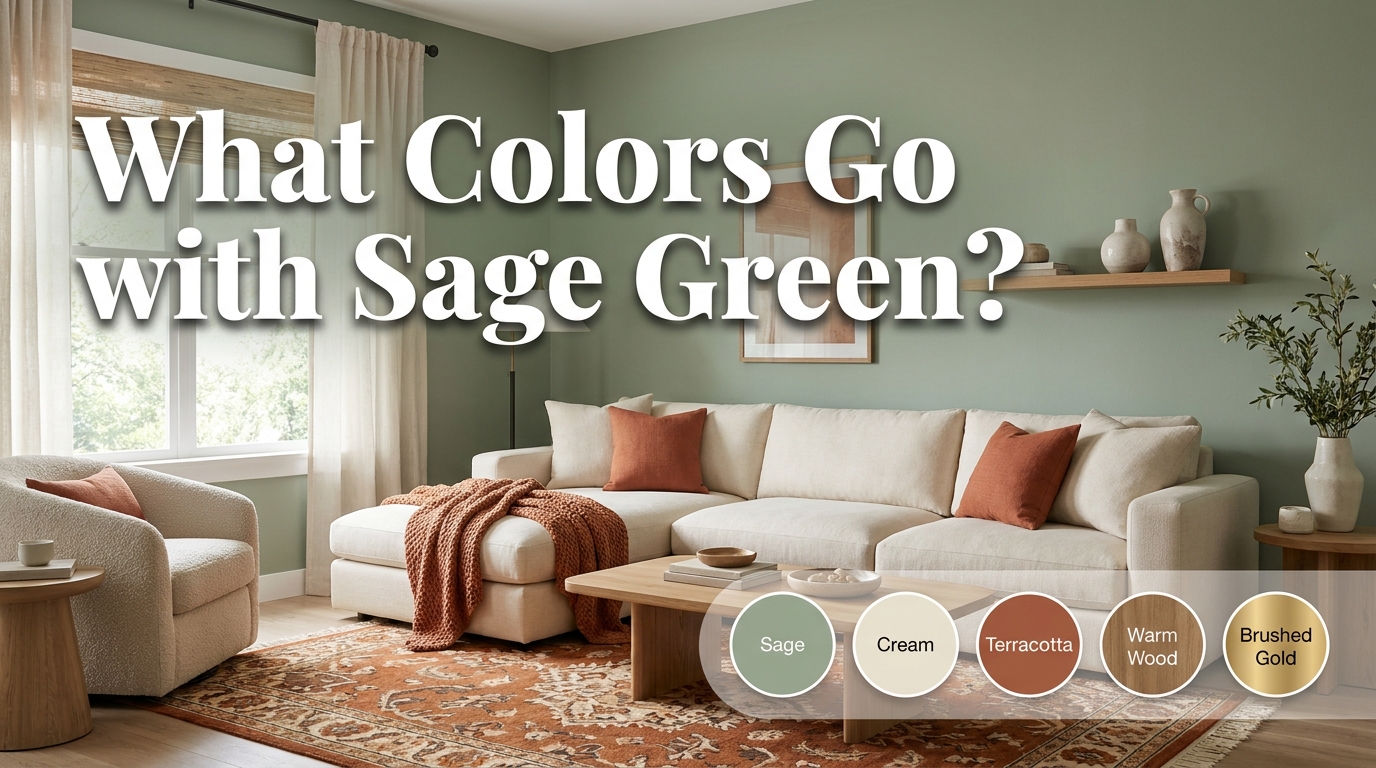
You’ve fallen in love with sage green — and honestly, who could blame you?
This soft, dusty, gray-tinged green has quietly taken over the design world, showing up on everything from kitchen cabinets and bedroom walls to sofas, throw pillows, and wedding tablescapes. It’s the color of silver-leafed herbs baking in the sun, and it carries that same effortless, grounded quality into any room it enters.
But here’s the question that stops most people in their tracks: what colors actually go with sage green?
Get the pairing right, and sage green feels like a breath of fresh air — layered, calm, and beautifully curated. Get it wrong, and even the most beautiful shade of sage can look muddy, cold, or just oddly “off.”
This guide is built to take that guesswork out of the equation entirely. Whether you’re designing a bedroom, living room, kitchen, or bathroom — or even picking out an outfit — you’ll find every key color combination covered here, explained in plain language with real-world examples and tips straight from professional designers.
Let’s start from the beginning.
What Exactly Is Sage Green?
Before pairing sage green with anything, it helps to really understand what you’re working with.
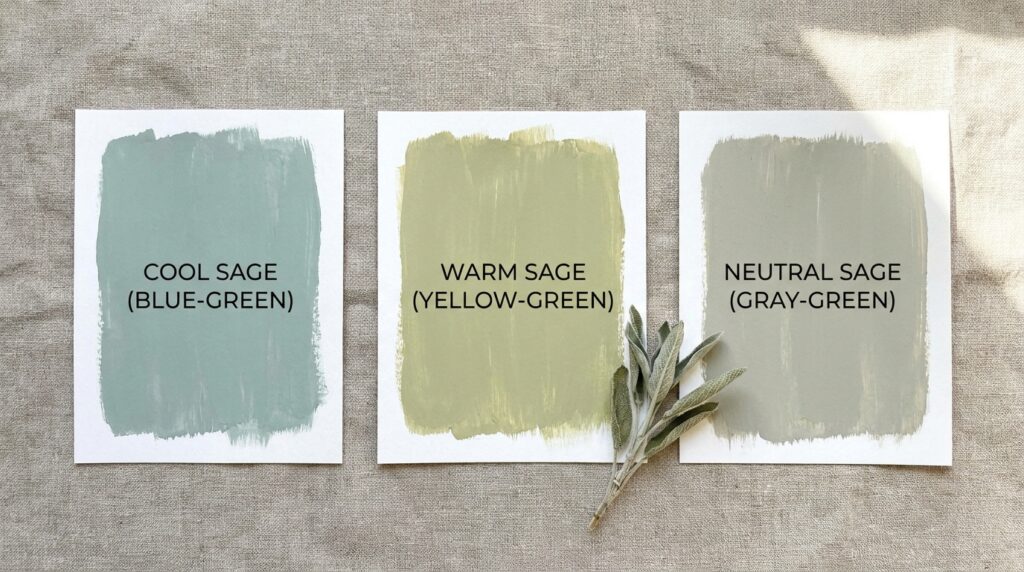
Sage green is a muted, grayish-green inspired by the color of dried sage herb leaves. It sits in a unique spot on the color wheel — it’s green, yes, but it leans heavily toward gray and sometimes toward blue or yellow depending on the specific shade. That muted quality is precisely what makes it so versatile and so beloved.
According to color experts at HGTV, sage green is a “delicate green that works as a great alternative to more typical neutrals” — pairing well with a wide range of decorating styles, wood tones, and metal finishes.
Because sage has these neutral-like tendencies, designers have increasingly begun calling it “the new neutral.” Southern Living designers note that sage green “blends with both warm and cool tones and effortlessly enhances any space” — which is exactly why color pairing works so broadly for this hue.
The Undertones Matter
Not all sage greens are equal. Some lean:
- Blue-green (cool, spa-like, airy)
- Yellow-green (warmer, more botanical, slightly retro)
- Gray-green (ultra-neutral, sophisticated, modern)
Always identify your sage’s undertone before choosing companion colors. A blue-toned sage pairs differently than a yellow-toned sage.
What Colors Go with Sage Green? (The Complete List)
Now for the main event. Below are the best colors to pair with sage green, organized from the safest and most versatile choices to the bolder, more dramatic ones.
1. Warm White and Cream
The Safest, Most Versatile Pairing
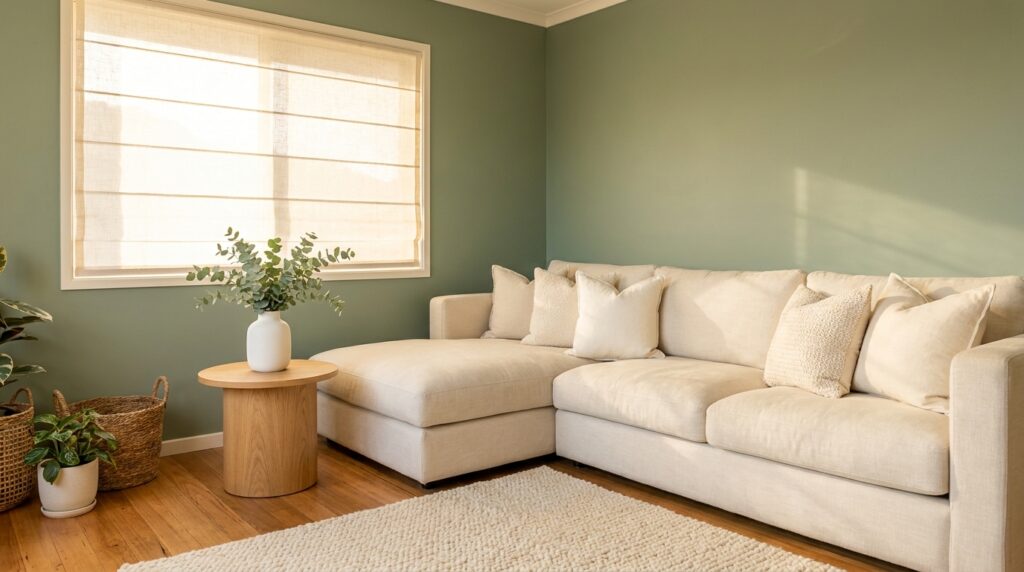
If you’re unsure where to start, start here. Warm white and cream tones are the most forgiving and universally flattering companions for sage green.
This combination works because cream softens the cooler, grayer side of sage without clashing with it. As Sampleboard’s color experts explain, cream “has a soft, mellow quality that complements the muted vibrancy of sage green in a subtle, natural way.”
Where it works best:
- Sage green walls with cream or linen curtains
- Sage kitchen cabinets against cream or off-white walls
- Sage green bedding layered with ivory pillows
- Sage green exterior siding with white trim
Pro Tip: Avoid bright, stark white with sage green — it can make sage look dirty by comparison. Stick to warm whites with yellow or beige undertones (like Benjamin Moore’s White Dove or Sherwin-Williams Alabaster).
Mood it creates: Clean, serene, airy, effortlessly timeless.
2. Beige and Warm Neutrals
Grounded, Nature-Inspired Comfort
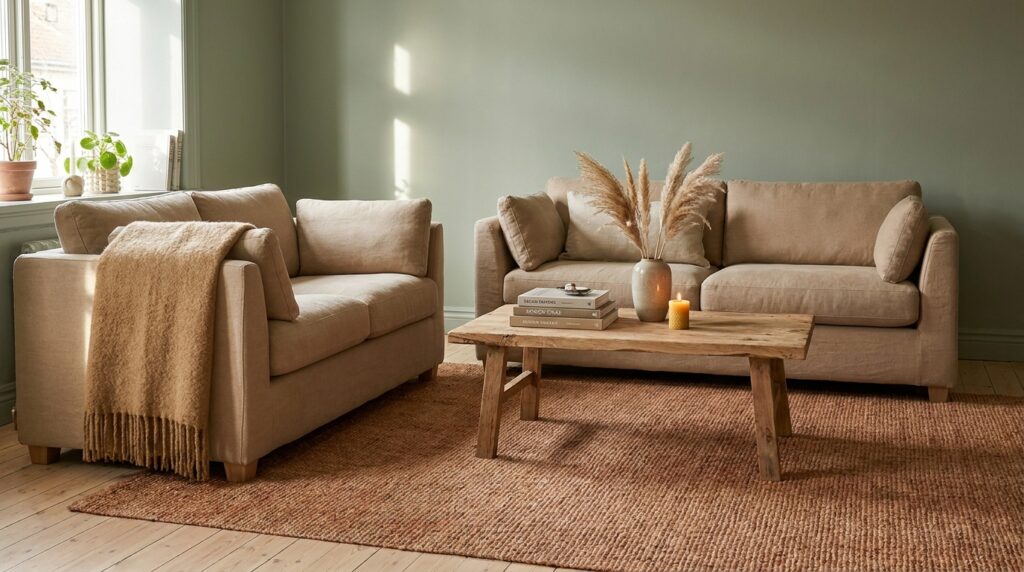
Beige takes the cream pairing one step warmer, adding a sandy, earthy quality that grounds sage green in a very natural way. Think of the palette of the great outdoors — green foliage over sandy soil — and you’ve essentially got this color combination.
Sampleboard notes that beige “lightens and brightens sage green without overpowering it. Meanwhile, sage green adds depth and visual interest to soft beige backdrops.”
And if you want to stay ahead of the trends, this pairing is especially well-timed: Pantone’s 2025 Color of the Year is Mocha Mousse, a warm brown-beige that pairs naturally with sage green. That earthy, organic palette is defining interior design right now.
Where it works best:
- Sage green walls in a living room with beige or camel-colored sofas
- Sage green throw pillows on a beige or tan sofa
- Sage green tile accents against beige stone or porcelain
- Sage cabinetry in a kitchen with warm beige countertops
Mood it creates: Grounded, organic, cozy, nature-inspired.
3. Warm Brown and Terracotta
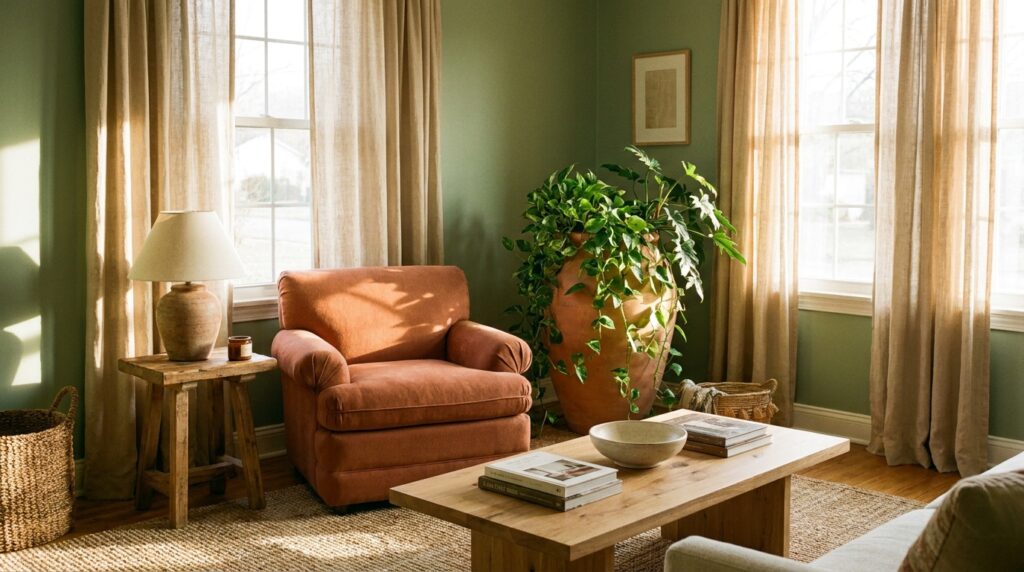
The Earthy, Botanical Combination
Brown and sage green is one of the most sophisticated pairings in interior design right now — and it has been for several years running.
As Woman & Home’s design experts note, brown is one of the biggest interior color trends, and “being a colour derived from nature, brown pairs perfectly with the natural appeal of sage green, creating a soothing colour scheme that feels like a country landscape.”
Terracotta takes this pairing up a notch. Sage green and terracotta are both earth-derived tones, and together they create a palette that feels simultaneously rustic and contemporary — very much at home in the current wave of biophilic design (the design philosophy of bringing natural environments into interiors).
Where it works best:
- Sage green walls with terracotta ceramic vases or pots
- Sage sofas with rust or terracotta throw pillows and blankets
- Sage green and terracotta kitchen tiles in a checkerboard pattern
- Brown leather furniture against sage green walls
- Sage green walls with warm wood furniture (walnut, oak, teak)
Mood it creates: Warm, botanical, grounded, boho-earthy.
4. Gray (Light to Charcoal)
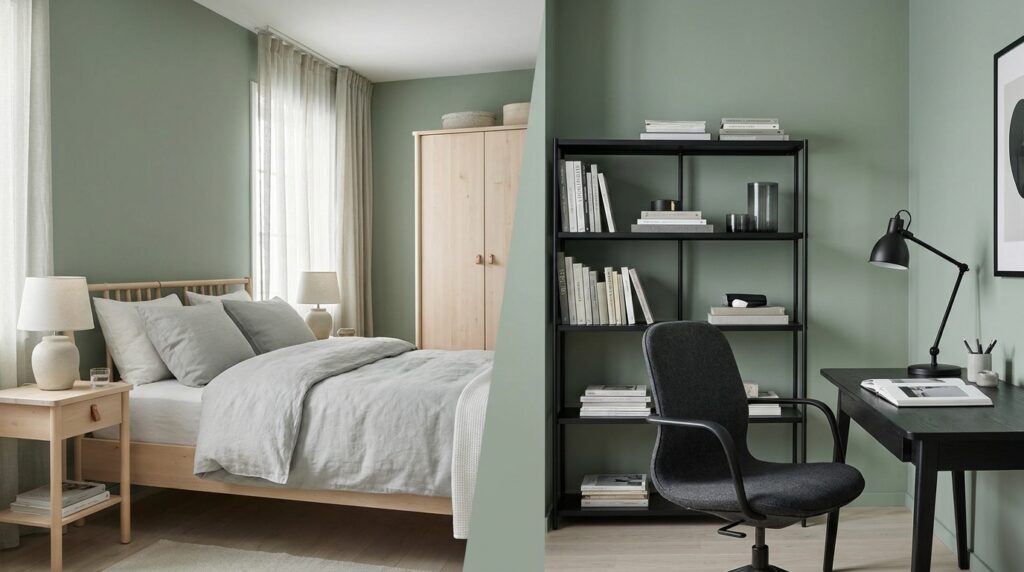
The Sleek, Contemporary Pairing
Gray and sage green is one of those combinations that just feels inherently sophisticated. The two colors share a similar muted quality — neither is shouting for attention — and together they create a space that feels pulled together and quietly modern.
Furn.com’s design guide recommends going with “smokey charcoal grey for a clean modern look” in living rooms. Meanwhile, light gray offers a softer, more airy feel that works beautifully in bedrooms.
According to NV Gallery’s color experts, “light gray adds a touch of softness and luminosity, while dark gray adds character and depth to the space.”
Where it works best:
| Gray Shade | Best Application | Mood |
|---|---|---|
| Light gray | Bedroom walls with sage accents | Soft, airy, serene |
| Mid gray | Living room furniture with sage walls | Contemporary, calm |
| Charcoal | Kitchen or bathroom feature wall | Dramatic, sophisticated |
| Warm greige | Bedroom or lounge overall palette | Cozy, neutral-rich |
Mood it creates: Sophisticated, contemporary, calm, clean.
5. White (True White and Off-White)
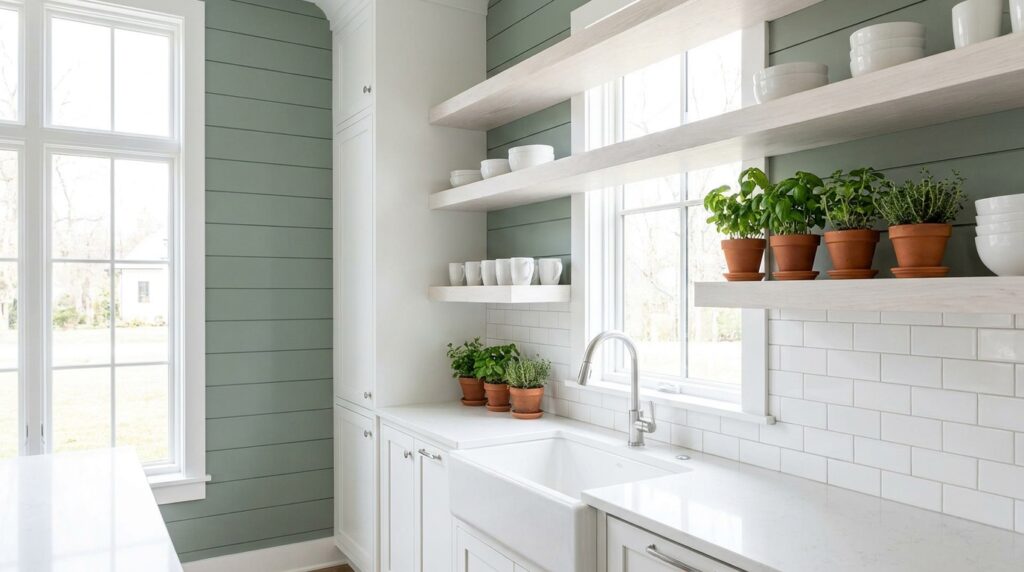
Bold Contrast with a Clean Finish
When used with intention, true white can make sage green pop rather than fade. This works particularly well in kitchens and bathrooms, where crisp contrast is often desirable.
The key is in how you use it. Rather than painting all surfaces white and sage green together, think of white as a structural color — white trim, white cabinetry handles, white tiling — with sage as the statement.
Sage green kitchen cabinets against white subway tiles and white shiplap walls is a classic for a reason: the contrast is fresh, clean, and timeless.
Pro Tip from Designers: According to interior design experts at Dowsing & Reynolds, combining sage green walls with neutral furnishings and accessories creates “a serene, modern look.” Incorporate natural materials like wood and stone to enhance the neutral aesthetic further.
Mood it creates: Fresh, crisp, modern, Scandinavian-inspired.
6. Navy and Dusty Blue
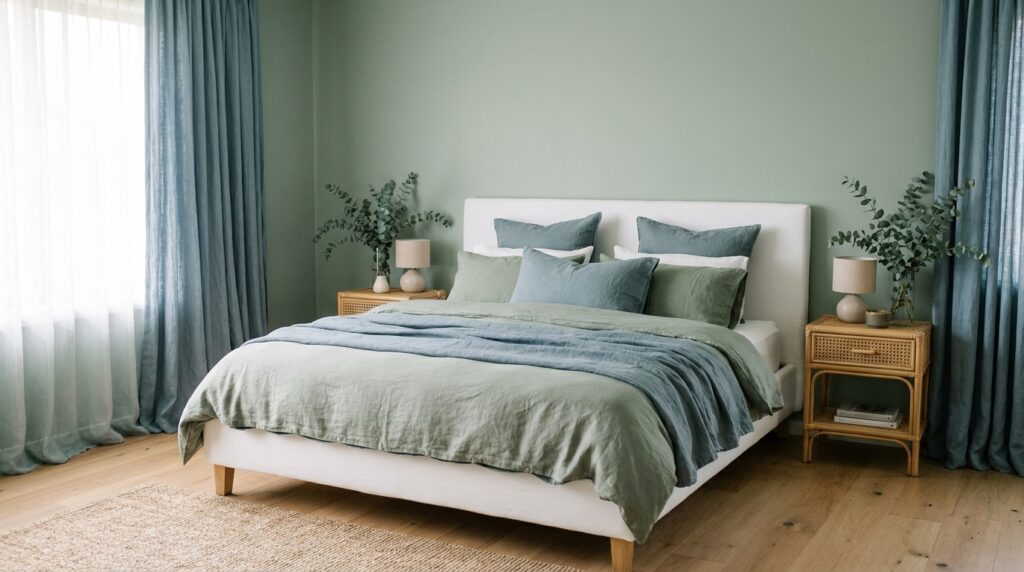
Rich, Moody Contrast
Here’s where things get a little more interesting. Blue and sage green are neighbors on the color wheel, which means they share a natural harmony — but they create different effects depending on how blue you go.
Dusty or powder blue creates a soft, almost coastal feel alongside sage green. This is one of the best combinations for bedrooms and home offices, according to Furn.com, as it “evokes a natural feel of clear skies and lush foliage… particularly good for bedrooms and home offices where tranquil vibes are the top priority.”
Navy blue creates richer contrast. Use navy as an accent wall behind a sage green sofa, or in navy-and-sage patterned throw pillows, and you’ll get a room that feels elegant and layered.
Where it works best:
- Sage green walls with dusty blue linen curtains
- Sage sofas with powder blue and sage green throw pillows
- Sage green and navy blue tiled bathroom
- Navy-painted accent wall behind a sage green headboard
Mood it creates: Coastal, tranquil, serene, layered.
7. Mustard Yellow and Gold
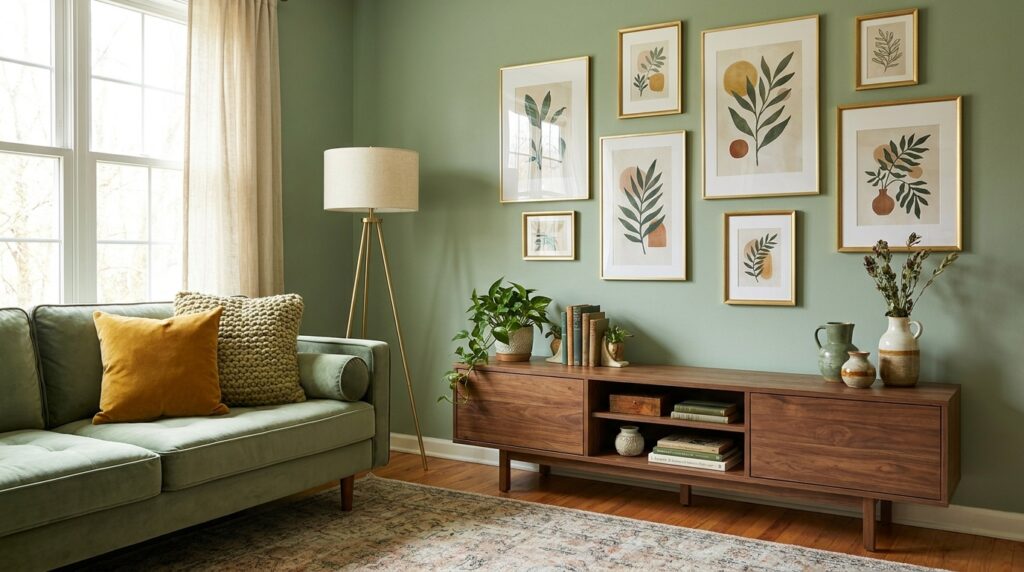
Warm Energy Against Cool Green
Mustard yellow is the bold choice in the sage green palette — and it pays off beautifully when done right.
Yellow and green are analogous colors (neighbors on the color wheel), but mustard’s warm, almost ochre quality adds a richness that soft sage often needs to feel livelier. Together, they create a palette that reads as warm, vintage, and organic.
Furn.com’s design team recommends “splashes of mustard yellow for added energy and vibrancy” in sage green living rooms.
Gold takes this a step further into luxurious territory. Gold hardware (cabinet pulls, light fixtures, mirror frames) against sage green cabinetry or walls is a combination you’ll see in virtually every high-end interior design magazine right now.
Where it works best:
- Sage green sofa with mustard yellow throw pillows
- Sage green kitchen cabinets with brushed gold hardware
- Sage green walls with a gold-framed oversized mirror
- Sage green and mustard yellow botanical print artwork
Mood it creates: Warm, energetic, vintage-botanical, luxe.
8. Blush Pink and Dusty Rose
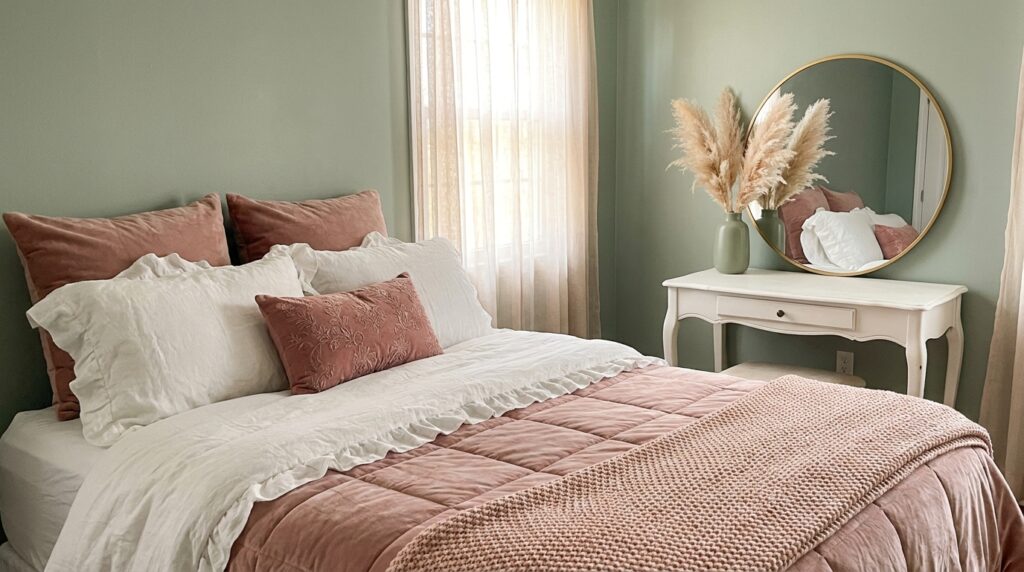
Soft, Romantic, and Modern
Sage green and blush pink is arguably one of the most photographed color combinations of the past five years — and for good reason. It’s soft, modern, and utterly elegant.
These two colors work because they’re both muted, grayish versions of their base hues — which means they share a similar tonal quality. Neither overpowers the other.
NV Gallery notes that “powder pink and sage green form a soft, soothing combination, ideal for creating a relaxing, feminine ambience” — particularly well-suited to bedrooms, bathrooms, and living rooms.
This combination works especially well in spaces designed with a modern romantic or cottagecore aesthetic.
Where it works best:
- Sage green walls with blush pink bedding and rose-colored throw pillows
- Sage green bathroom tiles with dusty rose towels and accents
- Sage green dining chairs with blush pink floral centerpieces
- Sage green bridal or event decor with dusty rose flowers
Mood it creates: Romantic, soft, modern-feminine, tranquil.
9. Black and Charcoal (Bold Contrast)
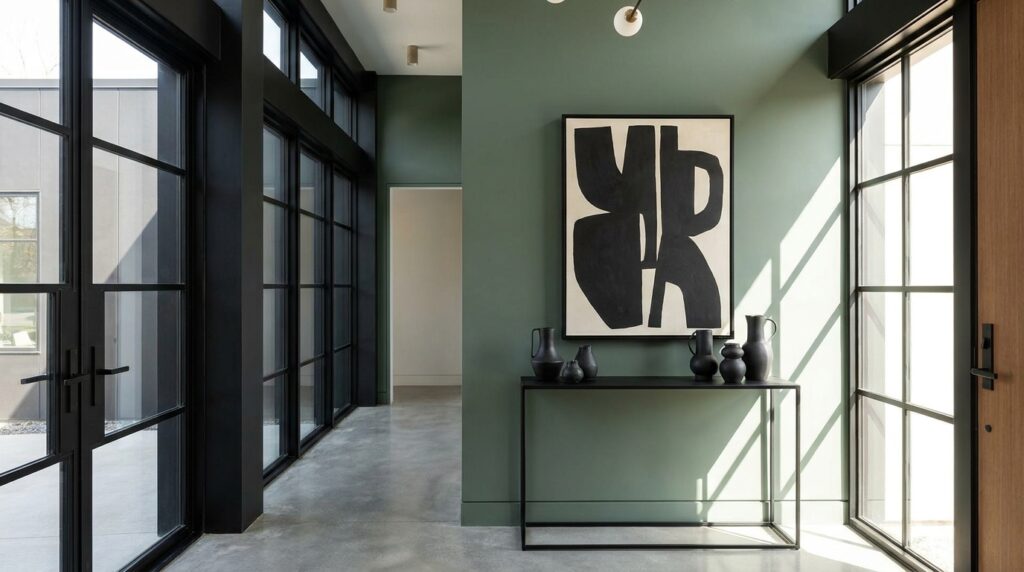
Graphic, Dramatic Edge
Want something more striking? Add black.
Black against sage green creates a pairing that’s unexpected and visually powerful. Sage green softens black’s severity while black grounds sage green and prevents it from feeling too passive.
Love Chic Living’s design guide confirms that “sage green looks stunning when paired with a monochromatic scheme of black and white. This combination creates an elegant, sophisticated, and modern aesthetic, suitable for spaces like hallways or kitchens.”
Where it works best:
- Black window frames or doors against sage green exterior walls
- Sage green kitchen with matte black hardware and fixtures
- Sage green walls with black-framed gallery wall artwork
- Sage green sofa with a black iron side table and black throw
Mood it creates: Graphic, bold, modern, gallery-like.
10. Terracotta and Rust (Deeper Tones)
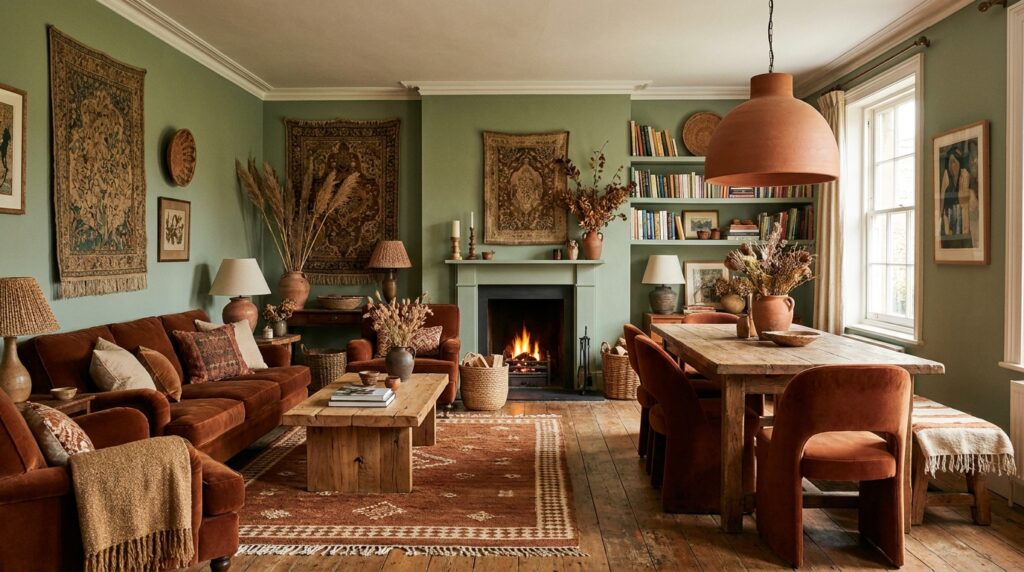
The Maximalist Earthy Palette
We touched on terracotta earlier, but it deserves its own deeper treatment here, particularly in its deeper rust and sienna variations.
NV Gallery’s design experts describe sienna as creating “a warm, natural ambience” when paired with sage green — ideal in a living or dining room where natural materials like wood and stone also feature. This deeper combination also suits rustic or bohemian design styles beautifully.
Where it works best:
- Deep rust-colored rug in a sage green living room
- Sage green and sienna terracotta-patterned tile
- Sage green walls with a rust-colored velvet sofa
- Earthy sage and rust color scheme in a dining room
Mood it creates: Boho, rustic, deeply earthy, maximalist-natural.
11. Lavender and Lilac
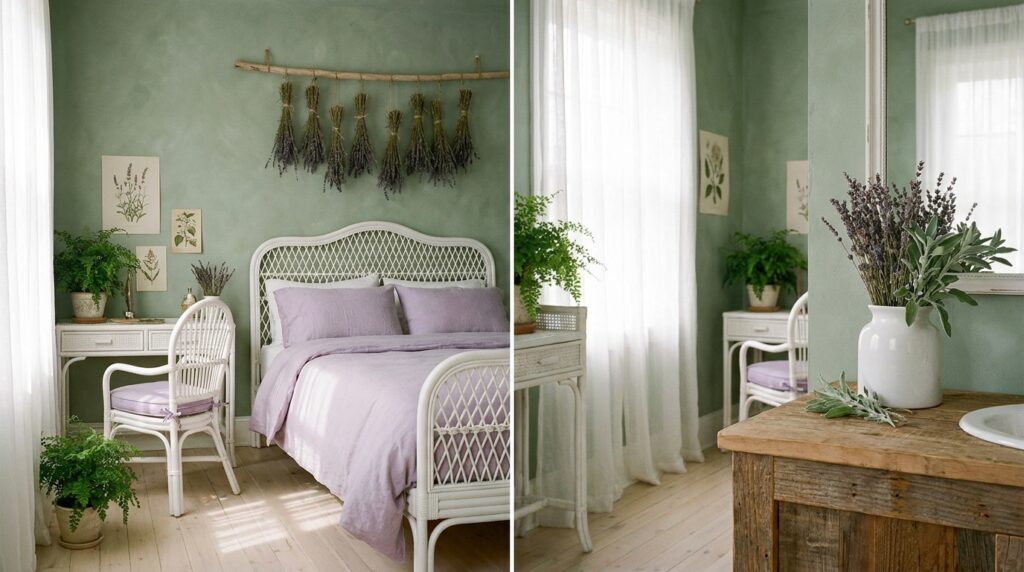
The Unexpected, Sophisticated Contrast
Purple and green sit opposite each other on the color wheel, making them complementary colors — meaning they create natural contrast and visual energy when paired.
Sage green and lavender is a particularly elegant version of this contrast because both colors are muted, keeping the combination feeling soft rather than jarring. Love Chic Living notes that “lilac or purple shades are excellent choices for creating a striking contrast in a sage green color scheme.”
Where it works best:
- Sage green walls with lavender accent pillows and candles
- Sage green bedding layered with lilac sheets or a duvet
- Sage green and lavender floral wallpaper in a bedroom or powder room
- Sage green and dried lavender in a bathroom or wellness space
Mood it creates: Botanical, whimsical, sophisticated, spa-like.
12. Coral and Blush Orange
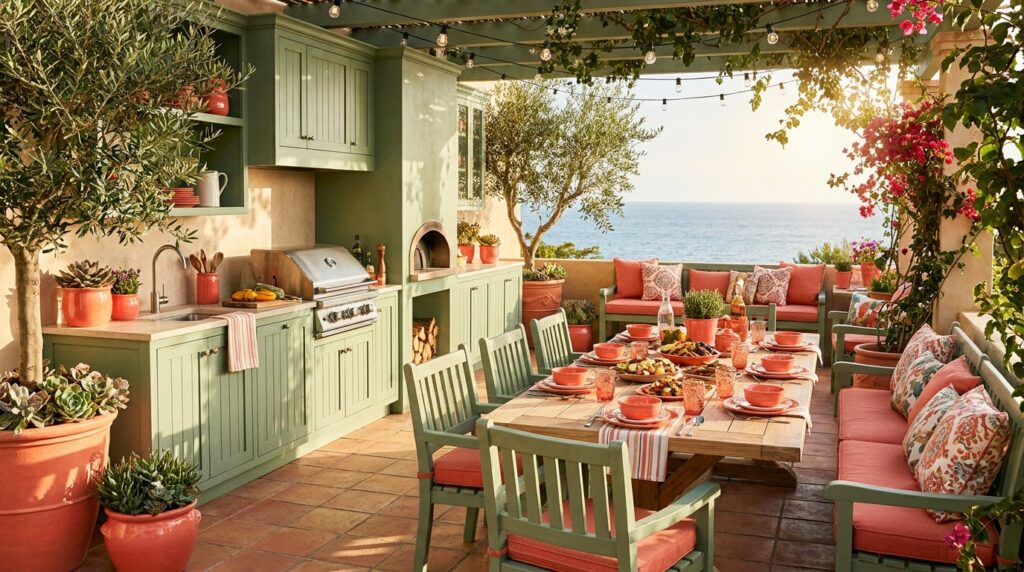
Playful, Warm Contrast
Coral is the more playful sibling of terracotta — brighter, cheerier, and more obviously vibrant. Against the cool-to-neutral quality of sage green, coral creates a pairing full of energy and warmth.
NV Gallery recommends using coral for accent elements: cushions, vases, or artwork — especially in outdoor spaces or social rooms where the combination “creates a welcoming, festive environment, perfect for relaxing with family or friends.”
Where it works best:
- Sage green patio furniture with coral outdoor cushions
- Sage kitchen with coral ceramic dishware or accessories
- Sage green and coral-patterned textile artwork
Mood it creates: Festive, warm, lively, Mediterranean-inspired.
Color Combinations by Room: Quick-Reference Guide
This section gives you a practical, at-a-glance reference for choosing colors based on the specific room you’re designing.
Sage Green Living Room Colors
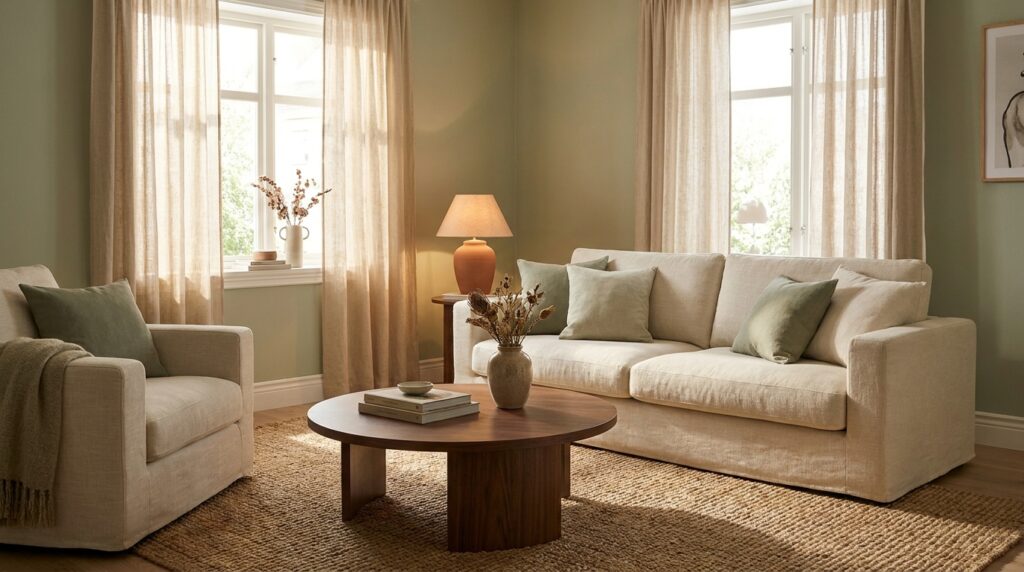
The living room needs to balance comfort and energy — it should feel inviting without being either too sleepy or too intense.
Best combinations:
- Sage green walls + cream sofa + warm wood accents (classic, versatile)
- Sage green sofa + beige walls + mustard yellow pillows (warm, layered)
- Sage green walls + charcoal grey furniture + black iron accents (contemporary)
- Sage green + terracotta + natural rattan (earthy boho)
Sage Green Bedroom Colors
The bedroom calls for calm. Sage green is already a deeply soothing color choice — your pairings should enhance that quality rather than fight it.
Best combinations:
- Sage green walls + white bedding + blush pink pillows (romantic, soft)
- Sage green + dusty blue + linen textures (coastal, tranquil)
- Sage green + cream + warm wood (grounded, peaceful)
- Sage green + lavender + natural rattan (botanical, whimsical)
Designer Tip: HGTV’s color experts note that “the soft, grayish-green color of sage leaves is an ideal choice when designing a bedroom. When mixed with tans, browns, and blacks, sage green takes on a darker, earthier tone.” Layer different sage tones with earthy accents for a cocoon-like effect.
Sage Green Kitchen Colors
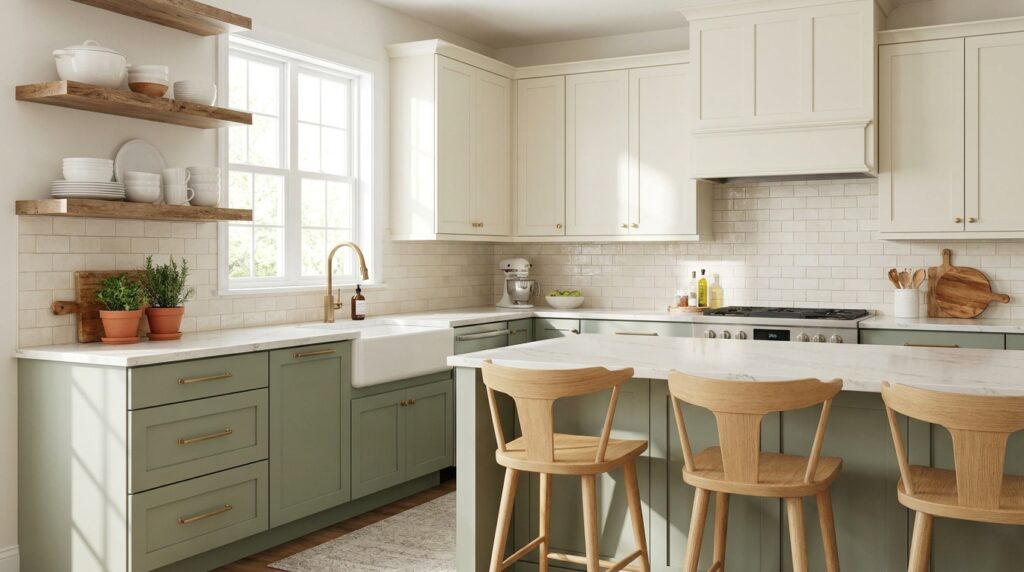
Kitchens benefit from pairings that feel fresh and clean without being sterile.
Best combinations:
- Sage green cabinets + white subway tile + brushed gold hardware (classic-modern)
- Sage green + cream + warm wood shelving (organic, Shaker-style)
- Sage green + black + white marble (contemporary-bold)
- Sage green + terracotta tile floor + warm wood counters (rustic farmhouse)
Sage Green Bathroom Colors
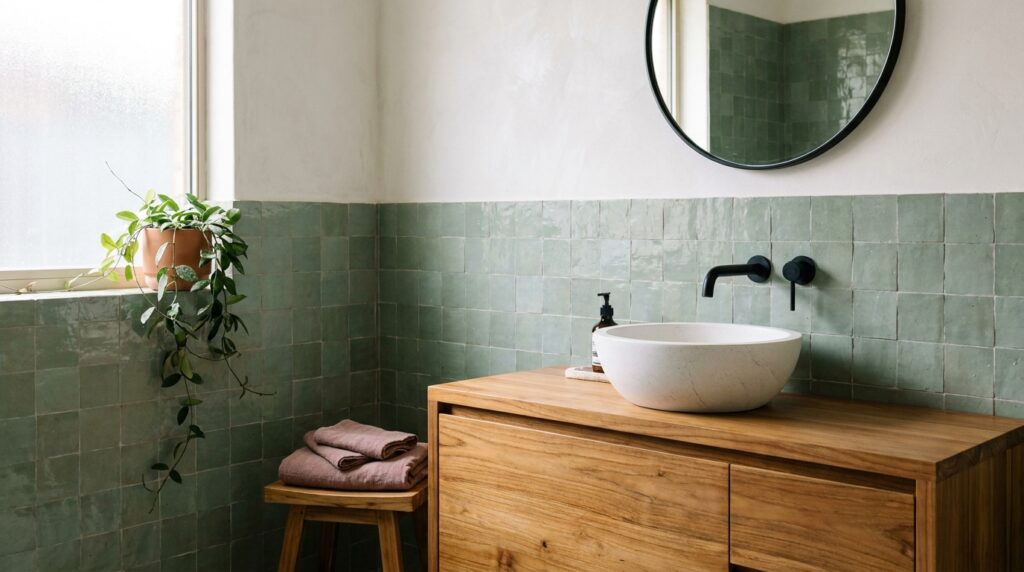
Bathrooms benefit from freshness and serenity — and sage green excels here when supported by the right companions.
Best combinations:
- Sage green tile + white grout + warm wood vanity (spa-like)
- Sage green walls + blush pink towels and accessories (soft, modern)
- Sage green + matte black fixtures + white marble (luxe contrast)
- Sage green + dusty blue + natural stone (coastal-organic)
What Colors to Avoid with Sage Green
Knowing what not to pair with sage green is just as valuable as knowing what works.
Avoid these combinations:
- Bright, vivid primary colors (bright red, electric blue, neon yellow): These clash with sage’s muted, quiet quality and create visual chaos.
- Cool, icy whites (Bright White with blue undertones): These make sage green look dull, dingy, and cold.
- Hot pink or magenta: Too saturated and too contrasting in undertone — this combination will feel jarring.
- Olive or army green combinations: When two very different greens compete in the same space, neither wins. Layer sage with completely different hues instead.
- Purple-red wine tones (maroon/burgundy): Typically too heavy and too cool to complement sage green’s delicate personality.
The overarching rule: avoid colors with high saturation next to sage green. Sage is a quiet, muted color — it needs partners that share its restraint or complement it without overwhelming it.
Sage Green with Different Materials and Finishes
Color isn’t the only thing that shapes how sage green reads in a space. Materials and finishes matter just as much.
Wood Tones
- Light wood (pine, ash, blonde oak): Brightens sage green and gives a Scandinavian or Japandi feel.
- Warm mid-tone wood (walnut, oak, teak): The most universally flattering partner for sage green — rich, natural, and grounded.
- Dark wood (ebony, dark walnut, mahogany): Creates drama and depth; best used in small doses against sage walls.
Metal Finishes
| Metal Finish | Effect with Sage Green |
|---|---|
| Brushed gold / champagne | Warm, luxurious, most popular pairing |
| Brass | Vintage-warm, botanical aesthetic |
| Matte black | Bold, modern, graphic contrast |
| Brushed nickel | Cool, contemporary, understated |
| Copper | Earthy warmth, rustic-modern |
Natural Textures
Sage green thrives alongside natural textures: linen, rattan, jute, cotton canvas, raw wool, terracotta ceramics, and natural stone. These materials reinforce the color’s earthy, biophilic quality and prevent spaces from feeling overly polished or cold.
Expert Tips: How Interior Designers Use Sage Green
Here’s what professional designers consistently recommend when working with sage green:
1. Start smaller if you’re unsure. Interior designer Rebecca Merritt, quoted in Southern Living, recommends starting with built-ins, cabinetry, or even a single accent wall rather than committing to four walls of sage right away. “It feels fresh without overwhelming a space,” she says.
2. Identify your sage’s undertone before buying paint. Test large paint swatches in your actual lighting — not just the store display. A blue-undertone sage looks entirely different under warm incandescent light versus cool natural daylight.
3. Layer, don’t match. Don’t use a single shade of sage everywhere. Instead, layer different values of the same color — slightly lighter sage on trim, deeper sage on cabinets, sage accessories — for a sophisticated, collected look.
4. Use sage as a genuine neutral. Michaela Quinton, director of design at Copper Sky Design + Remodel, advises treating sage as a soft neutral. “When applied to certain design elements, it can really make a statement. Sage blends with both warm and cool tones and effortlessly enhances any space.”
5. Don’t overlook ceilings. A sage green ceiling — often called the “fifth wall” — can transform a white room into something much more intentional and interesting without overwhelming the space.
6. Match metal finishes throughout the room. Whatever metal finish you choose as your primary (gold, black, nickel), keep it consistent across hardware, light fixtures, and mirrors for a cohesive look.
Best Sage Green Paint Shades (and What to Pair with Each)
If you’re still choosing your specific sage green, here’s a breakdown of some of the most well-regarded shades and their ideal companions:
| Paint Shade | Brand | Undertone | Best Paired With |
|---|---|---|---|
| Quietude | HGTV Home by Sherwin-Williams (2025 Color of the Year) | Soft blue-green | Cream, beige, light oak |
| Rosemary | Farrow & Ball | Warm gray-green | Cream, warm white, terracotta |
| Mizzle | Farrow & Ball | Neutral gray-green | Off-white, charcoal, warm wood |
| Pale Eucalyptus | Sherwin-Williams | Cool blue-green | White, dusty blue, brushed nickel |
| Sage | Benjamin Moore | Warm gray-green | Cream, gold, warm brown |
| Dried Thyme | Sherwin-Williams | Warm, slightly yellow-green | Warm white, rust, rattan |
Note: Always sample paints in your specific room’s light before committing. Benjamin Moore’s paint experts recommend viewing swatches in both natural daylight and your home’s artificial lighting at different times of day.
Is Sage Green Still in Style?
This is a fair question to ask — sage green has been everywhere for several years now. Is it past its peak?
The short answer: not quite, but it’s evolving.
Homes & Gardens reports that while sage green dominated the mid-2020s, designers in 2024 and 2025 are moving toward “much more vibrant and warm green color trends, emphasizing a shift toward personality-led spaces.” People are experimenting with richer, deeper, and more saturated greens.
However, designers quoted in Southern Living still firmly recommend sage green in 2025 — particularly for its function as a genuine neutral and its connection to the ongoing biophilic design movement.
The consensus: sage green is in its mature phase. It’s no longer the hot new trend, but it’s settling into the role of a design classic — much like navy blue, warm gray, or terracotta before it. Used thoughtfully with the right color pairings, sage green will look elegant and considered rather than dated.
FAQs: What Colors Go with Sage Green
1. What is the best color to pair with sage green walls?
The most versatile pairing for sage green walls is warm cream or off-white. It allows sage green to be the focal point of the room while providing a clean, bright backdrop. For something warmer, add beige or warm wood accents. For more drama, try charcoal gray or black as accent colors through furniture and fixtures.
2. Does gray go with sage green?
Yes — gray and sage green is one of the most popular color combinations in contemporary interior design. Light gray creates a soft, airy palette with sage, while charcoal gray creates bolder contrast. Choose warm-toned grays (greige) to keep the combination from feeling cold, especially in rooms with limited natural light.
3. What color furniture goes with sage green walls?
Furniture in cream, warm white, beige, warm brown, and natural wood all pair beautifully with sage green walls. For a bolder approach, deep navy blue or charcoal gray upholstered furniture adds sophisticated contrast. Avoid furniture in saturated, highly vivid colors — these will compete with sage rather than complement it.
4. Do sage green and navy blue go together?
Yes, sage green and navy blue work very well together, particularly in more traditionally styled or coastal-inspired spaces. Navy adds richness and depth to sage green’s quieter quality. Use navy as an accent — in throw pillows, artwork, a statement chair, or an accent wall — rather than as a dominant color alongside sage green.
5. Can you mix sage green with other greens?
You can, but it requires careful attention. Mixing sage green with other muted, earthy greens (like olive or eucalyptus) can work well in a tonal, nature-inspired palette. However, avoid mixing sage with vivid, bright, or warm greens — the contrast in saturation and temperature will look unintentional. A safe rule: if layering greens, stay within the same muted, gray-toned family.
Final Thoughts: Building Your Sage Green Palette
Sage green is one of those rare colors that manages to feel both timeless and completely current — and its versatility is the core reason it has stayed so relevant in interior design.
The key to getting it right lies in understanding your sage’s undertone, then choosing partner colors that either harmonize with it (creams, tans, dusty blues) or provide elegant contrast (charcoal, black, terracotta).
Here’s a simple framework to take with you:
- For a calm, serene room: Sage + cream + warm wood + linen textures
- For a warm, earthy room: Sage + terracotta + warm brown + rattan
- For a modern, contemporary room: Sage + gray + black + brushed gold
- For a romantic, soft room: Sage + blush pink + lavender + white
- For a bold, layered room: Sage + mustard yellow + deep rust + dark wood
Whatever direction you choose, the most important thing is to work with sage green’s quiet, grounded quality — not against it.
Ready to design your sage green space? Start by grabbing paint swatches of two or three candidate shades and testing them on your actual walls with the companion colors you’re considering. Let the light in your specific room — and your own instincts — guide you from there.

