
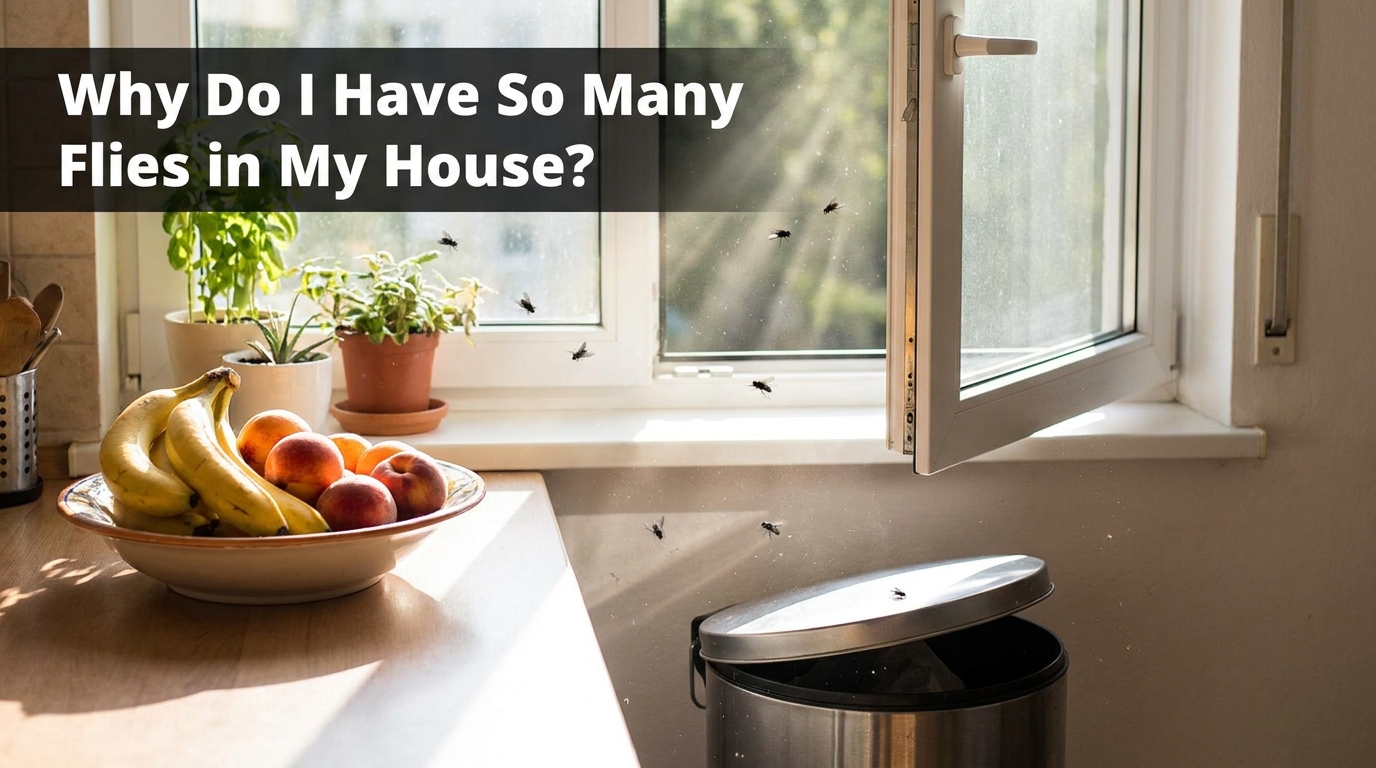
You walk into your kitchen in the morning and there they are — a dozen flies buzzing around the fruit bowl, landing on your countertops, and dive-bombing your coffee. Sound familiar?
If you’ve been wondering why do I have so many flies in my house, you’re not alone. This is one of the most common household pest complaints, especially in warmer months. And while a single fly might seem harmless, a sudden swarm is almost always a sign that something in or around your home is attracting them.
The good news? Flies don’t just show up at random. Once you understand what’s drawing them in, getting rid of them becomes a lot easier. This guide breaks down every major cause — and gives you practical, proven ways to fix it.
What Attracts Flies to Your Home?
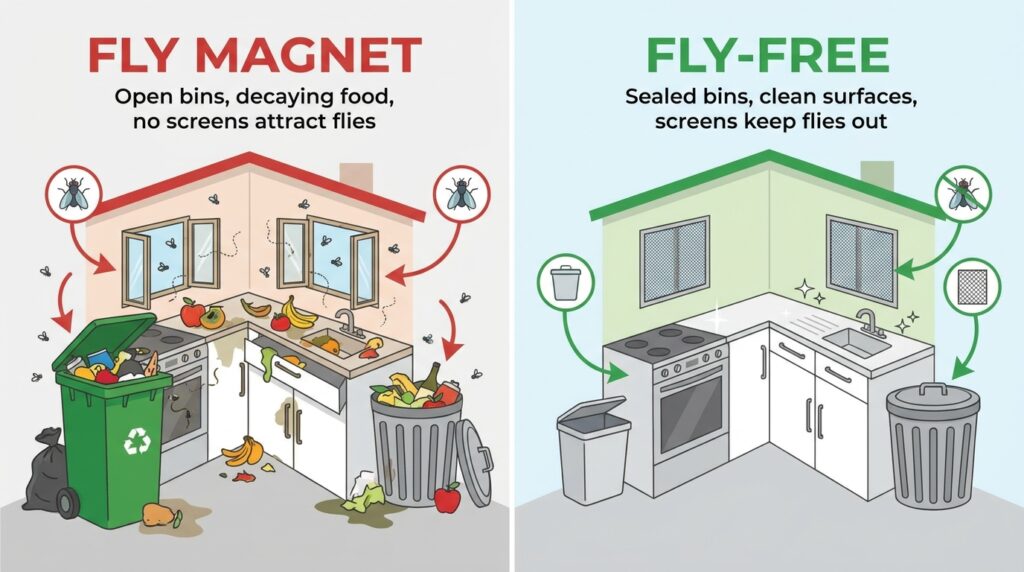
Flies are not picky. They’re attracted to anything that offers food, moisture, or a place to breed. Understanding their motivations is the first step to shutting the door on them — literally and figuratively.
The main attractants include:
- Food waste — uncovered trash, rotting produce, leftover food on counters
- Moisture — leaky pipes, damp mops, standing water
- Animal waste — pet feces in the yard or indoors
- Decomposing organic matter — compost bins, overripe fruit, drain buildup
- Warmth — flies seek warm spaces to breed and survive, especially in fall
According to the University of Florida’s Entomology Department, houseflies are capable of laying up to 500 eggs in a lifetime, and those eggs can hatch in as little as 12 to 24 hours under warm conditions. That’s why one fly can quickly turn into dozens.
The Most Common Reasons You Have So Many Flies
1. Garbage and Organic Waste
This is the number one cause. An open or overflowing trash can is a fly buffet. Even if the bin looks clean, the smell of organic residue on the inside lining is enough to attract flies from outside.
Flies have a highly sensitive sense of smell — research from Rockefeller University shows that some fly species can detect odor molecules at incredibly low concentrations, making your garbage practically a beacon.
Fix it: Use a trash can with a tight-fitting lid. Empty it daily during warmer months. Clean the interior of the bin with a disinfectant spray weekly.
2. Overripe or Rotting Fruit
Those tiny flies hovering around your fruit bowl? Those are likely fruit flies (Drosophila melanogaster), not houseflies. They’re drawn specifically to fermenting or decaying fruit and vegetables.
Fruit flies can breed inside your drains, in the soil of overwatered houseplants, and even inside empty wine or juice bottles.
Fix it: Store ripe fruit in the refrigerator. Rinse out bottles and cans before recycling. Pour boiling water or a baking soda and vinegar solution down drains weekly.
3. Dirty Drains and Pipes
Drain flies — also called moth flies — breed in the thin film of organic material that coats the inside of pipes. They’re small, fuzzy, and often mistaken for fruit flies.
If you’re seeing tiny flies near your bathroom sink, shower drain, or kitchen drain, this is likely the source. The Environmental Protection Agency (EPA) notes that drain flies are most common in drains that aren’t used frequently, where stagnant water allows buildup to accumulate.
Fix it: Use a drain brush or enzymatic drain cleaner like Bio-Clean to physically remove the organic film. Do this monthly as a preventive measure.
4. Pet Waste and Animal Food
If you have a dog or cat, their waste is a prime breeding site for flies — especially houseflies and blow flies. Even wet pet food left in a bowl for several hours becomes an attractant.
The American Kennel Club recommends scooping waste daily and keeping it covered or bagged until disposal.
Fix it: Scoop pet waste daily. Rinse and clean pet bowls after each meal. Don’t leave wet food sitting out for more than 30 minutes.
5. Open Windows and Doors Without Screens
If your windows and doors don’t have tight-fitting screens, or if your screens have tears or gaps, flies will simply walk right in. During summer, a 10-minute window left open without a screen can let in dozens of flies.
Fix it: Install or repair window and door screens. Use mesh screen tape for minor tears. Consider adding door sweeps to reduce gaps at the base of entry doors.
6. Compost Bins Left Open
Composting is great for the environment, but an uncovered or improperly managed compost bin is one of the fastest ways to end up with a fly infestation. Flies are especially attracted to nitrogen-rich materials like meat scraps, dairy, and coffee grounds.
Fix it: Always use a compost bin with a secure lid. The EPA’s composting guide recommends layering greens with browns (like cardboard or dry leaves) to reduce moisture and odor that attract flies.
7. Dead Animals in Walls or Attic
This is one of the more unsettling causes — and one people often overlook. If you have a sudden cluster of large, shiny blue or green flies (blow flies or bottle flies) appearing in one specific room, there may be a dead mouse, rat, squirrel, or bird trapped inside your wall, ceiling, or attic.
Blow flies have an exceptional ability to locate decomposing organic matter. According to Penn State Extension, blow flies can detect a carcass from up to a mile away.
Fix it: Call a pest control professional if you suspect a dead animal. They can locate and remove it to eliminate the source.
8. Excess Moisture and Standing Water
Many fly species need moisture to breed. A slow drip under your sink, a wet mop left in the corner, or water collecting in a basement can create the perfect breeding environment.
Fix it: Fix plumbing leaks promptly. Store mops and cleaning tools dry. Ensure proper drainage in basements and crawl spaces.
Types of Flies Commonly Found Indoors
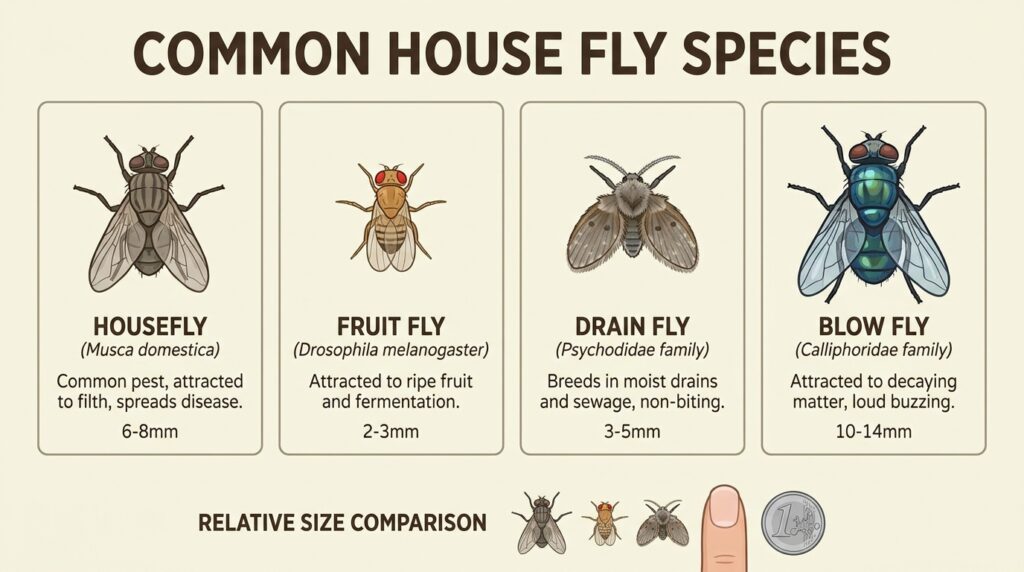
Not all indoor flies are the same. Knowing which type you’re dealing with helps you identify the source faster.
| Fly Type | Size | Common Source | Distinguishing Feature |
|---|---|---|---|
| Housefly | 6–7mm | Trash, food waste, pet waste | Gray with 4 dark stripes on thorax |
| Fruit Fly | 3–4mm | Overripe fruit, drains, fermented items | Red eyes, tan body |
| Drain Fly | 2–5mm | Slow or infrequently used drains | Fuzzy, moth-like wings |
| Blow Fly | 8–10mm | Dead animals, raw meat | Metallic blue or green body |
| Phorid Fly | 1–6mm | Drains, decaying organic matter | Humpbacked appearance |
How to Get Rid of Flies in Your House Fast
Natural and DIY Fly Traps
One of the most effective and non-toxic methods is the apple cider vinegar trap:
- Fill a small glass or jar halfway with apple cider vinegar
- Add a drop of dish soap (this breaks the surface tension)
- Cover the top with plastic wrap and poke small holes in it
- Flies are attracted to the vinegar, enter through the holes, and drown
This works especially well for fruit flies and fungus gnats.
Essential Oils and Natural Repellents
Certain scents repel flies naturally. You can use:
- Lavender oil — diluted in a spray bottle and misted around windows
- Peppermint oil — applied near entry points
- Basil plants — placed on kitchen windowsills
The National Pesticide Information Center notes that while essential oils can reduce fly activity, they work best as part of a broader prevention strategy rather than as standalone solutions.
Commercial Fly Control Products
For more serious infestations, consider:
- Sticky fly traps — non-toxic and highly effective for fruit flies and drain flies
- UV light traps — electric insect traps that attract and zap flies; effective for houseflies
- Pyrethrin-based sprays — natural insecticide derived from chrysanthemums, available at most hardware stores
The National Pesticide Information Center recommends reading all pesticide labels carefully and following instructions to minimize exposure.
Preventing Flies From Coming Back
Getting rid of flies is only half the battle. Here’s how to keep them from returning:
- Clean your kitchen daily — wipe down counters, wash dishes, and sweep floors
- Empty trash cans every 1–2 days in warm weather
- Keep drains clean — use enzymatic cleaners monthly
- Fix leaky pipes immediately
- Store food in sealed containers
- Pick up pet waste from the yard daily
- Repair or install window and door screens
- Check for dead animals if blow flies appear suddenly in one area
When to Call a Pest Control Professional
Most fly problems can be handled with the steps above. But there are situations where professional help is the right call:
- You’ve identified and eliminated all obvious sources, but flies persist
- You suspect a dead animal in the walls or attic
- There are flies in large numbers in multiple rooms simultaneously
- You’re dealing with a commercial kitchen or food prep area
A licensed pest control professional can identify hidden breeding sources, treat the area with appropriate products, and provide a long-term prevention plan.
You can find a certified pest control professional through the National Pest Management Association (NPMA).
Frequently Asked Questions
Why do I suddenly have so many flies in my house?
A sudden increase in flies almost always points to a new or recently activated source — spoiled food, a forgotten garbage bag, pet waste that hasn’t been cleaned up, or a dead animal in an inaccessible area. Check all the common sources listed in this article systematically.
What smell do flies hate the most?
Flies are strongly repelled by peppermint, lavender, eucalyptus, clove, and lemongrass. Placing essential oil diffusers or planting herbs like basil and mint near entry points can reduce fly activity naturally.
Can flies come up through drains?
Yes. Drain flies and phorid flies breed in the organic film lining the inside of pipes and can emerge from drains in bathrooms and kitchens. Regular cleaning with enzymatic drain cleaners eliminates their breeding ground.
How long do flies live inside a house?
The average housefly lives about 28 days, but they reproduce rapidly. Without intervention, the population can grow quickly since each female can lay hundreds of eggs during her lifetime.
Are flies in the house dangerous?
Yes. Houseflies are known to carry and transmit over 100 pathogens, including Salmonella, E. coli, and Typhoid fever, according to the CDC. They pick up bacteria on their legs and bodies and transfer them to food surfaces and utensils. This makes fly control a genuine health priority, not just a comfort issue.
Conclusion
If you’ve been asking yourself why do I have so many flies in my house, the answer usually comes down to one thing: an available source of food, moisture, or a breeding site that flies are exploiting.
The great news is that flies are entirely manageable with the right approach. Start by eliminating the most obvious attractants — trash, overripe produce, dirty drains, and pet waste. Then add physical barriers like screens and door sweeps. For persistent problems, bring in natural or commercial solutions, or call a professional.
A clean, fly-free home is absolutely achievable. Take action today, and you’ll notice a significant difference within days.
Did this article help you solve your fly problem? Share it with a friend or neighbor dealing with the same issue — and bookmark it for the next time the flies come back!

