
Have you ever driven past a freshly burned field or a construction site and noticed tiny green plants already pushing through the soil? Those scrappy little survivors have a name — and a very important job.
They’re called pioneer plants, and they’re nature’s original cleanup crew.
Whether you’re a student studying ecology, a gardener curious about native plants, or just someone who wonders how forests grow back after a wildfire, understanding pioneer plants gives you a window into one of nature’s most fascinating processes.
In this guide, we’ll break everything down — from the definition of pioneer plants to real-world examples, ecological benefits, and how you can use them in your own garden.
Let’s dig in.
What Is a Pioneer Plant?
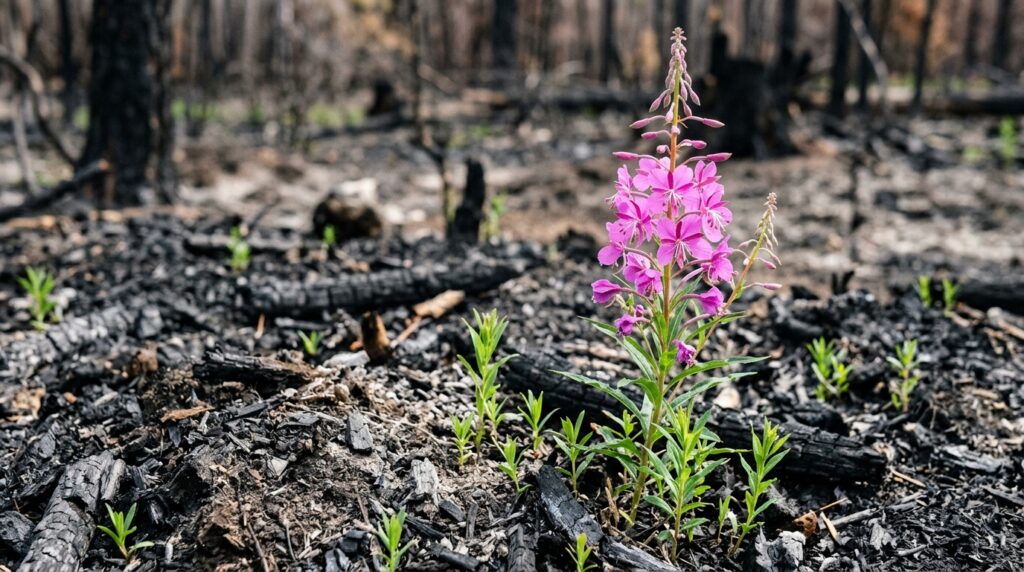
A pioneer plant is a plant species that is among the first to colonize bare, disturbed, or previously uninhabited land. These plants are ecological trailblazers — they move into areas where nothing (or almost nothing) is growing and start the long process of building a living ecosystem from the ground up.
The word “pioneer” comes from the idea of being first — just like the early explorers who opened up new territories. In ecology, pioneer plants do exactly that. They settle where others can’t.
Pioneer plants are part of a broader category called pioneer species, which also includes certain fungi, bacteria, lichens, and mosses. However, in the plant world specifically, pioneer plants refer to vascular plant species that thrive in extreme or resource-poor environments.
According to the Encyclopedia Britannica, pioneer species are the first organisms to occupy a region after a mass disturbance, beginning the process known as ecological succession.
The Science Behind Pioneer Plants: Ecological Succession
To truly understand what is pioneer plants, you need to understand the concept they’re central to: ecological succession.
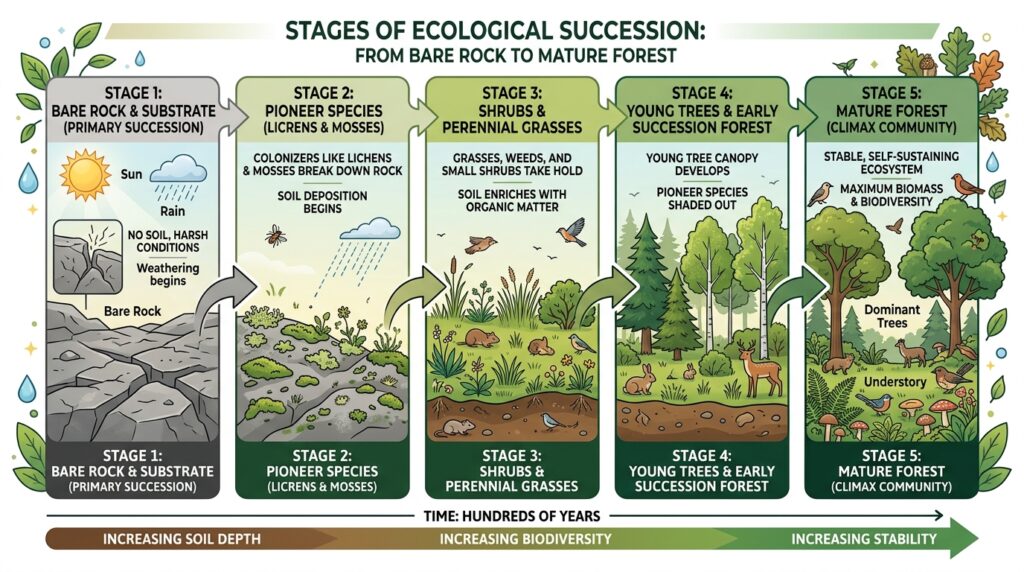
Ecological succession is the gradual process by which ecosystems change and develop over time. It’s nature’s way of building complexity — starting from nothing and slowly layering in more and more species until a stable, diverse community emerges.
Think of it like building a house. You don’t start with the furniture. You start with the foundation. Pioneer plants are that foundation.
The U.S. Forest Service recognizes succession as a fundamental ecological process that drives the development of forests, meadows, wetlands, and other natural habitats across the country.
There are two main types of succession that pioneer plants play a role in:
Primary Succession
This happens in areas where no soil or living material exists at all — like a new volcanic island, a freshly exposed glacier bed, or bare rock after a rockslide.
In primary succession, pioneer plants (often starting with lichens and mosses) begin breaking down rock into soil so that more complex plants can eventually take hold.
Secondary Succession
This occurs where soil already exists but the plant community has been wiped out — such as after a wildfire, flood, or farming activity.
Secondary succession moves faster than primary succession because the soil foundation is already there. Pioneer plants in this case often include fast-growing weeds, grasses, and wildflowers.
The National Park Service offers detailed insights into how succession shapes American landscapes, from Yellowstone’s post-fire recovery to glacier retreat zones in Alaska.
Primary vs. Secondary Succession: What’s the Difference?
Here’s a quick comparison to help it sink in:
| Feature | Primary Succession | Secondary Succession |
|---|---|---|
| Starting Condition | No soil, no life | Soil present, life destroyed |
| Speed | Very slow (centuries) | Faster (decades) |
| Typical Pioneer Plants | Lichens, mosses, rock ferns | Grasses, wildflowers, weeds |
| Example Locations | Volcanic islands, glacier retreat | Post-wildfire areas, abandoned farmland |
| Soil Development | Must start from scratch | Already has organic matter |
Both types begin with pioneer plants doing the hard work of preparing the environment for future life.
Characteristics of Pioneer Plants
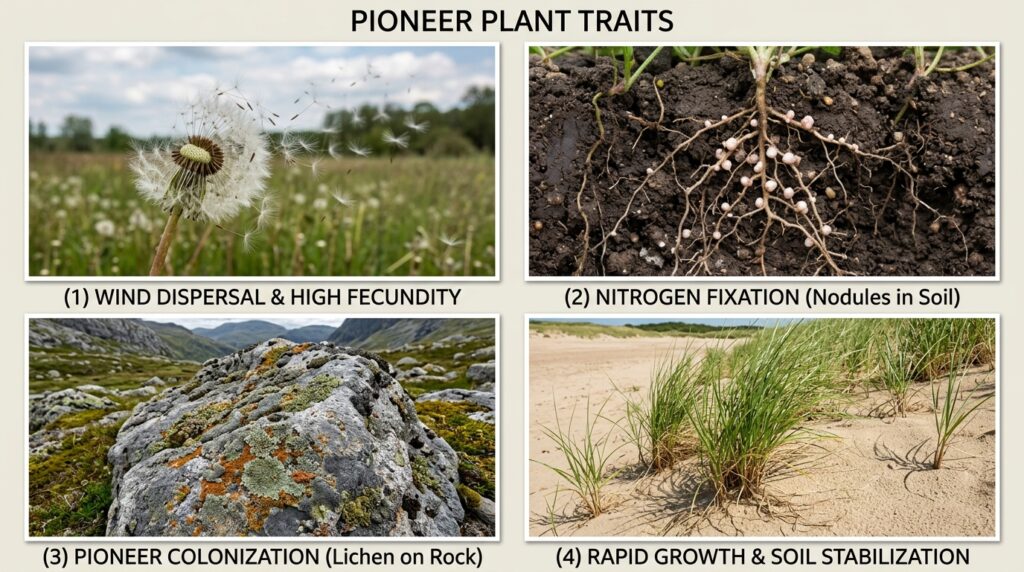
Not just any plant can be a pioneer. It takes a specific set of traits to survive in harsh, resource-poor environments. Here’s what makes pioneer plants so uniquely suited to their role:
1. Rapid Growth
Pioneer plants grow fast. They need to establish themselves quickly before conditions change or competition arrives. Many can go from seed to flower in a single growing season.
2. High Seed Production
To colonize new areas, pioneer plants produce enormous quantities of seeds. Dandelions, for example, produce hundreds of seeds per plant, each capable of floating long distances on the wind.
3. Efficient Seed Dispersal
Pioneer plant seeds are often designed to travel far — carried by wind, water, animals, or even human clothing. This is how they reach remote disturbed areas.
4. Drought and Stress Tolerance
Pioneer plants can handle poor, dry, or compacted soil. They’ve evolved to survive in conditions that would kill most garden plants.
5. Nitrogen Fixation (in many species)
Many pioneer plants — especially legumes like clover — partner with soil bacteria to fix atmospheric nitrogen into the soil, making it available for other plants. This is a critical ecosystem service.
Learn more about nitrogen fixation and its role in ecosystems from the Soil Science Society of America.
6. Short Life Cycles
Many pioneer species are annuals or biennials. They live fast, reproduce quickly, and die, leaving behind organic matter that enriches the soil.
7. Sun-Loving Nature
Pioneer plants are almost universally sun-loving (heliophytic). They thrive in open, exposed areas with full sunlight — exactly the conditions found in disturbed habitats.
Common Examples of Pioneer Plants
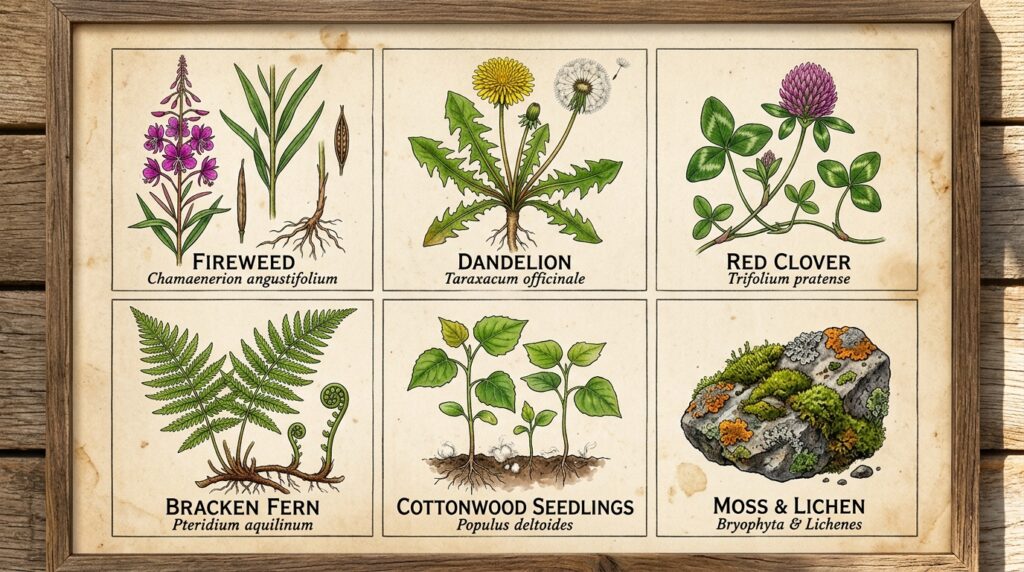
Pioneer plants vary by region and climate, but here are some of the most well-known examples found across North America and beyond:
Fireweed (Chamerion angustifolium)
Perhaps the most iconic pioneer plant, fireweed is famously the first plant to appear after wildfires. Its magenta blooms are a beacon of recovery. It’s so closely associated with post-fire ecosystems that some ecologists use it as an indicator of fire history. The USDA Plants Database has detailed information on this species.
Dandelion (Taraxacum officinale)
Often considered a weed, dandelions are actually impressive pioneer plants. They can grow in compacted urban soils and their deep taproots help break up hard ground, improving soil structure for other plants.
Red Clover (Trifolium pratense)
Red clover is a nitrogen-fixing pioneer that improves soil fertility wherever it grows. It’s widely used in ecological restoration projects and cover cropping.
Bracken Fern (Pteridium aquilinum)
One of the most widespread pioneer plants in the world, bracken fern rapidly colonizes disturbed forest clearings and grasslands, providing ground cover and organic matter.
Eastern Cottonwood (Populus deltoides)
In riparian (riverside) zones, cottonwood seedlings are often pioneer species that establish along newly deposited sediment banks and stabilize riverbanks.
Mosses and Lichens
Technically not flowering plants, but critical pioneer organisms. They’re often the very first colonizers of bare rock and create the conditions for vascular pioneer plants to follow. The British Bryological Society offers excellent resources on mosses.
Wild Raspberry (Rubus idaeus)
A fast-spreading shrub that thrives in disturbed woodland edges. It provides food and cover for wildlife while preparing the soil for forest succession.
Hairy Willowherb (Epilobium hirsutum)
Common in disturbed wetland habitats, this plant is an aggressive colonizer of wet, bare ground.
Ragweed (Ambrosia artemisiifolia)
Though notorious for causing allergies, ragweed serves an important ecological role as a pioneer in disturbed soils, quickly covering bare ground and preventing erosion.
The Role of Pioneer Plants in Ecosystems
Pioneer plants do so much more than just look green. They perform a cascade of ecological functions that set the stage for entire ecosystems to develop.
Building Soil
Pioneer plants add organic matter to bare substrates. When they die, their biomass decomposes, creating humus — the rich, dark component of soil that supports plant life. Over generations, pioneer plants literally build the soil that forests will eventually grow in.
Preventing Erosion
Bare soil is vulnerable. Wind and rain can strip it away in days. Pioneer plants quickly cover exposed ground, their root systems binding soil particles together and dramatically reducing erosion. This is why the USDA Natural Resources Conservation Service often uses pioneer species in land management and watershed restoration programs.
Providing Habitat
As soon as pioneer plants establish, they create microhabitats. Insects, birds, small mammals, and soil organisms move in — setting off a cascade of biodiversity.
Modifying Microclimate
Pioneer plant cover reduces soil temperature extremes, retains moisture, and creates shade — making conditions more hospitable for the next wave of colonizing species.
Nutrient Cycling
Through decomposition and nitrogen fixation, pioneer plants drive nutrient cycling that enriches the soil and supports the plants that come after them.
Pioneer Plants and Soil Formation
Soil formation — technically called pedogenesis — is one of the most important processes in the natural world, and pioneer plants are central to it.
In primary succession especially, there is no soil to begin with. Only bare rock or mineral substrate exists. Here’s the step-by-step process of how pioneer plants help build soil:
Step 1: Lichen and Moss Colonization Lichens (a partnership between fungi and algae) are often the true first pioneers. They secrete acids that slowly dissolve rock and begin the process of mineral release. According to USGS research, lichens can break down rock surface layers by chemical and physical action over decades.
Step 2: Organic Matter Accumulation As lichens and mosses die, their decaying organic matter accumulates in rock crevices, slowly building up a thin layer of proto-soil.
Step 3: Vascular Pioneer Plants Arrive Once even a thin layer of soil exists, small vascular pioneer plants (like fireweed or certain ferns) can take hold. Their deeper roots further fracture rock and pull up minerals.
Step 4: Soil Deepening Over time, cycles of growth and death deepen the soil layer. Earthworms, bacteria, and fungi join the soil community, further breaking down organic matter.
Step 5: Richer Plant Communities Emerge As soil depth and fertility increase, more demanding plant species can establish — shrubs, then small trees, eventually leading to forest.
This entire process can take anywhere from decades to thousands of years, depending on the climate and substrate involved.
Pioneer Plants vs. Climax Vegetation
Understanding the full arc of succession means understanding what comes after pioneer plants. That endpoint is called the climax community or climax vegetation.
| Feature | Pioneer Plants | Climax Vegetation |
|---|---|---|
| Arrives | First, in bare/disturbed areas | Last, after centuries of succession |
| Life Cycle | Short (annual/biennial) | Long-lived (perennial trees, etc.) |
| Shade Tolerance | Sun-loving, shade-intolerant | Often shade-tolerant |
| Root Systems | Shallow to medium | Deep and extensive |
| Biodiversity | Low | High |
| Soil Requirements | Poor, minimal | Rich, deep |
| Examples | Fireweed, dandelion, clover | Oak-hickory forest, tropical rainforest |
The climax community is the stable, mature ecosystem that succession ultimately produces. In eastern North America, that’s often a temperate deciduous forest. In the Pacific Northwest, it might be a Douglas fir rainforest.
Pioneer plants make that final community possible — but they don’t stick around to see it. As succession progresses and larger plants cast more shade, pioneer species can no longer survive. They’ve served their purpose and are naturally replaced.
This isn’t a failure — it’s a success. It means the ecosystem has developed enough to no longer need them.
Pioneer Plants in Disturbed Habitats
One of the most fascinating things about pioneer plants is just how wide a variety of “disturbed” environments they colonize. They don’t just appear after wildfires — they show up wherever the usual vegetation has been removed or destroyed.
Common disturbed habitats where pioneer plants thrive include:
- Post-fire landscapes — Fireweed and grasses are classic post-fire pioneers
- Roadsides and highway verges — Dandelions, chicory, and wild mustard
- Abandoned agricultural land — Ragweed, Queen Anne’s lace, and thistle
- Urban environments — Mosses on roofs, dandelions in sidewalk cracks, urban trees in vacant lots
- Landslide areas — Bracken fern, willowherb, and reed grass
- Mine tailings — Specially adapted plants like alpine pennycress (Noccaea caerulescens), which can even tolerate heavy metal contamination
- Glacier retreat zones — Dryas species and mountain avens in alpine environments
- Floodplain deposits — Cottonwood, willow, and riverbank grasses
The USDA’s Natural Resources Conservation Service plant lists include many of these pioneer species and their ecological roles.
How Pioneer Plants Help After Natural Disasters
When natural disasters strike, they often create vast areas of bare, lifeless terrain. Pioneer plants are nature’s first responders to these events.
Mount St. Helens: A Case Study in Recovery
Perhaps the most dramatic modern example is the recovery of the area around Mount St. Helens in Washington State after its catastrophic 1980 eruption.
The eruption blanketed hundreds of square miles with ash and volcanic rock, killing nearly everything. Scientists initially expected the area to take centuries to recover.
They were wrong. Within just a few years, pioneer plants — especially prairie lupine (Lupinus lepidus) — began growing in the ash fields. The lupine, a nitrogen-fixer, enriched the soil. Other pioneer plants followed.
By the 1990s, diverse plant communities had established. By the 2000s, shrubs and young trees were growing. The recovery was faster than anyone predicted, and pioneer plants were the reason.
Wildfire Recovery
After wildfires, pioneer plants are crucial for:
- Stabilizing slopes that could otherwise erode
- Restoring ground cover that reduces runoff
- Providing food and habitat for wildlife returning to the area
- Beginning the long process of rebuilding the forest community
The U.S. Forest Service’s fire ecology program documents the role of pioneer species in post-fire landscapes across the country.
Using Pioneer Plants in Landscaping and Restoration
You don’t need to wait for a wildfire to benefit from pioneer plants. Gardeners, landscape designers, and ecological restoration professionals actively use these plants to achieve specific goals.
Erosion Control
Pioneer plants with robust root systems — like native grasses, clover, and ferns — are excellent for stabilizing slopes and bare areas. The American Society of Landscape Architects often recommends native pioneer species for sustainable erosion control in project designs.
Improving Poor Soil
If you have depleted, compacted, or nutrient-poor soil, planting pioneer species like white clover (Trifolium repens) or lupine can naturally improve fertility before you plant other species.
Native Plant Restoration
Many restoration projects use native pioneer species to kick-start recovery in degraded habitats. Organizations like the Native Plant Society of Texas and similar groups in other states maintain lists of native pioneer plants for restoration use.
Covering Bare Ground Fast
If you’ve had construction work, soil disturbance, or bare patches in your garden, pioneer plants like annual rye grass, buckwheat, or phacelia can quickly cover the ground, preventing weed invasion and erosion.
Wildlife Gardens
Many pioneer plants are excellent for pollinators and wildlife. Fireweed, for example, is an important nectar source for bees, while native grasses provide habitat for ground-nesting birds.
The Xerces Society for Invertebrate Conservation has resources on using native pioneer plants to support pollinators and beneficial insects.
Expert Tips: Making the Most of Pioneer Plants
Whether you’re a gardener, a land manager, or just an ecology enthusiast, here are expert tips for working with pioneer plants effectively:
1: Match Pioneer Plants to Your Region Not all pioneer plants are native to all areas. Always choose species that are native to your specific region to avoid introducing invasive plants. Check the USDA Plants Database to verify native status.
2: Let Succession Happen If you’re doing ecological restoration, resist the urge to “tidy up” too quickly. Pioneer plants look messy by traditional gardening standards, but they’re doing important work. Give them time.
3: Use Nitrogen-Fixers First When establishing a new garden bed on poor soil, start with nitrogen-fixing pioneer plants (clover, lupine, vetch) before planting other species. You’ll be amazed how much better other plants perform after a season of nitrogen-fixing pioneers.
4: Pioneer Plants Make Great Cover Crops Farmers have long used pioneer-like cover crops to protect and improve soil between growing seasons. SARE (Sustainable Agriculture Research & Education) has excellent guides on this practice.
5: Watch for Invasive Imposters Some aggressive non-native plants behave like pioneer species (fast-growing, tolerant of poor conditions) but can become invasive. Japanese knotweed and kudzu are notorious examples. Stick to verified native pioneers.
Pros and Cons of Pioneer Plants
Like anything in ecology, pioneer plants come with both benefits and potential drawbacks.
Pros
- Soil building — Create and improve soil from bare substrates
- Erosion prevention — Stabilize vulnerable land quickly
- Biodiversity foundation — Enable other species to establish
- Carbon sequestration — Begin storing carbon in biomass and soil
- Low maintenance — Thrive with little to no human input
- Wildlife support — Provide early habitat and food for returning species
- Free ecosystem services — All these benefits happen naturally and at no cost
Cons
- Can appear “weedy” — Aesthetically unpleasant to some people
- Short-lived — Not permanent landscape solutions
- Some are aggressive — Without management, certain pioneer species can spread beyond desired areas
- Not always native — Many common “weedy” pioneers are introduced species
- Allergy concerns — Species like ragweed are significant allergy triggers
- May require management — In some cases, pioneer species need to be managed to prevent them from outcompeting desired native species
FAQs About Pioneer Plants
What is the best example of a pioneer plant?
Fireweed (Chamerion angustifolium) is widely considered the most iconic pioneer plant, famous for its rapid colonization of burned areas. It’s one of the first plants to appear after wildfires across North America and is often used as a natural indicator of fire history in an area.
Are pioneer plants the same as weeds?
Not exactly. While many common “weeds” are pioneer species (like dandelions and ragweed), not all pioneer plants are weeds. Many are valued native wildflowers, grasses, ferns, and shrubs. The difference is often about context — a plant that’s a nuisance in a garden may be ecologically essential in a disturbed habitat.
How long do pioneer plants last before being replaced?
It depends on the environment and type of succession. In secondary succession, pioneer plants may be replaced within 5–20 years as shrubs and trees move in. In primary succession on bare rock, pioneer communities can persist for decades or even centuries before the soil is rich enough to support more complex vegetation.
Can I plant pioneer plants in my garden?
Absolutely! Many native pioneer plants are excellent choices for naturalistic gardens, wildflower meadows, or disturbed areas needing quick ground cover. Look for native species like wild bergamot, black-eyed Susan, or native clovers. These provide beauty, support pollinators, and improve soil health.
Do pioneer plants help fight climate change?
Yes — in meaningful ways. Pioneer plants help sequester carbon by building soil organic matter, which stores carbon long-term. They also enable the development of forests, which are major carbon sinks. Research from the Carbon Brief highlights how ecosystem recovery — driven initially by pioneer species — is an important natural solution for climate mitigation.
Conclusion: Why Pioneer Plants Deserve More Respect
Pioneer plants are one of nature’s most extraordinary inventions — unassuming, often overlooked, but absolutely essential.
They show up where no one else will. They build soil from rock. They stabilize crumbling hillsides. They lay the groundwork for forests that will stand for centuries. And they do it all without any help from us.
The next time you see a “weed” pushing through a crack in the pavement, or fireweed blazing purple across a burned hillside, take a moment to appreciate what you’re looking at.
You’re watching the first chapter of a story that might end in a forest.
Understanding pioneer plants isn’t just an academic exercise — it has real implications for land restoration, climate change mitigation, sustainable gardening, and our ability to work with nature rather than against it.
What Can You Do?
- Learn your local pioneer plants — Check resources like the Native Plant Finder from the National Wildlife Federation to discover native pioneer species in your area.
- Let some areas “go wild” — Give pioneer plants space to do their thing in a corner of your yard or garden.
- Support ecological restoration — Many local conservation groups run volunteer restoration days where you can plant native pioneers.
- Share this article — Help others discover the incredible world of pioneer plants.
Nature already knows how to heal itself. Pioneer plants are proof of that. Our job is simply to understand and support the process.
This article is intended for educational and informational purposes. All ecological information is based on peer-reviewed science, government resources, and established ecological literature.

