
There’s a special kind of heartbreak reserved for laundry day.
You pull your favorite wool sweater out of the wash expecting cozy comfort, and instead you’re holding something that looks like it was made for a toddler. The sleeves are stiff. The shoulders are tight. And no amount of tugging is bringing it back.
Maybe it was a gift. Maybe it took three paychecks to justify buying it in the first place. Either way, that moment of pulling a ruined sweater out of the machine has a way of making people swear off wool entirely — which is a shame, because wool is one of the most forgiving, long-lasting fabrics you can own, as long as you understand a few basic rules.
Here’s the good news: that disaster is almost always preventable.
Wool isn’t actually a fussy, high-maintenance fabric. It’s just a fabric that plays by different rules than cotton or polyester, and once you know those rules, washing it becomes second nature. This guide walks you through exactly how to wash a wool sweater step by step, whether you prefer hand washing, the washing machine, or just want to know how often you really need to wash it in the first place.
No jargon. No guesswork. Just a method that works, explained the way you’d explain it to a friend who just texted you in a panic because their grandmother’s cardigan is sitting in a puddle on the bathroom floor.
Why Wool Sweaters Are So Easy to Ruin (And Why That’s Not Your Fault)
Before jumping into steps, it helps to understand why wool behaves the way it does. This isn’t filler — it’s the part that actually saves your sweaters.
Wool fiber isn’t smooth like cotton. Under a microscope, it looks more like a pinecone, covered in tiny overlapping scales. In normal conditions, those scales lie flat. But introduce heat, moisture, and movement all at once, and the scales lift up and grab onto each other like little hooks.
Once those scales interlock, the fibers pull tighter together, and the fabric shrinks and thickens. Textile experts call this process felting, and it’s the real reason wool sweaters shrink in the wash — not the water itself, and not the detergent, but the combination of heat plus agitation plus moisture working together.
This explains a few things that confuse a lot of people:
- Why a wool sweater can survive a gentle cold wash but die in a hot one
- Why tossing it in the dryer is far riskier than washing it
- Why even careful hand washing can backfire if you rub or wring the fabric
The encouraging part is that felting is also a result of heat, moisture, and mechanical agitation acting together, according to textile researchers. Remove just one of those three factors — say, keep the water cold and skip the aggressive rubbing — and the risk of shrinkage drops dramatically.
Different types of wool felt at different speeds, too. Merino wool fibers are longer and smoother with less natural crimp, so they generally take more heat and agitation to felt and shrink than something like shetland wool, which has shorter, curlier fibers. That’s worth knowing if you own a mix of merino sweaters and chunkier traditional knits — the chunkier ones may need a slightly more careful hand.
There’s another piece of the puzzle worth understanding: wool fiber is hydrophilic at its core, even though the outer scales naturally repel water. That’s why wool feels dry to the touch even in damp weather, but soaks up moisture fast once it’s fully submerged. When the fiber absorbs water, it physically swells. As it dries, it contracts again. If that swelling and contracting happens alongside agitation, the scales get even more opportunity to catch and lock onto neighboring fibers. This is part of why even a “safe” lukewarm wash can occasionally surprise you if the garment gets tossed around too much during the rinse.
None of this means you need to treat your sweater like it’s made of glass. It just means three specific things — heat, friction, and moisture — are working together against you, and your job is to keep at least one of them in check at every stage of the process.
Step 1: Check the Care Label First
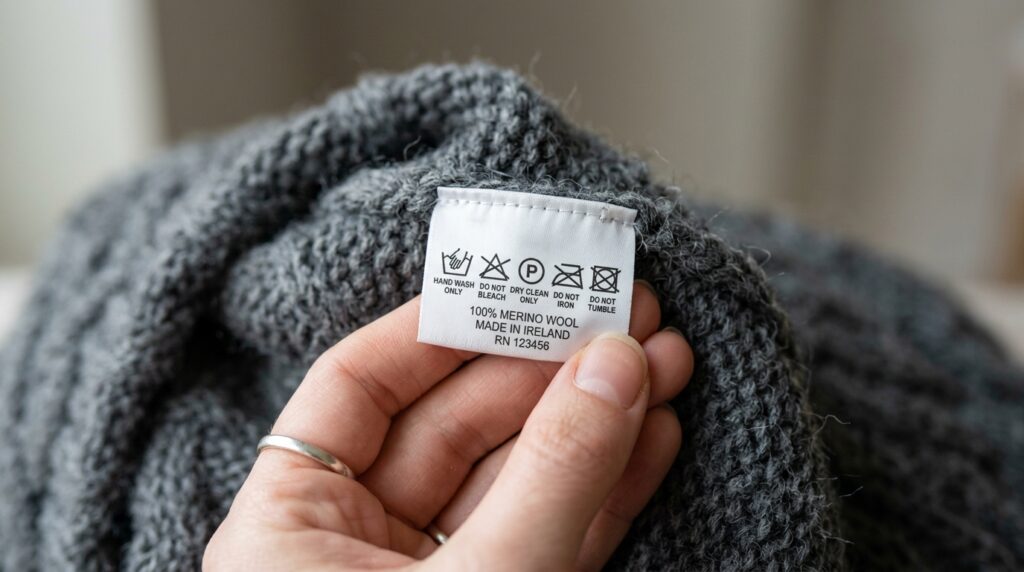
This sounds obvious, but it’s the step most people skip — and it’s the one that actually tells you what’s safe for your specific sweater.
Not all wool is treated the same way during manufacturing. Some sweaters are made from “superwash” or treated wool that’s been specially processed so the scales are smoothed down, making it far more resistant to felting. Others are 100% untreated wool that needs a gentler touch.
The care label will usually tell you one of three things:
| Label Says | What It Means |
|---|---|
| Machine washable / Wool cycle | Safe for a gentle machine wash on cold |
| Hand wash only | Skip the machine entirely — wash by hand |
| Dry clean only | Take it to a professional cleaner |
If you’ve lost the tag or it’s worn away, it’s safer to default to hand washing. It takes a little longer, but it’s the lowest-risk method for any wool garment.
It’s also worth paying attention to fiber content if it’s listed alongside the care instructions. A sweater that’s 100% wool behaves differently than a wool-cashmere blend or a wool-acrylic mix. Blended fibers can actually help reduce shrinkage risk, since the non-wool fibers interrupt some of the felting process — but they can also introduce their own quirks, like acrylic’s tendency to pill more easily or to react differently to heat. When in doubt, treat any wool-blend garment with the same caution you’d give 100% wool, since the wool content is usually still the most fragile part of the equation.
One more thing worth a quick mention: vintage or hand-knit sweaters often don’t come with care labels at all. If you’ve inherited a hand-knit piece or picked one up secondhand, it’s worth assuming the most delicate care level — cool water, hand washing, gentle handling — until you’ve had a chance to test a small, inconspicuous area.
How to Hand Wash a Wool Sweater (The Safest Method)
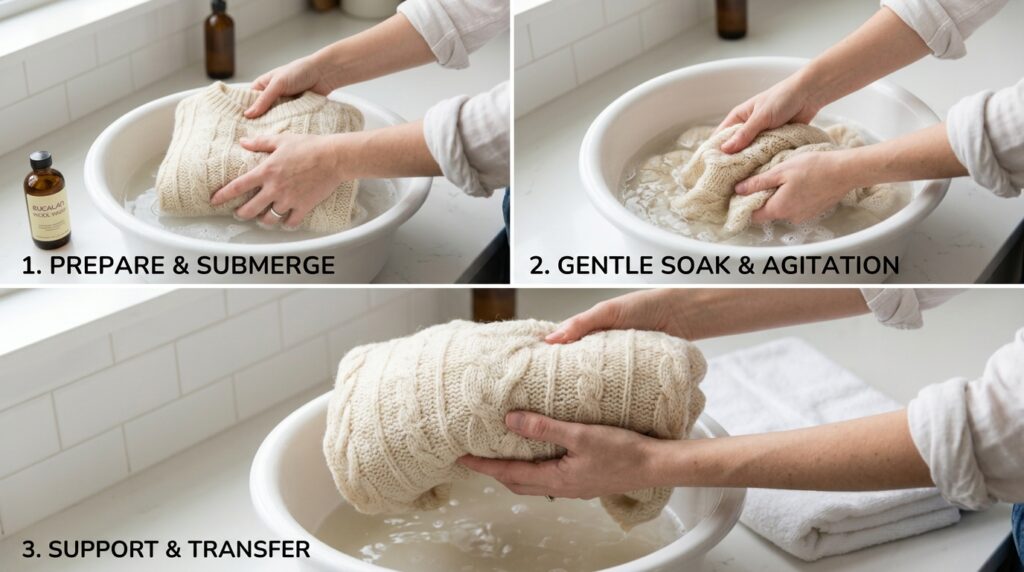
Hand washing is the gold standard for wool. It gives you full control over temperature and movement, which are exactly the two variables you need to manage to avoid shrinkage.
What You’ll Need
- A clean sink, basin, or tub
- Lukewarm water (not hot, not icy cold)
- A wool-specific detergent or a mild, enzyme-free cleanser
- Two clean towels
A quick note on detergent: regular laundry detergent often contains enzymes designed to break down protein-based stains. Since wool is itself a protein fiber, those same enzymes can quietly damage it over repeated washes. A dedicated wool wash, or even a gentle baby shampoo, is a safer bet.
It also helps to think about water hardness if you live somewhere with notably hard tap water. Minerals in hard water can make detergent less effective, leaving a slight residue behind on the fibers, which over time can make wool feel stiffer than it should. If your sweaters always seem to come out of the wash feeling a little rough no matter what you do, that’s worth investigating before you blame the detergent or the wool itself.
Step-by-Step Instructions
1. Turn the sweater inside out. This protects the outer surface from pilling and friction.
2. Fill your basin with lukewarm water. Aim for water that feels comfortably warm to the touch, never hot. Most experts recommend staying at or below roughly 30°C (86°F) — care labels often specify a maximum of around 30°C, or about 85°F, when hand washing wool.
3. Add a small amount of wool detergent. You don’t need much — a capful is usually plenty. Swirl it into the water before adding the sweater so the detergent disperses evenly instead of sitting directly on the fibers.
4. Submerge the sweater and let it soak. Gently push the sweater under the water until it’s fully saturated. Most guides recommend soaking for somewhere between 10 and 30 minutes, which gives the detergent time to lift dirt and oils without you having to scrub anything.
5. Move it gently — don’t rub. If you want to help loosen dirt, a slow, gentle swish is fine. Avoid rubbing the fabric against itself, twisting it, or scrubbing stained areas. That kind of friction is exactly what triggers felting.
6. Drain and rinse. Empty the soapy water, then refill the basin with clean water at the same temperature. Gently press the sweater to rinse out the detergent. Repeat until the water runs clear.
7. Press out the water — never wring. Wringing or twisting a wet wool sweater stretches and damages the fibers. Instead, gently press the sweater against the side of the sink or basin to squeeze out excess water.
8. Roll it in a towel. Lay the sweater flat on a dry towel, then roll the towel up like a burrito, pressing gently as you go. This pulls out most of the remaining moisture without any stretching.
9. Lay flat to dry. Unroll the sweater and reshape it on a second dry towel or a mesh drying rack, smoothing out the sleeves and body to their natural shape. More on how to dry wool properly below — this step matters just as much as the wash itself.
Can You Machine Wash a Wool Sweater? Yes — If You Do It Right
Plenty of wool sweaters today can go in the washing machine, especially if the label confirms it. Machine washing isn’t automatically risky; it’s just less forgiving if you skip a step.
How to Machine Wash Wool Safely
- Check the label to confirm machine washing is approved.
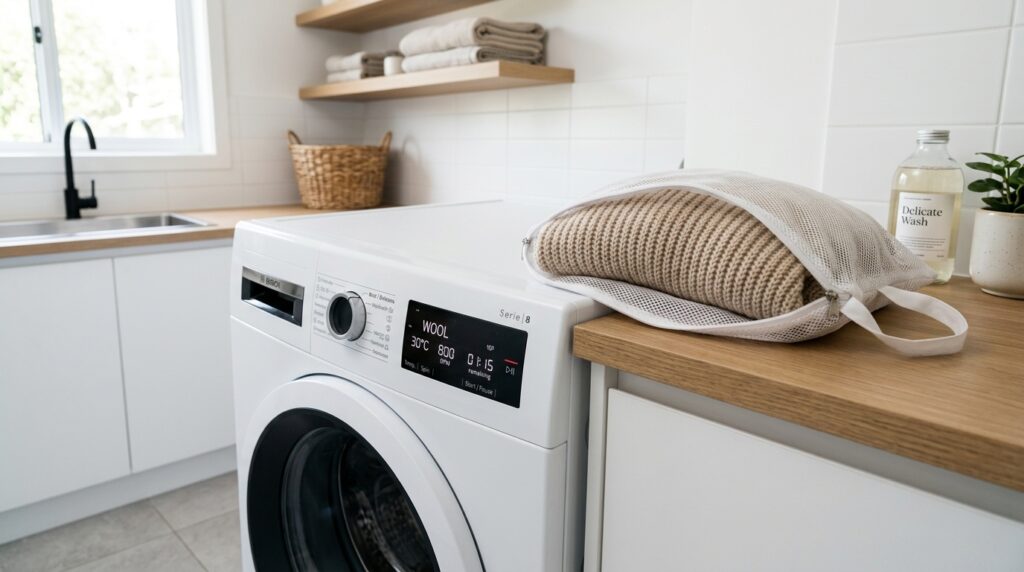
- Turn the sweater inside out, or place it inside a mesh laundry bag for extra protection from friction against other items.
- Select the wool cycle. Most modern machines have one. A wool cycle typically uses gentle action at around 40°C, though if your machine doesn’t have one, the cold water or delicate cycle is the safer substitute.
- Use a wool-safe detergent, added in a small amount rather than a full normal load’s worth.
- Skip the fabric softener. It coats the fibers in a way that actually works against wool’s natural texture over time.
- Set the spin cycle to low, or skip spinning altogether if your machine allows it. A slow spin removes water without the violent tumbling that can cause stretching.
- Remove the sweater promptly once the cycle ends, rather than letting it sit damp in the drum.
If you’re washing more than one wool item, sort by color first to prevent dye transfer, and avoid overloading the machine — wool needs room to move gently in the water rather than being crushed against other clothes.
Hand Wash vs. Machine Wash
| Factor | Hand Washing | Machine Washing (Wool Cycle) |
|---|---|---|
| Risk of shrinkage | Lowest | Low, if cycle and label match |
| Time required | 20–40 minutes | 5 minutes hands-on |
| Best for | Hand-wash-only labels, delicate or hand-knit pieces | Machine-washable labeled sweaters |
| Control over agitation | Full control | Depends on machine settings |
Common Mistakes That Ruin Wool Sweaters
A surprising number of wool disasters come down to one of a handful of repeat offenders. Knowing them ahead of time means you’re far less likely to make the same mistake twice.
Using hot water “to get it really clean.” Heat doesn’t make wool cleaner — it makes the fiber scales open up, which is exactly the condition felting needs to take hold. Lukewarm is plenty.
Throwing it in with a regular load. Wool needs its own gentle cycle, separate water temperature, and ideally its own detergent. Tossing it into a normal mixed load with jeans and towels exposes it to far more agitation than it can handle.
Wringing out the water like a dish towel. It’s an instinct for most people, but twisting wet wool stretches and weakens the fibers permanently, even if it doesn’t cause visible shrinkage right away.
Hanging it up wet. This is one of the sneakiest mistakes, because it doesn’t look dangerous in the moment. A soaked sweater is heavy, and gravity pulling on wet fibers for hours will stretch the body and sleeves out of shape long before it’s even dry.
Ignoring the care label because “it’s just a sweater.” Different wool garments are processed differently at the factory, and a label that says “hand wash only” usually means the manufacturer already knows that particular weave or blend doesn’t tolerate machine agitation well.
Using scented fabric softener. Fabric softener coats fibers in a thin waxy layer to make them feel smoother, but on wool, it actually works against the fiber’s natural texture and can leave it feeling less soft over time, not more.
Skipping the patch test on a new detergent. This one rarely causes shrinkage, but it can cause discoloration or a reaction with certain dyes, especially on hand-dyed or vintage pieces.
How to Dry a Wool Sweater (This Step Matters More Than You Think)
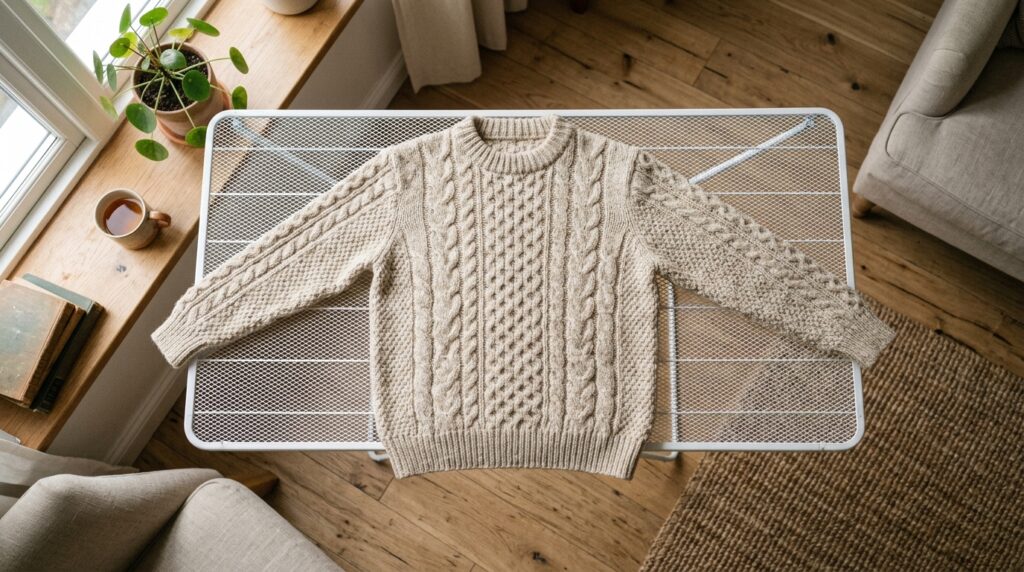
Even a perfect wash can be undone by the wrong drying method. Heat and tumbling are still the enemy here.
Never use the dryer. This is the single most damaging step you can take with a wool sweater. The combination of heat and constant tumbling is essentially a felting machine.
Never hang it to dry. A wet wool sweater is heavy with water, and hanging it lets gravity stretch the shoulders and body out of shape — sometimes permanently.
Instead:
- After rolling the sweater in a towel to remove excess moisture, lay it flat on a fresh, dry towel or a mesh drying rack.
- Gently reshape it into its natural dimensions — smooth the sleeves, straighten the hem, square up the shoulders.
- Keep it out of direct sunlight, which can fade color and dry the fibers unevenly. Knitwear like sweaters should be dried flat in the shade rather than in direct sun.
- Flip it over halfway through drying if the underside feels slow to dry, especially with thicker knits.
- Let it sit undisturbed. Depending on thickness and humidity, full drying can take anywhere from several hours to a full day or two.
If you’re drying more than one sweater at a time and space is limited, resist the urge to stack them on top of each other. A stack traps moisture in the middle layers, which slows drying and can encourage a musty smell. Spread sweaters out across multiple racks, or dry them in shifts if you only have one rack available.
Some experts also recommend letting a freshly washed wool garment rest for about a day after it’s fully dry before wearing it again, giving the fibers time to fully spring back into shape.
Does the Type of Wool Change How You Should Wash It?
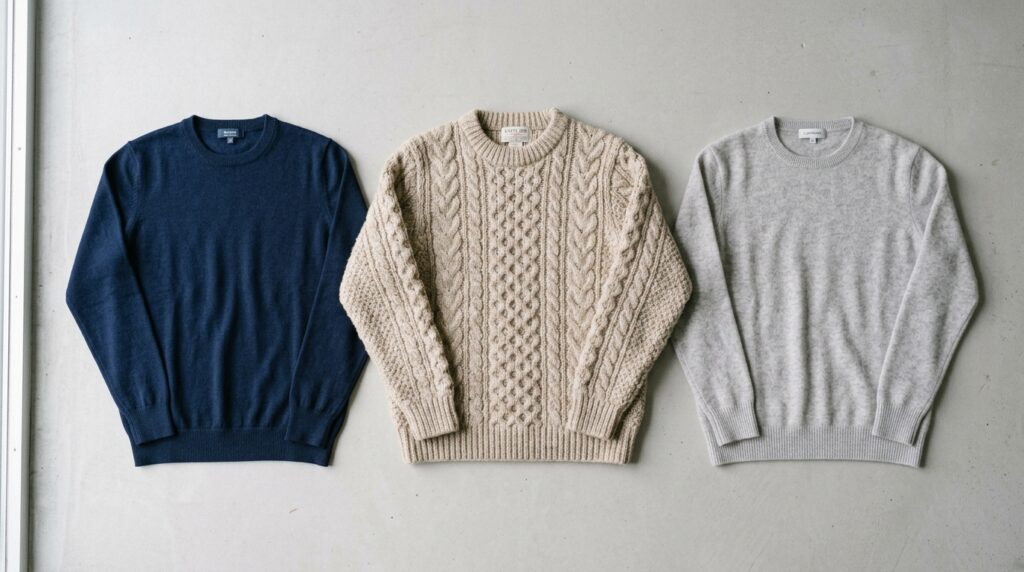
Not all wool sweaters are created equal, and a little awareness here goes a long way toward avoiding mistakes.
Merino wool is the most common type used in modern sweaters and base layers. Its fibers are fine and long with minimal natural crimp, which makes it soft against the skin and somewhat more resistant to felting than coarser wools — though “more resistant” doesn’t mean immune. Merino still needs cold water and gentle handling.
Lambswool comes from a sheep’s first shearing and tends to be especially soft and slightly more delicate than wool from later shearings. Treat it the same as a hand-wash-only garment unless the label says otherwise.
Cashmere, technically from goats rather than sheep, is even finer than merino and notoriously prone to pilling and stretching. Cashmere sweaters almost always do best with hand washing and a longer rest period between wears.
Shetland and other coarser wools have more natural crimp and shorter fibers, which actually makes them felt and shrink more readily under heat and agitation, even though the fabric itself feels sturdier to the touch. Don’t let the chunky, durable feel of a shetland sweater fool you into being less careful with it.
Superwash or treated wool has been through a manufacturing process that smooths or partially removes the fiber scales, specifically to make the garment more machine-wash tolerant. If your label says “machine washable” and the garment feels exceptionally soft and smooth, it’s likely been treated this way — though even superwash wool still prefers cold water over hot.
Knowing roughly which category your sweater falls into helps you calibrate how cautious to be, even before you check the label.
How Often Should You Actually Wash a Wool Sweater?
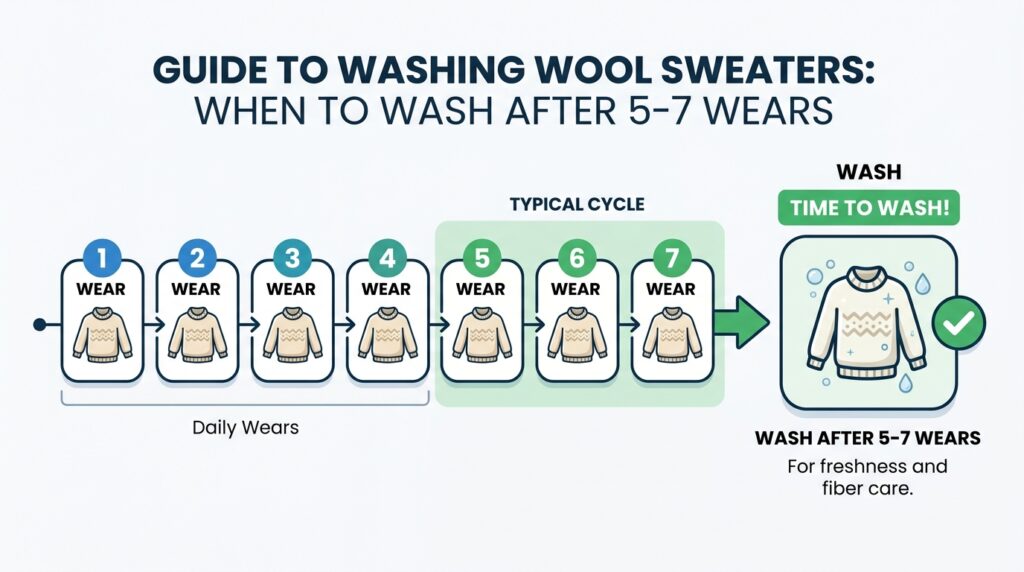
Here’s something that surprises a lot of people: wool doesn’t need to be washed nearly as often as cotton or synthetic fabrics.
Wool fiber has a naturally waxy outer layer that makes it resistant to odor and stains in a way most other fabrics simply aren’t. That’s part of why wool has stayed popular in performance and outdoor clothing — it can be worn multiple times before it actually needs cleaning.
Most laundry and garment-care experts land in a similar range. Guidance commonly suggests washing sweaters and wool tops roughly every five to seven wears, unless there’s visible dirt or an odor. Other expert sources on how often to wash sweaters put the number slightly lower, suggesting two to five wearings is typical, though more durable wool can often stretch to about five wears, especially if you’re wearing something underneath it.
A simple way to decide: if it smells fresh and looks clean, it’s fine to wear again. If it’s visibly dirty, stained, or starting to smell, it’s time to wash it.
A few things that shorten the time between washes:
- Wearing the sweater directly against your skin, without a layer underneath
- Heavy sweating or physical activity while wearing it
- Visible stains or spills
- Exposure to smoke, campfires, or strong odors
A few things that stretch out the time between washes:
- Layering a t-shirt or undershirt beneath the sweater
- Light, occasional wear rather than daily use
- Airing the sweater out between wears instead of immediately re-wearing it unwashed
Overwashing isn’t just unnecessary — it’s genuinely counterproductive. Every wash cycle creates some friction, and repeated friction is what leads to pilling, stretching, and a shortened lifespan for the garment. Washing less often, but washing correctly when you do, is the better long-term strategy for keeping a wool sweater looking good for years.
Removing Stains From a Wool Sweater Without Damaging It
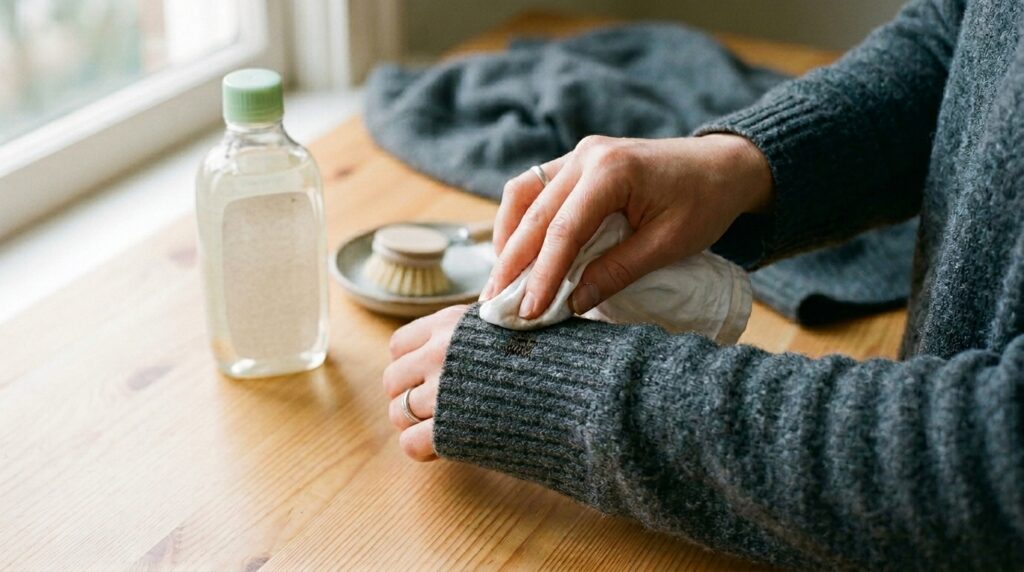
Spot-cleaning stains on wool is almost always better than a full wash if the rest of the sweater is clean. Treating just the stained area means less overall friction and exposure to water for the garment.
For most fresh stains:
- Act quickly — the longer a stain sits, the harder it is to lift.
- Blot (don’t rub) the area with a clean cloth to remove any excess liquid or residue.
- Apply a small amount of wool-safe detergent directly to the stain.
- Add a few drops of cool water and gently work up a light lather with your fingers.
- Rinse the spot with a clean, damp cloth, then blot dry.
- Let the spot air dry before wearing the sweater again.
For oil-based stains (like butter or salad dressing), a small amount of cornstarch or talcum powder pressed onto the spot for a few minutes before brushing it off can help absorb the oil before you treat it with detergent.
For tougher or older stains, it’s worth taking the sweater to a professional cleaner rather than risking aggressive at-home scrubbing, which can felt the fibers in that one spot even if the rest of the sweater is fine.
Dealing With Pilling on Wool Sweaters
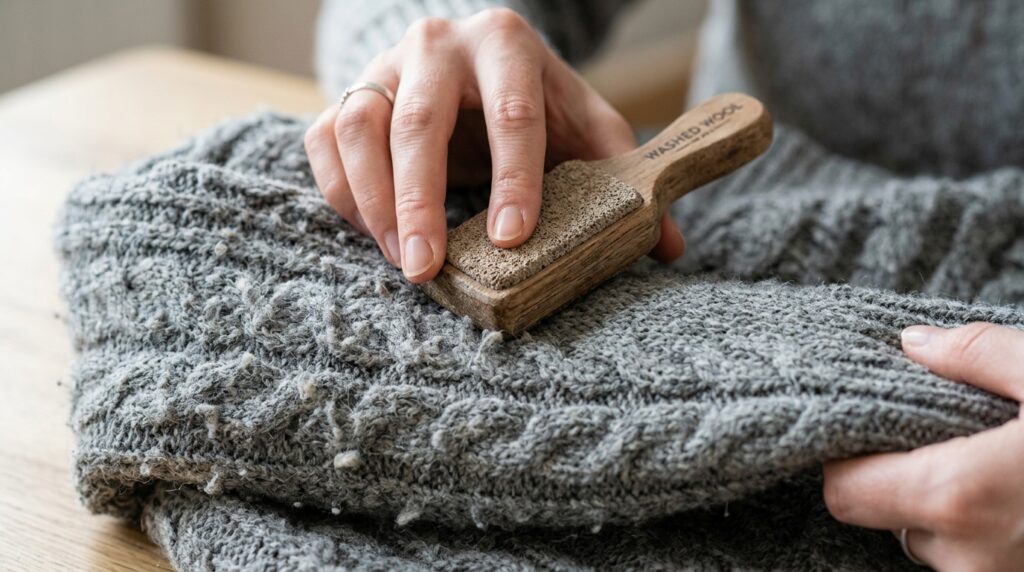
Those small fuzzy balls that show up on sleeves, underarms, and anywhere fabric rubs against fabric (like under a bag strap) are called pilling. It’s a completely normal part of wearing wool, not a sign you’ve done something wrong.
To remove pills:
- Use a sweater comb for finer, more delicate knits.
- Use a sweater stone (often made of pumice) for thicker, chunkier wool.
- Always move the tool gently in the direction of the knit, never against it, to avoid pulling threads.
- Focus on high-friction areas: underarms, sleeves, and anywhere the sweater rubs against a bag or coat.
Washing the sweater inside out and using a mesh laundry bag for machine washes also reduces how much pilling happens in the first place, since it limits the friction between the sweater and other fabric surfaces.
Storing a Wool Sweater Between Washes and Seasons
How you store wool clothes matters almost as much as how you wash it.
Always fold, never hang. Hanging a wool sweater on a hanger over time stretches the shoulders out of shape, since the fabric’s own weight pulls down on those two narrow points. Folding distributes the weight evenly.
Make sure it’s completely clean and dry before long-term storage. Any leftover body oils, sweat, or food residue can attract moths, even if the stain itself isn’t visible.
Use a breathable storage container for seasonal storage, like a cotton garment bag or a sealed plastic bin with cedar blocks or lavender sachets, both of which are natural moth deterrents.
Keep it away from direct sunlight and damp areas, like a humid basement or an attic without ventilation, both of which can encourage mildew or fading over months of storage.
What to Do If Your Wool Sweater Already Shrunk
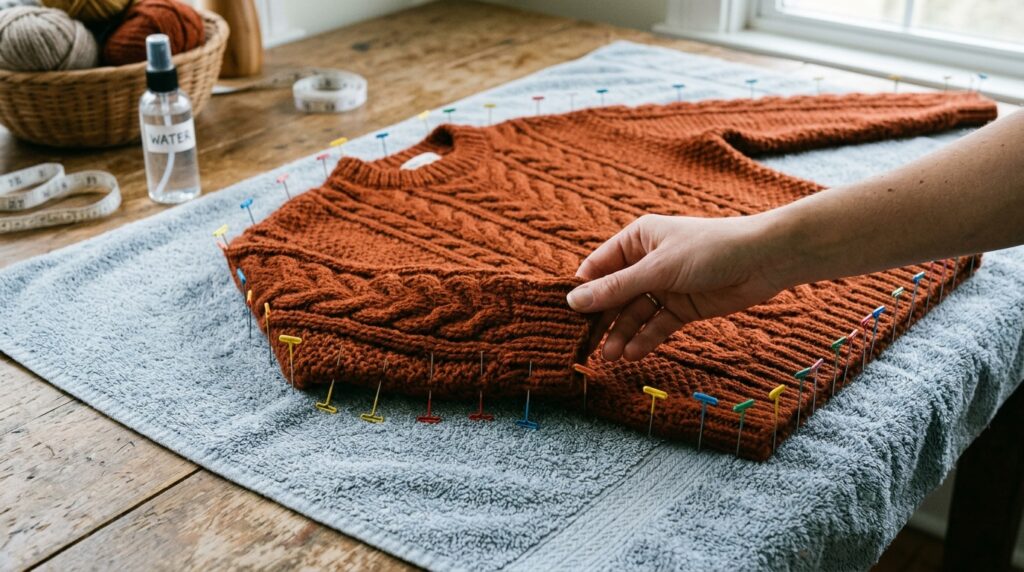
If you’re reading this after the damage is already done, there’s a method worth trying before giving up on the sweater entirely.
- Fill a basin with lukewarm water and add a wool wash or a small amount of hair conditioner. The conditioner helps relax and soften the fibers.
- Submerge the shrunken sweater and let it soak for around 20–30 minutes.
- Gently squeeze out the excess water — don’t wring it.
- Lay the sweater flat on a towel and very gently stretch it back toward its original dimensions, working slowly and evenly across the whole garment rather than pulling hard on one section.
- Pin the edges in place on the towel if you have sweater-blocking pins, to help it hold the stretched shape as it dries.
- Let it air dry completely in that stretched position.
It’s worth setting realistic expectations here: this method works best for mild shrinkage, where the felting hasn’t gone too far. If the fibers have fully matted and interlocked — true felting — the change is generally permanent, and stretching can only offer a partial improvement at best, not a full reversal.
Expert Tips for Long-Lasting Wool Care
A few extra habits that experienced wool owners swear by:
- Always do a patch test with a new detergent on an inside seam before washing the whole sweater, especially with vintage or hand-knit pieces.
- Skip the daily wear. Rotating between two or three sweaters rather than wearing one constantly reduces wash frequency and extends the life of each piece.
- Air it out between wears. Hanging a sweater near an open window for an hour can refresh it without a full wash.
- Avoid hot water at every stage, including rinsing — a sudden temperature change between wash and rinse water can itself contribute to felting.
- Brush woven wool items (like coats) with a soft-bristled brush in the direction of the weave to remove surface dust before it builds up.
- Trust the lowest-risk method when unsure. If you’re not certain whether a sweater is machine-safe, hand washing is always the safer default.
Pros and Cons of Hand Washing vs. Machine Washing Wool
| Pros | Cons | |
|---|---|---|
| Hand Washing | Lowest shrinkage risk, full control over temperature and handling, gentle on delicate or hand-knit pieces | Takes more time, requires a sink or basin, more physical effort |
| Machine Washing | Faster, less hands-on effort, convenient for everyday wool basics | Higher risk if cycle/settings are wrong, depends on having a wool or delicate cycle available |
Neither method is universally “better” — it depends on the specific sweater, its care label, and how much time you have. A delicate hand-knit cashmere blend deserves hand washing every time. A sturdy, machine-washable wool crewneck you wear weekly can usually handle the wool cycle just fine.
Frequently Asked Questions
1. Can you put a wool sweater in the dryer?
No. Heat combined with the tumbling motion of a dryer is one of the fastest ways to shrink and felt a wool sweater, often within a single cycle. Always air dry wool flat, away from direct heat sources.
2. Is cold water or warm water better for washing wool?
Cold to lukewarm water is best, generally staying below about 86°F (30°C). Hot water causes the fiber scales to open more aggressively, which significantly raises the risk of shrinkage and felting.
3. Can you use regular laundry detergent on a wool sweater?
It’s best to avoid it. Standard detergents often contain enzymes designed to break down protein stains, and since wool is a protein fiber, those same enzymes can weaken and damage it over time. A wool-specific detergent or a mild, enzyme-free cleanser is the safer choice.
4. How long should you soak a wool sweater when hand washing?
Somewhere between 10 and 30 minutes is typical. This gives the detergent enough time to lift dirt and oils without requiring any scrubbing, which is what actually causes fiber damage.
5. Why does my wool sweater smell even though it looks clean?
Wool is naturally odor-resistant, so a lingering smell after one or two wears is unusual unless it’s been exposed to sweat, smoke, or food odors. Airing it out near an open window for a few hours often resolves mild odors without a full wash.
Final Thoughts
Washing a wool sweater isn’t actually complicated — it just rewards a little patience over speed. Cold or lukewarm water, gentle handling, no wringing, and a flat dry away from direct heat will carry almost any wool garment through years of wear without shrinking or losing its shape.
The next time laundry day rolls around, skip the guesswork. Check the label, choose hand washing or the wool cycle accordingly, and give your sweater the gentle treatment it actually needs. Your favorite knit will thank you by lasting for many winters to come.

