
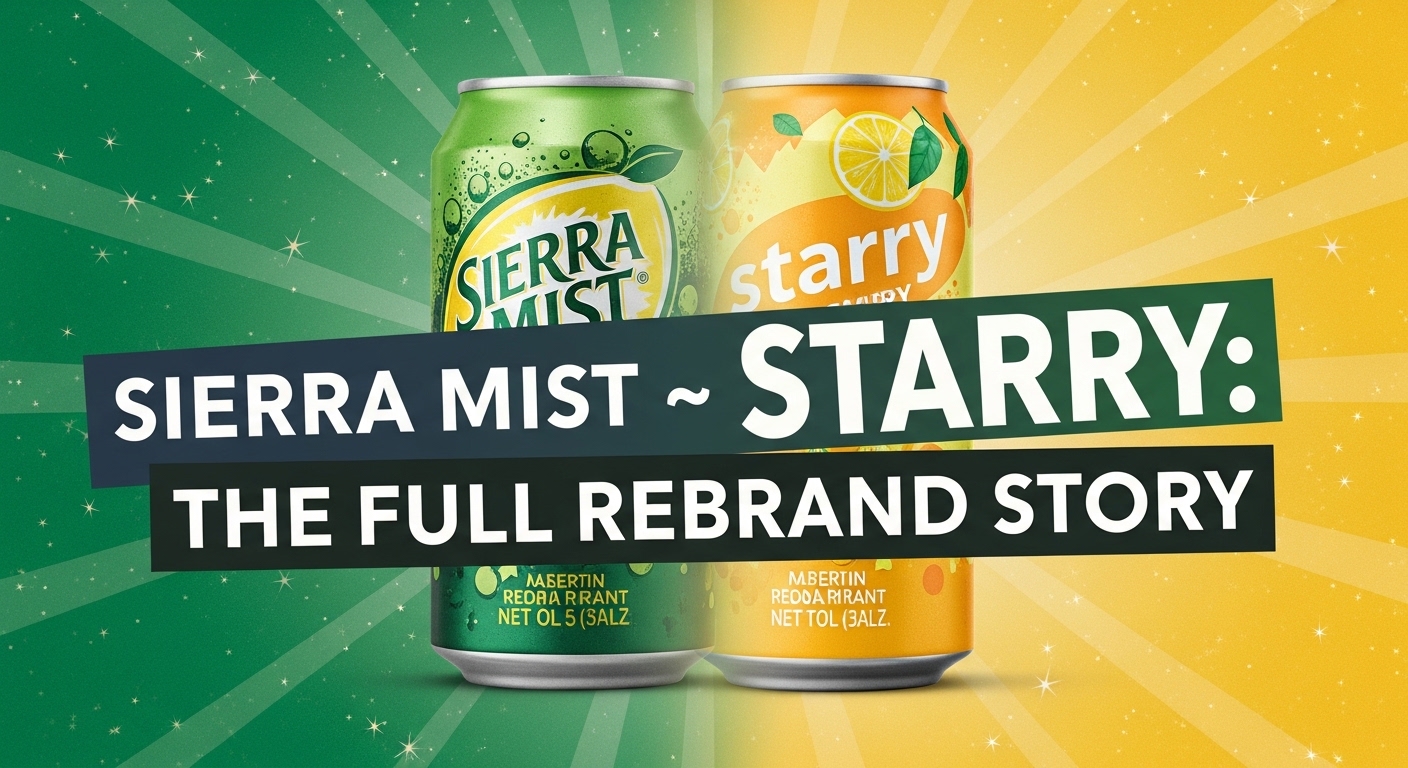
Introduction: The Soda Shelf Just Got a New Name
You grabbed a lemon-lime soda at the gas station. The green Sierra Mist you used to reach for? Gone. In its place: a sleek can called Starry.
If you’ve been asking yourself “why did Sierra Mist change its name?” or “what was Starry called before?” — you’re not alone. The rebrand caught a lot of soda drinkers off guard, and the questions have been pouring in ever since.
This article covers everything: the full history of Sierra Mist, why PepsiCo decided to kill off a 20-year-old brand, what exactly Starry is, how it compares to Sprite and Sierra Mist, and whether the switch was actually worth it.
Let’s get into it.
What Was Sierra Mist? A Brief History
Sierra Mist was PepsiCo’s answer to Coca-Cola’s Sprite. It was a lemon-lime carbonated soft drink, clear in color, and was positioned as a lighter, refreshing alternative to colas.
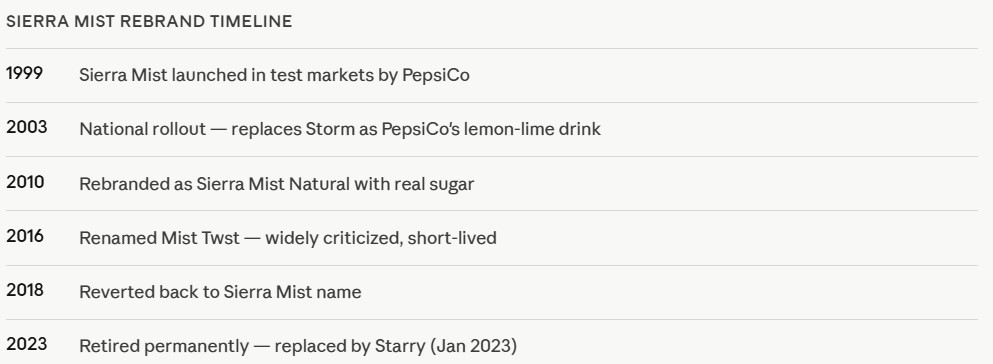
PepsiCo first launched Sierra Mist in 1999 as a test product in select U.S. markets. By 2003, it had gone national, officially replacing the older Mountain Dew-adjacent lemon-lime drink called Storm in PepsiCo’s lineup.
Over its two-decade run, Sierra Mist went through several identity crises:
- 2010: Rebranded as Sierra Mist Natural — PepsiCo swapped high-fructose corn syrup for real sugar to attract health-conscious consumers.
- 2013: The word “Natural” was dropped. It became simply Sierra Mist again, reformulated once more.
- 2016: Renamed to Mist Twst (yes, without the vowels), in a short-lived attempt to modernize the brand.
- 2018: PepsiCo reversed course and brought back the Sierra Mist name after the Mist Twst experiment didn’t resonate with consumers.
Despite surviving all those pivots, Sierra Mist was always a distant second to Sprite in the lemon-lime category. Market research consistently showed that Sprite dominated with a substantially larger market share, leaving Sierra Mist to fight for scraps.
Why Did Sierra Mist Change Its Name to Starry?
This is the big question, and the answer involves a mix of marketing strategy, brand fatigue, and competitive pressure.
The Official Reason: A Full Reset
In January 2023, PepsiCo officially announced the launch of Starry, describing it as a new lemon-lime soda brand built for a new generation — specifically Gen Z. It wasn’t just a name change. PepsiCo framed Starry as an entirely new product with a new brand identity, new flavor profile, and new marketing strategy.
The company’s messaging pointed to a desire to compete more aggressively against Sprite, which has long dominated the lemon-lime segment. In an interview with Ad Age, PepsiCo’s chief marketing officer highlighted the brand’s intent to create something with more cultural relevance.
Brand Fatigue Was Real
Sierra Mist had an identity problem. After years of reformulations, name swaps, and inconsistent marketing, the brand had lost its clarity. Consumers weren’t sure what Sierra Mist stood for anymore.
Mist Twst — the 2016 rebrand — was widely mocked and considered a failed experiment. Even after reverting to Sierra Mist in 2018, consumer trust and enthusiasm never fully recovered.
When a brand has been through that many changes, sometimes a clean break is more effective than another face-lift.
The Sprite Problem
Here’s the hard truth: Sierra Mist never won the lemon-lime war. According to Beverage Digest, Sprite consistently outsold Sierra Mist by a wide margin in the U.S. lemon-lime carbonated beverage market.
PepsiCo likely calculated that Sierra Mist’s brand equity had become a liability — the name carried too much baggage, and building a fresh identity was smarter than continuing to prop up an underperformer.
Targeting a Younger Audience
Starry’s branding, messaging, and early campaigns were clearly aimed at younger consumers. The name itself evokes something cosmic and energetic — very different from the “mountain fresh” imagery that Sierra Mist leaned on.
PepsiCo invested in NBA sponsorships and pop culture tie-ins for Starry’s launch, signaling a clear intent to position the drink as culturally cool rather than just a grocery shelf staple.
What Is Starry Soda?
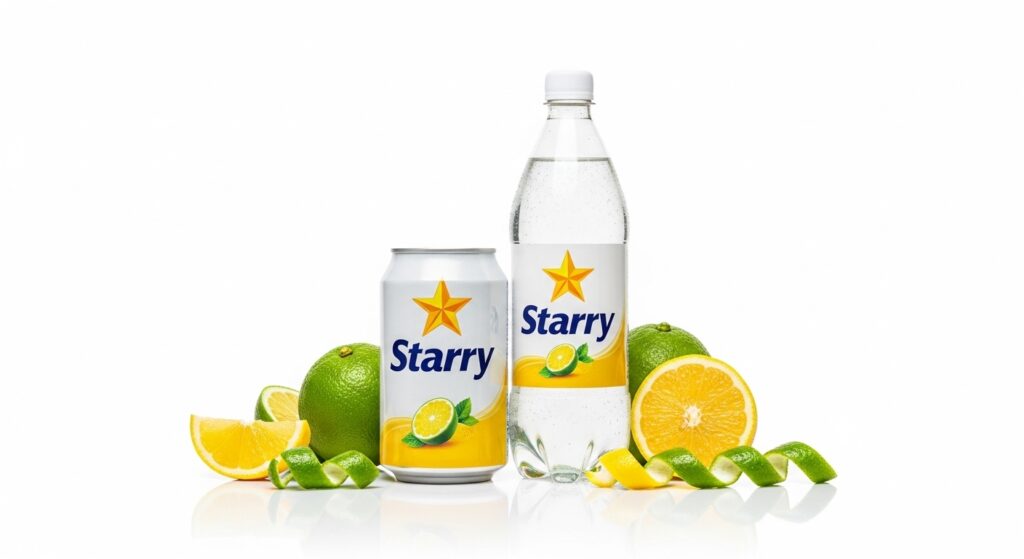
Starry is PepsiCo’s new lemon-lime carbonated soft drink, launched nationally in the United States in January 2023. It directly replaced Sierra Mist on store shelves.
Key facts about Starry:
| Feature | Details |
|---|---|
| Launch Date | January 2023 |
| Manufacturer | PepsiCo |
| Flavor Profile | Lemon-lime, crisp, slightly sweet |
| Sweetener | High-fructose corn syrup (regular); aspartame + acesulfame potassium (diet) |
| Calories (12oz) | 140 calories (regular) |
| Diet Version | Starry Zero Sugar |
| Available Sizes | Cans, 2-liter bottles, 20oz bottles |
Starry is caffeine-free and made with real lemon and lime flavors, according to PepsiCo’s product descriptions. The taste is described by the company as crisp and clean — more citrus-forward than Sierra Mist.
Who Owns Starry Soda?
Starry is owned by PepsiCo, one of the world’s largest food and beverage companies, headquartered in Purchase, New York. PepsiCo also owns brands like Mountain Dew, Gatorade, Tropicana, and of course, Pepsi-Cola.
Starry vs Sierra Mist: What Actually Changed?
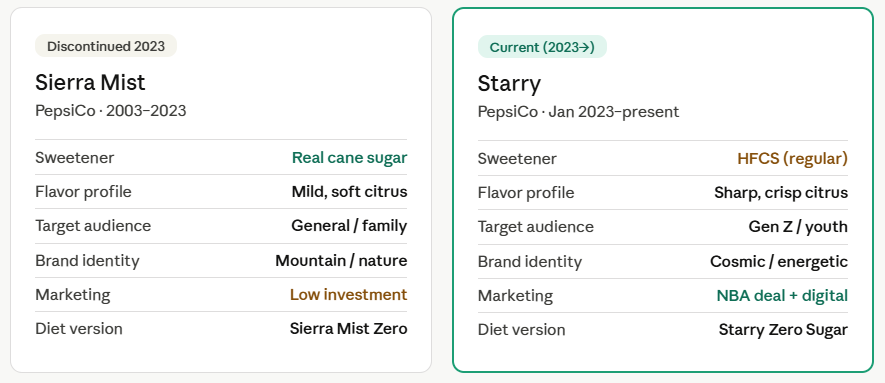
This is where it gets interesting. Starry isn’t just Sierra Mist with a new label. Here’s a breakdown of the real differences:
Taste
Consumer taste tests and early reviews noted that Starry has a sharper, more pronounced citrus kick compared to Sierra Mist. Sierra Mist was often described as mild and subtle, which some liked and others found forgettable.
Starry leans into the lemon-lime more aggressively, which some reviewers say brings it closer to Sprite’s flavor territory.
Sweetener
Sierra Mist (in its 2018–2022 form) used real sugar. Starry switched back to high-fructose corn syrup (HFCS) for the regular version — a decision that drew criticism from health-conscious consumers who preferred the natural sugar formula.
This is a notable trade-off and a point many original Sierra Mist fans bring up.
Branding and Design
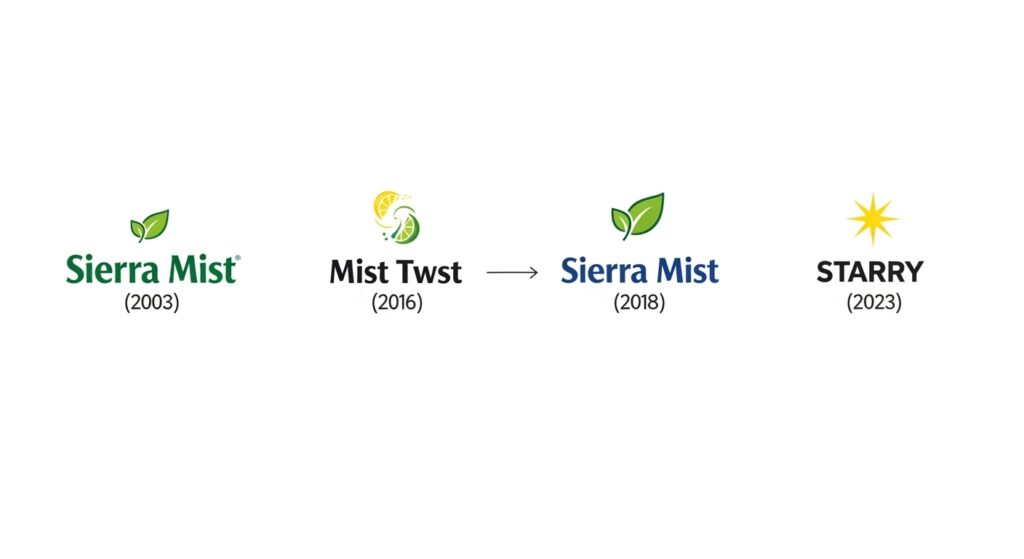
Sierra Mist used green mountain/nature imagery — calm, natural, familiar. Starry uses a star motif with bright, energetic visuals — bold, modern, targeted at younger buyers.
Marketing Strategy
Sierra Mist’s marketing was never particularly aggressive or culturally relevant. Starry launched with NBA partnerships, billboard campaigns in major cities, and a very deliberate social media presence aimed at Gen Z audiences.
Is Starry the Same as Sprite?
Short answer: No, Starry is not Sprite. They’re both lemon-lime sodas, but they’re made by rival companies and have distinct flavors.
Sprite is made by Coca-Cola and has been the dominant lemon-lime soda in the U.S. for decades. It has a clean, crisp taste with balanced sweetness.
Starry — made by PepsiCo — is a direct competitor to Sprite, and the two sodas have a similar flavor profile. But blind taste testers and consumer reviewers consistently note differences:
- Starry tends to taste slightly sweeter and more citrus-forward
- Sprite has a cleaner, more neutral aftertaste
- Sierra Mist (the predecessor) was softer and milder than both
Think of it like the Pepsi vs. Coke dynamic, but in the lemon-lime lane. Similar category, distinctly different products.
Why Did Pepsi Change the Name of Sierra Mist? (The Strategic Layer)
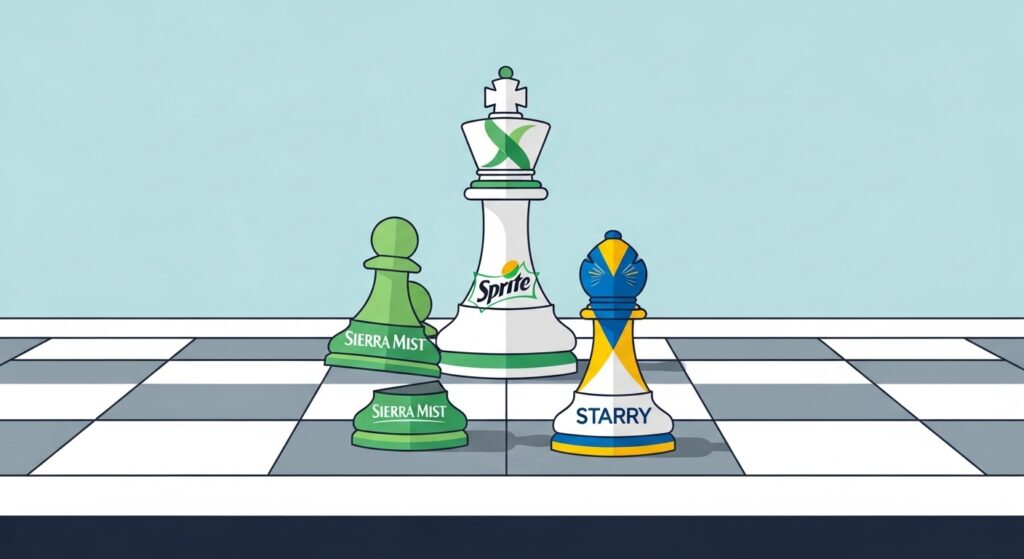
Let’s dig one layer deeper into the business reasoning.
Market Share Was Stagnant
Euromonitor International and industry reports have tracked the lemon-lime soda segment for years. Sierra Mist’s volume share was not growing meaningfully, even during periods when the overall carbonated soft drink market dipped.
PepsiCo was essentially spending marketing dollars on a brand that wasn’t gaining ground.
The Reformulation Opportunity
By retiring Sierra Mist, PepsiCo could introduce Starry with a new formulation without the burden of consumer comparisons to a beloved original. This is a classic marketing tactic: rather than reformulating an existing product (which almost always draws backlash), launching a new brand gives you a clean slate.
Gen Z Doesn’t Have Brand Loyalty to Sierra Mist
Older millennials and Gen X consumers might have had some nostalgia for Sierra Mist. But for Gen Z, the brand meant very little. By launching Starry fresh, PepsiCo was betting that younger consumers would simply adopt the new brand without mourning the old one.
This is backed by broader consumer behavior research from Nielsen, which shows Gen Z consumers respond better to new, culturally fresh branding than to legacy brands trying to reinvent themselves.
The Name “Sierra Mist” Had Lost Its Power
Brand names carry emotional weight. “Sierra” evokes mountain freshness — which felt relevant in the 2000s health-and-nature marketing boom. By the 2020s, that imagery felt dated.
“Starry” is punchy, modern, and scalable across multiple product lines. It also works internationally without the geographic/nature connotation that “Sierra” carries.
The Starry Launch: What Happened in January 2023?

Starry officially hit shelves across the United States in January 2023, timed to coincide with the start of the NBA season — a key marketing moment given PepsiCo’s new partnership with the league.
The launch was accompanied by:
- National TV and digital advertising campaigns
- NBA sponsorship integration, with Starry logos visible at games and in broadcast ads
- Social media campaigns targeting TikTok and Instagram audiences
- Sampling events in major metro markets
- A Zero Sugar version launching alongside the regular product, signaling PepsiCo’s awareness of the health-conscious consumer segment
Marketing trade publication Ad Age covered the launch extensively, noting that PepsiCo was making a significant brand investment to make Starry succeed where Sierra Mist had struggled.
Initial sales data and social media buzz suggested the new branding was resonating with younger consumers, though long-term market share data would take time to materialize.
Pros and Cons of the Rebrand
Pros of the Starry Rebrand
- Clean slate branding — No legacy baggage from Sierra Mist’s many identity crises
- Stronger citrus flavor — Many taste testers prefer the more assertive lemon-lime profile
- Modern, youthful appeal — Clear positioning for a younger demographic
- Aggressive marketing investment — NBA deal and national campaigns gave Starry visibility Sierra Mist never had
- Zero Sugar version included at launch — Smart move for health-aware consumers
Cons of the Starry Rebrand
Brand history erased — Twenty-plus years of brand building discarded in favor of a fresh start
Switched from real sugar to HFCS — A step backward for consumers who preferred Sierra Mist’s natural sugar formula
Alienated loyal Sierra Mist fans — Some customers felt their preferred drink was taken away without warning
Unproven long-term staying power — The rebrand’s success still depends on sustained performance against Sprite
Expert Tips: What Soda Marketers Can Learn From This Rebrand
The Sierra Mist → Starry rebrand offers several lessons relevant to any brand considering a similar move:
1. Don’t Rebrand Incrementally Forever Sierra Mist went through at least four significant name/identity changes in 20 years. Each small rebrand added confusion rather than clarity. Eventually, a hard reset became the only logical option.
2. Align Flavor With Brand Identity A major criticism of Sierra Mist was that its mild flavor didn’t match any strong brand identity. Starry’s sharper citrus profile aligns better with its bold, energetic branding.
3. Launch Culture-First, Not Shelf-First Starry’s NBA partnership and Gen Z-focused campaigns show that modern soda brands can’t just rely on store placement — they need cultural relevance.
4. Time Your Launch Strategically Launching in January — tied to NBA season and New Year health goals — was tactically smart. It gave Starry maximum visibility at a moment when consumers are already thinking about beverages and lifestyle choices.
5. Include a Zero Sugar Option From Day One Consumers increasingly seek lower-calorie options. Launching Starry Zero Sugar alongside the original version was a smart move that Sierra Mist never consistently executed.
Where Is Starry Available?
Starry is available nationwide across the United States in grocery stores, convenience stores, fast food chains, and online.
Common retail partners include:
- Walmart
- Target
- Amazon Fresh
- Most regional supermarket chains
- 7-Eleven and other convenience retailers
Starry is also available at select fast food chains and fountain beverage stations that carry PepsiCo products. If you’re at a venue with a Pepsi soda fountain, check the lemon-lime option — it’s likely Starry now.
Starry Zero Sugar: The Healthier Option
For calorie-conscious consumers, Starry Zero Sugar is the diet version — sweetened with aspartame and acesulfame potassium instead of high-fructose corn syrup.
It contains 0 calories per serving and maintains a similar citrus profile to the regular version, though some reviewers note the aftertaste is slightly different, as is common with artificial sweetener-based sodas.
Starry Zero Sugar is worth trying if you:
- Prefer diet sodas but want something beyond Diet Coke or Sprite Zero
- Are looking for a caffeine-free, zero-calorie lemon-lime option
- Liked Diet Sierra Mist and want to see how the replacement compares
FAQs: Sierra Mist Rebrand and Starry Soda
1. Is Starry the same as Sierra Mist?
Starry replaced Sierra Mist, but it’s not identical. The brand, name, logo, and formula are all different. Starry has a more pronounced citrus flavor and uses high-fructose corn syrup, while the final version of Sierra Mist used real sugar. So while they occupy the same product category, they are distinct drinks.
2. Why did Sierra Mist change its name to Starry?
PepsiCo retired Sierra Mist due to declining brand equity, a history of inconsistent identity, and a strategic decision to compete more effectively against Sprite with a completely fresh brand targeted at younger consumers.
3. Who owns Starry soda?
Starry is owned and manufactured by PepsiCo, the same company that made Sierra Mist. PepsiCo is one of the largest beverage and food companies in the world.
4. Is Starry better than Sprite?
Taste is subjective. Starry has a sharper lemon-lime flavor profile, while Sprite is known for its cleaner, more neutral taste. Consumer taste comparison reviews are mixed, but both sodas have loyal fans. The best way to answer this is to try both and decide for yourself.
5. Can you still buy Sierra Mist anywhere?
No. Sierra Mist was officially discontinued in January 2023 and has been replaced by Starry across all U.S. retail and foodservice channels. Some old stock may have lingered briefly, but Sierra Mist is no longer in production
Conclusion: The Rebrand Was Inevitable — But Was It Smart?
The Sierra Mist to Starry rebrand wasn’t a surprise to anyone watching the beverage industry closely. A brand with four identity changes in two decades, a market share that never caught Sprite, and a name rooted in outdated “mountain fresh” imagery was overdue for either a hard reset or retirement.
PepsiCo chose the reset — and did it boldly. Starry launched with a clear identity, a smarter marketing playbook, and an actual strategy for winning over younger consumers.
Whether Starry ultimately succeeds in closing the gap with Sprite remains to be seen. But the Sierra Mist rebrand was, at minimum, the most logical next step for a brand that had run out of credible ways to reinvent itself under the old name.
Want to stay updated on the latest moves in the beverage industry? Subscribe to our newsletter for weekly breakdowns of brand strategy, product launches, and consumer trends — straight to your inbox.

