
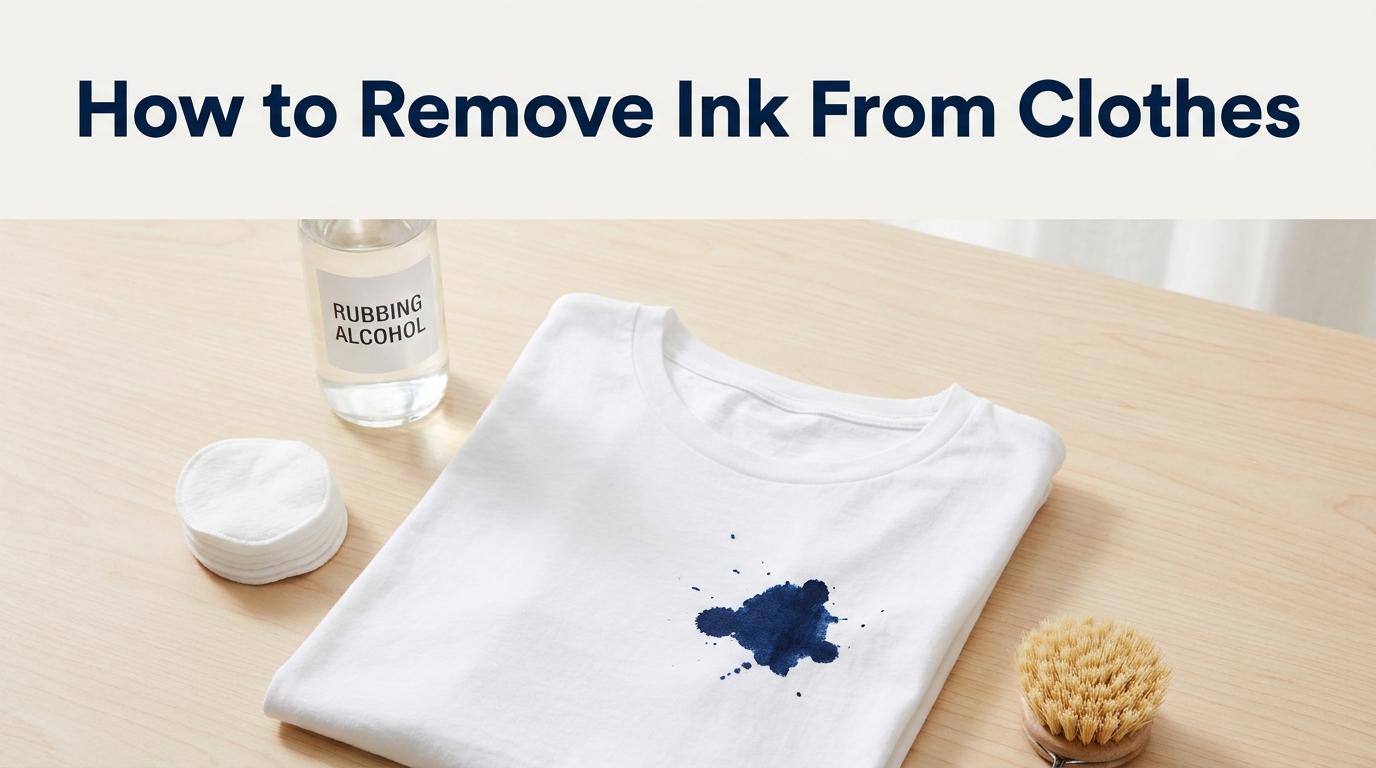
A pen exploding in a pocket, a toddler’s art project gone rogue, a leaky fountain pen on a work shirt — ink stains show up when you least expect them. The good news is that how to remove ink from clothes comes down to a handful of household ingredients and a little patience, not an expensive trip to the dry cleaner. Below is a practical, fabric-by-fabric approach that works whether the stain is fresh or already set.
Why Ink Stains Are So Stubborn

Ink isn’t one substance. It’s a mix of dyes, pigments, and carrier liquids, and that mix is exactly why some stains vanish in one wash while others seem permanent no matter what you try.
Water-Based vs. Oil-Based Ink
- Water-based ink comes from fountain pens, gel pens, and washable markers. It usually lifts with plain soap and cool water.
- Oil-based ink, the kind found in most ballpoint pens, clings to fabric fibers because it’s part grease. It needs a solvent like rubbing alcohol to break down.
- Alcohol-based ink, used in permanent markers, is the toughest of the three and often requires repeated treatment.
Knowing which type you’re dealing with saves you from wasting time on the wrong method. A detailed fabric stain removal reference is worth bookmarking if you’re ever unsure which category a stain falls into.
What You’ll Need Before You Start
You probably already own most of these items:
- Rubbing (isopropyl) alcohol, 70% or higher
- Clean white cloths or paper towels
- Liquid dish soap
- A soft-bristled toothbrush
- White vinegar
- Liquid laundry detergent
- Cold water
Skip anything scented or dyed. Colored soaps and fabric softeners can leave their own residue on top of the stain you’re trying to fix.
How to Remove Ink From Clothes: Step-by-Step

- Act fast. The longer ink sits, the deeper it soaks into the fibers. Treat the spot as soon as you notice it.
- Blot, don’t rub. Press a clean paper towel onto the stain to lift excess ink. Rubbing spreads it further and pushes it deeper into the weave.
- Protect the back layer. Slide a folded paper towel or old cloth underneath the stained area so ink doesn’t bleed through to the other side of the garment.
- Apply your solvent. For oil-based ink, dab rubbing alcohol onto the stain with a cotton ball, working from the outer edge inward. For water-based ink, cool water and a little dish soap often does the job.
- Blot again. Switch to a clean section of cloth as it picks up ink, and keep going until no more color transfers.
- Rinse from the back. Turn the garment inside out and run cool water through the stained area to push the loosened ink out rather than deeper in.
- Pretreat and wash. Apply a small amount of liquid detergent directly to the spot, then launder according to the care label — but skip the dryer.
- Check before drying. Heat sets ink permanently, so inspect the fabric in daylight before it goes anywhere near a dryer. If a shadow remains, repeat the treatment.
This step-by-step ink stain removal process follows this same logic and is worth bookmarking for future spills.
Removing Ink From Specific Fabrics

Not every garment can handle the same treatment. A method that’s perfectly safe on jeans could ruin silk.
Cotton and Denim
These sturdy fabrics tolerate rubbing alcohol well. A detailed breakdown for ink removal on tougher fabrics explains how ethanol-based solvents work best on oil-based ballpoint stains without damaging the weave.
Silk and Wool
Delicate fibers need a gentler touch. Dilute rubbing alcohol with an equal part of water, and dab rather than soak. If you’re at all unsure, a professional cleaner is the safer bet for silk blouses or wool suiting.
Polyester and Synthetic Blends
Synthetics can react unpredictably to solvents, sometimes losing shape or shine. Test in a hidden spot first, and stick to shorter contact times with your chosen solvent.
Ink Type and Solvent Quick Reference
| Ink Type | Common Source | Best First Solvent | Fabric Caution |
|---|---|---|---|
| Water-based | Fountain pens, washable markers | Cool water + dish soap | Safe for most fabrics |
| Oil-based | Ballpoint pens | Rubbing alcohol | Test on colored or delicate fabric |
| Alcohol-based | Permanent markers | Rubbing alcohol, repeated applications | May require professional treatment |
| Printer/toner | Inkjet or laser printers | Cold water rinse, then detergent | Avoid heat until fully removed |
Mistakes That Make Ink Stains Worse
- Using hot water first. Heat bonds ink to fibers before you’ve had a chance to lift it.
- Scrubbing aggressively. This spreads the stain rather than removing it.
- Tossing the item in the dryer too soon. Always confirm the stain is gone before applying heat.
- Mixing cleaning chemicals. Never combine bleach and ammonia-based products; the fumes are genuinely dangerous.
- Ignoring the care label. Some fabrics explicitly warn against alcohol or solvent-based treatments.
A tested side-by-side comparison of ink-removal methods backs this up — isopropyl alcohol consistently outperformed shortcuts like hand sanitizer or hairspray.
Expert Tips for Stubborn or Dried Ink Stains
If the stain has already dried or been through the wash and dryer once, don’t give up yet.
- Reapply rubbing alcohol and let it sit for a few minutes longer than you would on a fresh stain.
- Try a mix of white vinegar and dish soap as a second-pass option; the acidity helps break down set-in dye.
- For truly stubborn marks, this brush-and-soak method for set-in ink is built for exactly this situation.
- Layer treatments rather than switching products constantly — give one method three or four honest attempts before moving to another.
This same layering principle applies to other stubborn household marks, like the oil-and-discoloration combination you’ll find when learning how to treat avocado stains on fabric, where treating the grease component first makes everything else easier.
Pros and Cons of Common Ink-Removal Methods
| Method | Pros | Cons |
|---|---|---|
| Rubbing alcohol | Fast, effective on oil-based ink, cheap | Can fade some dyed fabrics |
| Dish soap + water | Gentle, safe for most fabrics | Weak against set-in oil-based ink |
| White vinegar | Helps loosen dried stains | Slower, may need repeat treatments |
| Nail polish remover | Strong on ballpoint ink | Risky on synthetics and colored fabric |
| Professional cleaning | Safest for delicates and valuables | Costs money, takes longer |
When to Call a Professional
Some situations are better left to a dry cleaner:
- The garment is silk, wool suiting, or otherwise labeled dry-clean only.
- The stain covers a large area or has gone through the dryer already.
- You’re dealing with a sentimental or expensive item you don’t want to risk.
- Home treatments have been tried twice without improvement.
A cleaner explains the reasoning well in this rundown on why heat is the single biggest mistake in home ink removal — once a stain is heat-set, even professional-grade solvents may not fully lift it.
Frequently Asked Questions
Does rubbing alcohol damage colored clothing?
It can, especially on cheaper dyes or synthetic blends. Always test on an inside seam first, and if the color starts to lift or bleed, dilute the alcohol with water or switch to a gentler method.
Can toothpaste remove ink stains?
Some people use it as a mild abrasive on cotton, but results are inconsistent and it works better on scuffs than true ink stains. Rubbing alcohol or dish soap are more reliable first choices.
What removes permanent marker from clothes?
Rubbing alcohol is the most consistent option, though permanent marker often needs several rounds of treatment. Dab, blot, and repeat rather than expecting one application to fully clear it.
Is it too late if the ink stain already went through the dryer?
Not necessarily, but it’s harder. Reapply your solvent, let it sit longer than usual, and repeat the process a few times. If there’s no improvement after two or three attempts, a professional cleaner is your best next step.
How do you get ink out of a white shirt without bleach?
Rubbing alcohol combined with a pre-wash stain remover usually works without needing bleach at all. Bleach can actually set some ink stains rather than lifting them, so it’s often best avoided.
Final Thoughts
Ink stains look worse than they usually are. With the right solvent for the ink type, a little patience, and cool water instead of heat, most stains come out without needing a dry cleaner at all. Keep a small bottle of rubbing alcohol in your laundry cabinet, and the next pen explosion won’t feel like an emergency.

