
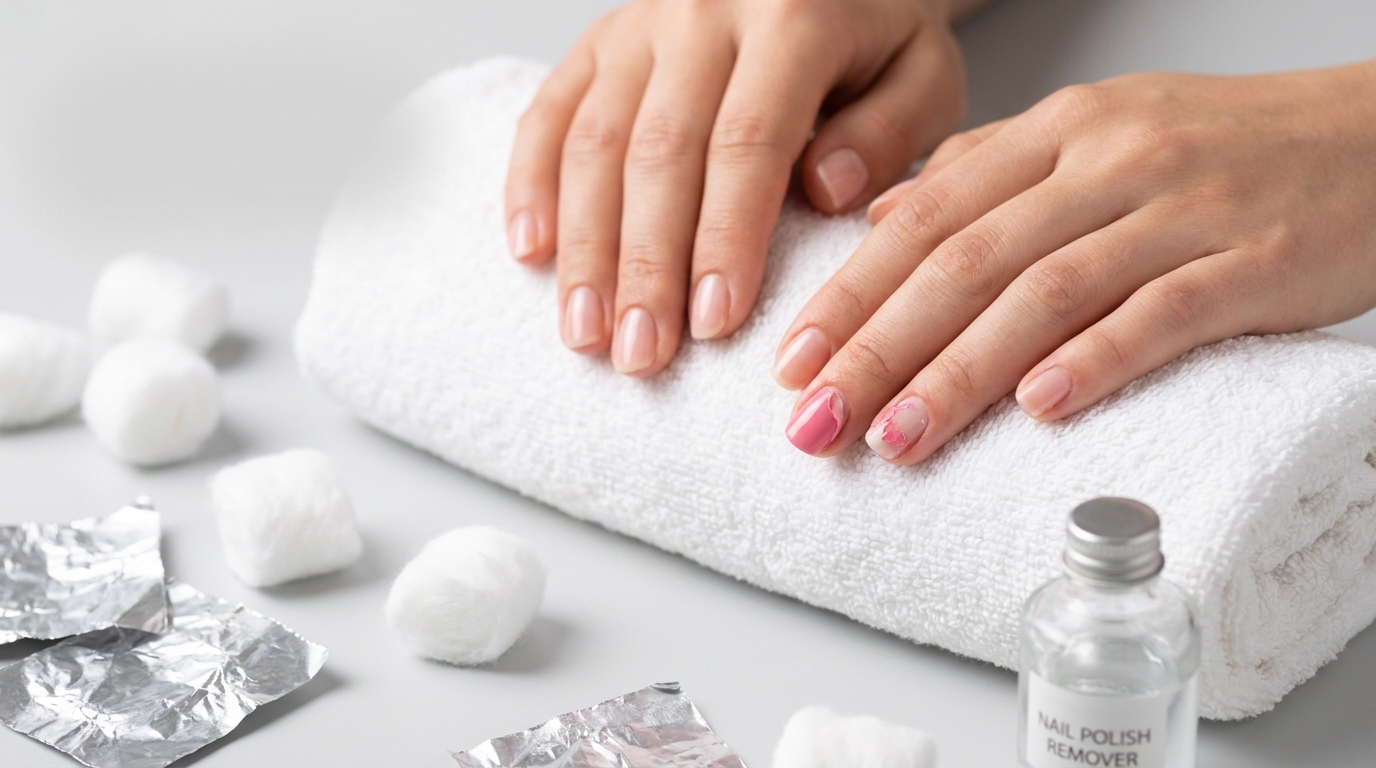
Your gel manicure looked perfect two weeks ago. Now it’s chipped at the edges, growing out awkwardly, and you just want it gone. If you’re wondering how to get gel nail polish off without a salon visit or a trip to the ER of nail damage, the short answer is this: soak your nails in 100% acetone for about 10 to 15 minutes, then gently push off the softened gel with a wooden cuticle stick. No scraping, no peeling, no shortcuts.
That single sentence covers the basics, but gel polish is stubborn stuff, and doing it wrong is one of the fastest ways to thin out your natural nails. This guide walks through the full acetone method step by step, a few gentler options if you’d rather skip the harsh chemicals, the mistakes that cause the most damage, and what to do for your nails once the polish is finally off.
Why Gel Polish Is So Hard to Remove
Regular nail polish air-dries. Gel polish is different. It’s cured, or hardened, under a UV or LED lamp, which triggers a chemical reaction that turns the liquid gel into a tough, flexible plastic-like coating bonded to the nail. That bond is exactly why gel manicures resist chipping for two to three weeks, and it’s also why a cotton ball and a quick wipe won’t touch it.
Because gel polish is chemically cured rather than simply dried, it needs a solvent strong enough to break down that cured layer. Acetone is currently the most reliable option available for home use, which is why nearly every dermatologist and nail professional recommends it over picking, peeling, or filing the polish off outright.
What You’ll Need Before You Start
Gather everything first so you’re not hunting for supplies mid-soak. Most of these items are already in a bathroom cabinet.
- 100% pure acetone (not a diluted “nail polish remover” blend)
- Cotton balls or cotton pads, cut or torn to nail size
- Aluminum foil or plastic food wrap, cut into small squares
- A coarse nail file or buffer
- A wooden or metal cuticle stick (orangewood sticks work well and won’t scratch the nail bed)
- Petroleum jelly or cuticle oil
- A bowl for soaking, if you prefer the dip method
- A towel to protect your work surface
According to board-certified dermatologists, using plastic food wrap instead of foil creates a tighter seal around the nail, which keeps acetone from dripping and helps it work faster.
How to Get Gel Nail Polish Off With Acetone (Step-by-Step)
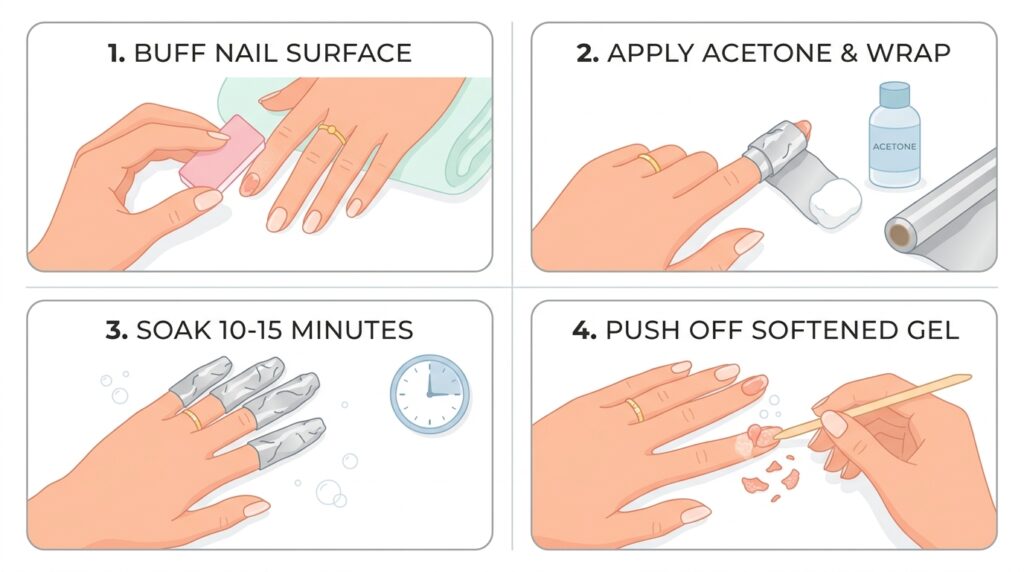
This is the method dermatologists and nail technicians recommend most often. It takes about 20 to 30 minutes for both hands.
- Protect your skin first. Rub a thin layer of petroleum jelly or cuticle oil onto the skin around each nail and the cuticles. This creates a barrier so the acetone irritates your nails and not your skin.
- Rough up the top coat. Using a coarse nail file, gently buff the shiny top layer of each nail until it looks matte. You’re not trying to remove the polish here, just break the sealed surface so the acetone can soak in.
- Soak your cotton. Saturate a piece of cotton ball or cotton pad with acetone for each nail. It should be wet enough to fully cover the nail without dripping everywhere.
- Wrap each nail. Press the soaked cotton onto the nail, then wrap the fingertip tightly in a small square of foil or plastic wrap. A snug wrap traps the acetone against the nail and speeds up softening.
- Wait it out. Let the wraps sit for 10 to 15 minutes. Working in a well-ventilated room matters here, since acetone fumes can be irritating in an enclosed space.
- Check one nail. Unwrap a single nail first. The gel should look wrinkled, bubbled, or slightly lifted. If it’s still shiny and firmly stuck, rewrap and give it another 5 minutes.
- Push, don’t scrape. Use a wooden cuticle stick to gently push the softened gel off, working from the cuticle toward the tip. If any resistance shows up, stop and soak that spot a little longer rather than forcing it.
- Buff lightly. Once all the gel is off, lightly buff the nail surface to smooth out any leftover residue. Avoid heavy buffing, which thins the nail plate.
- Wash and moisturize. Wash your hands with mild soap to remove any lingering acetone, then apply cuticle oil or hand cream generously.
How Long Should You Soak Gel Nails in Acetone?
Most standard gel polish softens enough to remove within 10 to 15 minutes of soaking. Thicker gel, builder gel, or gel extensions can take closer to 20 minutes. Soaking longer than 20 to 25 minutes generally doesn’t speed things up much further and increases the risk of drying out your skin and nails, so if the polish still won’t budge after that window, stop and try again later rather than pushing through with force.
Removing Gel Polish Without Acetone
Not everyone wants to use acetone, whether it’s because of sensitive skin, the smell, or simply not having any on hand. These alternatives are gentler, but they’re also slower and less reliable, and none of them will fully dissolve a thick or well-cured gel manicure the way acetone does.
- Warm soapy water soak. Soak your nails in warm water with a few drops of dish soap for 15 to 20 minutes, then gently work at the edges with a cuticle stick. This works best on polish that’s already lifting or chipping.
- Dental floss lift. Once an edge of the gel starts to peel, some people carefully slide dental floss underneath to lift sections away. This only works safely if the polish is already loose; forcing it on fully bonded gel can pull off healthy nail with it.
- Cuticle oil soak. Rubbing cuticle oil or a kitchen oil like olive oil into the nail and letting it sit for 10 minutes can soften the edges enough for gentle scraping, though it rarely removes a full manicure on its own.
- High-alcohol hand sanitizer. The alcohol content can help break down thinner gel layers with repeated rubbing, but it’s slow and inconsistent on stubborn polish.
- File it off. A slower, more manual process. Use a coarse file to gradually remove the layers, switching to a finer grit as you get closer to the natural nail. This method carries the highest risk of over-thinning your nails if you’re not careful.
Acetone vs. Non-Acetone Methods
| Method | Typical Time | Effectiveness on Full Gel Manicure | Best For |
|---|---|---|---|
| Pure acetone soak | 10–20 minutes | High | Standard gel polish, most reliable results |
| Warm soapy water | 15–20 minutes | Low to moderate | Polish that’s already lifting or chipped |
| Cuticle or kitchen oil | 10–15 minutes | Low | Softening edges before gentle scraping |
| High-alcohol sanitizer | 20+ minutes, repeated | Low to moderate | Thin, older, or partially worn gel |
| Filing off | 15–30 minutes | Moderate to high | Removing polish without any liquid remover |
Common Mistakes That Damage Your Nails
Most nail damage doesn’t come from acetone itself. It comes from how people try to speed the process up or skip steps.
- Peeling or picking at the gel. This is the single biggest cause of nail damage. Peeling pulls off layers of your natural nail along with the polish, leaving nails thin, weak, and prone to peeling for months afterward.
- Using metal tools aggressively. Digging in with a metal cuticle pusher or tweezers can gouge the nail bed. Stick to wooden or plastic tools and a light touch.
- Skipping the buffing step. Trying to soak off a fully glossy, unbroken top coat takes far longer and tempts people to force the polish off before it’s ready.
- Over-buffing afterward. Sanding too aggressively to smooth the nail can thin the plate significantly, making it more likely to bend, split, or accept the next manicure poorly.
- Soaking too long “just to be safe.” Extended acetone exposure dries out the nail plate and surrounding skin more than it improves results.
- Skipping aftercare. Nails and cuticles need rehydrating after any acetone exposure. Walking away without moisturizing leaves them brittle and more likely to crack.
Is Removing Gel Polish at Home Safe?
Yes, when it’s done correctly. The FDA generally recognizes acetone as safe with a low potential for causing acute or chronic health problems, though it can still irritate skin, eyes, and airways with heavy exposure. The bigger safety concern for most people isn’t the chemical itself, it’s improper technique.
A few precautions are worth taking seriously:
- Use a room with a window open or a fan running. Good ventilation matters whenever you’re using nail products, since inhaling concentrated fumes in a small, closed bathroom can cause headaches or throat irritation.
- Keep acetone away from open flames, lit candles, or cigarettes, since it’s highly flammable.
- Avoid soaking bare, cracked, or broken skin in acetone, which can worsen irritation.
- If you have young children in the house, store acetone out of reach. Applying petroleum jelly to cuticles beforehand helps protect them from acetone-based products, and remover should always be applied carefully to the nails only, not the surrounding skin.
If you experience unusual redness, swelling, or a burning sensation that doesn’t fade after washing, stop using acetone and consult a healthcare provider or dermatologist.
Aftercare: What to Do Once the Gel Is Off
Getting the polish off is only half the job. Nails right after gel removal often look dry, ridged, or slightly discolored. That’s usually temporary, not permanent damage, but the right aftercare speeds up recovery.
- Wash hands with a gentle, fragrance-free soap to remove any leftover acetone residue.
- Apply cuticle oil daily for at least a week to rehydrate the nail plate and surrounding skin.
- Follow with a rich hand cream or petroleum jelly, especially before bed.
- Skip a fresh manicure for a few days if your nails feel thin or sensitive. Giving them a short break allows moisture to return.
- If you notice white patches or ridges, don’t panic. Dermatologists note these are usually surface-level and grow out as the nail regenerates, which typically takes a few months.
Nails naturally hold slightly more moisture underneath a gel coating than when bare, so it’s normal for them to feel a little softer or more flexible right after removal. Give them roughly a day to return to their usual texture before judging how healthy they look.
When to Let a Professional Remove It Instead
Home removal works well for most people, but there are times a salon visit is the smarter call. If you have gel extensions, hard gel (as opposed to soak-off gel polish), acrylics layered under gel, or nails that are already damaged, cracked, or infected, a nail technician has tools and experience that reduce the risk of injury. Hard gel in particular typically cannot be soaked off at all and must be filed down by a professional, since acetone doesn’t break it down the same way it does soak-off gel polish.
If your nails are unusually painful, swollen, or show signs of infection around the cuticle, skip the DIY approach entirely and see a dermatologist or podiatrist rather than continuing to soak or file at home.
Frequently Asked Questions
Does gel nail polish ruin your nails?
Gel polish itself doesn’t inherently damage healthy nails when it’s applied and removed correctly. Most of the damage people associate with gel manicures actually comes from picking, peeling, or over-filing during removal rather than from the polish or the curing process itself.
Can you use regular nail polish remover on gel nails?
Regular, acetone-free nail polish remover is too weak to break down cured gel polish effectively. You’ll need 100% pure acetone, or one of the gentler non-acetone alternatives, though those work more slowly and less completely.
How long does it take to soak off gel nail polish?
Most gel manicures soften enough to remove within 10 to 15 minutes of soaking in pure acetone. Thicker gel or builder gel can take up to 20 minutes, but soaking much longer than that offers little extra benefit.
Why won’t my gel nail polish come off?
If the gel isn’t lifting after 15 to 20 minutes, the top coat likely wasn’t buffed enough before soaking, or the acetone wrap isn’t sealed tightly enough to hold heat and moisture against the nail. Rewrap with a fresh, well-soaked cotton pad and check again in five-minute intervals.
Is it bad to remove gel nail polish without acetone?
It’s not bad for your skin, but non-acetone methods are slower and often leave residue behind, which can tempt people to pick or scrape at the remaining polish. That picking, not the lack of acetone, is what actually causes nail damage.
Can I remove gel polish with just hot water? Hot water alone rarely removes a full gel manicure, since gel is chemically cured rather than water-soluble. It can help loosen polish that’s already chipping at the edges, but it isn’t a reliable standalone method.
How often can I safely remove and reapply gel polish? Most nail professionals recommend leaving at least a short break, generally a few days to a week, between removing one gel set and applying another so nails can rehydrate and recover some flexibility.
Final Thoughts
Learning how to get gel nail polish off without damaging your nails really comes down to patience. Acetone, foil, and a wooden cuticle stick will get the job done safely in about 20 to 30 minutes if you let the polish soften fully instead of forcing it. Skip the peeling, protect your cuticles, and follow up with real aftercare, and your nails should bounce back within a week or two looking just as healthy as before your last manicure.
Removing your own gel polish is just one of many small home routines that save a trip out and a bit of money. If you’re already in DIY mode, you might also want to look at how to get self tanner off hands or how to remove ink from clothes for a couple more quick fixes worth keeping bookmarked.

