
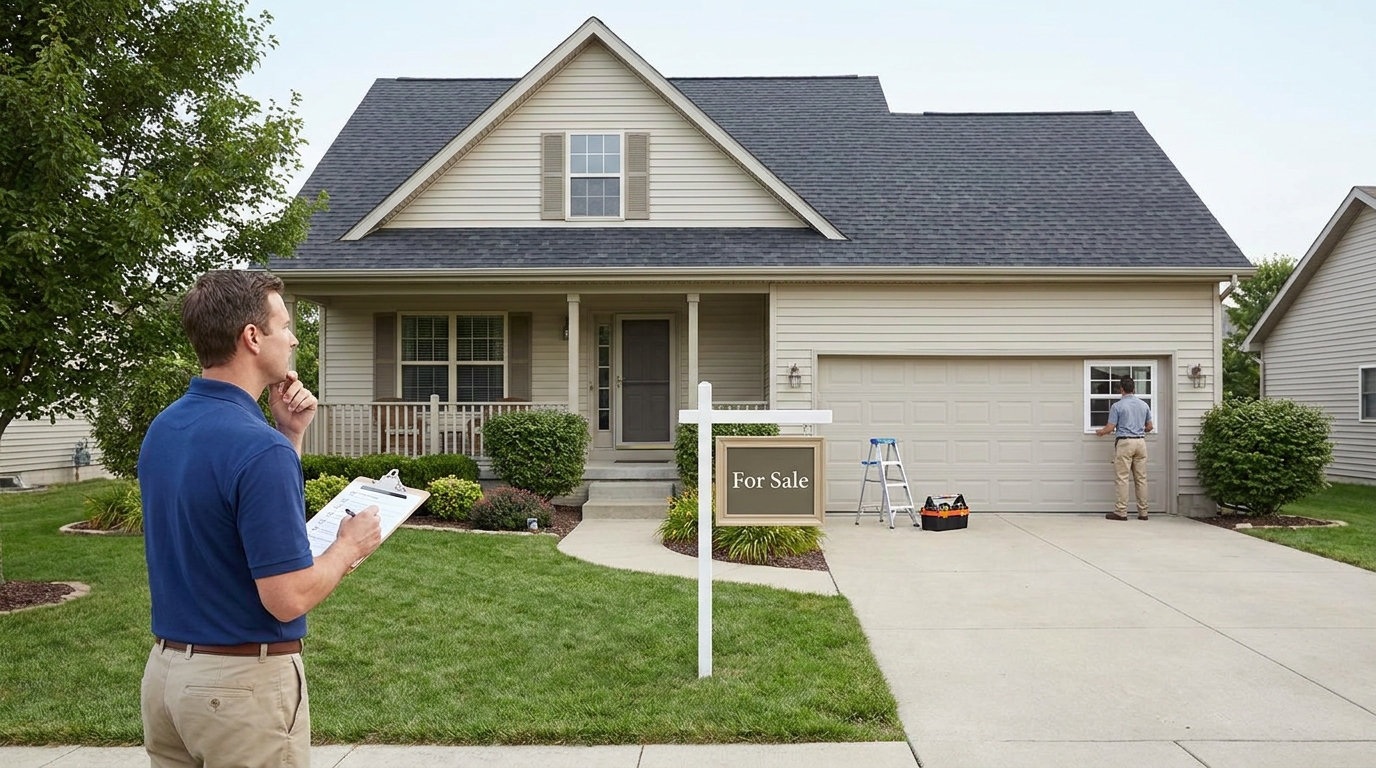
When you’re preparing to sell a house, every worn surface and unfinished project can suddenly feel like a problem that needs money thrown at it. The dated bathroom looks older than you remembered. The kitchen cabinets could use fresh paint. There’s a cracked tile by the back door, faded landscaping out front, and a list of projects you meant to tackle years ago.
But if you need to sell quickly, repairing everything can be the wrong strategy. Before spending heavily on repairs, homeowners should also consider how to sell a house fast while balancing price, condition, and timing.
Some problems deserve immediate attention because they can interfere with an inspection, create safety concerns, discourage buyers, or complicate a buyer’s financing. Other defects are mostly cosmetic. Fixing them might make the house prettier, but the added sale price may not justify the money and weeks spent completing the work.
That distinction matters even more when renovation remains expensive. The Harvard Joint Center for Housing Studies reports that annual U.S. spending on improvements and repairs remained above $600 billion following the pandemic-era surge. Harvard’s 2026 remodeling outlook also projects growth in renovation and repair spending slowing to about 1.6% by the end of 2026, while annual homeowner spending is expected to reach roughly $518 billion.
For homeowners dealing with a relocation, inherited property, financial pressure, divorce, or another deadline, the question therefore isn’t, “How do I make this house perfect?”
A better question is: Which repairs could interfere with the sale, and which ones can I reasonably leave for the next owner?
Start With Problems That Could Interfere With the Sale
Before choosing paint colors or replacing countertops, look for defects that could become bigger obstacles once buyers, inspectors, appraisers, or lenders enter the process.
A cosmetic flaw might affect how someone feels about the house. A serious property defect can affect whether the transaction reaches closing at all.
Active Water and Moisture Problems
A small stain from a leak repaired three years ago is different from water currently entering the house.
Active roof leaks, plumbing leaks, standing water, damaged pipes, and persistent moisture deserve attention because leaving them alone may allow additional damage to develop. Moisture can also make buyers wonder whether problems exist behind walls, under floors, or inside ceilings.
You don’t necessarily need to replace an entire roof because of one repairable leak. Start by identifying the source and getting an informed assessment.
That same principle applies elsewhere: repair the underlying defect rather than automatically replacing the entire system.
Unsafe Electrical Problems
A scratched light-switch cover is cosmetic. Exposed wiring, sparking outlets, unsafe electrical work, and other obvious hazards are different.
Problems involving basic safety can alarm buyers and may become negotiating issues after an inspection. Addressing a relatively contained electrical defect before listing can sometimes prevent a small problem from becoming a much larger source of uncertainty.
Plumbing and Sewer Issues
A dripping faucet might be an inexpensive weekend repair. A leaking supply line or sewer problem deserves much more attention.
Water-related defects have a habit of becoming more expensive when ignored. If you already know there’s an active problem, getting it diagnosed may give you more control than waiting for a buyer’s inspector to identify it.
Structural or Foundation Concerns
Large cracks, unusual floor movement, significant settling, or known structural problems require a different approach from ordinary cosmetic wear.
That doesn’t automatically mean you need an expensive structural renovation before selling. Depending on the problem, timing, market, and expected sale price, obtaining a professional assessment and disclosing the condition may make more financial sense than completing extensive work.
When the sale has a firm deadline, knowing the nature and approximate cost of the problem can be more valuable than immediately starting construction.
Make the Cheap Fixes That Improve Buyer Confidence
Some repairs are worth doing simply because they’re inexpensive, quick, and highly visible.
Think about the difference between a buyer noticing normal wear and seeing a string of obvious neglected details. Several minor defects clustered together can make someone wonder what larger maintenance problems they haven’t discovered yet.
Useful low-cost fixes may include:
- Replacing burned-out light bulbs
- Tightening loose cabinet hardware
- Repairing sticking doors
- Replacing cracked outlet or switch covers
- Fixing dripping faucets
- Patching small wall holes
- Touching up badly scuffed areas
- Cleaning stained grout
- Reattaching loose trim
- Removing debris from the yard
- Cutting overgrown grass and shrubs
- Pressure-washing visibly dirty exterior surfaces
Exterior presentation can deserve particular attention. In a National Association of REALTORS® report on outdoor projects, 92% of REALTORS® recommended improving curb appeal before listing. The same research estimated standard lawn-care service at about $415, compared with roughly $9,000 for a broader yard upgrade.
That comparison highlights an important point for rushed sellers. Improving an existing feature doesn’t always require replacing or redesigning it.
Mow the lawn before installing new landscaping. Clean the siding before repainting the entire exterior. Repair the cabinet hinge before replacing the cabinets.
Anyone getting a home ready to sell can benefit from separating basic presentation work from major renovation, especially when considering exterior improvements that can enhance curb appeal without requiring a major remodel. Cleaning, decluttering, minor repairs, and sensible staging often take far less time than construction and still help buyers see the house at its best.
Evaluate These Projects Case by Case
Some projects sit between obvious repair and optional upgrade. Whether they’re worth completing depends heavily on the property’s condition, price range, location, buyer expectations, and your deadline.
Roof Replacement
An aging roof doesn’t automatically mean you should replace it before selling.
If the roof is leaking heavily or near failure, its condition may become a major negotiating issue. But replacing a functional older roof solely because buyers might prefer something newer can be an expensive gamble.
The 2024 Cost vs. Value Report from the Journal of Light Construction and Zonda estimated an asphalt-shingle roof replacement at $30,680 nationally, with approximately $17,461 in resale value, or about 57% of the project cost recovered.
If you’re working against the clock, compare the likely cost of replacement with the likely price adjustment for selling with the existing roof.
Windows
Old windows can be inefficient or visually dated, but replacing every window shortly before moving can consume considerable money.
The same 2024 Cost vs. Value Report estimated a vinyl window replacement project at $21,264, with about $14,270 in resale value, or roughly 67% cost recovery. Wood replacements recovered approximately 63%.
Broken panes, windows that won’t close, or severe deterioration deserve attention. Functional but older windows may be reasonable to leave in place.
HVAC Systems
If the heating or cooling system isn’t working, buyers are likely to notice quickly. An older system that still operates is a different question.
Before automatically replacing it, consider servicing the equipment and documenting its condition. Spending thousands of dollars to replace a functioning system shortly before closing may not make financial sense if the buyer would prefer to select different equipment anyway.
Flooring
Damaged flooring can range from a minor visual flaw to a sign of a larger problem.
A few scratches in hardwood generally don’t justify replacing an entire floor. Severe pet damage, widespread torn carpeting, water damage, or major trip hazards deserve closer examination.
Sometimes professional cleaning or a limited repair is enough.
Major Upgrades Are Usually the First Projects to Skip
When sellers have time pressure, large remodeling projects deserve a high level of skepticism.
Why? Because you’re paying retail construction costs for improvements that the next owner gets to enjoy, and there’s no guarantee buyers will value your design decisions as highly as you do.
Skip the Luxury Kitchen Remodel
A dated kitchen can still be clean, functional, and saleable.
According to the 2024 Cost vs. Value Report, an upscale major kitchen remodel carried an estimated cost of $158,530 but added about $60,176 in resale value. That represented only about 38% cost recovery.
The 2025 Remodeling Impact Report from the National Association of REALTORS® also estimated that a complete kitchen renovation recovered around 60% of its cost at resale.
Those estimates vary because the reports use different project assumptions and methodologies, but the practical message is similar: spending heavily on a kitchen immediately before selling doesn’t automatically produce an equal increase in sale value.
If the kitchen works, consider cleaning it thoroughly, decluttering counters, repairing broken hardware, and addressing inexpensive visible defects instead.
Skip Adding a Primary Suite
Adding square footage shortly before a time-sensitive sale is even harder to justify.
The JLC/Zonda report estimated an upscale primary-suite addition at a striking $339,513, while its estimated resale value was about $81,042. That amounts to approximately 24% cost recovery.
Even a project that genuinely makes the home more desirable may be a poor choice if you’ll sell immediately after finishing it.
Large additions can also involve design work, contractors, permits, inspections, scheduling complications, and months of disruption. Those are difficult tradeoffs for someone whose priority is moving on quickly.
Skip a Full Bathroom Renovation Unless the Room Has Serious Problems
An avocado-green bathtub or unfashionable tile might not appeal to every buyer. That doesn’t mean it needs to disappear before listing.
The National Association of REALTORS® estimated that a bathroom renovation recovered around 50% of its project cost in its 2025 report.
If the shower leaks into the room below, fix the leak. If the bathroom is safe, clean, and functional but looks dated, renovation may be optional.
Skip Expensive Outdoor Amenities
A major outdoor project can be attractive without being a sensible presale investment.
NAR’s outdoor remodeling research estimated an overall yard upgrade at about $9,000, while an in-ground pool could reach roughly $90,000. By comparison, basic lawn care was estimated at only $415.
For sellers facing a deadline, the low-cost option often deserves consideration first. Trim, mow, clean, repair, and remove clutter before building something new.
Beware of Renovation Budgets That Keep Growing
The quoted price isn’t always the final price.
Angi’s 2024 State of Home Spending Report found that average homeowner spending on improvements was $9,322 in 2024, while average maintenance spending was $1,750. More than half of homeowners encountered unexpected project expenses, and 54% reported difficulty finding skilled professionals.
That uncertainty can create problems when your selling date isn’t flexible.
Suppose a renovation is supposed to take three weeks. Demolition exposes another problem. Materials arrive late. A subcontractor reschedules. Suddenly you’re carrying the mortgage, insurance, utilities, taxes, and renovation expenses for longer than expected.
The project doesn’t merely have to improve the house. It has to create enough additional sale value to compensate for its cost, delay, hassle, and risk.
That’s a much higher bar.
Use a Simple Test Before Approving Any Repair
Before spending money, ask five questions:
- Does this problem present a safety concern?
- Could it interfere with an inspection, appraisal, insurance requirement, or buyer financing?
- Will buyers interpret it as evidence that the home hasn’t been maintained?
- Can it be repaired quickly and inexpensively?
- Is the likely benefit worth delaying the sale?
If the answer to the first three questions is no, and the project is expensive or slow, skipping it may be reasonable.
“You can also compare two scenarios: selling at a lower price today versus spending money and delaying the sale in hopes of achieving a higher price later. When weighing those choices, comparing home-selling options by timeline, costs, and expected net proceeds can make the decision clearer.
That calculation becomes especially useful for homeowners selling quickly in Ponte Vedra or any market where personal circumstances create a firm timeline. A theoretically higher sale price several months from now isn’t always better if achieving it requires substantial renovation costs and additional months of property expenses.
When Selling As-Is Can Make More Sense
Sometimes the most practical repair strategy is doing very little.
An as-is sale generally means the seller isn’t planning to complete requested repairs before closing. That doesn’t mean defects can be hidden or that disclosure obligations disappear. Requirements vary by location, so sellers should understand the rules applying to their property.
Selling as-is may deserve consideration when:
- You inherited a property that needs substantial work.
- You need to relocate quickly.
- You can’t comfortably fund repairs before closing.
- The home needs multiple major systems repaired.
- Contractor availability would push the sale far beyond your deadline.
- Carrying costs during renovation would consume much of the possible gain.
- You’d rather accept a lower price in exchange for fewer repairs and a simpler timeline.
The tradeoff is straightforward: buyers may discount their offers because they’re assuming the cost and risk of future work.
That discount needs to be compared with the alternative—not with the price of a perfectly renovated version of the home.
If renovating would cost $40,000, take two months, and expose you to additional carrying costs, an as-is offer that is $25,000 lower could conceivably leave you in a stronger financial position. The actual calculation will depend on the property, offers, local market, repair estimates, and sale expenses.
Don’t Renovate for a Buyer You Haven’t Met
One of the biggest risks in presale renovation is trying to guess what an unknown buyer wants.
You choose gray cabinets. They want wood.
You install quartz. They prefer granite.
You replace perfectly usable flooring. They planned to replace it anyway.
You spend weeks creating a bathroom that matches your taste, then discover that buyers don’t value the improvement enough to repay the cost.
This is why repair and renovation should be treated differently.
Repairs protect the function and condition of the property. Upgrades attempt to improve desirability.
When time is short, spending money on the first category usually deserves priority.
There are exceptions. The 2024 JLC/Zonda data, for example, estimated that a garage-door replacement costing $4,513 added $8,751 in resale value, representing 194% cost recovery nationally. Smaller, visible exterior projects can sometimes perform far better than expensive interior renovations.
The lesson isn’t that every seller needs a new garage door. It’s that project size and sale value don’t necessarily move together.
Conclusion: Fix Problems, Not Every Imperfection
A quick home sale doesn’t require delivering a flawless property.
Start with known defects that could create safety issues, damage the house, undermine buyer confidence, or interfere with the transaction. Next, tackle inexpensive repairs and presentation work that make the property look cared for.
Then become much more selective.
Roof replacements, windows, HVAC systems, and flooring should be evaluated according to their actual condition rather than age or appearance alone. Full kitchens, luxury bathrooms, additions, pools, and other expensive upgrades are usually difficult to justify when the goal is selling soon.
The financial case becomes even weaker when renovation introduces unexpected expenses or pushes the listing date back.
For some homeowners, selling as-is may ultimately be the better option. The sale price may be lower, but so are the upfront repair bill, construction risk, carrying time, and uncertainty.
Before starting another project, ask what happens if you simply leave it alone.
Sometimes repairing less isn’t neglecting the sale. It’s recognizing that the next owner doesn’t need a perfect house—they need enough information to decide whether the house, its condition, and its price work for them.

