
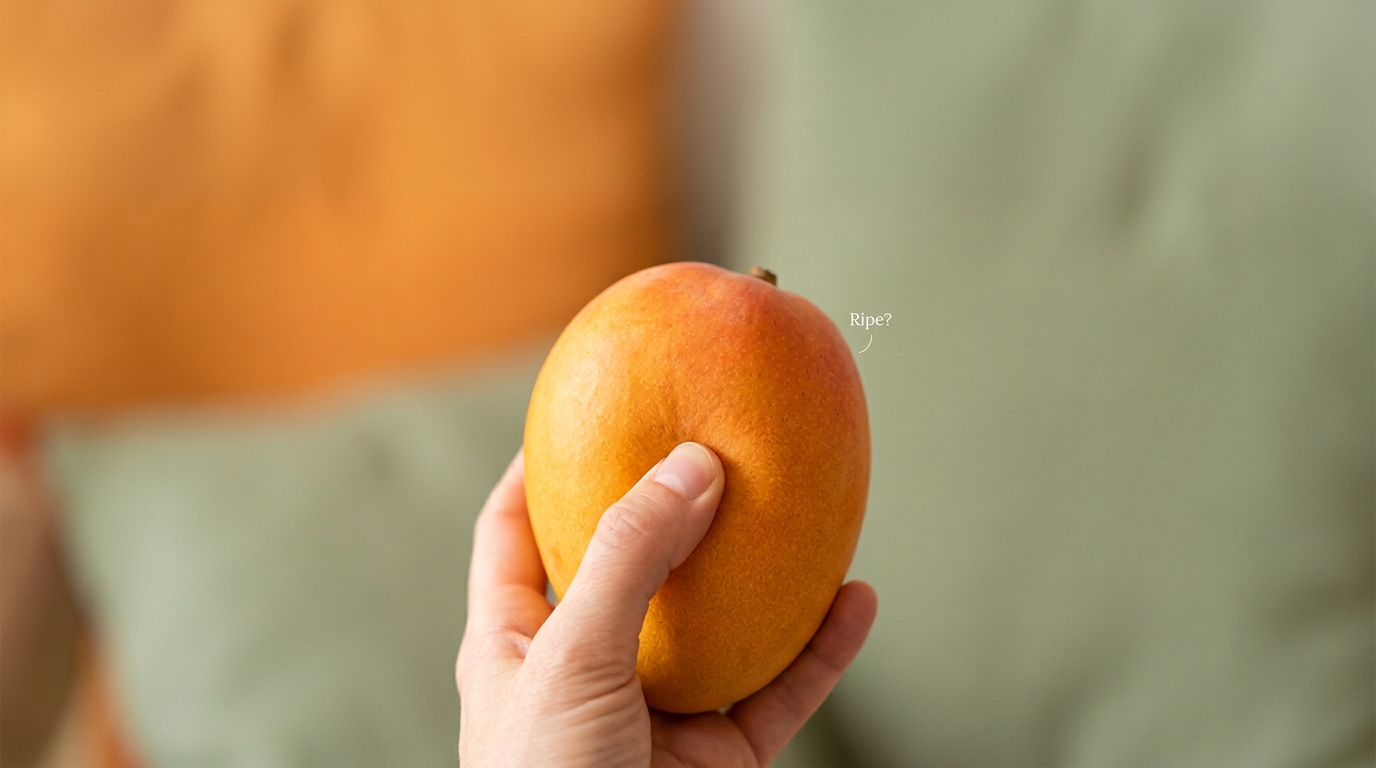
If you have ever sliced into a mango only to find it sour, stringy, or hard in the middle, you already know the frustration. Learning how to tell if a mango is ripe comes down to three quick checks: a gentle squeeze, a sniff near the stem, and the weight of the fruit in your hand. Color is the one clue you should mostly ignore, since it varies wildly between mango varieties. This guide walks through every reliable method, explains why some popular tricks don’t work, and shows you what to do once your mango is ready to eat.
The Quick Answer: How to Tell If a Mango Is Ripe

A ripe mango gives slightly when you press it gently with your fingers, similar to how a ripe avocado or peach feels. It also carries a sweet, fruity aroma near the stem end, and it feels a little heavier than you expect for its size. If the fruit is hard as a rock and has no smell at all, it needs more time on the counter. If it feels mushy or has a fermented, boozy smell, it has likely gone past its prime.
That is the short version. The rest of this guide breaks down each test in detail, plus how ripeness signs shift depending on the mango variety you picked up at the store.
Why Color Alone Won’t Tell You If a Mango Is Ripe
Most people instinctively look for a red or golden blush and assume that means ripe. This is one of the most common mistakes shoppers make, because mango skin color depends almost entirely on the variety, not the ripeness stage. In fact, color is not a reliable ripeness indicator at all, since mango varieties naturally come in a wide range of colors, shapes, and sizes.
A Kent mango can be ripe while still mostly green with a faint red blush. An Ataulfo (also sold as Honey or Champagne mango) turns from green to a deep golden yellow as it ripens, and its skin often develops small wrinkles right when it reaches peak sweetness. A Tommy Atkins mango might look bright red and still be underripe on the inside. Judging ripeness by color alone means you are really judging variety, not readiness.
That said, color is not completely useless. Watching a single mango change color over a few days on your counter can still tell you it is progressing, even if the final shade differs by type. Use color as a supporting clue, not the deciding factor.
The 4 Best Ways to Check If a Mango Is Ripe
Here are the tests that actually matter, in the order most people find easiest to use at the grocery store or at home.
1. The Squeeze Test
Cup the mango in the palm of your hand and press gently with your thumb, the same way you would check an avocado. A ripe mango yields slightly under light pressure without feeling mushy or leaving a permanent dent. If it feels hard with no give at all, it needs a few more days. If your finger sinks in and leaves an indentation, the mango is very ripe or possibly overripe, so plan to eat it soon.
Press different spots on the fruit rather than just one side, since mangoes can ripen unevenly depending on how they sat during shipping and storage.
2. The Smell Test
Bring the mango close to your nose and smell the stem end, the small nub where the fruit was attached to the tree. A ripe mango gives off a sweet, tropical fragrance at this spot. If you smell nothing, the mango is likely still unripe. If the smell is sharp, sour, or alcohol-like, the fruit has started to ferment and is past its best.
This test works especially well for varieties like Ataulfo, which develop a noticeably strong aroma right before they are ready to eat.
3. The Weight Test
Pick up two mangoes of a similar size and compare how heavy they feel. Ripe mangoes tend to feel heavier for their size because the flesh has become juicier as starches convert to sugar and water content increases. A mango that feels unexpectedly light for its size may be drier or less developed inside, even if the outside looks fine.
4. The Stem End Test
Look closely at the area around the stem. On a ripe mango, this spot is usually slightly rounded or softened rather than sunken and hard. A slight give in the skin right at the stem is often the very first place softening shows up, before the rest of the fruit catches up.
Mango Ripeness Stages Compared
Use this table as a quick reference once you have done the squeeze and smell tests.
| Stage | Feel | Smell | Best Use |
|---|---|---|---|
| Underripe | Very firm, no give | Little to no smell | Wait 2-5 days at room temperature |
| Ripe | Slight give under gentle pressure | Sweet, fruity smell near stem | Eat now, slice or blend |
| Very Ripe | Noticeable softness, may leave a dent | Strong, fragrant smell | Eat within a day, good for smoothies |
| Overripe | Mushy, skin may be wrinkled or leaking | Sour or fermented smell | Discard if fermented; otherwise use quickly in cooked dishes |
Mango Ripeness by Common Variety
Because color and texture cues shift between varieties, it helps to know what you are working with. Here is how ripeness typically shows up across the mangoes most commonly sold in U.S. grocery stores.
| Variety | Unripe Color | Ripe Color | Ripeness Clue |
|---|---|---|---|
| Tommy Atkins | Green with red blush | Deeper red-green, still often green-based | Rely on squeeze test, not color |
| Kent | Green | Green-yellow with red blush | Softens noticeably at the stem first |
| Keitt | Green | Stays mostly green even when ripe | Squeeze test is essential here |
| Haden | Green with light blush | Yellow-red | Aroma becomes strong when ripe |
| Ataulfo (Honey) | Green | Deep golden yellow, may wrinkle slightly | Wrinkled skin is a good sign, not a bad one |
If you are unsure which variety you bought, the squeeze and smell tests will still work reliably across all of them, which is why relying on touch and scent beats guessing by color every time.
Common Mistakes People Make When Checking Mango Ripeness
Even experienced shoppers get this wrong sometimes. Watch out for these habits:
- Judging ripeness purely by skin color instead of touch and smell.
- Pressing too hard, which bruises the flesh even on an unripe mango.
- Assuming wrinkled skin always means the mango is spoiled, when it often just means the variety is naturally ripening.
- Refrigerating a mango before it ripens, which slows or stops the ripening process.
- Cutting into a mango to check ripeness, which wastes fruit if it turns out underripe.
How to Ripen a Mango Faster
If your mango feels hard, you do not need to wait it out at room temperature without help. Place the mango in a paper bag along with a banana or apple, then fold the top closed and leave it on the counter. Bananas and apples release ethylene gas, a natural plant hormone that speeds up ripening. This gas plays a central role in triggering the ripening process across many fruit types, and mangoes respond strongly to it since they continue ripening after harvest.
Most mangoes ripen fully within two to five days using this method, depending on how firm they were to start. Check the mango daily using the squeeze test so you catch it right when it turns ready, rather than letting it slide into overripe territory. Commercial produce operations use a similar principle at a larger scale; controlled ethylene exposure for 12 to 24 hours can bring mangoes to full ripeness within roughly five to nine days, depending on the variety and how mature the fruit was at harvest. At home, a paper bag and a few days on the counter accomplish the same basic result.
Avoid the microwave shortcut some people recommend. Heating an unripe mango softens the texture without actually developing the sugar content, so you end up with a soft but still bland piece of fruit.
How to Store Mangoes at Every Stage
Storage depends entirely on how ripe the mango already is.
- Unripe mangoes: Keep at room temperature, out of direct sunlight, until they soften. Refrigeration before ripening halts the process and can leave the fruit tough and underdeveloped.
- Ripe mangoes: Move to the refrigerator once they reach the stage you want to eat them at. This slows further softening and buys you a few extra days.
- Cut mangoes: Store in an airtight container in the refrigerator and eat within three to four days for the best texture and flavor.
- Overripe mangoes: Use quickly in smoothies, baked goods, or chutneys rather than eating them raw if they have started to ferment.
If mango season has you stocking up on multiple pieces of fruit, this same logic applies to other produce. If you are also wondering how to tell if watermelon is ripe, the checks are different since it relies on sound and the field spot rather than squeeze pressure, so it is worth learning both methods separately rather than assuming one rule fits every fruit.
Is It Safe to Eat an Overripe or Wrinkled Mango?
Wrinkled skin on its own is not a warning sign, especially on Ataulfo mangoes, which naturally develop a slightly shriveled look as sugars concentrate right before peak ripeness. The concern is texture and smell, not wrinkles. A mango that has turned mushy throughout, leaks liquid, or smells like alcohol or vinegar has started fermenting and should be thrown out rather than eaten raw. A mango that is simply very soft but still smells sweet is fine to eat immediately, and works especially well blended into a smoothie or mixed into salsa where a softer texture is not an issue.
If you cut into a mango and notice mold, an off odor, or dark, slimy flesh anywhere beneath the skin, discard the entire fruit rather than cutting around the affected area, since mold can spread through soft fruit tissue that looks unaffected on the surface.
Mango Skin and Allergic Reactions: What to Know Before You Peel
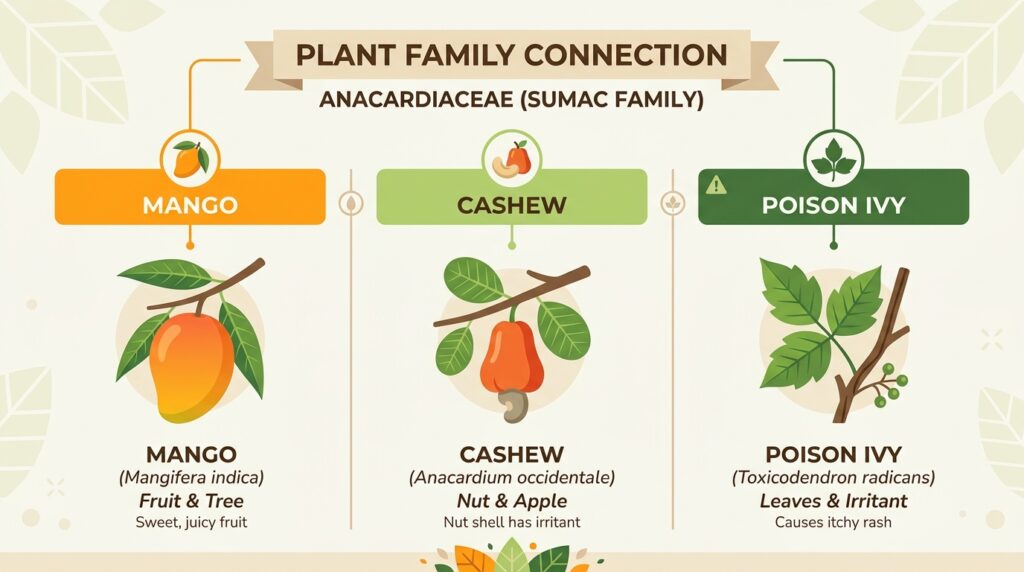
This is a detail most guides skip entirely, and it matters more than people realize. Mango belongs to the Anacardiaceae plant family, the same family as poison ivy, poison oak, and cashews. Mango skin and sap contain small amounts of urushiol, the same irritant compound responsible for poison ivy rashes. A peer-reviewed dermatology review on mango contact allergy found that a reaction can appear even on someone’s first known exposure to the fruit if they were already sensitized through contact with other urushiol-containing plants.
In practice, this means people with a history of poison ivy or poison oak reactions occasionally develop an itchy rash around the mouth or on the hands after peeling or eating mango, particularly when the skin touches bare skin for an extended time. The fruit’s flesh contains far less urushiol than the peel, so most reactions trace back to skin contact rather than eating the pulp itself. If you know you react strongly to poison ivy, consider wearing gloves when peeling a mango, or ask someone else to peel it for you, and wash your hands and any cutting tools promptly afterward.
This is general background information rather than medical advice. If you experience a rash, swelling, or breathing difficulty after handling or eating mango, stop consumption and speak with a doctor or allergist.
How to Cut a Ripe Mango
Once your mango passes the squeeze and smell tests, here is the simplest way to prepare it.
- Stand the mango upright on a cutting board with the stem end up.
- Slice downward on either side of the flat pit, producing two large “cheeks” and a center piece containing the seed.
- Score each cheek in a crosshatch pattern without cutting through the skin, then push the skin side inward to flip the cubes outward.
- Slice the cubes away from the skin with a knife or spoon.
- Trim the remaining fruit from around the pit and peel it with a knife for smaller pieces.
A ripe mango should cut cleanly, with juicy, non-fibrous flesh that separates easily from the pit. If the flesh feels stringy and clings stubbornly to the seed, the mango may be a fibrous variety like Tommy Atkins rather than underripe, since some varieties are naturally more fibrous than others regardless of ripeness.
Mango Nutrition at a Glance
Beyond flavor, ripe mango is a genuinely nutrient-dense fruit. One cup of raw mango pieces (about 165 grams) contains roughly 99 calories, along with a meaningful amount of vitamin C that supports immune function and helps the body absorb iron. Ripeness affects this profile slightly, since green mango tends to be higher in vitamin C and fiber, while fully ripe mango develops more beta-carotene as the flesh turns a deeper orange.
FAQs About Telling If a Mango Is Ripe
Does a ripe mango always turn red or yellow?
No. Color depends on the variety rather than ripeness. Keitt mangoes stay mostly green even at full ripeness, while Ataulfo mangoes turn golden yellow. Always confirm with the squeeze and smell tests rather than relying on color alone.
How long does it take for a mango to ripen at room temperature?
Most mangoes ripen within two to seven days at room temperature, depending on how mature they were at harvest and the surrounding temperature. Warmer rooms speed the process, while cooler kitchens slow it down.
Can you ripen a mango in the refrigerator?
No. Refrigeration slows or halts ripening entirely. Keep unripe mangoes at room temperature until they soften, then move them to the fridge only once they reach your preferred eating stage.
Is a mushy mango still safe to eat?
A soft, mushy mango that still smells sweet is generally safe and works well blended or mashed. Avoid mangoes that smell fermented, alcoholic, or sour, or that show mold or slimy patches beneath the skin.
Why does my mango feel firm but taste sweet already?
Some varieties, particularly Ataulfo, can reach good flavor slightly before the flesh softens dramatically. If it smells fragrant at the stem and tastes sweet, it is fine to eat even if it still feels a bit firm.
Can wrinkled mango skin mean it’s overripe?
Not necessarily. Wrinkling is common in varieties like Ataulfo as sugars concentrate near peak ripeness. Check for mushiness and smell rather than judging by wrinkles alone.
Why does my mango have no smell at all even though it looks ripe in color?
This usually means it is still underripe on the inside, since aroma develops later in the ripening process than color does in some varieties. Give it another day or two and test again with a gentle squeeze.
Is it normal to get an itchy rash after peeling a mango?
It can happen, especially in people sensitive to poison ivy or poison oak, since mango skin contains small amounts of a related compound called urushiol. Washing hands promptly after peeling and avoiding prolonged skin contact with the peel can help prevent this.
Final Thoughts
Knowing how to tell if a mango is ripe saves you from wasted fruit, disappointing flavor, and unnecessary guesswork at the store. Trust your hands and nose over your eyes: a gentle squeeze, a sniff near the stem, and a sense of the fruit’s weight will tell you far more than color ever could. Once you find one that passes all three checks, you are ready to slice it up and enjoy it at its best. If mangoes have you thinking about your other favorite fruits, take a look at how to tell if pineapple is ripe next, since the same instinct for touch and smell over color applies there too, and it is one more skill worth having in your kitchen alongside knowing how to check if eggs are good before you use them.

