
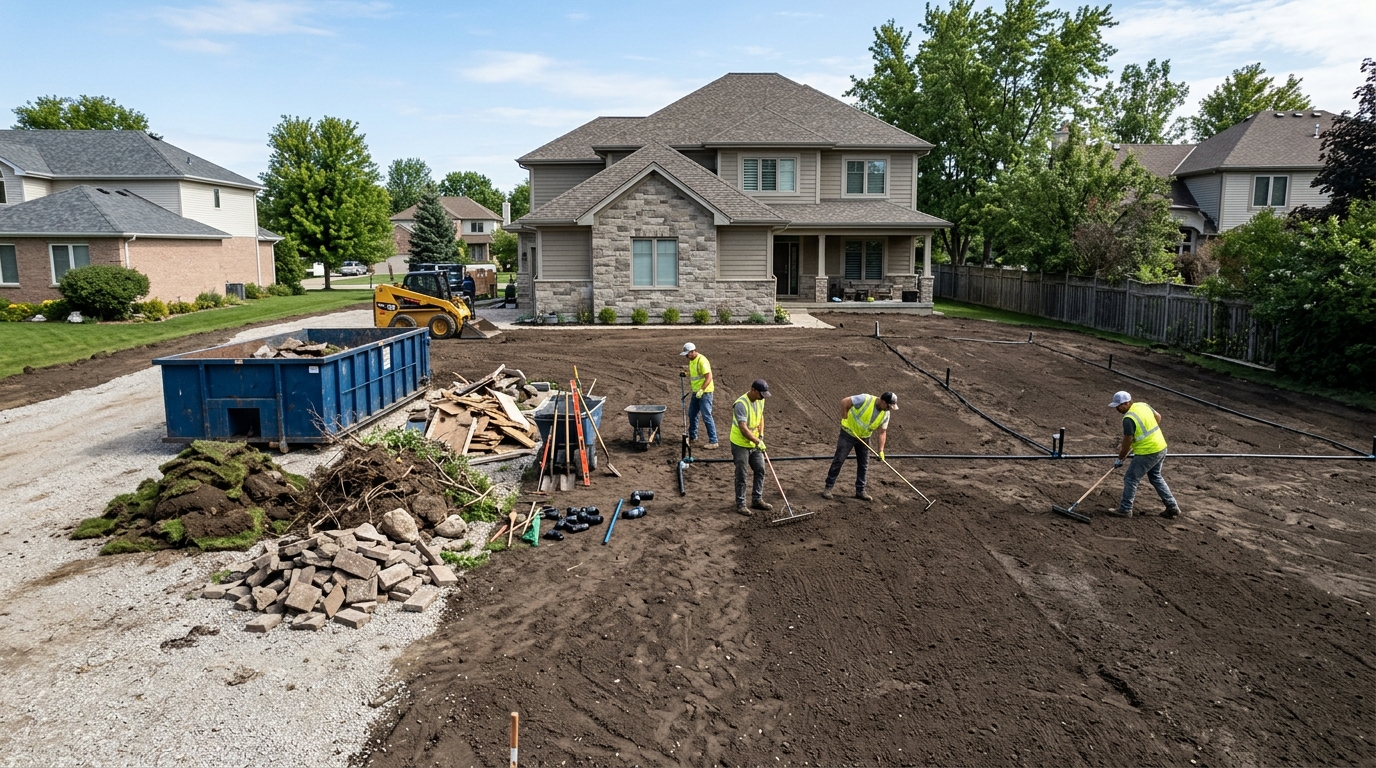
Yard debris removal is an important step before sod, seed, or irrigation work begins. A clean, prepared surface gives landscape contractors better access for grading, trenching, soil preparation, irrigation layout, and lawn installation. Before the new landscape phase starts, crews may need to remove old turf, brush, roots, dead plant material, broken edging, rocks, failed landscape fabric, rotted timbers, construction scraps, and other leftover debris. If this material is not cleared properly, it can create delays and make the installation process more difficult.
Dumpster rental planning helps contractors remove debris in a controlled way before finish landscaping begins. The goal is to give crews open ground, clean access, and enough working room for grading, trenching, irrigation layout, soil preparation, and installation. A good waste plan keeps cleanup from interfering with the work that turns a rough yard into a finished landscape.
Start With a Full Site Review
Before scheduling a dumpster, contractors should complete a thorough yard cleanup review to identify debris, access problems, and areas that need attention. Sod, seed, and irrigation work may involve more than the visible lawn surface. Fence lines, planting beds, side yards, drainage areas, old patios, tree edges, and construction staging zones may all contain debris that can interfere with the next phase.
The review should identify old grass, weeds, brush, roots, rocks, broken edging, plastic, landscape fabric, old pipe, sprinkler parts, mulch, soil piles, and construction scraps. Contractors should also note access points, gates, slopes, soft ground, and where equipment will need to move.
A clean installation starts with knowing what must be removed.
Separate Yard Debris From Construction Debris
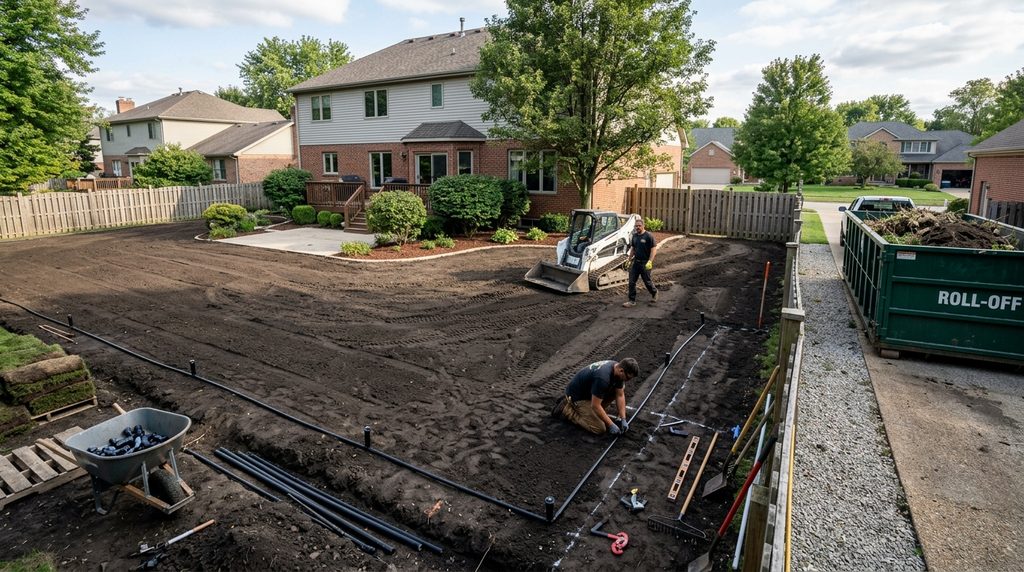
Landscape sites often contain mixed waste. Organic debris such as grass, leaves, brush, roots, sod, and plant material should be separated during garden cleanup from non-organic items when practical. Broken pavers, concrete chunks, plastic edging, treated lumber, metal stakes, wire, packaging, and construction scraps may need different handling.
Mixing everything together can make cleanup harder and may limit disposal options. Contractors should create simple categories before loading begins. Clean yard debris, heavy materials, reusable items, and questionable materials should not all go into one uncontrolled pile.
Sorting early helps keep the dumpster plan more organized.
Choose Dumpster Placement Carefully
Dumpster placement should support cleanup without blocking the next landscaping phase. The container should be close enough for efficient loading, but it should not sit where crews need to grade, trench, stage sod pallets, unload seed and straw, or run irrigation equipment.
Working with Waste Removal USA can help landscape contractors coordinate dumpster rental placement and service timing around outdoor cleanup and lawn installation schedules. A practical location keeps debris moving out while preserving access for the work still ahead.
The best placement supports both removal and installation.
Clear Debris Before Grading Begins
Grading work requires an open surface. Old roots, brush, rocks, broken edging, buried plastic, wood scraps, and loose construction debris can interfere with shaping the soil. If those materials are not removed first, grading crews may have to stop repeatedly to clear obstacles.
Contractors should remove obvious debris before final grade preparation begins. This gives operators a better view of low spots, slopes, lawn drainage paths, and soil conditions before final grading begins. It also reduces the chance of organic material or trash being mixed into the prepared soil.
Clean ground makes grading more accurate.
Protect Irrigation Layout and Trenching
Irrigation work requires clear access for marking, trenching, pipe placement, valve boxes, heads, and backfill. Debris left in the work area can slow layout and make trenching harder. Roots, rocks, old edging, buried pipe, and forgotten landscape materials can create problems once the system design is underway.
Contractors should clear the irrigation path before installation begins. If old sprinkler parts or pipe are uncovered, they should be removed or staged separately. Heavy debris should not be piled where trenching, valve access, or future maintenance points will be located.
A clean irrigation layout helps crews work faster and with fewer interruptions.
Prepare for Sod Pallet Deliveries
Sod installation requires open, accessible staging space. Pallets are heavy, and crews need room to unload, move, and install them quickly. If old debris or a dumpster blocks the best staging area, sod may be placed too far away and handled more than necessary.
Contractors should coordinate dumpster service before sod delivery whenever possible. Debris should be loaded and removed from driveways, side yards, and staging zones before pallets arrive. The installation route should be clear so crews can move sod efficiently without stepping over waste.
Sod work goes better when the site is reset before delivery.
Keep Seeded Areas Free of Debris
Seeded lawns need clean soil contact. Old mulch, leaves, rocks, sticks, plastic, torn fabric, and construction scraps can interfere with even seed distribution and soil preparation. Debris can also make it harder to rake, roll, straw, water, or protect the newly seeded area.
Before seeding, contractors should remove loose materials and inspect the area for hidden debris. The final cleanup should happen before soil amendments, seed, straw, erosion blanket, or starter fertilizer are applied.
A cleaner surface gives the seed phase a better start.
Watch for Heavy Materials
Landscaping cleanup is not always light yard waste. Old stone borders, concrete pieces, pavers, soil-heavy sod, root balls, gravel, brick, and wet debris can add weight quickly. A dumpster may still have visible room while already carrying a dense load.
Contractors should identify heavy materials during the site review. If a project includes hardscape removal, old edging, compacted stone, or soil-heavy debris, the waste plan should account for both weight and volume. Heavy materials may need staged loading or separate handling.
Weight planning helps prevent cleanup from slowing the installation schedule.
Connect Cleanup to the Landscaping Overhaul
Sod, seed, and irrigation work are often part of a larger backyard landscaping overhaul that requires coordinated cleanup and installation. The project may also include removing old beds, changing drainage, adding privacy features, replacing walkways, updating mulch, or redesigning outdoor living areas. Each step can create debris that affects the next phase.
Contractors should avoid treating lawn prep as a separate task from the rest of the cleanup. If old shrubs, borders, fabric, or hardscape materials are still in the way, sod and irrigation work may have to pause. The debris plan should follow the full project sequence.
A complete overhaul needs cleanup that keeps pace with the design, especially when planning front yard landscaping around new lawn areas and access routes.
Keep Access Routes Open
Landscape crews need steady movement through the site. Wheelbarrows, carts, compact equipment, trenchers, loaders, sod carriers, and irrigation tools may all use the same paths. Debris piles should not block gates, driveways, side yards, walkways, or equipment routes.
Contractors should define debris routes and installation routes before work begins. If the dumpster sits near the driveway or gate, there should still be room for crews and materials to pass. The service route for pickup should also stay open.
Clear access keeps the project moving.
Schedule Service Before Final Prep
The dumpster should not remain full or in the way when final prep begins. Once the site is ready for soil work, sod, seed, or irrigation finishing, debris should be gone or fully contained. A full dumpster blocking access can delay the most time-sensitive part of the job.
Contractors should monitor fill levels and schedule pickup or replacement before the project reaches the final landscape phase. If another cleanup phase remains after installation, decide whether the container still needs to stay on-site or whether it should be removed to free space.
Service timing should support the installation schedule.
Avoid Common Cleanup Mistakes
One common mistake is clearing debris after irrigation layout has already started. Another is placing the dumpster where sod pallets, trenching equipment, or grading crews need to work. Contractors should also avoid mixing yard debris, hardscape debris, and questionable materials without sorting.
It is also easy to underestimate the amount of waste created by old sod, roots, edging, brush, and landscape fabric. A better approach is to walk the site, plan loading routes, clear in phases, and remove debris before finish landscaping begins.
Dumpster rental strategies for clearing debris before sod, seed, or irrigation work should focus on timing, access, sorting, and site preparation. Landscape contractors need clean ground, open routes, and organized staging areas before the final lawn and irrigation phases begin.
By reviewing the site, separating debris, choosing smart dumpster placement, clearing before grading, protecting irrigation routes, planning for sod deliveries, and scheduling service before final prep, contractors can keep landscaping projects more efficient. A strong waste removal plan helps the new lawn or irrigation system begin on a cleaner, better-prepared site.

