
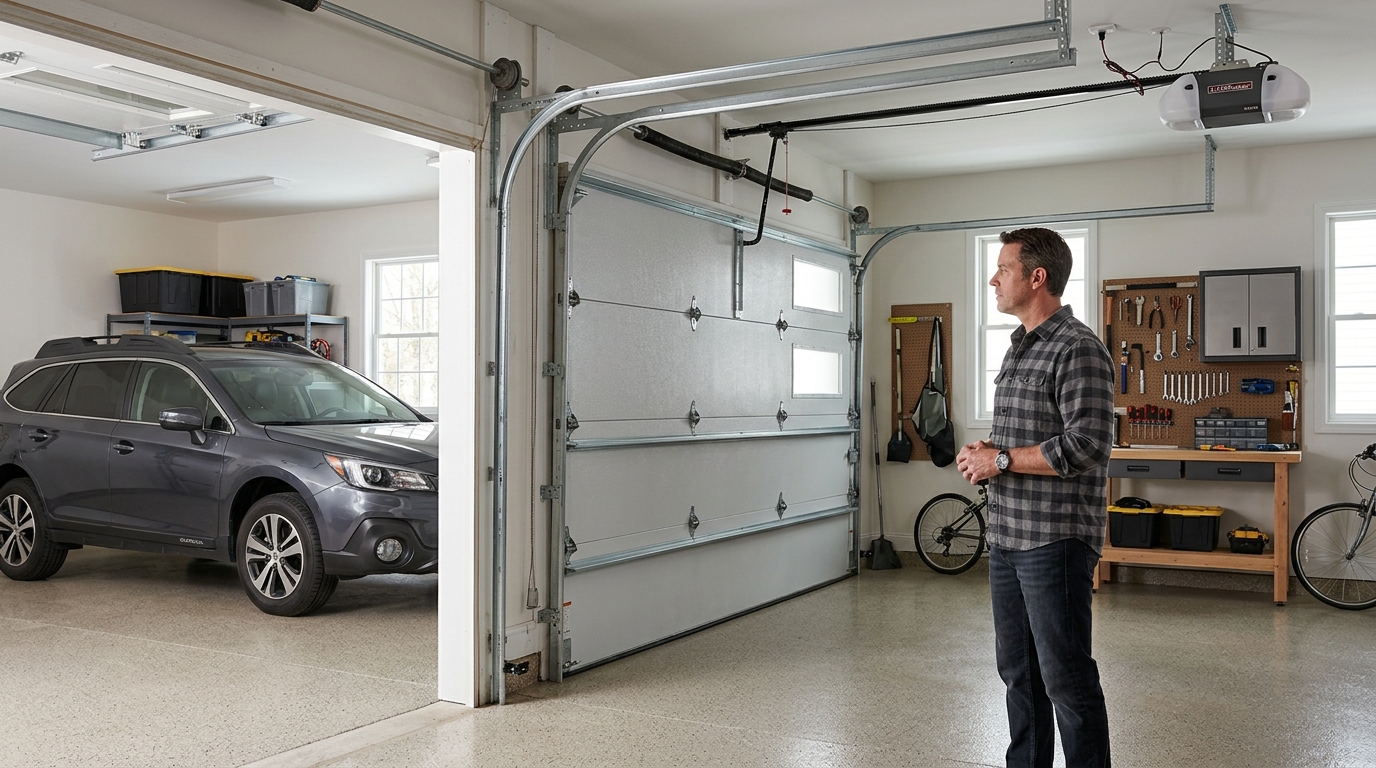
Primary Causes of Severe Garage Door Vibration
When your garage door begins to shake or vibrate, it’s a clear signal that something within its intricate mechanical system is struggling. A garage door is a heavy, complex piece of machinery, and garage door improvements can address both its appearance and long-term performance when replacement becomes necessary. Understanding the root causes is the first step toward a smooth, quiet operation.
Homeowners considering replacement may also explore custom garage doors when choosing a door designed around their home’s appearance, durability, and long-term performance.
Worn Rollers and Hardware Degradation
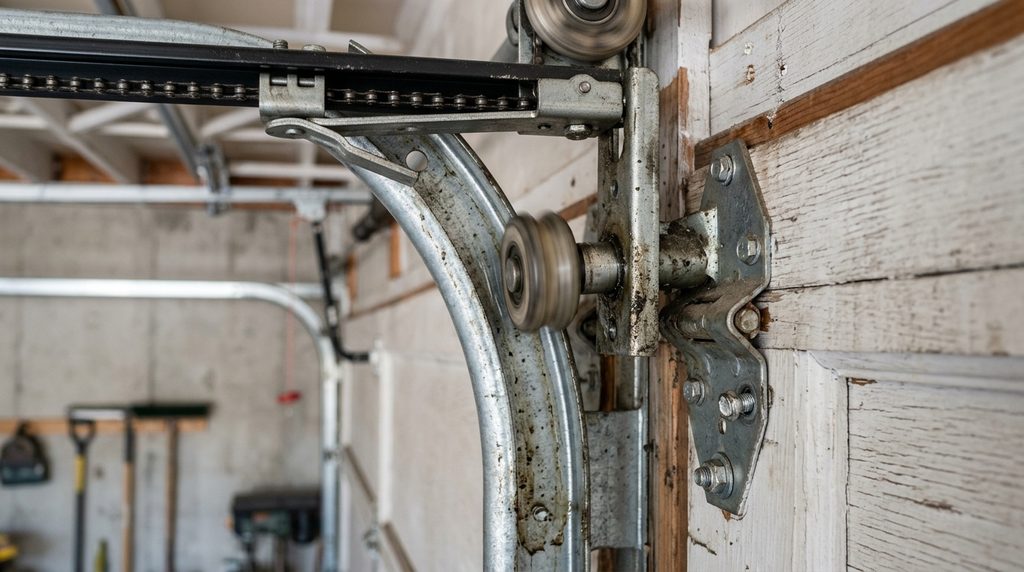
At the heart of smooth garage door movement are its rollers, guiding the door along its tracks. Over time, these components are subjected to significant wear and tear. Older steel rollers, especially those without sealed ball bearings, can degrade quickly. Their bearings can wear out, leading to a bumpy ride, a distinct wobble, or a rumbling sound as the door moves. Even modern nylon rollers, while quieter, will eventually show signs of wear, such as cracks or flat spots, preventing them from spinning freely. When rollers no longer glide smoothly, they create friction and resistance, which translates directly into shaking and vibrating.
Beyond the rollers, the entire system is held together by various pieces of hardware—hinges, track brackets, and bolts that secure the opener rail. The constant motion and weight of the garage door can cause these fasteners to loosen over time. Even a slight loosening in a hinge or a track bracket can introduce play into the system, allowing the door to shift and vibrate excessively. This seemingly small issue is amplified by the door’s substantial weight, making vibrations more pronounced and potentially leading to further damage. Regular checks and tightening of these components are crucial to maintaining stability.
Track Misalignment and Mechanical Resistance
The tracks along which your garage door travels are designed for precise alignment. Any deviation from this perfect parallel setup can cause significant mechanical resistance and, consequently, shaking. Tracks can become bent due to minor impacts, or even through structural settling of the house over time. When tracks are misaligned, rollers might press too tightly against one side, creating friction and grinding noises. You might observe rubbing marks on the tracks, metal dust accumulating, or the door hesitating at specific points during its travel.
Even subtle issues like track dents can disrupt the smooth path of the rollers. If a roller encounters a dent, it can cause the door to jerk or shake violently as it navigates the obstruction. The wall brackets that hold the tracks in place can also loosen, allowing the tracks to shift out of alignment. Addressing track issues requires precision; attempting DIY adjustments without proper tools or knowledge can often worsen the problem, potentially leading to the door derailing entirely.
Torsion Springs, Cable Slack, and Balance Issues
The garage door system relies heavily on a delicate balance, primarily managed by its springs. Whether you have torsion springs (mounted horizontally above the door) or extension springs (running along the sides of the tracks), their job is to counterbalance the door’s weight, making it feel lighter for the opener to lift. If these springs lose tension or break, the door becomes unbalanced. An unbalanced door forces the opener to work much harder, leading to strain, uneven movement, and significant shaking.
Cables also play a critical role, connecting the bottom of the door to the spring system via drums. If a cable frays, stretches, or unwinds unevenly from its drum, it can cause the door to travel crookedly or bind, resulting in pronounced shaking. Press-fit pulleys, which are common components in many systems, have an average lifespan of 3-5 years. Beyond this, they can start to separate, leading to frayed cables and increased vibration. Any issue with the springs or cables directly impacts the door’s balance, making smooth operation impossible and often causing noticeable vibrations throughout the entire system.
Diagnosing Good Golly Garage Door Shaking Safely at Home
Identifying the precise cause of your garage door’s shaking requires a systematic approach. Before you begin any inspection or attempt a DIY fix, always prioritize safety. Disconnect the opener’s power supply to prevent accidental operation, and follow basic electrical safety practices when inspecting powered garage-door equipment. Then, you can safely proceed with a visual inspection, listen for specific sounds, and perform a manual operation test. For more detailed insights into diagnosing and addressing garage door vibration, exploring resources on Good Golly garage door shaking can provide valuable guidance.
Step-by-Step Balance and Manual Lift Assessment
A crucial diagnostic step is to test your garage door’s balance. This assessment helps determine if the springs are properly tensioned and effectively counterbalancing the door’s weight.
- Disconnect the Opener: Pull the emergency release cord (usually a red handle hanging from the opener rail). This disengages the door from the opener, allowing you to operate it manually.
- Manually Lift the Door: Carefully lift the door by hand until it’s about halfway open.
- Release and Observe: Gently release the door. A properly balanced door should remain stationary at this midpoint, or move only slightly (a few inches) in either direction.
- Interpret the Results:Door drops quickly: This indicates that the springs are too weak or broken, and not providing enough counterbalance. The opener is likely overcompensating, leading to strain and shaking.
- Door flies open: The springs are likely too tight, applying excessive force.
- Door stays put: Your springs are well-balanced. If shaking persists, the issue likely lies elsewhere.
An unbalanced door not only causes shaking but also puts immense strain on your opener, shortening its lifespan and increasing the risk of mechanical failure.
Inspecting Moving Parts for Early Good Golly Garage Door Shaking
With the power disconnected, conduct a thorough visual and auditory inspection of all moving components.
- Rollers: Examine each roller. Do they spin freely? Are there any cracks, chips, or flat spots on the wheels? Worn rollers can cause a bumpy, uneven ride. Check for any excessive wobble in the rollers as they move within the tracks.
- Hinges and Brackets: Inspect all hinges and the brackets that hold the tracks to the wall. Look for loose bolts or screws. Even slightly loose hardware can introduce play into the system, leading to vibrations. Tighten any loose fasteners gently, ensuring not to overtighten and strip the threads.
- Cables: Carefully examine the lifting cables. Look for any signs of fraying, kinks, or rust. Ensure they are winding evenly onto their drums. Unevenly wound or damaged cables can cause the door to travel crookedly and shake. Pay particular attention to the pulleys; press-fit pulleys, which have a lifespan of around 3-5 years, can separate and cause cables to fray, contributing to significant shaking.
- Motor Rail: Check the opener’s motor rail for any looseness where it attaches to the header or ceiling. A wobbly opener can transmit vibrations directly to the door, while unusual electrical symptoms should be treated as potential electrical emergencies rather than ignored.
By systematically inspecting these areas, you can often pinpoint the source of the shaking or vibrating early, allowing for timely intervention.
Safe DIY Fixes vs. Hazardous Professional Repairs
Addressing garage door shaking involves a spectrum of tasks, some of which are perfectly safe for a homeowner to tackle, while others pose significant risks and should always be left to trained professionals. Understanding this distinction is paramount for your safety and the integrity of your garage door system.
Safe Home Maintenance and Component Lubrication
Many minor vibration issues can be resolved with routine maintenance. One of the most effective DIY fixes is proper lubrication. Over time, moving metal parts can become dry, leading to increased friction, noise, and vibration.
- Lubrication Points: Use a silicone-based lubricant or white lithium grease spray. Apply it to hinges, rollers (specifically the bearings inside the rollers, not the wheel surface that touches the track), and springs. Avoid using oil-based lubricants, as they can attract dirt and grime, leading to more problems.
- Track Cleaning: Crucially, do not lubricate the tracks themselves. Tracks should be kept clean and dry. Use a clean rag to wipe down the inside of the tracks, removing any dirt, grease, or debris that might impede roller movement.
- Hardware Tightening: As identified during your inspection, gently tighten any loose bolts on hinges, track brackets, and the opener rail. Be careful not to overtighten, which can strip screws or warp components.
- Sensor Alignment: Ensure the photo-eye sensors at the bottom of your garage door opening are clean and properly aligned. Misaligned sensors can cause the door to reverse unexpectedly or operate erratically, contributing to jerky movements.
These preventive measures can significantly reduce friction and ensure smoother operation, often eliminating minor shaking.
High-Tension Danger Zones: Cables, Drums, and Springs
While some tasks are homeowner-friendly, certain components of a garage door system are under extreme tension and can be incredibly dangerous to handle without specialized training and tools. This includes the springs (both torsion and extension), lifting cables, and the drums they wrap around.
Garage door springs, particularly torsion springs located above the door, hold hundreds of pounds of force. Adjusting or replacing these springs without the proper winding bars and expertise can lead to severe injury, including broken bones, lacerations, or even death. Similarly, lifting cables are under immense tension and, if they snap during a DIY repair, can cause the door to crash down or whip around violently.
High-Tension Emergency Warning Signs:
- A loud bang, indicating a broken spring.
- The door suddenly becoming extremely heavy or refusing to open.
- Visible fraying or snapping of lifting cables.
- The door jerking violently or moving crookedly, suggesting a cable or spring issue.
- The door coming off its tracks.
If you encounter any of these issues, or if your diagnosis points to problems with springs, cables, or drums, stop using the door immediately and contact a professional garage door technician. The potential cost of a professional service call is a small investment compared to the risk of injury or the expense of replacing a completely damaged door system. Professionals have the necessary tools, training, and experience to safely handle these high-tension components, ensuring your door is repaired correctly and safely.
Long-Term Maintenance and Vibration Prevention
Preventing garage door shaking and extending the lifespan of your system largely boils down to consistent, proactive maintenance. A routine tune-up is not just about fixing current problems but about identifying potential issues before they escalate into noticeable vibrations or costly breakdowns. Regular inspections and timely addressing of minor wear can keep your garage door operating smoothly and quietly for years.
Preventing Good Golly Garage Door Shaking and Structural House Resonance
Sometimes, the “shaking” you perceive might not be solely from the garage door mechanism itself but also from its operation causing vibrations within your home’s structure. This phenomenon, known as acoustic resonance, is particularly common in houses with hollow-core interior doors. These doors can resonate with the low-frequency vibrations generated by the garage door, causing them to shake or rattle. While irritating, this is generally not indicative of a structural problem with your house.
To mitigate this, consider simple vibration-dampening techniques:
- Hinge Foam: For hollow-core interior doors, a common DIY fix involves installing thin, dense foam insulation between the hinges and the door jamb. This absorbs vibrations and prevents the door from rattling.
- Opener Mounts: Ensure your garage door opener is securely mounted and that any vibration isolation pads are intact. A loose opener can transfer vibrations directly to the ceiling and surrounding structure.
Regular professional tune-ups are the best defense against both mechanical shaking and preventing the transfer of vibrations to your home. Technicians can ensure all components are properly aligned, lubricated, and tightened, minimizing the source of any low-frequency noise.
Frequently Asked Questions About Garage Door Vibration
Homeowners often have specific questions when faced with a shaking garage door. Here, we address some of the most common concerns regarding diagnosis, operational safety, and mechanical failure.
Why does my garage door shake violently halfway up?
If your garage door shakes violently or hesitates specifically when it’s halfway up, it often points to issues that become most apparent under maximum system stress. This mid-travel shaking can be due to:
- Cable Imbalance: One cable might be tighter or looser than the other, causing the door to bind or travel unevenly at its most extended point.
- Track Curve Issues: The transition from vertical to horizontal tracks is a common stress point. Worn rollers or slight track misalignment in this curved section can cause significant binding and shaking.
- Roller Binding: Rollers that are worn, damaged, or encountering debris or a dent in the track will cause resistance, especially where the door’s weight distribution changes most dramatically.
- Spring Transition: While less common, sometimes spring issues manifest more acutely when the door is partially open, as the spring tension is changing.
This specific symptom warrants immediate attention, as it indicates a significant strain on the system.
Is a vibrating garage door an immediate safety hazard?
Yes, a vibrating garage door can absolutely be an immediate safety hazard, especially if the shaking is violent or accompanied by other warning signs. Ignoring a shaking garage door can lead to:
- Door Coming Off Tracks: Severe vibrations can cause rollers to jump out of the tracks, leading to the door getting stuck, hanging precariously, or even falling.
- Spring Snapping: If the shaking is due to weakened or failing springs, they could snap under tension, causing the door to crash down suddenly.
- Cable Failure: Frayed or stressed cables can break, leading to similar catastrophic door failure.
- Motor Burnout: An unbalanced or binding door forces the opener motor to work harder, potentially leading to overheating and premature failure.
- Risk of Injury: A falling or derailing garage door can cause severe injury or even be fatal to anyone in its path.
If you observe violent jerks, loud bangs, the door moving crookedly, or any signs of fraying cables, stop using the door immediately and call a professional.
What type of lubricant stops garage door rattling?
The right lubricant can significantly reduce rattling and friction. We recommend using a silicone-based spray lubricant or white lithium grease. These products are designed for garage door components because they:
- Reduce Friction: They create a smooth, low-friction surface on moving parts.
- Don’t Attract Dirt: Unlike oil-based lubricants, they tend not to attract dust and grime, which can build up and cause more problems.
- Withstand Temperature Changes: They perform well across a range of temperatures.
Apply lubricant to the hinges, roller bearings (not the plastic/nylon wheel itself), and the springs. Never lubricate the tracks. Tracks should be cleaned with a dry rag to remove any debris. Proper lubrication is a simple yet effective way to maintain your garage door and prevent many common causes of rattling and shaking.
Conclusion
A garage door that shakes or vibrates during operation is more than just an annoyance; it’s a critical message from your system. From worn rollers and misaligned tracks to high-tension spring and cable issues, these vibrations signal underlying mechanical stress that, if ignored, can lead to costly repairs, premature system failure, and significant safety hazards.
By understanding the common causes, performing safe at-home diagnostic checks like the balance test, and adhering to a routine maintenance schedule, you can address minor issues proactively. Remember to always distinguish between safe DIY tasks, such as lubrication and hardware tightening, and dangerous repairs involving high-tension components like springs and cables, which demand professional expertise. Prioritizing early diagnosis, consistent hardware inspection, and ensuring balanced operation are key to preventing garage door shaking, extending the lifespan of your system, and ensuring the long-term durability and safety of your home’s largest moving component.

