
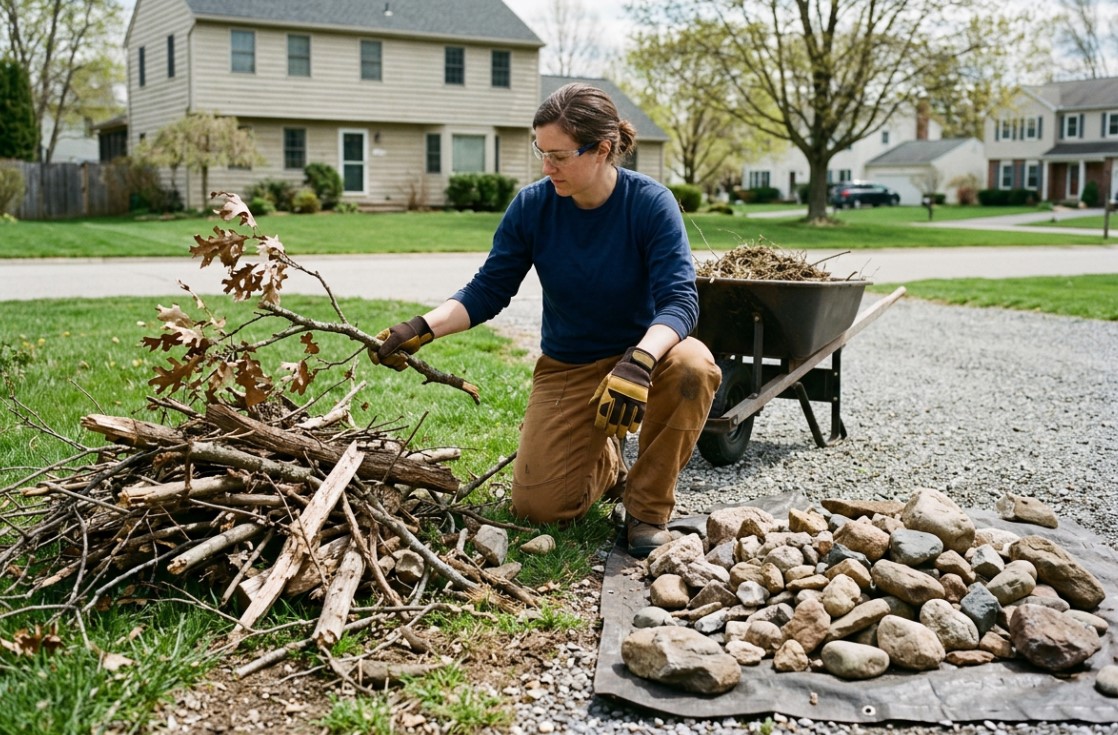
Before diving into the actual cleanup, it’s crucial to gather the right tools and prioritize safety. A well-prepared workspace and efficient equipment staging can significantly boost your productivity and ensure ergonomic efficiency, preventing strain and injury.
Personal Safety and Protective Gear
Your personal safety should always be the top priority. Yard work, even seemingly simple tasks, can pose various risks. We recommend equipping ourselves with the following protective gear:
- Work Gloves: Essential for protecting hands from thorns, splinters, chemicals, and blisters. Cut-resistant gloves are particularly useful when handling sharp debris or tools.
- Safety Glasses: Crucial for shielding eyes from flying debris, dust, and chemical splashes, especially when using power tools or working in windy conditions.
- Dust Masks: Important when dealing with dry leaves, soil, or mulch, as dormant mold spores can become airborne, even if no odor or discoloration is present.
- Sturdy Footwear: Protects your feet from falling objects, sharp tools, and provides better traction on uneven or slippery surfaces.
Core Hand and Power Equipment
Having the right tools makes all the difference in turning a daunting task into a manageable one. Here’s a list of essential equipment we find invaluable:
- Leaf Rakes: Ideal for gathering leaves and light debris from lawns. A bow rake, with its stiff, short tines, is better suited for moving heavier materials like soil or gravel.
- Bypass Pruners and Loppers: For clean cuts on shrubs and small branches. Sharp tools ensure plants heal faster, reducing the risk of disease.
- Drag Tarps: A game-changer for moving large volumes of leaves, clippings, or branches. Instead of numerous wheelbarrow trips, a heavy-duty tarp can save significant time and effort across a large yard.
- Wheelbarrows or Garden Carts: Useful for transporting soil, rocks, and smaller debris, especially in areas where a tarp might be cumbersome.
- Leaf Blowers: Excellent for quickly consolidating leaves and debris into piles, or for clearing hardscapes.
- Mulching Mowers: A true labor-saver. These mowers are designed to finely chop leaves and grass clippings, allowing them to decompose naturally on the lawn or be collected for composting, returning valuable nutrients to the soil.
The Step-by-Step Yard Debris Clearing Strategy
Cleaning a yard effectively means adopting a methodical approach. We’ve found that a “top-down” strategy, starting with large items and moving to smaller debris, is the most efficient. This ensures your path remains clear and you don’t have to clean areas twice. Establishing staging zones for different types of waste also streamlines the disposal process.
Removing Large Debris and Hazard Sorting
The first step in any major yard cleanup is to tackle the large, obvious debris. This includes storm debris like fallen branches, large rocks, and any discarded items that may have accumulated.
- Establish Staging Zones: Before you begin, set up designated areas near your driveway or gate. These zones will be for sorting different types of waste: branches, rocks, general trash, and potentially separate piles for compostable materials. This pre-sorting saves time during disposal.
- Clear Large Branches and Twigs: Walk through your yard and pick up all significant branches and twigs. Chop larger branches into manageable sizes, sort them, and bundle them together for easier transport or chipping. Always inspect brush piles for nesting wildlife before disturbing them.
- Handle Rocks and Boulders: Small rocks can often be pried up with a shovel or a stiff landscape rake and scooped into a cart. For larger, heavier rocks, a pry bar, a block of wood for leverage, and plywood sheets can help you roll them without straining your back or damaging the underlying turf. These can often be repurposed in garden borders or drainage pathways.
- Dispose of Hazardous Materials: Be vigilant for broken glass, metal debris, or other sharp objects. Deposit broken glass into rigid containers to prevent punctures. A magnetic sweeper can be invaluable for picking up hidden nails or metal fragments, especially after construction or renovation. Never reuse or compost diseased limbs, invasive vines, or fungal plant matter, as this can spread issues.
Efficient Techniques for Small Debris and Fallen Leaves
Once the large items are cleared, we can focus on the finer details: leaves, small twigs, and other ground-level debris.
- Raking and Blowing: For leaves and light debris, raking them into linear rows rather than circular piles makes bagging or gathering significantly easier. Leaf blowers are excellent for quickly consolidating these rows into larger piles. For very dense accumulations, a mower with a bag attachment can be more effective than mulching directly into the lawn.
- Tarp Dragging: Once piles are formed, a large drag tarp is your best friend. It allows you to move substantial volumes of debris across the yard in far fewer trips than a wheelbarrow, saving considerable time and energy.
- Optimal Moisture Conditions: We’ve found that slightly damp leaves are easier to manage as they don’t blow around as much. However, avoid cleaning gravel or heavy branches when wet, as moisture makes them heavier and causes gravel to stick to surfaces.
- Hard-to-Reach Areas: For gutters, a wet-vac can be highly effective for removing wet, mucky debris, while a leaf blower works well for dry contents. For patios and walkways, a push broom is often sufficient for light debris.
Seasonal Lawn and Garden Rejuvenation
Beyond just clearing debris, effective yard cleaning involves strategic seasonal rejuvenation and low maintenance front yard landscaping practices to promote soil health, grass vigor, and weed suppression, ultimately leading to better moisture retention. This dual-season framework ensures your yard remains healthy and attractive year-round.
Spring Revival: Aerating, Weeding, and Seeding
As the chill of winter recedes, our yards need special attention to recover and prepare for the growing season.
- Timing is Key: We recommend waiting until daily outdoor temperatures consistently exceed 50°F for several days before starting your spring cleanup. This crucial delay protects overwintering pollinators and beneficial insects that use leaf litter for shelter. Additionally, wait until your lawn has dried and firmed up; walking or raking on soggy turf can lead to soil compaction and damage to the waking grass crowns.
- Aeration and Top Dressing: Lawn aeration is vital in spring. It cuts through built-up thatch and compacted soil, creating channels that allow water, oxygen, and nutrients to reach the grass roots more effectively. Following aeration, applying a thin top dressing of soil conditioner or fine compost can further enrich the soil and improve its structure.
- Weed Management: Early spring is the time to tackle weeds. Pull emerging weeds by the roots, especially after rainfall when the soil is pliable. For proactive control, apply a pre-emergent herbicide after clearing debris. Applying it beforehand would result in the product being intercepted by leaves, rendering it ineffective.
- Repairing Bare Patches: Winter can leave bare spots in your lawn. To repair these, fill the area with quality topsoil, scatter grass seed, and lightly rake so that only about 5-10% of the seed remains visible. Cover with a thin layer of compost and water daily without over-saturating until established.
- Consistent Watering: Throughout spring and into summer, maintain consistent irrigation. Lawns typically require about an inch of water per week to maintain a lush, green appearance.
Fall Winterization: Mulch-Mowing and Root Protection
Fall cleanup is not just about aesthetics; it’s about preparing your lawn and garden for winter dormancy, including steps to winterize your garden, and ensuring a strong start next spring.
- Cool-Season Grass Focus: For cool-season grasses like Kentucky bluegrass, perennial ryegrass, and fescue, autumn is a critical period. They build their root mass primarily during the cool, moist months of fall, which is essential for their health and resilience.
- Mulch-Mowing Leaves: Instead of raking and bagging all fallen leaves, consider mulch-mowing them. Research from Michigan State University Extension indicates that mulching up to 6 inches of leaf cover directly into the lawn causes no harm to turf and can even reduce weed pressure over time. This returns valuable organic matter and nutrients to the soil. Only bag excess leaves if the layer is thicker than 6 inches or completely obscures the grass after multiple passes.
- Preventing Snow Mold: Heavy layers of wet leaves left on the lawn over winter, especially combined with long grass under snow, are a primary cause of pink and gray snow mold. Mulch-mowing helps prevent this.
- Mower Height Adjustment: For the final autumn mows, lowering your lawn mower carriage to its lowest setting helps cool-season grass direct energy towards root development rather than shoot growth, preparing it for winter.
- Late-Season Fertilization and Overseeding: Fall is an excellent time for fertilizer for plants and cool-season lawn fertilization and overseeding, promoting a denser, healthier lawn that will green up quickly the following spring.
Hardscape Restoration, Waste Management, and Eco-Friendly Practices
Our yard cleanup efforts extend beyond just the lawn and garden beds. Hardscapes like patios, decks, and fences also require attention. Furthermore, how we manage yard waste significantly impacts our environmental footprint, making sustainable practices crucial for nutrient recycling and supporting pollinator habitats.
Deep Cleaning Patios, Decks, and Fences
Winter weather can take a toll on hardscapes, leaving them grimy and worn.
- Pressure Washing: A portable electric pressure washer is an effective tool for deep cleaning patios, driveways, and stone walkways, removing built-up dirt, grime, and algae. For mildew, a solution of two tablespoons of detergent and two cups of bleach mixed into two quarts of warm water, left for 15 minutes before rinsing, can be very effective.
- Deck and Fence Maintenance: Inspect decks and fences for any winter damage, such as loose boards or peeling paint. Sand and seal wooden surfaces to protect them from moisture and UV damage. Regular cleaning and sealing extend their lifespan and maintain their aesthetic appeal.
- Gutter Clearing: Don’t forget your gutters! Clogged gutters fail to direct runoff away from your home’s foundation, potentially leading to water damage. Clear wet debris using a wet-vac or dry debris with a leaf blower. Always prioritize ladder safety when working at heights.
Sustainable Composting and Yard Waste Disposal
Responsible yard waste management is a cornerstone of eco-friendly yard care.
- Composting: Repurposing grass clippings and autumn leaves as mulch for vegetable and flower beds provides organic protection and nutrients, reducing the need for purchased fertilizers and minimizing yard waste. For a dedicated composting system, a DIY chicken-wire bin, at least 3×3 feet in size, can be built to turn organic waste into rich compost. Remember to exclude invasive vines, poison ivy, and diseased plant matter from your compost bin.
- Brush Piles: Consider creating small brush piles in out-of-the-way areas. These provide essential micro-habitats and shelter for native pollinators, beneficial insects, and small wildlife like frogs and toads, supporting local ecosystems.
- Municipal Regulations and No-Burn Rules: Many municipalities have specific regulations for yard waste disposal. Standard programs often require organic debris to be free of inorganic materials, construction debris, and heavy soil. Always use paper yard waste bags rather than plastic for curbside collection, and never blow leaves or debris into streets or storm drains, as this can lead to fines and water pollution. Burning yard waste is often prohibited due to increased air pollution, wildfire hazards, and the loss of valuable organic nutrients that could return to the soil.
DIY vs. Professional Yard Care: Costs and Maintenance Schedules
Deciding whether to tackle yard cleanup yourself or hire professionals often comes down to balancing cost, time, and the scale of the task. Both approaches have their merits, and understanding the financial and time commitments involved can help us make an informed decision.
Evaluating High-Quality Yard Cleaning Services vs. DIY Efforts
- DIY Costs: Doing it yourself is typically the most budget-friendly option. Beyond the initial investment in tools, the seasonal cost for supplies like yard waste bags and fuel for power equipment is usually minimal, ranging from roughly $0 to $50 per season. A reasonably fit homeowner can often manage a quarter-acre lot cleanup in an afternoon. If you need extra power for tasks like aeration or heavy-duty trimming, consider renting equipment from local hardware stores.
- Professional Rates: Hiring a crew for a seasonal yard cleanup, such as spring or fall, typically ranges from $150 to $350 for a small yard. For a large or heavily treed lot, costs can climb to $350 to $750 or more. Spring cleanups specifically often fall in the $200 to $500 range. Professional services are particularly beneficial for extensive properties, heavy debris removal, or when specialized equipment and expertise are required. For homeowners seeking consistent, High-quality yard cleaning without the time commitment, exploring reputable local landscaping services can be a worthwhile investment.
- Time and Effort: DIY requires a significant time commitment and physical labor. Professional services offer convenience, expertise, and efficiency, especially for large-scale projects or when dealing with challenging conditions.
Annual Maintenance Timelines for High-Quality Yard Cleaning
- Spring (Late March – Mid-May): This is the season for revival. Focus on debris removal (after the 50°F threshold), aeration, top dressing, pre-emergent weed control, and patching bare lawn spots.
- Summer (June – August): Regular maintenance is key. Clear away debris every month or so. Mow consistently, following the one-third rule (never remove more than one-third of the grass blade length at a time). Maintain consistent irrigation, aiming for about an inch of water per week, applied in the early morning (between 4 a.m. and 10 a.m.) to minimize evaporation and fungal growth.
- Fall (September – November): Prepare for winter. Start light weekly passes for leaf removal as they drop. Mulch-mow leaves to enrich the soil. Fertilize cool-season grasses and consider overseeding. Perform a full cleanup after leaf drop ends, before the first lasting snow. Adjust mower height downwards for the final cuts.
- Winter (December – February): Focus on tool maintenance. Clean, dry, remove rust, and lubricate garden tools before storing them in a cool, dry area. Inspect trees and shrubs during late dormancy for structural issues, as it’s easier to see their form without foliage. Address storm cleanup promptly after any major weather event.
Frequently Asked Questions About Yard Cleanup
We often encounter similar questions from homeowners looking to maintain a pristine outdoor space. Here, we address some of the most common inquiries to provide clarity and practical guidance.
When is the best time to start spring yard cleanup?
The optimal time to begin spring yard cleanup is when daily outdoor temperatures consistently exceed 50°F for several consecutive days. This timing is crucial for two main reasons: it protects overwintering pollinators and beneficial insects that are still dormant in leaf litter and plant stems, allowing them to emerge safely. Additionally, it’s important to wait until your lawn has dried and firmed up from winter moisture. Starting too early on soggy ground can lead to soil compaction and damage to the delicate grass crowns as they begin to wake up.
Is it better to mulch or bag fallen autumn leaves?
Whenever possible, we recommend mulch-mowing fallen autumn leaves. This process chops the leaves into fine pieces, allowing them to decompose directly on your lawn. This returns valuable organic matter and essential nutrients to the soil, improving soil health and even reducing weed pressure over time. Studies indicate that lawns can safely handle up to about 6 inches of leaves mulch-mowed into the turf without harm. Only bag the overflow if the leaf cover is excessively thick (more than 6 inches) or if multiple passes with the mower still leave the grass completely obscured. Mulching is a sustainable practice that minimizes waste and nourishes your lawn naturally.
How much water does an established lawn need weekly?
On average, an established lawn requires approximately one inch of water per week to maintain a healthy, green appearance. This should ideally be delivered through a deep watering that penetrates about six inches into the soil, rather than frequent shallow sprinklings. The best time to water your lawn is in the early morning, typically between 4 a.m. and 10 a.m. Watering during these hours minimizes water loss due to evaporation and allows the grass blades to dry before nightfall, which helps prevent the development of fungal diseases. Consistent deep watering encourages deeper root growth, making your lawn more resilient to drought and stress.
Conclusion
Transforming a cluttered yard into a pristine outdoor sanctuary is a rewarding endeavor that goes beyond mere aesthetics. By embracing a systematic approach to cleaning, utilizing the right tools, and understanding the nuances of seasonal care, we can ensure our outdoor spaces not only look their best but also thrive ecologically.
From the meticulous removal of debris and the careful rejuvenation of lawns in spring and fall, to the sustainable management of waste and the diligent upkeep of hardscapes, every step contributes to the long-term vitality of our property. Whether you choose the hands-on satisfaction of DIY or the convenience of professional services, consistent, high-quality yard cleaning is an investment in your home’s curb appeal, the health of your plants, and the enjoyment of your outdoor living areas. Let’s continue to nurture our yards, turning them from simple plots of land into masterpieces that bring joy and beauty year-round.

