
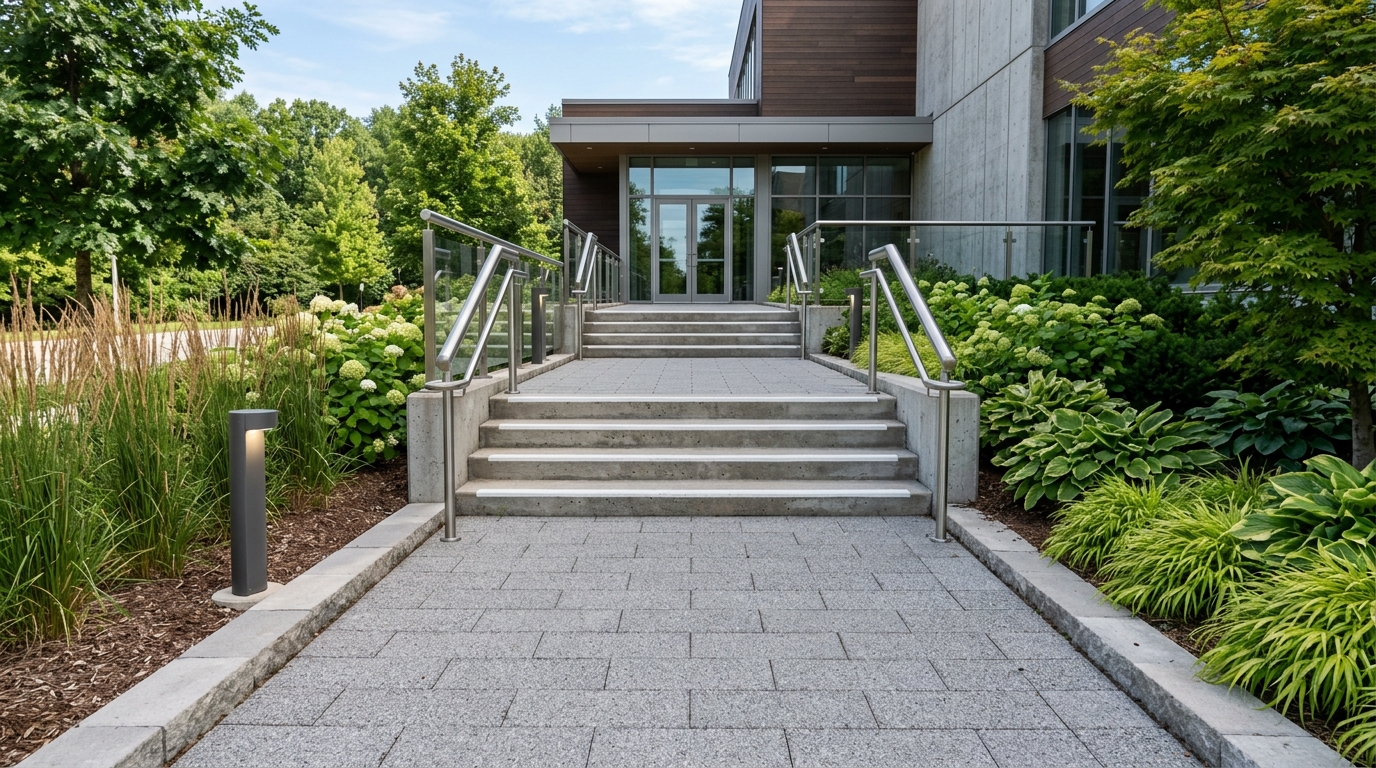
Walkway safety should be a regular consideration for any building or property where people use steps, ramps, entrances, or pedestrian paths. A loose surface, poor lighting, an unexpected change in level, or a lack of support can quickly turn an ordinary route into a potential hazard.
Whether you are responsible for a commercial property, industrial site, apartment building, or public space, making pedestrian routes safer does not always require a complete redesign. A few practical improvements can make a noticeable difference.
Keep Walking Surfaces in Good Condition
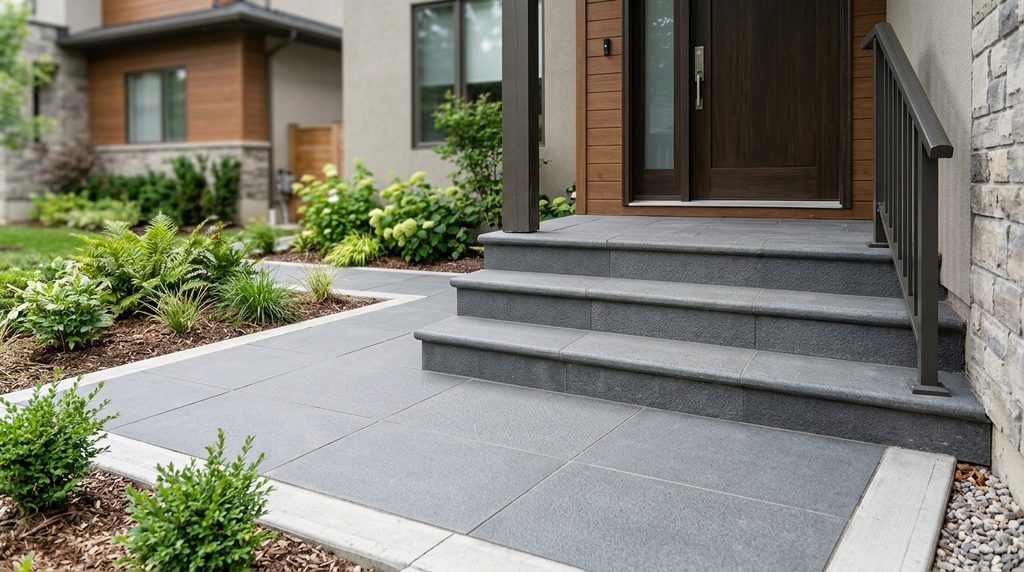
The first priority should be the condition of the surface itself. Cracked paving, loose tiles, damaged concrete, uneven slabs, and worn stair treads can all increase the risk of trips and falls, making slip-resistant surfaces an important consideration wherever people regularly walk.
Regular inspections are important because small defects can become more serious over time, especially when planning home exterior improvements that involve driveways, walkways, porches, or other frequently used outdoor areas. Repairs should be carried out promptly, particularly in high-traffic areas where people may not have time to notice an uneven surface before stepping onto it.
It is also worth considering how the surface performs in different weather conditions. Materials that become slippery when wet may need additional treatments or non-slip coverings, particularly when choosing hardscape materials for frequently used walkways, steps, patios, and outdoor circulation areas.
Add Reliable Handrails and Barriers
Handrails can provide valuable support on steps, ramps, elevated walkways, and other areas where users may need additional stability. They are particularly useful in locations that experience heavy foot traffic or where there is a significant change in level.
For businesses reviewing their existing safety infrastructure, keesystems.com provides information on handrails, safety barriers, and guardrail systems that can be used to improve pedestrian protection in a range of environments.
Barriers can also help prevent people from accidentally entering hazardous areas or getting too close to exposed edges.
Improve Lighting
A walkway may be perfectly safe during the day but much harder to navigate at night. Poor lighting can make it difficult to see steps, surface damage, obstacles, or changes in elevation.
Lighting should be bright enough to make the entire route easy to understand without creating glare, much like the pathway lighting used to improve visibility and movement around outdoor areas. Pay particular attention to entrances, staircases, ramps, corners, and outdoor paths, since better lighting around stairs can make everyday movement easier and help reduce common trip hazards.
Replacing failed bulbs quickly and cleaning light fittings regularly can also help maintain consistent visibility.
Make Changes in Level Easy to See
Unexpected steps are a common source of trips. Where possible, changes in level should be made visually obvious.
Contrasting edges on stair treads can help users identify where one step ends and another begins. Clear markings may also be helpful around ramps, curbs, and raised platforms.
Avoid placing decorative features, signs, furniture, or storage items where they could make a step harder to see.
Keep Routes Clear
Walkways should remain free from unnecessary obstacles, while the overall layout should provide comfortable and safe walkway design with enough space for people to move through the area easily. Boxes, cables, equipment, fallen leaves, ice, and even poorly positioned furniture can create hazards.
Establishing clear housekeeping procedures can help ensure that pedestrian routes remain usable throughout the day. Outdoor areas may also require seasonal maintenance, such as clearing snow, treating icy surfaces, or removing wet leaves.
Review Safety Regularly
Pedestrian safety is not something that should be addressed once and forgotten. Buildings change, surfaces wear down, and the way people use a space can evolve.
Regularly walking the routes yourself can help identify problems that may not be obvious from a maintenance checklist. By combining good surfaces, adequate lighting, appropriate handrails, clear markings, and routine maintenance, you can create steps and walkways that are considerably safer and easier for everyone to use.

