
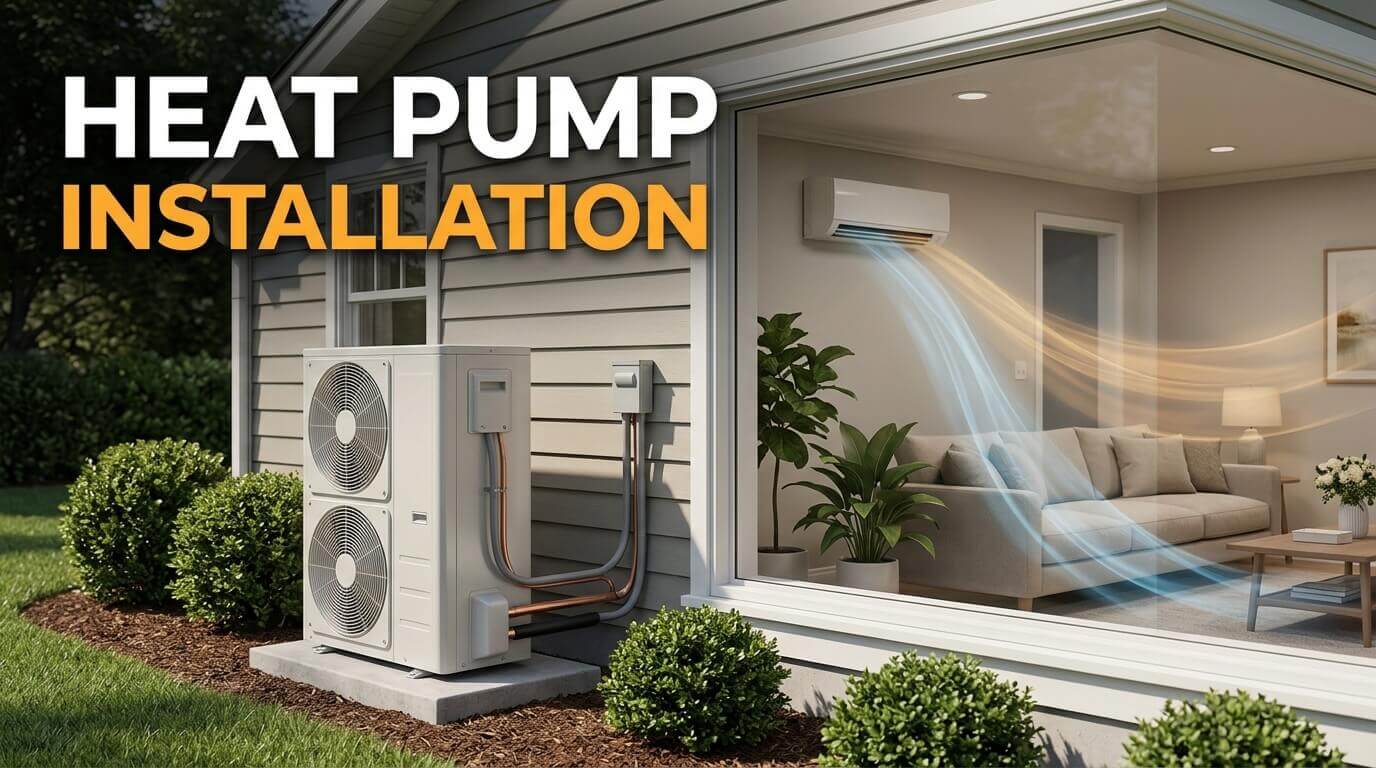
Choosing a new heating and cooling system involves more than comparing equipment prices. A properly planned heat pump installation can provide year-round comfort, help manage energy consumption, and reduce the need for separate heating and cooling equipment. The results, however, depend on choosing the right system for your home and ensuring that every part is installed correctly.
Heat pumps transfer heat instead of generating it through conventional fuel combustion. They can extract heat from outdoor air during colder weather and move indoor heat outside during warmer months. This guide explains the available system types, installation process, costs, sizing requirements, and common mistakes to avoid before committing to an upgrade.
What Is a Heat Pump and How Does It Work?
A heat pump uses electricity to move heat between two locations. In heating mode, refrigerant absorbs heat from an outdoor source and releases it inside the house. In cooling mode, the refrigeration cycle reverses, allowing the equipment to function much like an air conditioner.
Unlike a furnace that burns fuel to produce heat, an electric heat pump transfers existing thermal energy. This is why some systems can deliver more heat energy than the electrical energy they consume, although actual performance varies with outdoor temperature, equipment design, and installation quality.
Benefits of Installing a Heat Pump
A heat pump can offer several practical advantages when the system suits the property and local climate.
- Heating and cooling in one system: One installation can replace separate central heating and cooling equipment in suitable homes.
- Energy efficiency: Heat transfer can use less electricity than conventional electric resistance heating.
- Flexible installation: Ducted systems can use suitable existing ducts, while ductless systems serve rooms without them.
- Temperature control: Variable-speed models can adjust output to match changing heating and cooling demands.
- No on-site combustion in electric systems: These systems do not burn gas or oil inside the home to produce heat.
Heat pumps are not automatically the cheapest option for every property. Electricity rates, existing fuel costs, insulation, climate, and equipment performance all affect whether an upgrade will reduce household expenses.
For a deeper overview of system options, see this guide to choosing an eco-friendly HVAC system.
Which Type of Heat Pump Is Right for Your Home?
The right equipment depends on the property’s layout, existing heating system, climate, and installation budget. Comparing the main options before requesting quotes can help prevent paying for features or construction work you do not need.
Air-source heat pump
Uses outdoor air as its heat source and sink. It is a common choice for homes with existing central ductwork and can often replace compatible heating and cooling equipment without rebuilding the entire distribution system.
Ductless mini-split
Connects an outdoor unit to one or more indoor units without requiring conventional ductwork. It can work well in additions, older houses, converted garages, and homes that need room-by-room temperature control.
Geothermal heat pump
Transfers heat between the home and the ground through buried piping. It can provide efficient operation, but excavation or drilling, ground-loop design, and site conditions can make installation substantially more involved.
The best option depends on the home and site. The illustrations represent common configurations, not a recommendation for every property.
A useful starting point is the residential heat pump guidance, which explains system types, climate considerations, and the differences between ducted and ductless equipment.
What to Check Before Heat Pump Installation
A successful installation starts with an assessment of the property rather than a decision based solely on equipment size or advertised efficiency. A contractor should inspect the home’s existing systems and explain any work needed before providing a final quote.

1. Calculate the Heating and Cooling Load
The heating and cooling load is the amount of heat a home needs to remove or supply to maintain comfortable indoor temperatures. It depends on factors such as floor area, ceiling height, windows, insulation, air leakage, climate, and the home’s orientation.
Ask the contractor to perform a room-by-room load calculation using the recognized Manual J residential sizing method. Choosing equipment based only on square footage or the capacity of the old unit can lead to poor performance.
An oversized heat pump may cycle too frequently and struggle with humidity control. An undersized system may run for extended periods without meeting the home’s heating or cooling needs during demanding weather.
2. Inspect Existing Ductwork
If your home has central heating and cooling, the condition of the ducts can significantly affect the new system’s performance. Leaks, damaged insulation, restricted airflow, and poorly sized return vents can undermine an otherwise efficient heat pump.
Ask the installer to identify any necessary duct repairs, sealing, cleaning, or balancing. Homes without suitable ductwork may be better candidates for a ductless mini-split than an expensive new duct network.
3. Check Insulation and Air Sealing
Heat pumps work best when the building envelope limits unwanted heat transfer. Gaps around windows, poorly insulated attics, and air leaks can increase heating and cooling demand, potentially requiring more expensive equipment.
Where practical, address significant insulation and air-sealing problems before finalizing equipment sizing. The right sequence can improve comfort and help prevent the new system from being sized around avoidable energy losses.
4. Confirm Electrical and Outdoor Placement Requirements
The installer should evaluate the electrical panel, circuit capacity, disconnect requirements, and any wiring changes needed for the proposed equipment. Some replacements require electrical upgrades, so these should appear clearly in the estimate rather than becoming unexpected charges later.
The outdoor unit also needs a stable, well-drained location with adequate clearance for airflow and future servicing. Consider noise near bedrooms, runoff, snow accumulation where relevant, and manufacturer requirements for clearances and mounting.
How Much Does Heat Pump Installation Cost?
The total cost depends on the equipment type, home size, existing infrastructure, labor, and local installation requirements. A straightforward replacement that uses compatible ductwork will generally involve less construction than a geothermal system or a retrofit requiring new ducts and electrical upgrades.
Rather than relying on one national average, compare written estimates that describe the same scope of work.
How to Compare Installation Quotes
Request itemized estimates from at least two or three qualified contractors. Each quote should identify the proposed equipment, calculated heating and cooling loads, installation labor, ductwork requirements, electrical work, permit fees, warranty terms, and commissioning procedures.
Also ask what is excluded. A low initial quote may not include an electrical panel upgrade, duct repairs, removal and disposal of old equipment, or other work needed to complete the project properly.
Potential rebates and financing programs may reduce the net cost, but eligibility depends on the program, equipment, installation date, and applicable rules. Check current local utility offers and official program terms before including any incentive in your budget.
What Happens During a Professional Heat Pump Installation?
The exact process varies by system type and whether the project is a replacement or a new installation. Most residential projects follow a sequence of assessment, preparation, equipment installation, testing, and homeowner handover.
Step 1: Assessment and Equipment Selection
The contractor evaluates the home, performs the required load calculations, and recommends suitable equipment. This stage should also identify electrical work, duct modifications, condensate drainage, and any local permit requirements.
Step 2: Removal and Preparation
For a replacement, technicians disconnect and remove the old equipment using appropriate safety procedures. They prepare the installation area, check existing connections, and complete any agreed repairs before positioning the new system.
Step 3: Install Indoor and Outdoor Components
The team positions the equipment according to manufacturer specifications and connects the required refrigerant lines, electrical components, controls, and condensate drainage. Refrigerant handling and electrical work should be completed by appropriately qualified professionals.
If ductwork is used, the connections and airflow paths must suit the equipment. Ductless systems instead require carefully located indoor units and correctly routed connections to the outdoor unit.
Step 4: Test and Commission the System
Commissioning is the process of checking that the completed system operates as intended. The installer should verify appropriate airflow, refrigerant charge using manufacturer procedures, electrical operation, controls, drainage, and heating and cooling performance.
Do not treat the arrival of the equipment or the first successful startup as proof that every installation detail is correct. Ask for a clear explanation of the tests performed and any issues that still need attention.
Step 5: Review Operation and Maintenance
Before the installer leaves, learn how to operate the thermostat, change or clean filters, and recognize normal operating sounds. You should also receive the equipment documentation, warranty details, maintenance recommendations, and any required inspection records.
Choosing the right heat pump installation option can help ensure your new system meets your home’s heating and cooling needs.
How Long Does Installation Take?
A straightforward replacement may be completed in a day, while more involved projects can take several days or longer. The timeline depends on equipment availability, electrical upgrades, ductwork changes, site preparation, permits, and inspection scheduling.
These are project categories rather than guaranteed time estimates. Ask your contractor for a schedule that includes preparation, installation, testing, and any required inspections.
Common Heat Pump Installation Mistakes to Avoid
Even high-efficiency equipment can disappoint when the system design or installation is inadequate. Review these issues before approving the final work.
Choosing the Wrong System Size
Do not assume that a larger heat pump automatically provides better comfort. Ask for documented load calculations and an explanation of how the selected equipment meets the home’s needs across expected outdoor temperatures.
Ignoring Duct Leaks and Insulation
Installing a new unit without addressing significant duct problems or air leakage can limit the benefits of an upgrade. Have the contractor distinguish essential repairs from optional improvements so you can prioritize the work.
Selecting a Contractor Based Only on Price
An unusually low estimate may omit important design work, installation steps, or post-installation testing. Compare qualifications, references, insurance, written scope, and warranty coverage alongside the quoted price.
Overlooking Cold-Weather Performance
Heat pumps vary in how much heating capacity they deliver as outdoor temperatures fall. If your area experiences freezing weather, compare published low-temperature performance and discuss whether supplemental heating is appropriate.
Skipping Final Testing
A system that starts up can still have airflow, drainage, control, or refrigerant-related problems. Obtain confirmation that the system was commissioned and that any applicable permits and inspections have been addressed.
How to Keep a New Heat Pump Running Efficiently
Regular care helps maintain airflow, comfort, and reliable operation after installation. Homeowners can handle basic maintenance while leaving refrigerant service, electrical repairs, and internal mechanical work to qualified technicians.
- Check the air filter regularly. Inspect it according to the manufacturer’s guidance and clean or replace it when needed.
- Keep the outdoor unit clear. Remove leaves and debris without damaging the coil or blocking the required airflow space.
- Watch for unusual changes. New rattling, persistent poor airflow, unexpected temperature swings, or a sudden change in energy use may warrant professional inspection.
- Schedule professional maintenance. Follow the manufacturer’s recommended service interval and arrange checks before periods of heavy seasonal use.
- Learn the thermostat settings. Understand heating, cooling, fan, and auxiliary heat modes so the system operates as intended.
For additional practical advice, this guide to creating a reliable home heating plan explains how equipment choice, airflow, maintenance, and home conditions work together.
Frequently Asked Questions About Heat Pump Installation
Is heat pump installation worth it?
It can be worthwhile when the equipment matches the home, local climate, energy prices, and heating and cooling needs. Compare the full installation cost and expected operating expenses with those of your existing system before making a decision.
Can a heat pump replace both a furnace and an air conditioner?
Yes, a suitable heat pump can provide both heating and cooling. Some homes may still benefit from a backup heating source, particularly where outdoor temperatures regularly fall below the system’s most efficient operating range.
Can a heat pump use existing ductwork?
Yes, if the existing ducts are appropriately sized, sealed, and capable of delivering the required airflow. The contractor should inspect them before confirming that they can be reused without significant modifications.
Is a ductless mini-split easier to install than a central heat pump?
A mini-split may be simpler when a home has no suitable ductwork because it avoids installing a full duct network. However, the number of indoor units, wall penetrations, refrigerant-line routing, and electrical requirements still affect the project’s complexity.
Does a heat pump work in freezing weather?
Many modern heat pumps can operate in freezing conditions, but their heating capacity and efficiency vary with outdoor temperature and equipment design. Cold-climate models and appropriately designed backup heating can help meet a home’s heating requirements in colder regions.
How do I know what size heat pump my home needs?
A contractor should calculate the home’s heating and cooling loads rather than relying on square footage alone. Insulation, windows, air leakage, room layout, and local design temperatures all affect the appropriate capacity.
Does heat pump installation require a permit?
Permit requirements depend on local building codes and the work involved. Electrical modifications, mechanical work, and equipment replacement may trigger different requirements, so confirm them with the local authority and your contractor before work begins.
What should be included in a heat pump installation quote?
A detailed quote should identify equipment, labor, load calculations, ductwork and electrical work, permits, removal of old equipment, testing, and warranty coverage. Ask for exclusions in writing so you can compare contractors fairly.
How often should a heat pump be serviced?
Follow the equipment manufacturer’s maintenance instructions and have a qualified professional inspect the system at the recommended intervals. Filters and outdoor-unit clearance also need regular attention between professional visits.
Can I install a heat pump myself?
A complete installation involves electrical connections, refrigerant handling, system commissioning, and compliance with applicable codes. Professional installation is the safer approach, and refrigerant work may be subject to specific certification requirements.
Conclusion
A successful heat pump installation begins with the right system design, not simply the purchase of efficient equipment. Careful sizing, suitable ductwork, proper electrical preparation, and thorough commissioning all help determine whether the finished system delivers dependable comfort and the expected performance.
Before committing, compare detailed estimates, ask how the contractor will verify system size and performance, and confirm all permit and warranty requirements. With those checks in place, you can make a more informed decision about upgrading your home’s heating and cooling system.

