
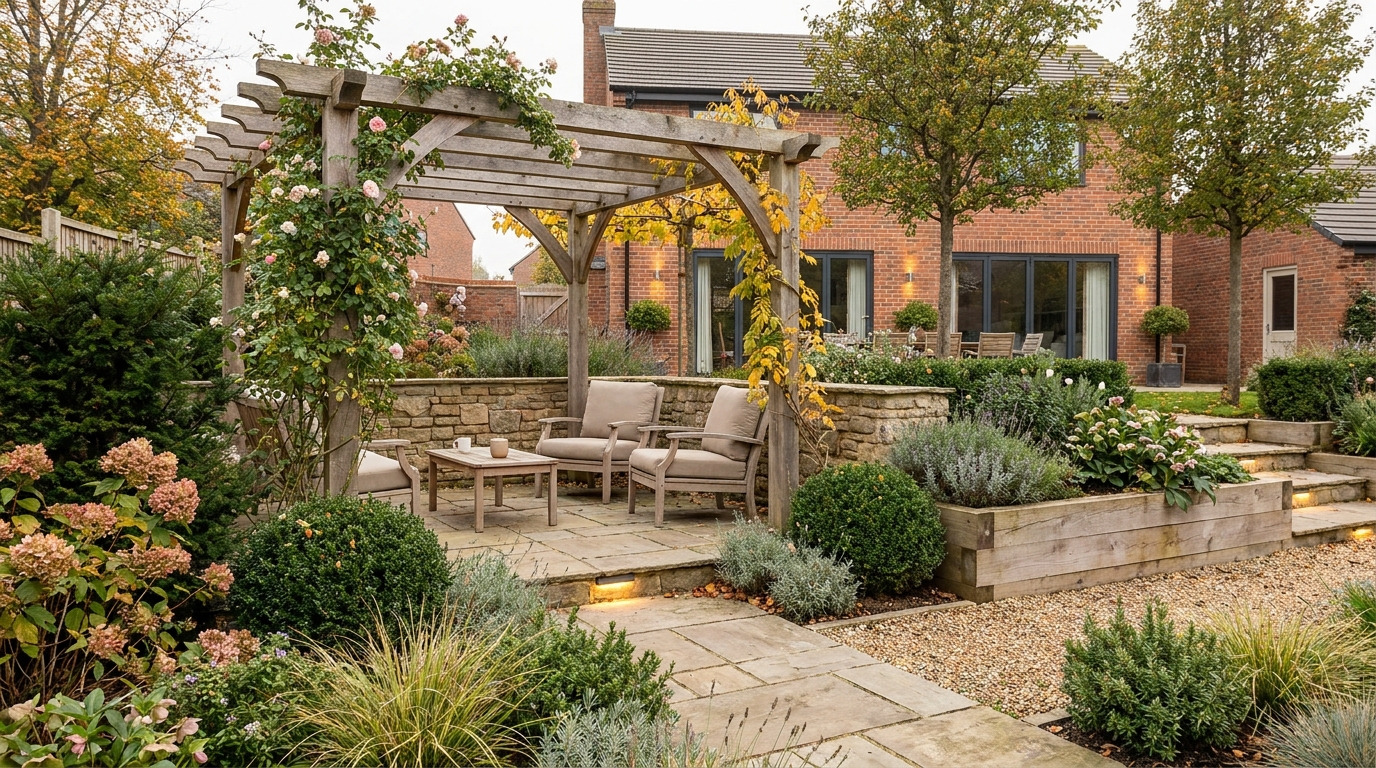
A garden shouldn’t be somewhere you only enjoy during a few sunny weeks in summer. With thoughtful planning, an outdoor space can remain practical, attractive, and inviting throughout the year. From sheltered seating to plants that provide changing seasonal interest, the right design decisions can help you get much more from your garden.
Start With How You Want to Use the Space
Before choosing plants, furniture, or paving, think about what you actually want from your garden. You might need an area for outdoor dining, somewhere quiet to relax, space for children to play, or a combination of different uses.
Dividing the garden into clear zones can make even a relatively small space more versatile. A patio close to the house could provide an everyday dining area, while a bench positioned further into the garden creates a more peaceful retreat.
If you are struggling to turn different ideas into one cohesive plan, working with a professional garden designer can help you make effective use of the available space while considering planting, layout, and practical requirements together.
Create Structure That Lasts Through Winter
Summer flowers can easily become the focus when planning a garden, but it is worth considering what will remain once they disappear.
Evergreen shrubs, hedges, and carefully positioned trees can give the garden structure throughout the colder months. Walls, pathways, raised beds, and large containers also create permanent features that prevent the space from feeling empty in winter.
Think about the views from inside your home too. A well-positioned tree, attractive planter, or sculptural feature can give you something interesting to look at even when the weather keeps you indoors.
Choose Plants for Different Seasons
Rather than filling borders with plants that all reach their peak simultaneously, aim for a succession of seasonal interest.
Spring bulbs can provide the first burst of color, followed by flowering perennials and shrubs during summer. Autumn can bring colorful foliage, berries, and ornamental grasses, while plants with attractive bark, seed heads, or evergreen leaves keep things interesting through winter.
Considering texture as well as flowers can also produce a richer planting scheme. Combining fine grasses, broad leaves, and structured shrubs creates contrast even when relatively little is flowering.
Make Seating More Versatile
A comfortable seating area can significantly extend the amount of time you spend outdoors. Position seating somewhere that benefits from sunlight, but consider adding shade for hotter days.
Pergolas, awnings, and covered areas can offer protection from both strong sun and light rain. Outdoor cushions and accessories should either be weather-resistant or easy to store when conditions deteriorate.
A fire pit or outdoor heater can also make a seating area more appealing during cooler evenings, provided it is positioned and used safely.
Add Lighting for Darker Months
Outdoor lighting becomes particularly valuable as the days shorten. Instead of flooding the entire garden with bright light, use carefully positioned lighting to highlight paths, steps, and key features.
Subtle lights around seating areas can create a welcoming atmosphere, while illuminated trees or architectural features allow the garden to remain visually connected to the house after dark.
Design With Every Season in Mind
The most successful year-round gardens balance appearance with practicality. Durable materials, permanent structure, varied planting, and comfortable places to sit all contribute to a space that continues to work as the seasons change.
By planning beyond summer, your garden can become a genuine extension of your home rather than somewhere that sits unused for much of the year.

