

So you have a handful of glossy black seeds with their odd little orange tufts, and you are wondering exactly how do you plant bird of paradise seeds so they actually sprout. The short answer is that you scarify the tough seed coat, soak the seeds for a day or two, sow them about an inch deep in a warm, well-draining mix, and then wait, sometimes for weeks, sometimes for months, since this plant is famously slow and unpredictable to start from seed. This guide walks through the entire process in detail, including the parts most articles skip, like why some batches never sprout at all and what to do about it.
Bird of paradise, botanically known as Strelitzia reginae, is the striking orange and blue flowering plant often associated with tropical landscaping and floral arrangements. Most nursery plants are grown from division rather than seed because division is faster and more reliable, but growing from seed is entirely possible if you are patient and willing to experiment. It is also often the only option if you have collected seed from a plant you already own or bought seed online rather than a division.
What You Need Before You Start
Having everything ready before you soak your first seed keeps the process moving and reduces the chance of seeds drying out or rotting while you scramble for supplies.
| Item | Purpose | Notes |
|---|---|---|
| Fresh bird of paradise seeds | Germination source | Seeds lose viability quickly, ideally use seed less than six months to a year old |
| Nail file, sandpaper, or small knife | Scarification | Used to break the hard outer seed coat |
| Small bowl of room-temperature water | Soaking | Softens the seed coat before sowing |
| Pots or trays with drainage holes | Growing container | 4-inch pots work well for individual seeds |
| Well-draining potting mix | Root environment | A blend of potting soil, sand, and perlite performs best |
| Heat mat (optional but helpful) | Consistent warmth | Speeds germination considerably in cooler climates |
| Plastic cover or humidity dome | Moisture retention | Reduces surface drying between waterings |
Where Bird of Paradise Seeds Come From
Bird of paradise seed pods form after the flower is pollinated, and the small black seeds inside are attached to a bright orange, hair-like tuft called an aril. In cultivation, pollination often needs help from a sunbird or, more commonly for home growers, hand pollination with a small brush, which is one reason viable seed can be harder to find than seed from many other garden plants. If you are buying seed rather than collecting your own, look for a supplier who can tell you roughly when the seed was harvested, since seed that has been sitting in storage for more than a year germinates far less reliably.
Step-by-Step: How Do You Plant Bird of Paradise Seeds
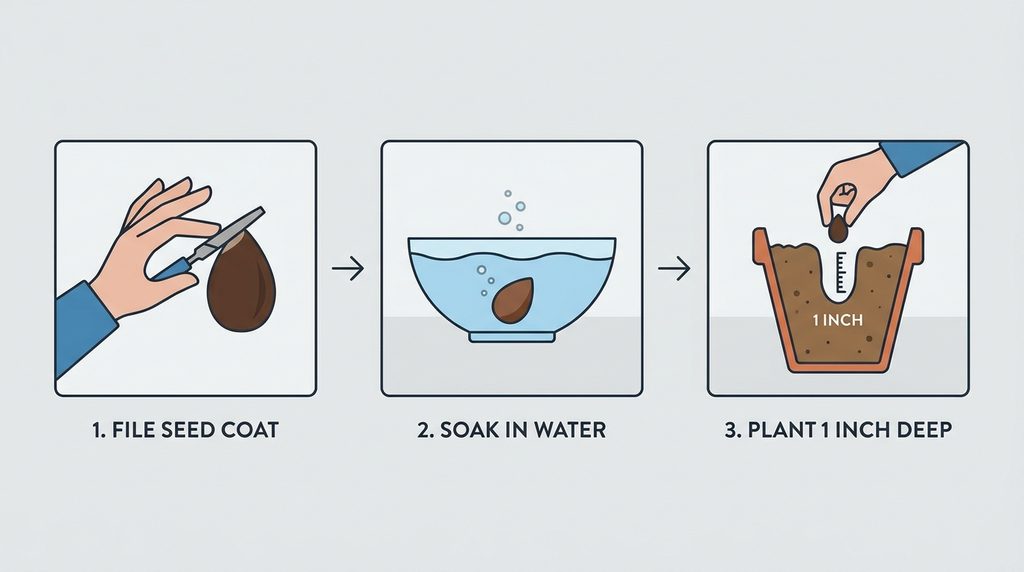
Once your seeds and supplies are ready, the actual planting steps are straightforward. The preparation stage is what makes the biggest difference to your success rate.
- Remove the orange tuft. Gently pull or trim away the fibrous orange aril attached to each seed. This material can slow water absorption and is not needed for germination.
- Scarify the seed coat. Bird of paradise seeds have an unusually hard shell. Lightly file, sand, or nick one section of the seed coat until you can see a slightly lighter layer underneath, being careful not to damage the embryo inside.
- Soak the seeds. Place the scarified seeds in room-temperature water for 24 to 72 hours, changing the water daily to prevent it from souring. Seeds that float after a day or two of soaking are often less viable, though this is not an absolute rule.
- Prepare a well-draining mix. Fill your pots with a loose blend of potting soil, coarse sand, and perlite. Heavy, water-retentive soil is one of the most common reasons seeds rot before they sprout.
- Sow at the right depth. Plant each seed about one inch deep, spacing multiple seeds a few inches apart if you are using a shared tray.
- Water and cover. Moisten the mix thoroughly, then cover the container with plastic wrap or a humidity dome to keep conditions consistently damp without waterlogging the soil.
- Provide steady bottom heat. Place the container somewhere warm, ideally between 75°F and 85°F. A heat mat placed under the pot dramatically improves germination speed and consistency, especially indoors during cooler months.
How Long Do Bird of Paradise Seeds Take to Germinate
This is where bird of paradise tests a gardener’s patience more than most houseplants. Germination timelines reported by growers and researchers vary widely, ranging from about four weeks under ideal warm conditions to two or three months, and in some cases longer, since this species is naturally slow and uneven to sprout. If you have sown several seeds in one tray, do not be surprised if they come up on completely different schedules rather than all at once.
Keep the soil consistently moist during this entire waiting period, and resist the urge to dig up seeds to check on them, since disturbing a slowly developing root can set germination back significantly. A small percentage of seeds in any batch may simply fail to sprout even under good conditions, which is normal for this species rather than a sign you did something wrong.
Caring for Bird of Paradise Seedlings After Germination
Once a seedling emerges and produces its first strap-like leaf, gradually reduce humidity cover so the young plant can adjust to normal room air. Keep the soil moist but not soggy, since seedling roots are just as prone to rot as the seed itself was during germination. Bright, indirect light suits young seedlings best, with a slow transition to more direct sun once they have several leaves and a sturdier root system.
If you already grow other slow-establishing tropical plants indoors, the same watering discipline used for propagating a spider plant translates well here, since both plants prefer soil that dries slightly at the surface between waterings rather than staying constantly wet. Watch new growth closely for pests as well, since sticky residue or small cottony clusters on young leaves usually signal mealybugs or scale, and catching an infestation early makes it far easier to manage using the same techniques covered in this guide on how to get rid of mealybugs.
Transplanting Seedlings Into Bigger Pots
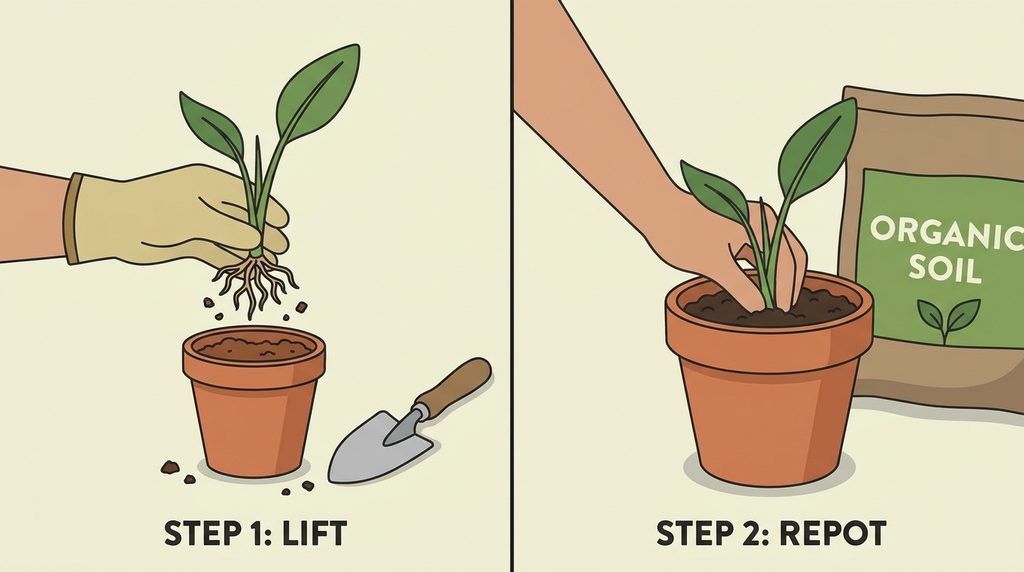
Move seedlings to a larger pot once they have developed two to three true leaves, typically using a container around six inches wide with fresh, well-draining potting mix. Handle the roots gently during the move, since bird of paradise has thick, somewhat brittle roots that do not recover quickly from rough handling. Repot again as the plant fills its container, moving up one pot size at a time rather than jumping straight to a large planter, since oversized pots hold excess moisture the developing roots cannot use yet.
Bird of paradise actually blooms better when its roots are slightly crowded in the pot, so there is no need to rush repotting once the plant reaches a reasonable size. If you eventually plan to keep your plant in a container long-term rather than moving it into the ground, the general principles covered in this article on growing peonies in containers regarding drainage and pot sizing apply just as well here, even though the two plants are unrelated.
Growing From Seed vs Growing From Division
Most experienced growers propagate bird of paradise by dividing an established clump rather than starting from seed, and understanding the trade-offs helps set realistic expectations before you begin.
| Factor | Growing From Seed | Growing From Division |
|---|---|---|
| Time to first bloom | Often several years, commonly cited around 4 to 10 years | Can flower within a year or two if divided from a mature clump |
| Genetic consistency | Variable, since seed is the result of cross-pollination | Identical to the parent plant |
| Difficulty | Slower and less predictable germination | More straightforward for most home gardeners |
| Seed or material availability | Requires viable, fresh seed which can be hard to source | Requires an existing mature plant to divide |
| Best for | Gardeners who enjoy a long-term growing project | Gardeners who want a faster, more predictable result |
Neither approach is wrong. Seed growing suits anyone who enjoys the slower process and does not mind waiting years for a first bloom, while division is the practical choice if you already have access to an established plant and want quicker results.
Common Mistakes When Planting Bird of Paradise Seeds
A handful of avoidable errors account for most failed attempts at germinating this species. Watching for these early can save months of waiting on a tray that was never going to sprout.
- Skipping scarification, which leaves the seed’s tough outer coat too hard for water to penetrate.
- Using old or improperly stored seed, since viability drops sharply after the first year.
- Keeping the growing area too cool, since consistent warmth above 75°F is important for reliable germination.
- Overwatering to the point the mix stays saturated, which encourages rot before the seed can sprout.
- Giving up too early, since this species can take considerably longer than typical garden seeds.
- Disturbing the soil repeatedly to check on progress, which can damage a fragile developing root.
Troubleshooting: Why Your Bird of Paradise Seeds Are Not Germinating
If weeks or even a couple of months have passed with no activity, start by checking soil temperature with a simple thermometer, since anything consistently below the mid-60s Fahrenheit will noticeably slow or stall germination. Next, dig gently around one seed to see whether it has softened and started to decay, which usually points to soil that has stayed too wet for too long, or seed that was not viable when it was sown.
If the seed still looks firm and intact but nothing has changed, patience is often the right answer rather than a change in technique, since even well-prepared seed from this species can take months. If an entire batch shows no sign of life after three to four months in consistently warm, moist conditions, it is reasonable to conclude the seed lot itself had low viability.
Is Bird of Paradise Safe to Handle and Grow Around Pets
Bird of paradise is generally considered a low-risk plant for people, but it is worth understanding the specifics before growing it around children or pets. A government-affiliated poison control resource notes that ingesting the fruit or seeds can cause mild gastrointestinal symptoms such as abdominal cramps, nausea, vomiting, or diarrhea in some cases, though serious reactions are uncommon.
The plant is also listed in a widely referenced animal poison-control plant database as toxic to dogs, cats, and horses, with clinical signs limited mainly to mild nausea, vomiting, and drowsiness caused primarily by the fruit and seeds rather than the leaves. Keeping seed trays and seedlings out of reach of curious pets is a simple precaution while your plants are young and easy to disturb.
Where Bird of Paradise Grows Best Outdoors

Bird of paradise is native to a mild, subtropical climate and performs best outdoors in regions with little to no hard frost. A university extension publication notes that the plant makes an attractive landscape addition in warmer regions but requires cold protection in areas further from the coast, and it grows best in fertile, well-drained soil. In cooler climates, most gardeners keep bird of paradise in containers that can be moved indoors before the first frost rather than planting it permanently in the ground.
If you are not sure which zone you are gardening in, the official interactive plant hardiness zone map lets you check your specific location by zip code, which is a useful step before deciding whether your seedlings will eventually go into the garden or stay in movable pots long term.
Costs, Time, and Difficulty at a Glance
For readers deciding whether this project fits their patience and budget, here is a realistic overview based on the steps above.
- Cost: Low. Seeds, a small pot, and basic potting mix components cost far less than a mature nursery specimen.
- Time to germination: Roughly four weeks to three months, depending on seed freshness, warmth, and scarification.
- Time to first bloom: Commonly several years from seed, sometimes cited as four to ten years, compared to one or two years from a division.
- Difficulty: Moderate to challenging. The individual steps are simple, but consistent warmth, correct scarification, and a willingness to wait make the real difference.
Frequently Asked Questions
How do you plant bird of paradise seeds successfully at home?
Remove the orange tuft, scarify the hard seed coat, soak the seed for one to three days, then sow it about an inch deep in warm, well-draining soil kept consistently moist. Bottom heat from a heat mat significantly improves the odds of successful germination.
Do bird of paradise seeds need to be scarified before planting?
Yes, scarification is one of the most important steps, since the seed coat is naturally tough and can prevent water from reaching the embryo inside. A nail file, sandpaper, or a careful nick with a small knife is usually enough to break through the outer layer.
How long does it take for a bird of paradise seed to sprout?
Germination time varies considerably, typically ranging from about four weeks to two or three months under warm, consistently moist conditions. Some seeds in the same batch may sprout weeks apart from one another, which is normal for this species.
Can I grow bird of paradise from seed indoors?
Yes, bird of paradise can be started and grown indoors as long as it receives warmth during germination and bright, indirect light as it matures. A sunny window or supplemental grow light generally works well for young plants before they are large enough to move outdoors or to a permanent spot.
Why is my bird of paradise seed not sprouting?
The most common causes are insufficient warmth, a seed coat that was not adequately scarified, or seed that had already lost viability due to age or improper storage. Checking soil temperature and reviewing your scarification technique are good first troubleshooting steps.
How long does it take a seed-grown bird of paradise to flower?
Seed-grown bird of paradise plants commonly take several years to reach flowering size, with estimates ranging from around four to ten years depending on growing conditions. This is considerably longer than plants propagated by division, which can sometimes bloom within a year or two.
Is bird of paradise toxic to dogs and cats?
Yes, bird of paradise is listed as toxic to dogs, cats, and horses, with the fruit and seeds being the primary concern. Reported symptoms are generally mild, including nausea, vomiting, and drowsiness, but a veterinarian should be contacted if a pet ingests a significant amount.
What is the best temperature for germinating bird of paradise seeds?
A consistent range of 75°F to 85°F produces the most reliable results, and a heat mat is one of the most effective tools for maintaining this range indoors. Cooler temperatures noticeably slow the process and can prevent germination altogether in some cases.
Final Thoughts and Next Steps
Growing bird of paradise from seed is less about following a complicated process and more about accepting that this particular plant moves at its own pace. Scarify the seed properly, keep the environment warm and evenly moist, and give the tray far more time than you would for a typical garden flower before assuming nothing is happening. Once your seedlings are established and growing steadily, the patience pays off with a genuinely striking plant that few gardeners bother to grow from seed themselves. If you enjoyed this kind of slow, rewarding propagation project, take a look at our other plant care guides for more ideas on what to grow next.

