
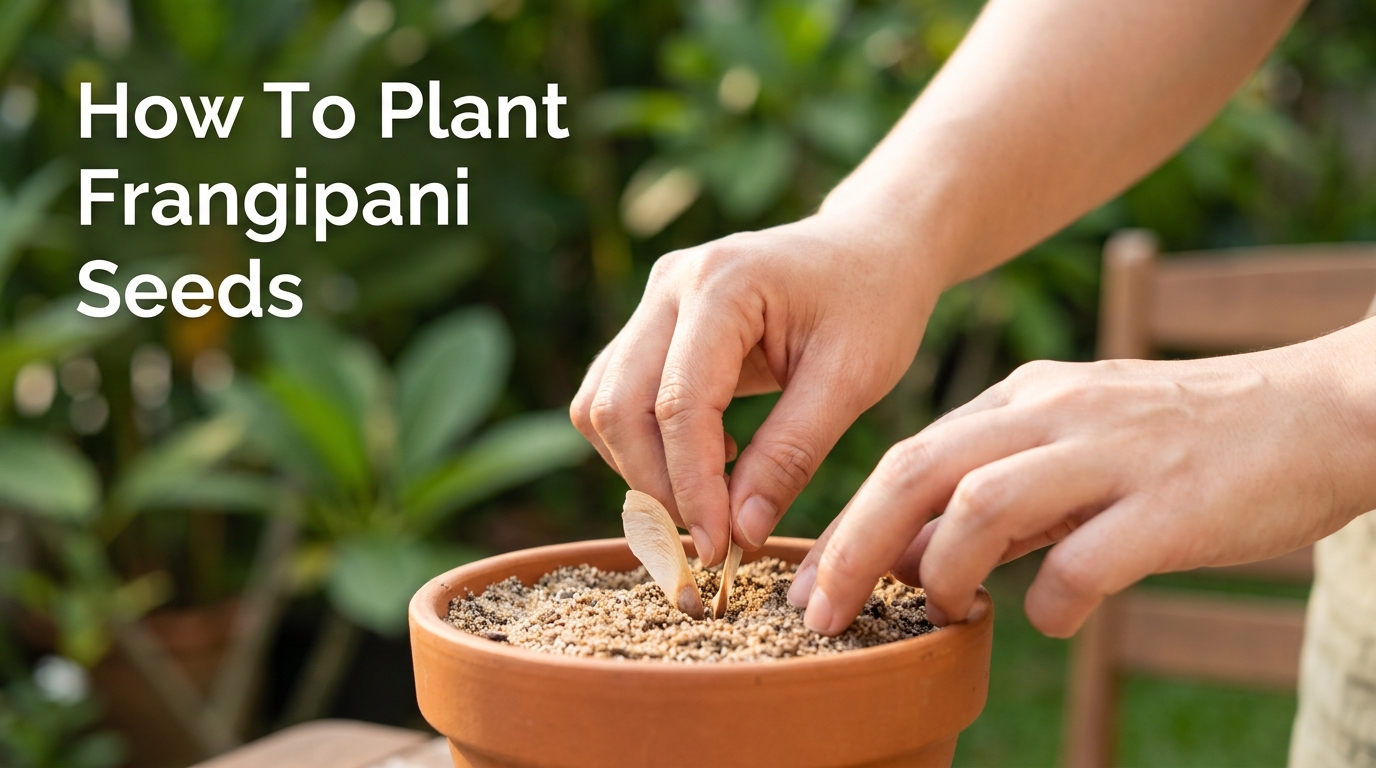
If you have ever held one of those papery, wing-shaped frangipani seeds and wondered what to do next, you are not alone. Learning how to plant frangipani seeds is simpler than most gardening guides make it sound, but a few small details make the difference between a pot of healthy seedlings and a tray of rot. In short, fresh seeds are soaked overnight, pressed into a well-draining mix with the wing left exposed, and kept warm and lightly moist until they sprout in one to three weeks. This guide walks through the entire process, from choosing viable seed to raising your seedling into a sturdy young plant, along with the mistakes that trip up most first-time growers.
Frangipani, also known botanically as Plumeria, is prized for its fragrant, waxy blooms and its association with tropical gardens and leis. Most home growers propagate it from cuttings because that method is faster and produces a plant identical to the parent. Growing from seed takes longer and the resulting flowers can vary in color and form, but it is a rewarding project if you want to experiment with new varieties or simply enjoy watching a plant grow from scratch.
What You Need Before You Start
Gathering the right supplies ahead of time prevents delays once your seeds are ready to soak. None of these items are expensive or hard to find at a local nursery or hardware store.
| Item | Purpose | Notes |
|---|---|---|
| Fresh or recently collected frangipani seeds | Germination source | Viability drops the longer seeds sit in storage |
| Small pots or seedling trays with drainage holes | Growing container | 3 to 4 inch pots work well for single seeds |
| Well-draining potting mix | Root environment | A blend of potting soil, coarse sand, and perlite or compost |
| Shallow dish and water | Pre-soaking | Room temperature water is sufficient |
| Spray bottle | Gentle watering | Reduces the risk of disturbing shallow-planted seeds |
| Warm, bright location | Germination environment | A sunny windowsill, greenhouse, or heat mat |
| Optional humidity dome or plastic wrap | Moisture retention | Helps in dry indoor climates |
Where to Get Viable Frangipani Seeds
Frangipani seed pods are long and green, and they stay that way for months before splitting open along one seam, usually in late summer. Inside, the seeds are stacked like shingles, each one fitted with a papery wing that helps it glide away from the parent tree. If you have access to a mature tree, you can collect seeds directly once a pod splits, or slip a breathable bag over a nearly-ripe pod to catch the seeds before wind scatters them.
If you do not have a tree nearby, seeds are also sold online by specialty growers and seed shops. Because germination rates decline with age, ask the seller how recently the seeds were harvested, and plan to sow them within a few weeks of receiving them for the best results. Seeds that feel dry, papery, and lightweight throughout, rather than plump near the base, are less likely to sprout.
Step-by-Step: How to Plant Frangipani Seeds
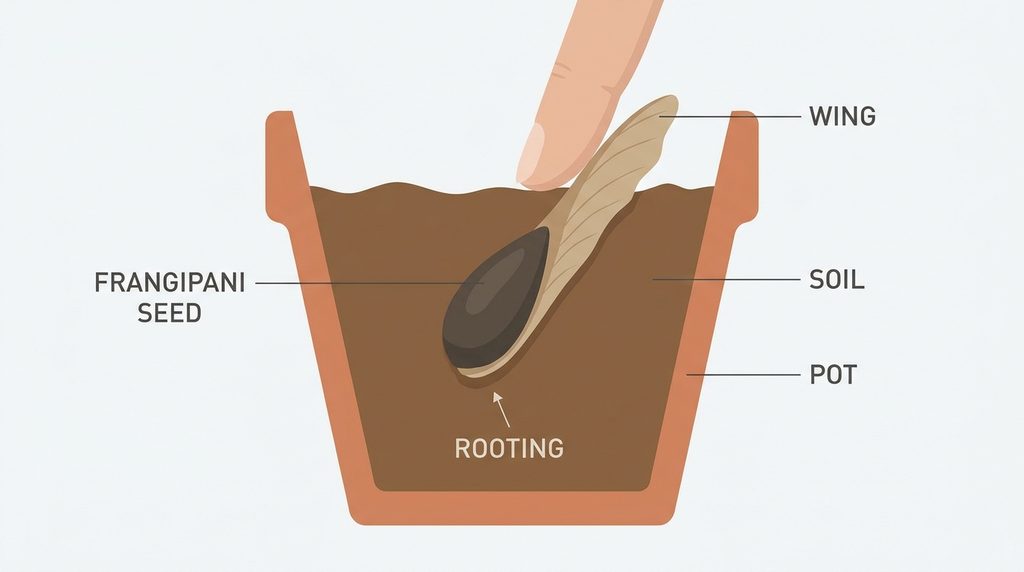
Once you have your seeds and supplies ready, the actual planting process only takes a few minutes per seed. Follow these steps in order for the most consistent results.
- Soak the seeds. Place the seeds in a shallow dish of room-temperature water, or between two damp paper towels sealed in a bag, for 12 to 24 hours. This softens the seed coat and signals to the seed that conditions are right for germination.
- Prepare the potting mix. Fill your pots with a loose, free-draining mix. A combination of standard potting soil, coarse sand, and either perlite or compost creates the airy structure frangipani roots need. Heavy garden soil or straight clay-based mixes hold too much water and encourage rot.
- Sow the seed at the correct depth. Push the swollen, non-winged end of the seed about a quarter to half an inch into the mix, angled so the wing remains above the surface. Do not bury the entire seed, since the wing does not need to be covered and full burial can trap excess moisture against the seed coat.
- Water gently. Moisten the mix thoroughly right after planting, then use a spray bottle for follow-up watering so the seed is not dislodged. The goal is consistently moist, never soggy, soil.
- Provide warmth and light. Move the pots somewhere warm, ideally between 70°F and 85°F, with bright but indirect light. A heat mat can help maintain steady soil temperature if you are starting seeds indoors during cooler months.
- Cover to retain humidity, if needed. In dry climates or air-conditioned homes, a loose plastic cover or humidity dome over the pot helps prevent the surface from drying out between waterings. Remove the cover for an hour or two each day so air can circulate and fungal issues stay in check.
How Long Do Frangipani Seeds Take to Germinate
Most viable frangipani seeds sprout within one to three weeks under warm, consistently moist conditions, though a few stragglers can take longer. You will know germination has started when a small green shoot pushes up and the papery husk begins to loosen from the emerging leaves. If the husk does not fall away on its own after a few days, a light misting followed by gently teasing it off with clean fingers can prevent the trapped seedling leaves from rotting underneath.
Patience matters here. Some seeds from the same batch can take noticeably longer than others, and pulling a pot too early because nothing seems to be happening is one of the more common reasons people give up prematurely.
Caring for Frangipani Seedlings After Germination
Once the first true leaves appear, your seedling needs slightly different care than it did as a dormant seed. Keep the soil lightly moist rather than constantly wet, and let the top layer dry out slightly between waterings to avoid the fungal problems that thrive in oversaturated mix. Frangipani seedlings are surprisingly sensitive to root rot at this early stage, so drainage is just as important now as it was during germination.
Gradually increase light exposure over the following weeks. Seedlings that germinate indoors benefit from a slow transition to brighter conditions rather than an abrupt move into full outdoor sun, which can scorch tender young leaves. If you already grow other drought-tolerant plants that need similar watering discipline, the same restraint that works for how often to water succulents applies well to young frangipani, since both dislike consistently wet roots.
Watch closely for early pest activity as well. Small, cottony insects on new growth are usually mealybugs, and catching them early makes treatment much easier. If you notice this on your seedlings, the same removal methods described in this guide on how to get rid of mealybugs apply directly to young frangipani plants.
Transplanting Seedlings Into Bigger Pots
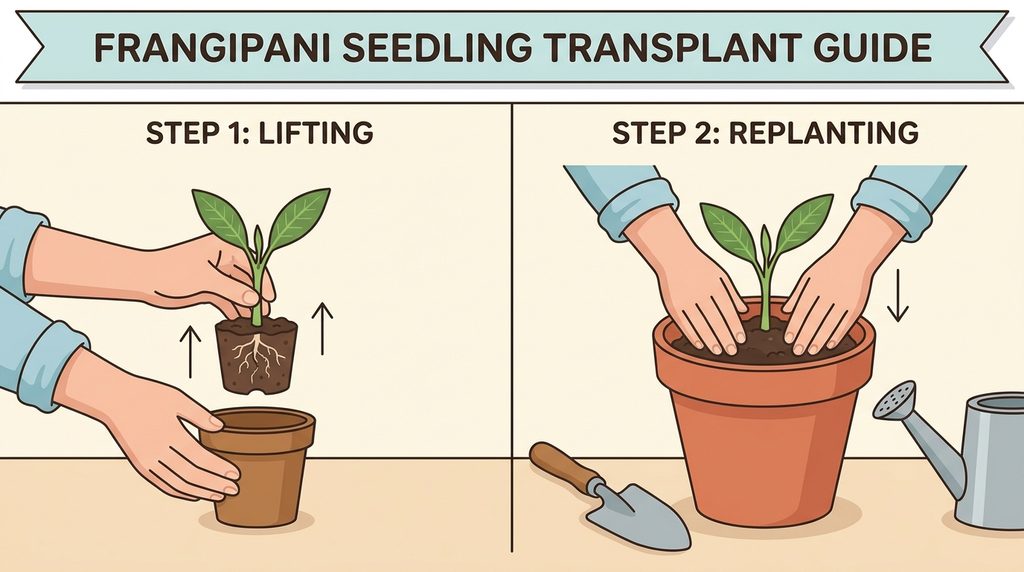
Frangipani seedlings are usually ready for their first transplant once they reach about three to four inches tall and have developed a second set of true leaves, which typically happens around the six-month mark from sowing. Choose a pot only slightly larger than the current one, since an oversized container holds excess moisture around roots that have not yet filled the space. Handle the root ball as little as possible during the move, since frangipani roots can be sensitive to disturbance while still young.
If you eventually plan to keep your frangipani in a container long-term rather than planting it in the ground, the same principles that apply to other container-grown ornamentals hold true here. The guidance in this article on growing peonies in containers on drainage, pot sizing, and root space applies just as well to frangipani, even though the two plants have very different growth habits.
Growing From Seed vs Growing From Cuttings
Most experienced growers propagate frangipani from stem cuttings rather than seed, and it helps to understand why before you commit to one method.
| Factor | Growing From Seed | Growing From Cuttings |
|---|---|---|
| Time to first flowers | Several years, often 3 to 5 | Often within the first year or two |
| Genetic consistency | Variable; flowers may differ from the parent plant | Identical to the parent plant |
| Difficulty | Moderate; more sensitive to rot and timing | Relatively straightforward for most gardeners |
| Best for | Breeding new color and form variations | Reliable, faster-flowering plants |
| Root system | Naturally develops a fibrous root system | Can sometimes be less vigorous initially |
Neither method is objectively better. Seed growing appeals to gardeners who enjoy the surprise of unknown flower colors and the slower process of raising a plant from scratch, while cuttings suit anyone who wants a predictable plant and quicker blooms.
Common Mistakes When Planting Frangipani Seeds
A handful of avoidable errors account for most failed germination attempts. Watching for these early can save weeks of frustration.
- Using old or improperly stored seeds, which lose viability faster than most gardeners expect.
- Burying the seed too deep or covering the wing completely, which traps moisture against the seed coat.
- Overwatering the pot to the point the mix stays soggy, encouraging fungal rot before the seed can sprout.
- Keeping seedlings in a cold or drafty spot, which slows or stalls germination entirely.
- Moving seedlings into direct, intense sun too soon after they sprout indoors.
- Skipping drainage holes in the pot, which is one of the fastest ways to lose an otherwise healthy seedling.
Troubleshooting: Why Your Frangipani Seeds Are Not Germinating
If several weeks have passed with no sign of a sprout, a few checks can help identify the problem. First, dig gently around one seed to see whether it has softened and started to decay, which usually points to overly wet soil or seeds that were not viable to begin with. If the seed looks firm and intact but unchanged, the issue is more likely insufficient warmth, since frangipani seeds germinate slowly or not at all below roughly 65°F.
Fungal rot on the seed coat or at the soil surface calls for reduced watering frequency and improved air circulation, and in persistent cases a light application of a general-purpose fungicide can help protect the remaining seeds in the tray. If none of the seeds in a batch show any activity after a month, it is reasonable to assume the seed lot itself had low viability rather than a problem with your technique.
Handling Frangipani Sap Safely
Frangipani plants produce a milky white sap in their stems and leaves that can irritate skin and eyes on contact, and this is worth knowing about before you start handling seed pods, cuttings, or mature plants. A government-run plant poisoning reference notes that the sap can act as a skin irritant in sensitive individuals, causing rash or blistering, and that ingesting sap or bark can lead to vomiting and diarrhea. Wearing gloves when handling seed pods or pruning an established plant is a simple precaution, and washing hands afterward reduces the chance of accidental eye contact.
This is also relevant for households with pets. Plumeria appears in a widely used animal poison-control plant database, so it is worth keeping seedlings and mature plants out of reach of curious dogs and cats, particularly since the flowers, leaves, and sap can all cause mild to moderate stomach upset if chewed or swallowed.
Where Frangipani Grows Best Outdoor
Frangipani is a tropical plant at heart, and its long-term outdoor survival depends heavily on climate. Guidance from a university horticulture extension program notes that plumeria in borderline zones remains vulnerable to frost damage even with protective siting, and gardeners in cooler regions often need to plan for winter protection or container growing. A separate master gardener extension resource similarly notes that in cooler hardiness zones, plumeria needs to spend a significant part of the year indoors, ideally in a bright spot kept between 65°F and 80°F.
If you are unsure which zone you garden in, the official interactive plant hardiness zone map lets you check your specific location by zip code, which is useful for deciding whether your seedlings will eventually live in the ground or stay in movable containers.
Costs, Time, and Difficulty at a Glance
For readers weighing whether this project fits their schedule and budget, here is a realistic overview based on the steps above.
- Cost: Low. Seeds, a small pot, and basic potting mix components typically cost less than a ready-grown nursery plant.
- Time to germination: One to three weeks under warm conditions.
- Time to first bloom: Several years, commonly three to five, since seed-grown frangipani take longer to mature than cutting-grown plants.
- Difficulty: Moderate. The steps themselves are simple, but consistent warmth, correct watering, and patience make the biggest difference in success rates.
Frequently Asked Questions
Do frangipani seeds need to be scarified before planting?
Scarifying, or lightly nicking the seed coat, is not strictly necessary but can speed up water absorption for seeds with a particularly tough outer layer. Soaking alone is usually sufficient for fresh seed, and scarification is more commonly used on older or harder seed batches.
How deep should you plant a frangipani seed?
Push the swollen end of the seed about a quarter to half an inch into the mix, leaving the papery wing exposed above the soil surface. Burying the entire seed, wing included, increases the risk of rot before germination can occur.
Can frangipani seeds be planted directly outdoors?
Direct sowing is possible in warm, frost-free climates with well-draining soil, but starting seeds in pots gives far more control over moisture and temperature. Most growers, even in warm regions, start seeds in containers and transplant seedlings later.
Why is my frangipani seedling’s husk not falling off?
Sometimes the papery seed husk clings to the emerging leaves longer than expected, which can trap and damage the young leaves underneath. A gentle misting followed by carefully easing the husk off with clean fingers usually resolves this without harming the seedling.
How long does it take for a seed-grown frangipani to flower?
Seed-grown frangipani typically take three to five years to produce their first blooms, considerably longer than plants propagated from cuttings. This is one of the main trade-offs of growing from seed rather than taking a cutting from an existing plant.
Is frangipani sap dangerous to touch?
The milky sap can irritate skin and eyes in sensitive individuals, and ingestion can cause gastrointestinal upset, so gloves are a sensible precaution when handling cuttings, pods, or pruning material. Washing any exposed skin promptly after contact reduces the chance of a reaction.
What is the best temperature for germinating frangipani seeds?
A consistent range of 70°F to 85°F gives the most reliable germination results. Temperatures below roughly 65°F noticeably slow the process and can prevent germination altogether.
Can I grow frangipani from seed indoors year-round?
Yes, frangipani can be started and grown indoors as long as it receives strong, direct light for several hours a day, since insufficient light is one of the main reasons indoor plants fail to flower. A sunny south-facing window or supplemental grow light usually makes indoor growing workable.
Final Thoughts and Next Steps
Planting frangipani seeds rewards patience more than any special skill. Fresh seed, a well-draining mix, steady warmth, and restrained watering will carry most batches through germination within a few weeks, and the seedlings that follow just need consistent light and careful transplanting as they grow. If you are new to raising tropical plants from seed, treat the first batch as a learning run and keep notes on what worked, since frangipani seed quality and home growing conditions vary enough that small adjustments often make the biggest difference the second time around. Once your seedlings are established, explore more of our plant care guides to keep your growing space thriving through every season.

