
You cracked an egg and it cracked back — right onto your favorite shirt. Here’s everything you need to fix it.
Picture this: Sunday morning, you’re making breakfast, and in one careless second, a whole egg slips from your hand and splashes across your shirt — or worse, the couch. Your first instinct is to wipe it off, but that smear just made things worse.
Sound familiar?
Egg stains are one of the trickiest messes to deal with, not because they’re impossible to remove, but because most people handle them the wrong way. Rub a fresh yolk stain too hard and you push it deeper into the fibers. Use hot water, and you’ve essentially cooked the protein right into the fabric. Game over.
The good news? Egg stains — whether fresh or dried — can almost always be fully removed with the right technique. This guide walks you through everything: how to get egg out of clothes, upholstery, carpet, and more, using methods that actually work.
Let’s get into it.
Does Egg Yolk Stain Clothes? (The Short Answer)
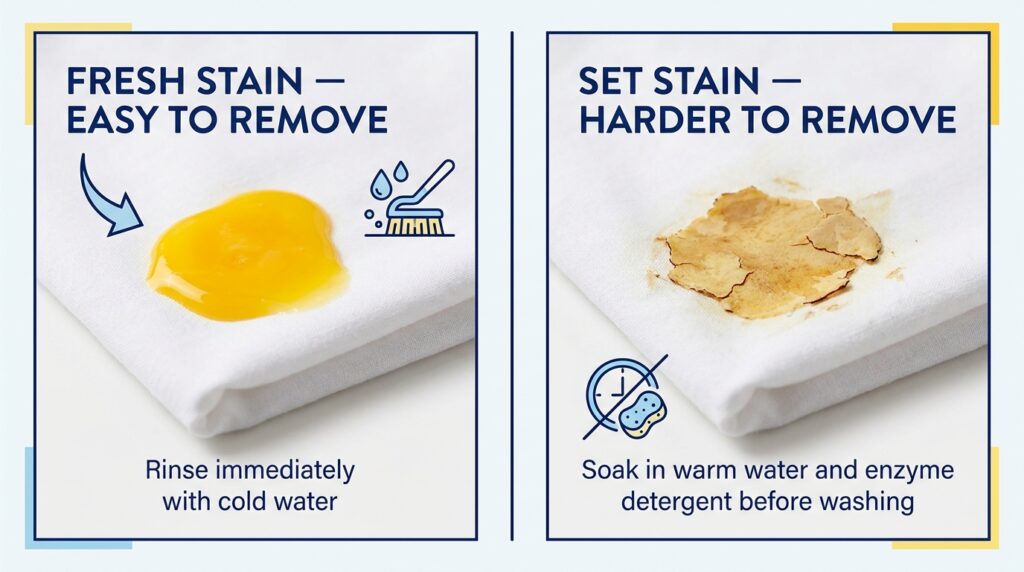
Yes — and it’s not just surface-level. Egg yolk contains proteins, fats, and pigments that bond with fabric fibers quickly. The yellow color comes from carotenoid pigments, which are oil-soluble and cling to textile fibers.
Egg whites, meanwhile, are mostly protein (primarily albumin), which coagulates — meaning it solidifies — when exposed to heat. This is why temperature matters so much when treating egg stains.
So does egg come out of clothes? Yes, almost always — if you treat it correctly and quickly. The longer a stain sits, the harder it becomes to lift. And once you’ve applied heat (warm water, a dryer, or direct sun), you’ve set the stain and made it exponentially harder to remove.
The enemy is heat and time. Keep both in check, and you’ll be fine.
What You’ll Need Before You Start
Before diving into the actual cleaning, gather these supplies. You probably have most of them at home already.
Basic Supplies:
- Cold water (never hot)
- Dull knife, spoon, or plastic scraper
- Clean white cloth or paper towels
- Liquid dish soap (like Dawn or similar degreaser)
- White vinegar
- Baking soda
- Enzyme-based laundry detergent (like Zout, Carbona Stain Devils #4, or OxiClean)
- Hydrogen peroxide (3%, for white fabrics only)
- Soft-bristled brush or old toothbrush
Optional but helpful:
- Enzyme pre-treatment spray (like Spray ‘n Wash or Shout)
- Glycerin (for stubborn dried stains)
- Ammonia (for heavy protein-based stains — use carefully)
How to Remove Egg Stains: Step-by-Step Methods
Method 1: Fresh Egg Stain on Clothing (The Most Common Scenario)
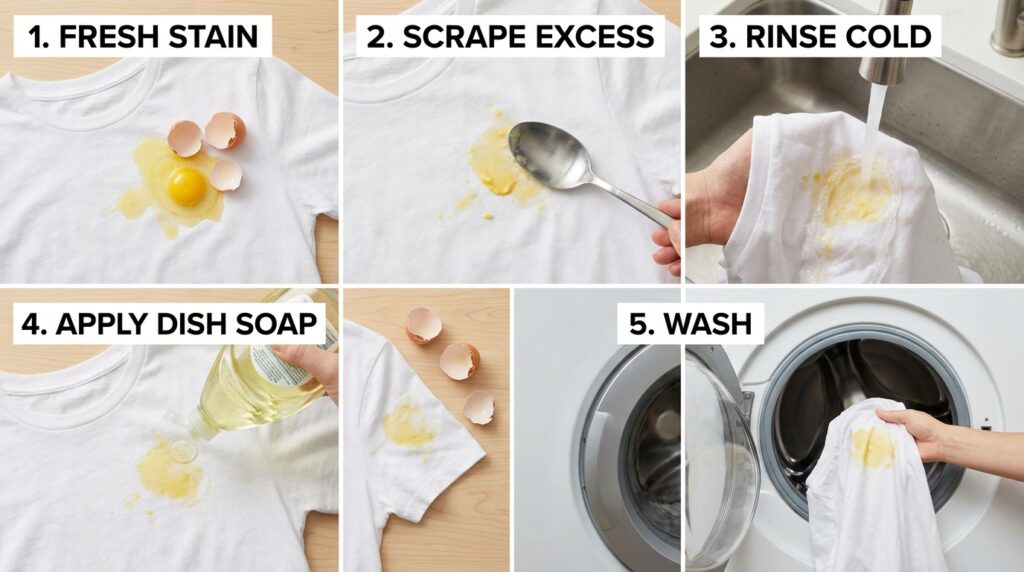
This is your standard morning scramble situation. The stain is wet and hasn’t dried yet. Act fast and you’ll be done in under 30 minutes.
Step 1: Scrape off the excess
Use the back of a spoon or a dull butter knife to gently scoop up as much of the egg as possible. Work from the outside of the stain inward to avoid spreading it. Do not rub — this pushes the proteins deeper into the fabric.
Step 2: Rinse with cold water
Hold the fabric under cold running water, with the stained side facing down so the water pushes the stain out through the back of the fabric rather than further through it. Run water through for at least 60–90 seconds.
Step 3: Apply dish soap or enzyme detergent
Put a small amount of liquid dish soap or liquid laundry detergent directly on the stain. Dish soap is particularly effective here because it’s designed to cut through fats and proteins — the same things that make egg sticky and stubborn.
Gently work it in using your fingers or a soft brush. Let it sit for 5–10 minutes.
Step 4: Rinse again with cold water
Rinse thoroughly. Check if the stain is gone. If it is, great — proceed to washing normally.
Step 5: Wash as usual — in cold water
Machine wash on a cold cycle using your normal detergent. Always use cold water for egg-stained clothing. After the wash, check the stain before you put the item in the dryer. If any stain remains, the dryer will set it permanently.
Method 2: How to Remove Dried or Set Egg Stains
Dried egg stains require more effort and patience, but they’re not hopeless. The key is rehydrating and breaking down the hardened protein.
Step 1: Scrape off dried egg residue
Use a stiff brush or the edge of a credit card to carefully flake off as much of the dried egg crust as possible. Don’t press down — just sweep it away.
Step 2: Soak in cold water
Submerge the stained area in cold water for 30 minutes. This softens the hardened protein and makes it easier to break down. You can add a tablespoon of enzyme-based detergent to the soak for extra power.
Step 3: Apply an enzyme cleaner or pre-treatment
Enzyme-based stain removers are your best weapon against dried egg. These products contain protease enzymes that specifically break down proteins. Apply directly to the stain and let it sit for 15–30 minutes (or up to an hour for very set stains).
Step 4: Gently scrub
Using a soft brush, work the cleaner into the stain using small circular motions. Don’t scrub aggressively — the goal is to loosen the protein, not damage the fabric.
Step 5: Rinse and inspect
Rinse with cold water. If the stain is still visible, repeat steps 3–4 before washing. Never put it in the dryer until the stain is completely gone.
Step 6: Wash in cold water
Run a normal cold cycle. Air dry, check, and repeat if necessary.
Method 3: How to Remove Egg Yolk Stain (Specifically)
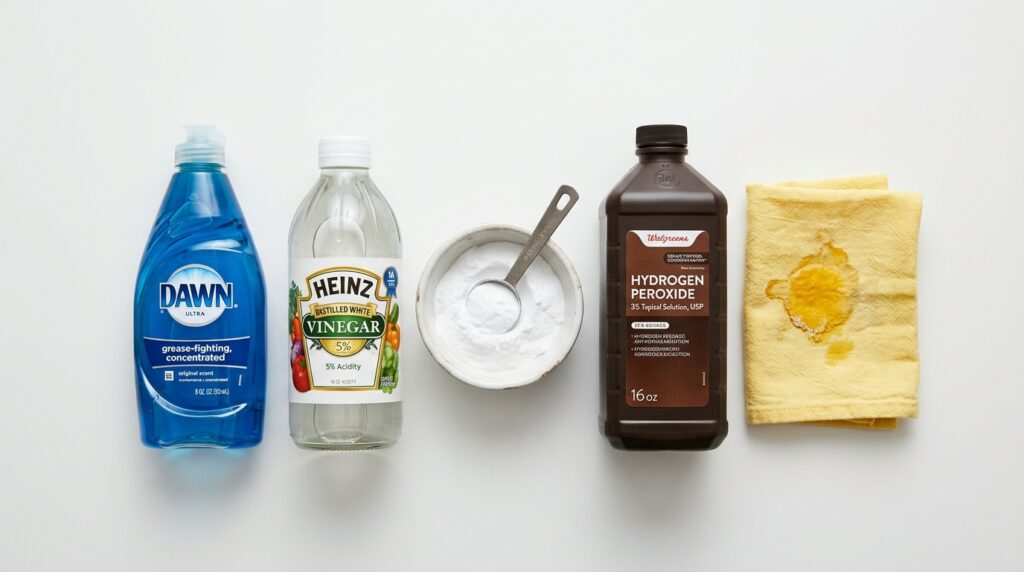
Egg yolk is oilier and more pigmented than egg white, which means you need to address both the fatty component and the yellow pigment.
What makes egg yolk different:
- Contains fat and cholesterol, which require a degreaser
- Contains carotenoid pigments that can leave a yellow tinge even after protein is removed
- More likely to leave a residual stain if not fully treated
Best approach for egg yolk stains:
- Scrape off excess, rinse with cold water (same as above)
- Apply liquid dish soap first — its degreasing action cuts the fat component
- After rinsing off the soap, apply a white vinegar solution (1 part vinegar to 2 parts cold water). This helps dissolve any remaining yellow pigment
- For stubborn yellow residue on white fabrics, apply a small amount of 3% hydrogen peroxide and let sit for 10–15 minutes before rinsing
- Wash cold and air dry
Pro tip from textile care experts: For colored fabrics with yellow egg yolk residue, skip the hydrogen peroxide (it may bleach). Instead, try a paste of baking soda and cold water applied for 20–30 minutes. Baking soda is a mild abrasive and natural deodorizer that can help lift residual pigment without damaging dyes. (Source: The American Cleaning Institute)
Method 4: Egg Stains on Delicate Fabrics (Silk, Wool, Dry-Clean Only)
Delicate fabrics need special handling. The wrong move here can ruin an item permanently.
For silk:
- Do NOT scrub. Silk fibers break easily under friction.
- Blot gently with a cold water-dampened white cloth
- Use a tiny amount of gentle dish soap (or a silk-safe detergent)
- Rinse by blotting — never wring or twist silk
- Take to a dry cleaner if the stain is large or set
For wool:
- Use cool water only (wool shrinks in warm/hot water)
- Apply a gentle enzyme cleaner formulated for wool (Woolite is a safe option)
- Blot — never rub — and reshape the garment while damp
- Dry flat to prevent stretching
For “dry clean only” items:
- Blot off excess egg immediately with a clean cloth
- Take to a professional dry cleaner as soon as possible
- Tell the cleaner what the stain is — egg specifically — so they use the right solvent
Method 5: Egg Stains on Upholstery and Carpet
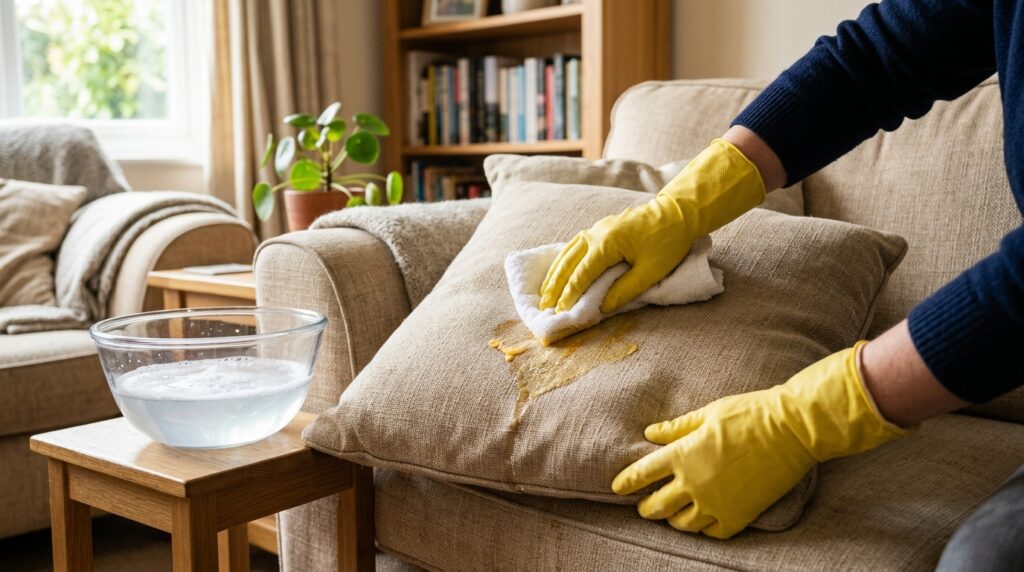
Eggs don’t just end up on clothes. Couches, carpet, and car upholstery are all fair game, especially with kids around.
For upholstery:
- Scoop up excess egg with a spoon or paper towel — work from the edges inward
- Mix 1 tablespoon of dish soap with 2 cups of cold water
- Using a clean white cloth, blot the stain with the soapy solution. Never pour liquid directly onto upholstery — it can seep into the cushion and cause mold
- Rinse by blotting with a cloth dampened in plain cold water
- Blot dry with a clean towel and allow to air dry fully
- For persistent stains, apply an enzyme-based upholstery cleaner like Bissell Professional Stain & Odor and follow the label instructions
For carpet:
- Scoop up what you can immediately
- Apply cold water and blot — never scrub, which damages carpet fibers
- Apply an enzyme-based carpet cleaner (like Nature’s Miracle or Rocco & Roxie)
- Let sit per instructions, then blot clean
- Rinse with cold water and blot dry
Quick Reference: Egg Stain Removal by Surface Type
| Surface | First Step | Best Cleaner | Temperature | Avoid |
|---|---|---|---|---|
| Cotton/polyester | Scrape + cold rinse | Enzyme detergent | Cold only | Heat, scrubbing |
| Silk | Blot gently | Gentle dish soap | Cool | Rubbing, wringing |
| Wool | Blot with cool water | Wool-safe enzyme cleaner | Cool only | Warm water, agitation |
| White fabric | Cold rinse | H₂O₂ + enzyme cleaner | Cold | Bleach (may yellow) |
| Carpet | Scoop + blot | Enzyme carpet spray | Cold water | Scrubbing, hot water |
| Upholstery | Scoop + blot | Enzyme upholstery cleaner | Cold | Soaking, scrubbing |
| Dry-clean only | Blot immediately | Professional dry cleaner | N/A | DIY treatment |
The Science Behind Why Egg Stains Are Stubborn
Understanding why egg stains are difficult makes it easier to treat them correctly.
Eggs are primarily composed of proteins and lipids. According to food scientists, egg white is about 90% water and 10% protein — mostly albumin. When heated (including by warm laundry water), albumin denatures and coagulates, essentially hardening like a cooked egg white. This is why hot water “sets” the stain permanently.
Egg yolk contains both proteins and fats, specifically phospholipids and cholesterol. Research published in food chemistry journals notes that the yellow pigment comes from carotenoids like lutein and zeaxanthin — the same antioxidants found in leafy greens. These pigments are hydrophobic (water-resistant) and bind tightly to synthetic fibers especially.
This means:
- Cold water helps prevent protein coagulation
- Enzyme cleaners break down protein bonds at the molecular level
- Dish soap emulsifies the fat component so it can be rinsed away
- Vinegar or hydrogen peroxide helps address the pigment that remains after protein is removed
Expert Tips for Removing Egg Stains Like a Pro
These are the insights that professional fabric care specialists and home economists actually use — not just generic advice.
Tip 1: Use Cold Water — Always This cannot be overstated. According to the American Cleaning Institute, hot water denatures proteins and sets them permanently into fabric. Cold water is the single most important rule for any protein-based stain (egg, blood, milk, sweat).
Tip 2: Enzyme Cleaners Are Your Best Ally Over-the-counter enzyme stain treatments contain protease enzymes — the same type your digestive system uses to break down protein. Products like Zout Triple Action, Carbona Stain Devils #4, or OxiClean MaxForce are specifically formulated for protein stains and will outperform regular detergent every time.
Tip 3: Don’t Rub — Always Blot Rubbing spreads the stain, damages fabric fibers, and pushes the stain deeper. Blot from the outside edge inward using a clean white cloth.
Tip 4: Check Before Drying Always inspect the garment after washing and before transferring to the dryer. Dryer heat is a one-way door — once the stain is set by heat, even professional cleaners may not be able to remove it fully.
Tip 5: White Vinegar for Residual Odor and Pigment Even when the visible stain is gone, egg can leave a faint odor or yellowish tinge. A soak in a solution of white vinegar and cold water (1:4 ratio) for 30 minutes before laundering helps neutralize both the smell and any residual pigment.
Tip 6: Baking Soda Paste for Stubborn Spots Mix baking soda with just enough cold water to form a paste. Apply to the stain, let sit for 30 minutes, then brush off and rinse. Baking soda’s mild alkalinity and gentle abrasive texture help lift what liquid treatments miss.
Tip 7: For Whites Only — Hydrogen Peroxide 3% hydrogen peroxide (available at any pharmacy) is a mild bleaching agent that works well on white or light-colored fabrics with egg yolk staining. Apply it directly, let sit for 10–15 minutes, and rinse. Never use on colored or dark fabrics — it may bleach them.
Common Mistakes That Make Egg Stains Worse
Most egg stain disasters happen in the first 2 minutes. Here’s what not to do:
Using hot or warm water — sets the protein instantly. Use cold water every single time.
Rubbing the stain vigorously — spreads it, damages fibers, and pushes it deeper. Blot instead.
Letting it dry before treating — fresh stains are 10x easier to remove than dried ones. Act immediately.
Throwing it in the dryer before checking — once the dryer sets the stain, recovery is very difficult.
Using bleach on egg stains — chlorine bleach can react with egg proteins and make the stain worse or turn it gray/yellow. Use an oxygen-based cleaner instead.
Using the wrong detergent — regular detergent alone often isn’t enough for set egg stains. Enzyme-based products are far more effective.
How to Remove Egg Stains With Natural/DIY Solutions
Not everyone has an enzyme cleaner handy. These pantry staples work surprisingly well:
White Vinegar Method
Mix 1 tablespoon white vinegar + 1 teaspoon dish soap in 2 cups cold water. Apply to stain, blot gently, rinse. Great for fresh stains and residual yellow pigment.
Baking Soda + Dish Soap Method
Make a paste of 2 tablespoons baking soda + 1 tablespoon dish soap + a few drops of cold water. Apply, let sit 20–30 minutes, rinse cold. Effective for moderately set stains.
Salt Method (for very fresh stains only)
Pour salt generously over a wet egg stain. The salt draws out moisture and protein. Leave for 5 minutes, brush away, then rinse and treat with soap. This is an old household trick that can buy you time before a full treatment.
Club Soda Method
Pour cold club soda over the stain. The carbonation can help lift fresh stains by agitating the fibers. Follow with dish soap and cold water rinse. Best for carpet and upholstery when other cleaners aren’t available.
Does Egg Come Out of Clothes? Real Talk
The honest answer is: almost always yes — if you treat it right.
Success rates vary based on:
- How quickly you acted — fresh stains are far easier than set ones
- Fabric type — natural fibers (cotton, linen) generally respond better than synthetics
- Whether heat was applied — if the item went through a hot cycle or dryer already, recovery is harder but not always impossible
- Stain age — a 10-minute stain versus a 2-day dried stain require very different approaches
For severely set egg stains on high-value garments, consider a professional dry cleaner who specializes in fabric restoration and stain treatment. These professionals have access to industrial enzyme solutions and tools that outperform anything available at retail.
FAQs
Does egg yolk permanently stain clothes?
Not usually, but it can if treated incorrectly. The biggest risk factors are using hot water (which sets the protein), rubbing the stain, or putting the item in the dryer before the stain is fully removed. Fresh stains treated with cold water and an enzyme cleaner almost always come out completely. Even dried or set egg yolk stains can often be removed with a longer soak and repeated enzyme treatment.
What removes egg yolk stains best?
Enzyme-based stain removers are the gold standard for egg yolk stains because they break down the protein and fat components at the molecular level. Products like OxiClean MaxForce, Carbona Stain Devils #4, and Zout Laundry Stain Remover are specifically designed for protein stains. Always pair with cold water, never hot.
Can I use bleach to remove egg stains?
No — avoid chlorine bleach on egg stains. Bleach can react with egg proteins and permanently set the stain or cause discoloration. If you need a whitening boost on white fabric, use oxygen-based bleach (like OxiClean) or 3% hydrogen peroxide, which are gentler and more effective on protein-based stains.
How do I get dried egg off clothes?
Start by scraping off as much of the dried egg crust as possible. Then soak the item in cold water with an enzyme detergent for 30–60 minutes to rehydrate and loosen the stain. Follow with an enzyme pre-treatment spray, let it sit for 15–30 minutes, then wash in cold water. Repeat if needed. The process takes longer than fresh stain removal but works in most cases.
How do I remove egg stains from a car or outdoor surface?
For car exteriors or other hard surfaces, rinse with cold water as soon as possible — dried egg contains acids that can damage car paint over time. Use a gentle car wash soap and a soft sponge, never abrasive scrubbers. For fabric car interiors, treat like upholstery: blot with a cold water and dish soap solution, rinse by blotting, and air dry. For outdoor furniture or siding, a garden hose on a gentle spray followed by mild soap usually does the trick.
When to Call a Professional
Sometimes DIY just isn’t enough. Consider taking your garment to a professional cleaner if:
- The stain has been set by heat (dryer or hot water)
- The item is labeled “dry clean only”
- The fabric is silk, cashmere, velvet, or heavily embellished
- Multiple home treatments have not worked
- The stain is very large or soaked deep into thick fabric
- The item has significant monetary or sentimental value
Professional dry cleaners have access to industrial-strength enzyme solutions, professional spotting tools, and fabric-specific solvents that go far beyond what’s available at retail. Many also offer garment restoration services for severely stained or damaged items.
Conclusion
Egg stains are one of those kitchen accidents that feel catastrophic in the moment but are almost always fixable with the right approach. The entire method comes down to four principles: act fast, use cold water, use the right cleaner, and check before you dry.
Whether you’re dealing with a fresh egg white splash on a dress shirt, a dried yolk on the couch, or a mystery stain you discovered after laundry day — the steps above will walk you through the right solution for every situation.
The next time breakfast gets away from you, you’ll know exactly what to do.
Still have a stain that won’t budge? Drop your specific situation in the comments — fabric type, how long the stain has been there, what you’ve tried — and we’ll help you figure out the best approa
Found this guide helpful? Bookmark it for the next time an egg (or any protein-based stain) strikes. Share it with a friend who might need it too.

