
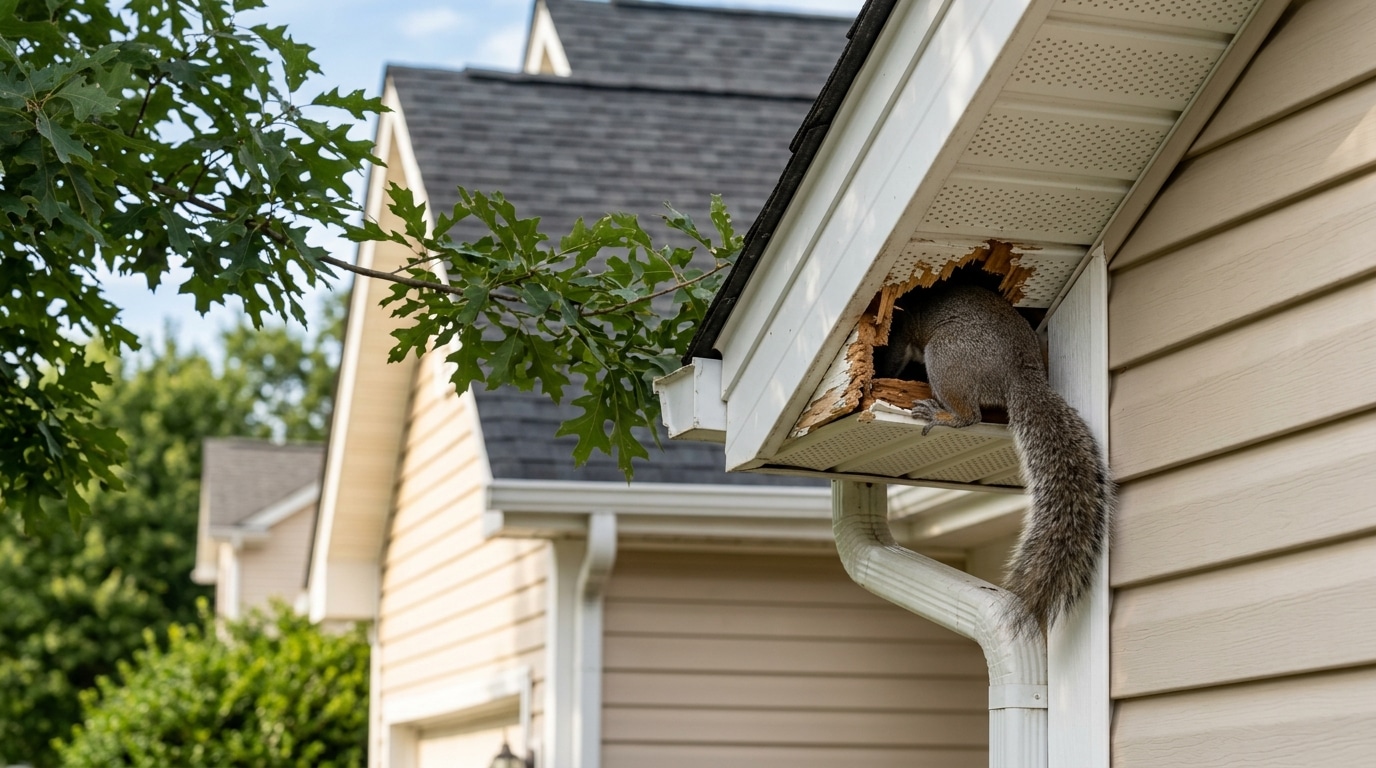
Squirrels may look harmless when they are running across a fence, climbing a tree, or moving through a backyard. But when they enter an attic, wall void, roofline, or crawl space, they can become a serious wildlife problem for homeowners.
Squirrels often look for safe, dry, sheltered areas where they can nest and raise young. An attic can provide warmth, protection, insulation, and limited disturbance, which makes it attractive once an entry point is available.
The problem is that squirrel activity inside a home rarely stays minor. These animals can chew, nest, contaminate insulation, create noise, and damage vulnerable areas around the roofline. Early identification and professional help can prevent a small wildlife issue from becoming a larger property problem.
Why Squirrels Enter Attics
Squirrels usually enter homes because they find an opening. A damaged vent, loose soffit, gap near the roofline, broken fascia board, or opening around construction details can give them access, so homeowners should also pay attention to attic ventilation and roofing when checking the upper areas of the home.
Common entry areas include:
- Roof vents
- Gable vents
- Soffit gaps
- Fascia damage
- Chimney gaps
- Loose siding
- Openings near dormers
- Gaps around roof intersections
- Tree limbs touching the roof
- Damaged attic screens
Once inside, squirrels may use insulation and stored materials for nesting. They may also return repeatedly if the entry point remains open.
Common Signs of Squirrels in the Attic
Homeowners often hear the problem before they see it. Squirrels are active during the day, so noises are commonly noticed in the morning or afternoon.
Warning signs may include:
- Scratching or running sounds in the attic
- Chewing noises near the ceiling or roofline
- Movement sounds during daylight hours
- Droppings in attic or storage areas
- Damaged insulation
- Nesting material
- Chewed wood, wires, or vents
- Entry holes near the roofline
- Squirrels repeatedly seen on the roof
- Odors from nesting or contamination
These signs should not be ignored. If squirrels are entering and leaving the home, the problem usually requires more than simply blocking a hole.
Why Chewing Damage Is a Concern
Squirrels have strong teeth and chew constantly. Inside an attic, they may chew wood, insulation, vents, plastic, stored belongings, and even wiring.
Chewing damage can create several problems:
- Larger entry openings
- Damaged attic materials
- Increased access for other pests
- Reduced insulation performance
- Potential electrical concerns
- More difficult repairs later
Even if only one squirrel is seen, there may be more activity than expected. A professional inspection can help identify where squirrels are entering and how much damage has occurred.
Insulation Damage Can Become Expensive
Attic insulation is one of the most common areas affected by squirrel activity. Squirrels may tunnel through insulation, compress it, contaminate it, or use it for nesting.
Damaged insulation can reduce comfort and energy efficiency. Contaminated insulation may also need to be removed or replaced depending on the extent of the activity.
Homeowners should avoid walking through attic insulation or handling contaminated material without proper protection. Wildlife activity can leave behind droppings, nesting debris, and odor issues that require careful cleanup.
Squirrels Can Create Repeat Problems
One of the biggest mistakes homeowners make is assuming that a squirrel problem is finished after the animal leaves. If the entry point remains open, squirrels may return. Other wildlife or rodents may also use the same access route.
A complete squirrel-control plan should address:
- Identification of the animal
- Inspection of entry points
- Removal of active squirrels
- Exclusion repairs
- Nesting and insulation damage
- Odor or contamination issues
- Follow-up monitoring
This is why squirrel pest control services should focus on both removal and prevention. The goal is not only to get squirrels out, but also to reduce the chance that they come back.
Why Homeowners Should Avoid Sealing Openings Too Early
It may seem logical to close the hole immediately after discovering squirrel activity. However, sealing an opening too soon can create additional problems if squirrels are still inside.
If an animal is trapped inside, it may cause more damage trying to escape. If young squirrels are present, the situation becomes even more complicated. This is one reason wildlife control should be handled carefully and professionally.
The correct process usually begins with inspection and confirmation of activity before permanent exclusion work is completed.
Exterior Conditions That Attract Squirrels
Squirrel problems are often connected to the exterior of the home, making regular home exterior improvements and maintenance important for identifying and repairing potential entry points. Trees, roof access, damaged vents, and weak building materials can all make it easier for squirrels to reach and enter the structure.
Homeowners can reduce risk by:
- Trimming tree branches away from the roof
- Repairing damaged vents
- Checking soffits and fascia boards
- Securing attic openings
- Inspecting roofline gaps
- Removing food sources where possible
- Keeping gutters and roof edges maintained
- Checking for repeated animal activity near the same area
These steps can help reduce access, but active squirrel problems should still be inspected before repairs are made.
Why Professional Squirrel Control Is Safer
Squirrels are wild animals. They should not be handled, cornered, or removed without the right experience. Homeowners may underestimate how quickly a squirrel can move or how difficult it can be to locate all entry points.
Professional wildlife control can help by:
- Confirming the animal involved
- Finding all active and potential entry points
- Removing squirrels safely
- Recommending exclusion repairs
- Checking attic damage
- Advising on insulation cleanup or replacement
- Monitoring for continued activity
A professional can also help prevent the common problem of removing one animal while leaving the structure open to future activity.
When to Call for Help
Homeowners should consider professional help when they hear repeated attic noises, see squirrels entering a roofline, find droppings, notice damaged insulation, or discover chewed materials.
Help is especially important when:
- Squirrels are seen entering the home
- Noises continue for several days
- Entry points are near the roofline
- Attic insulation appears damaged
- Wiring or vents may be affected
- There may be nesting activity
- The homeowner is unsure whether animals are still inside
For active attic wildlife problems, professional squirrel removal is usually safer and more effective than trying to solve the issue with temporary repairs.
A Complete Plan Should Include Prevention
Squirrel control should not stop once the visible activity is gone. The home should be inspected for weak points so similar issues do not return.
A good prevention plan may include roofline repairs, vent protection, sealing gaps, trimming nearby branches, and checking attic areas for damage or contamination.
Bug Busters USA provides squirrel control and wildlife management services for homeowners dealing with attic activity, entry points, insulation damage, and related wildlife concerns. Their squirrel control service focuses on inspection, exclusion, squirrel-proofing, removal of resident squirrels, and addressing soiled or damaged insulation.
For homeowners, the most important step is early action. Squirrel activity in the attic can lead to chewing damage, insulation problems, odors, and repeat entry if the home is not properly protected. By identifying the warning signs and handling the issue correctly, homeowners can protect the structure and reduce the chance of future wildlife problems.

