
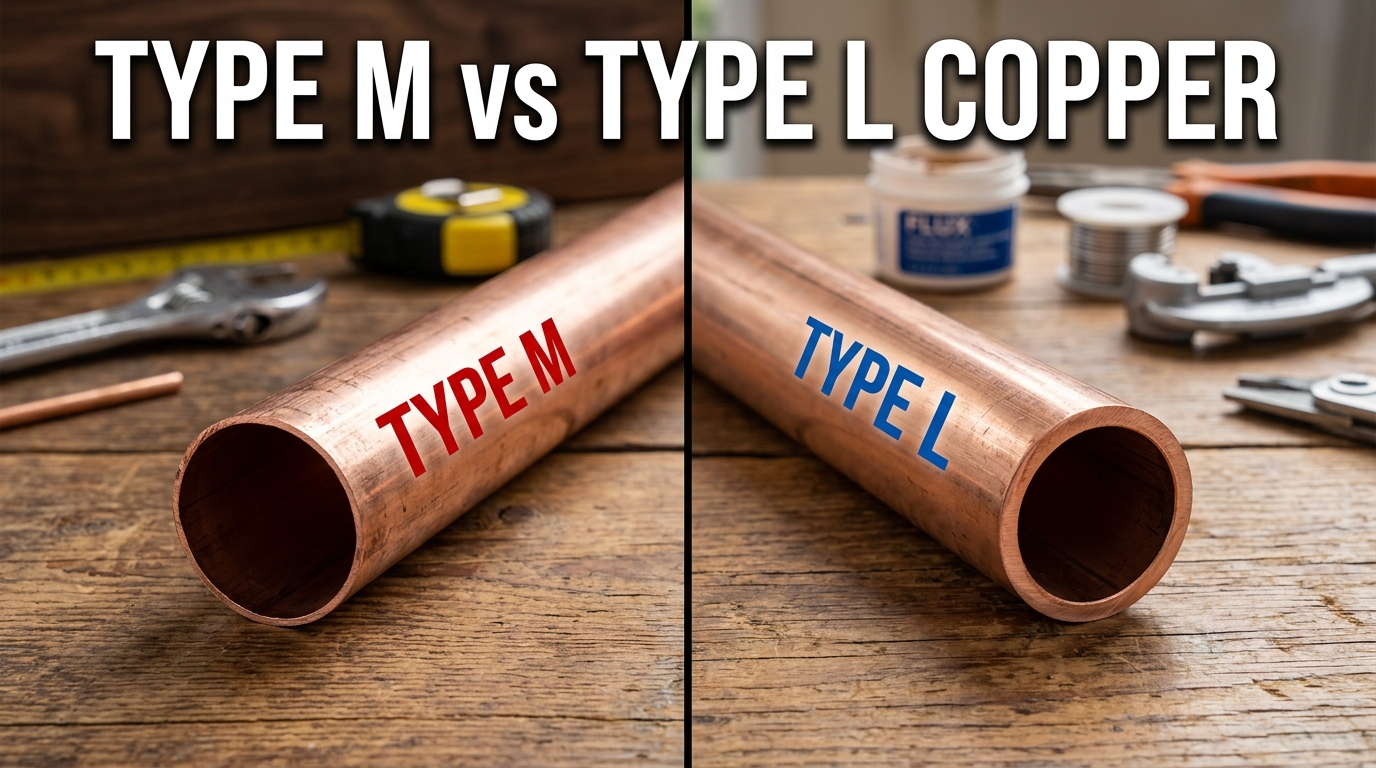
You’re standing in the plumbing aisle, staring at two nearly identical rolls of copper pipe. One says “Type M,” the other says “Type L.” They look the same. They’re priced differently. And your contractor mentioned something about “pressure ratings” that made your eyes glaze over.
Here’s the truth: choosing the wrong type won’t necessarily cause your pipes to burst tomorrow — but it can mean the difference between a system that lasts 20 years and one that lasts 50. It can also mean failing a building inspection or voiding a warranty.
This guide breaks down everything a homeowner, DIYer, or apprentice plumber needs to know about Type M vs Type L copper pipe — without the jargon overload.
What Is Copper Pipe, and Why Does the “Type” Matter?
Copper pipe has been a plumbing standard in residential and commercial construction for decades. It’s corrosion-resistant, long-lasting, and compatible with both hot and cold water systems.
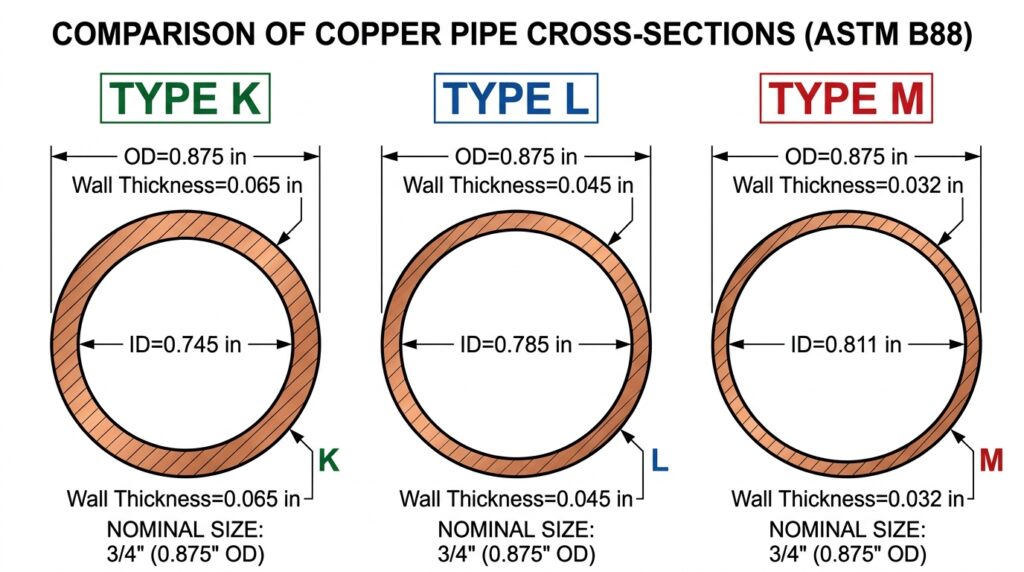
But not all copper pipe is built the same. The “type” — M, L, or K — refers specifically to the wall thickness of the pipe, not the outer diameter. According to ASTM International standards (ASTM B88), all copper pipe types share the same outer diameter for a given nominal size. That means a 1-inch Type M and a 1-inch Type L have the same outside diameter but different wall thicknesses and therefore different internal diameters and pressure capacities.
Think of it like this: both pipes are the same size coffee cup on the outside, but one has thicker walls, leaving less room for liquid inside.
Type M Copper Pipe: The Basics
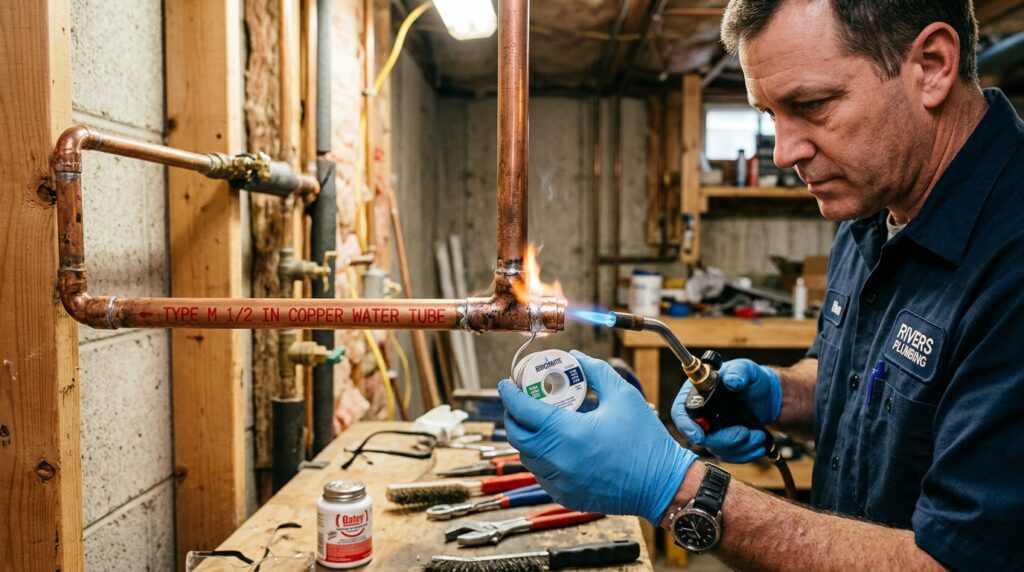
Type M is the thinnest-walled of the three common copper pipe types used in residential plumbing. It’s color-coded red on its markings and is most commonly found in:
- Indoor residential water supply lines
- Low-pressure systems
- Hot and cold water distribution inside homes
Wall Thickness of Type M
For reference, here’s how Type M’s wall thickness compares for common pipe sizes:
| Nominal Size | Type M Wall Thickness |
|---|---|
| 1/2 inch | 0.028 inches |
| 3/4 inch | 0.032 inches |
| 1 inch | 0.035 inches |
| 1-1/4 inch | 0.042 inches |
Because its walls are thinner, Type M is lighter and less expensive than Type L. It’s also easier to cut and work with, which makes it a popular choice for DIY plumbing projects.
Where Type M Is Commonly Used
- Residential water supply lines (indoors)
- Drain, waste, and vent (DWV) systems in some regions
- Above-ground interior plumbing
- HVAC refrigerant lines (in some cases)
Where Type M Is NOT Recommended
- Underground installations
- Areas with aggressive or acidic water
- High-pressure commercial systems
- Locations where local codes require thicker pipe
Type L Copper Pipe: The Basics
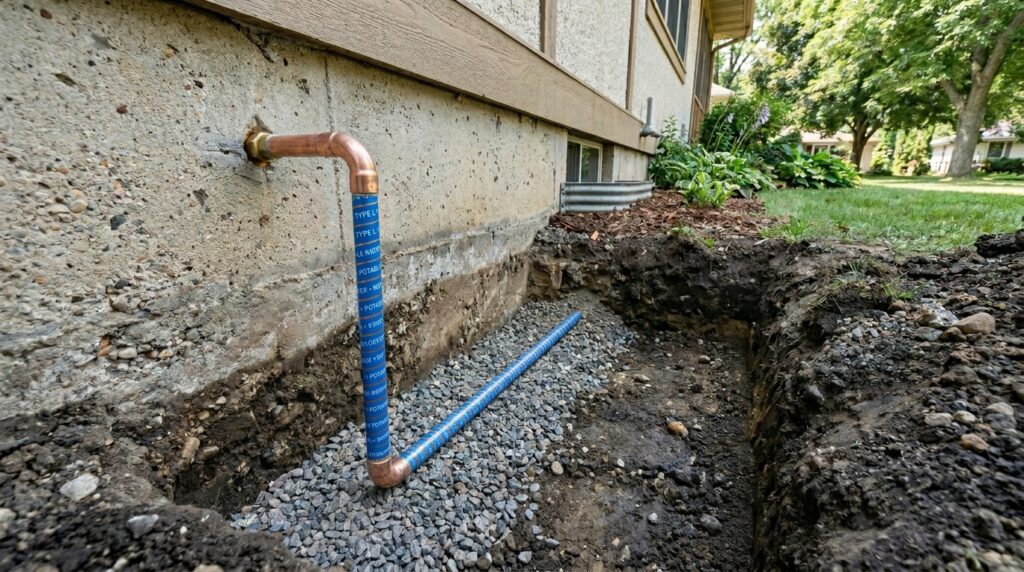
Type L is the middle ground — thicker walls than Type M but not as heavy as Type K. It’s color-coded blue and is widely considered the most versatile and commonly recommended copper pipe for both residential and light commercial applications.
Wall Thickness of Type L
| Nominal Size | Type L Wall Thickness |
|---|---|
| 1/2 inch | 0.040 inches |
| 3/4 inch | 0.045 inches |
| 1 inch | 0.050 inches |
| 1-1/4 inch | 0.065 inches |
That extra wall thickness — roughly 40–50% thicker than Type M in many sizes — makes a significant difference in durability and pressure handling.
Where Type L Is Commonly Used
- Outdoor plumbing and underground supply lines (with proper insulation)
- Interior and exterior water service lines
- Areas with slightly acidic or corrosive water
- Commercial buildings
- Fire suppression systems (in some configurations)
- Anywhere local building codes specify it
Why Many Plumbers Prefer Type L
Many licensed plumbers default to Type L even when Type M is technically code-compliant. The reasoning is simple: the extra wall thickness provides a meaningful buffer against pitting corrosion, water hammer stress, and installation damage from over-tightening fittings.
According to the Copper Development Association, Type L is the recommended standard for most residential plumbing applications where long-term performance is a priority.
Type M vs Type L Copper: Side-by-Side Comparison
Here’s the complete picture in one table:
| Feature | Type M Copper | Type L Copper |
|---|---|---|
| Color Code | Red | Blue |
| Wall Thickness | Thinner | Thicker (~40-50% more) |
| Pressure Rating | Lower | Higher |
| Weight | Lighter | Heavier |
| Cost | Less expensive | More expensive |
| Durability | Good | Better |
| Underground Use | Not recommended | Yes (with sleeve) |
| Code Acceptance | Some areas only | Widely accepted |
| DIY Friendliness | Easier to cut/solder | Slightly harder |
| Typical Application | Indoor residential | Indoor + outdoor, commercial |
The Wall Thickness Difference: Why It Actually Matters
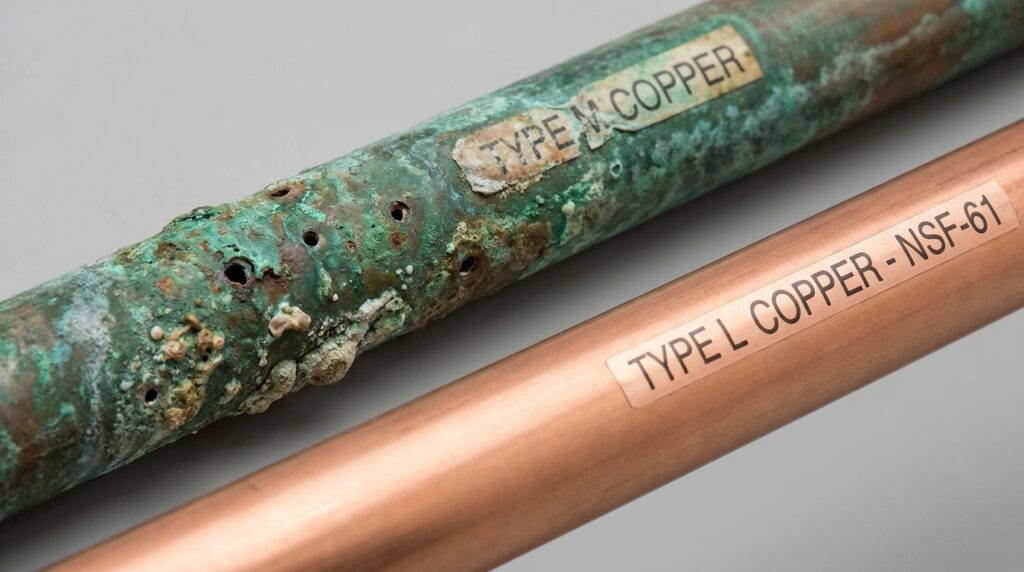
Let’s talk about what wall thickness really means in practice — because this is where most people get confused.
Pressure Ratings
Copper pipe pressure ratings are affected by wall thickness. The Copper Development Association’s technical resources confirm that Type L can handle higher working pressures than Type M for the same nominal pipe size.
For typical residential water supply pressure (40–80 PSI), both types are adequate. But if your system runs at higher pressures — say, near an industrial zone or in a high-rise — Type L’s headroom becomes relevant.
Corrosion Resistance
Thinner walls mean less material to corrode through. In areas where water has a lower pH (more acidic) or higher chlorine content, Type M pipes can be more susceptible to pinhole leaks over time.
The Environmental Protection Agency notes that corrosive water conditions are widespread and can significantly shorten the lifespan of thinner-walled copper pipes.
Type L’s additional wall thickness gives it a longer corrosion lifespan, especially in areas with softer or more aggressive water chemistry.
Water Hammer
Water hammer — that loud banging noise when you shut off a faucet quickly — creates a pressure spike inside your pipes. Over time, these spikes can fatigue thinner pipe walls. Type L handles this stress better due to its extra thickness.
Cost Difference: Is Type L Worth the Extra Money?
Type L typically costs 15–30% more than Type M for the same size and length. For a small repair, that’s a few extra dollars. For a full home re-pipe, the difference can add up to hundreds.
Here’s a rough price comparison (prices vary by region and market):
| Size | Type M (per foot) | Type L (per foot) |
|---|---|---|
| 1/2 inch | ~$0.80–$1.20 | ~$1.00–$1.50 |
| 3/4 inch | ~$1.20–$1.80 | ~$1.60–$2.30 |
| 1 inch | ~$2.00–$2.80 | ~$2.60–$3.60 |
Prices fluctuate with copper commodity markets. Check current prices at The Home Depot or Lowe’s for real-time local pricing.
The Long-Term Math
If Type L lasts significantly longer in your specific water conditions, it often pays for itself. A pinhole leak repair in a finished wall can easily cost $500–$2,000 in labor and drywall repair — far more than the upfront cost difference between pipe types.
Local Building Codes: This Is Non-Negotiable
Here’s something many homeowners don’t realize: your local building code may already decide this for you.
Some municipalities, particularly in areas with known corrosive water or high seismic activity, require Type L as a minimum for interior plumbing. Others allow Type M for interior lines but mandate Type L or Type K for underground or service entrance lines.
Before buying any copper pipe, check:
- Your local plumbing code — contact your city or county building department
- The Uniform Plumbing Code (UPC) — widely adopted across the western U.S.
- The International Plumbing Code (IPC) — common in the eastern U.S. and many municipalities
Some codes specifically call for Type L in exterior above-ground, underground, and solar water heating applications regardless of what a contractor prefers.
What About Type K Copper?
Since we’re talking about the family, Type K deserves a brief mention. It’s the thickest of the three and color-coded in green. You’ll typically find it used in:
- Underground water service lines from the street to the home
- Municipal water systems
- High-pressure or high-corrosion environments
Type K is overkill for standard interior residential plumbing and significantly more expensive. Most homeowners will never need it unless they’re replacing a water main or working in a specialized context.
Expert Tips: What Plumbers Actually Recommend
We’ve distilled advice from professional plumbing resources and trade guidance:
- Tip 1: In areas with soft water (low mineral content), go with Type L even indoors. Soft water tends to be more corrosive to copper, and the extra wall thickness pays off over decades.
- Tip 2: If you’re doing a whole-house repipe, use Type L throughout for consistency. Mixing pipe types means different pressure ratings at different points, which can complicate future repairs.
- Tip 3: For a simple faucet or fixture repair in a newer home with good water quality, Type M is perfectly adequate and easier to work with for a DIYer.
- Tip 4: Always check if your area has high chloramine levels in municipal water. Chloramines can accelerate pitting corrosion in copper, making Type L the smarter long-term choice. The American Water Works Association (AWWA) publishes water quality data for many municipalities.
- Tip 5: When in doubt, ask your local plumbing supply house — not just a big-box store. Counter staff at specialty suppliers often have region-specific knowledge about which pipe type performs better with local water.
Pros and Cons
Type M Copper
Pros:
- Less expensive
- Lighter weight (easier to handle and transport)
- Easier to cut and solder for DIYers
- Adequate for most low-pressure indoor applications
- Widely available
Cons:
- Thinner walls = less durable over time
- More vulnerable to corrosion in aggressive water conditions
- Not suitable for underground burial without protection
- Some local codes don’t allow it in all applications
Type L Copper
Pros:
- Thicker walls = better corrosion resistance
- Higher pressure rating
- Suitable for outdoor, underground, and commercial use
- Longer expected service life in most conditions
- Broadly accepted by all major plumbing codes
Cons:
- More expensive (15–30% premium over Type M)
- Slightly heavier
- Less flexible (more difficult to work with in tight spaces)
- Overkill for some simple low-risk interior applications
Frequently Asked Questions
1. Can I use Type M copper pipe for outdoor plumbing?
Technically, Type M can be used above-ground outdoors in some jurisdictions, but it’s not recommended for underground burial. The thinner walls make it more vulnerable to soil movement, external pressure, and corrosive soil conditions. Type L (or Type K for deep burial) is the standard choice for outdoor and underground installations. Always verify with your local building department before installing.
2. Is Type L copper worth the extra cost?
For most homeowners, yes — especially if you’re doing any significant plumbing work. The longevity benefit of Type L’s thicker walls generally outweighs the 15–30% price premium, particularly in areas with corrosive water or aggressive soil. If it’s a small indoor repair in a house with good water quality, Type M is a reasonable, code-compliant choice.
3. How do I tell Type M from Type L copper pipe?
The easiest way is the color-coded stamp on the pipe itself. Type M has red lettering, and Type L has blue lettering. If the markings have worn off, you can measure the wall thickness with a micrometer or look at the pipe’s inner diameter — Type L will have a slightly smaller bore for the same outer diameter.
4. Does Type M vs Type L affect soldering or fittings?
No — both Type M and Type L use the same fittings for a given nominal pipe size because they share the same outer diameter. Soldering technique is identical. However, Type L takes slightly longer to heat evenly during soldering due to its greater mass. Use the same lead-free solder and flux compliant with NSF/ANSI 61 standards for both.
5. What type of copper pipe is most commonly used in homes?
Historically, Type M has been most common in residential interior plumbing due to its lower cost. However, many contractors and plumbing codes are shifting toward Type L as the default for new construction, given its better long-term performance. If your home was built before the 1980s, it may even have Type K in some sections. A licensed plumber can help you assess what’s already in your home and what to use for additions or repairs. You can find licensed plumbers through the Plumbing-Heating-Cooling Contractors Association (PHCC).
Conclusion
So — Type M or Type L copper?
Here’s the short answer:
- Choose Type M if you’re making a simple indoor repair, working in an area with good water quality, and your local code allows it. It’s budget-friendly, easy to work with, and perfectly adequate for many standard residential applications.
- Choose Type L if you’re doing any outdoor work, burying pipe underground, working in an area with corrosive or soft water, doing a full repipe, or simply want the peace of mind that comes with a thicker, more durable pipe.
When in doubt, go with Type L. The small additional cost is a worthwhile investment in a system you won’t have to think about again for decades.
Before any plumbing project, always confirm your local code requirements — a quick call to your building department or a consultation with a licensed plumber can save you from a failed inspection or a premature replacement.
Ready to start your project? Check current copper pipe prices and availability at The Home Depot or Lowe’s. For code guidance, visit ICC’s official plumbing code resources or your local municipality’s building department website.
This article is for informational purposes. Always consult a licensed plumber and your local building authority before undertaking plumbing work.

