
If you love the huge, ruffled blooms of a peony but only have a balcony, patio, or small yard to work with, you’ve probably wondered the same thing many gardeners ask before they buy one. Can peonies be planted in containers, or do they only thrive when their roots are set free in open ground? The short answer is yes, peonies can be planted in containers, as long as you choose a large enough pot, use well-draining soil, and give the plant the winter chill it needs to bloom the following spring.
Peonies are not the easiest container plant, but they are far from impossible. This guide walks through everything you need to know before you plant, including pot size, soil, depth, sunlight, watering, and how to help your potted peony survive winter so it keeps blooming for years. Along the way, you will find the mistakes that most often cause potted peonies to fail, plus a few smart shortcuts that make the whole process less stressful.
Why Peonies Are Trickier in Pots Than Most Flowers
Peonies are long-lived herbaceous perennials, and some garden peonies stay in the same spot for decades once established. That long lifespan is part of what makes them tricky in containers. A peony growing in the ground can send roots down and out as far as it needs to find moisture and nutrients. A peony in a pot is limited to whatever space you give it, which means the container has to do a lot of the work that soil normally does on its own.
There’s also the matter of cold. Herbaceous peonies are winter-hardy plants that actually need a period of cold weather to set flower buds for the following spring. In the ground, the surrounding soil insulates the roots from extreme temperature swings. In a raised pot sitting above ground level, roots are exposed to cold from all sides, which can either kill them in a hard freeze or, in mild climates, prevent them from getting enough chill hours to bloom well. Both of these issues are manageable, but they are the reason potted peonies need more attention than, say, a container petunia.
Choosing the Right Container for Peonies
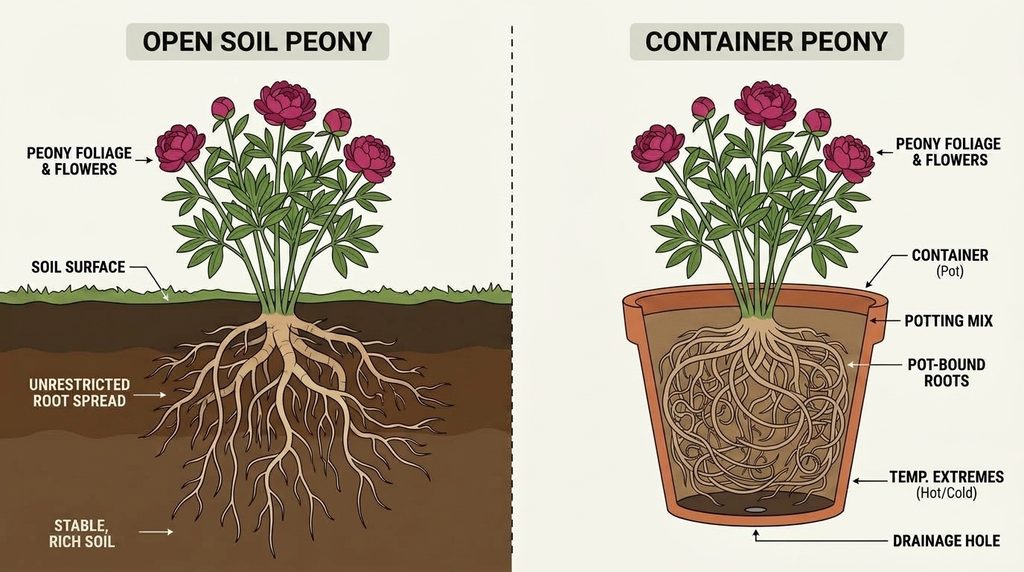
Pot size is the single biggest factor in whether a container peony thrives. Peony roots, especially the fleshy tuberous roots of herbaceous types, need real depth and width to establish properly.
- Choose a container that is at least 18 to 24 inches wide and deep. Bigger is almost always better for a plant that will live in the same pot for several years.
- Pick a heavy material like glazed ceramic, concrete, wood, or thick plastic. Avoid thin terracotta, since it dries out quickly and can crack in freezing weather.
- Make sure the pot has multiple drainage holes. Peony roots will rot quickly in soil that stays soggy.
- Consider a container with some weight or a wide base, since mature peonies with heavy blooms can become top-heavy in wind.
A good general rule from horticulture experts is that when moving a perennial from garden soil into a container, you should plan for a pot roughly two USDA hardiness zones larger in cold tolerance than what the ground planting requires, since roots above ground are more exposed to temperature swings.
What Soil and Depth Do Container Peonies Need?
Peonies prefer well-drained, fertile soil with a soil pH between about 6.5 and 7.0, which is close to neutral to slightly acidic. Use a high-quality potting mix designed for perennials or landscape plants rather than a lightweight houseplant mix, since the latter often drains too fast and holds too little nutrition for a heavy feeder like a peony. Mixing in compost improves both drainage and fertility.
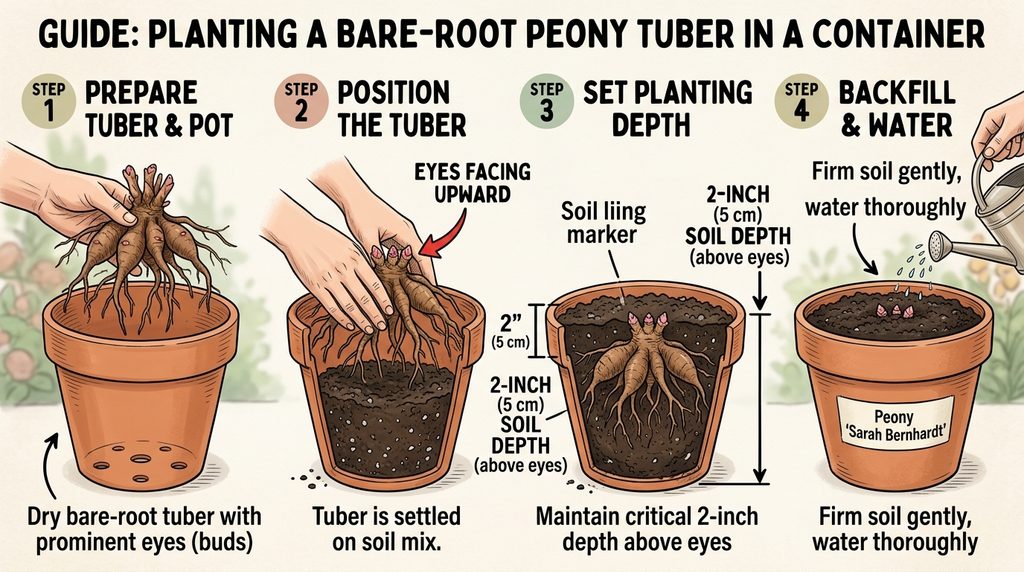
Planting depth matters more with peonies than with almost any other perennial. Bury the “eyes,” the small pink or red buds on a bare root tuber, no more than about 2 inches below the soil surface. Planting too deep is one of the most common reasons peonies fail to flower, even when every other condition is right. If you are transplanting an already-growing peony rather than a bare root, keep the crown level with or just slightly below the rim of the pot.
Sunlight, Watering, and Feeding
Herbaceous peonies need at least six hours of direct sunlight a day to bloom well. and place the container somewhere sheltered from strong wind, since peony stems and their heavy flowers can snap in gusts. If you have tree peonies, note that they actually prefer some afternoon shade, since intense sun can scorch their large, silky petals.
Watering container peonies takes a bit more attention than garden-grown ones because pots dry out faster.
- Water deeply after planting and keep the soil evenly moist while roots establish.
- Once established, let the top inch or two of soil dry out slightly between waterings rather than keeping it constantly wet.
- Increase watering frequency during hot summer weeks, since container soil loses moisture faster than ground soil.
- Reduce watering in fall as the plant goes dormant.
Feed container peonies lightly in early spring with a balanced fertilizer or one formulated for flowering perennials, and avoid heavy nitrogen feeding, which encourages leafy growth at the expense of blooms.
Can Container Peonies Survive Winter?
This is where most container peony questions really start. Herbaceous peonies need a meaningful period of winter cold, generally described as a minimum of six weeks of temperatures below 40°F, to properly set flower buds for spring. Some cultivars need considerably more, and many sources describe a range of roughly 500 to 1,000 chilling hours depending on the variety. In the ground, this happens naturally in USDA hardiness zones 3 through 8. In a pot, roots sit above the insulating layer of garden soil, so they are more vulnerable to hard freezes.
If you live in a colder zone, the risk is roots freezing solid and being damaged by repeated freeze-thaw cycles. If you live in a warmer zone, the risk flips: the pot might not get cold enough for long enough, so the plant never sets buds and stops flowering. Understanding your local planting timing and seasonal patterns for other perennial bulbs and roots can help you get a feel for how your region’s cold season affects flowering plants overall.
Winterizing a container peony:
- Let the foliage die back naturally in fall, then cut it to the ground and remove debris to prevent fungal disease.
- In cold-winter regions, move the pot against a sheltered wall, or sink it into the ground temporarily, or wrap the container in bubble wrap, burlap, or straw to insulate the roots.
- In an unheated garage or shed that stays above freezing but still cold, you can also store the whole pot for winter, checking soil moisture occasionally so roots don’t fully dry out.
- In warmer regions, look for peony cultivars bred for lower chill requirements, since some Southern-adapted varieties need fewer cold hours to bloom.
Peonies in Containers vs. Peonies in the Ground
| Factor | Container Peonies | In-Ground Peonies |
|---|---|---|
| Root space | Limited, requires a large pot | Unlimited, roots spread freely |
| Winter protection | Needs extra insulation or moving | Naturally insulated by surrounding soil |
| Watering needs | Frequent, dries out faster | Less frequent once established |
| Mobility | Can be moved for sun or shelter | Fixed once planted |
| Lifespan in same spot | Often 5 to 10+ years with repotting | Can live for decades undisturbed |
| Best for | Patios, balconies, small yards | Established garden beds and borders |
Best Peony Varieties for Container Growing
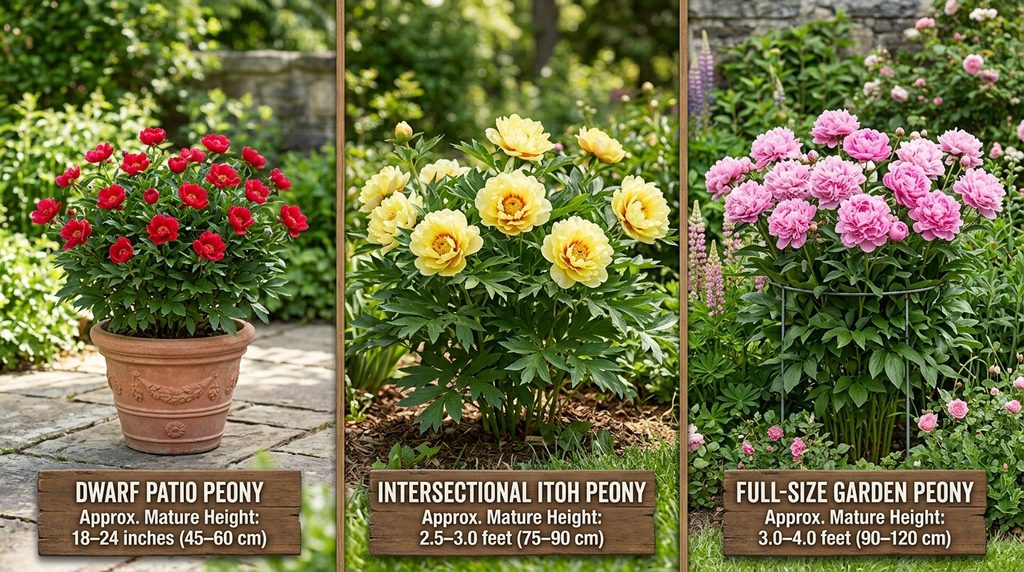
Not every peony variety is suited to pot life. Compact and dwarf cultivars generally perform better in containers than the tallest garden varieties, which can reach 3 to 4 feet wide and struggle to stay upright in a pot.
- Compact intersectional (Itoh) hybrids, which combine tree peony blooms with sturdier, shorter herbaceous stems.
- Dwarf “patio peony” cultivars specifically bred for smaller garden spaces and container life.
- Shorter herbaceous cultivars that top out around 2 feet, rather than the largest 3 to 4 foot varieties.
Avoid planting the largest tree peony cultivars in containers unless you have a genuinely oversized pot, since these shrubs can eventually reach 4 to 5 feet tall and need more root space than most containers can offer long term.
Common Mistakes When Growing Peonies in Pots
Even experienced gardeners run into a handful of predictable problems with container peonies. Knowing them ahead of time can save a plant that would otherwise struggle for years.
- Planting too deep. Burying the eyes more than 2 inches down is one of the most common reasons a peony never blooms.
- Choosing too small a pot. A container under 18 inches wide simply doesn’t give the roots enough room to support a mature plant.
- Overwatering. Soggy, poorly drained soil leads to root rot, which is often fatal for peonies.
- Ignoring winter chill needs. Skipping cold protection in freezing zones, or failing to give the plant enough cold in mild zones, both prevent good blooming.
- Moving the plant too often. Peonies dislike being disturbed once established, so repeated repotting can set flowering back by a year or more.
- Using lightweight potting mix. Soil formulated for houseplants often lacks the body and nutrients a heavy perennial feeder needs.
Pros and Cons of Growing Peonies in Containers
Pros:
- Makes peonies possible for patios, balconies, and small urban spaces.
- Lets you control soil quality and pH precisely.
- Makes it easier to isolate a plant if pests or disease appear.
- Allows you to move the plant for better sun or shelter.
Cons:
- Requires a large, heavy pot and more frequent watering.
- Winter care takes extra effort in cold and mild climates alike.
- Peonies may take a year or two longer to establish and bloom well compared to ground planting.
- Long-term growth can eventually outgrow even a generous container.
Troubleshooting: My Container Peony Isn’t Blooming
If your potted peony is healthy and leafy but refuses to flower, it usually comes down to one of a few causes. Check planting depth first, since eyes buried too deep is the most frequent culprit. Next, consider sunlight. Herbaceous peonies planted in partial shade often grow fine foliage but produce few or no blooms. Finally, think about winter chill. A plant that didn’t get enough cold weather, whether from a mild winter or being stored somewhere too warm, may skip flowering that year even if everything else is correct. Patience also matters here, since peonies grown from bare roots commonly take two to three years to bloom reliably no matter how they’re planted.
FAQs
How big of a pot does a peony need?
Choose a container at least 18 to 24 inches wide and deep. Peonies have wide-spreading roots and a long lifespan in the same spot, so a generously sized, heavy pot with good drainage gives the best long-term results.
Do container peonies come back every year?
Yes, herbaceous peonies are perennials and will die back to the ground each fall before regrowing in spring, as long as the roots survive winter and the plant received adequate cold. With proper winter protection, a healthy container peony can bloom for many years.
Can peonies survive winter in pots?
They can, but roots in a container are more exposed to cold than roots in the ground. In freezing climates, insulate the pot or move it somewhere sheltered but still cold, such as an unheated garage, to protect the roots without preventing the chill period peonies need to bloom.
How deep should you plant a peony in a container?
Plant bare root tubers with the eyes no more than about 2 inches below the soil surface. Planting too deep is one of the most common reasons container peonies fail to flower.
What is the best soil for potted peonies?
Use a well-draining potting mix formulated for perennials or landscape plants, ideally with added compost. Peonies prefer a soil pH between roughly 6.5 and 7.0, and lightweight houseplant soil is generally too fast-draining and low in nutrients for them.
Do peonies need full sun in containers?
Yes, herbaceous peonies need at least six hours of direct sunlight daily to produce strong blooms. Tree peonies are the exception, since their large petals benefit from some afternoon shade.
How often should I water a peony in a pot?
Water deeply while the plant is establishing, then let the top inch or two of soil dry out between waterings once it’s mature. Container soil dries faster than garden soil, so check moisture more often during hot summer weeks.
Can I grow a peony indoors permanently?
No, peonies are not well suited to permanent indoor growing because they require an extended winter chilling period to set flower buds. They can be enjoyed indoors briefly as cut flowers, but the living plant needs real winter cold outdoors or in an unheated space.
Final Thoughts
So, can peonies be planted in containers? Absolutely, and for many gardeners with limited space, it’s the only realistic way to enjoy these show-stopping blooms. The keys are a generously sized, well-draining pot, correct planting depth, plenty of sun, and a winter plan that gives the roots the cold they need without letting them freeze solid. Get those basics right, choose a compact or dwarf variety if your container is on the smaller side, and your potted peony can reward you with big, fragrant blooms for years to come.
If you’re already planning a wider container garden this season, take a look at how other perennials handle growing in containers to compare soil, depth, and watering approaches across different plant types. And if this is your first time growing peonies, start with one pot, get a feel for how it responds to your climate, and expand from there once you see how it performs through its first winter.

