
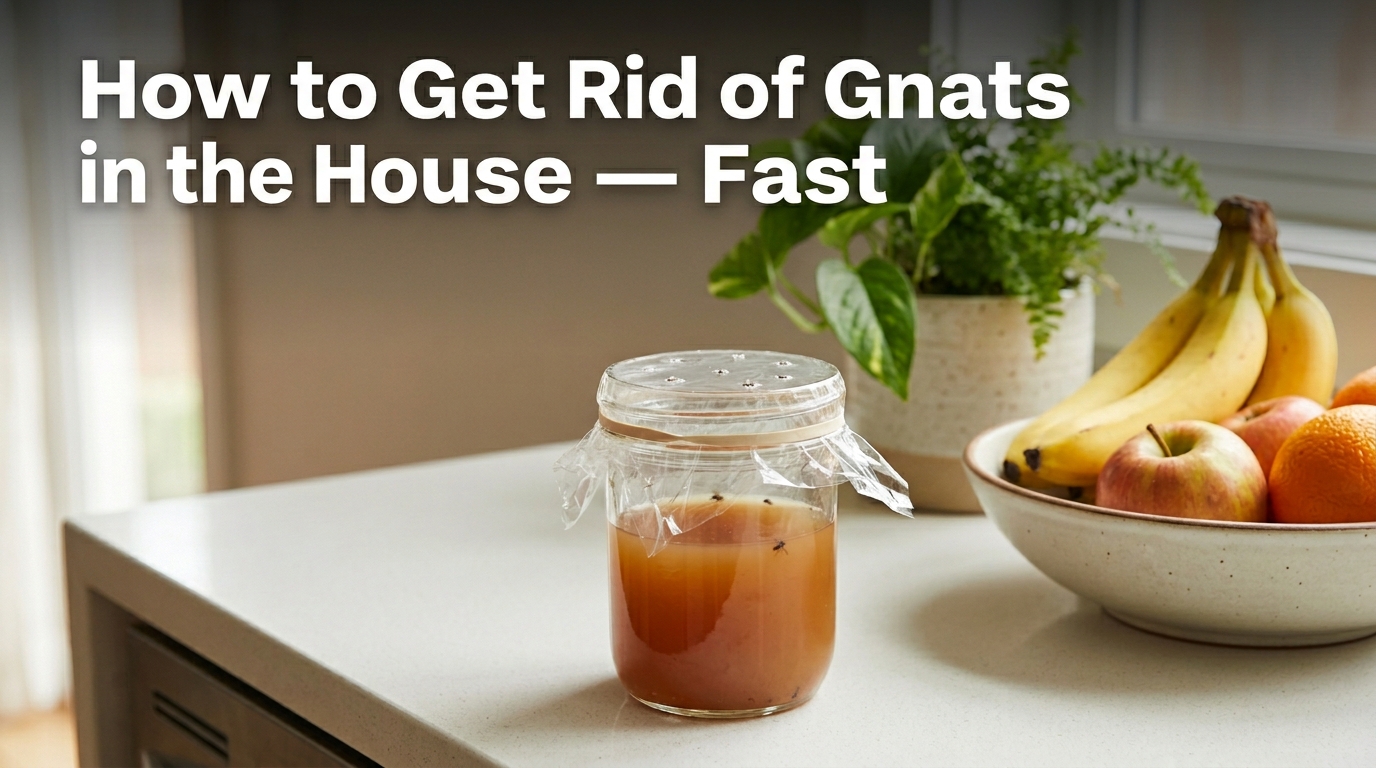
You’re sitting at the kitchen table, minding your own business, when one flies past your face. Then another. By the time you’ve swatted at the third one, you’ve already started typing the question into your phone.
If you’re dealing with a sudden swarm of tiny flying bugs in your kitchen, bathroom, or near your houseplants, you’re not imagining things, and you’re definitely not alone. Gnats are one of the most common household nuisances, and they tend to show up fast and multiply even faster. One day there’s nothing, and three days later you’re waving your hand in front of your face every time you walk past the counter.
What makes it more frustrating is that most people try the same thing first: they swat. They spray a little air freshener. They wipe down the counter and hope it was a one-time fluke. None of that actually touches the problem, because the bugs you’re seeing are just the visible tip of something breeding somewhere you haven’t looked yet.
The good news? Most gnat problems can be solved within a few days using things you already have at home. The key is figuring out exactly what kind of gnat you’re dealing with, because the fix for one type won’t touch another. Spraying vinegar traps around a houseplant infestation, for example, is a bit like setting a mousetrap to catch a moth. Right idea, wrong target.
This guide walks you through everything, step by step, in plain language. No jargon, no scare tactics, just a clear path from “why are there so many bugs in my house” to “wait, they’re actually gone.” By the end, you’ll know exactly which gnat you’re up against, exactly what to do about it tonight, and exactly how to keep it from coming back next month.
What Exactly Are Gnats? (And Why You Probably Have Three Different Kinds)
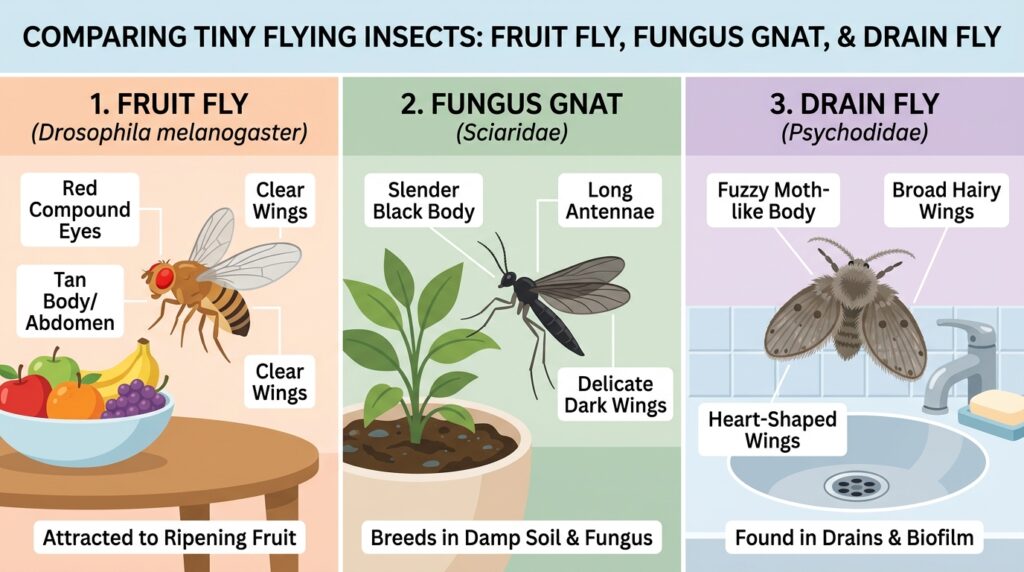
Here’s something that trips up almost everyone: “gnat” isn’t really one specific bug. It’s a catch-all word people use for several different small flying insects that happen to look similar at a glance.
Knowing how do you get rid of gnats starts with knowing which gnat is bugging you, because the breeding ground (and therefore the fix) is completely different for each one.
The Three Most Common Culprits
| Type | Where You’ll See Them | Eyes | Body | What Attracts Them |
|---|---|---|---|---|
| Fruit flies | Kitchen counters, fruit bowls, trash cans | Bright red | Tan/brown, stocky | Ripe or rotting produce, sugary spills |
| Fungus gnats | Around houseplants | Dark, hard to see | Black, slender, mosquito-like | Moist potting soil |
| Drain flies (moth flies) | Bathroom and kitchen sinks | Dark | Fuzzy, moth-like wings | Organic gunk inside drains |
According to pest identification resources, fungus gnats are mosquito-like insects often found near houseplants, with a distinctive Y-shaped pattern on their forewings, and they’re frequently mistaken for fruit flies, especially during colder months.
Fruit flies, on the other hand, are a different story entirely. Researchers at McGill University’s Office for Science and Society explain that fruit flies (technically Drosophila) are attracted not to fresh fruit, but to chemicals given off by fruit that is rotting or fermenting, which is exactly why a forgotten banana on the counter becomes ground zero for an infestation.
And then there are drain flies, which most people don’t even realize are a separate species until they look closely. The Ohio State University Extension notes that these flies often appear suddenly and can become a nuisance around sinks, showers, and floor drains, especially where organic buildup has collected.
So before you buy a single trap, take thirty seconds to actually watch where the bugs are hanging out. That one observation will save you days of using the wrong fix.
Why They Multiply So Fast
This is the part that catches most people off guard. A single female fungus gnat can lay around 200 eggs during a life cycle that lasts only seven to ten days, and she’s reproducing the entire time. That means what looks like “a few annoying bugs” on Monday can realistically become dozens of new adults by the following weekend.
Fruit flies follow a similarly fast timeline. They can go from egg to fully grown adult in roughly eight to ten days, which is part of why a fruit fly problem can feel like it exploded overnight even though it’s actually been building for a week or more.
This rapid life cycle is exactly why traps alone, without removing the breeding source, rarely solve the problem for good. You might catch the adults flying around the kitchen today, but if eggs are still hatching in a forgotten potato or a damp plant pot, you’ll be setting out a fresh trap again in three days.
How to Tell Fruit Flies, Fungus Gnats, and Drain Flies Apart in 10 Seconds
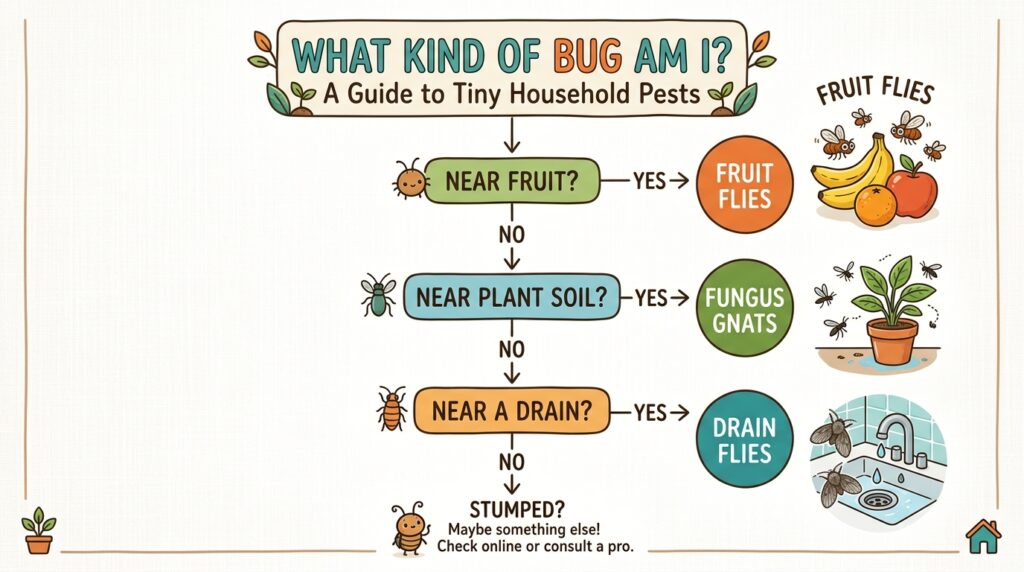
You don’t need a microscope. You just need to ask yourself three quick questions.
- Are they hovering over fruit, the trash can, or the sink? That’s almost always fruit flies. Pest control resources note that fruit flies have bright red eyes and hover around kitchens, while the other two types stick to very different spots.
- Are they low to the ground, near a potted plant, and flying in short, jerky bursts? That’s a fungus gnat problem, and it means your plant’s soil is too wet.
- Are they fuzzy-looking and seem to “hop” rather than fly, clustering right at the drain opening? Those are drain flies, and the fix lives inside your pipes, not on your counter.
One easy trick that works for almost any sink-related gnat mystery: place a strip of clear tape sticky-side-down over the drain opening overnight. Whatever’s living in there will get stuck on their way out, and you’ll have your answer by morning.
How to Get Rid of Gnats in the House Quickly: The Fast-Action Checklist
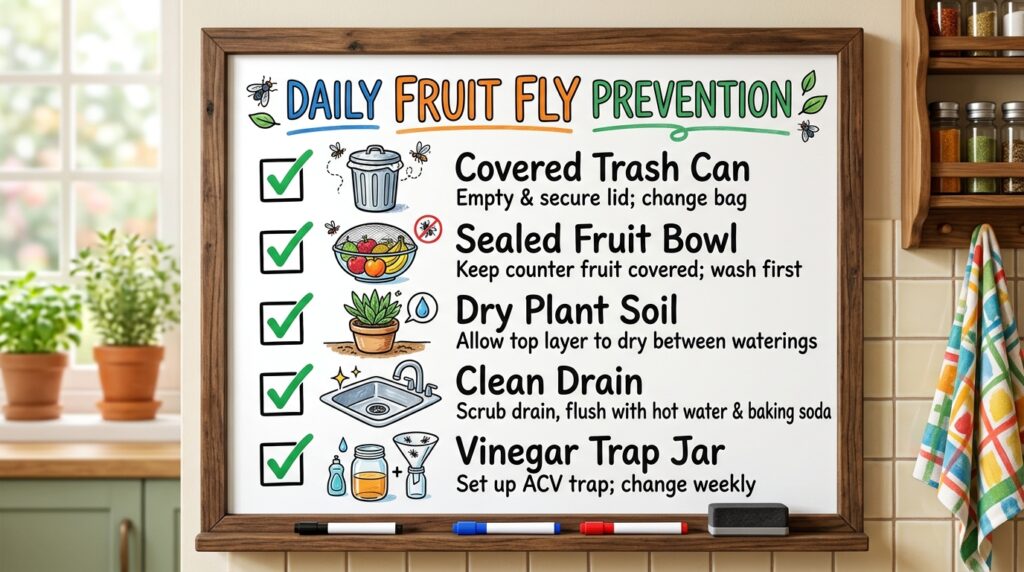
If you need results today, start here. This is the fastest path to noticeably fewer gnats within 24 to 48 hours.
- Find and remove the food source. This is non-negotiable. Traps help, but they’re a band-aid if the breeding site is still active.
- Set out a vinegar trap immediately. It takes two minutes and starts working within the hour.
- Take the trash out, even if it’s not full. Gnats only need a tiny bit of rotting material to lay dozens of eggs.
- Stop watering your houseplants for a few days. Dry soil is hostile territory for fungus gnat larvae.
- Run hot water and a drain cleaner through every sink. Even if you don’t think you have drain flies, this rules them out.
Knock out these five steps in one evening, and you’ll already notice a difference by the next morning. Now let’s go deeper into each pest type, because “quickly” only sticks if you treat the right target.
How to Get Rid of Gnats in the Kitchen (Fruit Flies)
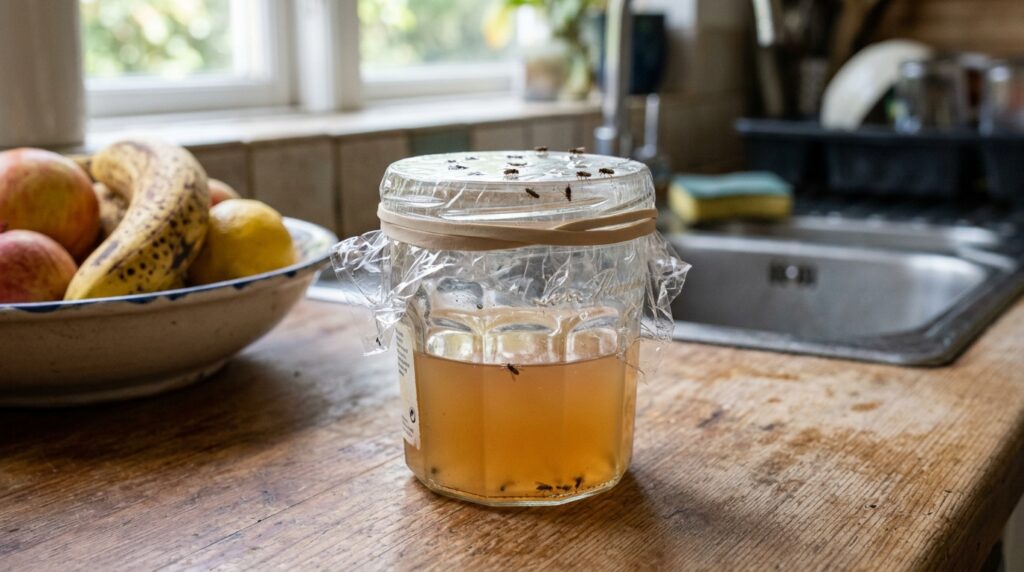
Kitchen gnats are almost always fruit flies, and they have one job: find fermenting sugar and lay eggs near it. Cut off that supply and they’ll have nowhere left to breed.
Think about the last time this happened to you. Chances are, there was a bag of onions in the pantry, or a banana that sat out a day too long, or a recycling bin that hadn’t been rinsed out in a while. Fruit flies don’t appear out of nowhere; they show up because something in the kitchen started fermenting, even slightly, and they can detect that from surprisingly far away.
Step 1: Hunt Down the Hidden Source
Check these spots, because fruit flies don’t always come from the fruit bowl you’d expect:
- Under the sink, behind cleaning supplies
- Inside the trash can and recycling bin
- Empty soda cans or beer bottles waiting to be recycled
- A forgotten potato or onion gone soft in the pantry
- The garbage disposal, where food particles can sit and ferment
- Reusable grocery bags that once carried produce
- The bottom of a fruit basket, underneath the top layer you can actually see
The Northwest Center for Alternatives to Pesticides recommends checking for food scraps hidden under furniture or elsewhere and storing produce in the refrigerator until the infestation clears up, since that single step removes their entire food supply.
It’s worth being thorough here. Most people check the obvious spots, find nothing, and assume the flies just “came from outside.” In reality, the source is usually still in the kitchen; it’s just somewhere slightly out of the normal sightline.
Step 2: Build a Vinegar Trap
This is the single most effective DIY method for fruit flies, and it’s backed by real science, not just kitchen folklore.
According to McGill University’s pest research, fruit flies are drawn to compounds like ethanol, acetic acid, 2-phenylethanol, and acetoin, all of which are found in fermenting liquids like apple cider vinegar. That’s why this trap works so reliably.
How to make it:
- Pour about half an inch of apple cider vinegar into a small jar or bowl.
- Add one or two drops of dish soap and stir gently.
- Cover the container with plastic wrap, securing it with a rubber band.
- Poke several small holes in the top with a toothpick.
- Set it near the affected area and leave it overnight.
Pest control experts explain that the dish soap breaks the surface tension of the vinegar, so once a fly lands on the liquid, it sinks instead of flying back out.
No apple cider vinegar? White vinegar with a teaspoon of sugar works as a solid substitute, since the sugar adds the sweetness the vinegar alone lacks. A piece of overripe banana dropped into a jar, covered the same way, works almost as well in a pinch.
If you want a slightly different version, the Northwest Center for Alternatives to Pesticides also recommends using roughly four tablespoons of apple cider vinegar or even leftover wine, plus a few drops of dish soap, in either an open bowl or a sealed jar with a small cone-shaped opening on top.
Step 3: Seal Off Escape Routes for Existing Eggs
Even after you remove the visible source, eggs that were already laid will keep hatching for several days. Keep your trap running for at least a week, even after you stop seeing adult flies, to catch the next generation as it emerges.
Swap out the vinegar every one to two days. Once it’s been sitting a while, it loses potency and stops pulling flies in as effectively, even though it still looks the same to you.
Pros and Cons of the Vinegar Trap Method
| Pros | Cons |
|---|---|
| Costs almost nothing | Only attracts fruit flies, not fungus gnats or drain flies |
| Works within hours | Needs to be refreshed every day or two |
| No chemicals near food prep areas | Won’t fix the root breeding source on its own |
| Easy to make with items already at home | Doesn’t kill eggs already laid elsewhere |
How to Get Rid of Gnats in Plants (Fungus Gnats)
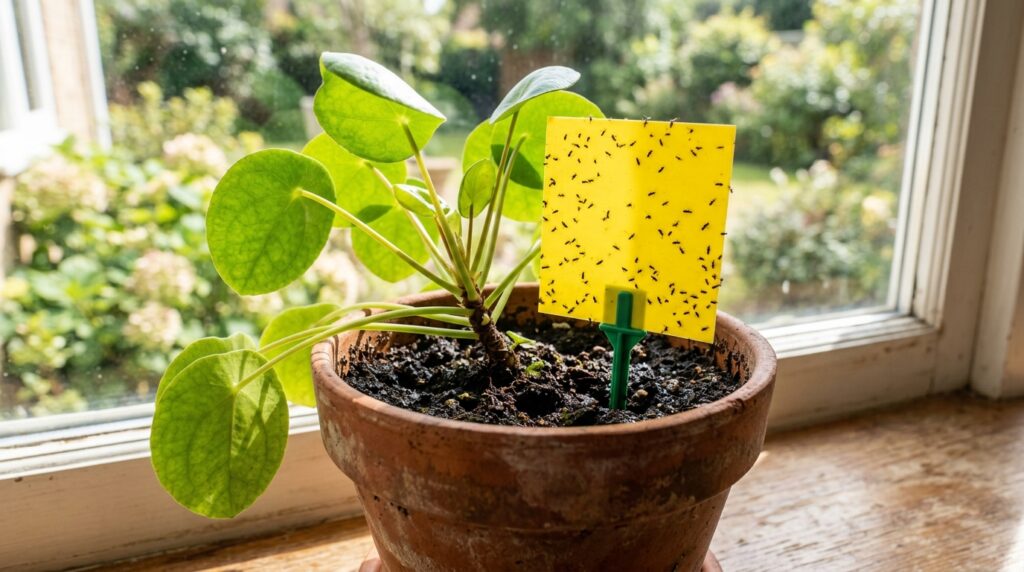
If the tiny flies in your home seem to orbit your houseplants specifically, you’re dealing with fungus gnats, and the fix lives entirely in the soil, not in the air.
This is the search that brings most plant owners here in the first place: how to get rid of gnats in plants without hurting the plant itself. The reassuring part is that the fix is almost always a watering adjustment, not a harsh chemical treatment.
Why Your Plant Became a Gnat Nursery
Fungus gnat larvae feed on fungus, algae, and decaying organic matter in soil that stays consistently damp. Identification resources note that fungus gnats flourish in soils rich in organic material and moisture, and a single female can lay around 200 eggs during her short lifespan.
That means one overwatered pot can turn into a full-blown swarm within a couple of weeks if nothing changes. It also explains why fungus gnats so often show up right after someone brings home a new plant from a nursery or garden center; the moist, organic-rich potting mix those plants are sold in is practically a welcome mat for them.
Step 1: Let the Soil Dry Out
This is the single most important fix, and it costs nothing. Fungus gnat larvae cannot survive in dry conditions.
Cornell Cooperative Extension recommends letting the soil dry out between waterings as a primary defense, since adult gnats lay their eggs specifically in moist surface soil.
A simple rule: stick your finger about two inches into the soil. If it’s damp, wait. Most houseplants (outside of a handful of moisture-loving species) actually prefer this drying-out period anyway, so this fix often improves your plant’s overall health at the same time it solves the gnat problem.
Step 2: Try a Hydrogen Peroxide Soil Drench
This is one of the most well-documented home remedies for fungus gnat larvae, and it’s recommended by university extension programs, not just blogs.
Cornell Cooperative Extension’s guidance is direct: mix one part 3% hydrogen peroxide with four parts water and pour it over the soil, and this mixture will fizz as it attacks the larvae.
How to apply it:
- Mix 1 part standard 3% hydrogen peroxide with 4 parts water.
- Water your plant as you normally would, but use this mixture instead.
- Pour until it runs through the drainage holes at the bottom of the pot.
- Expect some fizzing on the surface; that’s the peroxide breaking down and disrupting the larvae.
- Let the soil dry out fully before watering again.
Most home growers see noticeable results after two to three applications spaced about a week apart, since this interrupts each new wave of hatching larvae. Standard 3% hydrogen peroxide, the kind sold in any pharmacy for first-aid use, is exactly what you want; there’s no need for a stronger industrial-grade version.
One small but important note: hydrogen peroxide does affect the beneficial microorganisms living in the soil along with the larvae. It’s an effective short-term fix, but it isn’t something you want to use as a weekly habit indefinitely. Once the gnat population is under control, switch back to plain water and let the soil’s natural ecosystem recover.
Step 3: Add Yellow Sticky Traps for the Adults
The peroxide drench handles larvae in the soil, but adult gnats flying around the room need their own solution. Sticky traps are inexpensive, widely available at garden centers, and require zero effort once placed.
Simply insert a small yellow sticky card into the soil near the base of the plant. Their bright yellow color is highly attractive to adult fungus gnats, and once they land, they’re stuck for good.
Step 4: Consider a Layer of Sand or Gravel
Adding a thin layer of coarse sand or small gravel on top of the soil creates a physical barrier that makes it harder for adult gnats to lay eggs and for emerging adults to escape. It’s a small step, but it adds up when combined with drying out the soil.
A Word on What NOT to Use
Not every home remedy floating around online is actually a good idea. One extension specialist responding through a university’s Ask Extension service was blunt about it, advising to avoid cinnamon, hydrogen peroxide, and other home remedies when used carelessly, noting that water reduction is the most reliable fix in nearly every case, with peroxide and cinnamon only recommended in measured, diluted amounts because high doses can stress plant roots.
The takeaway: drying out the soil does more heavy lifting than any spray or powder ever will.
How to Get Rid of Gnats in the Bathroom (Drain Flies)
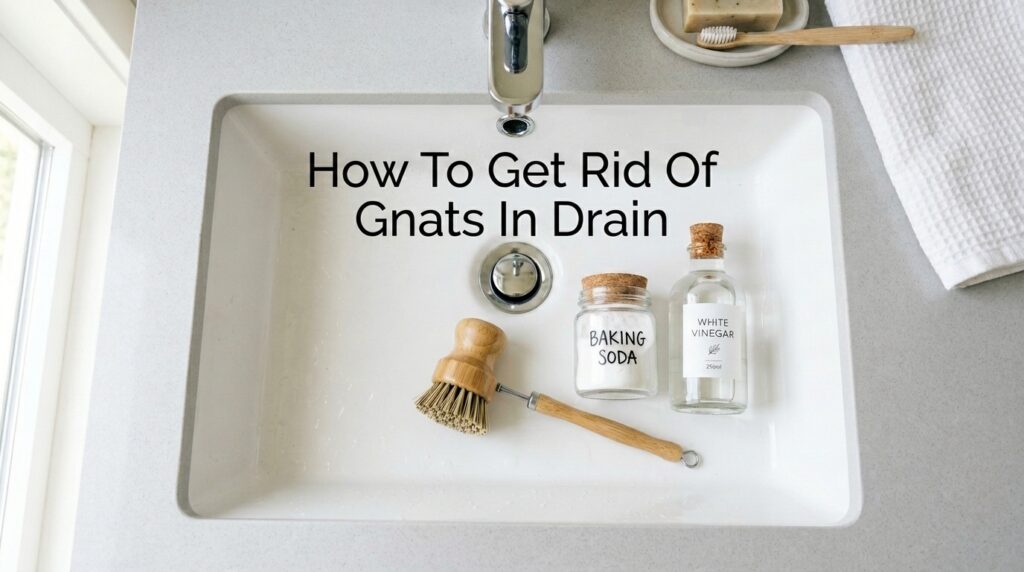
If your gnats seem glued to the bathroom sink, shower drain, or floor drain, you’re probably dealing with drain flies, sometimes called moth flies because of their fuzzy, moth-like wings.
This one trips people up the most, because drain flies don’t look quite like what most people picture when they hear “gnat.” They’re a little fuzzier, a little slower, and they tend to rest flat against tile walls near the drain rather than buzzing actively through the air. If you’ve been wondering how to get rid of gnats in your house and nothing seems to work, take a closer look at your sinks before trying anything else.
Why They’re Hard to Notice at First
Drain flies breed inside the slimy organic film that builds up along the inside walls of pipes, a layer most people never think to clean because it’s invisible from above the sink. This buildup, sometimes called drain sludge or biofilm, accumulates from soap residue, hair, food particles, and grease over weeks or months, and it provides the perfect moist, sheltered environment for drain fly larvae to develop.
The Ohio State University fact sheet warns that many people make the mistake of reaching for insect sprays, but explains that these products will not kill the larvae and new flies will soon appear, since the breeding ground is deep inside the pipe, completely out of reach of any surface spray.
Step 1: Confirm It’s Actually a Drain Problem
Cover the drain opening with a piece of clear tape overnight. If you find flies stuck to the underside by morning, you’ve confirmed the source.
Step 2: Physically Clean the Pipe, Don’t Just Pour Chemicals
This is the step most people skip, and it’s the one that actually matters. A bottle of insecticide poured down the drain won’t reach the larvae embedded in the gunk lining the pipe walls.
Instead:
- Use a long, narrow drain brush or an old bottle brush to physically scrub the inside of the pipe as far down as you can reach.
- Pour a mixture of baking soda followed by vinegar down the drain, and let it fizz for 15–30 minutes.
- Flush thoroughly with very hot water.
- Repeat this process every few days for about a week to break the breeding cycle completely.
The Ohio State Extension fact sheet specifically notes that there are no insecticides registered for safe use directly in household drains or sewage systems, and pouring random chemicals down the pipe can actually damage your plumbing without solving the problem.
Step 3: Skip the Bug Bomb
It’s tempting to reach for a total-release fogger when you’re frustrated, but it’s genuinely one of the least effective options here. Foggers only kill flying adults in the room; they do nothing to the larvae living safely inside the pipe, which means the swarm simply returns within days.
How to Get Rid of Gnats Outside (Before They Move Indoors)
A lot of indoor gnat problems actually start outside. If your yard is a five-star breeding resort, gnats will keep finding their way in through doors, windows, and gaps in screens no matter how many traps you set indoors. This is one of the most overlooked parts of solving an indoor infestation; you can treat every room in the house, but if the yard right outside your back door keeps producing new gnats, they’ll just walk right back in.
What Outdoor Gnats Are Actually Looking For
Pest professionals consistently point to the same handful of triggers. According to outdoor pest control guidance, gnats are drawn to standing water, rotting plant material, or overwatered soil, and even small amounts of moisture are enough to let them settle in and multiply.
Quick Outdoor Fixes That Actually Move the Needle
- Dump standing water everywhere you find it. Birdbaths, plant saucers, kiddie pools, even bottle caps. It only takes a small puddle for gnats to breed.
- Clean out clogged gutters. Trapped leaves and stagnant water inside gutters are a favorite gnat nursery that most homeowners never think to check.
- Pick up fallen fruit immediately. Pest control specialists list removing fallen fruit as a key step, since rotting produce on the ground attracts gnats and other insects almost instantly.
- Move compost bins farther from entry points. Composting is great for your garden, but a bin right next to your back door is basically an open invitation.
- Let your lawn and garden beds dry between waterings. Overwatered soil outdoors creates the exact same fungus gnat conditions as an overwatered houseplant, just on a bigger scale.
- Check around air conditioning units and downspouts. These areas often collect small amounts of standing water that go unnoticed for weeks at a time.
- Trim back dense, low-lying vegetation. Shady, overgrown ground cover traps moisture and gives gnats a comfortable place to rest during the heat of the day.
A Simple Outdoor Trap
The same vinegar trap concept that works indoors for fruit flies also works on a patio or near an outdoor dining area. Just place a few small jars around the perimeter of your seating area, and refresh them every couple of days during peak season.
If gnats are mainly a problem during outdoor gatherings rather than a constant yard issue, consider swapping standard porch lighting for warmer-toned or low-wattage bulbs. Many flying insects, gnats included, are less drawn to these compared to bright white or fluorescent light, which makes a noticeable difference during evening get-togethers without any spraying at all.
Natural and Home Remedies That Actually Work (And a Few That Don’t)

There’s a lot of advice online, and not all of it holds up. Here’s an honest breakdown.
Remedies With Real Backing
- Apple cider vinegar traps — Strongly effective for fruit flies specifically, backed by university research on the chemical compounds that attract them.
- Hydrogen peroxide soil drench — Recommended by Cornell Cooperative Extension for fungus gnat larvae, when diluted correctly.
- Yellow sticky traps — A genuinely effective, low-effort way to catch adult fungus gnats and monitor infestation levels.
- Drying out soil — The single most universally recommended fix across nearly every authoritative source for fungus gnats.
- Baking soda and vinegar drain flush — A reliable way to disrupt the organic buildup that drain flies breed in.
Remedies That Are Mostly Myths or Overstated
- Vinegar traps for fungus gnats — They simply don’t work the same way. Pest researchers point out that apple cider vinegar specifically attracts fruit flies and does little for fungus gnats, which are drawn to moist soil instead.
- Essential oils as a total solution — Scents like lavender, lemon, or citronella may offer mild, temporary repellent effects outdoors, but they won’t eliminate an active breeding site indoors.
- Bug bombs for drain flies — As covered above, foggers don’t reach larvae hidden inside pipes, so the relief is short-lived at best.
- Cinnamon on soil — Often recommended online, but extension specialists caution against using it in high concentrations, since it can be harsh on root systems without reliably solving the gnat problem.
The honest truth: there’s no single miracle remedy. The fastest results always come from combining the correct identification with the correct targeted fix.
Why Gnats Seem Worse at Certain Times of Year

If you’ve noticed your gnat problem seems to spike at certain points in the year, you’re not imagining a pattern.
Warmer months bring more outdoor breeding activity in general, simply because heat speeds up the gnat life cycle and humidity keeps soil and organic debris consistently moist. This is also when windows and doors are open more often, giving outdoor gnats an easy path inside.
Interestingly, fungus gnats are a bit different. Identification resources note that fungus gnats are active all year long, and during the winter months, they’re often mistaken for fruit flies, since both are commonly seen indoors when houseplants get extra attention (and extra watering) during the colder months when people spend more time at home.
This seasonal pattern is actually useful information. If your gnat problem tends to show up every winter specifically, your houseplants are the most likely culprit, since winter watering habits often skew toward overwatering as plants sit in less sunlight and dry out more slowly. If it shows up every summer instead, check your kitchen and outdoor areas first.
Expert Tips for Long-Term Prevention
Getting rid of an active swarm is only half the job. Keeping them from coming back is what actually saves you from repeating this whole process every few weeks.
- Water houseplants on a schedule, not a habit. Check the soil first; don’t water just because it’s “Sunday watering day.”
- Keep produce in the fridge until you’re ready to eat it, especially bananas, tomatoes, and other items that ripen quickly.
- Take out the trash every two to three days, even if the bin isn’t full, since a small amount of food waste is all gnats need.
- Rinse recycling before it goes in the bin. A sticky soda can sitting for a week is basically a gnat incubator.
- Run your garbage disposal with hot water and a bit of dish soap weekly to prevent buildup that attracts drain flies.
- Inspect new houseplants before bringing them inside. A new plant is one of the most common ways fungus gnats enter a home in the first place, so consider keeping new arrivals separate from your existing collection for a week or two.
- Repair leaky faucets and check under sinks regularly, since a slow drip creates the perfect breeding microclimate.
A few minutes of weekly maintenance is genuinely all it takes to keep gnats from becoming a recurring headache.
When to Call a Professional
Most gnat problems resolve within one to three weeks of consistent effort using the methods above. But there are a few signs it’s time to bring in outside help:
- The infestation hasn’t improved after three weeks of consistent treatment
- You’re seeing gnats in multiple rooms with no obvious shared source
- You suspect a plumbing issue, like a hidden leak, that’s creating a hidden moisture source
- The swarm is large enough to suggest a breeding site you simply can’t access, such as inside a wall cavity
There’s no shame in calling a pest control professional at this point. Sometimes the breeding source really is somewhere you can’t see or reach on your own, and a trained technician can identify it far faster than continued guesswork.
Frequently Asked Questions
How long does it take to get rid of gnats in the house?
Most fruit fly problems clear up within three to seven days once the food source is removed and traps are in place. Fungus gnats tied to houseplants typically take two to three weeks, since you’re working through multiple generations of larvae in the soil. Drain flies can take about a week of consistent cleaning to fully break the breeding cycle.
What kills gnats instantly?
Nothing kills an entire infestation instantly, but a soapy water spray will kill adult gnats on contact almost immediately. Mix a few drops of dish soap with water in a spray bottle and mist any gnats you see directly. This handles what’s flying around right now, while your traps and soil treatments handle the eggs and larvae you can’t see.
Why do I suddenly have gnats in my house?
Sudden gnat appearances are almost always tied to a new food or moisture source. Common triggers include a piece of overripe fruit left out, a recently watered houseplant, a new plant brought into the home, or a buildup of organic material in a drain. Cooler months can also push outdoor gnats indoors looking for warmth and moisture.
Do gnats go away on their own?
Rarely, and not quickly. Because adult gnats only live for about a week or two but can lay hundreds of eggs during that time, the population tends to grow rather than shrink unless the breeding source is removed. Waiting it out usually just means a bigger problem later.
Are gnats harmful to humans or pets?
Most common household gnats, including fruit flies and fungus gnats, don’t bite and aren’t considered a direct health threat. They’re primarily a nuisance. Fungus gnats can, however, damage the roots of seedlings and young plants if left unchecked. Some outdoor species, like biting midges, can bite and cause skin irritation, but these are far less common indoors.
Final Thoughts
Gnats feel overwhelming the moment you notice them, but the fix is almost always simpler than it seems once you know which type you’re dealing with. Identify the source, match the remedy to the pest, and stay consistent for a week or two. That combination solves the vast majority of household gnat problems without needing anything beyond items already sitting in your kitchen.
Start tonight: set up one vinegar trap, check your houseplant soil, and take a look at your drains. Small steps now mean a gnat-free home much sooner than you’d expect.

