
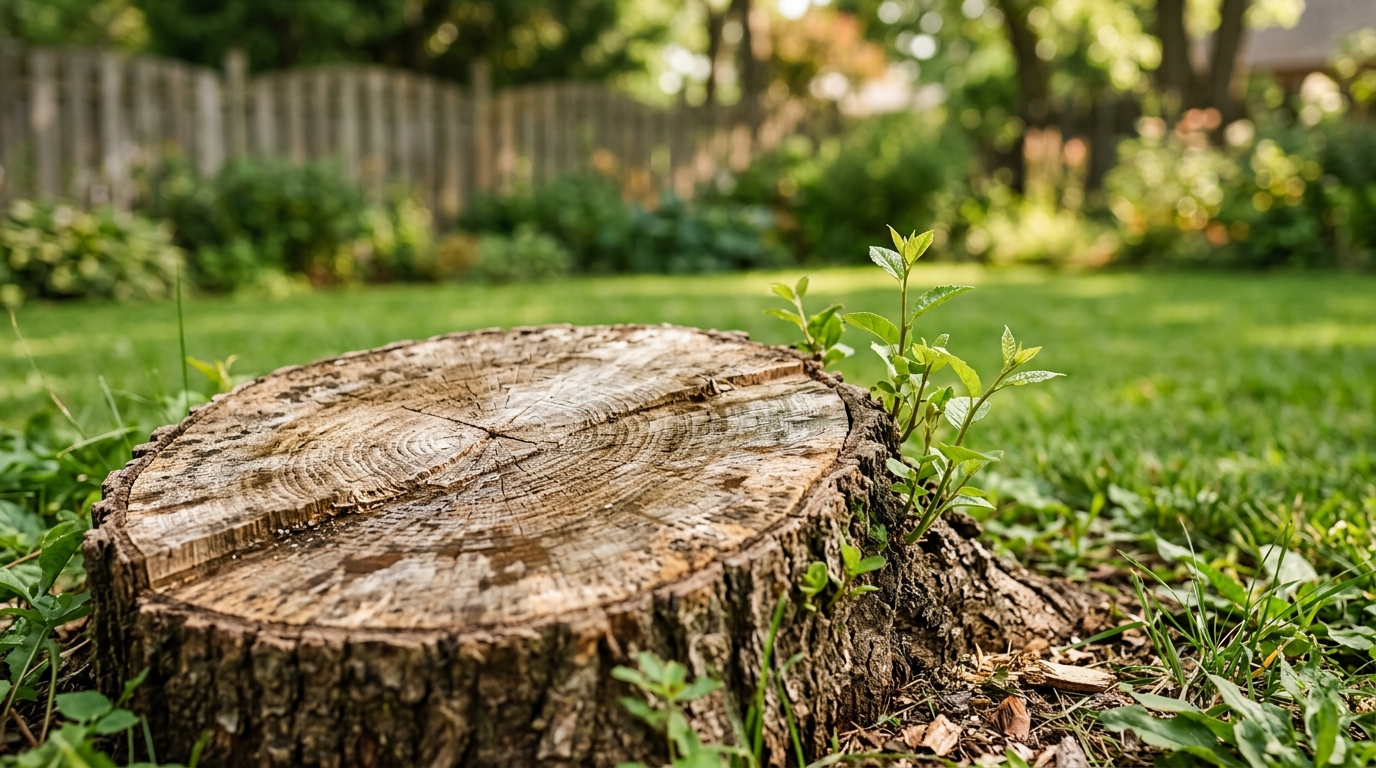
If you cut down a tree and noticed small green shoots poking out of the stump a few weeks later, you are probably wondering: can trees grow back from stumps? The short answer is yes, many species can and do grow back, but it depends heavily on the type of tree, its health, and what happens to the root system after cutting. This guide walks through why stumps sprout, which trees are most likely to regrow, and what you can do whether you want to stop the process or encourage it.
Understanding this process matters because it changes how you plan a landscaping project. A stump that keeps sending up shoots can undo weeks of yard cleanup, while a stump you actually want to regrow needs a completely different kind of care.
The Short Answer: Yes, Many Trees Can Regrow From a Stump
A living stump with an intact root system can send up new shoots because the roots still hold stored energy from before the tree was cut. This is a natural survival response, not a rare fluke. Fast-growing hardwoods like willow, poplar, and elm are especially prone to it, while slow-growing conifers like pine and spruce almost never do it.
Whether regrowth happens comes down to three main factors: the species, how much of the root system survived, and how the stump was cut or treated afterward. A stump left untouched in the ground has a much higher chance of sprouting than one that has been ground down or treated with a stump-killing product. None of this means every stump in your yard will turn back into a full tree, but it does mean the possibility should not be ignored when you are planning your next move.
Why Some Stumps Sprout and Others Don’t
New growth from a stump does not come from the stump wood itself. It comes from small clusters of dormant buds, called adventitious buds, that sit just below the bark at or near the base of the trunk and along the roots. According to research published by the University of Arizona Cooperative Extension, when a tree’s top is removed, many species respond by pushing new shoots from these buds using energy stored in the surviving root system.
This is essentially the tree’s emergency survival plan. Since the stump no longer has leaves to photosynthesize, it relies entirely on the sugars and starches it banked in the roots before it was cut. Once those reserves run out and no new leaves have formed to replace them, the sprouts and eventually the stump itself will die off if nothing else interferes.
Tree Species Likely to Grow Back From a Stump
Not every tree behaves the same way once it is cut. Fast-growing, deciduous hardwoods tend to be the most aggressive resprouters, while slower-growing species and most conifers rarely manage it at all.
| Trees Likely to Regrow | Trees Unlikely to Regrow |
|---|---|
| Willow | Pine |
| Poplar and cottonwood | Spruce |
| Elm | Fir |
| Maple and box elder | Most cypress |
| Aspen | Oak (slow, inconsistent) |
| Ash | Cedar |
| Sycamore | Douglas fir |
| Crepe myrtle | Redwood |
Oak sits in a bit of a gray area. It can sometimes sprout from a stump, but it does so far less reliably and much more slowly than fast-growing hardwoods, and older oak stumps often fail to regenerate at all.
What Is Coppicing? The Natural Process Behind Stump Regrowth
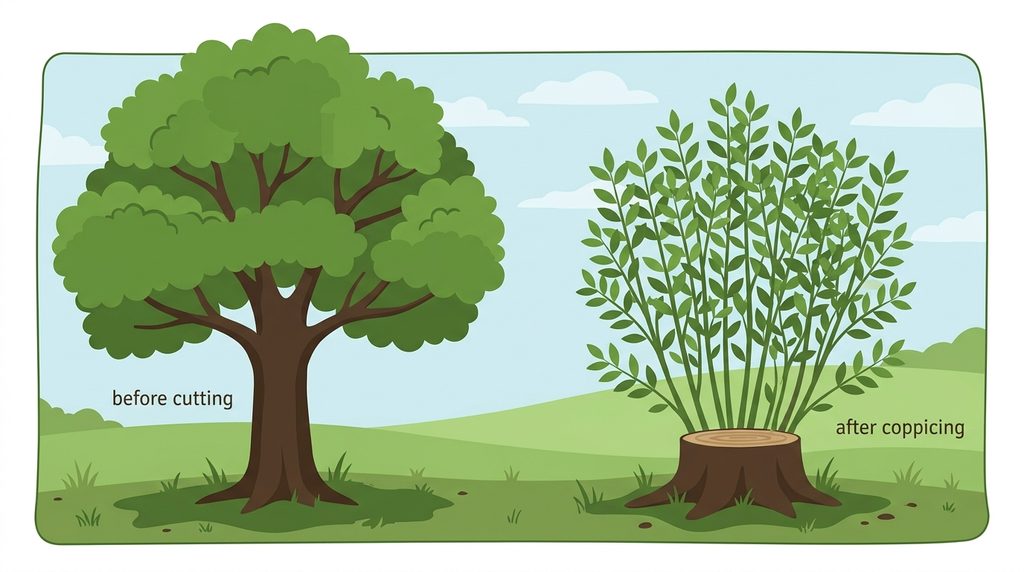
The scientific and horticultural term for a tree regrowing from a cut stump is coppicing. It is a traditional woodland management technique that people have used for thousands of years to harvest wood sustainably while keeping the same root system alive indefinitely.
According to horticulturists at the University of Washington Botanic Gardens, coppicing works because when a leafy tree or shrub is cut low, it sprouts again from dormant buds near the base or from new growth points formed by the cambium layer just under the bark. In managed woodlands, this cycle can be repeated every few years, with the same root system producing new stems again and again for decades or even centuries. That is very different from a homeowner’s stump sprouting on its own in a backyard, but the underlying biology is identical.
How Long Does It Take for a Stump to Start Sprouting?
Timing varies by species, season, and climate, but many stumps show visible shoots within a few weeks to a couple of months of cutting, especially if the tree was cut during its active growing season. Stumps cut in late fall or winter, when the tree is dormant, often wait until the following spring to sprout.
A peer-reviewed study on downy birch published in the journal Trees found that sprouting outcomes were closely tied to stump size and stand age, with smaller stumps under 1 centimeter and very large stumps over 9 centimeters in diameter showing higher failure rates than medium-sized stumps. The same research noted that most new sprouts emerge from very close to ground level, generally within the first two centimeters of the cut surface. This tells us that stump size and cutting height genuinely influence the odds of regrowth, not just the species involved.
Factors That Determine Whether a Stump Will Grow Back
Several conditions work together to decide whether a stump becomes a nuisance or stays dead for good.
- Tree species: Fast-growing hardwoods sprout far more readily than slow-growing trees or conifers.
- Root health before cutting: A tree that was already diseased, drought-stressed, or dying is less likely to push out strong new growth.
- Stump height and cut freshness: Freshly cut stumps generally have a better chance of sprouting than stumps that have sat exposed for a long time.
- Season of cutting: Cutting during the dormant season tends to slow or reduce sprouting compared to cutting during active growth.
- Soil and moisture conditions: Rich, well-watered soil supports stronger regrowth than poor or compacted soil.
- What happens to the stump afterward: Grinding, chemical treatment, or complete extraction each change the outcome differently.
Stump Grinding vs Full Stump Removal: Which One Stops Regrowth?
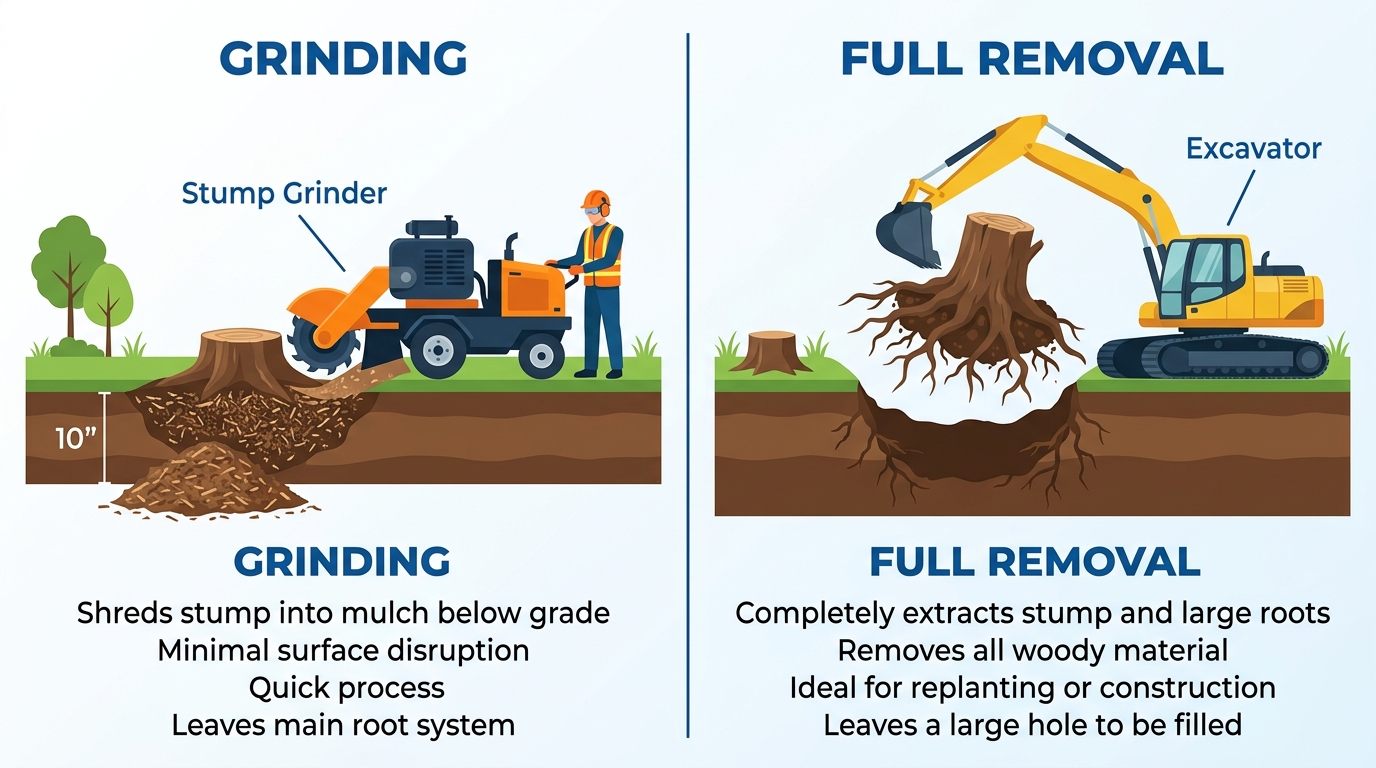
Homeowners usually choose between two main approaches once a tree comes down, and each one affects the odds of regrowth differently.
| Method | What It Does | Regrowth Risk | Typical Cost Range |
|---|---|---|---|
| Stump grinding | Shreds the visible stump a few inches below ground level | Low to moderate, since roots remain | Averages around $250, with most jobs falling between $120 and $500 |
| Full stump and root removal | Digs out or pulls the stump along with the major roots | Very low | Often higher due to labor and equipment |
| Leaving the stump as-is | No mechanical work done | High for resprouting species | No direct cost, but ongoing maintenance |
According to cost data compiled by HomeAdvisor, stump grinding typically costs between $2 and $5 per inch of stump diameter, with most contractors charging a minimum call-out fee. Grinding removes the visible wood, which stops new shoots from emerging directly out of the stump top, but it does not kill the root system underneath. That means aggressive resprouting species can still send up shoots from the surrounding roots even after grinding, which surprises a lot of homeowners who assumed grinding was a permanent fix.
If your goal is a yard that will never see that tree again, full removal of the stump and major root mass, or a herbicide treatment applied to the cut, gives you a much more reliable result. This matters most if you are also reworking the surrounding area, for example if you are planning low maintenance front yard landscaping and do not want surprise sprouts pushing through new mulch or ground cover later.
How to Stop a Tree From Growing Back After Cutting It Down
If you have removed a tree for a good reason, whether it was diseased, too close to your foundation, or simply in the wrong spot, the last thing you want is for it to keep coming back. Here is a straightforward approach based on guidance from university extension foresters.
- Cut the stump as low and flat as possible. A low, level cut makes later treatment or grinding more effective and reduces hiding spots for new shoots.
- Treat the freshly cut surface immediately. Extension foresters at the University of Kentucky note that herbicide should be applied to the cut stump within about one hour of cutting, since the cells on the exposed surface begin drying out and lose the ability to absorb the treatment as time passes.
- Use a labeled stump-killing herbicide. Products containing triclopyr or glyphosate are commonly recommended by university extension programs for this purpose; always follow the product label exactly.
- Remove and treat any new sprouts promptly. If shoots appear anyway, cut them close to the stump and treat the fresh cut again rather than letting them establish.
- Consider grinding or full removal for stubborn species. For notoriously persistent resprouters, mechanical removal paired with herbicide treatment gives the most reliable long-term result.
- Be patient with large, established root systems. A large tree’s root system can hold enough stored energy to keep attempting regrowth for more than one season.
A forestry expert at Utah State University Extension, when asked about a resprouting aspen stump, advised cutting the stump down again and applying triclopyr or glyphosate directly to the fresh surface, then repeating the process on any new sprouts until the root system is exhausted. This kind of repeated treatment is often necessary because a single application rarely kills an established, healthy root system on the first try.
Warning: Never apply herbicide to a stump if a tree of the same species is growing nearby, since root grafting between trees of the same type can allow the chemical to travel and damage or kill the neighboring tree.
Common Mistakes Homeowners Make When Removing a Stump
- Assuming grinding alone kills the roots. Grinding removes visible wood but leaves the root system alive underground for many species.
- Waiting too long to treat a freshly cut stump. Herbicide effectiveness drops sharply once the cut surface dries out.
- Ignoring sprouts that pop up nearby. Suckers emerging several feet from the original stump are often still connected to the same root system.
- Ripping out mulch or replanting immediately over a treated stump. Give any treatment time to work before disturbing the area again.
- Applying herbicide near desirable trees of the same species. This risks accidental damage through connected root systems.
When You Might Actually Want the Stump to Regrow
Not everyone wants to stop regrowth. Coppicing is a deliberate, useful technique if you are managing a hedge, want a renewable source of firewood or garden stakes, or are trying to naturally propagate certain shrubs from cuttings. Willow, dogwood, and some maples respond especially well to being cut back and allowed to resprout on a cycle.
If you are shaping this kind of feature into your yard design, it pairs well with a broader plan for structure and privacy. Homeowners working on corner lot landscaping ideas sometimes use coppiced shrubs or multi-stem regrowth deliberately to create natural screening without planting entirely new trees. Just keep in mind that regrowth from a stump rarely produces a tree with the same strong, single-trunk structure as the original, so it is better suited to hedges, thickets, and firewood coppices than to a replacement shade tree.
Safety and Structural Concerns With Stump Sprouts
Even when regrowth seems harmless, sprouts that grow from an old stump rarely develop the same strong trunk structure as the original tree. Multiple thin stems compete for the same limited root base, which often results in weak attachment points that are prone to splitting or falling during storms or heavy wind.
These fast-growing sprouts also draw heavily on water and nutrients from the surrounding soil, which can leave nearby lawn or garden plants struggling to compete. If a stump sits near a structure, driveway, or fence line, it is worth weighing the safety trade-offs before deciding to let it regrow naturally instead of removing it properly.
Frequently Asked Questions
Can a tree grow back from just the roots if the stump is completely removed?
Yes, in some cases. If the stump is removed but a significant portion of the root system remains in the soil, resprouting species can still send up new shoots from those roots, sometimes several feet away from where the original trunk stood.
How do I know if my tree stump is dead or still alive?
A living stump usually still has some greenish or moist tissue just under the bark, and it may show small buds or sprouts nearby. A dead stump typically appears dry, brittle, and gray or dark brown throughout, with no new growth even during the growing season.
Will grinding a stump stop it from growing back completely?
Not always. Grinding removes the visible wood and prevents shoots from emerging out of the stump top, but the root system usually survives underground, so aggressive species can still resprout from the roots around the grind site.
Is it bad to let a tree stump grow back on its own?
It depends on your goals. New growth from a stump is typically weak, multi-stemmed, and prone to storm damage, so it is not a good substitute for the original tree, though it can be useful if you intend to manage it deliberately as a coppiced hedge or shrub.
How long can tree roots stay alive after the tree is cut down?
This varies widely by species and root health, but established root systems of vigorous resprouting species can remain alive and capable of sending up shoots for a year or more after cutting, especially if nothing is done to treat or remove them.
What is the fastest way to permanently kill a tree stump?
A combination approach works best: cut the stump low, apply a labeled stump-killing herbicide to the fresh cut immediately, and follow up on any new sprouts with repeat treatment until the root system is fully exhausted.
Do all tree species sprout back from a stump the same way?
No. Fast-growing hardwoods like willow, poplar, and elm sprout vigorously and repeatedly, while most conifers and slow-growing hardwoods rarely sprout at all, even under favorable conditions.
Final Thoughts and Next Steps
So, can trees grow back from stumps? For many common species, the answer is yes, thanks to stored energy in a living root system and dormant buds that are ready to take over once the top of the tree is gone. Whether that is good news or bad news for your yard depends entirely on what you are trying to achieve, whether that means stopping an unwanted tree for good or deliberately encouraging a hedge or firewood coppice to thrive.
If you are dealing with a stubborn stump that keeps sending up shoots, start with a proper cut-and-treat approach before investing in full removal, and give any herbicide treatment enough time to work through the root system. And if this stump is part of a bigger yard refresh, it is worth mapping out the rest of your landscaping plan before you decide whether that stump stays, goes, or gets a second life as a natural hedge.

