
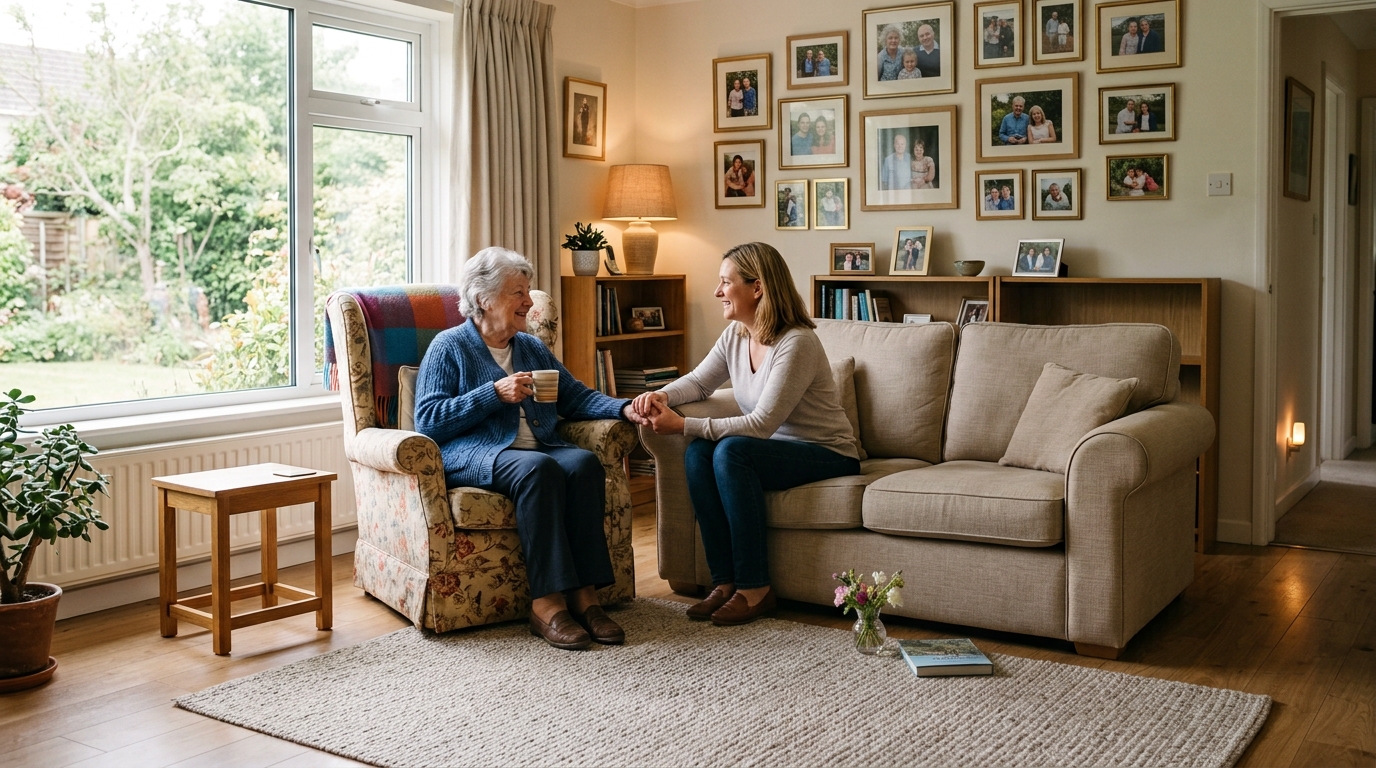
Dementia home safety starts with creating a familiar, comfortable environment where everyday surroundings feel recognizable and easy to navigate. For someone living with dementia, familiar rooms, treasured belongings and established routines can make everyday life feel more manageable.
However, changing needs may mean that the home environment needs to adapt over time. Thoughtful adjustments can improve independence at home while helping a loved one retain as much safety, familiarity and comfort as possible.
Keep the Environment Familiar
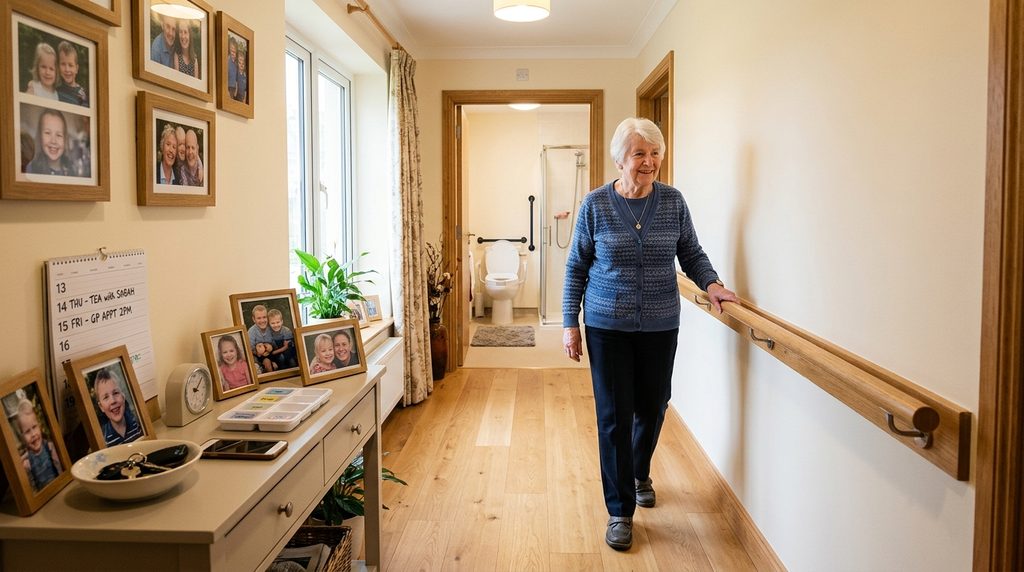
Large or unnecessary changes to the home can sometimes cause confusion. Where possible, keep furniture, photographs and familiar possessions in their usual places. Items with personal significance, such as family photographs, favorite ornaments or a well-used armchair, can make rooms feel recognizable.
If changes are necessary for safety reasons, introducing them gradually may make them easier to adjust to. The aim is not to redesign the entire home but to create an environment that continues to feel comfortable and familiar.
Reduce Common Safety Risks
Dementia can affect memory, judgment, balance and spatial awareness, so hazards that once presented little difficulty may become more significant. Loose rugs, trailing cables and cluttered walkways can increase the risk of trips and falls, making basic electrical safety an important part of a safer home.
Good lighting is equally important, particularly around stairs, hallways and bathrooms. Night lights can make it easier to move around safely after dark. Frequently used objects should also be stored somewhere accessible so there is less need for reaching, climbing or searching.
Depending on individual circumstances, additional safety measures might include handrails, accessible bathroom modifications, non-slip surfaces and appropriate kitchen precautions.
Make Everyday Tasks Simpler
A home that is straightforward to navigate can support independence. Clear labels or pictures on cupboards and doors may help someone locate everyday items without constantly needing assistance.
Keeping regularly used belongings in consistent places can also be useful. Glasses, keys, medication and other essentials are easier to find when they have an established location.
Avoid creating too much visual clutter, and use simple home decluttering strategies to keep spaces organized and easier to navigate.
Maintain Familiar Daily Routines
Creating a supportive home is about more than physical surroundings. Familiar routines can bring structure to the day and reduce uncertainty. Regular times for waking, eating meals, enjoying activities and going to bed may provide useful reference points.
Where appropriate, encourage your loved one to continue participating in familiar household activities. Folding laundry, helping prepare food, watering plants or exploring simple things to do at home can provide a sense of involvement and purpose.
Consider Support Within the Home
As dementia progresses, families may find that their loved one needs increasing assistance with personal care, meals, medication, mobility or household routines. This does not necessarily mean leaving familiar surroundings.
Options such as Consultus Care’s dementia live-in care service can enable someone to receive dedicated support while continuing to live in their own home. For some families, this provides a way to combine professional assistance with the comfort of familiar surroundings.
Adapt the Home as Needs Change
There is no single home setup that suits everyone living with dementia. Needs and abilities can change, so it is useful to review the environment regularly.
The most supportive approach balances safety with dignity and independence, including routine checks such as furnace and boiler maintenance when heating equipment is part of the home. By reducing unnecessary hazards, preserving familiar features and adapting routines carefully, families can create a home that remains reassuring, practical and welcoming as their loved one’s needs evolve.

